Snowflake Inc.

Search documents
NICE Grows Through Expanding Portfolio and Strong Partnerships
ZACKS· 2025-08-15 15:11
Core Insights - NICE is experiencing growth due to its strong cloud business, expanding customer base, and AI-driven solutions [1][4] - The company reported cloud revenues of $526.3 million in Q1 2025, a 12% year-over-year increase, contributing to overall revenue growth [2][9] - NICE has expanded its partnership with Salesforce to enhance AI-driven customer experiences through deeper integration [2][3] Financial Performance - For Q2 2025, NICE expects non-GAAP revenues between $709 million and $719 million, indicating a 7% year-over-year growth at the midpoint [7] - Non-GAAP earnings for Q2 are estimated to be between $2.93 and $3.03 per share, suggesting a 13% year-over-year growth at the midpoint [7] - For the full year 2025, NICE projects non-GAAP revenues between $2.92 billion and $2.94 billion, implying a 7% year-over-year growth at the midpoint [8][9] Strategic Partnerships - NICE has extended its partnership with RingCentral to market and sell RingCentral Contact Center powered by NICE CXone Mpower [5] - A strategic collaboration with Snowflake was announced, allowing CXone Mpower to utilize Snowflake Secure Data Sharing for centralized customer interaction data [6] - The company’s diverse portfolio, including solutions like Actimize and CXone, is attracting new customers and enhancing its market position [4]



索罗斯二季度清仓阿斯利康和摩根大通



Ge Long Hui A P P· 2025-08-14 22:39
Core Insights - Soros Fund Management has completely exited positions in AstraZeneca and JPMorgan Chase during the second quarter, indicating a strategic shift in investment focus [1] - The fund has increased its holdings in Nvidia, Snowflake, and KKR, suggesting a bullish outlook on these technology and investment firms [1] - There has been a reduction in positions in Alphabet (Google) and Goldman Sachs, reflecting a cautious approach towards these companies [1] Company Summaries - **AstraZeneca**: Soros Fund Management has fully liquidated its investment in AstraZeneca, signaling a potential reevaluation of the pharmaceutical sector [1] - **JPMorgan Chase**: The complete exit from JPMorgan Chase indicates a significant change in the fund's banking sector strategy [1] - **Nvidia**: Increased investment in Nvidia highlights confidence in the company's growth prospects, particularly in the semiconductor and AI sectors [1] - **Snowflake**: The decision to boost holdings in Snowflake suggests optimism regarding its cloud data platform and market position [1] - **KKR**: The increase in KKR shares indicates a positive outlook on private equity and alternative investment strategies [1] - **Alphabet (Google)**: The reduction in Alphabet shares may reflect concerns over regulatory pressures and market competition [1] - **Goldman Sachs**: A decrease in Goldman Sachs holdings suggests a cautious stance on investment banking and financial services [1]
Salesforce Pushes Data Cloud Adoption: Will It Anchor Growth?
ZACKS· 2025-08-14 13:06
Core Insights - Salesforce, Inc. is focusing on its Data Cloud platform as a central element of its growth strategy, with annual recurring revenues increasing by 120% year over year and over 22 trillion data points stored [1][10] Group 1: Data Cloud Platform Performance - The Data Cloud platform is experiencing strong adoption, with nearly 60% of the top 100 deals in the first quarter including both Data Cloud and AI capabilities [2] - Approximately half of the new Data Cloud bookings in the last reported quarter originated from existing clients, indicating high customer satisfaction and potential for further growth [2] Group 2: Integration and Competitive Position - Salesforce is integrating the Data Cloud platform with other tools such as Agentforce, Tableau, and Slack, facilitating data activation and AI application across operations [3] - Continuous product upgrades and cost-effective deployment are essential for Salesforce to maintain its competitive edge in the enterprise software market [4] Group 3: Revenue Trends and Estimates - Salesforce's total revenues grew by only 7.7% year over year in the first quarter, indicating a deceleration in growth after years of double-digit increases [5] - The Zacks Consensus Estimate suggests mid-to-high single-digit growth for fiscal years 2026 and 2027 [5][13] Group 4: Competitive Landscape - Salesforce faces increased competition from Microsoft and Snowflake in the data cloud sector, with Microsoft leveraging its Azure Data platform and Snowflake focusing solely on data services [6][7][8] Group 5: Valuation and Stock Performance - Salesforce shares have decreased by 29.1% year to date, contrasting with the Zacks Computer – Software industry's growth of 20.8% [9] - The company trades at a forward price-to-earnings ratio of 19.77, significantly lower than the industry average of 35.58 [11]


瑞银下调Snowflake目标价至250美元
Ge Long Hui· 2025-08-14 09:41
瑞银将Snowflake的目标价从265美元下调至250美元,维持"买入"评级。(格隆汇) ...
Agent狂欢下的冷思考:为什么说Data&AI数据基础设施,才是AI时代Infra新范式
机器之心· 2025-08-13 04:49
Core Viewpoint - The article discusses the emergence of AI Infrastructure (AI Infra) and its critical role in the effective deployment of AI Agents, emphasizing that without a robust AI Infra, the potential of Agents cannot be fully realized [2][4][5]. Group 1: AI Agents and Market Dynamics - The global market for AI Agents has surpassed $5 billion and is expected to reach $50 billion by 2030, indicating a competitive landscape where companies are rapidly developing their own Agents [2][5]. - Many enterprises face challenges in achieving expected outcomes from their deployed Agents, leading to skepticism about the effectiveness of these technologies [2][6]. - The misconception that Agent platforms can serve as AI Infra has led to underperformance, as the true AI Infra is essential for supporting the underlying data and model optimization processes [3][4][6]. Group 2: Understanding AI Infra - AI Infra encompasses structural capabilities such as distributed computing, data scheduling, model services, and feature processing, which are essential for model training and inference [7][9]. - The core operational logic of AI Infra is a data-driven model optimization cycle, which includes data collection, processing, application, feedback, and optimization [7][9]. - Data is described as the "soul" of AI Infra, and many enterprises fail to leverage their internal data effectively when deploying Agents, resulting in superficial functionalities [9][11]. Group 3: Evolution of Data Infrastructure - The shift from static data assets to dynamic data assets is crucial, as high-quality data must continuously evolve to meet the demands of AI applications [11][17]. - Traditional data infrastructures are inadequate for the current needs, leading to issues such as data silos and inefficiencies in data processing [12][13][14]. - The integration of data and AI is necessary to overcome the challenges faced by enterprises, as a cohesive Data&AI infrastructure is essential for effective AI deployment [17][18]. Group 4: Market Players and Trends - The market for Data&AI infrastructure is still in its early stages, with various players including AI tool vendors, traditional big data platform providers, platform-based comprehensive vendors, and specialized vertical vendors [20][21][22]. - Companies like Databricks are leading the way in developing integrated Data&AI infrastructure solutions, focusing on multi-modal data processing and low-code development capabilities [22][23]. - The emergence of technologies like "AI-in-Lakehouse" represents a significant trend in integrating AI capabilities directly into data architectures, addressing the fragmentation between data and AI [25][26]. Group 5: Case Studies and Future Outlook - Companies such as Sinopec and FAW have successfully implemented Data&AI integrated platforms to enhance operational efficiency and data management [34][35]. - The article concludes that as the Agent market continues to grow, the integration of Data&AI infrastructure will become increasingly vital for enterprises seeking to leverage AI effectively [35][36].

天风证券晨会集萃-20250813
Tianfeng Securities· 2025-08-12 23:45
Group 1: Macro Strategy and Market Overview - The three major equity indices continued to rise in early August, with the Shanghai Composite Index and Shenzhen Component Index both increasing by over 2%, and the ChiNext Index rising by 4.88% [20][21] - The central bank's net cash injection was 163.5 billion yuan, maintaining stable liquidity in early August, with the 7-day reverse repo rate (DR007) hovering around 1.45% [21][22] - Commodity prices showed mixed trends, with non-ferrous metals rebounding, crude oil slightly declining, and precious metals rebounding again [21] Group 2: Fixed Income and Bond Market - The upcoming issuance of 20-year special government bonds is expected to peak, presenting trading opportunities during the issuance process [2] - The new and old bond yield spread for 20-year bonds typically narrows by 0.4-1.5 basis points, with notable exceptions during significant market events [2] Group 3: Export Growth and Trade Analysis - China's exports showed steady growth in the first seven months of 2025, with a cumulative year-on-year increase of 6.1%, surpassing the 5.8% growth rate for the entire year of 2024 [23][24] - The global trade volume is expected to cool down in the second half of the year, influenced by preemptive demand in the U.S. and a decline in imports [23][24] - China's share of global exports has been increasing, with a notable rise in exports to non-U.S. regions compensating for declines in U.S. exports [24][25] Group 4: Company-Specific Insights - Yuan Da Pharmaceutical achieved a revenue of 10.784 billion yuan in 2024, a year-on-year increase of 10.59%, and a net profit of 2.286 billion yuan, up 31.28% [28][31] - The company is pioneering a new treatment for sepsis, STC3141, which has shown promising results in clinical trials [29][30] - Yuan Da's nuclear medicine segment is expanding, with significant sales growth expected from its core product, yttrium-90 microspheres, which has treated nearly 2,000 patients [30][31] Group 5: Industry Trends and Recommendations - The semiconductor industry is projected to continue its optimistic growth trajectory in 2025, driven by AI and high-performance computing [7] - The demand for storage solutions, particularly HBM and DDR5, is expected to remain strong, with price increases anticipated in the third quarter [7] - The construction materials sector, particularly cement and explosives, is expected to benefit from major infrastructure projects like the New Tibet Railway [34]





AI 产品定价指南
Hu Xiu· 2025-08-12 13:41
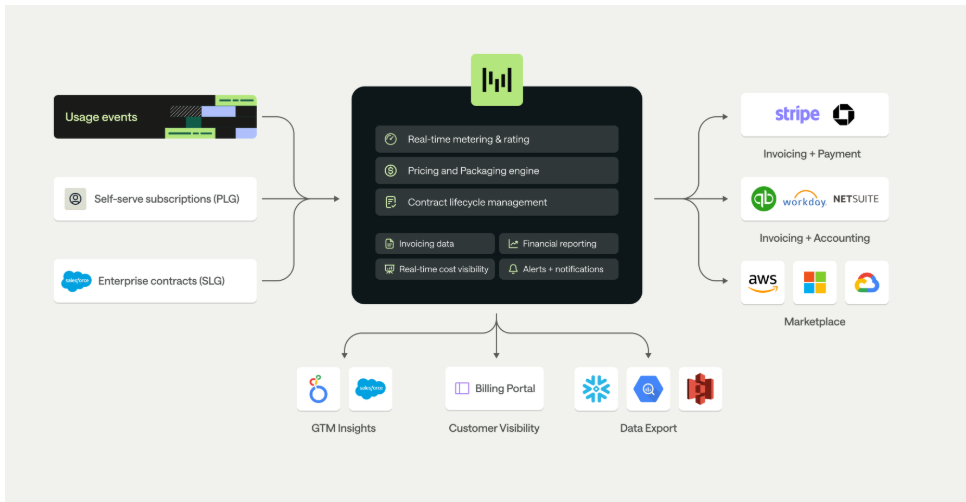
Group 1 - The core viewpoint of the article is that AI is fundamentally changing the pricing logic of software, moving from traditional seat-based pricing to usage-based or outcome-based pricing models [2][12][66] - AI enhances human efficiency, leading to a decrease in the number of software users, which challenges the traditional seat-based pricing model [12][15] - The implementation of usage-based pricing faces challenges such as the need for real-time billing systems, dynamic pricing models, and the retention of large-scale real data [2][18][21] Group 2 - CEOs need to focus on sales compensation structures and the division of sales responsibilities when transitioning to usage-based pricing [22][28] - The current trend among SaaS companies is to adopt a hybrid business model that combines both seat-based and usage-based pricing [15][16] - The pricing model for AI products can be analyzed based on attribution capability and autonomy, with stronger pricing power associated with high attribution and autonomy [42][46] Group 3 - The evolution of billing models has transitioned from on-premise software licenses to cloud-based seat subscriptions, and now to AI-driven value-based pricing [11][12] - Companies must continuously adapt and remain agile in their pricing strategies to capture value effectively [58][66] - The strategic significance of usage-based pricing is that it directly ties revenue to the value created for customers, allowing for a more flexible and responsive business model [22][66] Group 4 - The challenges of implementing usage-based pricing include the need for real-time monitoring of usage and the complexity of dynamic pricing models [18][21] - Companies must ensure that their financial teams evolve into real-time data hubs to support the new pricing models [33][66] - The shift to usage-based pricing requires a fundamental transformation in business operations, including sales, customer support, and product development [25][67] Group 5 - The most common pricing model for AI products is currently a hybrid model, reflecting a transition from traditional seat-based pricing to usage-based pricing [47][66] - The future may see an increase in outcome-based pricing models, with predictions that the proportion of companies adopting such models could rise from 5% to 25% in the next three years [48][66] - Companies need to focus on enhancing product autonomy and attribution capabilities to unlock greater commercial value [48][66]
Fastly: Improving Investment Setup
Seeking Alpha· 2025-08-12 10:27
Core Insights - Fastly (NYSE: FSLY) reported better-than-expected earnings for Q2'25, highlighting significant revenue growth and improvements in free cash flow [1] - The company achieved double-digit top-line growth and marked its second consecutive quarter of positive free cash flow [1] Financial Performance - Fastly's revenue growth was a key highlight, indicating strong demand for its cloud computing services [1] - The positive free cash flow reflects improved operational efficiency and financial health [1]


AI 产品定价指南:按量定价的卡点到底是什么?
Founder Park· 2025-08-11 15:10
Core Viewpoint - AI is fundamentally changing the pricing logic of software, shifting from traditional seat-based pricing to usage-based or outcome-based pricing models [2][11][20]. Group 1: AI Pricing Transformation - The traditional seat pricing model is becoming less viable as AI increases efficiency, leading to fewer users and a need for new pricing strategies [11][12]. - Implementing usage-based pricing faces challenges such as the need for real-time billing systems, dynamic pricing models, and maintaining large volumes of accurate data [3][15]. - Pricing models for AI products can be analyzed based on attribution capability and autonomy, with stronger attribution and autonomy leading to greater pricing power [32][36]. Group 2: CEO Considerations for Pricing Transition - CEOs must focus on sales compensation structures and the division of sales responsibilities when transitioning to usage-based pricing [3][22]. - A hybrid business model, combining seat pricing and usage-based pricing, is expected to dominate in the coming years, especially for application-level products [3][13]. - The sales team's role must evolve to ensure that actual usage aligns with revenue recognition, avoiding the pitfalls of recording false revenue [22][23]. Group 3: Challenges in Implementing Usage-Based Pricing - Real-time monitoring is essential to manage the risk of unlimited spending in usage-based pricing models, as seen in cases like Segment [15][16]. - The dynamic nature of pricing models complicates the creation of a universal billing engine, as contracts often vary significantly [15][16]. - Maintaining a reliable data chain is crucial for accurate historical data storage, which is necessary for future pricing adjustments [15][16]. Group 4: Strategic Importance of Usage-Based Pricing - Usage-based pricing directly ties revenue to the value created for customers, allowing for a more flexible and responsive business model [17][20]. - Sales commissions in usage-based models must be adjusted to align with actual product usage, preventing cash flow mismatches [18][22]. - The integration of value creation across departments is essential for the success of usage-based pricing, requiring a shift in company culture and operations [19][21]. Group 5: Future of Pricing Models - The trend is moving towards a mixed pricing strategy, with a significant portion of companies expected to adopt outcome-based pricing in the next few years [37][49]. - Companies must enhance their products' autonomy and attribution capabilities to unlock greater commercial value [37]. - The evolution of pricing models reflects a broader shift in the industry, where agility and adaptability are key to maintaining competitive advantage [43][49].
Mitek Systems (MITK) Tops Q3 Earnings and Revenue Estimates
ZACKS· 2025-08-07 23:51
Core Insights - Mitek Systems reported quarterly earnings of $0.22 per share, exceeding the Zacks Consensus Estimate of $0.18 per share, but down from $0.25 per share a year ago, resulting in an earnings surprise of +22.22% [1] - The company achieved revenues of $45.73 million for the quarter ended June 2025, surpassing the Zacks Consensus Estimate by 3.70% and showing an increase from $44.98 million year-over-year [2] - Mitek Systems has consistently surpassed consensus EPS and revenue estimates over the last four quarters [2] Earnings Outlook - The sustainability of Mitek Systems' stock price movement will depend on management's commentary during the earnings call and future earnings expectations [3][4] - The current consensus EPS estimate for the upcoming quarter is $0.16 on revenues of $42.75 million, and for the current fiscal year, it is $0.84 on revenues of $176.04 million [7] Industry Context - The Computer - Optical Imaging industry, to which Mitek Systems belongs, is currently ranked in the top 41% of over 250 Zacks industries, indicating a favorable outlook compared to the bottom 50% [8] - Empirical research suggests a strong correlation between near-term stock movements and trends in earnings estimate revisions, which can impact Mitek Systems' performance [5]