华为

Search documents
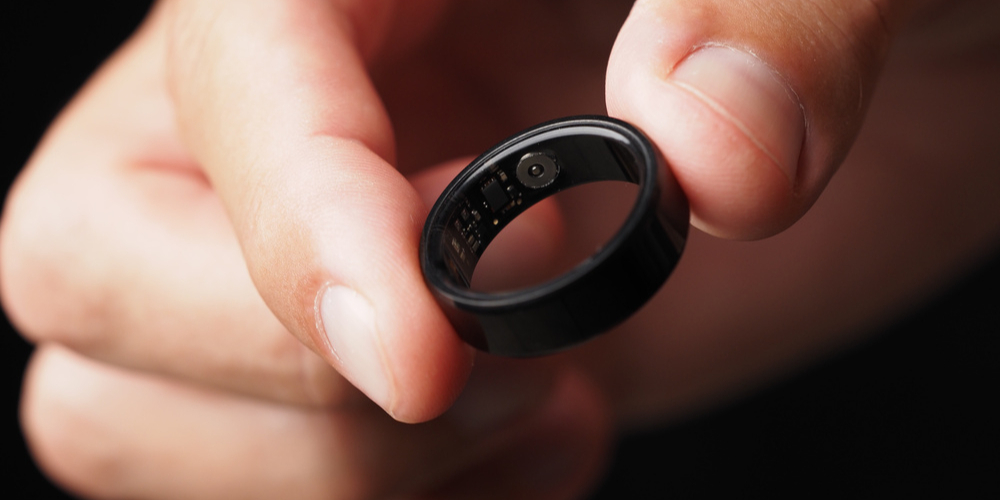
单枚毛利低至5毛钱 智能戒指未火先“卷”
经济观察报· 2026-02-06 14:31
Core Viewpoint - The smart ring market is experiencing significant challenges, with low profit margins and intense competition among manufacturers, leading to a saturated and chaotic environment in the hardware sector [2][5][15]. Group 1: Market Dynamics - The processing profit for a smart ring has drastically decreased to between 0.5 to 1 yuan, compared to a much higher profit margin three years ago [2][4]. - The entry of brands like Oura and RingConn has changed the landscape, with many manufacturers pivoting to produce white-label smart rings due to the perceived market potential [3][5]. - The monthly shipment volume of smart rings in Huaqiangbei has reached nearly 800,000 units, indicating a high level of market activity despite low margins [5][6]. Group 2: Competitive Landscape - Many manufacturers are entering the smart ring market, attracted by low technical barriers and the ability to produce using existing supply chains [6][10]. - The market is characterized by a high degree of product homogeneity, with many smart rings offering similar features such as blood oxygen and heart rate monitoring, leading to price competition [6][9]. - Companies like Gyges Labs are attempting to differentiate themselves by focusing on innovative applications, such as AI recording capabilities, rather than competing in the saturated health monitoring segment [9][10]. Group 3: Future Outlook - Major tech companies, including Ant Group and various smartphone manufacturers, are exploring the smart ring market, which could lead to increased competition and innovation [14][15]. - The entry of large companies is expected to shift the focus from mere hardware competition to ecosystem and scenario-based competition [14][15]. - The market is anticipated to see significant developments in 2024 as more major players enter the space, although current offerings from smartphone manufacturers have not yet achieved substantial sales [15].


国家数据局局长刘烈宏主持召开系列专家企业代表座谈会听取对“十五五”时期数字中国规划和建设的意见建议
Mei Ri Jing Ji Xin Wen· 2026-02-06 14:08
Group 1 - The National Bureau of Statistics held four symposiums to gather opinions from industry experts and company representatives on advancing the construction of Digital China [1] - Experts and representatives from major companies such as Huawei, Tencent, Alibaba, and Baidu participated, discussing the challenges and trends in the industry during the 14th Five-Year Plan period [1] - There was a consensus among participants that the planning is systematic and leading, effectively addressing social concerns and enhancing development confidence [1]

宝马2026年中国战略:三大品牌推约20款新车,另有马年特别版
Jing Ji Guan Cha Wang· 2026-02-06 13:52
Core Insights - BMW Group has announced its strategic plan for the Chinese market in 2026, emphasizing a significant product launch year with approximately 20 new models across its BMW, MINI, and BMW Motorrad brands to cater to consumer demands for driving pleasure and personalization [2] Group 1: Product Launches and Innovations - The new generation BMW iX3 long-wheelbase version will debut at the Beijing Auto Show this year and is set to launch in the second half of the year, designed specifically for the Chinese market with local consumer needs integrated [2] - The new generation BMW iX3 will feature advanced technologies including BMW's next-generation electric drive technology, "Heart of Joy" driving control system, and panoramic iDrive, along with deep integration of HUAWEI HiCar and a smart driving system developed in collaboration with Momenta [2][4] - In addition to the iX3, BMW plans to upgrade several mid-size to large models in 2026, including special editions for the Year of the Horse for models like the BMW 3 Series, X3, 5 Series, and X5 [3] Group 2: Market Performance and Localization - In 2025, BMW delivered approximately 2.464 million vehicles globally, with China remaining its largest single market, delivering over 625,000 BMW and MINI vehicles, supported by strong sales of core models [4] - BMW has established the largest R&D system outside Germany in China, with significant investments in innovation bases and software companies, and has deployed its AI platform "GAIA" at scale in the country [4] - The company has invested over 116 billion yuan in its Shenyang production base, which has begun trial production of the new generation BMW iX3, and plans to launch a sixth-generation battery project this year [4] Group 3: Leadership Changes - Christian Ach, the current head of the German market, will become the President and CEO of BMW Group Greater China starting April 1, 2026, marking a strategic move to deepen BMW's commitment to the Chinese market [5]

中科软:公司2025年海外业务拓展取得新进展
Zheng Quan Ri Bao Wang· 2026-02-06 13:42
Core Viewpoint - The company is actively expanding its overseas market presence and has established partnerships with firms like Huawei to create an ecosystem for international collaboration [1] Group 1: Overseas Market Expansion - The company aims to achieve significant progress in its overseas business by 2025, focusing on increasing the number of signed contracts and orders [1] - Target regions for expansion include Africa, the Middle East, and Southeast Asia, indicating a strategic approach to diversifying its market presence [1] - The company anticipates forming long-term, sustainable partnerships in these regions, which will help gradually scale its operations [1]

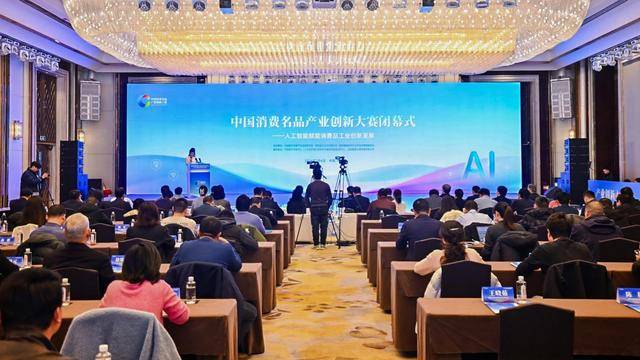
首届中国消费名品产业创新大赛西安闭幕
Sou Hu Cai Jing· 2026-02-06 13:17
Core Insights - The first China Consumer Brand Industry Innovation Competition concluded successfully in Xi'an, focusing on the integration of artificial intelligence (AI) in the consumer goods industry [1][3]. Group 1: Event Overview - The event was attended by over 200 representatives from various industrial and governmental sectors, including officials from the Ministry of Industry and Information Technology and local industrial departments [3]. - The competition was co-hosted by the China Electronic Information Industry Development Research Institute, the Shaanxi Provincial Department of Industry and Information Technology, and the Xi'an High-tech Industrial Development Zone Management Committee [3]. Group 2: Themes and Objectives - The competition centered on three main themes: product innovation, technological breakthroughs, and new consumer scenarios, aiming to identify innovative products and solutions that leverage AI to address industry pain points and enhance manufacturing efficiency [3][5]. - The event aims to accelerate the application and value release of cutting-edge AI concepts in the consumer goods sector [3]. Group 3: Future Directions - The Ministry of Industry and Information Technology plans to implement a "AI + Three Products" initiative, creating a comprehensive application roadmap for AI in various industries [5]. - Shaanxi Province aims to use the competition as a key opportunity to strengthen resource connections and accelerate the digital transformation of industries [8]. Group 4: Innovation and Collaboration - The establishment of the Shaanxi Province AI Empowerment Consumer Goods Industry Innovation Research Center was announced, focusing on key local sectors such as selenium-rich products, dairy, liquor, pharmaceuticals, and textiles [12]. - The next competition will continue to emphasize AI's role in consumer goods innovation, enhancing the mechanism for results transformation and promoting deep integration of industry, academia, and research [8][10]. Group 5: Showcase of Innovations - The competition featured presentations from 33 finalist teams, showcasing deep explorations and practices of AI technology in various fields, including smart home appliances and modern food [13].
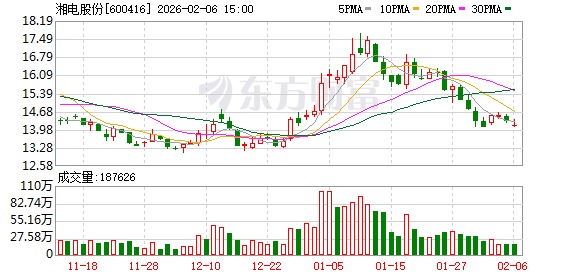
湘电股份:暂时没有与华为采矿系统有合作
Zheng Quan Ri Bao· 2026-02-06 13:13
Group 1 - The company, Xiangdian Co., stated that it currently has no cooperation with Huawei on mining systems [2]

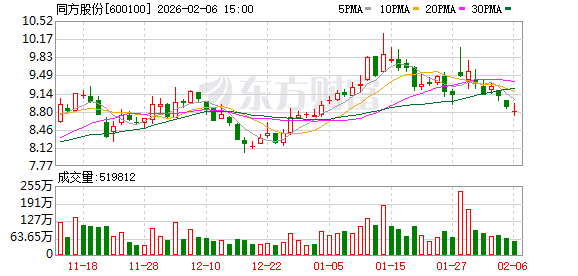
同方股份:目前并非华为昇腾的供应商
Zheng Quan Ri Bao· 2026-02-06 13:11
Group 1 - The company, Tongfang Co., stated that it is not a supplier for Huawei Ascend and does not provide related product supplies [2]

单枚毛利低至5毛钱 智能戒指未火先“卷”
Jing Ji Guan Cha Wang· 2026-02-06 12:21
Core Insights - The profit margins for smart ring manufacturing have drastically decreased, with current profits ranging from 0.5 to 1 yuan per unit, compared to much higher margins three years ago [2][4] - The rise of brands like Oura and RingConn has intensified competition in the smart ring market, leading to a saturation of the supply chain and a significant drop in profitability for manufacturers [3][4] - The market for smart rings is characterized by low barriers to entry, allowing many manufacturers to quickly replicate successful products, resulting in a "bloodbath" of competition [6][10] Industry Trends - The monthly shipment volume of smart rings in Shenzhen has reached approximately 800,000 units, with one factory accounting for about 1/9 of this total [4] - Many manufacturers are shifting focus to white-label smart rings, which offer lower profit margins but quicker returns [4][5] - The emergence of numerous similar products with identical functionalities has led to a significant reduction in average selling prices, with some products dropping below $10 [8][10] Competitive Landscape - Companies like Gyges Labs are attempting to differentiate themselves by focusing on innovative features, such as AI recording capabilities, rather than competing in the saturated health monitoring segment [9][10] - Major tech companies, including OPPO and ByteDance, are entering the smart ring market, although their current offerings have not yet achieved significant market traction [11][12] - The anticipated entry of larger players like Apple is expected to reshape the market dynamics, with many manufacturers currently adopting a wait-and-see approach [12][13] Market Opportunities - The smart ring market is projected to grow, with increasing interest from both consumers and manufacturers, particularly in health monitoring and payment functionalities [12] - The potential for smart rings to serve as entry points for broader ecosystems is being explored, particularly by companies like Ant Group [12] - The market is expected to see a shift towards more defined product offerings that cater to specific user needs, rather than generic products [12]
利好来了!刚刚,工信部重磅发布!
券商中国· 2026-02-06 11:49
Core Viewpoint - The Ministry of Industry and Information Technology (MIIT) has announced the construction of a national computing power interconnection node system, which is expected to enhance the efficiency and service level of public computing resources and promote high-quality development in the computing power industry [2][3]. Group 1: National Computing Power Interconnection Node System - The MIIT's notification outlines a "1+M+N" system for national computing power interconnection nodes, aiming to standardize and facilitate the efficient flow of computing resources across different regions and sectors [2][3]. - The construction goals include establishing a supply-demand matching system for computing power in regions and key industries, enhancing overall computing power levels [2][3]. - Regional nodes will provide a unified service platform for interconnection, including services such as resource aggregation, selection, and monitoring [2][3]. Group 2: Industry Trends and Demand - The domestic computing power demand is expected to accelerate, driven by rapid iterations of domestic AI models and the evolving interaction methods that are shaping the demand for inference-side computing power [4][5]. - Major AI models from companies like Alibaba and Baidu are being released, which will further drive the commercialization of these models and increase the demand for computing power [5][6]. - The infrastructure for AI computing power is undergoing systematic upgrades to support the explosive demand for training and inference, transitioning from vertical scaling to distributed cluster expansion and cross-domain collaboration [6][7]. Group 3: Hardware Innovations - Key hardware components such as optical modules and switches are innovating around high speed, low power consumption, and low cost, with a focus on co-packaged optics (CPO) and linear drive pluggable optics (LPO) [7]. - Domestic optical module manufacturers are gaining a leading position in the global market, which positions them to benefit significantly from the expansion of AI computing infrastructure [7].


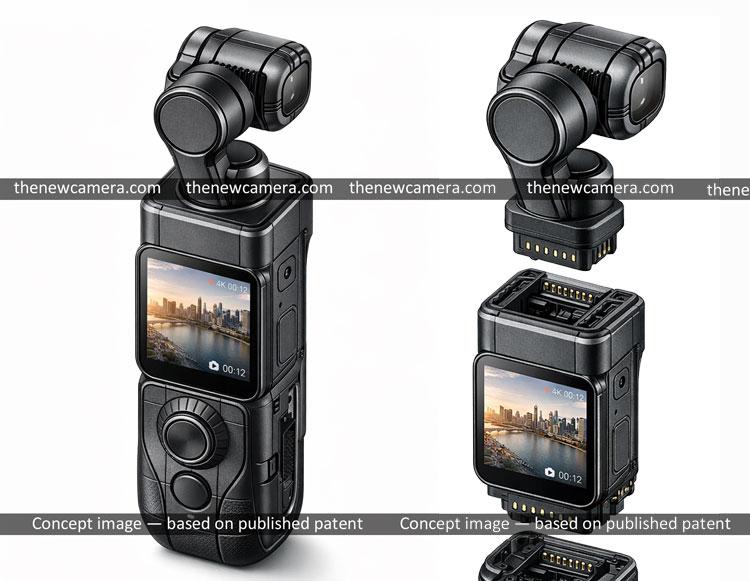
vivo、影石围猎大疆,Pocket 还能独占多久?
3 6 Ke· 2026-02-06 11:49
Core Viewpoint - The entry of smartphone manufacturers like vivo into the handheld gimbal camera market signifies a convergence of mobile and camera technology, driven by advancements in supply chains and consumer demand for specialized imaging devices. Group 1: Market Entry and Competition - Vivo has confirmed plans to launch a Vlog camera by the end of 2025, targeting DJI's Pocket series, with an expected release in 2026 [1] - Other companies, such as影石, are also set to release handheld gimbal cameras in the first half of 2026, indicating a growing trend among smartphone manufacturers to enter this market [1][33] - The competition is not limited to vivo; Huawei, Xiaomi, OPPO, and Honor are also exploring similar product developments, highlighting a collective shift in the industry [22][24] Group 2: Technological Advancements - Vivo's confidence in entering the camera market stems from its established supply chain and experience with imaging technology, particularly with the use of Sony's one-inch CMOS sensors [4][6] - The integration of advanced imaging chips, such as vivo's self-developed V3+ chip, allows for high-quality video processing capabilities, positioning the company well in the handheld camera space [6][10] - The design and engineering experience gained from previous smartphone models contribute to vivo's ability to create a competitive handheld gimbal camera [8][10] Group 3: Consumer Needs and Market Potential - Handheld gimbal cameras address common consumer frustrations with smartphones, such as battery life and storage limitations, by providing a dedicated device for video recording [15][17] - The market for handheld gimbal cameras has shown significant potential, with DJI's Osmo Pocket 3 achieving over 10 million units sold in just two years, indicating strong consumer interest [29][30] - The high profit margins and user engagement associated with these devices make them an attractive opportunity for smartphone manufacturers looking for new growth avenues [28][30] Group 4: Innovation and Future Outlook - The handheld gimbal camera format represents an innovative solution to the limitations of both smartphones and traditional cameras, offering portability and ease of use [32] - The potential for seamless integration with smartphone ecosystems, such as direct content transfer and collaborative functionality, presents a strategic advantage for smartphone manufacturers [18][30] - As the market evolves, the competition among smartphone brands to establish a foothold in the handheld camera segment is expected to intensify, leading to rapid advancements and innovations [30][35]