华为昇腾

Search documents
人民日报重磅发声|以算力集群破局,掌握AI主动权
是说芯语· 2026-03-12 03:43
Core Viewpoint - The article emphasizes the significant achievements and future development paths of China's artificial intelligence (AI) industry, highlighting the importance of self-control and high-quality development in the sector [1][2]. Group 1: AI Technology Development - China has made remarkable progress in AI technology and applications, achieving key advancements in core areas [2]. - The country is leading in the open-source model for algorithms, providing substantial foundational support for AI technology innovation and industry implementation [6]. - Domestic chip products, represented by Huawei's Ascend and Cambricon's products, are gradually building a localized ecosystem, alleviating the "bottleneck" pressure in the high-end chip sector [6]. Group 2: Computing Power Infrastructure - By 2025, China's intelligent computing power is expected to exceed 1590 exaFLOPS, with ongoing infrastructure construction yielding significant results [6]. - The establishment of a national integrated computing power network is accelerating, with the "East Data West Computing" strategy being implemented to optimize the allocation of computing and power resources nationwide [7]. - The Zhengzhou core node of the national supercomputing internet, supported by Sugon, is a key practice of this strategy, providing over 30,000 units of domestic AI computing power [7]. Group 3: Technological Breakthroughs - Breakthroughs in high-speed interconnection technology have solidified the core competitiveness of domestic computing power clusters, with Sugon's scaleFabric network achieving 400Gb/s bandwidth and under 1 microsecond communication latency [8]. - Despite significant achievements, challenges remain, particularly with leading companies like NVIDIA dominating the upstream of the industry ecosystem, especially in advanced process chips and development tools [8]. Group 4: Collaborative Innovation - The practice of companies like Sugon reflects the need for a collaborative approach, forming cross-industry and cross-disciplinary innovation alliances to tackle core technologies such as high-end chips and foundational software [9]. - Sugon's AI computing open architecture, in collaboration with over 20 industry chain enterprises, supports multi-brand domestic acceleration card mixed deployment and has optimized over 400 mainstream large models [9]. - The future of China's AI development will focus on self-reliance, application orientation, and the integration of core technology breakthroughs with ecological collaboration [9].



未知机构:华为昇腾中国AI应用的基石放量元年炸裂消息一个接一个-20260228
未知机构· 2026-02-28 02:45
Summary of Key Points from the Conference Call Industry Overview - The discussion centers around the AI application industry in China, specifically focusing on Huawei's Ascend (昇腾) chips as a foundational element for AI development in the country [1][2][3]. Core Insights and Arguments - **Launch of DeepSeek V4**: The new version of DeepSeek is set to launch within a week, indicating rapid advancements in AI technology [1][2]. - **Access Priority to Huawei**: Huawei's Ascend chips have been prioritized for access over NVIDIA, marking a significant shift in the competitive landscape of AI hardware [2][3]. - **Order Confirmation**: There is a confirmation of a substantial order worth 40 billion yuan for Ascend chips, which has not been denied by ByteDance, suggesting strong market confidence in Huawei's products [2][3]. - **Change in GPU Usage Ratio**: The ratio of NVIDIA cards (A100/H100) to domestic cards (including Huawei Ascend) is set to change from 80:20 in August 2025 to 70:30 by July 2026, reflecting a significant increase in the adoption of domestic chips [2][3]. - **Potential for Growth in 2026**: The year 2026 is anticipated to be a pivotal year for the Ascend chain, potentially marking a major expansion phase for Huawei's AI applications [4]. Other Important Insights - The shift in GPU usage ratios indicates a broader trend towards domestic chip adoption, which could have implications for the entire semiconductor industry in China [2][3]. - The confirmation of large orders and the prioritization of Huawei's technology may signal a growing confidence in domestic capabilities amidst global supply chain challenges [2][3].
华为昇腾板块活跃 首都在线涨幅居前
Xin Lang Cai Jing· 2026-02-27 05:26
Core Viewpoint - Huawei's Ascend segment is experiencing significant market activity, with several stocks showing notable gains, indicating a positive trend in the sector [1] Group 1 - The stocks of TOWAY Information have reached the daily limit increase, reflecting strong investor interest [1] - Capital Online, Runhe Software, Digital China, and Softcom Power are among the stocks with the highest gains, suggesting a broader positive sentiment in the market [1]


在深圳,能打工的才是好AI丨聚焦高质量发展
Sou Hu Cai Jing· 2026-02-23 02:45
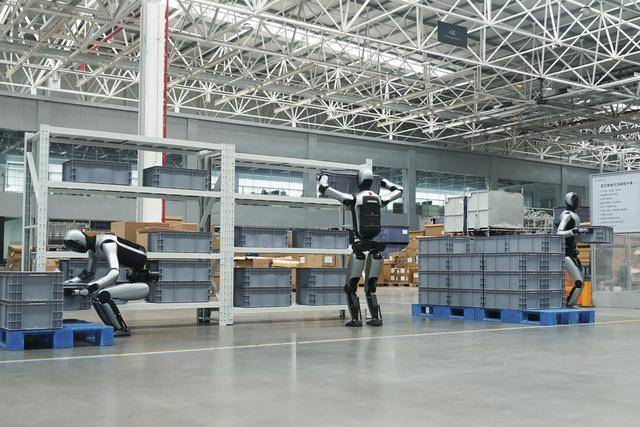
Core Insights - Shenzhen is positioning itself as a global leader in artificial intelligence (AI) by integrating AI into various sectors, aiming for a core industry revenue of 220 billion yuan by 2025 with over 2,600 enterprises [1][13] - The city has established a robust AI innovation ecosystem characterized by high-density innovation entities, with over 93% of R&D investment coming from enterprises [3][13] - Shenzhen's AI applications are being tested in real-world scenarios, with nearly 300 "city + AI" application scenarios addressing urban governance and industrial upgrades [6][13] Group 1: AI Industry Development - Shenzhen's AI industry has maintained double-digit growth, with significant contributions from enterprises that focus on specialized fields such as machine vision and AI chips [3] - The local humanoid robot industry has a 70% local supply rate, enhancing the resilience of the industrial chain [3] - The establishment of the Shenzhen Leading Edge Intelligent Open Research Institute aims to explore cutting-edge technologies and create a core hub for edge intelligence [5] Group 2: Policy and Infrastructure - The "Artificial Intelligence + Advanced Manufacturing Action Plan (2026-2027)" indicates a shift from isolated breakthroughs to a systematic reconstruction of AI's role in the manufacturing sector [5] - Major facilities like the National Supercomputing Center in Shenzhen are being developed to provide accessible intelligent computing power for SMEs [10] - The city is fostering a collaborative ecosystem through initiatives like the "6S" model for AI hardware, which reduces development cycles from months to weeks [11] Group 3: Real-World Applications - Shenzhen is utilizing the entire city as a testing ground for AI, with a focus on practical applications that meet real demands [6] - The introduction of 82 new low-altitude logistics routes by 2025 will enhance the efficiency of drone delivery services [6] - The establishment of the global AI application scenario center in Huaqiangbei aims to create a comprehensive model for AI application and industry integration [7]


2025中国算力产业实录:狂热、阵痛与价值回归丨年度盘点
雷峰网· 2026-02-19 03:32
Group 1 - The core viewpoint of the article emphasizes the transformation of the AI computing power industry, driven by the emergence of DeepSeek, which optimizes computing efficiency and breaks down barriers for deploying large models, marking a significant moment for China's AI industry [2][6] - The article highlights the rapid rise and subsequent decline of integrated machines within four months, illustrating the struggles faced by intelligent computing centers amid idle computing power and the need to sell cards for survival [3][10] - A year-long investigation into the industry reveals the underlying factors that will support the scaling and ecological development of China's AI computing power, emphasizing the importance of endurance, ecology, and trust in this ongoing battle [4][25] Group 2 - DeepSeek's explosive popularity catalyzed a transformation in the AI computing power industry, prompting domestic chip manufacturers to accelerate adaptation processes, benefiting companies like Huawei and Cambricon [7][8] - The article discusses the structural contradictions in the AI computing market, where demand for computing power is surging while many intelligent computing centers face low utilization rates, leading to a paradox of computing shortages on one side and idle resources on the other [10][11] - The article notes that the AI computing power industry is entering a mature phase, with a shift from speculative profits to a focus on core business principles, as evidenced by various industry challenges such as contract breaches and fraudulent activities [12][13] Group 3 - The article outlines the emergence of domestic inference chips, driven by urgent demands for autonomy and rapid growth in inference needs, with several companies like Moore Threads and Nuxi going public [16][17] - It highlights the competitive landscape where domestic chips are attempting to challenge Nvidia's dominance, with the inference segment becoming a critical breakthrough point for domestic computing power [19][20] - The storage sector is experiencing a price surge due to increased demand, significantly impacting the AI server industry and creating survival challenges for smaller manufacturers [21][23] Group 4 - The article reflects on the key developments in 2025, from the initial excitement surrounding DeepSeek to the industry's entry into a more complex phase characterized by chaos and bubble clearing [25] - It notes the collective market entry of several domestic GPU companies, referred to as the "Four Little Dragons," which has expanded the competitive landscape for domestic computing power [25] - Looking ahead to 2026, the article emphasizes the need to focus on the real adaptation progress in AI chips and storage, tracking technological breakthroughs and capital market dynamics to witness the evolution of domestic computing power from mere usability to leadership [25]



智谱涨幅扩大逾26% 新一代旗舰模型GLM-5已与华为昇腾等多家主流国产芯片平台适配
Zhi Tong Cai Jing· 2026-02-12 03:15
Core Viewpoint - The stock of Zhiyun (02513) has seen a significant increase of over 26%, currently trading at 388 HKD with a transaction volume of 925 million HKD, following the release of its new flagship model GLM-5 [1] Group 1: Product Launch - Zhiyun officially launched its next-generation flagship model GLM-5 on February 11, achieving state-of-the-art (SOTA) performance in coding and agent capabilities, closely matching the user experience of Claude Opus 4.5 in real programming scenarios [1] - The GLM-5 model is now available on Zhiyun's development platforms, including BigModel.cn, Z.ai, and Zhiyun Qingyan (App/web version), for user experience [1] - Due to computational power limitations, GLM-5 is currently only available in the Max user package, with plans for gradual expansion of access [1] Group 2: Technical Adaptation - The GLM-5 has completed deep reasoning adaptation and operator-level optimization with major domestic chip platforms such as Huawei Ascend, Moore Threads, Cambricon, Kunlun Core, Muxi, Suiruan, and Haiguang, enabling stable operation with high throughput and low latency on domestic computing clusters [1] - This adaptation signifies not just an engineering achievement but also relates to the autonomy and controllability of the AI computing supply chain, providing the conditions for large-scale delivery of open-source Agentic Engineering-level productivity tools [1]
港股异动 | 智谱(02513)涨幅扩大逾26% 新一代旗舰模型GLM-5已与华为昇腾等多家主流国产芯片平台适配
智通财经网· 2026-02-12 03:08
Core Viewpoint - The stock of Zhiyu (02513) has seen a significant increase, with a rise of over 26%, currently trading at 388 HKD and a transaction volume of 925 million HKD, following the release of its new flagship model GLM-5 [1] Group 1: Product Launch - Zhiyu officially launched its next-generation flagship model GLM-5 on February 11, achieving state-of-the-art (SOTA) performance in coding and agent capabilities, closely approaching the user experience of Claude Opus 4.5 in real programming scenarios [1] - The GLM-5 model is now available on Zhiyu's development platforms BigModel.cn, Z.ai, and Zhiyu Qingyan (App/web version) for user experience [1] - Currently, due to computational power limitations, GLM-5 is only included in the Max user package, with plans to gradually expand access [1] Group 2: Technical Adaptation - The newly released GLM-5 has completed deep reasoning adaptation and operator-level optimization with major domestic chip platforms such as Huawei Ascend, Moore Threads, Cambricon, Kunlun Core, Muxi, Suiruan, and Haiguang, enabling stable operation with high throughput and low latency on domestic computing clusters [1] - This adaptation signifies more than just engineering compatibility; it is crucial for the autonomy and controllability of the AI computing power supply chain, providing the conditions for large-scale delivery of open-source Agentic Engineering-level productivity tools [1]
同方股份:目前并非华为昇腾的供应商
Zheng Quan Ri Bao· 2026-02-06 13:11
Group 1 - The company, Tongfang Co., stated that it is not a supplier for Huawei Ascend and does not provide related product supplies [2]

同方股份(600100.SH):公司目前并非华为昇腾的供应商
Ge Long Hui· 2026-02-06 08:10
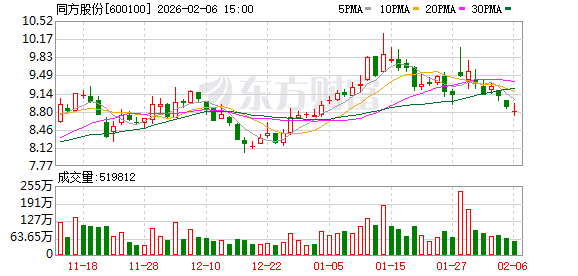
Core Viewpoint - The company Tongfang Co., Ltd. (600100.SH) is not a supplier for Huawei's Ascend products and does not provide related product supplies [1] Group 1 - The company confirmed its current status regarding Huawei's Ascend products on the investor interaction platform [1]
红包里的国产AI芯片,才是未来
3 6 Ke· 2026-02-04 00:07
Group 1 - The core point of the article highlights the significant escalation in AI promotion during the Spring Festival, with major companies like Tencent, Baidu, and Alibaba launching massive cash red envelope campaigns to engage users and showcase AI capabilities [1][2][10] - Tencent's Yuanshuo APP initiated a record-breaking 1 billion yuan red envelope campaign, while Baidu followed with a 500 million yuan initiative, and Alibaba's Qianwen APP announced a 3 billion yuan "Spring Festival Treat" plan [2][5][7] - The competition among these tech giants is not just about user acquisition but also about establishing a strong foothold in the AI landscape, with the outcomes of user retention post-festival being crucial for determining market leadership [10][12] Group 2 - The article discusses the underlying "chip war" that supports the AI applications, emphasizing that the high concurrency demands during these promotional events are met by domestic AI chips rather than Nvidia's GPUs [12][13] - The landscape of the Chinese AI chip market is undergoing a dramatic shift, with Nvidia's market share in high-end training chips dropping from 95% to 0% due to U.S. export restrictions, allowing domestic companies to gain ground [14][15][16] - Predictions indicate that by 2026, Huawei is expected to dominate the Chinese AI chip market with a 50% share, while other companies like AMD, Cambricon, and Haiguang will follow with significantly smaller shares [17][18] Group 3 - The rise of domestic AI chips is marked by several companies achieving substantial order volumes, with Huawei Ascend and Baidu Kunlun being among the largest suppliers [23][24] - Despite the rapid growth of domestic AI chips, there remains a significant performance gap compared to Nvidia, prompting a focus on optimizing chip usage and system architecture to enhance competitiveness [25][26][30] - The article concludes that while the promotional activities may end, the advancements in AI chip technology are just beginning, indicating a potential shift in the global AI semiconductor landscape [32][34]