
中航西飞

Search documents
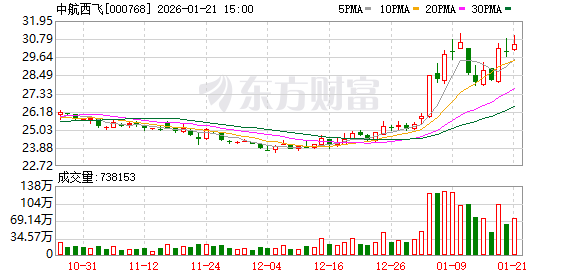
中航西飞:截至2026年1月20日股东人数为158394户
Zheng Quan Ri Bao· 2026-01-21 14:11
Group 1 - The core point of the article is that AVIC Xi'an Aircraft Industry Group has reported its shareholder count as of January 20, 2026, which stands at 158,394 households [2]


中航西飞:突破AI视觉技术应用,实现飞机制造多环节智能化检测
2 1 Shi Ji Jing Ji Bao Dao· 2026-01-21 10:34
Core Viewpoint - The company, AVIC Xi'an Aircraft Industry Group, has successfully developed six types of AI vision systems aimed at enhancing the manufacturing and assembly processes of large and medium-sized military and civilian aircraft, addressing various quality and safety detection challenges [1] Group 1: AI Vision System Development - The company has overcome challenges related to multi-scale recognition and lightweight technology in AI vision models [1] - The developed AI vision systems are applied in multiple processes including manufacturing, assembly, measurement, non-destructive testing, on-machine operations, and safety production [1] Group 2: Quality and Safety Detection Solutions - The AI vision systems effectively address issues such as defect detection in manufacturing processes, detection of missing fasteners, intelligent reading of measurement dials, non-destructive testing using fluorescence and magnetic powder, intelligent management of on-machine tools, and identification of safety violations [1]
中航西飞(000768) - 2026年1月21日投资者关系活动记录表
2026-01-21 10:16
Group 1: Supply Chain Management - The company actively fulfills its role as a "chain master," promoting the development of the entire industrial chain and forming a "community of shared destiny" with upstream and downstream partners [1] - It has established a comprehensive industrial chain layout covering R&D, manufacturing, and maintenance services, enhancing collaboration with partners [1] - The company explores innovative supply chain management systems to ensure safety, stability, and efficiency, thereby improving supply chain resilience [2] Group 2: Civil Aviation Business - The civil aviation industry is expected to grow rapidly during the 14th Five-Year Plan, surpassing aerospace equipment revenue and becoming a key growth driver for the company [3] - The C919 project is progressing steadily, with scale effects expected to gradually emerge, supporting revenue and profit growth [3] - The company aims to optimize project gross margins and enhance cost control to achieve higher quality development in the civil aviation sector [3] Group 3: Military Trade Business - The company is advancing its military trade business by participating in international airshows and defense exhibitions, increasing product visibility [4] - It actively engages in deep communication with international clients to facilitate orderly development of military trade [4] Group 4: Artificial Intelligence Applications - The company has developed six types of visual systems for aircraft manufacturing and assembly, addressing quality and safety detection challenges [5][6] Group 5: Innovation and Organizational Vitality - The company emphasizes innovation incentives, establishing a new R&D system and aligning resource allocation with key talent contributions [7] - It implements internal performance management to enhance cost control and operational capabilities [7] - Various innovation funds and awards are set up to stimulate employee creativity and improve independent technological innovation [7]
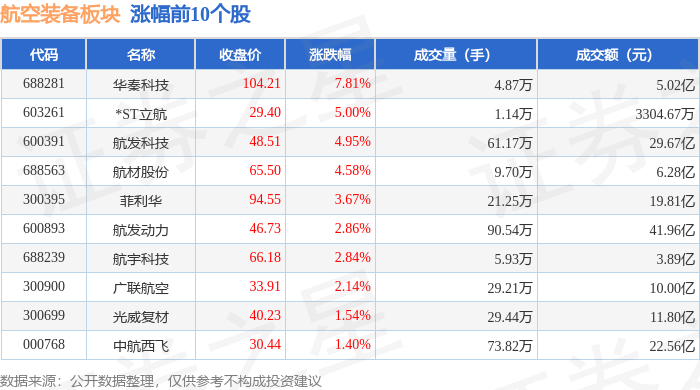
航空装备板块1月21日涨0.46%,华秦科技领涨,主力资金净流出3.68亿元
Zheng Xing Xing Ye Ri Bao· 2026-01-21 09:08
Group 1 - The aviation equipment sector saw a rise of 0.46% on January 21, with Huayin Technology leading the gains [1] - The Shanghai Composite Index closed at 4116.94, up 0.08%, while the Shenzhen Component Index closed at 14255.12, up 0.7% [1] - Key stocks in the aviation equipment sector included Huayin Technology, which rose by 7.81% to a closing price of 104.21, with a trading volume of 48,700 lots and a transaction value of 502 million [1] Group 2 - The aviation equipment sector experienced a net outflow of 368 million in main funds, while retail investors saw a net inflow of 309 million [2] - The stock with the highest net inflow from main funds was AVIC Power, with 263 million, while Guangwei Composite had a net inflow of 94.37 million [3] - The overall trend showed that retail investors were more active, contributing to a net inflow despite the main funds' outflow [2][3]


中航西飞20260120
2026-01-21 02:57
Summary of the Conference Call for AVIC Xi'an Aircraft Industry Group Co., Ltd. (中航西飞) Industry and Company Overview - AVIC Xi'an is a key supplier of critical components for the C919 aircraft, contributing approximately 1/6 of the total aircraft value, benefiting from the ramp-up in C919 production, leading to steady growth in civil aviation revenue [2][5][6] - The company is actively involved in international subcontracting, collaborating with Boeing and Airbus, maintaining a technological edge [2][6] - In the military aircraft sector, AVIC Xi'an produces significant products such as the Y-20, Y-8/9, and the KJ series, with plans to introduce a stealth bomber, indicating a broad market potential for military trade [2][4] Core Insights and Arguments - AVIC Xi'an plays a crucial role in the domestic large aircraft project, supplying key components like wings and fuselage for the C919, which account for 50% of the structural workload and approximately 1/3 of the aircraft's total value [3] - The Y-20 has a notable supply-side scarcity, with demand from both large countries and smaller nations, enhancing its military trade prospects [4] - The management team underwent significant changes in July 2025, with a younger leadership focusing on investor relations and increasing external communication, leading to improved operational efficiency and profitability [7] Future Development and Potential - AVIC Xi'an plans to continue developing existing product lines, including new medium transport aircraft and stealth bombers, while also expanding into the drone sector with the HH series cargo drones, having signed intent procurement contracts with courier companies [8] - The company is expected to see steady revenue growth in the civil aviation sector as C919 production capacity increases, alongside ongoing international collaborations to enhance its technological capabilities and market competitiveness [2][6][8] Additional Important Points - The company’s stock incentive programs have significantly improved cost efficiency, with performance growth outpacing revenue growth [7] - AVIC Xi'an's involvement in international subcontracting with major global aerospace manufacturers is crucial for maintaining its industry-leading position [2][8]
东方证券:商业航天近期调整不改中长期产业趋势 关注大飞机国际化认证进展
智通财经网· 2026-01-20 06:04
Group 1 - The European Union Aviation Safety Agency (EASA) has begun flight evaluation tests for the C919 in Shanghai, which is expected to accelerate the global expansion of China's commercial aviation sector [2][3] - EASA's certification is recognized globally, and the C919 has already transported millions of passengers domestically, indicating its initial market validation [2] - The China Aerospace Science and Technology Corporation (CASC) held a meeting emphasizing the advancement of manned lunar missions and deep space exploration, alongside breakthroughs in reusable rocket technology [2][3] Group 2 - The competition for near-Earth orbit resources is intensifying, with low Earth orbit satellite constellations becoming a new arena for major powers, prompting China to accelerate the development of its low Earth orbit satellite systems [3] - The ongoing support from policies, improvements in rocket capacity, and advancements in reusable technology are expected to drive rapid growth in the satellite industry, benefiting the entire supply chain from manufacturing to operation [3] - The 14th Five-Year Plan has commenced, with a focus on military and civilian dual-use technologies, including unmanned systems and deep-sea technology, highlighting the growth potential in the military sector [4]

看好国产大飞机及军贸主线
2026-01-20 03:54
Summary of the Conference Call Industry Overview - The focus is on the military industry, particularly in the context of China's military modernization and export potential, with two key areas of interest: domestic large aircraft and high-end military trade [2][3][4] Key Points and Arguments Domestic Large Aircraft - The domestic large aircraft, specifically the C919, is highlighted as a significant player in the market, aiming to compete with Airbus and Boeing [5][6] - The C919 has completed the third phase of certification for the European market, with expectations to finalize all certifications by mid-2027 [6][7] - The aircraft has already achieved over 4 million safe flights domestically, indicating operational success [7][8] - Future production targets for the C919 are projected to reach 200 to 400 units by 2030 to 2035, supported by a robust supply chain [8][9] - The development of derivative models, such as high-altitude and extended-range versions, is underway to meet diverse customer needs [9][10] Military Trade - The export of advanced military aircraft, such as the FC-1 (also known as the JF-17 or Thunder), is seen as a catalyst for expanding China's military trade [13][19] - The demand for the FC-1 from countries like Pakistan is expected to enhance China's military supply chain and promote further exports of advanced military equipment [13][19] - Upcoming defense exhibitions in Saudi Arabia and Singapore are anticipated to serve as platforms for showcasing China's military capabilities and fostering international military trade relationships [20][21] Investment Strategy - The investment strategy emphasizes a focus on companies that can create long-term value, particularly those involved in the second growth curve, which includes new business areas like commercial aerospace and military exports [4][5] - The military industry is characterized by a shift towards bottom-up stock selection, with a focus on individual companies that demonstrate potential for growth and profitability [4][5] Additional Important Content - The military industry is experiencing structural changes, with three main segments identified: military trade, military-to-civilian transitions, and domestic military equipment construction [3][4] - The military trade sector is expected to benefit from increased global military spending, particularly as geopolitical tensions rise [16][17] - The U.S. defense budget is projected to increase significantly, which may further stimulate global military trade dynamics [16][17] - The conference also discussed the importance of technological advancements in military equipment and the need for a comprehensive military industrial base to support these developments [17][18] Company-Specific Insights - Torch Electronics is highlighted for its growth potential in specialized electronic components and new materials, with a focus on military applications [23][24] - The company is recognized as a leading supplier of multilayer ceramic capacitors (MLCC) in the military sector, with plans for expansion into new materials for aerospace and missile applications [25][26] - Torch Electronics has implemented multiple employee stock incentive plans to align the interests of management and employees, which is expected to support long-term growth [26][27] This summary encapsulates the key insights from the conference call, focusing on the military industry, investment strategies, and specific company developments.




未知机构:欧洲航安局完成C919符合性试飞评价良好欧洲航空安全局EASA-20260120
未知机构· 2026-01-20 02:25
Summary of Key Points from the Conference Call Industry Overview - The conference call discusses the aviation industry, specifically focusing on the C919 aircraft developed by COMAC (Commercial Aircraft Corporation of China) and its recent evaluation by the European Union Aviation Safety Agency (EASA) [1] Core Insights and Arguments - EASA has completed the compliance flight evaluation of the C919 in Shanghai, awarding it a "good performance" rating, which is a significant milestone for the aircraft's international airworthiness certification [1] - This achievement greatly enhances the certainty of the C919 entering the global mainstream market, shifting market focus from long-term concepts to near-term realizations [1] - The market will now concentrate on the acceleration of the C919 delivery schedule and the domestic substitution process for high-value components such as engines and onboard systems [1] Additional Important Content - The successful evaluation by EASA is expected to act as a catalyst for the C919's market entry, indicating a shift in the industry's dynamics [1] - Companies to watch in relation to this development include AVIC Xi'an Aircraft Industrial Group (中航西飞) and Guizhou Aviation Industry Group (广联航空), which may benefit from the advancements in domestic manufacturing capabilities [1]
未知机构:板块点评原文转发国盛军工大飞机C919产业全面提速万-20260120
未知机构· 2026-01-20 02:25
Industry and Company Analysis Summary Industry Overview - The large aircraft industry, particularly the C919, is experiencing significant acceleration, marking a turning point in a trillion-yuan market. This is evidenced by a collective surge in stock prices within the large aircraft and aviation sectors, indicating a strong market response to recent developments in China's civil aviation and aerospace industries [1][2]. Key Developments 1. The European Union Aviation Safety Agency (EASA) has completed compliance flight tests for the C919, providing a core evaluation of "good performance and safety reliability," which signifies the entry of the domestically produced large aircraft into the global market [3]. 2. The successful completion of national energy bureau evaluations for several gas turbine innovation development demonstration projects, including the "Taihang 7," "Taihang 15," and "Taihang 110," indicates progress in China's gas turbine technology [3]. 3. The C919 has reportedly accumulated over 1,000 orders, translating to a market scale exceeding 650 billion yuan based on the Eastern Airlines procurement price of 653 million yuan. Including the maintenance and spare parts market, the total lifecycle market potential approaches one trillion yuan [3]. 4. The CJ-1000A domestic aircraft engine is expected to begin mass installation in 2027, which will alleviate supply chain bottlenecks and accelerate performance realization [3]. 5. Siemens Energy, a leading overseas gas turbine manufacturer, plans to increase its capacity from 17 GW in 2024 to over 30 GW by 2028-2030, reflecting robust global growth in the gas turbine industry [3]. Investment Recommendations 1. **Large Aircraft Sector**: Companies benefiting from the accelerated delivery of the C909 and C919, particularly those with high domestic production rates in structural components, include AVIC Xi'an Aircraft Industry Group, Hongdu Aviation Industry Group, Triangle Defense, Runbei Aerospace Technology, and Quanzhi Co., Ltd. [4]. 2. **Domestic Engine/Gas Turbine Sector**: Companies poised to benefit from the accelerated industrialization of domestic engines and gas turbines include AVIC Power, AVIC Control, AVIC Technology, Hangya Technology, Tunang Co., Ltd., Yingliu Technology, AVIC Aerospace, AVIC Materials, Parker New Materials, and Lian Ce Technology [4]. Risk Factors - Potential risks include the possibility of aircraft deliveries not meeting expectations and the slower-than-anticipated industrialization progress of domestic aviation engines and gas turbines [4].


商用大飞机及航空发动机行业深度
2026-02-25 04:13
Summary of Commercial Aircraft and Aviation Engine Industry Conference Call Industry Overview - The global commercial aircraft market is expected to exceed 48 trillion RMB over the next 20 years, with China accounting for approximately 20%, translating to about 500 billion RMB annually, significantly surpassing the military aircraft market size [1][5] - The Chinese civil aviation fleet is projected to grow to around 5,500 aircraft by 2029, with an average addition of about 400 aircraft per year, leading to a cumulative demand of over 2,000 aircraft from 2025 to 2030 [1][6] Key Insights on C919 Aircraft - The C919 has obtained its TC certificate and is gradually ramping up production, with expected deliveries of about 15 aircraft by the end of 2025 and 13 aircraft in 2024 [1][7] - Despite increasing production capacity, it still falls short of the domestic demand for 300-400 new aircraft annually, indicating a need for international market expansion [1][7] Market Dynamics and Competition - The global aviation manufacturing industry is highly monopolized, with Airbus generating over 50 billion USD in revenue and Boeing maintaining around 20 billion USD [1][8] - The market is dominated by a duopoly of Boeing and Airbus, which together hold over 90% of the market share, creating significant opportunities for domestic aircraft manufacturers to replace imports [1][8] Domestic Aviation Engine Development - The domestic commercial aviation engine sector is in its early development stage, with a projected global market demand exceeding 13 trillion RMB over the next 20 years, and the Chinese market expected to reach 2.9 trillion RMB, or about 1,450 billion RMB annually [3][12] - The demand for commercial engines in China is estimated to require around 900 engines annually by 2029, with a market size of approximately 1,000 billion RMB per year [3][12] Material Trends - The use of composite materials in civil aircraft and aviation engines is expected to increase significantly, with modern aircraft like the Boeing 787 and Airbus A350 utilizing over 50% composite materials [3][16] - The C919 aims to increase its composite material usage to over 50%, with a current usage of only 12% [3][17] Key Suppliers and Their Roles - Major suppliers in the domestic aviation supply chain include CFM International for engines and Honeywell, Safran, and Collins Aerospace for onboard equipment [1][10] - The China Aviation Industry Corporation (AVIC) is responsible for various components of the aircraft structure, with significant contributions from companies like COMAC and AVIC Xi'an Aircraft Industry [1][10] Future Prospects and Challenges - The domestic aviation industry faces challenges in achieving self-sufficiency in critical systems, as many components still rely on imports or joint ventures [1][9] - Companies like AVIC and others are making strides in domestic production capabilities, with a focus on increasing the localization of key components [1][15] Conclusion - The commercial aircraft and aviation engine industry in China is poised for significant growth, driven by increasing domestic demand and the potential for international expansion. However, challenges remain in achieving full domestic production capabilities and competing against established global players.