
扬杰科技

Search documents
扬杰科技:公司高度重视年度报告的信息披露工作
Zheng Quan Ri Bao· 2025-12-15 12:29
证券日报网讯 12月15日,扬杰科技在互动平台回答投资者提问时表示,公司高度重视年度报告的信息 披露工作,目前正在有序推进相关编制与准备工作,并将全力配合审计机构加快进程。年报的具体披露 时间需综合审计工作进展及公司内部程序最终确定,公司将严格按照深交所规定及时履行信息披露义 务,请关注后续公告。 (文章来源:证券日报) ...


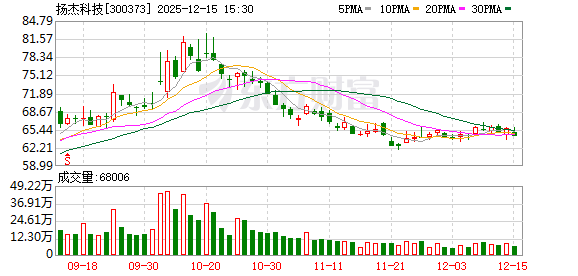
扬杰科技:第四季度,公司各产线均处于满负荷运转状态
Zheng Quan Ri Bao Wang· 2025-12-15 09:13
证券日报网讯12月15日,扬杰科技(300373)在互动平台回答投资者提问时表示,第四季度,公司各产 线均处于满负荷运转状态,生产经营有序高效。公司一直聚焦功率半导体领域,目前主要产能集中于5 吋、6吋、8吋等成熟特色工艺平台。未来,公司将继续围绕功率半导体核心赛道,结合客户需求与行业 发展,稳步推进技术升级与产能规划。 ...
扬杰科技:截至12月15日收市股东总户数为57000余户
Zheng Quan Ri Bao Wang· 2025-12-15 09:13
Group 1 - The core point of the article is that Yangjie Technology (300373) reported a total of over 57,000 shareholders as of the market close on December 15 [1]
三代半产业运作模式演进方向
Xin Lang Cai Jing· 2025-12-12 14:19
Core Viewpoint - The article discusses the diversified operational models of domestic listed companies in the third-generation semiconductor materials, silicon carbide (SiC) and gallium nitride (GaN), as they are widely applied in electric vehicles, data centers, and consumer electronics [1][9]. Group 1: Main Operational Models - The IDM (Integrated Device Manufacturer) model dominates the core competition, covering the entire industry chain from chip design to wafer manufacturing and packaging testing, becoming the preferred model for leading companies [2][10]. - Eight companies primarily operate under the IDM model, with Huazhong Microelectronics and Wentai Technology being notable examples, focusing on applications in electric vehicles and data centers [2][10]. - Huazhong Microelectronics has achieved mass production of SiC JBS G3 and SiC MOS G2 products, while Wentai Technology has established a global capacity layout with its 1200V automotive-grade SiC MOSFET [2][10]. Group 2: Company-Specific Developments - InnoLux is the world's first GaN IDM company to achieve large-scale production of 8-inch wafers, with a product voltage range from 15V to 1200V, and has seen a 128% growth in automotive-grade chip deliveries [3][11]. - Sanan Optoelectronics has built a complete SiC industry chain, with a monthly capacity of 16,000 pieces for 6-inch SiC and is accelerating its 8-inch SiC project in partnership with STMicroelectronics [3][11]. - Jiejie Microelectronics focuses on SiC Schottky diodes for electric vehicles and renewable energy, achieving mass production while maintaining flexibility through outsourcing [3][11]. Group 3: Operational Model Variations - Companies like Yangjie Technology adopt a hybrid model of IDM and Fabless, balancing production capacity and R&D, while also collaborating with foundries to ensure capacity [4][13]. - Sinda Semiconductor is transitioning from a Fabless to an IDM model, establishing its own 6-inch SiC chip production line with an annual capacity of 60,000 automotive-grade SiC MOSFETs [5][14]. - The hybrid model allows companies to respond quickly to market demands while gradually mastering core processes, suitable for medium-sized enterprises aiming for high-end markets [6][14]. Group 4: Industry Trends and Future Directions - The current landscape of the third-generation semiconductor industry in China shows a trend of "IDM as the mainstream, with hybrid models as a supplement," driven by the explosive demand from electric vehicles and AI data centers [8][15]. - IDM companies are expanding their 12-inch SiC/GaN production lines, while hybrid model companies are increasing their self-production ratios to reduce reliance on external foundries [8][15]. - Future success in the industry will depend on technological R&D capabilities, production scale, and supply chain stability, pushing the industry towards high-quality development [8][15].

扬杰科技(300373)12月8日主力资金净流入4893.56万元
Sou Hu Cai Jing· 2025-12-08 08:41
Group 1 - The core viewpoint of the news is that Yangjie Technology (300373) has shown positive financial performance and significant market activity as of December 8, 2025, with a stock price increase and notable net inflow of funds [1] - As of the latest quarterly report, the company reported total revenue of 5.348 billion yuan, a year-on-year increase of 20.89%, and a net profit attributable to shareholders of 974 million yuan, up 45.51% year-on-year [1] - The company's liquidity ratios are strong, with a current ratio of 1.700 and a quick ratio of 1.426, while the debt-to-asset ratio stands at 41.18% [1] Group 2 - Yangjie Technology has made investments in 28 companies and participated in 197 bidding projects, indicating active engagement in business expansion [2] - The company holds 5 trademark registrations and 773 patents, showcasing its commitment to innovation and intellectual property [2] - Additionally, Yangjie Technology possesses 234 administrative licenses, reflecting its compliance and operational capabilities [2]
中国功率半导体,逆袭
3 6 Ke· 2025-12-08 00:07
Core Viewpoint - The collaboration between global semiconductor giants and Chinese technology leaders signifies a profound industrial transformation, with Chinese companies rapidly advancing in the power semiconductor sector, moving from the periphery to the center of the global stage [1][2][3] Group 1: Collaborations and Partnerships - Onsemi and Innoscience have formed a deep collaboration to develop next-generation efficient power devices based on Innoscience's 8-inch silicon-based GaN technology, targeting markets such as industrial, automotive, telecommunications, consumer electronics, and AI data centers [1][3] - STMicroelectronics and Sanan Optoelectronics are jointly building a silicon carbide (SiC) manufacturing plant in Chongqing, with an expected annual capacity of hundreds of thousands of wafers, marking a significant investment of approximately 230 billion RMB [4][5] - Infineon has established long-term supply agreements with domestic companies for high-quality SiC substrates, ensuring a stable supply of materials for SiC semiconductor production [6][7] Group 2: Market Dynamics and Growth - The global power semiconductor market is projected to see GaN technology capture approximately $2.9 billion (11%) by 2030, with a compound annual growth rate of 42% from 2024 to 2030 [3] - China's power semiconductor industry is expected to reach a market size of 105.775 billion RMB in 2024, maintaining its position as the largest consumer market globally, with a domestic production rate exceeding 80% for low-end power devices [10][11] - Innoscience has achieved a global market share of over 42.4% in 2024, with cumulative shipments exceeding 2 billion chips, highlighting its significant position in the global semiconductor landscape [11] Group 3: Industry Trends and Future Outlook - The shift from passive following to active selection by international giants indicates a recognition of China's capabilities in core technology breakthroughs and market potential [8][9] - The rise of domestic companies in the power semiconductor sector is characterized by a combination of integrated device manufacturing (IDM) and specialized divisions, enhancing self-sufficiency and competitiveness [9][10] - The future landscape will require Chinese companies to focus on technological innovation, global expansion, and collaborative industry chain development to maintain their competitive edge [14][15]


刘小涛在泰州扬州调研时强调因地制宜打造特色优势产业 不断塑造高质量发展新动能
Xin Hua Ri Bao· 2025-12-07 23:12
医药产业是泰州的地标产业。在中国医药城医药博览馆、复旦大学泰州健康科学研究院、扬子江药 业集团,刘小涛详细了解产业布局规划、新型研发机构建设和重点企业发展情况。他强调,要立足产业 基础、找准细分赛道,强化龙头和链主企业创新带动作用,更好推动科技成果转化和产业化,积极承接 跨国药企本地化生产需求,实现产业不断做大做强。泰兴经济开发区是全国首批专业性精细化工园区之 一。刘小涛了解园区转型升级、中试孵化产业园运营等情况后说,要加大科技招商、产业链招商力度, 打造精细化工绿色发展高地,同时深化安全生产"六化"建设,认真排查人的不安全行为、物的不安全状 态和环境的不安全因素,加强全流程全链条监管,着力提升本质安全水平。 12月5日至7日,省长刘小涛在泰州市、扬州市调研。他强调,要深入学习贯彻党的二十届四中全会 和习近平总书记对江苏工作重要讲话精神,全面落实省委十四届十次全会部署,更好融入服务长三角一 体化、长江经济带发展等重大战略,充分发挥承东启西、连南接北的区位优势,培育壮大特色优势产 业,因地制宜发展新质生产力,推动高质量发展持续向新向好,确保完成全年目标任务和"十四五"圆满 收官,为"十五五"良好开局夯实基础。 ...

因地制宜打造特色优势产业 不断塑造高质量发展新动能
Xin Hua Ri Bao· 2025-12-07 22:54
刘小涛走进靖江市人民医院"一站式"服务中心、卒中中心和神经内科病区,了解重点科室建设情况,和 医生、患者深入交流。他说,健康是民生之本,要持续提升县级医院医疗服务能力特别是特色优势专科 水平,加强青年人才培养和医德医风建设,进一步优化就医流程,让群众就近就便享受更加公平可及的 医疗服务。在仪征市新就业群体服务中心,刘小涛与快递员、外卖员交流,建议当地更好立足实际需 求,因地制宜建好用好服务站点,拓展政策宣传、暖心服务、诉求收集等功能,凝聚共建共治共享新力 量。 省政府秘书长赵建军参加调研。 在江苏新时代造船公司、沈阳飞机设计研究所扬州协同创新研究院、扬力集团、扬杰电子科技公司、仪 征化纤公司,刘小涛详细询问高端装备、先进制造、新材料等产业发展和企业安全生产措施落实情况。 他要求当地进一步优化营商环境,丰富政策工具箱支持企业做强主业、增资扩产,推动新技术创新应用 和新产品研发推广,促进制造业向产业链价值链高端攀升,为全省加快建设现代化产业体系作出贡献。 刘小涛来到南水北调东线工程的起点江都水利枢纽,了解工程建设历程,实地察看水利枢纽运行情况, 要求从源头守护水质安全,进一步发挥重大工程效益,让一江碧水永续北上。 ...
中国功率半导体,逆袭!
半导体行业观察· 2025-12-07 02:33
Core Viewpoint - The article highlights the significant transformation in the global semiconductor industry, particularly in the power semiconductor sector, where Chinese companies are rapidly advancing from a position of dependency to becoming key players in the global market [1][2][3]. Group 1: Industry Dynamics - Onsemi and Innoscience have formed a deep collaboration to develop next-generation efficient power devices based on Innoscience's 8-inch silicon-based GaN technology, indicating a shift in global partnerships towards Chinese technology leaders [1][3]. - The global power semiconductor giants are increasingly engaging in comprehensive collaborations with Chinese firms, including joint R&D and supply chain integration, reflecting a recognition of China's industrial strength [2][8]. - The power semiconductor sector is identified as a leading area for China's semiconductor industry to achieve breakthroughs, supported by a growing number of domestic companies emerging in this field [2][9]. Group 2: Market Opportunities - The global market for GaN power semiconductors is projected to reach approximately $2.9 billion by 2030, with a compound annual growth rate of 42% from 2024 to 2030, highlighting the growth potential in this segment [3][12]. - The Chinese power semiconductor market is expected to reach 105.775 billion yuan in 2024, maintaining its position as the largest consumer market globally, with a significant increase in domestic production rates [11][12]. - The domestic market for low-end power devices has surpassed 80% in localization, with expectations for SiC manufacturers' market share to increase by 10-15 percentage points this year [11][12]. Group 3: Technological Advancements - Innoscience has become the first global company to achieve mass production of 8-inch GaN wafers, with a market share exceeding 42.4% in 2024, showcasing its technological and production capabilities [12]. - Chinese companies have made significant advancements in SiC substrate and epitaxial wafer technologies, with Tianyu Semiconductor leading in market share for carbon silicon epitaxial wafers [11][12]. - The collaboration between international firms and Chinese manufacturers is evolving from technology licensing to joint R&D and supply chain binding, indicating a deeper integration of Chinese firms into the global semiconductor ecosystem [8][9]. Group 4: Strategic Collaborations - STMicroelectronics and Sanan Optoelectronics are collaborating to build a SiC manufacturing facility in Chongqing, with an expected investment of approximately 23 billion yuan, marking a significant step in localizing SiC production [5][6]. - Infineon has established long-term supply agreements with domestic SiC substrate manufacturers to secure competitive materials for its semiconductor production, further integrating Chinese suppliers into its supply chain [6][7]. - Other international companies, such as ROHM and Panasonic, are also forming strategic partnerships with Chinese firms to enhance their product offerings and market reach in the power semiconductor sector [7][8]. Group 5: Future Outlook - The article emphasizes that the rise of China's power semiconductor industry is not coincidental but a result of multiple factors, including strong market demand, strategic opportunities in third-generation semiconductors, and supportive policies [12][13][14]. - The industry is transitioning from a focus on domestic market replacement to actively participating in global competition, with Chinese firms expanding their international presence and capabilities [14][15]. - The future competition in the power semiconductor sector will hinge on technological endurance, ecosystem development, and global operational capabilities, as Chinese companies aim to lead in key areas like SiC and GaN [15][16].


AI用电的“困”与“破” | 投研报告
Zhong Guo Neng Yuan Wang· 2025-12-04 02:03
Core Insights - The report by Jinyuan Securities highlights the significant energy consumption associated with training advanced AI models, particularly GPT-4, which requires approximately 38.2 GWh over a training period of 95 days [1][2]. Group 1: AI Model Training Energy Consumption - The maximum rated power consumption of a single GPU can reach 1000 watts [2]. - GPT-4's training energy demand translates to an average daily consumption of about 0.40 GWh, equivalent to the daily electricity usage of approximately 40,000 households [1][2]. Group 2: Data Center Energy Consumption Trends - Global data center electricity consumption is projected to reach 415 TWh in 2024, accounting for about 1.5% of the world's total electricity consumption, with the US, Europe, and China collectively responsible for 85% of this total [2]. - In the US, data center electricity consumption is expected to grow at an annual rate of approximately 12% from 2015 to 2024, resulting in an increase of about 250 TWh, with 2024 consumption estimated at 180 TWh [2]. Group 3: Future Projections - By 2030, global data center electricity consumption is forecasted to double to approximately 945 TWh, representing nearly 3% of global electricity consumption, with the US market projected to consume about 420 TWh, a 130% increase from 2024 [2]. Group 4: Power Infrastructure Challenges - The mismatch between the manufacturing cycle of power infrastructure and the demand cycle for AI presents significant challenges [3]. - Solar energy and gas turbines are currently the only reliable power sources that can be developed in a short timeframe to meet data center demands, but solar energy's intermittent nature poses challenges for continuous operation [3]. Group 5: Energy Storage Systems - A complete electrochemical energy storage system consists of battery packs, battery management systems (BMS), energy management systems (EMS), and storage inverters, collectively referred to as "3S" [4]. - The global inverter market is projected to reach approximately $129.2 billion in 2024, with the battery energy storage system (BESS) market expected to grow at a compound annual growth rate of 18.5% from 2024 to 2030, reaching $23.3 billion by 2030 [4]. Group 6: Power Device Market Insights - The IGBT and silicon-based MOSFET markets are significant, with the IGBT market projected to grow from approximately $8.887 billion in 2024 to $16.151 billion by 2030, reflecting a compound annual growth rate of 10.47% [5]. - The market for silicon carbide (SiC) devices is also expected to grow significantly, with a combined market size projected to increase from $2.967 billion in 2024 to $9.520 billion by 2030, at a compound annual growth rate of 21.45% [5]. Group 7: Related Companies - Companies involved in this sector include SDIC (603290.SH), Yangjie Technology (300373.SZ), ChipLink Integration-U (688469.SH), Silan Microelectronics (600460.SH), and Dongwei Semiconductor (688261.SH) [6].

