碳化硅分立器件

Search documents
基本半导体港股IPO:主要产品亏本大甩卖 三年半净亏10亿元 营运资金常年为负 董事长却拿走5000万天价薪酬
Xin Lang Cai Jing· 2025-12-11 06:57
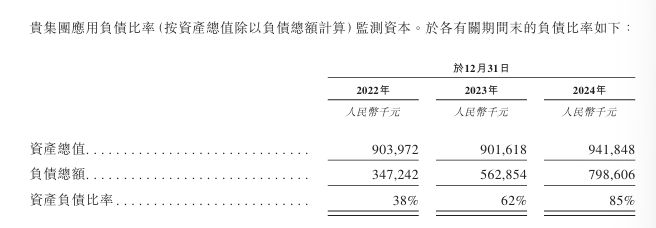
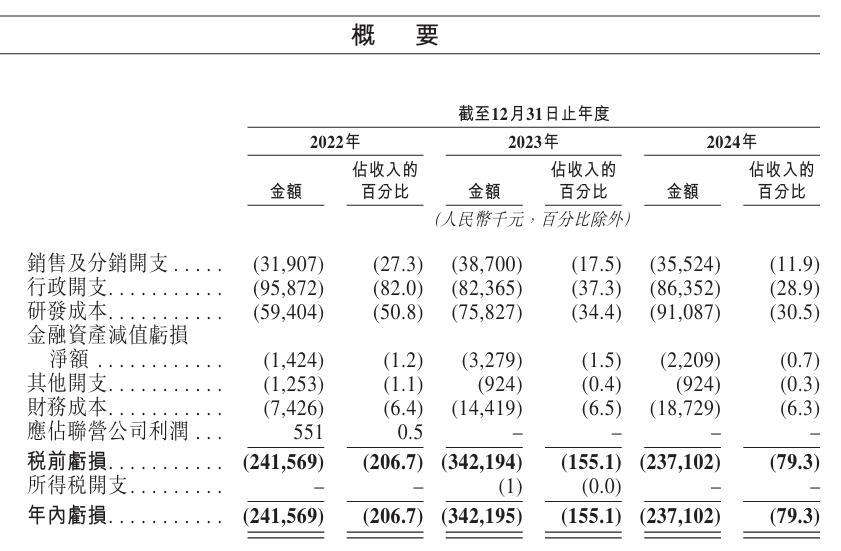
Core Viewpoint - Shenzhen Basic Semiconductor Co., Ltd. has submitted a listing application to the Hong Kong Stock Exchange, facing significant financial challenges with a cumulative net loss of nearly 1 billion yuan over three and a half years, primarily due to negative gross margins on its core products and high operational costs associated with its IDM model [1][19][28]. Financial Performance - The company reported net losses of -242 million yuan, -342 million yuan, -237 million yuan, and -177 million yuan for the respective years, totaling nearly 1 billion yuan in losses [13][28]. - The asset-liability ratio increased from 38.41% to 86.61% over the reporting period, indicating a deteriorating financial condition [15][30]. - The company's cash flow from operating activities has consistently been negative, with figures of -307 million yuan, -120 million yuan, -24 million yuan, and -39 million yuan, highlighting its inability to generate positive cash flow [17][32]. Product and Revenue Insights - Basic Semiconductor's revenue from silicon carbide power modules surged from 5.05 million yuan in 2022 to 146 million yuan in 2024, marking a 27.8-fold increase [10][25]. - The average selling price of silicon carbide power modules plummeted by 74.08% in 2023, contributing to ongoing negative gross margins [11][27]. - The company’s primary revenue sources are silicon carbide power modules and power semiconductor gate drivers, which have seen significant fluctuations in revenue and gross margins [9][24]. Market Position and Strategy - The company operates in the third-generation semiconductor power device sector, focusing on silicon carbide power devices for various industries, including electric vehicles and renewable energy systems [2][20]. - Despite a strong technical foundation and backing from notable investors, the aggressive pricing strategy to capture market share has led to unsustainable losses [14][29]. - The company has completed 12 rounds of financing, raising over 1.1 billion yuan, with a valuation of 5.16 billion yuan following its D round in August [4][21]. Operational Challenges - The production capacity utilization rates for its main production bases remain low, with figures of 11.2%, 49.2%, 52.6%, and 40.8% for the silicon carbide power module facility [18][33]. - The company plans to use funds from its IPO to expand production capacity and enhance research and development efforts for new silicon carbide products [18][33].

【IPO前哨】博士天团创业,博世闻泰押注!碳化硅龙头IPO冲刺港股
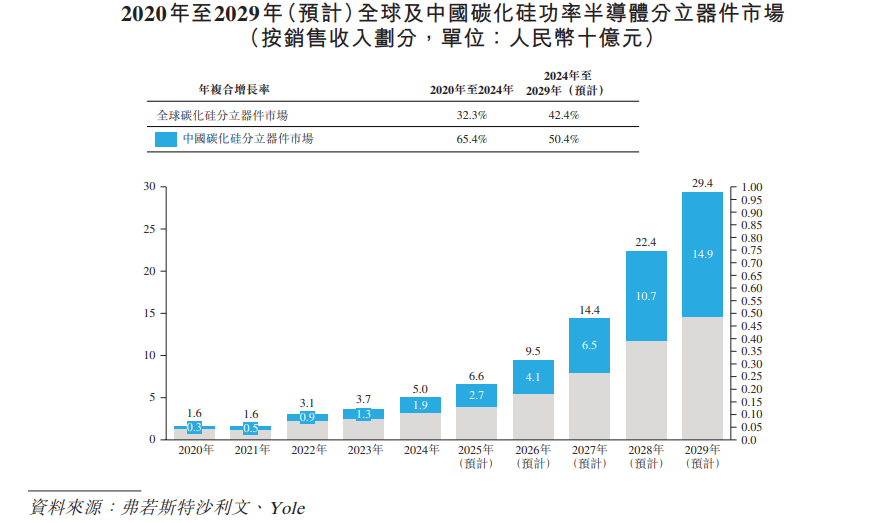
Sou Hu Cai Jing· 2025-12-05 13:33
Core Viewpoint - The silicon carbide (SiC) power device sector is experiencing a boom driven by the growth of the electric vehicle and renewable energy industries, as evidenced by the IPO plans of Shenzhen Basic Semiconductor Co., Ltd. [2] Company Overview - Shenzhen Basic Semiconductor, founded by a team of top PhDs and backed by prominent investors like Bosch and Wingtech Technology, is characterized by high growth alongside ongoing losses [3][4]. - The company has raised over 1 billion RMB through multiple financing rounds, achieving a valuation of 5.16 billion RMB after its D round in August [4]. Shareholding Structure - The founder, Wang Zhihan, holds 45.98% of the shares, making him the controlling shareholder, while Wingtech Technology, Bosch Venture Capital, and GAC Capital hold 3.67%, 2.18%, and 1.5% respectively [5]. Market Position and Product Offering - Basic Semiconductor is one of the few IDM companies in China that has achieved full-process independent production of SiC chips, including design, wafer manufacturing, module packaging, and driver design [6]. - The product line includes SiC discrete devices, automotive-grade and industrial-grade SiC power modules, and gate drivers, with applications in high-growth sectors such as electric vehicles and renewable energy [6][8]. - The company has successfully entered the supply chains of over 10 automotive manufacturers, with shipments of over 110,000 units for electric vehicle products expected by June 2025 [8]. Industry Growth and Financial Performance - The global SiC power device market is projected to grow from 4.5 billion RMB in 2020 to 22.7 billion RMB by 2024, with a compound annual growth rate (CAGR) of 49.8% [9]. - The domestic market is expected to reach 42.8 billion RMB by 2029, with a CAGR of 47.1% from 2025 to 2029 [9]. - Despite revenue growth from 117 million RMB in 2022 to 299 million RMB in 2024, the company has faced significant losses, totaling over 800 million RMB from 2022 to 2024, with a net loss of 177 million RMB in the first half of 2025 [10]. Profitability Challenges - The company has struggled with profitability, with a gross loss margin of 40.8% for SiC power modules in the first half of 2025, primarily due to high raw material costs and increased market competition [11][12]. - Although the overall gross loss margin improved from 48.5% in 2022 to 9.7% in 2024, it rose again to 28.8% in the first half of 2025, indicating volatility in profitability [12]. Customer Retention and Revenue Concentration - Customer retention rates have shown significant fluctuations, particularly in the renewable energy and industrial application sectors, with retention rates of 53.7% and 71.1% respectively in the first half of 2025 [13]. - The top five customers contributed 58% of the company's revenue in the first half of 2025, indicating a high concentration of revenue sources and associated operational risks [14]. Conclusion - Basic Semiconductor has established a strong position in the domestic SiC market with its IDM capabilities and technical expertise, supported by significant investments from industry leaders [14]. - However, the company faces critical challenges in achieving profitability amidst rising competition and fluctuating customer retention, which will be crucial for its upcoming IPO and future growth [14].

基本半导体递表港交所 专注于碳化硅功率器件研发、制造及销售
Zheng Quan Shi Bao Wang· 2025-12-05 00:20
Core Viewpoint - Basic Semiconductor has submitted an application for listing on the Hong Kong Stock Exchange, with CITIC Securities, Guotai Junan Securities (Hong Kong) Limited, and Bank of China International as joint sponsors [1] Group 1: Company Overview - Basic Semiconductor is a third-generation semiconductor power device company in China, focusing on the research, manufacturing, and sales of silicon carbide power devices [1] - The company is the only one in China that integrates silicon carbide chip design, wafer manufacturing, module packaging, and gate driver design and testing capabilities [1] - It has developed a comprehensive product portfolio, including silicon carbide discrete devices, automotive-grade and industrial-grade silicon carbide power modules, and power semiconductor gate drivers, widely used in electric vehicles, renewable energy, energy storage, and industrial control [1] Group 2: Market Position - For the year 2024, Basic Semiconductor ranks sixth in the Chinese silicon carbide power module market (third among Chinese companies) with a market share of 2.9% [1] - In the Chinese silicon carbide discrete device market and power semiconductor gate driver market, the company ranks ninth, with market shares of 2.7% and 1.7%, respectively [1] Group 3: Product Application - The company is one of the first in China to mass-produce and deliver silicon carbide solutions for electric vehicles, having secured design-ins with over 10 automotive manufacturers for more than 50 vehicle models [1] - Basic Semiconductor has accumulated over 110,000 units of silicon carbide products shipped for electric vehicle applications [1]
新股消息 | 基本半导体二次递表港交所 专注于碳化硅功率器件的研发、制造及销售
Zhi Tong Cai Jing· 2025-12-04 08:39
Company Overview - Basic Semiconductor has submitted a listing application to the Hong Kong Stock Exchange, with CITIC Securities, Guotai Junan Securities (Hong Kong) Limited, and Bank of China International as joint sponsors [1] - The company focuses on the research, manufacturing, and sales of silicon carbide (SiC) power devices, being the only Chinese enterprise that integrates SiC chip design, wafer manufacturing, module packaging, and gate driver design and testing capabilities [1][2] - Basic Semiconductor is one of the first companies in China to mass-produce and deliver SiC solutions for electric vehicles, which is the largest end-use market for SiC semiconductors [1][2] Product Portfolio - The company has developed a comprehensive product portfolio that includes SiC discrete devices, automotive-grade and industrial-grade SiC power modules, and power semiconductor gate drivers [2] - Basic Semiconductor's solutions serve various industries, including electric vehicles, renewable energy systems, energy storage systems, industrial control, data and server centers, and rail transportation [2] Market Position - According to Frost & Sullivan, Basic Semiconductor ranks sixth in the Chinese SiC power module market with a market share of 2.9%, and ranks third among domestic companies [2] - The company ranks ninth in both the Chinese SiC discrete device market and the power semiconductor gate driver market, with market shares of 2.7% and 1.7%, respectively [2] Sales Performance - As of June 30, 2025, the cumulative shipment of products for energy vehicles exceeded 110,000 units, with sales of SiC power modules increasing from over 500 units in 2022 to over 30,000 units in 2023, and further to over 61,000 units in 2024 [3] Financial Performance - The company recorded revenues of RMB 117 million, RMB 221 million, RMB 299 million, and RMB 104 million for the fiscal years 2022, 2023, 2024, and the six months ending June 30, 2025, respectively [4] - Basic Semiconductor reported losses of RMB 242 million, RMB 342 million, RMB 237 million, and RMB 177 million for the same periods [5] - Research and development expenses were RMB 59.4 million, RMB 75.8 million, RMB 91.1 million, and RMB 53.9 million for the respective years [6] Industry Overview - The global SiC power device industry has experienced significant growth from RMB 4.5 billion in 2020 to RMB 22.7 billion in 2024, with a compound annual growth rate (CAGR) of 49.8% [7] - The market is expected to continue growing at a CAGR of 40.5% from 2025 to 2029, reaching approximately RMB 110.6 billion by 2029 [8] - In China, the SiC power device market sales revenue increased from RMB 1.1 billion in 2020 to RMB 6.9 billion in 2024, with a CAGR of 59.7% [8] - The penetration rate of SiC in the Chinese power device market is projected to rise from 0.9% in 2020 to 5.4% in 2024, and is expected to reach 19.0% by 2029 [8][9]
AI用电的“困”与“破” | 投研报告
Zhong Guo Neng Yuan Wang· 2025-12-04 02:03
Core Insights - The report by Jinyuan Securities highlights the significant energy consumption associated with training advanced AI models, particularly GPT-4, which requires approximately 38.2 GWh over a training period of 95 days [1][2]. Group 1: AI Model Training Energy Consumption - The maximum rated power consumption of a single GPU can reach 1000 watts [2]. - GPT-4's training energy demand translates to an average daily consumption of about 0.40 GWh, equivalent to the daily electricity usage of approximately 40,000 households [1][2]. Group 2: Data Center Energy Consumption Trends - Global data center electricity consumption is projected to reach 415 TWh in 2024, accounting for about 1.5% of the world's total electricity consumption, with the US, Europe, and China collectively responsible for 85% of this total [2]. - In the US, data center electricity consumption is expected to grow at an annual rate of approximately 12% from 2015 to 2024, resulting in an increase of about 250 TWh, with 2024 consumption estimated at 180 TWh [2]. Group 3: Future Projections - By 2030, global data center electricity consumption is forecasted to double to approximately 945 TWh, representing nearly 3% of global electricity consumption, with the US market projected to consume about 420 TWh, a 130% increase from 2024 [2]. Group 4: Power Infrastructure Challenges - The mismatch between the manufacturing cycle of power infrastructure and the demand cycle for AI presents significant challenges [3]. - Solar energy and gas turbines are currently the only reliable power sources that can be developed in a short timeframe to meet data center demands, but solar energy's intermittent nature poses challenges for continuous operation [3]. Group 5: Energy Storage Systems - A complete electrochemical energy storage system consists of battery packs, battery management systems (BMS), energy management systems (EMS), and storage inverters, collectively referred to as "3S" [4]. - The global inverter market is projected to reach approximately $129.2 billion in 2024, with the battery energy storage system (BESS) market expected to grow at a compound annual growth rate of 18.5% from 2024 to 2030, reaching $23.3 billion by 2030 [4]. Group 6: Power Device Market Insights - The IGBT and silicon-based MOSFET markets are significant, with the IGBT market projected to grow from approximately $8.887 billion in 2024 to $16.151 billion by 2030, reflecting a compound annual growth rate of 10.47% [5]. - The market for silicon carbide (SiC) devices is also expected to grow significantly, with a combined market size projected to increase from $2.967 billion in 2024 to $9.520 billion by 2030, at a compound annual growth rate of 21.45% [5]. Group 7: Related Companies - Companies involved in this sector include SDIC (603290.SH), Yangjie Technology (300373.SZ), ChipLink Integration-U (688469.SH), Silan Microelectronics (600460.SH), and Dongwei Semiconductor (688261.SH) [6].


深圳基本半导体股份有限公司(H0194) - 申请版本(第一次呈交)
2025-12-03 16:00
香港交易及結算所有限公司、香港聯合交易所有限公司與證券及期貨事務監察委員會對本申請版本 的內容概不負責,對其準確性或完整性亦不發表任何意見,並明確表示概不就因本申請版本全部或 任何部分內容而產生或因倚賴該等內容而引致的任何損失承擔任何責任。 BASiC Semiconductor Co., Ltd. 深圳基本半導體股份有限公司 (「本公司」) (於中華人民共和國註冊成立的股份有限公司) 的申請版本 警告 本申請版本乃根據香港聯合交易所有限公司(「聯交所」)及證券及期貨事務監察委員會(「證監會」)的 要求而刊發,僅用作提供資料予香港公眾人士。 本申請版本為草擬本,其內所載資料並不完整,亦可能會作出重大變動。 閣下閱覽本文件,即代 表 閣下知悉、接納並向本公司、本公司的聯席保薦人、整體協調人、顧問或承銷團成員表示同 意: 於本公司招股章程根據香港法例第32章《公司(清盤及雜項條文)條例》送呈香港公司註冊處處長登記 前,不會向香港公眾人士提出要約或邀請。倘於適時向香港公眾人士提出要約或邀請,有意投資者 務請僅依據於香港公司註冊處處長登記的本公司招股章程作出投資決定,該文件的文本將於發售期 內向公眾刊發。 (a) 本 ...
又一批半导体产业链新公司成立
是说芯语· 2025-08-27 06:29
Core Viewpoint - The establishment of multiple new companies in the semiconductor industry chain indicates a significant trend of regional expansion among leading enterprises, with a focus on key areas such as chip design, manufacturing equipment, materials, and packaging testing [1] Group 1: New Company Establishments - A total of 11 new semiconductor companies have been established, with a concentration in Shanghai (4), Jiangsu (3), and Zhejiang (2), while emerging regions like Hainan and Inner Mongolia are becoming new hubs for technology deployment [1] - Hainan Unisoc Technology Co., Ltd. focuses on integrated circuit design, data processing services, and cloud computing equipment sales, potentially aligning with the cross-border data flow policies of the free trade port [3] - Shanghai SIDA Integrated Circuit Co., Ltd. aims to enhance its capabilities in power semiconductor design and sales, particularly targeting the automotive electronics industry in the Yangtze River Delta [4] - Cambricon (Hohhot) Information Technology Co., Ltd. is dedicated to integrated circuit chip design and manufacturing, supporting AI chip trials and localization in Northern China [5] - Beijing Weifang Technology Co., Ltd. is involved in 5G communication and integrated circuit chip manufacturing, particularly in satellite mobile communication terminals and smart drones [6] - Haimuxing Laser Intelligent Equipment (Foshan) Co., Ltd. applies laser technology to semiconductor device manufacturing, contributing to the local semiconductor industry cluster [7][8] Group 2: Industry Chain Segmentation - Shanghai Huichunxin Semiconductor Materials Co., Ltd. focuses on the research and sales of electronic materials, potentially involving the localization of critical materials like photoresists and target materials [10] - Huzhou Sucas Semiconductor Technology Co., Ltd. continues its parent company's expertise in semiconductor cleaning equipment, while Suzhou Guanghuan Zhi Semiconductor Equipment Co., Ltd. is involved in semiconductor device manufacturing [12] - Basic Semiconductor (Hangzhou) Co., Ltd. specializes in silicon carbide discrete devices and integrated circuit chips, catering to high-voltage applications in electric vehicles and energy storage [13] Group 3: Investment Characteristics - 80% of the new companies are wholly owned by listed companies or industry leaders, indicating a trend of vertical integration to strengthen control over the industry chain [16] - Investment in automotive-grade chips, silicon carbide devices, and semiconductor laser equipment accounts for over 60% of the new establishments, closely linked to the explosive growth of end markets like electric vehicles and energy storage [16] - The establishment of companies in non-traditional semiconductor bases like Hohhot and Hainan suggests a shift towards regions with lower costs and better policies, accelerating the formation of a national industry chain network [16]


基本半导体持续亏损超8亿:资产负债比率大幅走高,现金流连年为负
Xin Lang Cai Jing· 2025-07-04 00:59
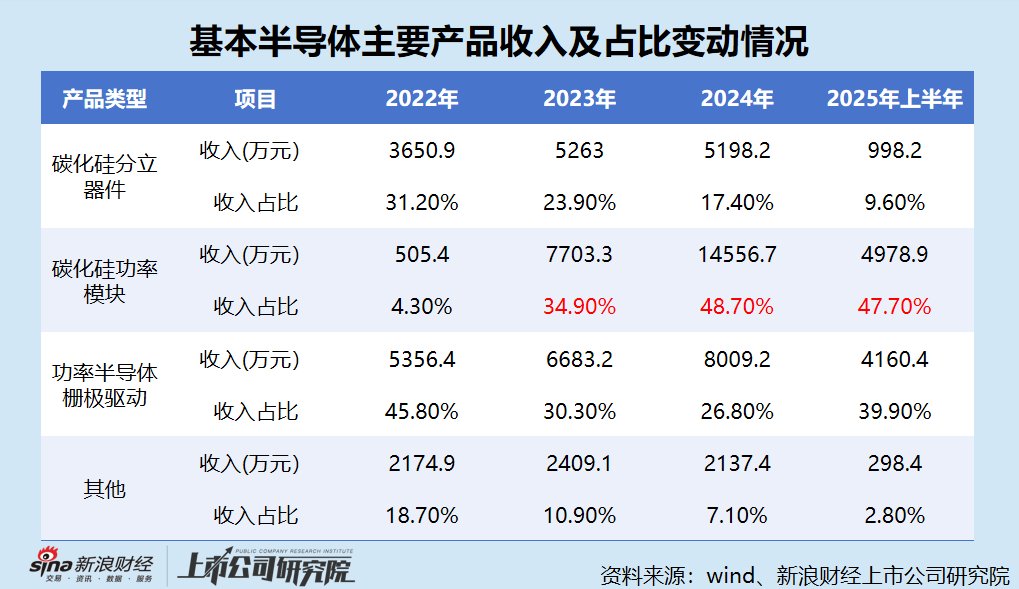
Core Viewpoint - Shenzhen Basic Semiconductor Co., Ltd. is seeking to list on the Hong Kong Stock Exchange, focusing on silicon carbide (SiC) power devices, with significant losses exceeding 800 million RMB over the past three years [1][2][3] Financial Performance - The company reported revenues of 117 million RMB, 221 million RMB, and 299 million RMB from 2022 to 2024, with corresponding losses of 242 million RMB, 342 million RMB, and 237 million RMB [2][3] - The revenue from SiC power modules increased significantly, accounting for 4.3%, 34.9%, and 48.7% of total revenue during the same period, while revenue from gate drivers decreased from 45.8% to 26.8% [2] - The overall gross margin was negative, with figures of -48.5%, -59.6%, and -9.7% over the three years [3] Research and Development - The company has high R&D costs, with expenditures of 59.4 million RMB, 75.8 million RMB, and 91.1 million RMB, representing 50.8%, 34.4%, and 30.5% of total revenue [4][5] - The high R&D costs are attributed to the nature of the semiconductor industry, which requires significant investment in technology and manufacturing processes [3][8] Customer Base and Revenue Concentration - Major customers include automotive manufacturers and high-tech companies focused on renewable energy, with revenue from the top five customers increasing from 32.2% to 63.1% of total sales over the reporting period [4][6] - The company faces risks related to revenue concentration, as over 50% of total revenue comes from a small number of clients [8] Capital Expenditure and Cash Flow - Capital expenditures were significant, with amounts of 212 million RMB, 146 million RMB, and 36.6 million RMB over the reporting period, aimed at expanding production capacity and upgrading equipment [5][9] - The company has recorded negative cash flow from operating activities for three consecutive years, with net cash outflows of 307 million RMB, 12 million RMB, and 24.1 million RMB [5][8] Debt and Liquidity - The asset-liability ratio increased significantly, reaching 85% by the end of 2024, indicating a deteriorating liquidity position [6][8] - The company’s total liabilities rose from 347 million RMB to 799 million RMB over the reporting period, raising concerns about its ability to meet financial obligations [7][8] Market Position and Future Outlook - Basic Semiconductor is positioned as a key player in the SiC power device market, ranking seventh globally and sixth in China, with a focus on the growing electric vehicle sector [1][2] - The company aims to leverage its technological advantages and patents to capture market share in the rapidly evolving semiconductor landscape [8][9]
17岁夺得广东高考物理头名,25岁拿下剑桥博士学位 如今他创立的基本半导体正闯关港交所
Mei Ri Jing Ji Xin Wen· 2025-06-06 14:29
Core Viewpoint - Basic Semiconductor is the only company in China that integrates silicon carbide (SiC) chip design, wafer manufacturing, module packaging, and gate driver design and testing capabilities, and is preparing for an IPO in Hong Kong [1][12]. Company Overview - Basic Semiconductor was founded in 2016 and is led by a team of highly educated individuals, including founder Wang Zhihan, who achieved top scores in the physics section of the Guangdong provincial college entrance examination at age 17 and later earned a PhD from Cambridge University [1][5][4]. - The company's main products include SiC discrete devices, SiC power modules, and power semiconductor gate drivers [1]. Financial Performance - From 2022 to 2024, Basic Semiconductor reported total revenues of approximately 650 million RMB, but incurred total losses exceeding 800 million RMB [1]. - The revenue for the years 2022, 2023, and 2024 was 117 million RMB, 221 million RMB, and 299 million RMB, respectively, reflecting a compound annual growth rate (CAGR) of 59.9% [15]. - The revenue from SiC power modules specifically was 5.05 million RMB, 77.03 million RMB, and 146.57 million RMB for the same years, with a staggering CAGR of 434.3% [15]. Market Position and Product Development - Basic Semiconductor is recognized as a leading player in the SiC power device market, particularly in the electric vehicle sector, having secured design-in agreements with over 50 models from various automotive manufacturers [18]. - The company operates a wafer fab in Shenzhen and a packaging line in Wuxi, with plans to expand packaging capacity in Shenzhen and Zhongshan [14]. Investment and Valuation - Basic Semiconductor has undergone multiple rounds of financing, achieving a post-money valuation exceeding 5.1 billion RMB as of April 2023 [12]. - The latest round of financing included investments from state-owned enterprises in Zhongshan, indicating strong institutional support [12]. Challenges and Future Outlook - Despite significant revenue growth, Basic Semiconductor has not yet achieved profitability, with gross margins for SiC power modules reported at -75.5%, -66.0%, and -27.9% for the years 2022 to 2024 [18]. - The company anticipates continued net losses in the short term due to ongoing investments in research and development and business expansion [18].
新股前瞻|基本半导体:第三代半导体功率器件行业“种子选手”,3年亏损超8亿元
智通财经网· 2025-05-30 02:36
Core Viewpoint - The semiconductor industry is shifting towards third-generation semiconductors, particularly silicon carbide (SiC), which is being widely adopted in high-voltage and high-current applications such as electric vehicles and renewable energy systems [1][2]. Group 1: Industry Trends - The market for third-generation semiconductor materials is experiencing significant growth, driven by the superior properties of SiC, including high breakdown electric field strength, high thermal conductivity, and wide bandgap [1]. - The global market for SiC discrete devices is expected to grow at a compound annual growth rate (CAGR) of 32.2% from 2020 to 2024, with sales revenue projected to increase from 1.6 billion to 5 billion [6]. - The Chinese market for SiC discrete devices is anticipated to grow at a CAGR of 65.4% from 2020 to 2024, with sales revenue expected to rise from 0.3 billion to 1.9 billion, contributing 38.4% to the global market by 2024 [6]. Group 2: Company Overview - Shenzhen Basic Semiconductor Co., Ltd., a leading Chinese company in the SiC chip sector, has submitted its listing application to the Hong Kong Stock Exchange, backed by major securities firms [2][3]. - Established in 2016 by a team of PhDs from Tsinghua University and the University of Cambridge, the company focuses on the research, development, manufacturing, and sales of SiC power devices [2]. - Basic Semiconductor is the only domestic company that integrates SiC chip design, wafer manufacturing, module packaging, and gate driver design and testing capabilities, achieving mass production across all segments [2]. Group 3: Financial Performance - Basic Semiconductor reported revenues of approximately 0.117 billion, 0.221 billion, and 0.299 billion from 2022 to 2024, showing significant year-on-year growth [5]. - The company incurred losses of approximately 0.242 billion, 0.342 billion, and 0.237 billion during the same period, totaling a cumulative loss of 0.821 billion [5]. - Research and development expenses increased from 0.059 billion in 2022 to 0.091 billion in 2024, reflecting the company's commitment to innovation despite ongoing losses [5]. Group 4: Market Position and Challenges - Basic Semiconductor ranks seventh globally and sixth in China in the SiC power module market by revenue as of 2024, positioning itself as a significant player in the domestic third-generation semiconductor sector [4]. - The company faces challenges due to the capital-intensive nature of the semiconductor industry, with rising financing costs and long return cycles impacting cash flow [11]. - Despite the high volatility and long cycles associated with the industry, Basic Semiconductor's potential for long-term growth remains strong, particularly if it successfully capitalizes on technological advancements [11].