
星尘智能

Search documents
AI创业暗战2025,有人半年签单破亿
3 6 Ke· 2025-11-04 12:53
Core Insights - The AI wave is a transformative force that has leveled the playing field for established companies, elite returnees, and newcomers alike, presenting new solutions to past business challenges and future opportunities [1][2] Investment Landscape - Global tech giants continue to invest heavily in AI, but concerns about whether generative AI represents a "bottomless pit" for capital without long-term returns are rising [2][14] - The debate between "bubble theory" and the ongoing AI hype is critical for entrepreneurs and investors, emphasizing the need for agility, risk-taking, and keen market insight [2][12] Entrepreneurial Strategies - Entrepreneurs are exploring diverse approaches within the AI landscape, such as AI content ecosystems, robotic interactions, and intelligent agent technologies, each aiming to carve out a niche amid competition from tech giants [2][11] - Founders like Shen Qiaojin and Lai Jie are leveraging their unique backgrounds and insights to innovate in AI-driven content and robotics, respectively, with Shen's company, IdeaFlow, targeting interactive content and Lai's Astribot focusing on AI robots [5][8][9] Market Dynamics - The AI startup ecosystem is characterized by a mix of established industry veterans and new entrants, all vying for survival and success in a competitive environment dominated by major players [11][12] - The emergence of AI applications is broad, with significant investment in various sectors, including content creation, robotics, and AI chips, indicating a robust growth trajectory [16][17] Financial Performance - Companies like DeepWisdom have reported rapid revenue growth, with their product MGX achieving an annual recurring revenue of over $1 million shortly after launch, highlighting the potential for profitability in the AI sector [10][12] - The overall investment in AI, particularly in the robotics sector, has surged, with significant funding recorded in the first eight months of the year, suggesting a strong market appetite for AI innovations [17] Future Outlook - The AI industry is at a critical juncture, with discussions around whether it is experiencing a bubble or entering an "iPhone moment," where transformative products and companies will emerge [14][18] - The potential for AI to revolutionize various sectors is immense, with predictions of substantial market growth in AI chips and applications, indicating a promising future for the industry [16][17]


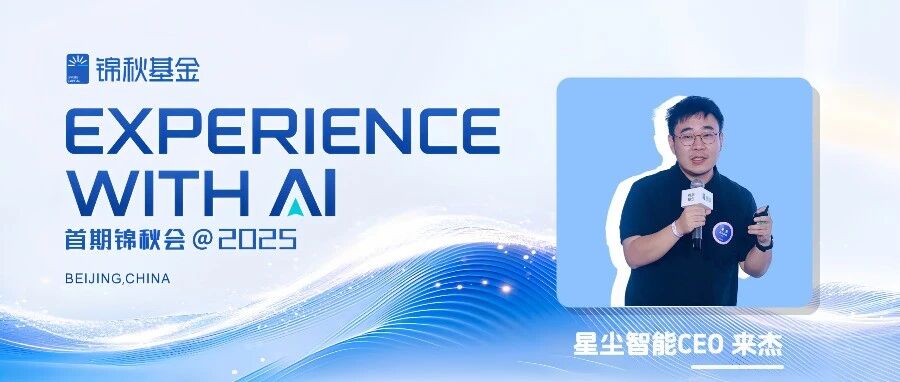
星尘智能CEO来杰:当AI开始操作世界,具身智能的“Windows时刻”何时到来?|「锦秋会」分享
锦秋集· 2025-11-04 12:51
Core Viewpoint - The article discusses the evolution of embodied intelligence in robotics, emphasizing the need for an interactive layer to facilitate user engagement and application, akin to the role of operating systems in personal computers [6][10][15]. Group 1: Industry Insights - The embodied intelligence industry is currently hindered by a lack of an interactive layer, which prevents widespread application despite advancements in algorithms and computing power [5][6]. - The industry is experiencing continuous influx of capital and talent, with ongoing debates about the correct path for embodied intelligence, whether it should focus on full automation or human-robot collaboration [6][10]. Group 2: Company Overview - Stardust Intelligence, founded in 2022, has focused on the development and application of humanoid robots, achieving mass production and deployment in various scenarios [13][14]. - The company has successfully created a humanoid robot capable of playing the piano, showcasing its ability to perform complex tasks through coordinated movement [13][41]. Group 3: Technological Framework - The CEO of Stardust Intelligence, Lai Jie, proposes a three-layer structure for embodied intelligence: the terminal (hardware), the interactive layer (remote operation system), and the driving layer (AI models) [6][15][21]. - Lai Jie draws parallels between the current state of robotics and the early days of personal computers, suggesting that a user-friendly interface is essential for broader adoption [19][20]. Group 4: Future Directions - The company aims to enhance the understanding of robotics through real-world applications, iterating products based on practical experiences rather than theoretical assumptions [24]. - The focus is on developing a unified platform and providing tools and resources to support the industry, particularly in areas like physical intelligence and safety systems [63][64].
2025年智慧养老产业发展白皮书
Tou Bao Yan Jiu Yuan· 2025-11-04 12:04
Investment Rating - The report does not explicitly state an investment rating for the smart elderly care industry Core Insights - The smart elderly care industry in China is rapidly evolving through technological integration and innovative models to address the challenges posed by an aging population, which is expected to reach 30% by 2050, significantly higher than the global average [5][18] - The industry is focusing on creating a comprehensive health management ecosystem that covers the entire life cycle of elderly care, showcasing significant breakthroughs from technology application to system construction [5] Summary by Sections Overview of the Smart Elderly Care Industry - The aging population in China is accelerating, with the proportion of individuals aged 65 and above expected to reach 30% by 2050, indicating a severe challenge for social and economic development [18][20] - The report highlights the structural challenges in the current elderly care service supply system, including insufficient total supply, uneven resource distribution, and a shortage of professional caregivers [6] Demand Environment - The acceptance of smart products among the elderly is steadily increasing, with 43.08% of users spending 1-3 hours daily using these products [6][39] - The demand for personalized leisure and entertainment services is significantly higher among elderly individuals living with family compared to those living alone, indicating a strong expectation for functionality in multi-generational households [6] Supply Situation - Smart elderly care products are evolving from single-function devices to comprehensive solutions, with wearable devices forming a health management loop covering prevention, diagnosis, and rehabilitation [7] - The report emphasizes the need for a smart transformation in elderly care services to enhance sustainability and meet the growing demand [6] Policy Environment - The report outlines a systematic approach to policy development in the smart elderly care sector, emphasizing the integration of technology and the enhancement of service quality to improve the well-being of the elderly [33] Economic Environment - Investment strategies in the elderly care sector are shifting from quantity to quality, focusing on high-quality projects in areas such as artificial intelligence, robotics, and digital platforms [35] - The report notes significant investment activity in the elderly care robot sector, with a notable increase in funding for companies developing companion and rehabilitation robots [37] Technological Environment - The health IoT is driving the development of automated and intelligent health services, with technologies such as blockchain enhancing data security and sharing [45][47] - The integration of various technologies is crucial for creating a seamless health management ecosystem that meets the needs of the elderly [47] Industry Chain Analysis - The smart elderly care industry chain consists of upstream technology support, midstream product and service integration, and downstream application scenarios, forming a collaborative ecosystem [51][53] - The report highlights the importance of integrating resources from various sectors to create a comprehensive elderly care solution that includes home care, community support, and institutional care [52]
Experience with AI,锦秋与你一起定义未来的1.0版本|首期「锦秋会」精彩回顾
锦秋集· 2025-11-04 07:14
Core Insights - The event "Experience with AI" aimed to create a platform for founders to share their experiences and insights in the AI sector, emphasizing the importance of founder-led discussions [5][24][63] - The focus was on the advancements in AI tools and the challenges related to their generalization capabilities, with predictions of significant progress in embodied intelligence within the next two to three years [5][7][63] Group 1: Event Overview - The "Jinqiu Conference" is the 1.0 version, designed specifically for founders, allowing them to be the main characters in discussions about AI [5][24] - The event featured notable speakers, including CEOs from various AI companies, who shared insights on foundational computing, model innovation, and global trends in AI applications [7][16] Group 2: Key Discussions - A significant dialogue occurred between Wang Xingxing, CEO of Yushu Technology, and Zang Tianyu, partner at Jinqiu Fund, focusing on the challenges and future of AI tools [5][7] - Founders shared their companies' missions and values in the AI era during a roundtable discussion, highlighting the diverse perspectives within the industry [16][20] Group 3: Jinqiu Fund's Focus - Jinqiu Fund is concentrating on AI computing power, applications, embodied intelligence, and model development, having invested in over 70 projects to date [27][30] - The fund's approach emphasizes patience and long-term support for innovative entrepreneurs, with a 12-year investment cycle [27] Group 4: Event Highlights - The event included interactive AI experiences, such as personalized AI videos and 3D figurines created from attendees' images, enhancing engagement and excitement [31][32][36] - A unique AI punch-in machine was set up to generate photos and videos for attendees, ensuring continuous interaction throughout the event [38] Group 5: Future Outlook - The conference is seen as a starting point for future iterations, with plans for optimization and enhancement based on feedback [59][60] - The emphasis on finding direction and collaborating with like-minded individuals is a core philosophy of Jinqiu, aiming to navigate the uncertainties of the AI landscape [62][63]

一年出手50次,锦秋两位合伙人首谈AI创业与投资 | 巴伦精选
Tai Mei Ti A P P· 2025-11-04 05:03
Core Insights - Jinqiu Fund is one of the most active investment institutions in the domestic AI sector this year, with over 50 investments in AI-related fields by the end of October [2][3] - The fund has made significant contributions to the AI entrepreneurial ecosystem, establishing a strong brand presence in just three years [2] - The first AI CEO conference held by Jinqiu Fund highlighted the historical opportunities in three key areas: computing/chips, applications, and robotics [2][5] Investment Landscape - Jinqiu Fund's investment strategy is deeply rooted in understanding technology cycles and entrepreneurial patterns [3] - The fund has invested heavily in AI applications, with 56% of projects in this area, followed by 25% in embodied intelligence and 10% in computing infrastructure [51][58] - The global computing market is projected to reach $150 billion by 2025 and $500 billion by 2028, indicating a significant growth opportunity [18] Market Opportunities - The AI application market is experiencing rapid revenue and valuation growth, with emerging AI companies reaching $100 million ARR much faster than traditional SaaS companies [15] - The demand for inference chips is surging, with Google reporting an average monthly token consumption of 1,000 trillion in Q3 [19] - The robotics sector is poised for explosive growth, with projected financing reaching $41.4 billion by 2025, five times that of 2023 [23] Key Trends and Predictions - The competition among large models will continue, benefiting application companies as user loyalty to models is low [36] - The shift from a "personal assistant era" to an "Agent Economy" is anticipated, creating new opportunities in autonomous learning and infrastructure [37] - AI demand is underestimated, with tech giants' capital expenditures expected to rise from $227 billion in 2023 to $543 billion in 2026 [39] Founders' Guidance - Founders in the application space should focus on creating products that build user trust, as models are seen as commodities [43] - For chip founders, aligning closely with user scenarios is crucial for establishing a competitive moat [44] - Robotics founders should focus on accumulating relevant scenarios now to build future barriers [44]

我们大胆做了个决定,大会所有音乐bgm由AI生成,这部分预算可以省了!|Jinqiu Scan
锦秋集· 2025-11-03 08:13
Core Viewpoint - The article discusses the first CEO annual conference organized by Jinqiu Fund, themed "Experience with AI," focusing on the intersection of technology, capital, and creativity in the AI era [1]. Group 1: Event Overview - The conference aims to explore not just AI itself but how technology, capital, and creativity can interact in the AI age [1]. - The event is designed to be a genuine space for understanding, utilizing, and experiencing AI [1]. Group 2: Music Generation with AI - Seven representative AI music generation products were evaluated, including Suno, ElevenLabs, and Udio, with Suno being selected for the conference music due to its high success rate [4][5][6]. - The music requirements included creating entrance music for guests based on their company and personal situations, as well as warm-up music suitable for the conference theme [7][8]. Group 3: Music Production Process - The production process involved using ChatGPT to generate prompts for music creation, which were then used with Suno to produce suitable music [10][12]. - Different styles of warm-up music were created based on the agenda and desired atmosphere, with 10-20 tracks prepared for each segment [20][21]. Group 4: AI Music Generation Insights - AI can generate melodies and mimic styles but lacks deep semantic understanding, making it challenging to create emotionally resonant music [26]. - The effectiveness of AI music generation heavily relies on the precision of prompts, which can be a challenge for those unfamiliar with music [27][28]. Group 5: Future Directions - The company plans to explore a more systematic and intelligent approach to music generation in the future, potentially integrating multiple AI models for different styles [30]. - There is an aspiration to create a conference theme song that meets the satisfaction of all team members and to experiment with real-time emotional feedback for music generation [30].

持续深耕工业场景 仙工智能携多款具身机器人新品亮相亚洲物流展
Zheng Quan Shi Bao Wang· 2025-10-31 11:48
Core Insights - The article highlights the participation of XianGong Intelligent at the CeMAT ASIA 2025 exhibition in Shanghai, showcasing various new products including intelligent robots and control systems [1] Product Launches - XianGong Intelligent introduced the X1-PRO robot featuring a bending structure and omnidirectional chassis, capable of 45° bending operations and supporting a standard load of 6kg, with a dual-arm short-term load capacity of 16kg [1] - The X2-PRO robot, developed in collaboration with Stardust Intelligent, is designed for industrial applications and features 25 degrees of freedom, combining a rope-driven upper body and an omnidirectional mobile platform [2] Modular Design and Applications - The X2-PRO's modular design allows for flexible configuration and easy maintenance, enabling rapid adaptation in various industrial scenarios such as warehousing and logistics [2] - A new humanoid robot demonstrated smooth interaction and task execution, showcasing the core capabilities of XianGong's control system and the dexterity of the Stardust rope-driven body [2] New Robotic Products - XianGong Intelligent also presented new robotic dogs, capable of navigating complex environments with features like 3D autonomous navigation and AI-enhanced decision-making [2] - The D1-W series robotic dog offers a high-strength body with IP54 protection, suitable for diverse indoor and outdoor applications, while the D2-W series includes patrol capabilities with integrated thermal imaging and audio-visual alert systems [3] Competitive Advantages - XianGong's robotic dogs are noted for their integrated controllers and ease of use, allowing factory clients to seamlessly combine them with other XianGong products without needing to learn different operating systems [3] Strategic Development - The company is implementing a "dual flywheel" strategy to accelerate the deployment of humanoid robots and embodied intelligence, aiming to create a comprehensive ecosystem from core components to application scenarios [4]

深圳具身机器人企业频频获得大订单,从“技术炫技”走向“工具化普及” 人形机器人进入“产业兑现期”
Shen Zhen Shang Bao· 2025-10-31 07:25
Core Insights - Shenzhen's embodied intelligent robotics companies are securing significant orders, indicating a shift from demonstration applications to real industrial demand [1][4] - The recent surge in orders is seen as a signal that the humanoid robotics industry is entering a phase of industrial realization, moving from technological showcase to widespread tool adoption [1][4] Group 1: Recent Orders and Market Dynamics - On October 29, Yujian Robotics signed a procurement contract with Ruidefeng Precision Technology Co., Ltd., amounting to over 80.5 million yuan, including humanoid and collaborative robots [1] - In the past two months, companies like UBTECH and Zhihui Square have secured large orders, pushing embodied intelligence from concept validation to large-scale application [2] - UBTECH received two major orders in mid-October, totaling over 32 million yuan, and has achieved over 630 million yuan in orders for its Walker series robots this year [2] Group 2: Delivery Challenges and Industry Standards - The influx of high-value orders has created significant pressure on companies' delivery capabilities, with many still in the "engineer-driven" phase lacking standardized production processes [3] - Most companies are currently delivering between 100 to 2000 units, with Zhiyuan Robotics leading with over 2000 units produced by July, aiming for thousands more in the coming year [3] Group 3: Future Outlook - The current wave of orders reflects a concentrated release of demand for manufacturing intelligence upgrades and a reassessment of the humanoid robotics industry's delivery capabilities by the capital market [4][5] - Shenzhen is emerging as the primary hub for humanoid robot mass production and application in China, with 2025 anticipated to be a pivotal year for the industry's operational capabilities [4][5]
真的不是科幻!人形机器人“进厂打工”啦!就是有点“小贵”……
Zheng Quan Shi Bao Wang· 2025-10-29 03:10
Core Insights - Recent large orders for humanoid robots have been primarily from manufacturing companies, indicating a growing interest in industrial applications [1][2] - The current orders are mostly for pilot verification, suggesting that humanoid robots are still not commercially viable in terms of cost-effectiveness [1][4] Group 1: Order Trends - Seven humanoid robot companies have announced orders exceeding 100 million or over 1,000 units, including companies like UBTECH and ZhiYuan Robotics [2] - UBTECH's Walker series has secured over 630 million yuan in orders for the year, while ZhiYuan's G2 robot has landed several hundred million yuan in contracts [2][3] - The primary buyers of these robots are from the manufacturing sector, followed by educational institutions and government units, with applications mainly in industrial settings [2][3] Group 2: Industrial Applications - The introduction of humanoid robots into factories aims to collect real-world data for technological iteration and upgrades [1][4] - Companies like ZhiYuan and UBTECH are focusing on specific applications, such as assembly lines and logistics, to demonstrate the robots' capabilities [3][4] - The debate continues regarding the necessity of humanoid robots in factories, as wheeled robots are already capable of performing many tasks more efficiently [4][5] Group 3: Challenges and Limitations - The humanoid robot industry faces significant challenges, including quality control, mass production bottlenecks, and a lack of necessary application scenarios [6][7] - Current humanoid robots are not yet capable of handling a wide range of tasks, and there are concerns about their reliability and efficiency in high-demand environments [6][7] - The industry is experiencing a "bubble" phase, which is seen as a normal precursor to technological breakthroughs, but there are risks that some companies may not survive the transition to scalable products [7]
人形机器人大单频现 “进厂打工”拥抱应用场景
Zheng Quan Shi Bao· 2025-10-28 18:23
Core Insights - Recent large orders for humanoid robots have been reported, primarily from manufacturing companies, indicating a growing interest in industrial applications of these robots [1][2] - The current orders are largely seen as pilot projects, with significant gaps remaining before achieving commercial viability [4][7] Group 1: Market Activity - Seven humanoid robot companies have announced orders exceeding 100 million or over 1,000 units, including companies like UBTECH, ZhiYuan Robotics, and YuShu Technology [2] - UBTECH's Walker series has secured over 630 million yuan in orders for the year, while ZhiYuan's G2 robot has landed several hundred million yuan in contracts [2][3] - The primary buyers of these robots are from the manufacturing sector, followed by educational institutions and government entities, with applications mainly in industrial settings [2][3] Group 2: Technological Development - The introduction of humanoid robots into factories aims to collect real-world data to facilitate technological iterations and upgrades [4][5] - The industry is currently facing challenges in mass production, quality control, and the need for diverse application scenarios [6][7] - The competition in the next three years will focus on the ability to deploy robots in real commercial environments and continuously feed operational data back for model and hardware optimization [5][6] Group 3: Challenges and Limitations - Humanoid robots currently struggle with efficiency compared to human workers, and their cost-effectiveness remains a concern [4][6] - Key challenges include the need for improved dexterity in tasks such as precision assembly and the ability to meet strict efficiency requirements on production lines [7] - The industry faces a "bubble" situation, where the current enthusiasm may not translate into sustainable growth without overcoming significant engineering and production hurdles [7][8]