瑞众人寿

Search documents
险资年内合计举牌20次已达去年全年水平
Zheng Quan Ri Bao· 2025-07-07 16:52
Core Viewpoint - The trend of insurance capital increasing their stakes in listed companies continues, with a total of 20 instances recorded this year, matching the total from the previous year [1][2]. Group 1: Insurance Capital Activity - Hongkang Life Insurance recently increased its stake in Zhengzhou Bank's H-shares, acquiring 16 million shares at HKD 1.2068 per share, raising its holding to 5.55% [1]. - Following this, on June 30, Hongkang Life further acquired 23 million shares at HKD 1.1804 per share, bringing its total holdings to 135 million shares, or 6.68% of the H-shares [1]. - A total of 10 insurance institutions have participated in the 20 instances of stake increases across 16 listed companies this year [2]. Group 2: Motivations Behind Increased Stakes - The low interest rate environment and supportive policies are driving insurance capital to increase their stakes, with expectations that this trend will continue [1][2]. - The recent policies encouraging long-term funds to enter the market have enhanced the willingness of insurance capital to invest [2]. Group 3: Characteristics of Target Companies - The companies targeted for stake increases are predominantly high-dividend and H-share listed companies, aligning with the long-term investment style of insurance funds [3]. - H-shares are perceived to have a valuation discount compared to A-shares, presenting greater appreciation potential, along with tax benefits through the Hong Kong Stock Connect [3]. Group 4: Future Considerations and Strategies - The upcoming implementation of new accounting standards is prompting more insurance companies to pursue stake increases to achieve equity method accounting, thereby reducing profit volatility [3]. - Insurance companies are advised to focus on stocks with stable dividends, strong fundamentals, and long-term appreciation potential while enhancing their risk management capabilities [3].
金融半年观 |有银行A股半年涨超30%,郑州银行逆势下跌
Nan Fang Du Shi Bao· 2025-07-04 08:00
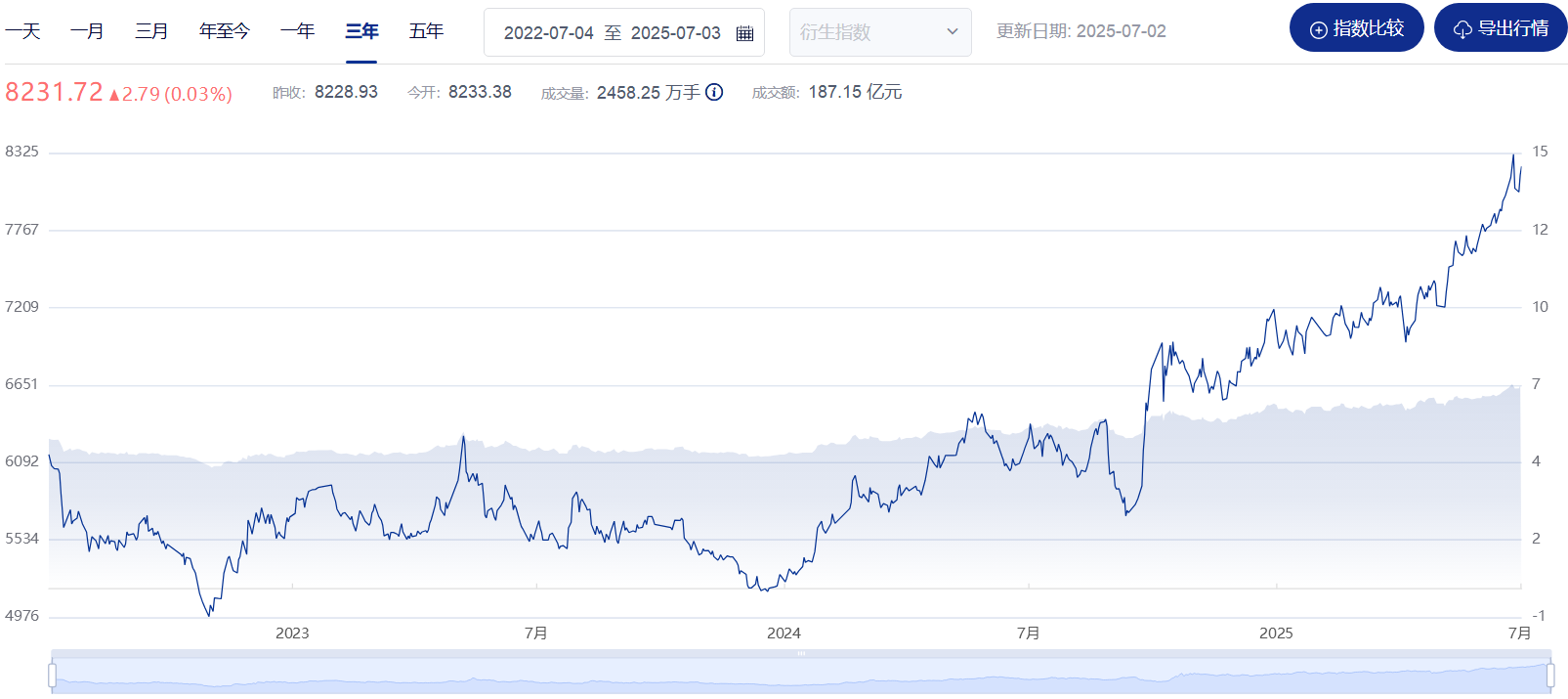
Core Viewpoint - Bank stocks are gaining popularity among investors, with notable examples of high returns, such as a student earning over 13% in four months from bank stocks [1][3]. Group 1: Market Performance - The China Securities Bank Index saw a 34.7% increase in 2024 and a further 13% rise in the first half of 2025, leading among all industry indices [2][3]. - Among 42 A-share listed banks, 15 reached historical highs in stock prices during the first half of 2025 [2]. - The performance of state-owned banks lagged behind, with an average increase of only 8.8% in the first half of 2025, ranking last among various bank categories [3][4]. Group 2: Individual Bank Performance - Agricultural Bank led the six major state-owned banks with a 12.7% increase, while Postal Savings Bank had the lowest increase at just 1% [4]. - Shanghai Pudong Development Bank and Qingdao Bank topped the A-share listed banks with increases of 34.9% and 32.4%, respectively, in the first half of 2025 [7][8]. - Zhengzhou Bank was the only bank to experience a decline in stock price, dropping 1.9% in the first half of 2025 [9]. Group 3: Dividend and Yield Analysis - The average dividend yield for state-owned banks was 4.04% as of June 30, 2025, with a price-to-book ratio of 0.71, indicating a relatively high cost-performance ratio [6]. - Despite high dividend rates, some banks like Postal Savings Bank and Lanzhou Bank saw minimal stock price increases, highlighting that dividend yield does not solely determine stock performance [10]. Group 4: Investment Sentiment and Future Outlook - The market sentiment towards bank stocks remains mixed, with some investors questioning whether to increase their investments or take profits after recent gains [1][11]. - Analysts emphasize that the sustainability of high dividend yields depends on banks' profitability, valuation, and dividend policies, which are crucial for maintaining investor interest [14].

信泰人寿“举牌”华菱钢铁,持仓市值超17亿
Huan Qiu Lao Hu Cai Jing· 2025-07-04 07:50
Group 1 - Hualing Steel announced that from January 2025 to now, Xintai Life Insurance has cumulatively increased its holdings in the company by 343 million shares, reaching a total of 345 million shares, which accounts for 5.00% of the company's total share capital, triggering the shareholding threshold [1] - Xintai Life's share purchases included 2.71 million shares in January, 10.74 million in February, 122 million in March, 172 million in April, 16.88 million in May, 17.1 million in June, and 690,000 shares in July, with a total value of approximately 1.75 billion yuan at the current share price of 5.1 yuan [1] - Xintai Life expressed optimism about Hualing Steel's future development and recognized the company's value, aiming to support its growth and share in its long-term benefits [1] Group 2 - Hualing Steel's performance has shown a decline, with a revenue of 144.11 billion yuan in 2024, down 12.07% year-on-year, and a net profit attributable to shareholders of 2.03 billion yuan, down 59.99% year-on-year [2] - In the first quarter of this year, the company's revenue continued to decline by 18.52%, reaching 30.08 billion yuan, while the net profit attributable to shareholders increased by 43.55% year-on-year to 562 million yuan [2] - Despite the significant decline in performance, Hualing Steel announced a dividend of 0.1 yuan per share totaling approximately 700 million yuan and plans to repurchase shares worth 200 to 400 million yuan [2]

年内险资举牌次数直逼去年!频频出手为哪般
Bei Jing Shang Bao· 2025-07-03 12:21
Core Viewpoint - Insurance capital is increasingly active in the capital market, with a significant acceleration in shareholding actions, indicating a strong interest in dividend stocks, particularly in the banking sector and public utilities [1][4]. Group 1: Shareholding Actions - As of July 2, 2025, insurance companies have made 18 shareholding actions, surpassing the total of 20 for the entire year of 2024 and significantly exceeding the 2023 total [1][4]. - Li'an Life announced a shareholding action in Jiangnan Water, increasing its stake from 4.91% to 5.03% after purchasing 1.1 million shares [3]. - Major shareholders like Great Wall Life are also actively buying shares, indicating a trend of increased participation in the market [4]. Group 2: Investment Focus - The focus of insurance capital has shifted towards H-shares and banking stocks, which are favored due to their significant discounts compared to A-shares and high dividend yields above 5% [4][8]. - The stable profitability and low volatility of banking stocks, especially state-owned banks, align with the risk preferences of insurance capital [4][9]. - The regulatory environment has become more favorable, encouraging insurance funds to increase their equity investments, with a reported 34.9 trillion yuan in investment balance as of Q1 2025, a 16.7% year-on-year increase [8]. Group 3: Strategic Implications - Insurance companies are not only focusing on financial returns but also on industrial synergy, as seen in the case of Huaxia Life's investment in Hangzhou Bank to enhance insurance and banking collaboration [5]. - The trend of shareholding actions is expected to continue, with a potential diversification into sectors like public utilities, environmental protection, and transportation, which offer stable cash flows and are less affected by economic cycles [9][10]. - Future investments are likely to prioritize high-dividend, high-capital appreciation potential companies, aligning with the long-term, stable needs of the insurance industry [10].




中邮人寿增资至行业第四,偿付能力承压下资本突围战再起
Xin Lang Cai Jing· 2025-06-23 12:09
Core Viewpoint - Zhongyin Life Insurance has increased its registered capital from 28.663 billion to 32.643 billion yuan, making it the fourth largest in the life insurance industry, while its solvency remains a concern [1] Group 1: Capital Increase and Shareholding Structure - Zhongyin Life's capital increase positions it as the fourth largest life insurer, following Ruizhong Life, Ping An Life, and Zhonghui Life [1] - The shareholding structure has been adjusted, with Zhongyin Group's stake rising from 38.22% to 42.68%, while AIA's stake remains unchanged at 24.99% [1] Group 2: Solvency and Regulatory Environment - As of Q4 2023, Zhongyin Life's core solvency ratio is 86.18%, and comprehensive solvency ratio is 160.38%, which, while above regulatory thresholds, is still below industry averages [1] - The insurance industry has seen a capital replenishment of nearly 70 billion yuan through various means, with at least six companies approved for capital increases totaling approximately 8.853 billion yuan [3] - The transition to the second phase of solvency regulations has led to stricter capital recognition standards, increasing the demand for external capital replenishment [6][7] Group 3: Capital Supplementation Tools - Capital supplement bonds can enhance comprehensive solvency ratios but not core solvency ratios, while perpetual bonds can improve both [4] - In Q1 2023, eight insurance companies issued perpetual bonds totaling 45.7 billion yuan, surpassing the total for the entire year of 2024 [4] Group 4: Market Dynamics and Future Outlook - The insurance sector's capital replenishment is a response to the transition in solvency rules, which has increased the capital requirements for companies [6] - Regulatory adjustments have included a 10% reduction in risk factors for stock investments, potentially improving solvency ratios by 1.4 percentage points if companies do not increase stock allocations [8] - The long-term focus for the insurance industry is on sustainable growth through improved profitability and self-sustaining capital generation [8]


新一轮保险产品“降息”开启
财联社· 2025-06-16 11:02
Core Viewpoint - A new round of insurance "interest rate cuts" has begun, with companies restructuring their product matrices to focus on "protection + savings" as many 2.5% guaranteed rate savings insurance products are being phased out ahead of the third quarter [1][3]. Group 1: Insurance Rate Adjustments - The first move in the new round of insurance "interest rate cuts" was made by Tongfang Global Life, which launched new dividend insurance products with a guaranteed rate reduced from the market cap of 2% to 1.5% [2][3]. - The adjustment of guaranteed rates is seen as a necessary response to environmental changes, aimed at reducing the liability costs for insurance companies and promoting sustainable development in the industry [3][12]. Group 2: Product Discontinuation - Many insurance companies are ceasing the sale of various 2.5% guaranteed rate savings insurance products as they prepare for the upcoming changes in the market [3][10]. - Specific products that have been discontinued include the "Xinyingjia" whole life insurance and "Yuehuo" life annuity insurance from Zhongying Life, effective from June 13, 2025 [4][10]. Group 3: Market Trends and Future Outlook - The insurance industry is expected to transition from high guaranteed returns to low guaranteed and floating rate products, reflecting a broader trend towards risk-sharing [12][14]. - The current market environment, characterized by declining interest rates, is putting pressure on insurance asset allocation, necessitating an increase in equity investments to enhance flexibility [13][14].

天安财险、天安人寿被吊销业务许可证,多名原高管终身禁业
第一财经· 2025-06-15 06:34
Core Viewpoint - Tianan Insurance and Tianan Life have been officially penalized with the revocation of their business licenses due to serious violations, marking the end of their operations after being taken over by the former CBIRC in July 2020 [1][2]. Summary by Sections Violations and Penalties - Tianan Life and Tianan Insurance faced severe administrative penalties for issues including false governance reports, unauthorized executive appointments, and improper benefits to related parties [1]. - Specific violations for Tianan Insurance included failure to use approved insurance terms and rates, and providing false reports to regulators. Tianan Life was found to have false statements in board reports and mismanagement of compensation reports [1]. - Seven former executives from both companies received lifetime bans from the insurance industry, including notable figures such as Guo Yufeng and Gao Huanli [1][2]. Related Institutions - Other institutions under regulatory scrutiny, such as Huaxia Life and Yian Insurance, also faced penalties. Yian Insurance's 13 responsible personnel were fined 1.71 million yuan for misusing funds, while Huaxia Life's asset management company faced fines totaling 2.66 million yuan [2]. - Multiple individuals from these institutions received bans ranging from 3 to 10 years, along with warnings and fines [2]. Risk Management and Transition - Risk management plans for the affected insurance companies have been implemented. Zhonghui Life took over Tianan Life's liabilities and assets, while Sheneng Insurance acquired Tianan Insurance's business [3]. - Ruizhong Life assumed Huaxia Life's assets and liabilities, and Yian Insurance underwent bankruptcy restructuring, eventually being acquired by BYD and rebranded as BYD Insurance [3]. - Policyholders' rights will continue to be honored by the acquiring institutions [3].

险资持续增持银行股!新华保险43亿元接盘杭州银行外资股权
Nan Fang Du Shi Bao· 2025-06-13 10:08
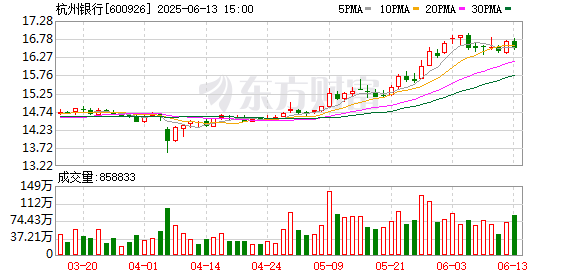
Core Viewpoint - Xinhua Insurance has acquired 329.6 million shares of Hangzhou Bank from the Commonwealth Bank of Australia for a total price of 4.32 billion yuan, making it the fourth largest shareholder with a 5.09% stake [2][3]. Group 1: Transaction Details - The share acquisition was completed at a price of 13.095 yuan per share, totaling 4.32 billion yuan [3]. - Following the transaction, the Commonwealth Bank no longer holds shares in Hangzhou Bank, which maintains no controlling shareholder or actual controller [3]. - The top three shareholders of Hangzhou Bank as of Q1 2025 are Hangzhou Financial Investment Group (18.2%), Red Lion Holdings Group (11.1%), and Hangzhou Urban Construction Investment Group (6.9%) [3]. Group 2: Investment Rationale - Analysts believe Xinhua Insurance's investment reflects confidence in Hangzhou Bank's long-term development prospects, given its strong performance and strategic location in the economically vibrant Yangtze River Delta [3]. - Hangzhou Bank reported a revenue of 38.38 billion yuan in 2024, a year-on-year increase of 9.6%, and a net profit of 16.98 billion yuan, up 18.1%, maintaining a leading growth rate in the industry [3]. Group 3: Broader Industry Trends - Since 2025, several insurance companies, including China Life and Ping An, have increased their holdings in bank stocks, indicating a positive outlook for the banking sector [5]. - The banking sector index has risen over 12% year-to-date, with several bank stocks reaching historical highs [5]. - The trend of insurance capital investing in bank stocks is driven by the need for asset allocation optimization and recognition of the long-term value of bank stocks [6]. Group 4: Future Outlook - High-quality banks are expected to become a priority for insurance capital in equity investments, providing a continuous source of incremental capital for the sector [7].

举牌之后继续“买买买” 险资“扫货”银行股
Zheng Quan Ri Bao· 2025-06-12 16:38
Core Viewpoint - Insurance companies, particularly Ping An Life, are increasingly favoring bank stocks, as evidenced by significant share acquisitions in Agricultural Bank of China and other banks, driven by stable performance and high dividend yields in a declining interest rate environment [1][2][4]. Group 1: Shareholding Activities - Ping An Life has acquired approximately 635.34 million shares of Agricultural Bank of China H-shares, raising its total holdings to about 4.658 billion shares, which constitutes 15.15% of the total H-shares [1]. - Ping An Life has executed multiple share acquisitions in Agricultural Bank of China, with initial holdings of approximately 1.539 billion shares (5% stake) on February 17, and increasing to about 3.191 billion shares (10.38% stake) by May 12, followed by further increases to approximately 3.944 billion shares by June 6 [2]. - Similar activities were observed with China Merchants Bank, where Ping An Life increased its holdings from about 230 million shares (5.01% stake) on January 10 to approximately 647 million shares (14.08% stake) by June 4 [2]. Group 2: Industry Trends - The trend of insurance companies acquiring bank stocks is reflected in actions by other firms such as Xinhua Insurance, which has also engaged in share acquisitions of banks, including a significant stake in Hangzhou Bank [3]. - Factors driving this trend include the stable performance and high dividend yields of bank stocks, which are attractive in the current investment environment characterized by declining interest rates [4][5]. - The collaboration between banking and insurance sectors is seen as strategically beneficial, enhancing competitive advantages and risk management capabilities for insurance companies [4][6]. Group 3: Future Outlook - The banking sector is expected to remain a key focus for insurance capital, with the potential for increased equity investments as regulatory policies encourage long-term capital market participation [6]. - The high dividend yield of the banking sector positions it favorably compared to other industries, making it an attractive investment option for insurance companies [5][6].

险资,继续“扫货”银行股!
券商中国· 2025-06-11 23:28
Core Viewpoint - China Ping An continues to aggressively acquire bank stocks, particularly increasing its stake in Agricultural Bank of China (ABC) H-shares to 15.15% after purchasing 63.534 million shares at an average price of HKD 5.3126 per share, totaling approximately HKD 338 million [2][3][4]. Group 1: Investment in Agricultural Bank of China - After the recent purchase, China Ping An's total holdings in ABC H-shares reached approximately 4.658 billion shares, with a market value of HKD 25.85 billion as of June 11 [5]. - The investment in ABC H-shares has been ongoing since January, with a total increase of 3.1 billion shares and a 10.1% rise in ownership percentage, costing over HKD 10 billion [4]. Group 2: Broader Bank Stock Investments - In addition to ABC, China Ping An has significant holdings in other major banks, including China Merchants Bank, Postal Savings Bank, Industrial and Commercial Bank of China, and China Construction Bank [6]. - The stake in China Merchants Bank has also increased, with Ping An Life surpassing 10% ownership and reaching 14.08% after purchasing 4.058 million shares at an average price of HKD 49.6294 per share [6]. - Ping An Life's investment in Postal Savings Bank has triggered a stake increase to 11.02%, with holdings valued at over HKD 10 billion as of May 26 [6]. Group 3: Investment Rationale - The management of China Ping An emphasizes the stability and low volatility of state-owned banks, which offer high dividend yields averaging over 5%, making them attractive compared to the 2%-2.5% guaranteed rates of insurance products [7]. - The insurance sector's interest in bank stocks is driven by their large size, relatively low valuations, and high dividend yields, aligning with the investment philosophy of insurance companies [8]. Group 4: Trends in Insurance Capital Investment - The insurance sector is experiencing a third wave of capital injection into bank stocks, with 15 instances of stake increases reported by seven insurance companies by May 31, surpassing the total for the entire year of 2023 [12][15]. - The trend of increasing equity investments is seen as a strategy to enhance investment returns, particularly in a low-interest-rate environment [10][15]. Group 5: Long-term Investment Strategies - Insurance companies are actively exploring long-term investment reforms, including the establishment of private equity funds focused on the stock market, with Ping An Asset Management recently launching a fund with a target size of HKD 30 billion [16].