荣耀

Search documents
太抢手了!3499元“豆包助手”手机一天就卖光,闲鱼最高溢价超过6500元【附智能手机行业市场分析】
Qian Zhan Wang· 2025-12-04 06:40
Core Insights - The "Doubao Assistant" engineering prototype, developed by ByteDance and ZTE, sold out within a day of its release, indicating strong market demand for AI-integrated smartphones [1][6] - The device is not a mass-market product but an engineering sample aimed at developers and tech enthusiasts, featuring high-end specifications and a unique AI assistant [1][2] - The smartphone market in China is highly concentrated, with major players like Vivo and Huawei holding significant market shares [3][5] Group 1: Product Overview - The "Doubao Assistant" is priced at 3499 yuan and features flagship specifications, including a 6.78-inch screen and Qualcomm Snapdragon 8 Gen 2 platform, making it attractive to developers [1][2] - The AI assistant can perform tasks across applications, breaking down data barriers and enhancing user experience [2][6] Group 2: Market Dynamics - The Chinese smartphone market is dominated by a few key players, with Vivo holding a 17.2% market share and Huawei over 16% in 2024 [3] - The top five manufacturers (Vivo, Huawei, Honor, OPPO, Xiaomi) account for approximately 80.8% of the market share, indicating high market concentration [5] Group 3: Industry Implications - The success of the "Doubao Assistant" prototype highlights the potential for system-level AI integration in smartphones, which could reshape the industry [6][7] - Traditional smartphone manufacturers may need to adapt to this new model of AI-defined hardware, which could disrupt existing brand-user relationships [6][7]


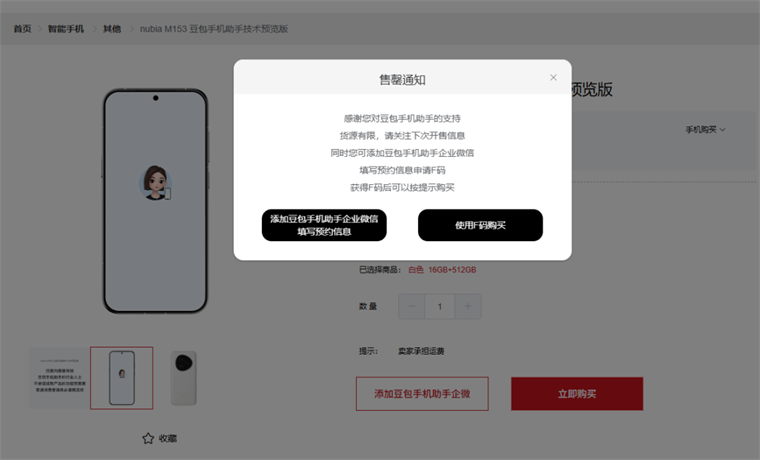
AI智能体正重写手机安全规则,该不该让“豆包助手”模拟你的手指?
Di Yi Cai Jing· 2025-12-04 03:24
Core Viewpoint - The article discusses the implications of granting the INJECT_EVENTS permission to the "Doubao Assistant" on the Nubia M153 phone, highlighting potential security risks and the necessity of collaboration between AI developers and hardware manufacturers [1][2][3]. Group 1: Technical Aspects - The Nubia M153 has enabled the INJECT_EVENTS permission, allowing applications to simulate user input events, which is a high-risk permission in the Android system [2][3]. - This permission is typically reserved for system-level applications and requires the app to be signed with the manufacturer's system private key, making it a significant security concern if misused [3][6]. - Doubao Assistant's ability to operate like a native system component is contingent upon its collaboration with hardware manufacturers, which is essential for accessing such high-level permissions [3][4]. Group 2: Security Concerns - Granting INJECT_EVENTS permission to third-party applications could lead to severe security risks, such as unauthorized access to sensitive information like banking passwords [3][4]. - The article emphasizes the need for a dual authorization mechanism to ensure user safety when AI interacts with third-party applications [7]. - Experts express that while there are inherent risks, the collaboration between AI and hardware manufacturers can justify the need for such permissions in specific scenarios [4][7]. Group 3: Market Dynamics - The competition among mobile manufacturers, AI developers, and traditional app developers is characterized as a struggle for data access and user entry points [7]. - The current target audience for the Doubao Assistant is primarily developers, not ordinary consumers, indicating a niche market focus [8].
千寻位置:时空服务月调用量破万亿次,每秒处理超38万次请求
Xin Lang Cai Jing· 2025-12-04 02:52
Core Insights - The company, Qianxun Location, has announced that its monthly spatiotemporal intelligent service call volume has exceeded 1 trillion times for two consecutive months, making it the first platform globally to reach this milestone [1][2] - The monthly call volume has increased tenfold from 100 billion times in March 2022 to over 1 trillion times in just three and a half years, equating to approximately 380,000 service requests processed per second [1][2] Smart Driving Sector - Qianxun Location has provided services to over 3.5 million smart connected vehicles, with a reliability risk as low as 10⁻⁷ per hour, supporting advanced driving functions such as high-speed NOA [1][2] - The company currently facilitates over 10 billion kilometers of driving mileage for intelligent vehicles each month, covering major brands like XPeng, Aion, Li Auto, and others [1][2] Low-altitude Economy - In the low-altitude economy sector, Qianxun Location has assisted over 200,000 drones and other low-altitude aircraft in completing various professional tasks, accumulating nearly 4 billion kilometers of service mileage [3] - This service mileage is equivalent to these aircraft flying around the Earth nearly 100,000 times [3] Consumer Market - The number of smartphones supporting Qianxun Location's high-precision positioning capabilities has surpassed 50 million units, covering major brands such as Huawei, Honor, OPPO, and VIVO [3]
努比亚Z80 Ultra登顶2025安卓好评榜首
Xin Lang Cai Jing· 2025-12-04 02:05
Core Insights - The November 2025 Android smartphone user satisfaction ranking has been released, highlighting the Nubia Z80 Ultra with an impressive 99.99% satisfaction rate, nearly achieving a perfect score [2][3] - Huawei's flagship models, the Mate 70 RS and Mate 70 Pro+, both secured a satisfaction rate of 98.46%, ranking them second, showcasing strong brand recognition in the high-end market [2][3] - Huawei's Mate 70 Pro Enjoy Edition also performed well with a satisfaction rate of 98.24%, allowing Huawei to occupy three positions in the top five, making it the standout brand in this ranking [2][3] Market Performance - The mid-range market is also showing strong performance, with the OPPO K13 Turbo 5G achieving a satisfaction rate of 98.26%, indicating ongoing improvements in user experience for mid-range devices [4] - The top ten models in the ranking represent a diverse array of brands, including realme, Honor, OnePlus, and Samsung, reflecting the competitive landscape and varied development within the Android ecosystem [4]
从“猎奇”到“信赖”折叠屏手机用户发展洞察报告
Ai Rui Zi Xun· 2025-12-04 01:42
Investment Rating - The report does not explicitly state an investment rating for the folding screen mobile phone industry Core Insights - The folding screen mobile phone has emerged as a strategic direction to break the growth bottleneck in the smartphone market, with significant growth expected from 2022 to 2024 [10][11] - The folding screen technology has evolved significantly, focusing on durability, user experience, and diverse forms [14][24] - The Chinese folding screen mobile phone industry is expected to lead globally due to technological advancements, cost control, and market innovation [23][24] Summary by Sections 01 Current Development of the Folding Screen Mobile Phone Industry - The global smartphone market has entered a phase of stock competition since 2017, with annual shipments declining by approximately 2.52%, projected to reach 1.22 billion units by 2024 [6][7] - Folding screen mobile phones are redefining user experience and are expected to maintain high growth rates in shipments from 2022 to 2024 [11][12] - The folding screen technology has undergone continuous evolution, focusing on core hardware reliability and software ecosystem optimization [14] 02 Brand Competition in the Folding Screen Mobile Phone Market - The global shipment of folding screen smartphones is projected to reach 6.6 million units in the first half of 2025, with a 0.1% year-on-year growth expected for the entire year [71] - In China, the shipment of folding screen smartphones is expected to reach 9.69 million units in 2024, with a steady growth trend observed [74] - The market is dominated by horizontal folding phones, which are expected to account for 6.31 million units in 2024 [80] 03 Consumer Psychology Insights of Folding Screen Mobile Phone Users - The user demographic for folding screen phones is predominantly male and urban, with a significant preference among high-education individuals [91][92] - The primary reasons for purchasing folding screen phones include a stronger sense of technology and innovation, with a budget of 8,000 to 10,000 yuan being common among users [109][110] - Users are primarily corporate managers, with a high interest in technology and brand reputation [94][95]
Counterpoint:Q3全球折叠屏智能手机出货量同比增长14% 创季度历史新高
Zhi Tong Cai Jing· 2025-12-04 01:28
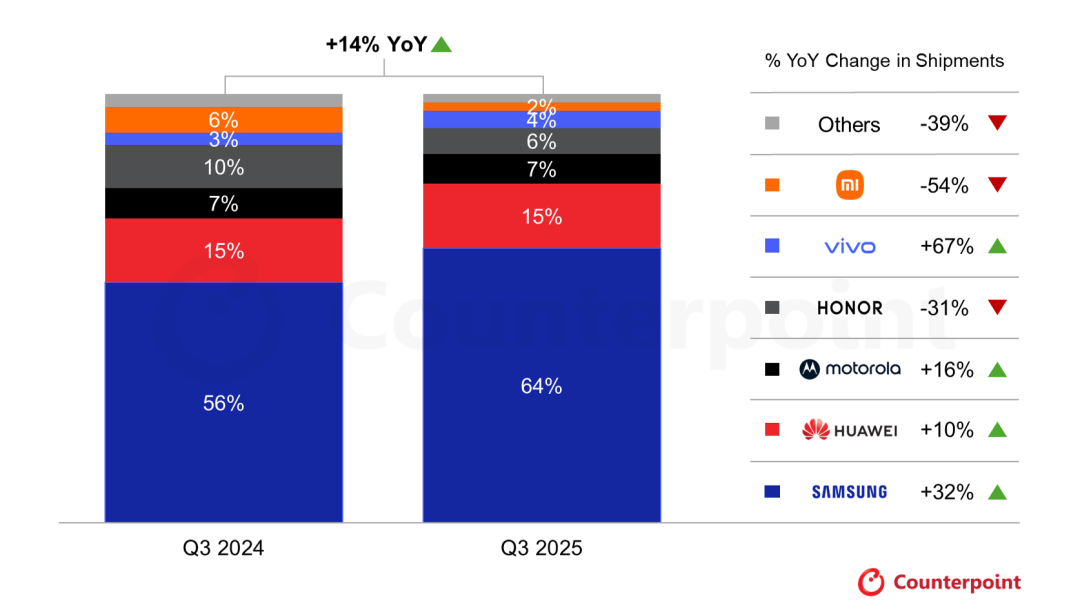
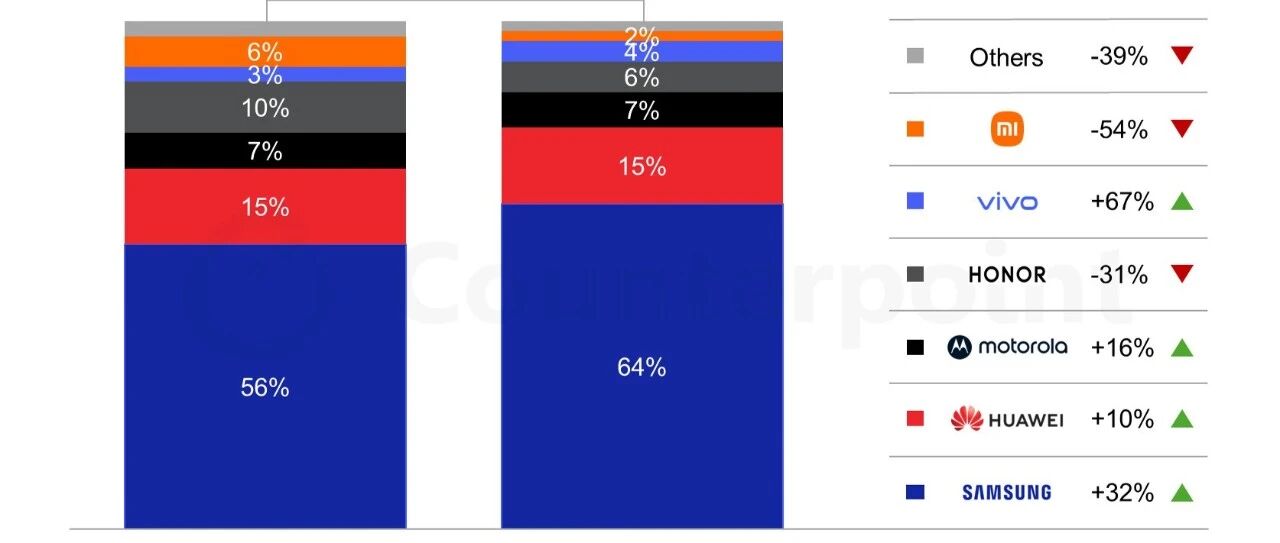
Group 1 - The global foldable smartphone shipment is expected to grow by 14% year-on-year in Q3 2025, reaching a historical high for the category, with foldable devices now accounting for 2.5% of global smartphone shipments [1] - The market expansion is driven by the Samsung Galaxy Z Fold7 and Huawei Mate series, with book-style models leading the growth, while clamshell models also perform well due to Samsung's refreshed product line and the strong performance of the Motorola Razr60 series [1] - Samsung's Galaxy Z series, particularly the Z Fold7, has significantly enhanced its appeal in the high-end market due to its thinner body, lighter weight, more durable hinge, and less visible crease, contributing to unexpected growth [1] Group 2 - The foldable smartphone market is projected to close 2025 with a stable growth rate of around 16% year-on-year, driven by high-end users' preference for larger screens and improved durability [4] - The market is expected to enter a significant expansion phase in 2026, with key drivers including enhanced durability, thinner and lighter designs, optimized hinge and panel structures, and richer AI-driven software experiences [4] - Apple is anticipated to enter the foldable market in the second half of 2026, leveraging its large iPhone user base to drive a new round of high-end product upgrades [4] Group 3 - The competition landscape is expected to change significantly with Apple's entry into the foldable market, prompting existing manufacturers to accelerate their technological advancements and product differentiation strategies [4] - A notable trend is the gradual move away from traditional book-style designs in foldable smartphones, with Huawei's early multi-fold solutions demonstrating engineering feasibility and Samsung's new tri-fold product marking a shift from concept to practical testing [4][5] - Samsung's first tri-fold model will have limited shipments, focusing on validating durability, hinge structure, and software optimization before larger-scale commercialization [5]

Omdia:第三季度拉美地区智能手机市场同比增长1% 出货量达到3520万部
Zhi Tong Cai Jing· 2025-12-04 01:21
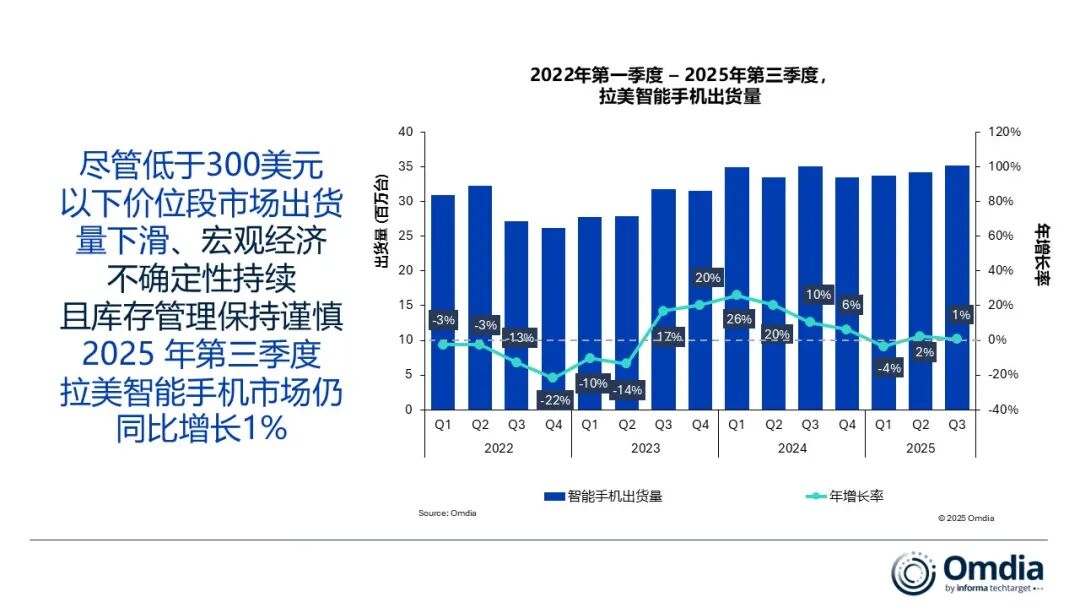
Core Insights - The Latin American smartphone market is projected to grow by 1% year-on-year in Q3 2025, reaching a shipment volume of 35.2 million units, marking the highest quarterly shipment level since Q4 2015 [1][9] - Despite economic uncertainties, careful inventory management and moderate consumer demand have contributed to resilient shipment performance among major manufacturers [1] Market Performance - Samsung leads the market with 11.6 million units shipped, capturing 33% market share, driven by strong performance of its low-end A series, which accounts for 68% of its total shipments [2][9] - Xiaomi follows in second place with 6.3 million units (18% share), while Motorola ranks third but has seen a decline of 11% year-on-year [2][9] - Honor has achieved a new shipment high of 2.9 million units, marking a 75% increase year-on-year, while Transsion has experienced a 19% decline [2][9] Regional Insights - The recovery in the region is attributed to growth in key markets such as Brazil and Central America, with Brazil holding a 29% share and a shipment volume of 10.3 million units, reflecting a 5% year-on-year increase [4] - In contrast, Mexico, the second-largest market, saw a shipment volume of 7.4 million units (21% share), down 11% year-on-year, marking the fourth consecutive quarter of decline [4] - Emerging brands like realme, OPPO, and Honor are strengthening their market positions through local manufacturing and partnerships with carriers and retailers [4] Price Segment Analysis - The segment of smartphones priced below $300, which accounts for 71% of total shipments, has declined by 2%, primarily due to ongoing inventory pressures and stagnant consumer demand [5][6] - Conversely, the high-end segment (above $500) has seen a robust growth of 20% year-on-year, leading to an 8% increase in average selling price (ASP) in Q3 2025 [6][8] - This structural shift indicates increased competition in the high-price segment traditionally dominated by Apple and Samsung, with brands like OPPO, Xiaomi, and Honor intensifying their investments [6][8] Future Outlook - Omdia forecasts that the Latin American smartphone market will remain stable in 2025, with an estimated annual shipment volume of approximately 137 million units, although pressures for 2026 are beginning to emerge [8] - Rising costs for memory and storage may lead to price increases for entry-level devices, potentially hindering market growth [8] - Manufacturers and retailers will need to adopt strategies such as subsidies, margin management, bundled sales, and flexible financing options to mitigate the impact on consumers [8]


华为“智能憨憨”引发AI玩具热,行业同质化严重智能化不足
证券时报· 2025-12-04 01:06
Core Insights - The AI toy market is experiencing a surge in interest, driven by products like the "Smart Hanhai" emotional companion AI robot from Huawei, which sold out quickly and has a high pre-order volume [1][3] - Despite the growing popularity, the industry faces significant challenges, including severe product homogenization and insufficient intelligence levels in AI toys [5][6] - Major companies are entering the AI toy space, indicating a competitive landscape, with new products being launched by firms like UBTECH and JD.com [2][4] Market Trends - The AI toy market is projected to grow significantly, with estimates suggesting a market size of approximately 246 billion yuan in 2024, increasing to 290 billion yuan in 2025, and potentially exceeding 1 trillion yuan by 2030, with a compound annual growth rate of over 50% [4][8] - The increase in consumer demand for intelligent products is pushing AI toys towards becoming mainstream, especially as traditional consumer electronics face stagnation [4][7] Industry Challenges - The AI toy sector is plagued by high return rates, with initial rates reaching up to 40% due to unmet consumer expectations regarding product functionality [6][8] - Many AI toys utilize common models and hardware, leading to a lack of differentiation and innovation, which contributes to the high return rates and consumer dissatisfaction [6][7] - The industry is currently in a "feature phone" stage, with many products failing to meet the true needs of consumers, resulting in a short-lived novelty [6][9] Competitive Landscape - The market is expected to undergo a significant reshuffle within the next five years, with companies lacking unique intellectual property, data, and comprehensive capabilities likely to exit the market [9] - Three main types of players are anticipated to remain: large consumer electronics firms leveraging their ecosystem, content-driven companies like LEGO and Disney, and specialized service providers focusing on niche markets [9][10] - Companies that can transition from one-time sales to sustainable content subscription models are likely to thrive, while others may struggle to compete [9][10]

全球折叠屏智能手机出货量在 2025 年 Q3 创历史新高,为 2026 年爆发式增长奠定基础
Counterpoint Research· 2025-12-04 01:03
Core Insights - The global foldable smartphone shipment volume reached a record high in Q3 2025, with a year-on-year growth of 14%, driven primarily by the strong performance of Samsung's Galaxy Z7 series [4][5]. Market Performance - In Q3 2025, foldable smartphones accounted for 2.5% of global smartphone shipments, indicating a growing acceptance in the high-end market [5]. - The book-style foldable models led market expansion, supported by the launch of Samsung's Galaxy Z Fold7 and Huawei's Mate series [5]. - The clamshell foldable models also performed well, benefiting from Samsung's refreshed product line and the strong showing of Motorola's Razr 60 series [5]. Future Projections - The foldable smartphone market is expected to close 2025 with a year-on-year growth of around 16%, maintaining a stable growth trajectory [8]. - By 2026, the market is anticipated to enter a significant expansion phase, driven by improvements in durability, thinner and lighter designs, and enhanced AI-driven software experiences [8]. - Apple is expected to enter the foldable market in the second half of 2026, potentially triggering a new upgrade cycle among high-end users [8][9]. Competitive Landscape - The competition in the foldable smartphone market is set to intensify with Apple's entry, prompting existing manufacturers to accelerate their technological advancements and product differentiation strategies [8][10]. - Samsung's recent launch of the Galaxy Z TriFold is a strategic pilot aimed at solidifying its technological leadership before broader commercialization [9][10].
Omdia:2025年第三季度,拉美智能手机市场同比增1%,创2015年以来单季出货量最高水平
Canalys· 2025-12-04 01:01
Core Insights - The Latin American smartphone market is projected to grow by 1% year-on-year in Q3 2025, reaching a shipment volume of 35.2 million units, the highest quarterly shipment level since Q4 2015 [2] - Major manufacturers have shown resilience in shipment volumes due to cautious inventory management and moderate consumer demand despite economic uncertainties [2] Market Performance - Samsung leads the market with 11.6 million units shipped, capturing 33% market share, with its low-end A series models accounting for 68% of its total shipments [2] - Xiaomi follows in second place with 6.3 million units (18% share), while Motorola ranks third but has seen a decline for six consecutive quarters, with a year-on-year drop of 11% [2] - Honor ranks fourth, achieving a new shipment high of 2.9 million units for the third consecutive quarter, driven by growth in the Caribbean, Colombia, and Ecuador, which now account for over 40% of its total shipments [2] Regional Insights - The recovery in the region is attributed to growth in key markets like Brazil and Central America, with Brazil holding a 29% share and a shipment volume of 10.3 million units (5% year-on-year growth) [4] - In contrast, Mexico, the second-largest market, saw a shipment volume of 7.4 million units (21% share), down 11% year-on-year, marking the fourth consecutive quarter of decline [4] - The demand for low-end devices remains strong in Brazil and other markets, while Colombia and Chile show signs of recovery due to improved economic conditions [4] Price Segment Analysis - Despite overall market growth, the segment below $300, which accounts for 71% of total shipments, declined by 2% due to ongoing inventory pressures and stagnant consumer demand [5] - This decline is offset by a robust 20% year-on-year growth in the high-end segment (above $500), leading to an 8% increase in average selling price (ASP) in Q3 2025 [6] - Brands like OPPO, Xiaomi, Honor, vivo, and realme are intensifying their efforts to solidify their positions in this high-margin segment [6] Strategic Insights - The increase in high-end market shipments reflects manufacturers' efforts to maintain market share and enhance brand positioning amid saturation in the low-end market [8] - Companies are focusing on improving ASP, enhancing ecosystem profitability, and strengthening customer loyalty as key strategies for sustained financial health [8] - Omdia forecasts that the Latin American smartphone market will remain stable in 2025, with an estimated annual shipment volume of approximately 137 million units, although pressures for 2026 are emerging due to rising costs of memory and storage [8]