IDC

Search documents
IDC FutureScape 2026十大预测:AI已经成为云计算发展的第一驱动力
智通财经网· 2026-02-10 05:52
Core Insights - The core message of the article emphasizes that AI has become the primary driver of cloud computing development, transforming cloud infrastructure from merely supporting IT to being essential for the deployment and scalability of AI applications [1] Group 1: Cloud Infrastructure Modernization - By 2027, over 85% of organizations in China will transition traditional cloud environments to new platforms that accommodate AI workloads, indicating that traditional IaaS/PaaS models are insufficient for scaling AI applications [2] - The modernization of cloud infrastructure is a prerequisite for enterprises to develop intelligent business operations [2] Group 2: AI-Driven Cloud Operations - By 2027, 80% of China's top 500 enterprises will deploy agent-based AI platforms to automate IT cloud operations, providing large-scale, continuous monitoring, analysis, and fault recovery capabilities with minimal human intervention [3][4] Group 3: AI Cloud Service Providers - By 2029, at least 30% of high-grade GPU resources will be provided by AI cloud service providers that offer cloud characteristics, flexible billing, APIs, and software services, distinguishing them from traditional GPU resource providers [5][6] Group 4: Edge AI and Private Cloud Platforms - By 2028, embodied intelligence will experience explosive growth, with cloud service providers deploying AI infrastructure and agents at the enterprise edge to support 60% of business scenarios [7] - To meet data privacy needs and reduce risks associated with public large language models, 60% of organizations in China will adopt private cloud platforms that offer greater control over data governance by 2028 [8][9] Group 5: AI Cost Governance and Heterogeneous Cloud Infrastructure - By 2028, companies that do not integrate AI investments into their cost governance will face a 30% increase in costs and lower overall returns on AI-related projects [10] - Over 80% of organizations in China will adopt heterogeneous cloud infrastructure by 2028 to balance mixed CPU, GPU, and storage technologies, optimizing the cost-effectiveness of AI workloads [11] Group 6: Cloud Risk Management and AI Workload Automation - By 2029, 50% of organizations implementing digital autonomy in China will migrate sensitive workloads to new cloud platforms to mitigate risks and enhance autonomy due to geopolitical uncertainties [12] - By 2029, 60% of organizations will use cloud-based AI integration tools to assess cost and performance metrics, deploying AI agents to automate workload collaboration and optimize workload substitution [13] Group 7: Intelligent SaaS Platforms - By 2029, 50% of Chinese enterprises will adopt SaaS platforms for real-time workflows, integrating predefined app functions with AI agents to create modular and interactive solutions [14] - The SaaS model is evolving towards a combination of "applications + agents," reflecting a shift in the cloud computing market from a growth phase to a capability reconstruction phase [15]

北京城市副中心外资企业突破1800家
Xin Lang Cai Jing· 2026-02-04 16:25
Core Insights - By the end of 2025, there will be 1,806 foreign-funded enterprises in Beijing's urban sub-center, with 569 new registrations from 2023 to 2025, of which 207 are expected in 2025 alone, accounting for 40% of the total new registrations over three years [1][2] - The rapid accumulation of foreign enterprises is attributed to the continuous efforts of the Tongzhou District Market Supervision Administration in service innovation and process optimization, enhancing the region's attractiveness to foreign investment [1][2] Group 1 - The establishment of a dedicated service team for foreign enterprises aims to streamline the registration process, ensuring efficient and effective service delivery [1][2] - The introduction of a bilingual registration guide and the implementation of an online registration system have significantly reduced bureaucratic hurdles, allowing for zero-runaround and high efficiency in business operations [1][2] Group 2 - Notable foreign projects, including the first wholly foreign-owned currency brokerage and major IT consulting firms, are settling in the sub-center, contributing to regional industrial upgrades and aligning with the development direction of the area [2] - The focus on optimizing the business environment includes a comprehensive service system that supports enterprises from entry to growth, with plans to enhance the "one-stop" service system and improve approval processes [2]


智能手机2025年先扬后抑 2026年AI手机市占率或过半
Xin Lang Cai Jing· 2026-01-02 20:35
Core Insights - The Chinese smartphone market experienced a "first rise, then fall" pattern in 2025, driven by initial consumer demand from the "old-for-new" subsidy policy, followed by a market cooling due to tightening subsidy policies and rising costs [1][3][5] - Industry innovation continues with advancements in battery technology, imaging capabilities, and AI integration, shifting the competition from "parameter competition" to "experience competition" [1][8][10] Market Trends - The initial success of the smartphone market in early 2025 was marked by a significant sales surge during the Spring Festival, with over 4.5 million digital products sold, and smartphone sales reaching 14.1 billion yuan, a 182% year-on-year increase [3] - However, the market faced a 4% year-on-year decline in smartphone sales in Q2 2025 due to inventory adjustments by manufacturers and the diminishing effects of subsidy policies [3][5] - The global rise in storage chip prices, driven by AI demand, has significantly increased costs, with prices for Samsung LPDDR4X memory rising from approximately $6 to $25 per unit, a more than threefold increase [3][5] Pricing and Market Segmentation - Rising costs have led to increased retail prices for smartphones, with Xiaomi's Redmi K90 priced at 2,599 yuan, up 300 yuan from its predecessor [4] - High-end flagship models can better absorb cost increases, while the low-end market faces severe pressure, as price sensitivity among consumers can lead to reduced demand for new devices [4][6] - Forecasts for 2026 indicate a conservative outlook for smartphone production and shipment, with IDC predicting a 2.2% year-on-year decline in shipments to approximately 278 million units [5][6] Structural Changes in the Market - The high-end smartphone market (priced above $600) is expected to grow its market share by 5.4 percentage points to 35.9%, while the low-end market (below $200) is projected to shrink by 4.3 percentage points to 20% [6] - The second-hand smartphone market is anticipated to grow by 20% in 2026, reaching over 100 million units, as consumers may opt for second-hand devices due to rising new device prices [7] Technological Innovations - The industry is focusing on significant upgrades in battery capacity, with major brands adopting 6,000-7,000mAh batteries, and some models featuring batteries as large as 8,300mAh [8] - Imaging technology is advancing with new models featuring 200-megapixel cameras, while AI capabilities are being integrated into devices with high-performance chips [8][10] - The competition is shifting towards AI capabilities and ecosystem integration, with brands needing to differentiate themselves through innovation and emotional engagement with consumers [9][10] Future Outlook - The year 2026 is seen as critical for the Chinese smartphone market, where success will depend on manufacturers' ability to navigate cost pressures and establish emotional connections with consumers [2][5] - IDC forecasts that the shipment of AI-enabled smartphones will reach 147 million units in 2026, representing a 31.6% year-on-year growth and accounting for 53% of the overall market [10][11]
The AI Transformation Has Arrived. Now Comes the Hard Part: Securing It
Globenewswire· 2025-12-02 21:03
Core Insights - Artificial intelligence is rapidly transforming enterprises, impacting critical workloads, cloud operations, identity systems, and collaboration tools, leading to new security challenges in evolving AI architectures [1][2]. Event Details - Check Point Software Technologies is hosting a virtual event titled "Securing the AI Transformation in a Hyperconnected World" on December 4, 2025, featuring experts from Check Point, NVIDIA, IDC, and global CISOs [2][6]. - The event aims to provide strategic insights for leaders on securing AI systems across cloud, edge, and distributed networks, rather than showcasing products [3][4]. Learning Objectives - Attendees will learn to build a unified AI-security stack across various environments, detect and prevent emerging threats from AI agents, and adopt a flexible security architecture [9]. Target Audience - The webinar is designed for CISOs, network architects, DevOps leads, CIOs, and security practitioners involved in AI deployment [6]. Company Overview - Check Point Software Technologies is a leader in digital trust protection, utilizing AI-powered cybersecurity solutions to safeguard over 100,000 organizations globally, with a focus on a prevention-first approach [7].


OPPO成三季度唯一增长的国产手机品牌 品牌忠诚度仅次于苹果
第一财经· 2025-11-07 07:34
Group 1 - OPPO is the only brand among top manufacturers in China to achieve growth in Q3, demonstrating strong resilience and growth capability [1] - The OPPO Reno series continues to be favored by young consumers, leading the shipment volume in the competitive $400-$600 price range during the first three quarters of the year [1] - OPPO's global device activation has surpassed 130 million, indicating a broad user base for the Reno series [2] Group 2 - OPPO has a high brand loyalty with nearly 50% of its users being repeat customers, the highest among Android brands [2] - The global memory chip market is experiencing significant price increases, with DRAM prices rising, which is expected to impact the pricing of end products [2] - Upcoming mid-range models are anticipated to also see price hikes as new flagship models have already been launched with price increases [2]

X @Bloomberg
Bloomberg· 2025-10-14 09:06
Mergers and Acquisitions - ArcelorMittal's head of M&A is in South Africa to finalize the sale of its local unit [1] - The potential buyer is the IDC (Industrial Development Corporation) [1]
IDC:2029年中国网络空间地图的市场规模将近10亿元
Bei Jing Shang Bao· 2025-09-22 11:38
Core Insights - The market size of China's cyberspace mapping is projected to reach 600 million yuan in 2024 and nearly 1 billion yuan by 2029, with a compound annual growth rate (CAGR) of 11% [1] Industry Development - Cyberspace mapping technology involves acquiring virtual and physical resources through mapping techniques, creating a foundational data resource set from multi-source data storage, and mapping these resources to geographic and social spaces [1] - IDC anticipates that the development of China's cyberspace mapping technology and market will focus on four key areas: continuous refinement of core capabilities, integration of cyberspace mapping with other platform capabilities, automation and intelligence in surveying, and accelerated development of industry-specific solutions [1]
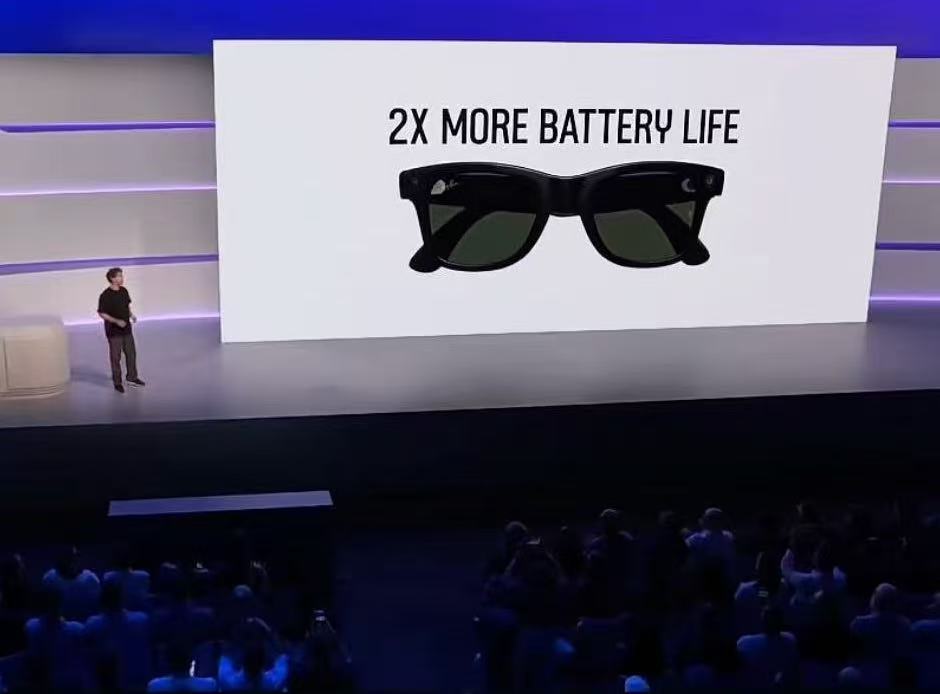
Meta发布首款带显示的AI眼镜,新引擎催生更多AI创作内容
Di Yi Cai Jing· 2025-09-18 04:38
Group 1 - Meta has launched its first AI glasses with a display that can provide real-time translation and support 3K video recording, marking a significant advancement in consumer wearable devices [3] - The new Horizon Engine aims to enhance the speed of virtual content creation using AI tools, which will eventually support content integration into glasses [3][4] - According to Sigmaintell, global AI smart glasses sales are expected to reach 5.7 million units by 2025, with Meta projected to capture over 65% of the market share due to the new product launches [3] Group 2 - The Horizon Engine is designed to improve the performance of the metaverse, allowing for faster loading times and better rendering effects, making it easier to create immersive virtual spaces [6] - Meta's Horizon Studio has released several generative AI tools over the past year to assist creators, and the new engine will integrate these tools for enhanced utility [4] - IDC reports that the global smart glasses market is expected to see a shipment of 2.555 million units by Q2 2025, with a year-on-year growth of 54.9% [6] Group 3 - Following the announcement, the AI glasses sector in the domestic A-share market saw a rise in stock prices, with several companies experiencing increases of over 10% [7]

AI时代,网络交换机市场强势复苏
半导体行业观察· 2025-06-21 03:05
Core Insights - The data center network switch market is experiencing significant growth driven by artificial intelligence, with a reported revenue of $11.7 billion in Q1 2025, marking a 32.3% year-over-year increase [3] - IDC noted a remarkable 54.7% growth in data center switch revenue compared to the previous quarter [4] Revenue Growth - The revenue from 200/400 GbE switches surged by 189.7% year-over-year [5] - IDC has started tracking 800 GbE switches, which generated $350.8 million in revenue, capturing nearly 5% of the market [5] Vendor Performance - NVIDIA emerged as the biggest winner in the switch market, with a staggering 760.3% year-over-year revenue increase, reaching $1.46 billion [5] - Arista's data center switch revenue grew by 27.1% to $1.6 billion, while Cisco's revenue declined by 3.2%, indicating competitive pressures [5] Non-Data Center Revenue - Non-data center related revenue from campus and branch network switches grew by a modest 9.6% [6] WLAN Market Insights - The WLAN market recorded a 10.6% revenue growth in Q1, with stabilization in supply-demand dynamics following the pandemic-related supply chain issues [7] - Innovations such as 6 GHz Wi-Fi and AI-driven management features are expected to drive future growth in enterprise WLAN [7]


Prediction: Apple Will Soar Over the Next 5 Years. Here's 1 Reason Why.
The Motley Fool· 2025-03-27 14:42
Core Viewpoint - Apple is struggling to catch up in the artificial intelligence sector, leading to underperformance in its stock due to disappointing AI efforts [1][2]. Group 1: Current Performance - Demand for Apple's AI features and related hardware has been lackluster, with iPhone revenue declining in the quarter ending December [2]. - iPhone unit sales fell by 4.1% year-over-year during the same quarter, indicating a significant drop in consumer interest [2]. - Apple's AI-powered virtual assistant, Siri, has been reassigned to a new chief after being described as "ugly and embarrassing" by a senior director [2]. Group 2: Market Expectations - Analysts suggest that the market may have had unrealistic expectations for Apple's AI advancements in the short term [3]. - UBS analyst David Vogt warns that significant improvements in Apple Intelligence are not expected within the next 12 months, even with the upcoming iPhone 17 series [3]. Group 3: Future Growth Potential - Analysts foresee potential AI-driven growth for Apple once the company enhances the marketability of Apple Intelligence [4]. - The intelligent virtual assistant market is projected to grow at an annualized rate of 26% through 2033, indicating a promising future for AI technologies [4]. Group 4: Analyst Sentiment - The current 12-month consensus price target for Apple is $253.71 per share, reflecting a 15% increase from its current price, with most analysts rating the stock as a buy [5]. - A catalyst is needed to convince investors that Apple's AI initiatives are back on track, but there is a concern that it may be too late to invest once such a catalyst appears [5].