Mellanox

Search documents
一颗颠覆传统的芯片
半导体行业观察· 2026-02-06 01:33
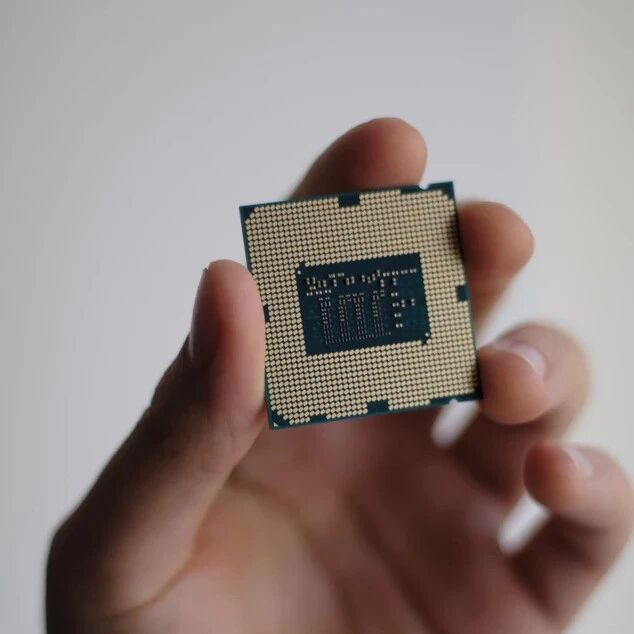
Core Viewpoint - NextSilicon is innovating in computer architecture with its Maverick 2 processor, aiming to address challenges in high-performance computing (HPC) and artificial intelligence (AI) by utilizing a unique data flow architecture that enhances performance and efficiency [2][3][16]. Group 1: Company Strategy and Architecture - NextSilicon's Maverick 2 processor is designed to overcome limitations of traditional CPU and GPU architectures by directly executing computation graphs, eliminating the need for instruction serialization and reordering [7][8]. - The architecture allows for simultaneous execution of multiple memory operations and arithmetic logic unit (ALU) operations, significantly improving performance by masking core latency sensitivity [6][9]. - The company emphasizes the importance of memory management, utilizing a unique memory management unit (MMU) that handles fewer memory accesses, thus optimizing memory access patterns [10][11]. Group 2: Performance Metrics and Testing - NextSilicon's architecture has demonstrated unprecedented performance in benchmarks such as GUPS (Giga Updates Per Second), showcasing its ability to handle random memory access efficiently [18]. - The company aims to maximize performance by transforming workloads typically limited by computation into those limited by memory, thus achieving optimal performance levels [19]. Group 3: Market Focus and Future Directions - NextSilicon strategically targets the HPC market, which, despite being smaller than the AI market, provides a mature environment for technology development and customer collaboration [16][17]. - The company is exploring how to leverage its HPC chip for AI applications, indicating a future direction that combines high-performance computing with artificial intelligence workloads [23][24].

未知机构:沃尔核材重点推荐RubinUltra明确保留铜连接器方案-20260127
未知机构· 2026-01-27 02:10
Summary of Conference Call Notes Company and Industry Involved - The focus is on **沃尔核材 (Wolfe Materials)**, specifically regarding their **RubinUltra** product line and the copper connector solutions. Core Points and Arguments - **New Technology Impact**: The introduction of **BiDi (bidirectional transmission)** technology is expected to significantly extend the lifecycle of copper cables on the Nvidia (Nv) side, effectively doubling the bandwidth of connectors [1] - **Market Demand Growth**: There is a notable increase in demand from major companies like **Google** and **Amazon**, which is anticipated to open up substantial market space for copper cables, particularly in the context of **ASIC (Application-Specific Integrated Circuit) cabinets** [1] - **Future Projections**: The demand from these tech giants is projected to exceed Nvidia's solutions by 2026, indicating a strong market shift towards copper connectors [1] - **Profit Expectations**: The profit expectations for 2027 are optimistic, suggesting that the anticipated profits should be factored into Wolfe Materials' market valuation [1] Other Important but Potentially Overlooked Content - The ongoing debate regarding the viability of copper connectors versus alternative solutions is expected to continue, but there is a growing optimism among proponents of copper technology [1] - The company encourages further inquiries for detailed breakdowns and elasticity assessments related to their offerings [1]

史上最大收购竟秘而不宣,英伟达如何借“授权协议”收割技术和人才?
Feng Huang Wang· 2025-12-27 01:32
Core Viewpoint - Nvidia has acquired key assets from AI chip startup Groq for $20 billion, utilizing a non-exclusive licensing agreement to circumvent traditional acquisition methods and potential antitrust scrutiny [1][3][4]. Group 1: Acquisition Details - Nvidia's acquisition of Groq marks the largest merger in its 32-year history, surpassing the previous record of nearly $7 billion for Mellanox in 2019 [3]. - The deal includes Groq's CEO Jonathan Ross and other top executives, who will join Nvidia to enhance the application of licensed technology while Groq continues to operate independently under CFO Simon Edwards [2][3]. Group 2: Strategic Implications - This acquisition strategy reflects a trend among tech giants like Meta, Google, Microsoft, and Amazon, who have similarly invested billions to attract top AI talent and secure critical technologies through licensing agreements [3]. - Analysts suggest that this move not only prevents Groq's technology from falling into competitors' hands but also strengthens Nvidia's position in the AI market, enhancing its competitive moat [7]. Group 3: Financial Context - Nvidia's stock rose approximately 1% to $190.53 following the announcement, with a year-to-date increase of 42%, and a staggering 13-fold increase since the launch of ChatGPT in late 2022 [5]. - The company has significantly increased its cash reserves, totaling $60.6 billion as of October, up from $13.3 billion at the beginning of 2023, allowing for aggressive investments in the AI ecosystem [5]. Group 4: Future Considerations - Key questions remain regarding the ownership of Groq's language processing unit (LPU) intellectual property and its potential licensing to Nvidia's competitors, as well as the impact of Groq's nascent cloud business on Nvidia's services [8].


刚刚,黄仁勋回应
半导体芯闻· 2025-12-25 10:20
Core Viewpoint - NVIDIA has agreed to acquire Groq's intellectual property for $20 billion in cash, marking the largest acquisition in NVIDIA's history, although it does not involve the purchase of Groq as a company [2][3]. Group 1: Acquisition Details - The acquisition will allow NVIDIA to integrate Groq's low-latency processors into its AI factory architecture, expanding its capabilities for AI inference and real-time workloads [4]. - Groq's revenue target for this year is set at $500 million, driven by the increasing demand for AI acceleration chips [4]. - Groq will continue to operate as an independent company, with its cloud business, GroqCloud, remaining unaffected by the acquisition [3][4]. Group 2: Financial Context - Prior to this acquisition, NVIDIA's largest acquisition was the $6.9 billion purchase of Mellanox in 2019 [3]. - As of the end of October, NVIDIA holds $60.6 billion in cash and short-term investments, a significant increase from $13.3 billion at the beginning of 2023 [3].
Nvidia makes its biggest purchase ever
Yahoo Finance· 2025-12-25 06:07
According to CNBC, Nvidia has agreed to pay about $20 billion in cash for Groq, a specialist in AI accelerator chips used to power inference—the stage where trained AI models actually answer questions, generate text, or drive real-time applications. Alex Davis, CEO of investment firm Disruptive, which led Groq’s latest financing round, told CNBC that the deal came together quickly, months after Groq raised $750 million at a valuation of roughly $6.9 billion. Disruptive has invested more than $500 million ...
英伟达(NVDA.US)豪掷200亿美元拿下AI芯片初创企业Groq核心资产 创公司史上最大交易
智通财经网· 2025-12-24 22:37
Core Insights - Nvidia has agreed to acquire assets from AI chip startup Groq for $20 billion in cash, marking Nvidia's largest acquisition to date [1] - Groq has raised over $500 million since its founding in 2016, with a recent funding round of $750 million valuing the company at approximately $6.9 billion [1][2] - Groq will continue to operate independently, with its CFO Simon Edwards becoming the CEO, while key executives will join Nvidia to enhance its technology capabilities [1][2] Financial Details - Nvidia's cash and short-term investments reached $60.6 billion as of the end of October, significantly up from $13.3 billion at the beginning of 2023, providing ample resources for large investments [2] - The acquisition is significantly larger than Nvidia's previous record acquisition of Mellanox for about $7 billion in 2019 [2] Strategic Implications - Nvidia plans to integrate Groq's low-latency processors into its AI infrastructure, expanding its capabilities in AI inference and real-time workloads [2] - The acquisition aligns with Nvidia's ongoing strategy to invest heavily in the AI ecosystem, including investments in AI and energy infrastructure companies and partnerships with major players like OpenAI and Intel [3] Market Context - The demand for AI inference acceleration chips is surging, with Groq targeting $500 million in revenue this year [3] - Other AI chip startups, such as Cerebras Systems, are also gaining attention, indicating a competitive landscape in the AI chip market [4]
NBA球星,成为英伟达副总裁
猿大侠· 2025-12-15 04:11
Core Insights - The article discusses NVIDIA's unique management structure under CEO Jensen Huang, who directly oversees a team of 36 executives, down from a peak of 55, emphasizing a flat organizational model that enhances information flow and decision-making efficiency [1][16][18]. Group 1: Management Philosophy - Huang believes that "information is power," requiring each executive to access firsthand information to accelerate decision-making and innovation [2][9]. - He has established a rule of "no proactive one-on-one meetings" to prevent information silos, but is always available for immediate communication when requested [2][10]. - This management style contrasts sharply with other tech leaders like Mark Zuckerberg and Elon Musk, who maintain smaller, more traditional management teams [5][7]. Group 2: Team Composition - Huang's direct reports include a mix of long-time veterans and industry experts, forming a diverse team that drives NVIDIA's success across various sectors, including GPUs, AI, and automotive chips [18][20]. - The core team consists of founding members and early contributors who have been integral to NVIDIA's growth from a small startup to a multi-trillion-dollar company [21][22]. Group 3: Key Executives - Chris Malachowsky, co-founder, focuses on core technology strategy and has over 40 years of experience in the semiconductor industry [25][30]. - Dwight Diercks, a long-serving executive, has been pivotal in developing software for NVIDIA's GPU and AI platforms [33][34]. - Jeff Fisher, responsible for the GeForce business, has played a crucial role in establishing NVIDIA's dominance in the gaming market [37][40]. Group 4: Technical Leadership - Bill Dally, NVIDIA's Chief Scientist, is known for his contributions to parallel computing and has been instrumental in the company's transition to a computing-focused entity [60][61]. - Michael Kagan, CTO, integrates networking technology with GPU capabilities, enhancing NVIDIA's data center solutions [68][71]. - Ian Buck, a pioneer in GPU computing, oversees NVIDIA's data center business and has been influential in developing the CUDA platform [77][80]. Group 5: Business Operations - Colette Kress, CFO, has been crucial in balancing R&D investments with profitability, helping NVIDIA achieve significant revenue growth [118][122]. - Jay Puri, responsible for global business development, has expanded NVIDIA's market presence across various sectors [126][130]. - Debora Shoquist, EVP of Operations, has restructured NVIDIA's supply chain to meet increasing demand for GPUs [138][143]. Group 6: New Ventures - Howard Wright, responsible for the Inception startup program, brings a unique background from sports and technology to foster innovation [199][205]. - Wu Xinzhou, overseeing automotive business, leverages his experience in autonomous driving to enhance NVIDIA's market position in this sector [213][220]. - Alexis Bjorlin, leading the DGX Cloud initiative, focuses on providing AI cloud services, marking NVIDIA's shift towards a service-oriented model [224][230].
英伟达(NVDA.US)“现金帝国”浮现:黄仁勋打造AI生态防火墙 未来将用战略投资取代大型并购
智通财经网· 2025-12-05 01:17
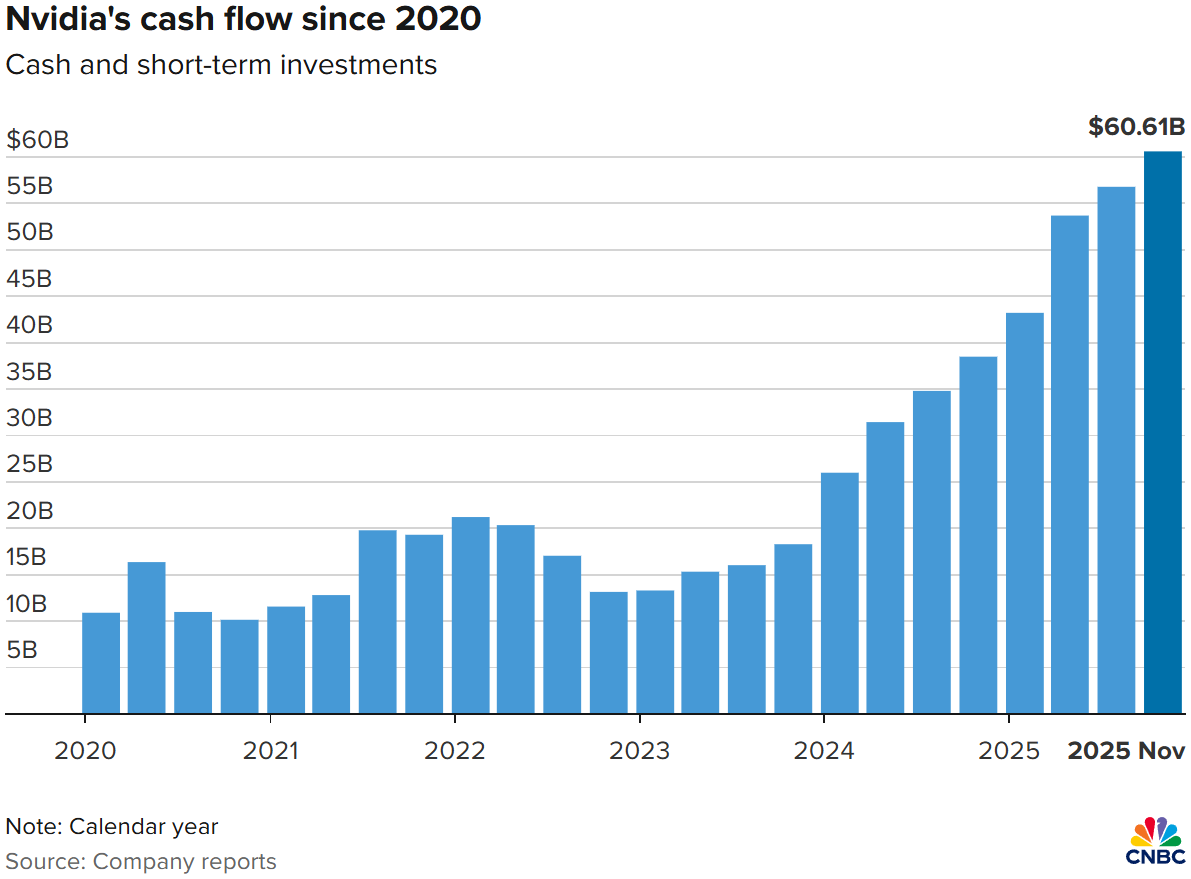
Core Viewpoint - Nvidia is making significant investments in various companies, totaling $18 billion in commitments this year alone, with a focus on enhancing its position in the AI and semiconductor sectors [1][2]. Group 1: Investment Activities - Nvidia announced a $2 billion investment in Synopsys, part of a series of large-scale investments including $1 billion in Nokia, $5 billion in Intel, and $10 billion in Anthropic, totaling $18 billion in commitments [1]. - The company has also committed to investing $100 billion in acquiring shares of OpenAI over the coming years, although a final agreement has not yet been reached [1]. - Nvidia's cash reserves have significantly increased to $60.6 billion as of the end of October, up from $13.3 billion in January 2023, largely due to the success of its chips following the launch of ChatGPT [1]. Group 2: Cash Flow and Share Buybacks - Nvidia is projected to generate $96.85 billion in free cash flow this year, with a total of $576 billion over the next three years [2]. - Analysts expect Nvidia to utilize a portion of its cash for stock buybacks, with the board having authorized an additional $60 billion for this purpose [2]. - The company has already spent $37 billion on stock buybacks and dividends in the first three quarters of the year [2]. Group 3: Strategic Focus and Future Plans - CEO Jensen Huang emphasized the importance of maintaining a strong balance sheet to ensure confidence among customers and suppliers regarding future order fulfillment [3]. - The CFO stated that the primary goal is to ensure sufficient cash is available for timely delivery of next-generation products, particularly in light of demands from major suppliers like Foxconn and Dell [3]. - Huang described strategic investments as crucial for driving additional consumption of Nvidia's chips, particularly as companies like OpenAI grow [3]. Group 4: Historical Context and Acquisition Strategy - Since 2020, Nvidia has seen a substantial increase in cash flow, with investments in private companies totaling $8.2 billion, which have replaced large-scale acquisitions [7]. - The acquisition of Mellanox for $7 billion in 2020 was Nvidia's largest acquisition, laying the groundwork for its current AI server products [7]. - Nvidia faced regulatory challenges in its attempt to acquire Arm for $40 billion, leading to the termination of the deal, and has not completed any large-scale acquisitions since then [7].
英伟达“现金帝国”浮现:黄仁勋打造AI生态防火墙 未来将用战略投资取代大型并购
Jin Rong Jie· 2025-12-05 01:12
尽管涉及巨额资金和众多交易,但英伟达拥有足以开出大额支票的现金储备。截至 10 月底,英伟达拥 有 606 亿美元现金及短期投资。这一数字较 2023 年 1 月的 133 亿美元大幅增长,当时正值 OpenAI 发 布 ChatGPT 不久。三年前 ChatGPT 的发布,是推动英伟达芯片成为最具价值科技产品的关键因素。 随着英伟达从游戏技术制造商转型为美国市值最高的公司,其资产负债表已固若金汤,投资者也越来越 好奇公司将如何运用其巨额现金。 在上个月的财报电话会议上,当被问及公司计划如何运用现金时,首席执行官黄仁勋表示:"没有公司 曾实现我们正在谈论的这种规模的增长。" 根据 FactSet 对分析师的调查,预计该公司今年将产生 968.5 亿美元自由现金流,未来三年自由现金流 总额将达 5760 亿美元。 智通财经APP注意到,本周,英伟达(NVDA.US)宣布将斥资 20 亿美元入股芯片设计公司 Synopsys,这 只是这家芯片制造商今年宣布的一系列大规模投资中的最新一例。 英伟达还表示将投资 10 亿美元入股诺基亚、向英特尔投资 50 亿美元、向 Anthropic 投资 100 亿美元 ——仅这 ...
Nvidia has a cash problem -- too much of it
CNBC· 2025-12-04 12:00
Core Insights - Nvidia has announced significant investments totaling $18 billion in various companies, including a $2 billion stake in Synopsys, a $1 billion stake in Nokia, a $5 billion investment in Intel, and a $10 billion investment in Anthropic, alongside a potential $100 billion commitment to acquire OpenAI shares over several years [1][2][3] Financial Position - As of the end of October, Nvidia holds $60.6 billion in cash and short-term investments, a substantial increase from $13.3 billion in January 2023, following the launch of ChatGPT [3][4] - Analysts project Nvidia will generate $96.85 billion in free cash flow this year and $576 billion over the next three years, with some suggesting the company should allocate more cash for share repurchases [5][6] Share Repurchase Strategy - Nvidia's board increased its share repurchase authorization by $60 billion in August, with $37 billion spent on share repurchases and dividends in the first three quarters of the year [6][7] - The company plans to continue stock buybacks, leveraging its strong balance sheet to instill confidence among customers and suppliers [6][7] Strategic Investments - Nvidia's CEO emphasized the importance of strategic investments in driving AI consumption and expanding the ecosystem of its products, particularly Cuda [8] - The company has made $8.2 billion in investments in private companies, which have replaced traditional acquisitions, with the largest acquisition being the $7 billion purchase of Mellanox in 2020 [9][10] Regulatory Challenges - Nvidia faced regulatory hurdles when attempting to acquire Arm for $40 billion in 2020, leading to the deal's cancellation due to competition concerns [10][11] - The company has not completed any significant multi-billion acquisitions since the failed Arm deal, with the CFO noting that large M&A opportunities are currently limited [11]