
张量处理单元

Search documents
刚刚,黄仁勋回应
半导体芯闻· 2025-12-25 10:20
Core Viewpoint - NVIDIA has agreed to acquire Groq's intellectual property for $20 billion in cash, marking the largest acquisition in NVIDIA's history, although it does not involve the purchase of Groq as a company [2][3]. Group 1: Acquisition Details - The acquisition will allow NVIDIA to integrate Groq's low-latency processors into its AI factory architecture, expanding its capabilities for AI inference and real-time workloads [4]. - Groq's revenue target for this year is set at $500 million, driven by the increasing demand for AI acceleration chips [4]. - Groq will continue to operate as an independent company, with its cloud business, GroqCloud, remaining unaffected by the acquisition [3][4]. Group 2: Financial Context - Prior to this acquisition, NVIDIA's largest acquisition was the $6.9 billion purchase of Mellanox in 2019 [3]. - As of the end of October, NVIDIA holds $60.6 billion in cash and short-term investments, a significant increase from $13.3 billion at the beginning of 2023 [3].


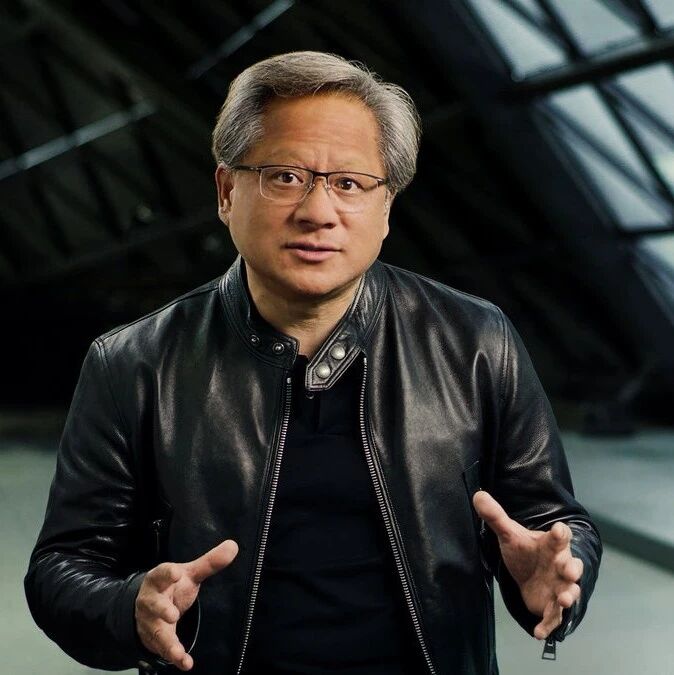
博通Q4业绩超预期:AI芯片销售将翻倍 净利飙升97%
Xin Lang Cai Jing· 2025-12-11 22:16
来源:环球市场播报 调整后每股收益:1.95美元(预期1.86美元) 今年6月,博通透露其定制化人工智能芯片已有3家客户和4家潜在客户;9月宣布迎来第四家匿名大客 户,对方下达了100亿美元的定制芯片订单;10月又与OpenAI达成合作,共同研发定制化芯片。投资者 正密切关注博通是否能确认这些企业持续合作,并按计划采购、部署定制芯片。 博通本季度总营收同比增长28%,公司将这一增长主要归功于人工智能芯片销售额74%的大幅攀升,这 意味着第四季度人工智能相关收入已达82亿美元。 博通(Broadcom)发布的第四财季报告显示,公司调整后每股收益与营收均超出市场预期,同时受 人工智能需求推动,发布了强劲的本季度业绩指引。 营收:180.2亿美元(预期174.9亿美元) 博通表示,第一季度营收预计约为191亿美元,同比增长28%,高于分析师平均预期183亿美元。 首席执行官Hock Tan在声明中称,博通预计本季度人工智能芯片销售额将同比翻倍至82亿美元,收入来 源既包括定制化人工智能芯片,也涵盖人工智能网络相关半导体产品。 本季度公司净利润同比激增97%,从去年同期的43.2亿美元(合每股0.90美元)增至85. ...

“太空数据中心”成AI必争之地?马斯克与贝佐斯互掐,Altman也想插一脚
硬AI· 2025-12-11 11:32
Core Viewpoint - The competition between Elon Musk's SpaceX and Jeff Bezos's Blue Origin to develop orbital AI data centers is intensifying, aiming to leverage heavy rockets to address the significant energy consumption issues on Earth [2][3]. Group 1: Industry Overview - The trend of moving AI data centers to space is driven by the need to alleviate the physical limitations on Earth, particularly the enormous power requirements for AI model training and inference [6]. - Supporters believe that orbital data centers can harness solar energy more efficiently, with satellites potentially receiving 30% more solar intensity and up to six times the total solar energy compared to Earth [6]. - The concept of relocating resource-intensive infrastructure off Earth has been around for years, but advancements in launch and satellite costs are approaching a critical point [6]. Group 2: Key Players - SpaceX plans to utilize an upgraded version of its Starlink satellites to support AI computing loads, potentially increasing its valuation to $800 billion [3]. - Blue Origin is developing the New Glenn rocket, which is designed to launch large numbers of satellites into orbit, with expectations that orbital data centers could become cost-effective within 20 years [9]. - Other tech leaders, including OpenAI and Google, are also exploring opportunities in this emerging market, with Google planning to deploy test satellites carrying AI chips by early 2027 [11]. Group 3: Challenges and Risks - Significant technical challenges remain, including temperature management, cosmic radiation protection, and the transmission of vast amounts of data back to Earth without delays [13]. - Skeptics argue that the costs and risks associated with space-based data centers are underestimated, particularly when compared to ground facilities that may benefit from improved power and resource availability [13]. - Achieving the necessary scale for orbital data centers will require thousands of satellites, posing high demands on current launch capabilities and cost management [13].

人工智能泡沫还是超级周期?AMD CEO 公开说出不为人知的一面
美股研究社· 2025-12-05 10:52
Core Viewpoint - AMD is not in an AI bubble but is in the "third year of a ten-year super cycle of computing demand" [1][10]. Group 1: AMD's Strategic Positioning - AMD has transitioned from being a "CPU follower" to a data center powerhouse [3]. - The company has reallocated R&D resources towards high-performance computing and AI, resulting in a data center business growth rate exceeding 50%, projected to rise above 60% [5][6]. - AMD aims to capture a double-digit market share in a projected $1 trillion data center market by 2030, leveraging its comprehensive product portfolio [6][8]. Group 2: Competitive Advantages - AMD's chiplet-first architecture and rack-scale systems provide a significant competitive edge [2]. - The company possesses unique capabilities across CPUs, GPUs, FPGAs, and ASICs, allowing for integrated solutions that adapt to changing workloads [6][8]. - AMD believes that GPUs will dominate the market for the next five years due to their programmability and flexibility, while custom ASICs will complement rather than replace them [7][12]. Group 3: Transition to System Solutions - AMD is evolving from a "chip company" to a "system company," focusing on full-stack solutions to enhance deployment efficiency [9][10]. - The acquisition of ZT Systems and partnerships for rack-level designs like Helios demonstrate AMD's commitment to this strategy [9][10]. Group 4: AI Market Dynamics - AMD's CEO asserts that the current AI landscape is not speculative but integral to productivity and innovation across various sectors [10][12]. - The demand for CPUs is rising due to the increasing need for general-purpose processing in AI applications, countering the notion that GPUs will solely dominate [11][12]. Group 5: Future Outlook - AMD's strategic focus on high-performance computing and AI positions it well for significant growth, with analysts projecting a potential stock price of $775, and in optimistic scenarios, close to $1000 [2].

联发科股价周涨逾20% 有望创2002年来最佳单周表现 与谷歌合作重塑增长前景
智通财经网· 2025-11-28 03:48
Core Viewpoint - Media reports indicate that MediaTek's stock is poised for its best week since 2002, driven by advancements in artificial intelligence technology and support from its client Google, which is reshaping the company's future growth prospects [1] Company Summary - MediaTek's stock price has surged over 20% this week in the Taipei stock market, fueled by investor enthusiasm for Google's newly launched Gemini model and AI chip transactions [1] - The company has partnered with Alphabet's Google to co-design tensor processing units, which is seen as a potential competitor to NVIDIA's chips in the AI application space [1] - Despite being a prominent smartphone chip manufacturer, MediaTek faces challenges due to intense market competition and high R&D costs, leading to uncertain demand for its end products and pressure on profits [1] - Year-to-date, MediaTek's stock has declined by approximately 2%, despite the recent boost from AI-related news [1] Industry Summary - Analysts from Morgan Stanley, Charlie Chan and Daniel Yen, suggest that while the business environment will remain challenging next year, the growth potential of Google's TPU should offset the negative impact from the smartphone business in the long run [1] - The upgrade of MediaTek's stock rating from "hold" to "buy" reflects a positive outlook on the company's future prospects in the AI sector [1]
AI烧钱引担忧,谷歌(GOOGL.US)高管派定心丸:算力每半年翻一倍才能满足需求
Zhi Tong Cai Jing· 2025-11-21 13:42
Core Viewpoint - Google needs to double its computing power every six months to meet demand, aiming for a 1000-fold increase in computing capacity within 4 to 5 years [1] Group 1: Google's AI Infrastructure - Amin Vahdat, Google Cloud VP, emphasized that the competition in AI infrastructure is critical and costly, requiring significant improvements in cost, energy consumption, computing power, storage, and network connectivity while maintaining the same power and energy levels [1] - The statement was made during a meeting on November 6, highlighting the urgency of scaling computing capabilities [1] Group 2: Investment Risks and Market Reactions - Sundar Pichai, CEO of Alphabet, acknowledged the risks of underinvestment in AI, especially in light of the strong performance of cloud business data, which could improve with more computing resources [2] - The report followed Nvidia's announcement of better-than-expected earnings and guidance, which initially boosted its stock price before concerns about an AI bubble led to a decline [2] Group 3: Alphabet's Relationship with Nvidia - Alphabet is a customer of Nvidia and utilizes its tensor processing units for various applications and services [3]
