
PPG

Search documents
【行业深度】洞察2025:中国涂料行业竞争格局及市场份额(附市场集中度、市场份额等)
Qian Zhan Wang· 2026-02-27 06:09
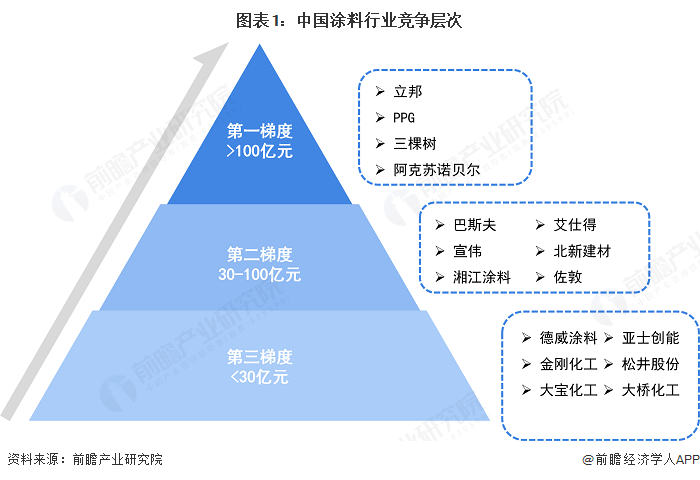
本文核心数据:涂料企业竞争格局;涂料市场集中度 1、中国涂料行业竞争梯队 根据国内涂料行业首家财经媒体《涂界》发布的《2025中国涂料企业100强排行榜》对中国涂料行业竞争梯 队进行分析,销售额大于100亿元的企业有立邦、PPG、三棵树和阿克苏诺贝尔等,位于行业竞争第一梯 队;30-100亿元区间内包括巴斯夫、佐敦、宣伟、艾仕得、北新建材、湘江涂料等,位于第二梯队;小于30亿 元企业包括德威涂料、亚士创能、松井股份、大宝化工、大桥化工等,位于第三梯队。 转自:前瞻产业研究院 以下数据及分析来自于前瞻产业研究院涂料研究小组发布的《中国涂料行业发展前景预测与投资战略规划分 析报告》 行业主要上市公司:三棵树(603737)、北新建材(000786)、亚士创能(603378)、松井股份(688157)等 2、中国涂料行业区域竞争分析 根据企查猫以"涂料、油墨、颜料及类似产品制造业"为选定行业,以"涂料"为关键词进行精确搜索,涂料产 业链企业主要分布在广东省,以及山东、浙江、江苏、上海等华东地区。截至2025年12月,广东共有相关涂 料企业数5931家。 注:企查猫数据截止到2025年12月5日 从代表性企业分布来看 ...


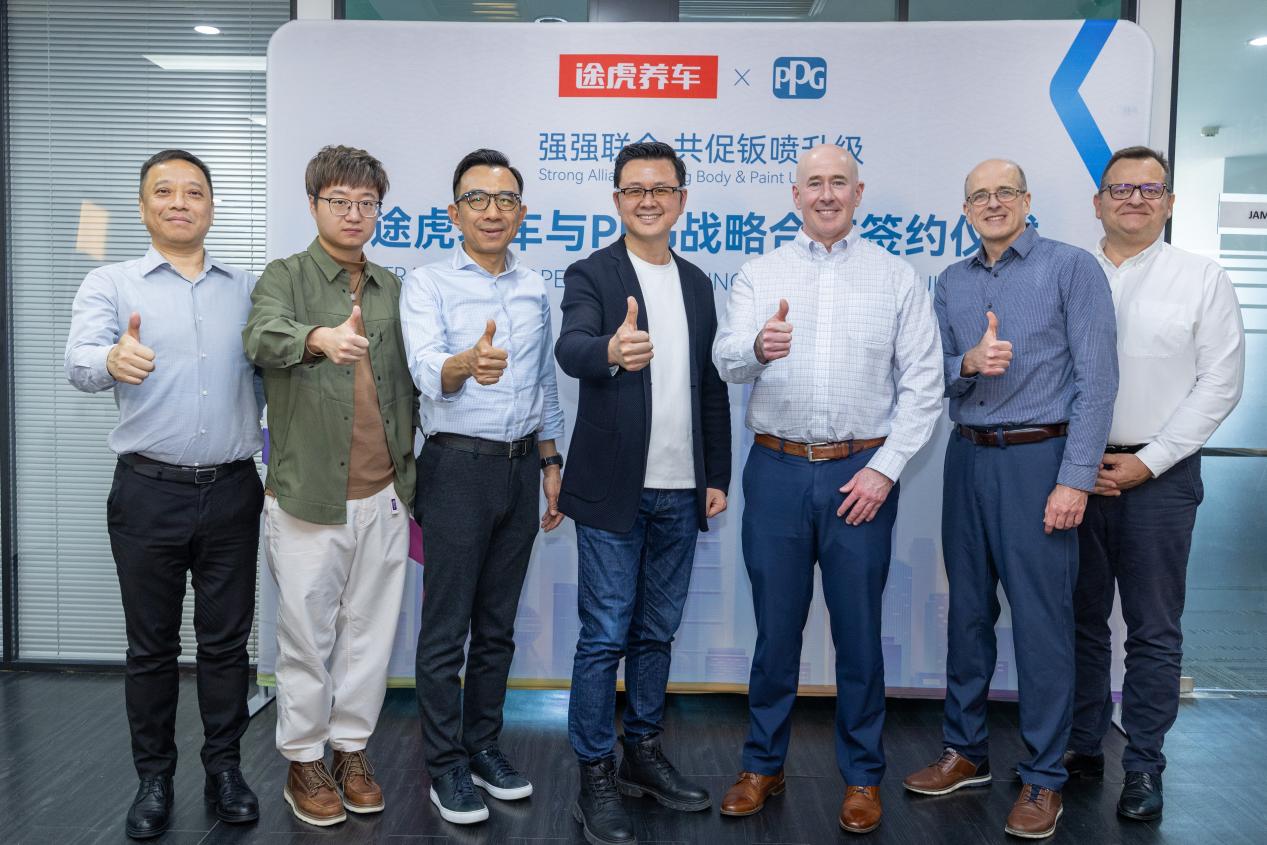
途虎养车与PPG汽车修补漆战略合作,强强联合共推钣喷服务升级
Jin Rong Jie· 2026-02-04 08:26
2026年2月3日,国内领先的独立汽车服务平台途虎养车与全球知名涂料品牌PPG汽车修补漆,在PPG大中华区总部正式举行战略合作签约仪式。基于双方自 2024年初启动合作以来的良好基础,本次双方续签并深化战略合作协议,途虎养车部分精选钣喷门店将选用PPG汽车修补漆产品及标准化喷涂解决方案,共 同推动汽车钣喷服务质量与用户体验的全面升级。 财经频道更多独家策划、专家专栏,免费查阅>> 本次签约仪式上,途虎养车相关业务负责人,以及PPG汽车修补漆全球高级副总裁Chancey Hagerty,PPG汽车修补漆亚洲区副总裁Tony Wu,PPG汽车修补 漆Mid-tier业务总经理Eric Zheng等双方高层出席并共同见证这一重要时刻。 责任编辑:山上 PPG是全球领先的涂料、材料和解决方案供应商,拥有140多年的行业积淀。汽车修补漆作为PPG旗下核心业务板块之一,在全球汽车后市场领域享有极高 的专业声誉与市场口碑。依托领先的产品技术、完善的培训体系以及覆盖全国的经销商网络,PPG汽车修补漆长期服务于国内主流4S店、连锁维修体系及高 端修理厂网络。深耕中国市场二十余载,PPG汽车修补漆通过技术创新与人才培养,推动中国 ...
航材股份20260127
2026-01-28 03:01
Summary of the Conference Call for Hangcai Co., Ltd. Company Overview - Hangcai Co., Ltd. is incubated by AECC (Aviation Industry Corporation of China) and relies on the research capabilities of the Beijing Aeronautical Materials Institute, holding a diversified layout and sustainable profitability through an industrialization platform for mass production [2][3] - The major shareholder is the Beijing Aeronautical Materials Institute, which holds 60.14% of the company's shares [4] Core Business and Competitive Advantages - The company focuses on integrated casting technology to enhance component strength and avoid welding fatigue cracks, with a highly automated production base in Zhenjiang [2][5] - It is the only domestic enterprise engaged in the subcontracting of titanium alloy intermediate casings, meeting the demand for engines in the civil aviation manufacturing sector [5] - The main business areas include titanium alloy castings, high-temperature alloy master alloys, transparent glass, rubber sealing materials, and sealants, particularly supporting the domestic C919 aircraft project [3][5] Financial Performance and Profitability - Non-metal materials, including cockpit transparent components and rubber sealing materials, contribute over 70% of the company's total profits, despite lower revenue proportions [2][7] - The gross margin for high-temperature alloy master alloy smelting is relatively low, indicating significant room for improvement [4][9] Future Development Potential - The company has potential for downstream expansion, particularly in high-temperature alloy casting, including blade casting and powder metallurgy assets, which are not yet fully integrated into the listed company [2][8] - By leveraging the strong R&D capabilities of its controlling shareholder, the company aims to further expand market share and enhance overall profitability [8] Technological Advancements and Challenges - The transparent component business is crucial for fighter aircraft cockpits, requiring advanced technology for stealth capabilities, with significant expected advancements by 2025 [10][11] - The company faces competition in rubber sealing materials from established overseas firms and domestic competitors, with ongoing efforts for domestic verification to drive future growth [12] Conclusion - Hangcai Co., Ltd. demonstrates a strong position in the aerospace materials industry, with a focus on innovation and strategic partnerships, while also facing challenges in profitability and competition that need to be addressed for sustained growth [2][4][8]

X @The Wall Street Journal
The Wall Street Journal· 2026-01-25 17:12
Paint maker PPG built a database of their products overlaid with the laws of chemistry, then asked AI to create something new. The result is PPG’s first AI-assisted new product. https://t.co/Qx7Yk087Ob ...
X @The Wall Street Journal
The Wall Street Journal· 2026-01-24 17:02
Paint maker PPG built a database of their products overlaid with the laws of chemistry, then asked AI to create something new. The result is PPG’s first AI-assisted new product. https://t.co/zfPJVXrE82 ...
3440万辆创纪录!2025中国汽车产销引爆涂料行业百亿赛道
Xin Lang Cai Jing· 2026-01-15 14:09
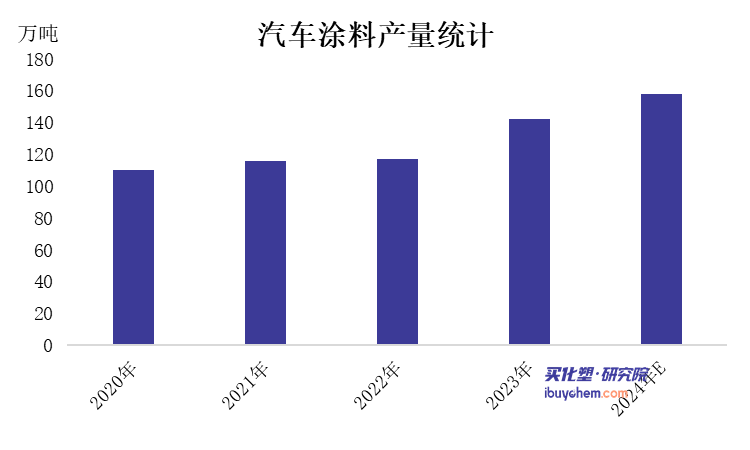
Core Insights - The Chinese automotive industry achieved a production and sales volume of 34.53 million and 34.40 million vehicles in 2025, marking a year-on-year growth of 10.4% and 9.4%, respectively, maintaining its position as the world's largest market for 17 consecutive years [1][27] - New energy vehicles (NEVs) reached a production and sales volume of 16.63 million and 16.49 million units, leading the global market for 11 years, with domestic new car sales accounting for 47.9% [1][27] - The automotive industry's growth has significantly boosted the upstream coatings industry, with an expected production of 1.74 million tons of automotive coatings and a market value of 64.5 billion yuan in 2025 [1][27] Automotive Coatings Market Overview - The automotive coatings market is segmented into original equipment manufacturer (OEM) coatings (44%), repair coatings (26%), component coatings (18%), and other coatings (12%) [3][30] - The OEM coatings market in China is projected to grow to approximately 28.5 billion yuan, with domestic brands increasing their market share in commercial vehicles to over 40% [4][32] - The repair coatings market is valued at around 16.8 billion yuan, with both domestic and foreign brands coexisting [4][32] Demand and Growth Drivers - The automotive coatings sector is closely tied to the automotive industry's performance, with passenger vehicle production and sales surpassing 30 million units for the first time in 2025, driving strong demand for coatings [7][34] - The commercial vehicle market is also recovering, with production and sales exceeding 4 million units, contributing to the growth of related coatings products [7][34] - Exports of Chinese vehicles exceeded 7 million units in 2025, a year-on-year increase of 21.1%, with NEV exports doubling to 2.615 million units, further stimulating coatings demand [7][34] Company Performance - In the first three quarters of 2025, Matsui's passenger vehicle coatings revenue surged by 87.57% to 149 million yuan, while Nippon Paint's automotive coatings revenue reached 1.995 billion yuan, up 4.4% [11][38] - BASF's Shanghai coatings division reported a revenue of 2.298 billion yuan in the first half of 2025, reflecting a 3.1% increase [11][38] - Domestic companies such as Donglai Technology, Jinlitai, and Yatu Gaoxin also reported revenue growth of over 5% [11][38] New Energy Vehicles and Functional Coatings - NEVs are driving a revolution in materials and processes, with a penetration rate approaching 50%, creating new demands for specialized coatings [14][41] - The need for protective coatings for power batteries requires extreme insulation, flame resistance, corrosion resistance, and thermal conductivity, leading to the emergence of a high-value segment for battery coatings [14][41] - The use of lightweight materials like aluminum and carbon fiber in NEVs presents new challenges for coatings in terms of adhesion and flexibility [14][41] Policy and Technological Drivers - Stricter environmental policies are pushing the industry towards greener technologies, with a focus on low-VOC coatings becoming mainstream [17][44] - The 2025 Central Economic Work Conference emphasized promoting green development, leading to the adoption of water-based and high-solid coatings [17][44] - Technological innovations driven by consumer demand for quality and safety are accelerating the development of high-value products such as self-repairing coatings and low-VOC interior coatings [19][46] Supply Chain and Domestic Market Dynamics - Foreign brands have historically held a 60% market share in China's automotive coatings market, dominating over 80% in high-end segments [22][49] - Recent strategic investments by major automotive manufacturers in domestic coatings companies are breaking this trend, providing local firms with valuable validation and order guarantees [23][50] - The "14th Five-Year Plan" encourages the development of strategic emerging industries, creating opportunities for domestic companies to accelerate their growth in the NEV sector [23][50] Future Outlook - The China Automotive Industry Association predicts that automotive sales will reach 34.75 million units in 2026, with NEV sales at 19 million units and exports at 7.4 million units [24][51] - Future competition will focus on environmental compliance, NEV market positioning, and supply chain autonomy [24][51] - The automotive coatings industry is transitioning from scale growth to high-quality development, with domestic brands poised to reshape the global competitive landscape [24][51]
IPO研究丨预计2035年全球铝颜料市场规模将达13.9亿美元
Sou Hu Cai Jing· 2026-01-06 03:22
Group 1 - The core point of the article is that Inner Mongolia Xuyang New Materials Co., Ltd. has received acceptance for its IPO on the Beijing Stock Exchange [2] - The underwriting institution for the IPO is Changjiang Securities Co., Ltd., with representatives Xu Chao and Tong Jinshuan, and the accounting firm is Rongcheng Accounting Firm [3] Group 2 - Xuyang New Materials is a high-tech enterprise specializing in the R&D, production, and sales of functional powder and slurry materials made from non-ferrous metals, with main products including fine spherical aluminum powder, aluminum pigments, spherical zinc powder, and copper pigments [4] - The company has established stable partnerships with well-known international coating companies such as PPG, AkzoNobel, and BASF [4] Group 3 - The demand for aluminum pigments is increasing due to higher consumer expectations for the appearance and performance of various consumer goods, with applications in coatings, inks, plastics, and industries such as automotive and 3C products [5] - According to Research Nester, the global aluminum pigment market is projected to reach approximately $550.91 million in 2024, exceed $871.07 million in 2025, and reach $1.39 billion by 2035, with a compound annual growth rate of about 4.8% from 2026 to 2035 [5]
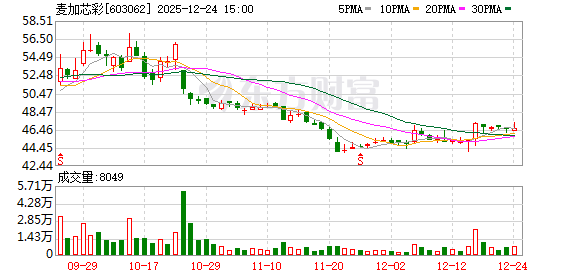
麦加芯彩:国内国际市场均为公司目标市场
Zheng Quan Ri Bao· 2025-12-24 12:13
Core Insights - The Chinese ship coating market is estimated to be valued at approximately 11.5 billion yuan in 2024, with foreign brands holding a dominant market share of 85.32% [2] - The top seven companies in the market are all foreign brands, including Jotun, AkzoNobel, Hempel, Nippon Paint, Zhongtu Chemical, PPG, and King Paint [2] - The global ship coating market is around 40 billion yuan, with the main competitors also being the aforementioned foreign brands [2]

2025年中国轨道交通装备用涂料行业壁垒、政策、发展规模、应用市场结构、竞争格局及发展趋势研判:市场需求持续扩容,国内龙头企业积极向高端市场渗透[图]
Chan Ye Xin Xi Wang· 2025-12-24 01:33
Core Viewpoint - The rail transit equipment coating industry is experiencing significant growth driven by the expansion of the rail transit sector in China, with a dual growth pattern of "new construction + maintenance" [1][7]. Industry Overview - Rail transit equipment coatings are essential for protecting and beautifying train surfaces, providing anti-rust and anti-corrosion properties, which are critical for product quality [1][7]. - The market demand for rail transit coatings is expected to grow, with a projected demand of 73,921 tons in 2024 and 77,572 tons in 2025 [1][7][8]. - The market size for rail transit coatings is anticipated to reach 2.206 billion yuan in 2024 and 2.337 billion yuan in 2025 [1][7]. Market Structure - The rail transit coating market is divided into new vehicle matching (28.59% in 2024) and maintenance (71.41% in 2024) segments, with the latter dominating the market [1][7]. - By 2025, the new vehicle matching segment is expected to increase to 30.35%, while the maintenance segment will decrease to 69.64% [1][7]. Industry Chain - The upstream core raw materials for rail transit coatings include resins, pigments, additives, and solvents, with epoxy and polyurethane resins being widely used [8]. - The midstream involves the research and production of rail transit coatings, while the downstream applications include high-speed trains, subways, and freight trains [8]. Competitive Landscape - The market shows a mix of diversification and concentration, with large multinational companies like PPG and AkzoNobel dominating the high-end market, while domestic leaders focus on narrowing the technology gap [10]. - Key domestic companies include Zhuzhou Feilu High-tech Materials Co., Ltd., Qingdao Aierjiacai New Materials Co., Ltd., and others, with a focus on innovation and quality [10][12]. Development Trends - The industry is moving towards high-end functional coatings with higher added value, including self-repairing and smart sensing coatings, which are expected to drive profit growth [13]. - The integration of new materials and technologies will continue to inject vitality into the industry, with advancements in intelligent coating technologies enhancing efficiency and quality [13].

信凯科技(001335) - 001335信凯科技投资者关系管理信息20251211
2025-12-11 12:38
Company Overview - Zhejiang Xinkai Technology Group Co., Ltd. is actively engaging with investors to discuss its operations and market strategies [1] - The company is currently in the trial production phase at its new facility in Liaoning, which is expected to last approximately one year [2] Production and R&D - The production ramp-up for the new facility is influenced by market demand and competition, typically taking 2-3 years for chemical companies to reach full capacity [2] - The company’s R&D expenses are lower compared to peers due to a focus on product development and customization rather than extensive manufacturing R&D [3] - Future investments in manufacturing bases and R&D centers are expected to increase R&D expenditures [3] Market Position and Sales - Approximately 87% of the company's revenue comes from overseas markets, with operations in over 70 countries [7] - The company has established seven subsidiaries abroad to enhance sales efficiency and customer service [7] - The global automotive coatings market is valued at around $24 billion, with the company aiming to increase its market share in high-end applications [8] Product Classification - The distinction between mid-to-high-end and mid-to-low-end products is based on application requirements and production costs, with high-end products requiring more complex and costly manufacturing processes [4] Strategic Location - The decision to establish manufacturing facilities in Jinzhou, Liaoning, was based on favorable local policies, energy costs, and logistical considerations [5][6] Competitive Landscape - The company faces significant competition in the high-end automotive coatings market, which is predominantly controlled by foreign giants [8] - The company aims to break the overseas monopoly through technological advancements and promote domestic brands globally [8]