
Pertamina

Search documents
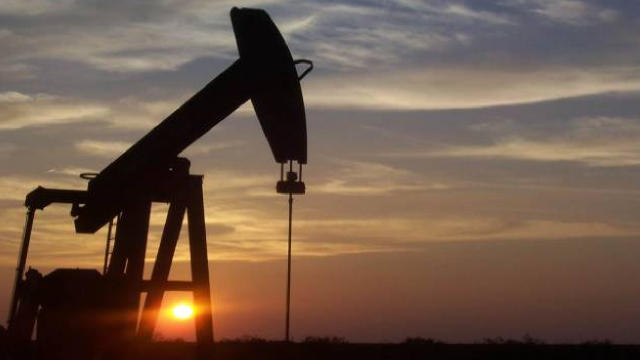
Halliburton Teams Up With Pertamina to Boost Indonesia's Energy Output
ZACKS· 2026-02-24 14:16
Key Takeaways Halliburton signed an MOU with Pertamina to deploy advanced drilling tech in Indonesia.HAL will use multi-stage fracking, acid stimulation and cementing to lift output from mature fields.Partnership adds AI and closed-loop automation to improve efficiency, safety and energy security.Halliburton (HAL) , a major global oil and gas equipment and services company, has formed a new partnership with Pertamina, Indonesia’s state-owned energy company. The two companies signed a memorandum of understan ...


印尼最大炼油厂完成升级改造
Xin Lang Cai Jing· 2026-01-19 05:47
Core Insights - Pertamina, Indonesia's state-owned energy company, has completed a $7.4 billion upgrade of the Balikpapan refinery, increasing its crude oil processing capacity from 260,000 barrels per day to 360,000 barrels per day, making it the largest refinery in Indonesia [1] Group 1: Upgrade Details - The upgrade aims to meet the growing domestic energy demand in Indonesia and reduce import dependency [1] - Post-upgrade, the refinery will produce gasoline grades 92, 95, and 98, with an expected annual output of 5.8 million kiloliters, alleviating gasoline import pressure [1] - The project includes the capability to produce lower sulfur fuel and significantly increases liquefied petroleum gas (LPG) annual production capacity from 48,000 tons to 384,000 tons, which is expected to reduce LPG imports by 4.9% [1] Group 2: Future Projections - The energy sector anticipates that, combined with the mandatory biodiesel blending policy, Indonesia will be able to stop diesel imports and cease aviation fuel imports by 2027 [1] - The upgrade also includes new petrochemical production facilities, which will produce 283,000 tons of petrochemical products annually, including 225,000 tons of propylene [1]
Indonesia officially opens upgraded Balikpapan refinery
Yahoo Finance· 2026-01-12 14:28
Core Insights - The inauguration of Pertamina's upgraded Balikpapan refinery marks a significant enhancement in Indonesia's oil refining capacity, with an investment of $7.4 billion aimed at boosting energy independence [1] - The refinery's processing capacity has increased to 360,000 barrels per day from 260,000 barrels, making it the largest refinery in Indonesia [1] Group 1: Refinery Upgrade and Production - The upgraded refinery is expected to produce 5.8 billion liters of gasoline annually, reducing gasoline imports from 24 billion to 19 billion liters [2] - The modernization project includes the ability to produce lower-sulphur fuel and an increase in liquefied petroleum gas (LPG) production capacity from 48,000 to 384,000 tonnes annually [3] - A new petrochemical production unit at the facility is set to produce 283,000 tonnes of petrochemicals each year [4] Group 2: Energy Independence and Policy Impact - The expansion is projected to decrease LPG imports by 4.9% and aims to eliminate the need for gas oil imports due to rising production levels and the biodiesel mandate [2][4] - Indonesia's oil production is expected to reach 580,000 barrels per day in 2024, with further increases projected by 2026, attributed to policy measures and new technologies [5] - The focus on energy security is a priority for the administration, aiming to reduce reliance on imported fuels and enhance economic resilience [5] Group 3: Environmental and Technological Advancements - The refinery features advanced processing units that comply with Euro V emission standards, supporting environmental goals while meeting domestic demand [4] - The operationalization of the residual fluid catalytic cracking unit in November 2025 is a key component of the refinery's modernization efforts [6]
固定收益部市场日报-20260105
Zhao Yin Guo Ji· 2026-01-05 07:59
Report Industry Investment Rating - No information provided on the industry investment rating Core Viewpoints - Asia IG names were unchanged to 2bps tighter in the morning, with flows favoring higher - yielding issues in greater Asia and LGFV spaces [3] - Macau's gaming industry had solid GGR growth in 2025, and the 2026 target seems conservative [6] - China's PMI signaled a temporary improvement, with expected GDP growth decline from 5% in 2025 to 4.8% in 2026, and potential policy stimulus [3][10][11][15] Summary by Related Catalogs Trading Desk Comments - ARAMCO 35s tightened 1bp, FABUH 30 widened 5bps last Friday [2] - Chinese IG names had spreads changes of 5bps tighter to 4bps wider, NWDEVL Perps rose 0.2 - 1.9pts, VDNWDL 9 Perp increased by 1.4pts [2] - The buy recommendation on NWDEVL 5.25 Perp and NWDEVL 8.675 02/06/28 was changed to neutral, and a buy on VDNWDL 9 Perp was initiated [2] - Lai Sun Development's Chairman made a profit of USD11.3mn from trading LASUDE 26, and LASUDE 26 was up by 0.8pt [2] - Various bonds in different regions and industries had price and spread changes, such as Macau gaming, Chinese properties, JP, and SE Asia [2] Last Trading Day's Top Movers - Top performers included VLLPM 9 3/8 07/29/29 with a 3.3 price change, NWDEVL 5 1/4 PERP with a 1.9 change [4] - Top underperformers included FTLNHD 11.88 09/30/27 with a - 0.9 change, COSL 2 1/2 06/24/30 with a - 0.9 change [4] Macro News Recap - S&P (+0.19%), Dow (+0.66%) and Nasdaq (-0.03%) were mixed last Friday, and Trump made a statement about Venezuela [5] - 5/10/30 year UST yield was higher, with 2/5/10/30 year yield at 3.47%/3.74%/4.19%/4.86% [5] Desk Analyst Comments - Macau Gaming - Macau's GGR in Dec'25 increased 14.8% yoy to MOP20.9bn, and cumulatively in 2025, it increased 9.1% to MOP247.4bn, 84.6% of 2019 level [6] - In 2025, tourist arrival was 40.1mn, up 15% yoy and exceeding the 2019 record [6] - Macau government's 2026 GGR target of MOP236bn seems conservative [6] - MPELs and STCITYs are top picks, WYNMAC'27 and '29 are yield - pick - up plays, and neutral on MGMCHIs, SANLTDs, and SJMHOLs [7] Desk Analyst Comments - China Economy - China's manufacturing PMI rebounded in December but recovery was fragile due to seasonality [10][11][12] - Demand improved with new orders expanding and export orders approaching expansion, deflation pressure eased [10][11][12] - Service PMI remained in contraction, construction PMI rebounded [11][13] - Growth is expected to be under pressure in early 2026, potentially triggering policy stimulus [11][14][15] - Expect a 50bp cut in RRR and a 10bp cut in LPR in 1Q26, an additional 10bp LPR cut in 3Q26, and broad fiscal deficit at 8.5% in 2026 [11][14][15] Offshore Asia New Issues - No new offshore Asia issues were priced on the last trading day [17] - Pipeline issues include BOC Aviation, Export - Import Bank of India, and Hyundai Capital America with various tenors and coupon rates [18] News and Market Color - Onshore primary issuances suspended last Friday during the New Year Holiday [21] - China will broaden fiscal spending in 2026 and prioritize domestic demand [21] - Multiple corporate events such as China Jinmao's redemption, CTF Services' acquisition lapse, and rating changes [21]
Weatherford Announces Third Quarter 2025 Results
Globenewswire· 2025-10-21 20:30
Core Insights - Weatherford International plc reported third quarter 2025 revenues of $1,232 million, reflecting a 2% increase sequentially but a 13% decrease year-over-year [2][7] - The company experienced a significant decline in operating income, net income, and earnings per share compared to both the previous quarter and the same quarter last year [2][3][7] - Adjusted EBITDA for the quarter was $269 million, with a margin of 21.8%, showing a sequential increase but a year-over-year decrease [2][3][7] Financial Performance - Revenues for Q3 2025 were $1,232 million, up 2% sequentially but down 13% year-over-year [2][7] - Operating income was $178 million, down 25% sequentially and 27% year-over-year [2][7] - Net income was $81 million, with a margin of 6.6%, reflecting a 40% decrease sequentially and a 48% decrease year-over-year [2][7] - Basic income per share was $1.13, down 40% sequentially and 48% year-over-year [2][7] Cash Flow and Capital Expenditures - Cash flows from operating activities were $138 million, an 8% increase sequentially but a 47% decrease year-over-year [3][7] - Adjusted free cash flow was $99 million, a 25% increase sequentially but a 46% decrease year-over-year [3][7] - Capital expenditures totaled $44 million, down 19% sequentially and 44% year-over-year [3][7] Strategic Developments - The company expanded its credit facility by $280 million, with total commitments now at $1 billion [5][16] - Weatherford announced a private offering of $1,200 million in Senior Notes due 2033 and a cash tender offer for $1,300 million of outstanding Senior Notes due 2030 [5][16] - Credit rating upgrades were received from Moody's, S&P Global Ratings, and Fitch Ratings, enhancing the company's financial standing [5][16] Operational Highlights - Weatherford showcased over 20 product launches at the FWRD 2025 conference, emphasizing innovation and digital transformation [6][7] - The company secured several significant contracts, including a $147 million contract with Petrobras for Tubular Running Services in Brazil [10][7] - Notable operational achievements included the deployment of advanced technologies in various regions, enhancing efficiency and reducing costs [10][11][20] Segment Performance - Drilling and Evaluation (DRE) segment revenue was $346 million, a 3% sequential increase but a 20% year-over-year decrease [15][17] - Well Construction and Completions (WCC) segment revenue was $468 million, up 3% sequentially but down 8% year-over-year [19][20] - Production and Intervention (PRI) segment revenue was $326 million, largely flat sequentially but down 12% year-over-year [21][22] Geographic Revenue Breakdown - North America revenue was $243 million, a 1% sequential increase but a 9% year-over-year decrease [24][7] - International revenue reached $989 million, a 3% sequential increase but a 13% year-over-year decrease [25][7] - Latin America revenue was $214 million, a 10% sequential increase but a 40% year-over-year decrease [26][7] - Middle East/North Africa/Asia revenue was $533 million, a 2% sequential increase but a 2% year-over-year decrease [27][7] - Europe/Sub-Sahara Africa/Russia revenue was $242 million, a 1% sequential decrease but flat year-over-year [28][7]


Global Markets Grapple with Geopolitical Headwinds, Shifting Monetary Policies, and US Political Standoff
Stock Market News· 2025-10-08 02:08
US Political Standoff and Economic Implications - A draft White House memo indicates that furloughed federal workers may not receive back pay after the current government shutdown, potentially affecting up to 750,000 federal employees [3] - The Trump administration is considering an additional $12 billion in cuts to clean energy funding, adding to previous cuts of $7.56 billion, totaling nearly $24 billion since May [4] Monetary Policy and Currency Movements - The Reserve Bank of New Zealand unexpectedly cut its Official Cash Rate by 50 basis points to 2.50%, following a total of 300 basis points in reductions since August 2024, impacting the AUD/NZD currency pair [5] - The yield on the 20-year Japanese Government Bond climbed to 2.7%, the highest since 1999, driven by expectations of expansionary fiscal policies under the new Prime Minister [6] Asian Markets and Tech Sector Volatility - Major Chinese tech firms like Alibaba and Baidu saw shares fall by 3% and 4.5% respectively, contributing to a nearly 2% drop in the Hang Seng Tech Index, influenced by global uncertainties and US-China trade tensions [9] Corporate and Commodity News - Glencore is set to receive A$600 million ($395 million USD) from the Australian government to keep its Mount Isa copper smelter operational for three more years, amid rising costs and competition [10] - OpenAI is expanding its data-center capacity globally, with significant investments in AMD chips and a $100 billion investment from Nvidia for data center capacity [11] - Indonesia is considering a new mandate for 10% bioethanol-blended fuel for gasoline, supported by the state energy firm Pertamina, to enhance energy self-sufficiency [12]


亚太能源的未来-四大主题-Investor Presentation Asia Pacific Future of Energy Four Themes
2025-09-15 02:00
Summary of Key Points from the Investor Presentation on the Future of Energy Industry Overview - The presentation focuses on the energy and power markets, highlighting four key themes driving current debates in the sector [1][8]. Core Themes Identified 1. **Golden Age of Refining** - Fuel demand is outpacing new refining capacity growth, indicating a significant opportunity for refiners [15]. - The refining capacity is expected to see delays, with only 0.5 million barrels per day (mbpd) of net new capacity added annually until 2028 [17]. - Global fuel demand remains steady, with India, Europe, ASEAN, and the Americas being key drivers of incremental demand [19][20]. 2. **China's Anti-Involution** - China's policy actions are focused on rationalizing older, inefficient refining capacities, with a target to phase out 60 million tons per annum (Mtpa) of outdated refining capacity by 2025 [25][29]. - Approximately 0.8 mbpd of teapot capacity has been rationalized in the past five years, with a further 3 mbpd (16% of China's capacity) at risk due to these policies [29][31]. - China's fuel exports have been declining since 2024 amid lower operating rates and reducing export quotas [34]. 3. **Natural Gas: Fueling the Decade** - Gas consumption expectations are being revised higher, particularly in Asia, driven by economics, infrastructure, and policy support [49]. - Asia is projected to absorb a significant portion of US natural gas exports by 2030, with the region consuming one-third of global gas and two-thirds of global LNG [52]. - The US shale revolution is reshaping energy markets, with a similar dynamic expected in Asia due to increased LNG export capacity [58]. 4. **Powering AI** - Global power demand is expected to grow significantly, driven by data centers and electrification of industries, with expectations revised up by over 100 basis points globally [78]. - The demand for power in data centers is projected to nearly triple by 2030, indicating a substantial increase in energy requirements [85]. - Natural gas is expected to play a crucial role in meeting this growing power demand, particularly in Southeast Asia and Japan [91]. Additional Insights - The refining sector is experiencing the slowest supply growth since 2003, with strong demand recovery expected above pre-COVID levels in 2023 [15][19]. - Transport fuel margins have rebounded, and rising OPEC supply is anticipated to support lower crude premiums [22]. - The chemicals sector is facing a deep downcycle, with Asian chemical companies expected to regain market share lost to Chinese peers since 2022 [37][40]. - The focus on free cash flow (FCF) is increasing in the chemicals sector, with capital expenditure intensity cut nearly in half [43]. This summary encapsulates the critical insights and data points from the investor presentation, providing a comprehensive overview of the current trends and future outlook in the energy and power markets.
能源专题报告:印尼生物燃料市场展望
Hua Tai Qi Huo· 2025-09-04 09:49
1. Report Industry Investment Rating No relevant content provided. 2. Core Viewpoints of the Report - Indonesia's biofuel industry shows initial development potential under policy guidance but faces multiple challenges, including policy implementation, raw material supply, production capacity, and subsidy mechanisms [97][98][99] - The development of the biofuel industry is crucial for Indonesia to fulfill climate commitments, ensure energy security, reduce import dependence, and promote economic development [13][93][94] - The biofuel industry is expected to play an increasingly important role in Indonesia's energy structure, with different sub - sectors having different development prospects and challenges [93][98][99] 3. Summary According to the Table of Contents 3.1 Indonesia Biofuel Policy Framework 3.1.1 Policy Background - Indonesia aims to meet increasing energy demand and fulfill international climate commitments through biofuel development, driven by both carbon reduction and energy security needs [11][12][13] - Social unrest in Indonesia may indirectly affect the biofuel industry, including policy implementation delays, raw material supply disruptions, and investment uncertainties [15] 3.1.2 Policy Start and Legislative Basis - Indonesia started its national - level biofuel policy in 2006 and has since issued a series of regulations and presidential decrees. The 2024 No. 79 Government Regulation is expected to replace the old one [16] - The current National Energy Policy sets targets for the proportion of renewable energy consumption, and biofuel is expected to contribute significantly to these targets [17][18] 3.1.3 Mandatory Blending Plan and Market Price Mechanism - Bio - diesel blending policy has advanced rapidly, reaching B40 in 2025 and planning B50 in 2026. Ethanol fuel blending has a more tortuous path, with the E5 pilot restarted in 2023. The SAF blending target has been adjusted [20][21][22] - Indonesia uses a market index price mechanism to regulate the biofuel industry, with the price of bio - diesel and bio - ethanol related to CPO and molasses prices respectively [23][26] 3.1.4 Bio - diesel Subsidy Development and Adjustment - The subsidy mechanism for bio - diesel has shifted from the national budget to the palm oil plantation fund (BPDP). The government provides price - difference subsidies to producers [27][28] - Fluctuations in palm oil prices and frequent adjustments to export tax policies have put pressure on the sustainability of the subsidy fund [29] 3.1.5 Carbon Market Trading Mechanism and Carbon Tax - Indonesia has established a carbon market trading system and plans to implement a carbon tax. However, the carbon market is currently limited in scale, and the implementation of the carbon tax has been delayed [35][36][37] 3.2 Indonesia Bio - based Diesel Industry Analysis 3.2.1 Industry Overview - Indonesia mainly produces palm - oil - based bio - diesel, including FAME (dominant) and HVO (in the initial stage) [38] 3.2.2 Demand Growth Driven by Policy and Subsidy - Policy support and subsidies have driven the growth of bio - diesel demand. With the increase in blending ratios, consumption has grown rapidly. The planned B50 policy is expected to further boost demand [39] - The subsidy mechanism has some limitations, such as the instability of the subsidy fund due to palm oil price fluctuations [40] 3.2.3 Reshaping Export Trade Flow - Indonesia may prioritize the domestic market due to increasing domestic demand and trade policy restrictions. European trade policies have significantly affected Indonesia's bio - diesel exports [43][44] 3.2.4 Current Supply and Future Outlook - Currently, bio - diesel supply is stable, but future supply may be tight due to potential shortages in palm oil supply and limited production capacity when the blending ratio reaches B50 [48][55] 3.2.5 Challenges in Implementing B50 - The B50 policy faces challenges in technology (FAME limitations), supply (raw material and capacity shortages), and funds (sustainability of subsidies) [58][59] 3.3 Indonesia Sustainable Aviation Fuel Industry Analysis 3.3.1 Industry Overview - SAF is in the initial stage in Indonesia, with the HEFA process being the main production method [60][61] 3.3.2 Demand Drivers - Policy - mandated blending, the growth of the aviation industry, and economic benefits are the main drivers of SAF demand [63][64] 3.3.3 Supply Situation - The supply of SAF is limited by raw material collection and technology compliance issues. The Cilacap Green Refinery project has achieved initial commercialization [69][70] 3.4 Indonesia Fuel Ethanol Industry Analysis 3.4.1 Industry Overview - Indonesia's fuel ethanol industry mainly uses molasses as raw material, facing challenges such as limited supply, competition for raw materials, and high costs [74] 3.4.2 Policy Progress and Current Consumption - The development of fuel ethanol has been tortuous. The E5 pilot was restarted in 2023, but current consumption is limited [75][77] 3.4.3 Raw Material and Capacity Constraints - Raw material supply is insufficient, and the current production capacity is far from meeting the demand. Alternative raw materials are still in the experimental stage [80][81] 3.4.4 Economic Barriers - The high price of E5 gasoline compared to regular gasoline and import restrictions hinder the promotion of fuel ethanol [88][89] 3.5 Impact of Indonesia Biofuel on Petroleum Consumption - Bio - diesel has a large potential to replace fossil diesel, while the impact of fuel ethanol on gasoline consumption is limited, and SAF has great potential in the future [93] - Bio - fuels can reduce Indonesia's dependence on petroleum imports and lower import costs [94] 3.6 Summary and Outlook - Indonesia's biofuel industry has potential but faces challenges in policy implementation, raw material supply, production capacity, and subsidy mechanisms [97][98][99] - Key issues for future development include the implementation of the B50 plan, the breakthrough of the fuel ethanol industry, the development of SAF, and the improvement of the subsidy mechanism [99]
X @Bloomberg
Bloomberg· 2025-09-04 04:52
Indonesia’s state-owned oil giant Pertamina is seeking a $2.5 billion short-term loan, sources say, in what could be among the biggest dollar deals in the nation this year https://t.co/qXBthVxhR4 ...
X @Bloomberg
Bloomberg· 2025-08-05 10:42
Indonesia plans to declare a prominent oil trader a fugitive and seek international help to locate him as part of a sweeping graft probe involving oil procurement by state-owned Pertamina https://t.co/uwrwX6haD6 ...