
Schneider

Search documents
Italy's Eni reports 35% rise in Q4 adjusted net profit
Reuters· 2026-02-26 06:50
Core Insights - Eni reported a 35% year-on-year increase in adjusted net profit for Q4, driven by strong growth in its exploration and production division [1] - The adjusted net profit for the fourth quarter reached 1.2 billion euros ($1.4 billion), up from 885 million euros in the same period last year, surpassing analyst expectations of 960 million euros [1] Financial Performance - Adjusted net profit for Q4: 1.2 billion euros ($1.4 billion) [1] - Year-on-year growth: 35% increase from 885 million euros [1] - Analyst consensus: Expected profit of 960 million euros [1]



融资14亿美元,Skild AI打造跨任务、跨硬件形态的通用具身大脑
3 6 Ke· 2026-01-21 23:52
Core Insights - The development of AI progresses from specialization to generalization, eventually entering valuable niche scenarios based on general capabilities [1] - Skild AI aims to create a universal robotic brain, Skild Brain, that can adapt to any hardware form and perform various tasks, moving beyond the limitations of previous generations of robots [6][4] Funding and Valuation - Skild AI secured $300 million in Series A funding in 2024 and recently completed a $1.4 billion Series B funding round, led by SoftBank, with a valuation exceeding $14 billion [3] Founders and Team - The founders, Deepak Pathak and Abhinav Gupta, have over 110,000 paper citations and have led significant breakthroughs in robotics over the past decade [4] - The team comprises experts from leading tech companies and universities, enhancing its capabilities in embodied intelligence [4] Technological Advancements - Skild Brain is designed to control various types of robots without prior knowledge of their physical forms, enabling it to handle tasks ranging from simple household chores to complex physical challenges [6] - The architecture of Skild Brain includes a layered structure for operation and navigation strategies, allowing seamless transitions between different tasks [8] Learning and Adaptation - Skild Brain utilizes end-to-end motion control driven by online visual and proprioceptive feedback, enabling real-time adaptation to new environments [9][11] - The model incorporates context learning, allowing robots to learn from failures and adapt to unfamiliar situations, enhancing their versatility [12][15] Data Infrastructure - Skild has built a robust data infrastructure that allows Skild Brain to learn from various sources, including large-scale simulations and real-world deployments [16][17] - The company has achieved significant revenue growth, reaching $30 million in a few months through deployments in security, construction, and warehousing [19] Future Outlook - The company aims to bridge the generalization gap in physical AI, potentially leading to exponential value creation as it matures and expands its applications [20]

瑞银2026年投资策略:聚焦AI应用、科技股需精选,超配电气化主题
智通财经网· 2025-12-18 09:09
Group 1: Core Themes and Investment Strategies - UBS emphasizes selective overweights in growth themes while balancing valuation protection and risk defense strategies amid moderate economic growth, persistent inflation, and geopolitical and technological changes [1] - The report identifies seven key themes for investment, focusing on technology stocks, artificial intelligence, electrification, European consumer potential, European and Japanese bank stocks, defensive stocks, and gold-related stocks [1][2][3][4] Group 2: Technology and AI Focus - UBS adopts a cautious stance on technology stocks, highlighting Microsoft, Amazon, TSMC, Tencent, and strategically SAP, while being cautious on Apple, Tesla, and ad-based business models [1] - The report underscores the importance of reasonably valued pure data center stocks and emphasizes application scenarios benefiting various sectors, including food retail and financial institutions [2] Group 3: Electrification and European Consumer Insights - UBS believes electrification is still in its early stages, with only 20% of global energy consumption coming from electricity, which needs to rise to 55%-70% by 2050 [2] - The report highlights potential surprises from European consumers in 2026, focusing on banks, retail, and consumer-centric companies like Ryanair and Accor [2][3] Group 4: Banking Sector Outlook - UBS remains optimistic about European and Japanese bank stocks for the third consecutive year, citing strong macroeconomic fundamentals and valuation support [3] - The report suggests that bank stock valuations should adjust to reflect their superior fundamentals and potential earnings compared to historical averages [3] Group 5: Defensive Stock Recommendations - UBS recommends buying undervalued defensive stocks, including household products, medical devices, and food retail, due to concerns over high valuations in cyclical stocks [4] - The report highlights a preference for gold mining equipment companies over gold equities as a hedge against currency devaluation and sovereign credit rating risks [4] Group 6: Investment Style Preferences - UBS continues to overweight low PEG, low leverage, and upward earnings revision factors, while also favoring quality stocks with reasonable valuations [4] - The report suggests a slight overweight in small-cap stocks relative to large-cap stocks in Europe and the UK due to their lower valuations [4]
Canadian Pacific Kansas City (NYSE:CP) Conference Transcript
2025-12-02 15:42
Summary of Canadian Pacific Kansas City (CPKC) Conference Call - December 02, 2025 Company Overview - **Company**: Canadian Pacific Kansas City (NYSE: CP) - **Industry**: Rail Transportation Key Points and Arguments 1. **Company Growth and Positioning**: CPKC is in its early stages of growth, having combined two established rail networks. Despite economic challenges, the company has led the industry in growth through market creation and synergies [2][3][4] 2. **Earnings Outlook**: CPKC aims for double-digit earnings growth, supported by cost control and a strong grain crop in Canada, with expectations of moving 73 million metric tons of grain [3][4] 3. **Intermodal and Automotive Growth**: The company has seen significant growth in domestic intermodal traffic, up 48% year-over-year, and anticipates continued growth in the automotive sector [5][6] 4. **Capital Expenditure Plans**: CPKC plans to reduce capital expenditures to a range of $2.6 billion to $2.8 billion in 2026, focusing on operational efficiencies and infrastructure investments [20][22] 5. **Revenue Synergies**: The company is on track to achieve $1.4 billion in revenue synergies by the end of 2026, driven by unique market connections and operational efficiencies [12][14] 6. **Market Dynamics**: CPKC is positioned to benefit from the resolution of trade disputes, particularly with China, which is expected to increase soybean movements [4] 7. **Regulatory Environment**: Concerns were raised about potential mergers in the industry (UP and NS), with CPKC's unique North-South positioning providing a competitive advantage. The complexity of regulatory approvals for such mergers is highlighted [44][45][49] 8. **Future Opportunities**: CPKC anticipates significant revenue growth from connecting Canadian and Mexican markets, with an expected annualized revenue of approximately $460 million from this initiative [39][40][41] Additional Important Insights 1. **Leadership Commitment**: CEO Keith Creel expressed strong commitment to CPKC, emphasizing the importance of legacy and the completion of integration efforts post-merger [17][18] 2. **Infrastructure Investments**: CPKC has made substantial investments in infrastructure, which are expected to yield operational efficiencies and support future growth [20][30] 3. **Partnerships and Collaborations**: The company is leveraging partnerships, such as with Americold, to enhance its service offerings and create additional growth opportunities [35][36] 4. **Market Diversification**: The company is capitalizing on the trend of market diversification between Canada and Mexico, which has been accelerated by recent tariff challenges [39][41] 5. **Shareholder Returns**: CPKC is planning to gradually increase its dividend payout ratio and is considering share buybacks as part of its capital allocation strategy [23][25] This summary encapsulates the key insights and strategic directions discussed during the CPKC conference call, highlighting the company's growth trajectory, market positioning, and future opportunities within the rail transportation industry.

多行业热力图_2025 年第三季度迄今-Multi-Industry Heatmap_ 3Q25 so far
2025-11-13 11:52
Summary of Multi-Industry Heatmap: 3Q25 Industry Overview - The report covers various industries, including electrical equipment, discrete automation, mining, semiconductors, trucks, and agriculture equipment, with a focus on the performance trends in these sectors during the third quarter of 2025 [3][5]. Key Insights 1. **Earnings Performance**: Approximately 77% of the companies covered have reported, showing a largely positive trend in orders, margins, and EBITA performance [3]. 2. **Electrical Equipment Strength**: There is continuing strength in electrical equipment volumes, particularly driven by data center demand, with some positive signs in European residential construction [3]. 3. **Mixed Mining Results**: Mining results have been mixed, indicating variability in performance across different companies [3]. 4. **Semiconductor Weakness**: Despite earlier expectations of a turnaround in 2026, there has been observed weakness in the semiconductor sector [3]. 5. **Weakness in Trucks and Agriculture Equipment**: Activity in trucks and agriculture equipment is reported to be very weak, with a noted softening in Europe, which was previously expected only in the US [3]. 6. **Pricing Pressure in the US**: Companies with historically higher margins, such as Legrand, Atlas Copco, VAT, and Schneider, are facing challenges in justifying price increases due to weaker-than-expected pricing power in the US [4]. 7. **Global Heatmap Trends**: The broader global heatmap indicates improving trends in sectors such as autos, general industrial, consumer, rail, and construction in the EU and Americas, while healthcare in China/Asia is experiencing deceleration [5]. Additional Observations - **Sector-Specific Trends**: The report highlights specific sectors showing sequential improvement, including autos, general industrial, and EU healthcare, while marine and oil & gas sectors have turned negative [5]. - **Overall Stability**: The aggregated trends in the EU and US are positive, suggesting a degree of stability in the market, particularly in comparison to the previous quarters [5]. - **Future Monitoring**: The report emphasizes the need to monitor pricing strategies of higher-margin companies to understand their ability to maintain price increases amidst changing market conditions [4]. Conclusion The 3Q25 reporting season reflects a mixed but generally positive outlook across various industries, with specific challenges noted in semiconductors and trucks. The pricing dynamics in the US market warrant close attention as companies navigate inflationary pressures and changing demand patterns.
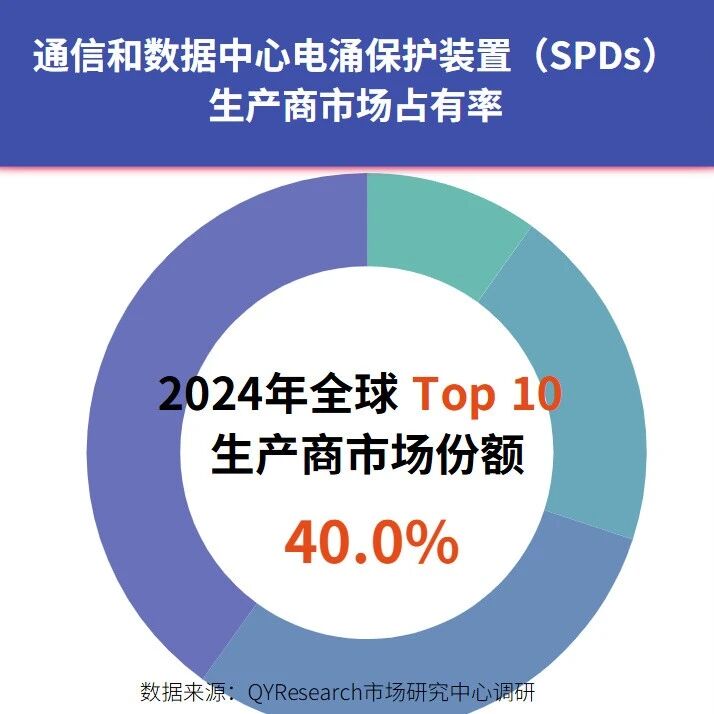
全球通信和数据中心电涌保护装置(SPDs)市场生产商排名及市场占有率
QYResearch· 2025-11-06 02:18
通信和数据中心领域的电涌保护装置( SPDs )是专门用于限制通信、数据传输及供电系统中,由雷击、设备启停、电网波动 等引发的瞬时过电压(电涌),并疏导过量瞬时电流,从而保护通信设备、服务器、网络设施等精密电子装置免受损坏的专用 防护设备。 据 QYResearch 调研团队最新报告"全球通信和数据中心电涌保护装置( SPDs )市场报告 2025-2031 "显示,预计 2031 年全球通 信和数据中心电涌保护装置( SPDs )市场规模将达到 5.4 亿美元,未来几年年复合增长率 CAGR 为 2.1% 。 通信和数据中心电涌保护装置( SPDs ) ,全球市场总体规模 全球 通信和数据中心电涌保护装置( SPDs ) 市场前 28 强生产商排名及市场占有率 (基于 2024 年调研数据;目前最新数据以 本公司最新调研数据为准) 根据 QYResearch 头部企业研究中心调研,全球范围内通信和数据中心电涌保护装置( SPDs )生产商主要包括 Phoenix 、 ABB 、 Emerson 、 DEHN SE 、 Eaton 、 Siemens 、 Citel 、 Obo Bettermann 、 Sc ...
中国工业科技_2025 年三季度机器人自动化格局分析_市场份额如何变化China Industrial Tech_ 3Q25 Robot_Automation Landscape Analyzer_ How are market shares shifting_
2025-10-30 02:01
Summary of China Industrial Robot & Automation Landscape - 3Q25 Industry Overview - The report focuses on the **China Industrial Robot (IR)** and **Industrial Automation (IA)** sectors, analyzing market shares and sales data for 3Q25 [1][2]. Key Observations - **Market Share Growth**: Domestic IR players increased their total market share to **55%** in 3Q25, up **2 percentage points (pp)** year-over-year (yoy) and **1 pp** quarter-over-quarter (qoq) [3][27]. - **Sales Volume Growth**: Domestic brands experienced a **12% yoy** growth in sales volume, significantly outpacing overseas brands, which only grew by **2% yoy** [3][27]. - **Total Industrial Automation Market**: The IA market saw a **2% yoy decline** in 3Q25, with project markets down **4% yoy** and OEM markets up **2% yoy**. The full-year outlook for 2025 is expected to be flat at **0% yoy** [27][30]. Sales Data - **Total IR Unit Sales**: Reached **81,000 units** in 3Q25, marking a **7% yoy** increase but a **6% qoq** decline, indicating a slowdown from the previous quarter's **20% yoy** growth [27][31]. - **Cobot Segment**: Continued strong growth at **31% yoy**, although this was a deceleration from **52% yoy** in 2Q25 [27]. - **Performance by Robot Type**: - Large 6-axis robots grew **6% yoy** - Small 6-axis robots grew **5% yoy** - SCARA robots grew **2% yoy** [27]. Market Dynamics - **End-Market Performance**: - Strong growth in sectors like **Semiconductor (+30% yoy)**, **Lithium battery (+17% yoy)**, and **Auto electronics (+16% yoy)**, although these were lower than in 2Q25. - The **Solar** sector was a significant underperformer, declining **22% yoy** [27][35]. Company Performance - **ESTUN**: Maintained the 1 position in the IR market with a **10% market share**, despite a **11% qoq** decline in sales volume [27][40]. - **Inovance**: Ranked 4 with an **8% market share**, showing **7% yoy** growth in sales volume but a **8% qoq** increase [27][40]. - **Market Share by Robot Type**: - **Small 6-axis Robots**: Domestic brands increased their market share to **58%**. ESTUN led with **10%**, while Inovance held **6%** [27][42]. - **Large 6-axis Robots**: Domestic brands maintained a **33%** market share, with ESTUN at **15%** and Inovance at **2%** [27][44]. - **SCARA Robots**: Inovance's market share increased to **25%**, recovering from previous declines [27]. Component Market - **IA Components**: Inovance retained its 1 position in **Servo** (32% share) and **Low Voltage Inverter** (21% share) markets, although both saw slight declines in market share [27][28]. Inventory and Production Insights - There was a notable discrepancy between industrial robot production and domestic sales, with approximately **123,000 units** produced in 3Q25 and **51,000 units** exported [27][28]. Conclusion - The China Industrial Robot and Automation sectors are experiencing a shift towards domestic players gaining market share, with strong performance in specific end-markets. However, overall growth is tempered by declines in certain segments and a slowdown in sales volume growth compared to previous quarters.


资本支出追踪-科技和公用事业之外,资本支出削减占主导-Multi-Industry Capex Tracker_ Capex Tracker quick take_ Capex cuts prevail outside of Tech_Utilities
2025-09-30 02:22
Summary of Key Points from the Capex Tracker Industry Overview - The Capex Tracker indicates a trend of capital expenditure (Capex) cuts across various industries, with notable exceptions in Technology and Utilities [3][4]. Core Observations - General Industrial Capex is projected to have a compound annual growth rate (CAGR) of 5.5% for the period 2024-2028, which is a slight decrease of 0.4 percentage points compared to the previous update in July [3][4]. - Positive growth in Capex is observed in the following sectors: - **Datacenters**: 26.5% CAGR, an increase of 3.5 percentage points from July [4]. - **Pulp & Paper**: Improvement noted, but specific growth figures not provided [3]. - **Conventional Power Generation**: Positive outlook with companies like Wartsila and Accelleron showing growth [3]. - **Mining**: Companies such as Epiroc and FLSmidth are expected to benefit [3]. - Conversely, significant declines are noted in: - **Vehicles/Autos**: Negative growth, with a decrease of 1.8 percentage points to 2.0% CAGR [4]. - **Pharma and Biotech**: Both sectors are experiencing negative trends, with Biotech showing a decline of 8.6% [4]. Detailed Capex Growth by Sector - **Datacenters**: - 2025 Capex growth projected at 51.7%, a significant increase of 15.2 percentage points [4]. - **Renewables and T&D**: - 2025 Capex growth at 17.5%, down by 8.0 percentage points [4]. - **Semiconductors**: - 2025 Capex growth at 15.7%, a decrease of 1.2 percentage points [4]. - **Healthcare**: - 2025 Capex growth projected at 0.0%, indicating stagnation [4]. - **Consumer Sector**: - 2025 Capex growth at 0.7%, reflecting a decline of 1.1 percentage points [4]. Additional Insights - The Capex Tracker highlights a robust growth trajectory in Datacenters, Renewables, and Mining, while traditional sectors like Vehicles and Pharma are facing headwinds [4]. - The report emphasizes the importance of monitoring these trends for potential investment opportunities and risks in the respective sectors [3][4]. Conclusion - The Capex Tracker serves as a critical tool for understanding industry trends and making informed investment decisions, particularly in identifying sectors poised for growth versus those facing challenges [3][4].
中国最新情况-疲软需求进一步凸显刺激政策必要性-Capital Goods_ China update_ Fragile demand further underscores need for stimulus
2025-09-25 05:58
Summary of Key Points from the Conference Call Industry Overview: Capital Goods - **China's Economic Performance**: China's GDP growth in H1 was +5.3% YoY, supported by export frontloading and government stimulus. However, signs of a sequential slowdown are emerging, with manufacturing and infrastructure fixed asset investment (FAI) declining by -1.3% and -6.4% YoY in August, compared to -0.3% and -2% YoY in July [1][29] - **GDP Growth Forecasts**: The GDP growth forecasts for Q3 and Q4 2025 have been revised down to +4.5% and +4% YoY, respectively, while the FY forecasts for 2025-2027 remain unchanged at +4.7% to +4.1% YoY [1][29] - **Market Conditions**: Companies exposed to China are facing a difficult market, with a shift towards local-for-local strategies due to increasing competition [1] Automation Sector - **Market Recovery**: A mild recovery in the China Automation market is expected in 2025, with Factory Automation (FA) orders showing strength, particularly in the battery segment. Domestic companies like Inovance reported FA orders up over 20% YoY in August [2][30] - **Inventory Levels**: Distributors' inventories for major companies like Siemens and Omron have normalized, which is expected to support growth moving forward [2][30] - **Forecast Adjustments**: The growth forecast for the China Automation market has been cut to +0.2% YoY for 2025, with Factory Automation revised to +1.7% YoY due to demand uncertainty and weaker-than-expected demand from electronics [31] Construction Sector - **Property Market Outlook**: The outlook for the China property market remains weak, with new home sales down 9.7% YoY in August. No meaningful recovery is expected in the near term due to lack of government support [3][48] - **Construction Machinery Demand**: Demand for construction machinery is positive, driven by large infrastructure projects and increased government support for modernization projects [3][48] Consumer Sector - **Retail Sales Trends**: Retail sales growth slowed to +3.4% YoY in August, down from +3.7% in July, indicating a peaking of consumer durable subsidies. However, expectations for future spending are at a 16-month high, with 46% of respondents expecting to increase spending in the next six months [4][61][66] Key Companies and Their Exposure to China - **Company Exposure**: Kone has the highest exposure to China, with 26% of group sales in FY23, down from 31% in FY22. Other companies with significant exposure include Atlas, Metso, and ABB [9][10] - **Performance Insights**: Siemens Digital Industries reported a 19% YoY revenue growth in China for Q3'25, driven by strong demand in the battery segment [34][37] Additional Insights - **Manufacturing PMI**: The NBS manufacturing PMI for August was 49.4, indicating continued demand weakness, with new orders remaining in contraction territory [14][17] - **Price Pressures**: Rising purchase and producer prices indicate ongoing cost pressures, exacerbated by tariffs and trade tensions [17][22] - **Government Policy**: Limited room for substantial easing efforts from the government is anticipated, with policymakers comfortable with the current growth trajectory [29] This summary encapsulates the critical insights from the conference call, highlighting the challenges and opportunities within the capital goods sector, particularly in relation to the Chinese market.
工业多行业-谁在打造数据中心2025-Who Makes the Data Center 2025
2025-09-18 13:09
Summary of Data Center Market Research Industry Overview - The global data center market is projected to exceed $500 billion by 2025, with spending estimated at $506 billion, comprising $418 billion for IT equipment and $88 billion for infrastructure spending, reflecting a 25% year-over-year increase [1][12] - The market is expected to grow at a compound annual growth rate (CAGR) of 23% from 2024 to 2028, with infrastructure spending growing at a 19% CAGR [1][12] Key Product Lines and Costs - The data center infrastructure includes 12 product categories such as chillers, cooling towers, generators, and servers, with an estimated all-in cost of building a data center at $39 million per megawatt (MW) [2][16] - Next-generation AI architectures are anticipated to be more capital-intensive, with costs rising to $52 million per MW [2][17] AI Impact on Data Centers - AI electricity demand is projected to grow at a CAGR of over 40%, while total data center demand is expected to grow in the low to mid-teens [5] - The demand for electricity for AI inference is expected to surpass that for AI training by the end of the decade [5] Infrastructure Trends - There is a shift from low voltage alternating current (AC) designs to high voltage direct current (DC) architectures for electrical equipment, driven by the evolution of AI semiconductor manufacturers [3] - Liquid cooling solutions are gaining traction due to rising rack density, with coolant distribution units (CDUs) becoming essential [4] Market Dynamics - The data center market is segmented into various types, including enterprise, single-tenant colocation, multi-tenant colocation, and hyperscale data centers [27][33] - Hyperscale data centers are the fastest-growing segment, with significant capacity additions compared to colocation firms [29][31] Vendor Market Shares - Schneider is the market leader in electrical products, holding a 21% share of the $18 billion market, while Vertiv leads the thermal products market with a 20% share of the $10 billion market [21][24][26] Regional Insights - The Americas account for over 50% of global data center capacity, with a growth rate of 17% CAGR from 2019 to 2024 [36][38] - Hyperscaler capacity is concentrated in key regions, with Northern Virginia being the largest single location globally [39] Economic Considerations - Typical annual rent for colocation projects is estimated at $2-3 million per MW, with current occupancy rates in the US around 96-97% [41] - The projected internal rate of return (IRR) for a wholesale colocation project is approximately 11% based on various economic assumptions [44] Energy Consumption Trends - AI training power draw is increasing, with significant energy requirements for training large models, while inference power requirements are expected to grow as usage scales [49][60] - The energy efficiency of inference is improving, but overall energy consumption is expected to rise due to increased adoption of AI technologies [60][62] Conclusion - The data center market is poised for significant growth driven by AI adoption, with evolving infrastructure needs and increasing energy demands shaping the future landscape of the industry [1][5][12]