
人才强国战略

Search documents
筑牢新质生产力发展的基础性战略性支撑
Jing Ji Ri Bao· 2026-01-05 22:49
Group 1 - The core concept of the news revolves around the "new quality productivity" proposed by Xi Jinping, emphasizing the need for a strategic approach to integrate education, technology, and talent development to support high-quality economic growth [1][2]. - The "new quality productivity" is defined as an advanced state of productivity that aligns with new development concepts, driven by technological breakthroughs and innovation, transitioning labor from physical to intelligent forms and resources from mechanical tools to digital platforms [2][3]. - The current systemic disconnect between the innovation chain, industry chain, and talent chain presents challenges in forming an efficient innovation ecosystem, highlighting barriers in resource flow and integration [3][4]. Group 2 - The need for a top-level design is emphasized, advocating for a coordinated strategy that integrates education, technology, and talent development, supported by policies and funding to create a conducive environment for innovation [4][5]. - Collaboration between higher education institutions, research organizations, and leading enterprises is encouraged to establish a synergistic innovation ecosystem, enhancing the integration of education, technology, and talent [5][6]. - A multi-faceted evaluation mechanism is proposed to assess talent development and research contributions, focusing on capabilities and quality rather than traditional metrics, to ensure effective utilization of human resources [6].
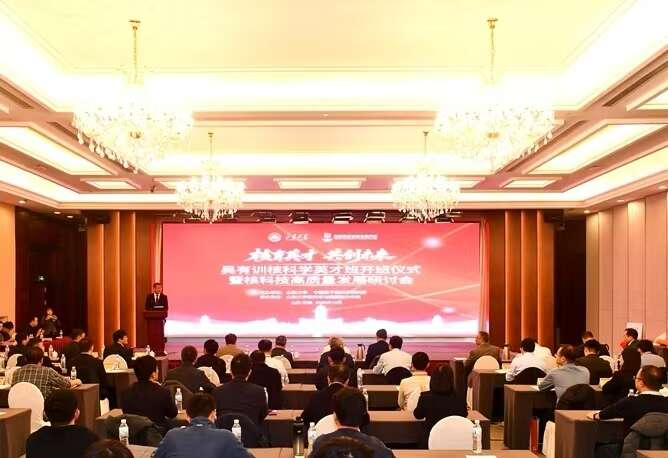
吴有训核科学英才班开班仪式举行
Xin Lang Cai Jing· 2025-12-30 17:06
Core Insights - The Wu Youxun Nuclear Science Talent Class aims to cultivate high-level interdisciplinary talents with a solid foundation in physics and specialized knowledge in nuclear science, leveraging the research platforms and academic strengths of both the China Institute of Atomic Energy and Shandong University [1][3]. Group 1: Event Overview - The opening ceremony and seminar on high-quality development in nuclear technology were held at Shandong University on December 28-29 [1]. - The event was attended by over 200 participants, including experts from Tsinghua University, Peking University, Fudan University, and other institutions, as well as faculty and students from Shandong University [3]. Group 2: Institutional Support - Shandong University is committed to supporting the Wu Youxun Nuclear Science Talent Class, aiming to contribute to national energy security and the "dual carbon" strategic goals [3]. - The establishment of the talent class is seen as a practical implementation of the strategies for strengthening the nation through science and education, as well as promoting deep integration of industry, academia, and research [3].

长沙是座人才梦想城
Chang Sha Wan Bao· 2025-12-22 02:05
Core Viewpoint - Changsha is undergoing a modern transformation while maintaining its historical significance, responding to the era's demands through a clear talent strategy that integrates personal dreams with national aspirations [2][3][17]. Group 1: Talent Strategy and Recognition - Changsha has been awarded the title of "China's Best Talent Attraction City," highlighting its successful talent strategy and recognition at the national level [2][16]. - The city is actively engaging in initiatives that align with national strategies, showcasing its commitment to building a competitive talent ecosystem [9][11]. - The launch of the fifth season of "My Dream, My City" reflects Changsha's focus on youth and innovation, further enhancing its appeal to young talents [2][8]. Group 2: National Strategy Alignment - The emphasis on talent competition is crucial for national development, as articulated by President Xi Jinping, indicating that talent work must align with broader national strategies [4][5]. - Changsha's initiatives, such as the National Graduate Cybersecurity Innovation Competition, are designed to meet urgent national needs while fostering local talent [11][12]. - The city's approach transcends traditional financial incentives, focusing on cultural engagement and ecological sustainability as part of a comprehensive talent strategy [6][14]. Group 3: Cultural Confidence and Community Engagement - Changsha's cultural initiatives, like the documentary "My Dream, My City," aim to build cultural confidence and resonate with the values of youth, promoting a narrative of hard work and success [14][15]. - The city is positioning itself as a destination for innovation and entrepreneurship, appealing to university students and young professionals [13][18]. - By creating a warm and relatable narrative around its talent strategy, Changsha enhances its attractiveness and fosters a deeper connection with potential talents [15][17].
办好人民满意的教育(学习贯彻党的二十届四中全会精神)
Ren Min Ri Bao· 2025-12-16 22:11
Core Viewpoint - The article emphasizes the importance of providing education that satisfies the people, aligning with the fundamental purpose of serving the people and the basic philosophy of education development in China [1][2]. Group 1: Significance of Satisfying Education - Providing education that meets the people's needs is essential for promoting high-quality education development and building an education powerhouse, as highlighted by Xi Jinping [2]. - Education is a crucial factor for social equity and justice, ensuring that educational benefits are distributed fairly among all citizens [3]. - Education serves as a strategic support for national strength and the rejuvenation of the nation, enhancing the country's core competitiveness [4]. Group 2: Achievements and Changes in Education During the 14th Five-Year Plan - The education sector has seen historical achievements and significant changes, with a focus on prioritizing education development [5]. - The level of education has improved significantly, with enrollment rates in preschool and high school reaching 92% and 60.8% respectively, aligning with high-income countries [6]. - The quality of education has advanced, with increased public satisfaction regarding educational outcomes and support for students from economically disadvantaged backgrounds [7]. Group 3: Key Tasks for Implementing Satisfying Education - A new framework for moral education must be established to cultivate future socialist builders and successors [10]. - The quality and accessibility of public education services need to be enhanced to meet the expectations of the populace [11]. - A virtuous cycle between education, technology, and talent must be promoted to improve the quality of talent cultivation [12]. - A high-quality, professional teaching workforce is essential for building an education powerhouse [13]. - Expanding high-level educational openness is necessary to enhance international influence and competitiveness [13].
构建银发人才“代际知识转移”新模式
Xin Hua Ri Bao· 2025-12-15 23:43
Core Viewpoint - The article emphasizes the importance of leveraging retired university teachers as a valuable resource for knowledge transfer, which can enhance the development of younger faculty and contribute to the modernization of higher education governance in the context of China's talent strategy [1]. Group 1: Value of Knowledge Transfer - The transfer of knowledge from retired teachers serves as a "booster" for the development of young faculty, providing not only technical skills but also the transmission of values and academic culture [2]. - Retired teachers act as role models in research and education, helping to instill a strong academic ethos and guiding younger scholars in their professional journeys [2][3]. Group 2: Educational Impact on Students - The experience and expertise of retired teachers create a rich environment for students, ensuring continuity in academic traditions and providing innovative insights for their learning paths [3]. - This intergenerational knowledge transfer is crucial for cultivating students' moral values and comprehensive qualities, acting as a bridge between past and future educational practices [3]. Group 3: Innovation in Talent Utilization - The process of knowledge transfer from retired teachers transforms their accumulated experience into new intellectual resources, fostering innovation and optimizing talent allocation within universities [4]. - This approach not only enhances the academic foundation of institutions but also supports their cultural development and strategic goals in education and research [4]. Group 4: Mechanisms for Knowledge Transfer - Establishing institutional mechanisms like "Silver Wisdom Think Tank" and "Blue-Green Classroom" can formalize the knowledge transfer process, integrating retired teachers' expertise into university curricula and research initiatives [5]. - These mechanisms promote intergenerational interaction and prevent knowledge fragmentation, becoming essential practices in university governance [5]. Group 5: Digital and Cultural Support - Utilizing digital technologies to create platforms for knowledge transfer can enhance the effectiveness of intergenerational collaboration, breaking down communication barriers [6]. - Cultural initiatives, such as academic honor days and collaborative projects, are necessary to foster a supportive environment for knowledge sharing, ensuring that the transfer process is meaningful and engaging [7].
以人才布局优化促进区域协调发展(专题深思)
Ren Min Ri Bao· 2025-12-08 22:10
Core Viewpoint - The article emphasizes the importance of talent in promoting regional coordinated development in China, highlighting that talent is a crucial resource for economic growth and innovation [1][2][3]. Group 1: Importance of Talent in Regional Development - Talent is the most valuable resource for a country and region, directly influencing economic growth quality and speed [2]. - The flow of talent can promote the dissemination of new ideas, technologies, and knowledge, facilitating industrial upgrades and high-quality development in less developed areas [2]. - Optimizing talent distribution can break resource flow restrictions between regions and deepen industrial collaboration, helping to reduce regional development disparities [2][3]. Group 2: Strategies for Talent Flow and Coordination - The Chinese government has implemented strategies to encourage talent flow to underdeveloped areas, breaking down barriers to talent mobility [3][4]. - A large, high-quality talent pool has been formed, playing a key role in national strategies such as innovation-driven development and poverty alleviation [3]. - There is a need to address regional disparities in talent distribution, as talent is concentrated in developed regions, which hinders coordinated development [3][4]. Group 3: Mechanisms for Talent Mobility - Establishing a scientific and reasonable talent mobility system is essential for promoting optimal talent distribution [4]. - The article suggests that a unified national market should be built to eliminate barriers to talent mobility, ensuring that talent flows according to regional development needs [4]. - Regions with strong economic foundations and abundant educational resources tend to attract more talent, necessitating policies to balance talent distribution across different areas [4]. Group 4: Integration of Talent and Industry - The integration of talent and industry is crucial for regional coordinated development, as industries attract talent and vice versa [5]. - Local resources, industrial foundations, and research conditions should guide the development of specialized industries to attract high-level talent [5]. - Encouraging underdeveloped regions to leverage new technological opportunities can enhance their capacity to attract talent and drive high-quality development [5]. Group 5: Alignment of Talent Policies with Development Strategies - There is a need to align talent policies with regional coordinated development strategies to create a positive feedback loop between talent and regional growth [6]. - The article calls for enhancing the attractiveness of central and western regions to talent and promoting collaboration among different regions [6]. - Establishing efficient cooperation relationships between regions can facilitate flexible talent mobility and optimize talent resource allocation [6].
【省人社厅】全国人力资源服务业发展大会搭建供需对接平台陕西达成意向签约金额4000万元
Shan Xi Ri Bao· 2025-12-06 01:11
Core Viewpoint - The recent National Human Resources Service Industry Development Conference showcased the robust growth and innovative vitality of Shaanxi's human resources service sector, highlighted by significant project signings and unique labor service brands [1][2] Group 1: Event Highlights - Shaanxi's delegation presented at the conference with 16 key institutions and 5 distinctive labor service brands, demonstrating a diverse ecosystem of human resources services [1] - The event featured immersive displays and interactive experiences that attracted numerous attendees for engagement and discussion [1] - A total of 4 key intention signing projects were established, with a total signing amount of 40 million yuan, covering areas such as organizational efficiency enhancement and domestic service ecosystem development [1] Group 2: Industry Statistics - By the end of 2024, the province is expected to have 4,203 human resources service institutions, generating an annual revenue of 61.48 billion yuan, leading the western region in industry scale and service efficiency [2] - The "Qin Yun Employment" digital platform has facilitated the creation of an integrated online and offline employment service network, with over 15 million registered users [2] - The platform has successfully promoted employment for 404,000 individuals and achieved nearly 300,000 precise job postings [2]
学习规划建议每日问答丨怎样理解促进人才区域协调发展
Xin Hua Wang· 2025-12-05 03:45
Group 1 - The core viewpoint emphasizes the importance of promoting regional coordination in talent development to support China's modernization and economic growth [1][2][3] - The strategy aims to optimize the spatial distribution of talent, addressing issues such as uneven talent distribution and weak competitiveness in central and western regions [1][2] - The significance of talent as a core driver for regional development is highlighted, affecting economic growth quality and speed through technology diffusion and industrial upgrading [1][3] Group 2 - The need to prioritize talent resource development for high-quality regional growth is stressed, focusing on enhancing talent effectiveness and stimulating innovation [2] - Measures are proposed to prevent excessive talent migration to eastern coastal areas and mitigate the "siphon effect" of central cities [2] - Encouragement for underdeveloped regions to leverage local resources and characteristics to attract high-level talent and develop specialized industries is outlined [2][3] Group 3 - The current talent distribution in China is deemed unreasonable, with a concentration in economically developed eastern coastal areas, which hinders the development of central and western regions [3] - A call for optimizing the layout of innovation centers and talent hubs based on regional functions is made, along with the need for coordinated planning between talent inflow and outflow areas [3] - The establishment of a fair and orderly talent flow system is essential for sustained economic health, with a focus on enhancing the attractiveness of central and western regions [3]
构建教育科技人才一体化发展新生态
Ren Min Ri Bao· 2025-11-30 22:20
Core Viewpoint - Education, technology, and talent are foundational and strategic supports for China's modernization, emphasizing the need for integrated development in these areas to enhance innovation and competitiveness on a global scale [1][2][3]. Group 1: Strategic Importance - The central government has prioritized education, technology, and talent as key strategic areas since the 18th National Congress, implementing various strategies to promote their integrated development [2][3]. - There are existing issues such as the disconnect between education supply and industry demand, and the need for systemic reforms to address these challenges [2][3]. Group 2: Systematic Reform - High-level coordination is essential to break down institutional barriers and drive systemic change, as highlighted by the establishment of cross-departmental coordination mechanisms [3]. - The need for a unified approach in planning and implementing education, technology, and talent development is emphasized to avoid resource wastage and ensure collaborative progress towards innovation goals [3]. Group 3: Innovation Mechanisms - The integration of innovation elements such as knowledge, technology, talent, and funding is crucial for fostering a productive cycle of innovation [4]. - The importance of aligning research projects with industry needs and talent development goals is stressed, along with the need for reforms in project management to enhance the effectiveness of technology transfer [4]. Group 4: Evaluation and Contribution - Establishing a talent evaluation system that focuses on innovation value, capability, and contribution is necessary to guide the integrated development of education, technology, and talent [5]. - The reform of evaluation mechanisms should promote collaboration and value creation, ensuring that educational and research institutions are aligned with national strategic needs [5]. Group 5: Collaborative Innovation - Building collaborative innovation platforms and ecosystems is essential for enhancing the quality and efficiency of innovation efforts [6]. - The example of the Guangdong-Hong Kong-Macao Greater Bay Area illustrates the importance of a comprehensive innovation ecosystem that integrates various elements of research, technology, and talent [6].
引才范围实现突破 宁夏修订院士专家工作站管理办法
Zhong Guo Xin Wen Wang· 2025-11-27 13:26
Core Viewpoint - Ningxia has revised the management measures for academician and expert workstations to attract high-level talent and enhance its competitiveness in the western region of China, aiming to support high-quality development and innovation [1][2]. Group 1: Talent Attraction - The revised measures significantly broaden the scope of talent recruitment by including foreign academicians and internationally renowned award winners, moving beyond the previous limitation of only domestic academicians [1][3]. - This initiative aims to connect local research teams with global scientific frontiers and integrate into the global innovation network, facilitating breakthroughs in major research projects [1][3]. Group 2: Policy Support - The new policy framework includes a combination of funding measures, providing a basic operational fund of 200,000 yuan annually, with additional subsidies of up to 300,000 yuan for workstations collaborating with overseas academicians [2]. - A performance evaluation reward mechanism has been introduced, offering rewards of 1 million yuan and 500,000 yuan for workstations rated as "excellent" and "good," respectively, along with a special support mechanism for promising innovation outcomes [2]. Group 3: Management and Services - The management system is designed to be collaborative and efficient, with a full-cycle management model that includes construction, operation, and evaluation, ensuring a comprehensive assessment of research, transformation, and talent [2]. - Academicians and experts working in Ningxia will enjoy equal medical and cultural services as high-level talents, supported by measures that reduce administrative burdens, allowing them to focus on research and innovation [2][3].