共产主义

Search documents
防止“气血不足百病生”
Ren Min Ri Bao· 2026-02-25 00:45
中医认为,气血为生命之本,强调气为生命动力,血为物质基础,两者相辅相成。气血充盈,百病不 生;气血亏虚,百病乃生。将党性比作"气血",这里的"气"主要表现为主观层面不忘初心强信 仰,"血"主要表现为客观层面躬身实干出实绩。从马克思主义认识论角度看,党性这一"气血"实质上是 主观世界与客观实践的统一,既不是与生俱来的天赋,也不是一劳永逸的状态,而是在认识世界、改造 世界的实践中不断生成、巩固和发展的动态结晶。在这一过程中,党性越坚强,就越能在复杂环境中明 辨是非、保持定力;而越是经风雨、见世面、壮筋骨,党性就越能得到锤炼升华。反之,若脱离实践、 闭门修养,或是在实践中迷失方向,党性之"气血"就会逐渐亏虚。 党员干部的"气血",源于对马克思主义的坚定信仰,对共产主义远大理想和中国特色社会主义共同理想 的执着追求。"气血"充盈,则志存高远、正气浩然、百毒不侵;"气血"不足,"总开关"就容易出问题, 就会精神空虚、境界低下,在形形色色的诱惑面前失守失节。在我们党的百余年奋斗历程中,无数共产 党人之所以能在枪林弹雨中视死如归、在艰苦环境中无私奉献、在糖衣炮弹前一身正气,正是因为他们 有坚定的马克思主义信仰之"气",有深 ...
锤炼党性、纯洁党风系列谈①守好立身之本
Zhong Yang Ji Wei Guo Jia Jian Wei Wang Zhan· 2026-02-03 07:52
Group 1 - The core belief in Marxism and the commitment to ideals are fundamental to the Communist Party, as emphasized by Xi Jinping in his speech [1] - The Party's mission is to achieve communism and seek happiness for the Chinese people, which has been a guiding principle since its inception [2] - The importance of practical action in achieving great accomplishments is highlighted, with a focus on the need for dedication and hard work from Party members [3] Group 2 - The enhancement of political capability is crucial for the Party to fulfill its mission and respond to challenges effectively [4] - Continuous theoretical learning and self-reflection are necessary for Party members to align with the Party's historical mission and responsibilities [2][4] - The commitment to Marxism and loyalty to the Party and the people are essential for maintaining resilience in the face of risks [4]
清风正气歌 | “不计浮名不畏难”
Xin Lang Cai Jing· 2026-01-03 12:01
Group 1 - Chen Geng was a loyal and selfless revolutionary, known for his integrity and dedication to the Communist Party, as highlighted by his peers' praises [2] - He joined the Communist Party in 1922 after studying at Hunan Self-Study University, where he embraced progressive ideas and committed to communism as his sole belief [2] - During the Anti-Japanese War, Chen led the 386th Brigade in guerrilla warfare, gaining a formidable reputation and being recognized by the U.S. Embassy as "the best brigade in China" [2] Group 2 - In 1952, Chen was tasked with establishing a military engineering academy, aiming to create a second Huangpu Military Academy, despite a shortage of qualified personnel [3] - He prioritized the welfare of faculty members, providing them with the best accommodations while living in modest housing himself, emphasizing the importance of educators in shaping students [3] - Chen's humility was evident when he downplayed his military rank, reflecting on the sacrifices of his fallen comrades and instilling a strong work ethic in his family, emphasizing service to the Party and the people [3]

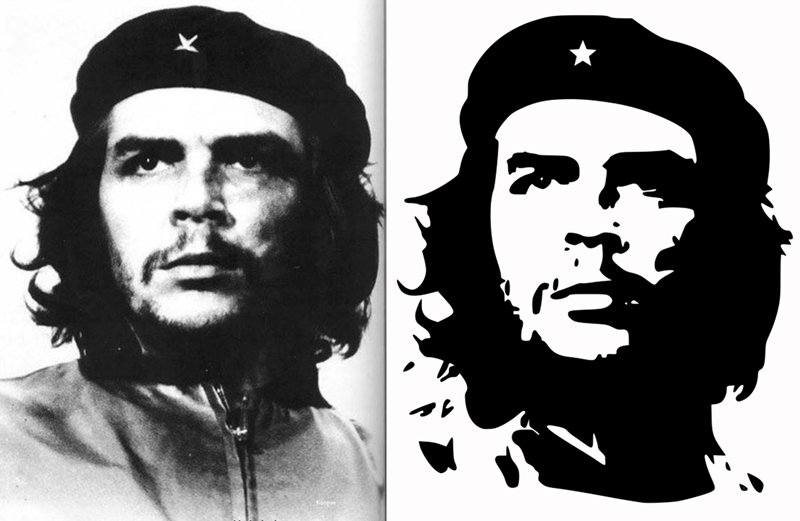
红姑娘:古巴革命胜利67周年,聊聊格瓦拉、“司令”和他们的五星帽徽
Guan Cha Zhe Wang· 2026-01-01 01:39
Core Viewpoint - The article discusses the historical significance and evolution of the "Commander" rank in the context of the Cuban Revolution, particularly focusing on the symbolism of Che Guevara's star insignia and its implications for the military culture in Cuba [5][6][12]. Group 1: Historical Context - The "Commander" insignia, represented by a gold star, originated from the military rank system in Cuba during the 1940s and 1950s, specifically denoting the rank of "Comandante" [6][9]. - The Cuban Revolution, which culminated on January 1, 1959, saw the overthrow of the Batista regime, with the "Commander" rank reflecting the military culture and characteristics of the early revolutionary period [5][12]. Group 2: Military Structure and Evolution - The early Cuban revolutionary army was organized at a battalion level, with the "Commander" rank being the highest, often leading to a situation where multiple individuals held the same rank without a clear hierarchical distinction [44]. - By the end of 1958, the revolutionary army had expanded to approximately 4,000 members, but the rank of "Commander" was widely distributed, leading to a flattening of the military hierarchy [44]. Group 3: Cultural Significance - The term "El Comandante" has become synonymous with Fidel Castro, reflecting the cultural and political legacy of the Cuban Revolution, where the military and revolutionary ideals are deeply intertwined [27][49]. - The article highlights the unique position of the Cuban military in governance, where military leaders often transitioned into civilian roles, influencing various sectors of the economy and governance [47][49].
经典常谈丨“法律是人民意志的自觉表现”
Zhong Yang Ji Wei Guo Jia Jian Wei Wang Zhan· 2025-12-16 00:49
Group 1 - The core viewpoint emphasizes the importance of social fairness and justice as a legal value pursuit, aiming for the public to feel fairness and justice in every legal system, enforcement decision, and judicial case [1] - Marx argued that laws must be based on objective facts and that legislative activities should be grounded in the essence and necessity of things, highlighting the relationship between material production methods and social life [2] - The essence of law is intertwined with its complex relationship with society, and legislators must understand practical laws to ensure laws meet real needs, reflecting the will of the people [3] Group 2 - The Chinese socialist legal system reflects the collective will of the people under the leadership of the Communist Party, emphasizing the importance of a people-centered approach in legal construction [4] - Since the 18th National Congress, there has been a consistent emphasis on the integration of party leadership, people's sovereignty, and rule of law, with a focus on ensuring that the public feels fairness and justice in judicial cases [5]
“生命上最光荣的一天”(以物鉴史)
Ren Min Ri Bao· 2025-12-12 22:00
Core Points - The article highlights the historical significance of Xian Xinghai's application to join the Communist Party of China, reflecting his commitment to the party and the nation during the anti-Japanese war [2][3][4] - It details Xian Xinghai's contributions to Chinese music and his evolution from a patriot to a communist, emphasizing his role in creating influential anti-war songs and his collaboration on the monumental "Yellow River Cantata" [3][4] Group 1 - Xian Xinghai submitted his application to join the Communist Party on May 15, 1939, expressing his desire for political guidance and his commitment to contribute to the party's strength in the new China [2] - He was a pioneer of new Chinese music, known as the "People's Musician," and actively participated in the anti-Japanese movement by creating significant songs [3] - His application was influenced by his interactions with Zhao Yimin, who encouraged him to develop his talents and embrace communist ideals [3] Group 2 - Xian Xinghai officially joined the Communist Party on June 14, 1939, marking it as the most glorious day of his life and expressing his hope to change his worldview to fight for proletarian music [4]
经典常谈丨人民是历史的创造者
Zhong Yang Ji Wei Guo Jia Jian Wei Wang Zhan· 2025-12-09 00:11
Group 1 - The core idea emphasizes the significant role of the masses in historical development, as articulated by Marx and Engels, who argue that history is created by the people rather than by individual thinkers [1][2][3] - Marx and Engels highlight that the first historical activity is the production of material necessities, which is fundamental for the masses to create history [2] - The importance of the proletariat and the masses in achieving communism is underscored, with the assertion that their movement is for the benefit of the majority [2] Group 2 - The concept of "acting masses" as the decisive force in historical development is presented as a methodological guide for understanding historical direction [4] - The Chinese Communist Party has consistently focused on transforming the mass perspective into concrete revolutionary practice, emphasizing the people's role in history [4][5] - Xi Jinping's statements reinforce the need to rely on the people for historical achievements, highlighting the importance of engaging with the masses to harness their creative power [5]
学有所悟丨传承红色基因 赓续红色血脉
Zhong Yang Ji Wei Guo Jia Jian Wei Wang Zhan· 2025-12-04 00:15
Group 1 - The core message emphasizes the importance of red culture and resources in guiding the Chinese Communist Party (CCP) and its members, particularly the youth, to inherit the revolutionary spirit and continue the legacy of the Party [1][2][3] - Xi Jinping highlighted that the red bloodline represents the political essence of the CCP, showcasing the sacrifices made by revolutionary martyrs throughout history, which form the spiritual foundation of the Party [2][3] - The revolutionary culture is described as a valuable spiritual asset that has been cultivated through the Party's long history of struggle, serving as a source of motivation and strength for current and future endeavors [3][4] Group 2 - The article stresses the need to utilize red resources effectively, including revolutionary museums and memorials, to educate the public and instill a sense of patriotism and Party loyalty, particularly among the youth [5][6] - It is noted that the Party's glorious traditions and fine conduct are essential for distinguishing it from other political entities, and these should be actively promoted to inspire and unite the members [5][6] - The importance of learning from historical experiences is emphasized, suggesting that these lessons can provide wisdom and guidance for navigating new challenges in the context of modern Chinese development [6]
思想体悟丨坚定理想信念 补足精神之钙
Zhong Yang Ji Wei Guo Jia Jian Wei Wang Zhan· 2025-12-01 00:40
Core Viewpoint - The article emphasizes the importance of ideal beliefs as the spiritual pillar and political soul of the Communist Party of China, highlighting that a firm commitment to these beliefs is essential for the Party's integrity and effectiveness [5][15][16]. Group 1: Importance of Ideals and Beliefs - The Communist Party of China is organized around shared ideals and beliefs, with Marxism as its guiding ideology, which is crucial for maintaining its direction and purpose [6][15]. - The commitment to the lofty ideals of communism and socialism is seen as the foundation for the Party's resilience and ability to overcome challenges [6][15]. - The article stresses that the loss of ideals and beliefs can lead to disintegration and failure, both for the Party and individual members [9][16]. Group 2: Role of Education and Continuous Learning - Continuous education and reinforcement of ideals are necessary for Party members to maintain their political integrity and commitment to their duties [4][11]. - The article highlights the need for Party members to engage in lifelong learning to strengthen their understanding and adherence to Marxist principles and the Party's mission [10][11]. Group 3: Practical Application of Ideals - The article asserts that ideals must be translated into action, with Party members demonstrating their commitment through responsible and dedicated service [14][15]. - It emphasizes that the true test of a Party member's beliefs is their ability to withstand political challenges and maintain a strong sense of duty in various circumstances [11][14].
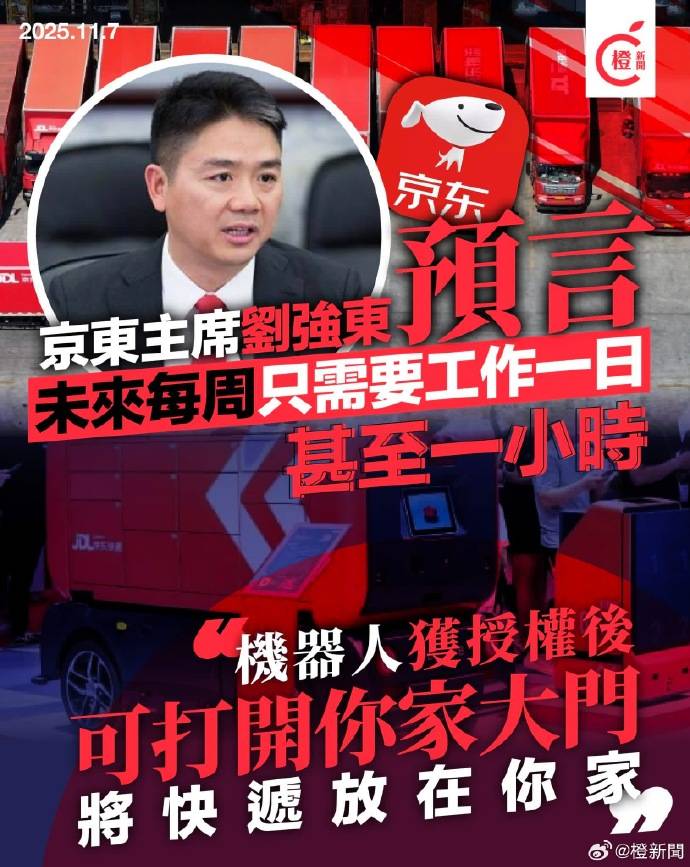
刘强东:未来机器人会完成所有工作!网友:技术垄断或加剧贫富分化
Sou Hu Cai Jing· 2025-11-29 22:36
Core Insights - Liu Qiangdong's statement about "robots completing all work" signifies JD's commitment to automation in logistics and sparks societal discussions on employment and wealth distribution in the automation era [2][3] - JD Logistics has achieved 90% automation in warehousing and sorting, with over 700,000 kilometers of testing for unmanned trucks and over one million kilometers for last-mile delivery vehicles [2] - Aiming for a fully automated delivery station by April 2026, JD plans to procure 3 million robots, 1 million unmanned vehicles, and 100,000 drones over the next five years [2] Automation and Employment - Liu predicts that automation will significantly reduce working hours, with employees potentially working only one day a week or even one hour, allowing a shift towards creative fields [3] - While positions like couriers face replacement risks, JD claims that modular design will enable workers to transition to technical roles such as equipment maintenance and scheduling [3] - Critics argue that the notion of working one day a week is unrealistic, especially for low-skilled laborers who may face structural unemployment [3] Wealth Distribution and Societal Impact - Liu has suggested that the wealth generated by robots could lead to a form of communism, where the government redistributes resources to eliminate wealth gaps [3] - This vision raises questions about the fair distribution of wealth created by automation, with concerns that without institutional safeguards, technological monopolies could exacerbate wealth inequality [3] - The discussion emphasizes the need for policies like "excess profit tax" to reinvest in education and social welfare [3] Technological Utopia vs. Social Reality - The advancement of unmanned delivery is seen as irreversible, yet the ideal of "robots supporting humanity" requires institutional innovation to ensure equitable benefits [3] - Historical patterns indicate that technological revolutions will eventually create new balances, but the transitional pains necessitate shared responsibility between companies and society [3] - Public sentiment reflects a desire for equitable distribution of automation's benefits, highlighting concerns that ordinary people may not share in the wealth generated by robots [3]