
医育结合

Search documents
“医育结合”新模式提高托育服务专业度
Xin Lang Cai Jing· 2026-02-03 20:49
Core Viewpoint - The integration of medical care and education in childcare services in Guizhou Province is highlighted as a significant advancement, providing a comprehensive support system for infants and toddlers [4][5]. Group 1: Childcare Center Operations - The Tianzhu County Maternal and Child Health Hospital's childcare center offers full-day care for infants aged 6 to 36 months, utilizing the hospital's medical resources to ensure a safe and healthy environment for children [2][3]. - Daily activities at the childcare center are designed based on developmental guidelines for infants aged 0 to 3 years, including physical training, language development, and health education [3][4]. Group 2: Medical and Educational Integration - The childcare center combines medical care, education, and childcare services, allowing for direct treatment of children at the center and facilitating referrals for complex cases [3][4]. - A multidisciplinary team, including healthcare professionals and educators, has been established to ensure seamless integration of medical and childcare services [4][5]. Group 3: Policy and Development - Guizhou Province has prioritized the development of childcare services as part of its social and economic development strategy, with specific policies aimed at improving the availability and quality of childcare [4][5]. - As of the end of 2025, Guizhou Province has achieved a total of 177,000 childcare spots, with a ratio of 4.59 spots per 1,000 people, reflecting significant progress in expanding childcare services [4].

辽宁代表委员建言:织密“一老一小”民生保障网
Zhong Guo Xin Wen Wang· 2026-01-30 06:02
Core Viewpoint - The article discusses the urgent need for a comprehensive "one elderly, one child" social security network in Liaoning Province to address the challenges posed by an aging population and to create a better environment for children's growth [1]. Group 1: Aging Population Challenges - Multiple representatives suggest accelerating the establishment of a multi-level service system that combines medical care and elderly care, emphasizing the need for inter-departmental collaboration and community support for high-quality development of elderly and childcare services [1][2]. - A core issue identified is the "breakpoint" in care for disabled elderly individuals, who often face challenges in transitioning from hospital care to home care due to a lack of trained caregivers and insufficient institutional support [1]. Group 2: Special Groups and Policy Gaps - There is a noted dilemma for certain groups, such as patients with infectious diseases, who face rejection from nursing homes due to infection risks while hospitals cannot accommodate them long-term, highlighting gaps in the current medical and elderly care system [2]. - The existing system is criticized for its fragmented management across various departments, with a particular shortage of specialized facilities for disabled and cognitively impaired elderly individuals [2]. Group 3: Implementation and Support - Emphasis is placed on the importance of timely policy implementation, such as the monthly subsidy of 800 yuan for disabled elderly individuals, to ensure both elder satisfaction and the sustainability of care enterprises [3]. - The need for building a professional caregiving workforce is highlighted, with suggestions for government incentives to foster a respectful and honorable environment for caregivers [3]. Group 4: Technological Integration and Training - The article suggests leveraging the strengths of local medical institutions to establish relevant training programs for community and elderly care facilities, as well as integrating technology, such as smart wearable devices for remote monitoring [3]. - The ultimate goal is to create a long-term care management mechanism within a social security framework, ensuring comprehensive support for elderly care and reducing the burden on families and society [3].
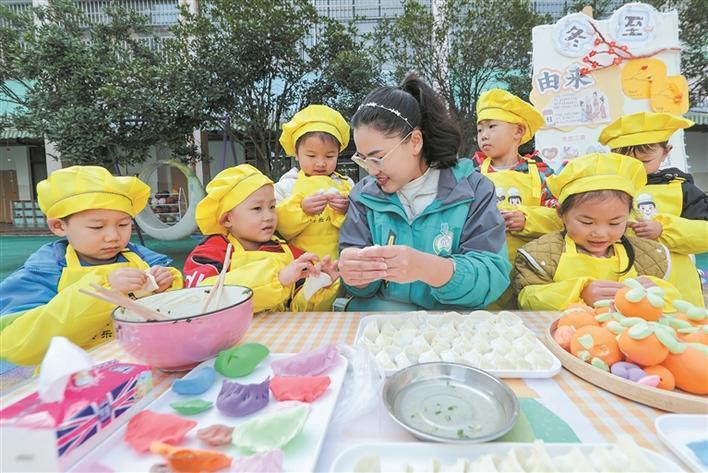
烟台市人大代表姜俊杰:建普惠托育机构,探索“医育结合”新路径
Qi Lu Wan Bao· 2026-01-22 05:30
Group 1 - The government work report emphasizes the implementation of free preschool education policies and the expansion of integrated childcare services, aiming for over 3,000 children in nursery classes [1] - The proposal includes a binding target of 4.6 childcare places per 1,000 population by 2025, as outlined in the Yantai City plan for optimizing fertility policies [1] - Currently, there is a significant supply gap in Yantai, with only 8 publicly announced affordable childcare institutions in the Laishan District, providing less than 500 places, while market-based institutions charge over 2,500 yuan monthly [1] Group 2 - A new maternal and child health comprehensive building in Yantai is set to open in 2026, which will serve as a core hub for women's and children's medical services [2] - A proposal has been made to build a public welfare childcare institution for children aged 0-3 on a well-located plot near the new health building, promoting a "medical-education integration" model [2] - This model aims to enhance the professionalism and safety of childcare services by embedding medical resources directly into the care process, potentially creating a replicable benchmark for the province [2] Group 3 - To realize this proposal, a special task force should be formed, involving various departments to conduct site assessments and adhere to the childcare institution setting standards [3] - The suggested operational model includes a "public-private partnership," where professional childcare institutions are invited through bidding, ensuring affordable fees with government subsidies [3] - The maternal and child health hospital will provide essential medical services, supporting the establishment of a model for integrated medical and educational childcare institutions in Yantai [3]
多措并举,始终将百姓健康需求“置顶”
Xin Lang Cai Jing· 2026-01-12 21:04
Core Viewpoint - The healthcare system in Jiangsu has significantly improved during the "14th Five-Year Plan" period, enhancing accessibility and quality of medical services for residents, particularly in community healthcare settings [1][17]. Group 1: Healthcare Accessibility - Jiangsu has focused on strengthening county-level hospitals, with 84.5% of county hospitals upgraded to tertiary hospitals, and 95% of patients now receiving care within their counties [2][3]. - The establishment of 256 internet hospitals aims to provide convenient online medical services, with a target of serving over 50 million people by 2025 [6]. - The implementation of a policy allowing patients to revisit the same department within three days without re-registering has streamlined the healthcare process [6]. Group 2: Quality of Medical Services - Investment of 4.1 billion yuan has been directed towards developing 16 high-level hospitals, enhancing specialized medical capabilities in areas such as lung transplants and critical care [3]. - The introduction of advanced medical technologies, such as the world's first Y-90 microsphere treatment for liver cancer, showcases the integration of cutting-edge procedures into local healthcare [2]. Group 3: Community Health Management - Jiangsu has shifted from single diagnosis to comprehensive health management, exemplified by personalized health services provided by family doctors [3]. - The establishment of 120 chronic disease screening and prevention centers has improved early detection and management of conditions like hypertension and diabetes [4]. Group 4: Elderly and Child Healthcare - The province has implemented priority services for elderly patients, including zero-waiting times for those over 80 years old, enhancing their healthcare experience [5][8]. - The development of a robust pediatric healthcare network allows children to receive timely treatment for common illnesses at local facilities [11]. Group 5: Traditional Chinese Medicine (TCM) - Jiangsu has achieved full coverage of community TCM clinics, with 352 clinics established, reflecting a significant increase in TCM services [14]. - The integration of TCM into the healthcare system has been supported by training programs for local practitioners, ensuring high-quality care is accessible [15][16].
以提案之力聚发展之智 以实干担当赴时代征程
Xin Lang Cai Jing· 2026-01-07 00:39
Group 1: Proposal Work Overview - The Changsha Municipal Political Consultative Conference reported a total of 499 proposals collected and 425 proposals officially filed since the last meeting, all of which have been addressed by the end of November 2025, contributing to the development and public welfare in Changsha [1][2][3] Group 2: Focus on High-Quality Development - A total of 184 proposals were made focusing on high-quality development and modernization, with 166 officially filed, emphasizing the creation of an AI application city and the promotion of low-altitude economy innovation [2][3] - Recommendations include building high-energy innovation platforms, fostering digital economy clusters, and accelerating the transformation of scientific research achievements from universities [2][3] Group 3: Enhancing Public Services and Welfare - 170 proposals were centered on improving public services and social welfare, with 151 officially filed, focusing on enhancing education quality and cultural development [3][4] - Suggestions include integrating vocational education with industry needs and improving community services for the elderly [3][4] Group 4: Urban Governance and Environmental Sustainability - 145 proposals were aimed at urban governance and social operation efficiency, with 108 officially filed, addressing urban-rural integration and enhancing city safety measures [5][6] - Recommendations include promoting green transportation and energy transition, as well as improving urban drainage management [5][6] Group 5: Future Proposal Work Strategy - The Municipal Political Consultative Conference plans to enhance proposal quality and effectiveness by focusing on in-depth research and practical recommendations, ensuring alignment with the city's development goals [6][7] - Emphasis will be placed on collaborative efforts and effective implementation of proposals to ensure actionable outcomes [6][7]
苏州市政协视察2025年民生实事项目进展
Su Zhou Ri Bao· 2025-12-30 00:32
Core Insights - The Suzhou Municipal Political Consultative Conference organized a special inspection of the progress of the 2025 municipal livelihood projects, focusing on key areas such as elderly care, childcare, and mental health services [1][2] Group 1: Mental Health Services - The Suzhou Psychological Assistance Hotline Center was officially launched on April 30, providing 24/7 free psychological health education, counseling, and crisis intervention services [1] - The center currently employs 12 dedicated hotline operators with backgrounds in psychology or medicine and has a reserve of 210 volunteer hotline staff [1] Group 2: Childcare Services - The Wenyuan Road Kindergarten, which reopened in 2023 after relocation, is set to add a childcare department in 2024 [1] - The kindergarten is exploring a "medical-education integration" model and a distinctive curriculum system, collaborating with community health service stations to provide affordable services to families [1] Group 3: Elderly Care Services - The Suzhou Industrial Park Social Welfare Center, which includes a smart nursing home, has a construction area of 34,000 square meters and currently accommodates over 90 elderly residents [1] - The inspection focused on the construction and operational status of the smart nursing home system [1] Group 4: Overall Assessment and Recommendations - Committee members acknowledged the solid progress and significant outcomes of the three livelihood projects, reflecting the government's people-centered development philosophy [2] - Recommendations were made to increase investment, improve long-term mechanisms, and promote equitable public services to better benefit all citizens [2]
从“乐都模式”到“海东样板”
Xin Lang Cai Jing· 2025-12-25 08:21
Core Viewpoint - The "Sunshine Starting Point Action Plan," previously known as "Huiyu China," has significantly improved early childhood development in rural areas of Haidong City, Qinghai Province, by enhancing caregiver interactions and providing educational support to children aged 0-6 [3][4][11]. Group 1: Project Overview - The "Huiyu China" project was initiated in 2015 to improve early childhood care in rural areas, focusing on cognitive, language, social, and health development [3][10]. - The project was implemented in Haidong City in 2018, addressing the lack of early childhood education in rural areas [4][11]. - As of now, the project has expanded to cover 35 towns, 634 administrative villages, and 49 communities, benefiting 4,867 children through home visits and educational interventions [5][12]. Group 2: Funding and Support - The project has received a total funding of 35.463 million yuan from the foundation and 14.46 million yuan from government support, ensuring its steady progress [5][12]. - In September 2023, the local government prioritized rural children's early development as a key livelihood project, establishing a special leadership group to promote the initiative [4][11]. Group 3: Implementation and Impact - The project has established 15 early childhood care centers across the city, integrating medical and educational resources to provide comprehensive support [5][13]. - A professional team of 345 local women has been formed to deliver services, creating job opportunities while reducing parental separation due to work migration [6][14]. - Evaluation results show that the intervention significantly reduced the rate of developmental delays among children, with a detection rate of only 0.5% in the intervention group compared to 2.5% in the non-intervention group [7][14]. Group 4: Community Engagement and Feedback - A satisfaction survey conducted in September 2025 revealed an overall satisfaction rate of 98.31% among families receiving home visits, indicating strong community support for the program [7][15]. - The project has evolved from the "Ledu Model" to the "Haidong Sample," providing a replicable path for early childhood development in rural areas [7][15].
托育服务,为带娃家庭“减负”(建言)
Ren Min Ri Bao· 2025-12-24 22:18
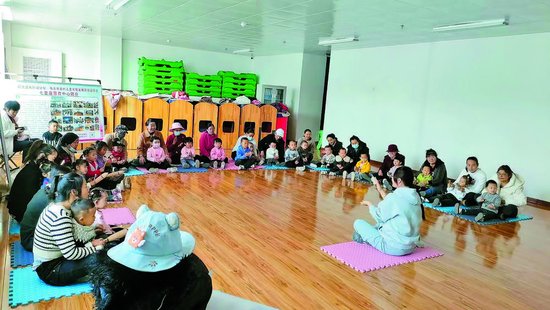
Core Insights - The development of inclusive childcare services is crucial for children's health and family welfare, as highlighted in the "14th Five-Year Plan" which emphasizes the establishment of a comprehensive childcare service system [1] Group 1: Current State of Childcare Services - As of the "14th Five-Year Plan" period, there are 126,000 childcare institutions in China, providing a total of 6.657 million childcare spots, with a ratio of 4.73 spots per 1,000 population for children under three years old [1] - Various regions are increasing resource investment in childcare services, with innovative measures being implemented, such as Heilongjiang's inclusion of affordable childcare services in its "Happy Heilongjiang" initiative [1] Group 2: Challenges in Childcare Services - Many working parents report a heavy burden in balancing work and childcare, with a lack of nearby, high-quality childcare institutions, and issues such as high costs and unstable service hours [2] - There is a significant gap between the effective supply of childcare services and the diverse, convenient, and inclusive needs of families, leading to concerns about affordability and trust in childcare services [2] Group 3: Recommendations for Improvement - It is recommended to establish accessible childcare institutions within communities to provide affordable and quality services to more families [2] - Encouragement of diverse social entities to participate in the provision of inclusive childcare services is necessary to create a multi-layered supply system [2] - Support for kindergartens to expand services by enrolling 2-3 year-olds and integrating childcare resources is essential [2] Group 4: Service Model Optimization - There is a need to optimize service models to meet family needs, including offering flexible childcare options such as full-time, part-time, and holiday care [3] - Establishing urban comprehensive childcare service centers is suggested to enhance the quality of childcare services and provide training and consultation for childcare institutions [3] Group 5: Integration of Health and Education - Promoting the integration of health services and childcare is vital, with recommendations to connect healthcare institutions, childcare facilities, and families to support children's health and development [4] - The establishment of "health-education combined" childcare units is proposed to introduce scientific parenting concepts and health services into childcare practices [4]
通辽市经济开发区:普惠托育 “托”起家庭幸福未来
Nei Meng Gu Ri Bao· 2025-11-13 09:45
Core Insights - The establishment of childcare services like Yiyou Baby Nursery and Zhihui Future Childcare Center in Tongliao City addresses the needs of working parents, providing peace of mind and professional care for their children [1][9][14] - The local government has invested significantly in childcare infrastructure and subsidies, enhancing the accessibility and affordability of these services for families [14][15] Group 1: Yiyou Baby Nursery - Yiyou Baby Nursery offers flexible childcare services, including hourly care, which has been beneficial for working parents like Yaoyao's mother [1][8] - The nursery has a capacity of 60 spots, with 59 children enrolled as of September this year, and has served nearly 500 children since its inception [8][14] - Monthly fees are set at 1150 yuan for childcare and 600 yuan for meals, making it a cost-effective option for families [8] Group 2: Zhihui Future Childcare Center - Zhihui Future Childcare Center, a public facility, focuses on integrating medical and educational services, supported by local health authorities [9][13] - The center has a capacity of 65 spots and has served 908 children through its half-day and parent-child classes [13] - A professional health management team is in place to ensure comprehensive care for children, including specialized health records for each child [13] Group 3: Government Support and Investment - The Tongliao Economic Development Zone has allocated 11.44 million yuan for childcare services, including subsidies and training programs [14] - The average cost of urban childcare services is 27% of urban residents' disposable income, while it is 11% for rural residents, indicating a focus on affordability [14] - The area has seen a steady increase in birth rates, with 2,112 births in 2023, leading to a growing demand for childcare services [15]

7个省份生娃基本不花钱 多维度解读生育支持政策
Yang Shi Wang· 2025-11-12 00:34
Core Points - The national medical insurance bureau is accelerating the establishment of a comprehensive fertility protection system to support childbirth and child-rearing [1] - As of the end of October, all 31 provinces and Xinjiang Production and Construction Corps have included assisted reproduction in medical insurance, benefiting over 1 million people [1] - 25 provinces have implemented direct payment of maternity benefits to individuals, enhancing convenience for insured female employees [2][3] Group 1: Maternity Insurance and Benefits - The maternity allowance, also known as "maternity pay," is funded by maternity insurance, ensuring income security for female employees during childbirth and maternity leave [3] - By June 2025, the number of people covered by maternity insurance reached 253 million, with an average maternity allowance exceeding 26,000 yuan per insured female employee in 2024 [3] - Seven provinces have achieved a model where childbirth incurs minimal out-of-pocket expenses, with reports of individuals spending as little as 3.7 yuan for hospital delivery [4] Group 2: Direct Payment and Accessibility - The transition to direct payment of maternity benefits has streamlined the application process, eliminating the need for additional documents like marriage and birth certificates [3] - In Xiangtan, Hunan Province, the maternity allowance will be directly deposited into personal accounts starting January 2025, reducing processing time from 20 to 7 working days [2] - The implementation of real-time reimbursement policies for newborns has significantly eased financial burdens for new parents [4] Group 3: Inclusive Coverage - Flexible employment insurance participants will also enjoy equal maternity benefits starting November 1, 2025, ensuring broader access to maternity care [5] - The integration of medical and educational services for infants is being promoted, with cities like Meishan in Sichuan establishing public childcare institutions that combine health care and early childhood education [6]