宇宙探索

Search documents
新春走基层丨“中国天眼”守岁:大窝凼里,他们以坚守赴星河之约
Xin Lang Cai Jing· 2026-02-18 02:52
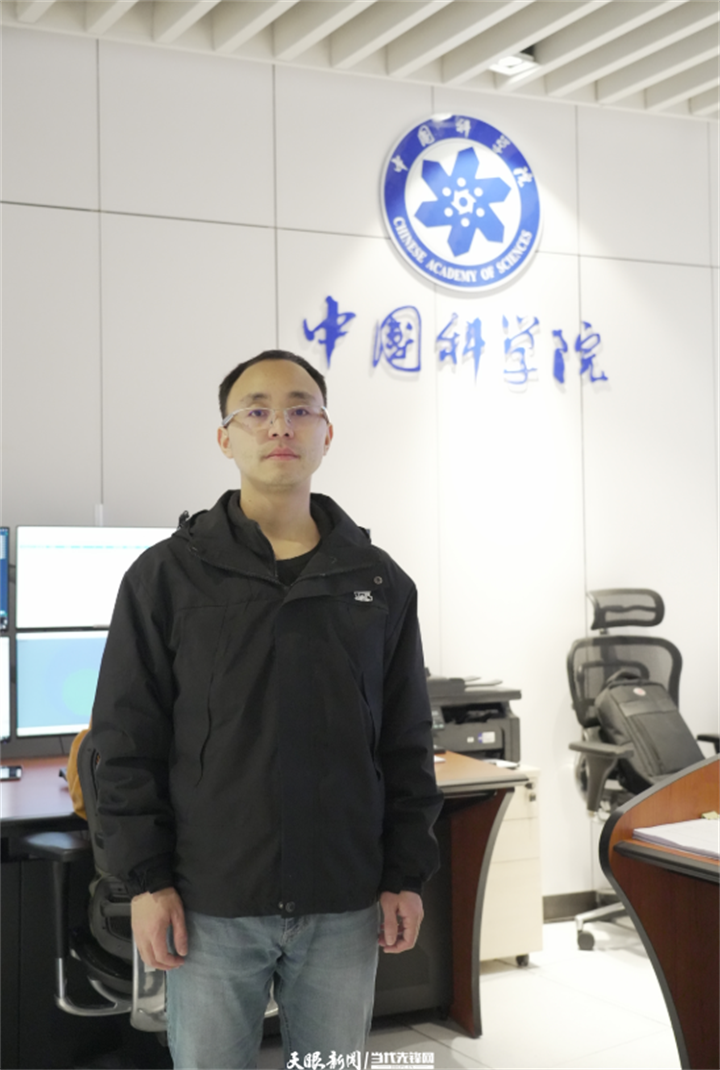
黔南州平塘县的深山里,年味裹着山风漫过大窝凼,500米口径球面射电望远镜FAST静静伫立,一如往常凝望深邃星空。当万家灯火映团圆,当欢声笑语 绕街巷,大窝凼里的这群科技工作者,却选择与"天眼"相伴守岁。以一身坚守,让这只中国"宇宙之眼"在新春依旧不停转动,捕捉着来自亿万光年外的星 光。 "我的工作说白了,就是让天眼知道往哪动、怎么动,精准对准天上的观测目标。"已在FAST坚守12年的运行和发展中心控制组组长杨清亮,是土生 土长的贵州都匀人。聊天时,他笑着将自己的工作比作天眼的"导航员",可这"导航"的背后,是十二年如一日的深耕。 运行和发展中心控制组组长杨清亮坚守春节一班岗。 春节值守,于杨清亮而言,与其说是一种选择,不如说是一份刻在心底的责任。"天眼不停转,我们就不能歇。我在现场,故障排查就能快一点,观测的 损失就能少一点。"朴实的话语,道尽了他对这份工作的赤诚。 2026年的新春,他的愿望简单而真挚:家人平安健康,是心底最柔软的期盼;而工作里, 正全力推进的FAST核心阵联合控制系统研发,盼着能让天眼带着周边40米小天线顺利"组队观测",让这只"宇宙之眼"看得更清、望得更远,触达更浩瀚 的星河。 这个春节 ...

马斯克急了,直播回应一切,xAI全新阵容首曝光,华人联创仅剩一人
3 6 Ke· 2026-02-13 00:22
两位华人联创接连「弃船」,一大批xAI员工也纷纷官宣离职,让全网惊掉了下巴。 xAI药丸了?xAI到底发生了什么? 一时间,社交媒体上的各种负面争议甚嚣尘上。 马斯克终于绷不住了!一半联创出走,在全网吵得沸沸扬扬。今天(2月12日),他紧急召开全员大会,官宣合并后全新阵容。更梦幻的是, 他勾勒了一个终极蓝图:未来在月球建AI工厂。 短短24小时,马斯克xAI经历了一场九级大地震! 其中,有四大核心板块:Grok主模型&语音模型、编码、Imagine,以及Macrohard。 | Grok Main & Voice | Coding | Imagine | Macrohard | | --- | --- | --- | --- | | Lead: Aman | Lead: Makro | Lead: Guodong | Lead: Toby | | Tyler & Jake H. | Guodong | Haotian & Chaitu | John M. | | API & Core Product Infrastructure // Toby, Jaime | | | | | Expert Tutors & ...

昆三中学子踏上追“星”之旅
Xin Lang Cai Jing· 2026-02-05 22:20
当暮色如墨浸染天幕,学生在教师指导下架起相机,对准深邃宇宙。猎户座大星云如一朵微光之花,在 镜头中温柔绽放;月球表面的环形山清晰可辨,仿佛低语着亿万年的宇宙故事……从按下快门捕捉原始 影像,到后期叠加、降噪、调色,当模糊的光点逐渐化作绚烂的星云图景,学生眼中闪烁的,是对浩瀚 宇宙最真挚的敬畏与热爱。 本报讯 记者蔡晓磊报道 近日,昆明市第三中学学子踏上了一场冬日里的追"星"之旅。 刚从火车卧铺的摇晃中醒来,昆明三中学生抵达了研学首站——束河古镇。 在实地观察中,学生探究纳西先民如何巧妙借力自然,营造出冬暖夏凉的宜居空间。一砖一瓦皆是地理 智慧,一庭一院尽显生态哲思。这堂行走的"人地协调"课,让古老民族的生存智慧在暖阳下悄然苏醒。 研学最后一站,学生徒步登上海拔3200米的中国科学院云南天文台丽江观测站。当银白色的圆顶缓缓开 启,2.4米口径的光学望远镜——被誉为"东亚之眼"的国之重器赫然矗立。如何通过自适应光学技术穿 透大气湍流,又如何将遥远星光转化为可解码的科学数据,带人类窥探千万光年外的宇宙奥秘……观测 站科研人员以通俗语言讲述着"东亚之眼"的传奇。 通过本次研学,学校希望在学生心中种下一颗名为"未来"的 ...
日联科技:公司产品及技术暂未应用于宇宙探索领域
Zheng Quan Ri Bao Wang· 2026-01-05 11:42
Group 1 - The core viewpoint of the article is that the company, 日联科技, has clarified that its products and technologies are not currently applied in the field of space exploration [1]

回眸2025年星空 品味苍穹诗意
Xin Hua She· 2025-12-31 09:20
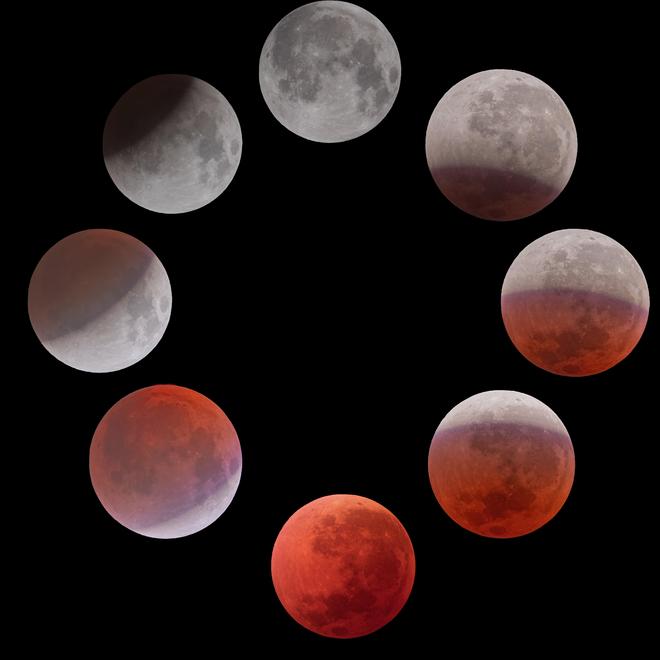
Group 1 - The year 2025 features significant astronomical events, including a total lunar eclipse, the appearance of the Lemmon comet, supermoons, auroras, and meteor showers, creating a rich tapestry of celestial phenomena [1][3][6][9][10] - The total lunar eclipse on September 8, 2025, is the only one visible in its entirety from China that year, marking a reunion with the "red moon" after nearly three years [3] - The Lemmon comet, noted as the brightest comet of the year, has been a highlight since its closest approach on October 21, 2025, captivating observers in the Northern Hemisphere [6] - Three supermoons are scheduled for October 7, November 5, and December 5, 2025, each offering a chance for people to engage with the night sky and reflect on the passage of time [7] - A significant aurora event occurred on the night of November 12-13, 2025, due to solar activity, showcasing vibrant green and red auroras across northern regions of China [9] - The year will also witness major meteor showers, including the Quadrantids, Perseids, and Geminids, which are described as cosmic love letters from the universe [10] Group 2 - The year 2025 marks the 25th solar activity cycle, influencing various celestial events and enhancing the visibility of phenomena such as auroras [9] - Notable astronomical projects include the construction of a large general-purpose spectroscopic telescope and the successful launch of the Tianwen-2 probe, indicating a strong commitment to space exploration [12] - The successful launch of the Shenzhou-21 manned spacecraft on October 31, 2025, highlights advancements in China's space capabilities and ongoing efforts in space exploration [12]
中国铁建:2016年公司所属十一局集团参建的世界上最大的单口径射电望远镜在贵州省平塘县落成启用
Zheng Quan Ri Bao· 2025-12-30 12:07
Core Viewpoint - China Railway Construction Corporation (CRCC) announced the completion and operation of the world's largest single-dish radio telescope, known as FAST, located in Pingtang County, Guizhou Province, marking a significant advancement in China's ability to explore deep space and cosmic phenomena [1] Group 1 - The FAST telescope, with a diameter of 500 meters and a total area of 250,000 square meters, is equivalent to 30 standard football fields [1] - The telescope is capable of receiving electromagnetic signals from 13.7 billion light-years away, providing opportunities for breakthroughs in fundamental research areas such as large-scale physics of the universe and the deep structure and laws of matter [1] - The Eleventh Bureau Group of CRCC played a crucial role in the construction of the FAST project, contributing to various civil engineering works including access roads, site excavation, water diversion tunnels, and research facilities [1]

当美国启动AI“创世纪”,中国开始寻找第二颗地球
Guan Cha Zhe Wang· 2025-11-26 07:21
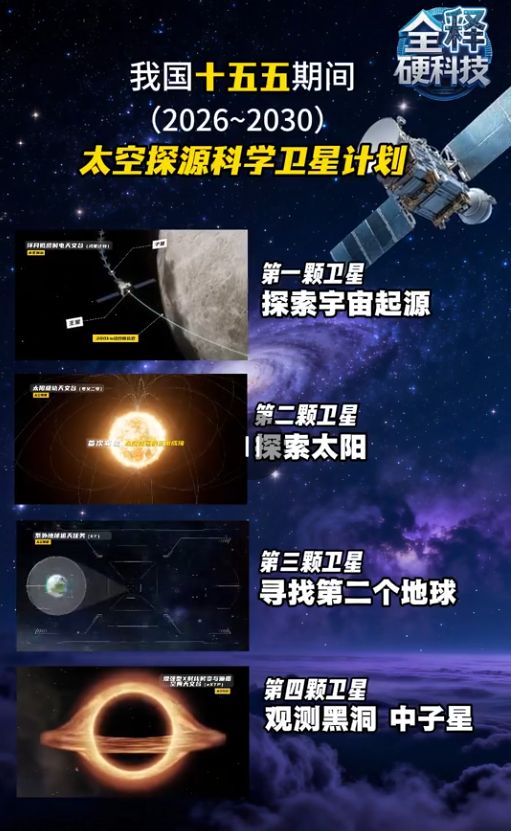
Core Viewpoint - China and the United States have proposed different visions for humanity's future, with China focusing on finding a second Earth and the U.S. launching an AI initiative to reshape scientific research [1] Group 1: China's Space Exploration Initiatives - China's announcement to search for a second Earth is part of a larger strategy to explore cosmic mysteries, emphasizing a systematic approach to understanding the universe [3][4] - The four scientific satellites launched by China target the origins of the universe, stellar activity, and the potential for life, forming a comprehensive knowledge chain [4][5] - The "Kuafu-2" mission aims to observe the solar polar regions, filling a critical gap in solar research that has persisted for decades [4][5] Group 2: Technological Advancements in Exoplanet Research - The "Exoplanet Survey Satellite" will utilize advanced techniques to detect low-mass, long-period planets that have been challenging to identify, marking a significant advancement in exoplanet research [11][14] - China's team successfully identified a previously undetected exoplanet, Kepler-725c, using a complex dynamical method, showcasing the country's growing capabilities in this field [11][14] Group 3: Broader Implications of Space Exploration - The search for a second Earth is not merely about finding a new home but understanding humanity's place in the universe and the origins of life [15] - China's initiatives reflect a shift from passive observation to active exploration, aiming to construct a shared knowledge framework for humanity [5][15]

走进“世界巨眼”南非台址(国际科技前沿)
Ren Min Ri Bao· 2025-10-26 22:19
Core Insights - The Square Kilometer Array (SKA) is a major international scientific project involving multiple countries, aimed at building the world's largest radio telescope to explore cosmic mysteries [1][5][6] Group 1: Project Overview - SKA is a collaborative effort involving ten countries, including China, which plays a significant role in the project [6][7] - The project features two main sites: one in South Africa and another in Australia, chosen for their low light pollution and optimal conditions for astronomical observations [2][4] - The South African site will consist of thousands of 15-meter diameter dish antennas arranged in a spiral pattern to enhance signal reception [2][4] Group 2: Technical Features - SKA utilizes a technique called radio interferometry, allowing multiple antennas to work together to create a larger effective aperture for observing the universe [2][4] - The project is expected to generate massive amounts of data, approximately 8 terabytes per second, which will be processed by supercomputers and shared with scientists worldwide [4][6] - SKA's design allows for high sensitivity and resolution, enabling the detection of previously undetectable faint signals from the cosmos [5][6] Group 3: Scientific Contributions - The MeerKAT telescope, a precursor to SKA, has already achieved significant scientific milestones, including imaging the center of the Milky Way and discovering a giant galaxy [6][8] - The project aims to enhance understanding of cosmic phenomena, such as the evolution of galaxies and the behavior of dark matter [6][8] - Collaboration between SKA and China's FAST telescope is expected to yield new insights into the universe, leveraging the strengths of both facilities [7][8]
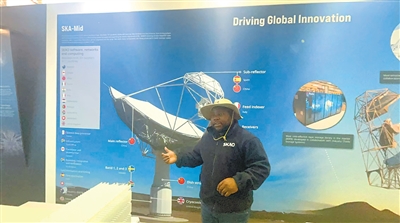
记者手记|国际大科学工程中的中国贡献——实地探访平方公里阵列射电望远镜南非台址
Xin Hua She· 2025-09-30 10:37
Core Insights - The article highlights China's significant contributions to the international scientific project, the Square Kilometre Array (SKA), which is the world's largest radio telescope project, involving multiple countries [1][2]. Group 1: Project Overview - The SKA consists of two parts: a low-frequency array in Australia and a mid-frequency array in South Africa and eight other southern African countries, named for its total receiving area of approximately one square kilometer [1]. - The MeerKAT radio telescope, a precursor to the SKA, features 64 hexagonal dishes, each with a diameter of 13.5 meters, located in the Karoo region of South Africa [1]. Group 2: China's Contributions - China has provided 64 mid-frequency antennas for the SKA, with three already installed and one undergoing testing, showcasing its role as a primary contractor for the antenna structure [2]. - The mid-frequency antennas are critical components of the SKA, with their main reflector made up of 66 individual panels, each requiring sub-millimeter precision adjustments to ensure optimal performance [2][3]. Group 3: Knowledge Transfer and Collaboration - China has also contributed to the development of the servo control system for the antennas, enhancing their pointing accuracy, which is essential for achieving the scientific goals of the SKA [3]. - The SKA regional science center, where data from both South Africa and Australia is aggregated, involves collaboration among astronomers, computer scientists, and engineers, with China playing a key role [3]. Group 4: International Cooperation - The SKA project fosters international collaboration, bringing together countries from both the Global North and South, with a shared goal of understanding the universe [3][4]. - South African officials expressed gratitude for China's support in advancing the country's scientific and technological capabilities [4].
原创科普展品亮相奥园
Bei Jing Ri Bao Ke Hu Duan· 2025-09-19 22:50
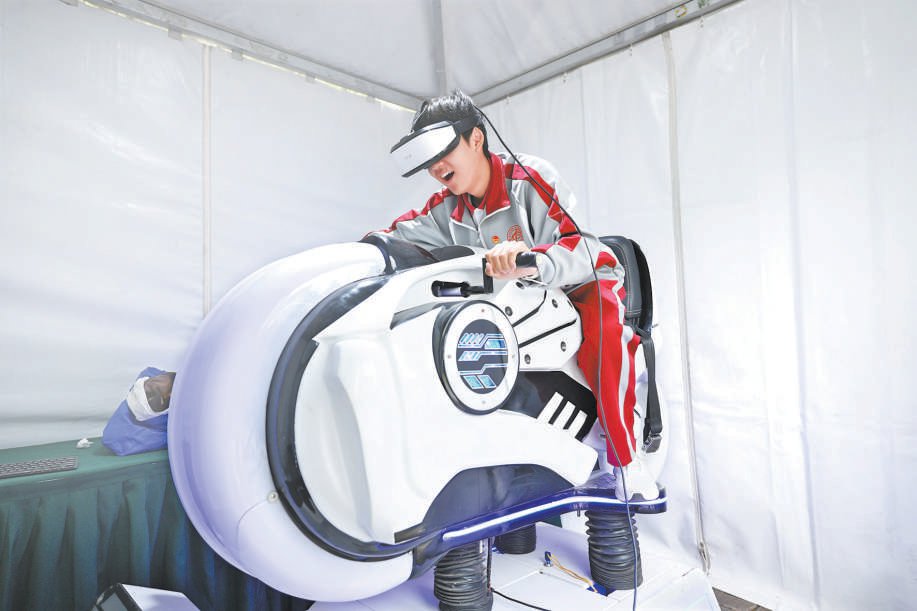
Group 1 - The event at Olympic Park in Chaoyang District transformed into a science popularization exhibition featuring various national science museums and enterprises, providing innovative technology experiences to the audience [2][3] - The China Science and Technology Museum established three major exhibition areas focusing on cutting-edge fields such as life sciences, space exploration, AI creation, and advanced manufacturing, showcasing significant scientific issues and breakthrough technological achievements [2] - A total of 15 interactive science popularization exhibits were presented, including the "Zuchongzhi No. 3" superconducting quantum computer and immersive VR experiences related to aircraft carrier operations [2] Group 2 - The Chaoyang District Science and Technology Culture Carnival was launched alongside the exhibition, covering topics like metaverse virtual interaction, AIGC creativity, astronomy, space science, and digital healthcare, with 19 themed exhibitions set up [3] - The event featured 30 technology experiences at the Aoyuan Technology Show, allowing attendees to engage in human-machine chess matches and immersive flight simulations using VR headsets [3] - The exhibition also included unmanned retail vehicles and coffee robots providing food services, along with a consumer street featuring various tech brands and cultural creative studios showcasing trendy tech and cultural innovations [3]