教育科技人才一体化发展

Search documents
广东召开全省高质量发展大会 广工多维度参与贡献智慧力量
Zhong Guo Fa Zhan Wang· 2026-02-27 09:26
Group 1 - The Guangdong provincial government is focusing on high-quality development through the collaboration of manufacturing and service industries, aiming to set a strong foundation for the "14th Five-Year Plan" [1] - Guangdong University of Technology (GUT) is actively participating in various initiatives to support regional economic development and optimize industrial structure [1][2] - GUT is implementing a "one county, one policy" approach to assist local industries in transitioning towards intelligent, green, and integrated development [2] Group 2 - GUT is enhancing its capabilities in emerging industries such as integrated circuits, artificial intelligence, deep-sea equipment, and ecological protection, aiming to achieve international competitiveness [2] - The university is establishing a multi-dimensional results transformation system to facilitate the matching of supply and demand, addressing the challenges in technology transfer [2] - GUT is committed to the "115" peak engineering initiative, which includes a talent cultivation plan, a first-class discipline construction plan, and five innovation transformation platform support plans [3][4] Group 3 - Over its 68 years of operation, GUT has trained over 600,000 professionals, with 93% serving the Greater Bay Area and 80% working in frontline industries, significantly contributing to the high-quality development of Guangdong's manufacturing sector [4] - The university aims to leverage its strengths in engineering to enhance talent development, empower technology, and drive manufacturing excellence, positioning itself as a leader in China's modernization efforts [4]
擦亮兵团教育品牌 构建高质量教育体系
Xin Lang Cai Jing· 2026-02-12 20:33
Group 1 - The meeting emphasized the importance of education as a strategic priority for development, highlighting the central government's focus on education since the 18th National Congress of the Communist Party of China [1] - The meeting reviewed the achievements of the "14th Five-Year Plan" for education in the region, noting significant progress in promoting the education of the Chinese national community and the implementation of moral education [1] - For 2026, the meeting outlined the need to scientifically develop and implement the "15th Five-Year Plan" for education, aiming to introduce impactful reform measures and policies [1] Group 2 - The meeting included representatives from various cities and educational institutions who shared their experiences and insights, indicating a collaborative approach to education reform [2]
北京今年308项重点任务发布
Xin Lang Cai Jing· 2026-02-11 22:54
Group 1: Urban Development and Infrastructure - The 2026 work report emphasizes the implementation of urban planning and the promotion of coordinated development in the Beijing-Tianjin-Hebei region, focusing on the relocation of non-capital functions and the construction of new university campuses and hospitals [2][3] - Key projects include the construction of the M101 rail line and the enhancement of the suburban railway, aiming to maintain a significant investment scale in urban infrastructure [3] Group 2: Economic Growth and Consumer Demand - The report outlines strategies to enhance domestic demand and stabilize economic growth, including policies to increase residents' income and improve consumption capabilities [4] - Initiatives to develop international consumer experience zones and enhance the quality of traditional commercial areas are also highlighted [4] Group 3: Education and Talent Development - The focus on education includes ensuring that students engage in at least 2 hours of physical activity daily and expanding vocational education through partnerships with higher vocational colleges [5][6] - The report aims to cultivate high-quality skilled talent and enhance the integration of education, technology, and talent development [5][6] Group 4: Public Services and Social Welfare - The report emphasizes improving public services, including job creation for graduates and enhancing healthcare resources, with specific targets for employment and healthcare facility construction [8] - Initiatives to support the elderly and children, including the addition of family care beds and the promotion of inclusive childcare services, are also outlined [8]
许蓓蕾:去年对澳供水1亿立方米,建成13公里碧道
Nan Fang Du Shi Bao· 2026-02-11 07:15
Core Viewpoint - The article discusses the key developments and future goals of Zhuhai as it embarks on the "15th Five-Year Plan," focusing on urban development, water security, and environmental sustainability [1]. Group 1: Economic and Social Development Goals - The Zhuhai government work report outlines ten key areas for development during the "15th Five-Year Plan," including the construction of the Guangdong-Hong Kong-Macao Greater Bay Area and the integration of education, technology, and talent [1]. - The report emphasizes the importance of building on the achievements of the "14th Five-Year Plan" to ensure a strong start for the upcoming five years [1]. Group 2: Water Supply and Management - In 2025, Zhuhai plans to supply 100 million cubic meters of quality water to Macau, with the seawater desalination project under construction to provide emergency water for 300,000 people [2]. - The city has exceeded its targets for secondary water supply facilities, enhancing residents' water comfort [2]. Group 3: Wastewater Treatment and Environmental Protection - The construction of wastewater treatment facilities is accelerating, with 106 kilometers of sewage pipelines completed, improving the efficiency of wastewater collection and treatment [2]. - A comprehensive governance mechanism for rural wastewater is being established, ensuring effective management in both urban and rural areas [2]. Group 4: Flood Control and Urban Safety - Zhuhai is enhancing its flood control systems, with ongoing improvements to sea dikes and successful management of stormwater drainage during severe weather events [2]. - The city's flood prevention infrastructure has proven effective in protecting citizens' lives and property during typhoons and heavy rainfall [2]. Group 5: Future Water Management Initiatives - In 2026, Zhuhai aims to strengthen its water supply network, improve wastewater treatment, enhance flood control capabilities, and promote ecological water management [3]. - The city plans to focus on key areas such as the construction of water resource projects and the establishment of a green water economy to contribute to high-quality development [4].


范波会见北京航空航天大学校长王云鹏一行
Su Zhou Ri Bao· 2026-02-02 00:30
Core Viewpoint - The meeting between Suzhou's Mayor Fan Bo and Beijing University of Aeronautics and Astronautics President Wang Yunpeng emphasizes the importance of collaboration in advancing AI and manufacturing, aiming to establish Suzhou as a global hub for industrial technology innovation [1][2]. Group 1 - Suzhou is focusing on leveraging opportunities in artificial intelligence and deepening "AI + manufacturing" initiatives to promote new industrialization [1]. - The collaboration between Beijing University of Aeronautics and Astronautics and Suzhou has been strengthening, with a focus on building high-level platforms and cultivating high-caliber talent [1]. - The goal is to create a collaborative innovation system that integrates enterprises, research institutions, and universities, facilitating the transformation of scientific achievements into practical applications in Suzhou [1]. Group 2 - Wang Yunpeng expressed gratitude for Suzhou's support and highlighted the city's cultural richness, vibrant market economy, and strong innovation atmosphere [2]. - There is a mutual interest in deepening strategic cooperation to explore integrated development paths for education, technology, and talent, enhancing the synergy between technological and industrial innovation [2].
【聚焦2026云南省两会】一体推进教育科技人才发展|云岭时评
Xin Lang Cai Jing· 2026-01-30 23:53
Core Viewpoint - Education, technology, and talent are foundational and strategic supports for building a modern socialist country, creating a virtuous cycle that enhances high-quality development [1] Group 1: Education and Talent Development - The province focuses on cultivating localized application-oriented talents in industries such as green energy, biomedicine, and cultural tourism, addressing structural contradictions in talent supply and demand [1] - There is a need to optimize educational resource supply and enhance the integration of ideological and political courses with curriculum, ensuring education returns to its essence of nurturing individuals [1] Group 2: Technological Innovation - Strengthening technology empowerment is essential, linking basic research with applied research, and promoting the growth of specialized and innovative small and medium-sized enterprises as well as high-tech companies [1] - A systematic approach to technology transfer and transformation of achievements is necessary to attract high-quality resources to the region [1] Group 3: Talent Evaluation and Collaboration - The construction of an innovative talent team should be prioritized, establishing a collaborative model for technological breakthroughs, talent cultivation, discipline development, and industrial growth [1] - Reforms in talent evaluation are crucial to support the integrated development of education, technology, and talent [1] Group 4: Strategic Importance - Recognizing the integrated development of education, technology, and talent is vital for solidifying the foundation of high-quality development, contributing to the construction of a strong technological nation and achieving high-level self-reliance in technology [1]
赵刚在参加省政协十三届四次会议专题(联组)讨论时强调推动科技创新和产业创新深度融合加快构建具有陕西特色的现代化产业体系
Shan Xi Ri Bao· 2026-01-29 00:52
Core Viewpoint - The provincial government emphasizes the integration of technological and industrial innovation to support high-quality development in Shaanxi, guided by the principles of Xi Jinping's speeches and directives [1][2]. Group 1: Government Initiatives - The provincial government aims to implement an innovation-driven development strategy during the "14th Five-Year Plan" period, focusing on high-quality development and the cultivation of new productive forces [2]. - There is a commitment to transforming educational and scientific resources into driving forces for development, with a focus on the construction of a regional technology innovation center in Xi'an [2]. - The government plans to enhance the status of enterprises in technological innovation and promote the application of scientific achievements [2]. Group 2: Industrial Development - The government will prioritize the development of the real economy, particularly the manufacturing sector, and will work on building key industrial chains [2]. - There is a focus on upgrading traditional industries, expanding emerging industries, and planning for future industries to ensure a robust modern industrial system [2]. - The government encourages the active participation of political advisors in providing suggestions and strengthening democratic supervision to build consensus [2].
省政协召开智库专家座谈会征求意见建议
Liao Ning Ri Bao· 2026-01-09 01:04
Core Viewpoint - The provincial political consultative conference (CPPCC) is actively seeking expert opinions to enhance its work and strategic planning for 2026, focusing on various socio-economic issues in the province [1][2]. Group 1: Expert Contributions - Experts highly praised the CPPCC's dual efforts in providing advice and building consensus over the past year [1]. - Suggestions from experts included accelerating the construction of a new energy system, promoting integrated development of education and technology, increasing autonomy for higher education institutions, and reducing business costs [1]. - Other recommendations involved developing the silver economy, addressing rural elderly care, managing livestock waste, enhancing property management, and expanding think tank resources [1]. Group 2: CPPCC Leadership and Support - The CPPCC Chairman, Zhou Bo, expressed gratitude for the ongoing support from think tank experts and emphasized their valuable contributions to the CPPCC's work [1]. - Zhou Bo highlighted the importance of think tank experts as a "treasure" for the CPPCC, noting their role in improving the professionalism of consultative discussions through valuable research outcomes [1]. - Zhou Bo encouraged experts to enhance their sense of responsibility and actively participate in CPPCC activities, focusing on strategic research related to major socio-economic issues in Liaoning [2].
从“书本里”到产业里
Xin Lang Cai Jing· 2026-01-02 18:29
Group 1 - A research-oriented and application-based learning chain is rapidly forming in Wuxi, Jiangsu, bridging basic education and higher education [1] - Students at Wuxi No. 1 High School are engaging in hands-on projects, such as designing electronic pets and building load-bearing structures, showcasing the collaboration between basic and higher education [1] - The school encourages student-driven research topics, significantly enhancing students' intrinsic motivation to learn [1] Group 2 - Wuxi's education authorities emphasize the importance of high-quality high school education resources and the cultivation of innovative talents through specialized science, engineering, and AI education practices [2] - Wuxi Institute of Technology collaborates with enterprises, integrating real production tasks into the curriculum, allowing students to understand the economic and social value of their learning [2] - The city is optimizing its higher education layout to align academic disciplines with local industries, establishing ten key industry-education integration communities [2] Group 3 - Wuxi is implementing talent recruitment and retention strategies, focusing on attracting high-level talents and cultivating industry-adapted professionals [3] - The city has 17 universities with a total of 192,000 students, and it aims to increase the retention rate of graduates in Wuxi through various initiatives [3] - Wuxi's education strategy is centered on the interconnection of education, technology, and talent, promoting a unified development framework [3]
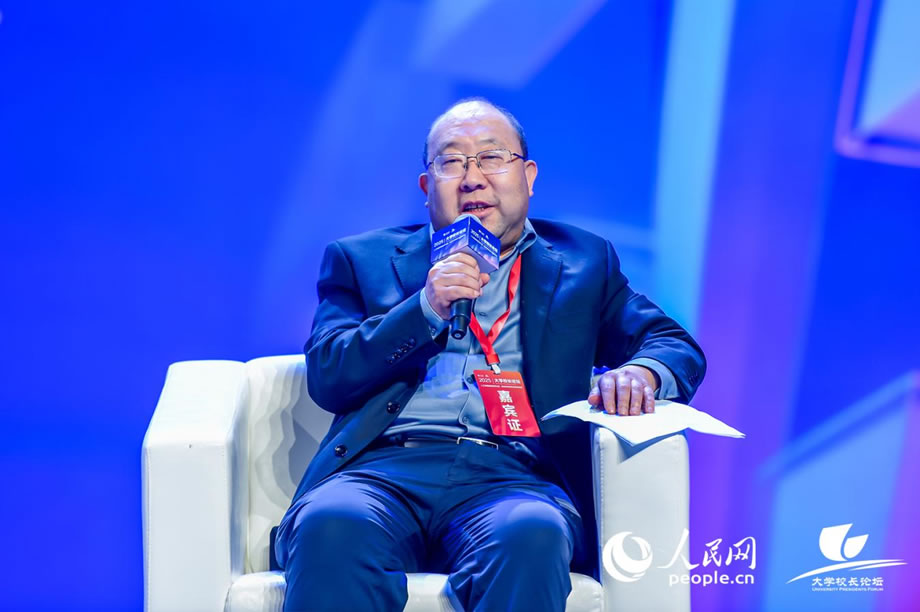
张锋:高校要为科技人才选好谱、搭好台、奏好曲
Xin Lang Cai Jing· 2025-12-27 14:34
Group 1 - The core viewpoint emphasizes the importance of unifying the value of talent evaluation in higher education to promote a virtuous cycle of education, technology, and talent [2] - Higher education institutions are identified as key players in basic research and major technological breakthroughs, with a call for universities to support technology talent in significant national tasks [2] - The need for universities to integrate "basic research" and "industrial transformation" is highlighted, advocating for deep collaboration between academia and industry to convert research outcomes into social benefits [2] Group 2 - The introduction of a dynamic optimization mechanism for academic disciplines at Hebei University includes the discontinuation of certain master's and undergraduate programs while adding new disciplines such as Big Data Technology and Artificial Intelligence [3] - The core of integrated development in education and technology is achieving a virtuous cycle of "education as the foundation, technology as empowerment, and talent as the driver," with a focus on deepening reforms to enhance support for technology and talent [3] - The establishment of a technology innovation evaluation system that prioritizes innovation capability, quality, effectiveness, and contribution is proposed, along with the need for incentive policies to reflect the value of intellectual labor [2][3]