
智能仓储

Search documents
合肥井松智能科技股份有限公司2025年度业绩快报公告
Shang Hai Zheng Quan Bao· 2026-02-27 20:49
登录新浪财经APP 搜索【信披】查看更多考评等级 证券代码:688251 证券简称:井松智能 公告编号:2026-004 合肥井松智能科技股份有限公司 2025年度业绩快报公告 本公司董事会及全体董事保证本公告内容不存在任何虚假记载、误导性陈述或者重大遗漏,并对其内容 的真实性、准确性和完整性依法承担法律责任。 本公告所载2025年度主要财务数据为合肥井松智能科技股份有限公司(以下简称"公司")初步核算数 据,未经会计师事务所审计,具体数据以公司2025年年度的定期报告为准,提请投资者注意投资风险。 一、2025年度主要财务数据和指标 单位:人民币元 ■ 注:1.根据《公开发行证券的公司信息披露编报规则第9号一一净资产收益率和每股收益的计算及披 露》,为保持基本每股收益可比性,上年同期基本每股收益按照本报告期资本公积转股后的股本计算。 其他本报告期初数同法定披露的上年年末数一致。 二、经营业绩和财务状况情况说明 (一)报告期的经营情况、财务状况及影响经营业绩的主要因素 报告期内公司实现营业总收入102,203.85万元,较上年同期增长22.25%;实现营业利润3,138.95万元, 较上年同期减少27.05% ...

俊峰工业自主研发智能仓储系统—— 重型钢板即取即用
Jing Ji Ri Bao· 2026-02-23 23:31
在青岛俊峰工业装备科技有限公司钣金车间,激光下料操作人员李晓同轻点控制面板,一台"钢铁柜"应 声而动。9层"抽屉"层层精准滑出,将数吨重的指定钢板平稳送达存取口。航吊随即接手,将其运往切 割区。"这是公司自主研发的重型板材库。"李晓同说,"以前找料靠经验、搬运靠蛮力,现在像'点菜'一 样简单。" 俊峰工业是位于青岛市即墨区环秀街道的一家专精特新企业,其精密零件加工业务涉及航空、石油、医 疗等10多个领域,产品销往西班牙、挪威、荷兰等多个国家。 以创新技术站稳市场后,俊峰工业一度被物料管理困扰。"我们用的板材,动辄几吨重,尺寸规格繁 多。"俊峰工业副总经理孙莎告诉记者,"传统平面堆放就像'摆地摊',要取出最下面那块板材,需动用 叉车、人工反复垫板调整,耗时费力,安全隐患大。"前段物料供给的"拖沓",严重制约了后段精密加 工生产线的稳定节拍。 重型板材库在车间投入运行后,仓储空间利用率跃升至82%,出入库效率大幅提升,原先需要数小时查 找搬运的板材,如今可在两分钟内精准到位。 "重型板材库为许多与我们面临同样困境的企业提供了'一揽子'解决方案。"俊峰工业总经理王俊先说, 它不仅是硬件设备,也集成了智能仓储管理系统 ...
透视贵州双龙航空港经济区春节保供战
Mei Ri Jing Ji Xin Wen· 2026-02-23 11:52
Core Viewpoint - The article highlights the significant increase in demand for Moutai liquor during the upcoming Spring Festival, driven by both B-end (distributors and self-operated stores) and C-end (individual consumers) orders, leading to challenges in supply chain management and logistics [1][3]. Group 1: Market Demand and Supply - The demand for Moutai liquor has surged, with many distributors reporting that they have sold out their January and February quotas before the Spring Festival, even prepaying for part of the March quota [1]. - The average wholesale price for the 2026 version of Moutai is reported to be stable, with prices around 1,700 RMB per bottle for boxed versions and between 1,660 to 1,690 RMB for loose bottles, indicating a price increase compared to previous years [1]. Group 2: Warehouse and Logistics Operations - The "Moutai Shuanglong Warehouse" in Guizhou covers approximately 155 acres and has a total construction area of 108,000 square meters, with a storage capacity of 32,000 tons of finished liquor and over 10.6 million boxes [2]. - The warehouse has seen a doubling of workload compared to previous years, shifting from bulk shipments to handling a large volume of small, immediate orders [3]. - The warehouse employs an automated system for inventory management, utilizing barcode scanning and real-time tracking to ensure efficient sorting and dispatching of products [3][7]. Group 3: Staffing and Operational Adjustments - To cope with the increased workload, the warehouse has expanded its workforce, adding 30 to 40 personnel for B-end orders and over 70 for C-end orders daily [4]. - New shipping warehouses in Nanjing and Beijing have been established to facilitate faster delivery for C-end consumers, significantly reducing delivery times [4]. Group 4: Collaboration with Logistics Partners - Moutai logistics collaborates with JD and SF Express for distribution, with each partner focusing on specific delivery tasks to enhance efficiency [6]. - SF Express has developed customized packaging solutions to prevent damage during transport and has implemented a "consolidation" delivery method for small orders to improve safety and efficiency [6]. Group 5: Retail Experience and Consumer Interaction - The increase in online orders has transformed Moutai's retail stores into crucial points connecting online purchases with offline experiences, leading to a three to fourfold increase in customer traffic [9]. - Retail staff have been adjusted to manage the increased customer volume, with extended operational hours to accommodate the demand [9].

极智嘉发布人形通用仓储机器人
Xin Jing Bao· 2026-02-10 05:29
新京报贝壳财经讯(记者陈维城)2月10日,极智嘉(Geek+,2590.HK)发布面向仓储场景的通用机器人 Gino1。据悉,未来极智嘉将依托全球网络加速无人仓方案的规模化落地,推动技术与商业的双重进 化;同时,公司将筹备启动战略第三阶段的生态共建。 目前,极智嘉有从"货到人"模式的专用仓储机器人(AMR),到解决海量商品高效拣选的专用机械臂无人 拣货站,以及通用仓储机器人Gino1,构建了多智能体全流程协同的智能仓储作业体系。 Gino 1专为面向仓储场景的通用多任务能力而设计并训练,能够从事仓储拣货、搬箱、打包、巡检等多 任务,实现了"一台机器人覆盖仓内主流人工操作场景"。 ...

京东进驻董事会,科大智能IPO前黄明松变现2.48亿
Sou Hu Cai Jing· 2026-02-03 03:32
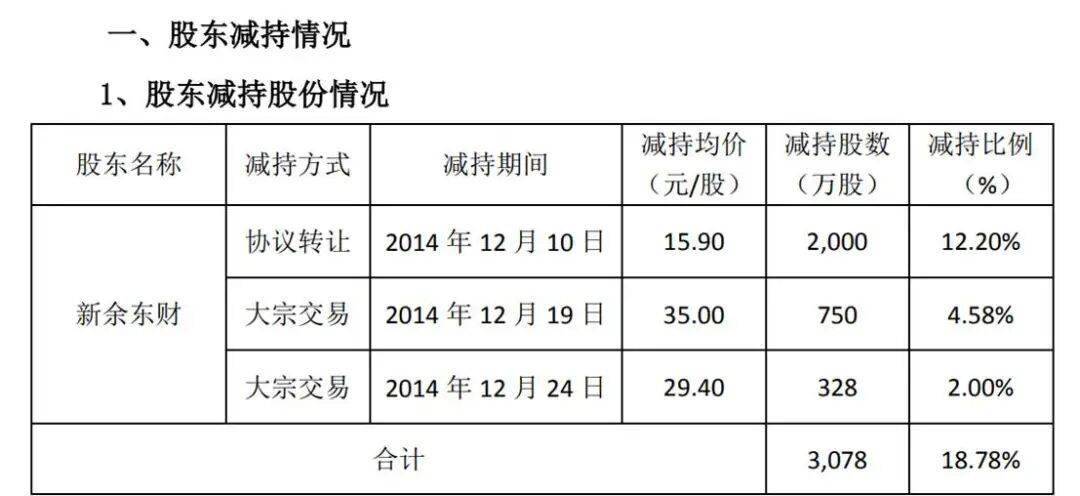
Core Viewpoint - Keda Intelligent, a company specializing in power distribution automation, is undergoing significant leadership changes and strategic moves, including a planned listing on the Hong Kong Stock Exchange and a shift in major shareholders [2][3][7]. Group 1: Leadership Changes - Wang Tingting, who has been with Keda Intelligent for nearly 19 years, became the company's president after taking over from the actual controller Huang Mingsong [1][2]. - Huang Mingsong, the former controller, has begun to reduce his shareholding in the company, which raises questions about the company's governance and future direction [8][9]. Group 2: Financial Performance - Keda Intelligent's revenue for 2023 and 2024 was reported at 3.024 billion RMB and 2.687 billion RMB, respectively, with a notable increase in revenue for the first nine months of 2025 at 1.904 billion RMB, reflecting a year-on-year growth of approximately 2211.9 million RMB [20]. - The company's primary revenue source, digital energy, contributed 2 billion RMB in 2023, 2.101 billion RMB in 2024, and 1.429 billion RMB in the first nine months of 2025 [21][22]. Group 3: Shareholder Dynamics - Prior to the listing application, Huang Mingsong reduced his stake in Keda Intelligent, with his shareholding dropping to 21.96% by the time of the application [7][9]. - The company has seen significant changes in its shareholder structure, with Anhui Dongcai no longer being a shareholder and Huang Mingsong's stake being reduced [7][8]. Group 4: Business Operations - Keda Intelligent operates in two main segments: digital energy and intelligent robotics, with the former being the more stable revenue source [19][20]. - The intelligent robotics segment has experienced fluctuations in revenue, with significant contributions from a few major clients, which raises concerns about dependency on a limited customer base [23]. Group 5: Financial Health - Trade receivables accounted for 66.3% and 67.47% of Keda Intelligent's revenue in 2023 and 2024, respectively, indicating a reliance on credit sales [26]. - The company has maintained a strong cash position, with cash and cash equivalents significantly exceeding short-term borrowings, amounting to 280 million RMB as of September 2025 [33].


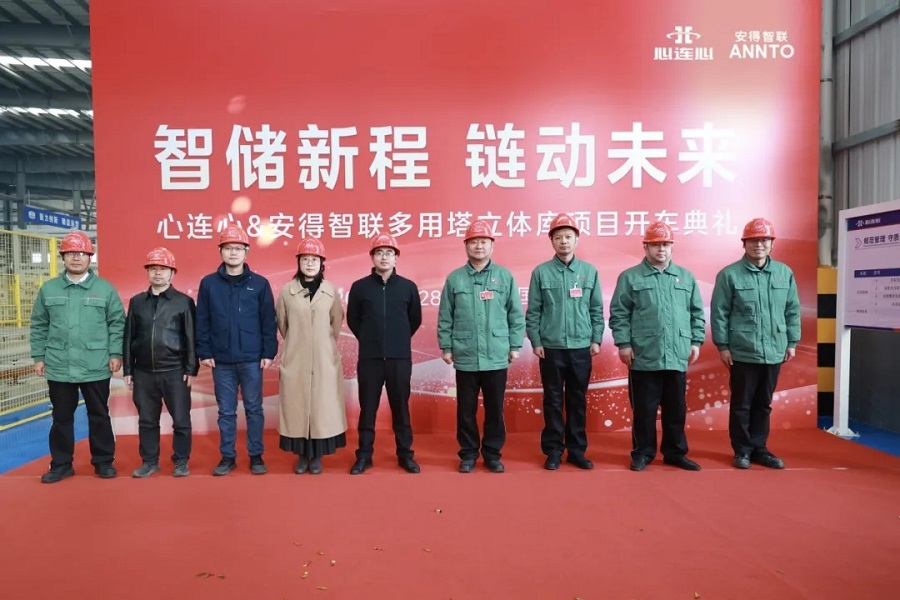
复合肥行业首个智能立库投运,安得智联助力心连心打造智能仓储新标杆
Sou Hu Wang· 2025-12-31 10:36
Core Viewpoint - The launch of the multi-use tower intelligent warehouse by Henan Xinlianxin Chemical Industry Group marks a significant advancement in the fertilizer industry, addressing various logistical challenges through automation and smart technology [1][4][9] Group 1: Project Overview - The multi-use tower intelligent warehouse has an area of 16,000 square meters, including a 10,000 square meter warehouse and a 6,000 square meter production line stacking area, specifically designed for fertilizer storage [6] - The project was a collaboration between Xinlianxin and Ande Zhiliang, focusing on automating traditional storage methods to enhance efficiency and safety in warehouse operations [1][4] Group 2: Technological Innovations - Advanced equipment deployed includes heavy-duty stackers, circular shuttle vehicles, stack shaping machines, and automatic flip boards, enabling 24-hour unmanned operations throughout the entire storage process [6] - The intelligent warehouse features over 9,000 storage locations, maximizing space utilization and ensuring a 100% inventory accuracy rate [6] Group 3: Operational Efficiency - The new warehouse has increased storage capacity by 2.8 times and reduced overall logistics costs by approximately 44.4% [6] - The implementation of a warehouse control system (WCS) allows for intelligent scheduling and control of equipment, ensuring efficient product handling from production to storage and loading [6][9] Group 4: Strategic Partnership - The collaboration with Ande Zhiliang is a result of a long-term partnership, leveraging their expertise in integrated and intelligent supply chain logistics solutions [9] - The successful operation of the intelligent warehouse is seen as a milestone for the fertilizer industry, showcasing Ande Zhiliang's capabilities in supply chain technology development [9]
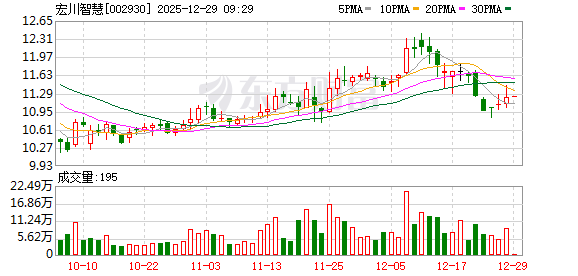
宏川智慧:在液体仓储场景,公司已在试点库区投入智能巡检机器人
Mei Ri Jing Ji Xin Wen· 2025-12-29 01:28
Group 1 - The core viewpoint of the article highlights the differentiated application strategy of the company in smart warehousing, focusing on the automation and unmanned aspects of its operations [2] - In solid warehousing scenarios, the company is conducting research and evaluation on the applicability of smart equipment like AGVs based on specific operational processes [2] - In liquid warehousing scenarios, the company has deployed smart inspection robots in pilot areas and is continuously optimizing their functions [2] Group 2 - The company plans to further explore the deep integration of smart technology in warehousing operations management, aligning with actual business needs and safety management requirements [2]
太湖雪已取得近2.7万平方米土地使用权,将推进未来工厂项目
Xin Jing Bao· 2025-12-27 11:20
Core Viewpoint - Suzhou Taihu Snow Silk Co., Ltd. has officially acquired a land use right of 26,990.78 square meters, which will facilitate the investment in the "Taihu Snow Future Factory Project" aimed at optimizing production layout and enhancing capacity [1] Group 1: Land Acquisition - The company successfully won the land use right through an online bidding process organized by the Suzhou Wujiang District Natural Resources and Planning Bureau for 11.606 million yuan [1] - The land is located on the north side of National Highway 318 and west side of Wangjiazhuang in Zhenze Town [1] - The company received the "People's Republic of China Real Estate Certificate" on December 24, confirming the land acquisition [1] Group 2: Future Plans - The acquisition is expected to support the development of a future factory that integrates "smart manufacturing + smart warehousing + cross-border services," positioning it as a benchmark in the industry [1] - This initiative aims to expand production capacity, increase market share, and empower the company's digital transformation and globalization efforts [1] Group 3: Company Background - Taihu Snow has developed a comprehensive product system over more than a decade, covering four main categories: silk quilts, bedding sets, silk accessories, and silk clothing [1] - The company became the first silk stock listed on the Beijing Stock Exchange in 2022, marking its status as a new national brand in silk [1]
「智世机器人」完成数千万元A+轮融资,研发安全易用四向穿梭机器人丨 36氪首发
3 6 Ke· 2025-12-10 12:01
Group 1 - The core viewpoint of the article is that Shanghai Zhishi Robotics has recently completed a multi-million A+ round of financing, exclusively invested by Yinfeng Capital [1] - Zhishi Robotics, established in 2019, focuses on the research and manufacturing of four-way shuttle robots, which are an emerging technology aimed at enhancing automation in dense storage warehouses [2] - The company has invested three years in refining product details, emphasizing safety and ease of use as its main competitive advantages [4] Group 2 - Zhishi Robotics has developed multiple proprietary technologies to ensure safety, including adaptive obstacle perception, pallet offset detection, and multiple positioning technologies [4] - The ease of use is highlighted by a deployment time of only five minutes for the new four-way shuttle robots, significantly reducing product complexity [4] - The company has achieved a modularity rate exceeding 90% for its robots, maintaining a zero project failure rate and a delivery cycle of approximately two months [4] Group 3 - Zhishi Robotics collaborates with Shanghai Jiao Tong University for long-term technical cooperation, focusing on system planning algorithms and safety models [5] - The company has launched several four-way shuttle robot products, including ultra-thin H125 and heavy-duty L2000, and has developed a comprehensive ZSmart intelligent platform for integrated solutions [5] - Over the past three years, Zhishi Robotics has experienced rapid commercialization, with annual growth rates of 200%-300%, serving over 200 large and medium-sized enterprises globally [5] Group 4 - Since 2025, Zhishi Robotics has accelerated its overseas business expansion, with international revenue accounting for 30% of total revenue, exporting products to over 20 countries and regions [5] - Yinfeng Capital focuses on the robotics sector, particularly in smart robotics applications and core technologies, with investments linked to the publicly listed service robot company Ecovacs Robotics [5]
麦加芯彩:调整“智能仓储建设项目”内部投资结构
Xin Lang Cai Jing· 2025-11-21 09:00
Core Viewpoint - The company announced an adjustment to the internal investment structure of its "Intelligent Warehousing Construction Project" during a board meeting scheduled for November 21, 2025, with a total investment of 55.5347 million yuan [1] Group 1 - The implementation entity for the project is Nantong Mega [1] - The total engineering cost remains unchanged, while the equipment procurement cost is reduced by 27.9448 million yuan and added to the construction engineering cost [1] - The adjustment is necessitated by capacity expansion at Nantong Mega, leading to tight warehousing space and the need to increase warehouse floors [1] Group 2 - The adjustment does not alter the total amount of funds raised or the investment in the project, aligning with regulations and the company's interests [1]
