消费税

Search documents
——海外税制学习系列二:如果糖税落地,该有何流程?
Huachuang Securities· 2026-03-03 13:13
【宏观专题】 如果糖税落地,该有何流程? ——海外税制学习系列二 宏观研究 证 券 研 究 报 告 背景 最近资本市场对糖税开始有了讨论和关注。本文仅探讨,如果糖税落地,该有 何流程? 核心观点 糖税落地的潜在流程,关键看定性——就看是新税种还是消费税新税目: 1、如果作为新税种(如"健康税"),需履行全国人大立法程序,推进周期可 能历时数年; 2、如果作为消费税新税目,则可由国务院直接调整,年内或随时落地; 3、从国际经验看,若我国想加快实施糖税,作为消费税新税目的概率或不小。 当前在我国,讨论任何一个新税的落地,都要基于税收法定这一大原则。 税收法定, "简而言之,就是政府收什么税,向谁收,收多少,怎么收,都要 通过人大来立法决定 (时任全国人大常委会副秘书长傅莹,2015) " ;2015 年 新《立法法》实施以后,凡是开征新税的,要由全国人大及其常委会制定税收 法律——第十一条规定:"税种的设立、税率的确定和税收征收管理等税收基 本制度,只能由法律规定";第十条规定,全国人民代表大会和全国人民代表 大会常务委员会根据宪法规定行使国家立法权。 落地流程而言,新税要立法,法定程序至少需四步(提出-审议-表 ...
2025年我国进口货物增值税、消费税18263亿元,比上年下滑4.8%
Chan Ye Xin Xi Wang· 2026-02-25 03:31
2020年-2025年我国进口货物增值税、消费税收入统计图 数据来源:国家统计局 相关报告:智研咨询发布的《2026-2032年中国税务服务行业竞争现状及投资策略研究报告》 2025年,我国进口货物增值税、消费税18263亿元,比上年下滑4.8%,占税收收入的比重为10.36%,占 比较上年减少0.6个百分点。 ...


凯投宏观:日本第四季度GDP增长疲软可能刺激进一步的财政宽松
Xin Lang Cai Jing· 2026-02-16 00:40
凯投宏观(Capital Economics)的Marcel Thieliant在评论中表示,日本第四季度GDP增长疲软可能刺激 进一步的财政宽松。这位亚太区主管指出,早些时候公布的第四季度初步数据显示,"企业投资仅环比 增长0.2%,净出口持平,公共需求则环比下降0.2%"。Thieliant表示,这意味着11月底通过的大规模补 充预算尚未对上一季度的公共支出起到提振作用。Thieliant补充说,疲软的经济活动增加了首相高市早 苗不仅会推进暂停对食品征收消费税,而且会在4月份开始的财年上半年就制定一项补充预算,而不是 等到2026年底的可能性。 责任编辑:王永生 凯投宏观(Capital Economics)的Marcel Thieliant在评论中表示,日本第四季度GDP增长疲软可能刺激 进一步的财政宽松。这位亚太区主管指出,早些时候公布的第四季度初步数据显示,"企业投资仅环比 增长0.2%,净出口持平,公共需求则环比下降0.2%"。Thieliant表示,这意味着11月底通过的大规模补 充预算尚未对上一季度的公共支出起到提振作用。Thieliant补充说,疲软的经济活动增加了首相高市早 苗不仅会推进暂 ...
高市早苗胜选无济于事?市场警告:赤字空间已尽,日元仍悬利剑
Jin Shi Shu Ju· 2026-02-09 09:51
Core Viewpoint - The recent election victory of Prime Minister Sanna Takashi provides her with significant authority to revitalize Japan's economy, but investors are concerned about the limited room for increasing deficits, which could soon pressure bonds and the yen [1][2]. Group 1: Election Impact - Takashi's Liberal Democratic Party won over two-thirds of the seats in the House of Representatives, allowing her to advance her agenda without needing to negotiate with other parties [1]. - The victory was praised by U.S. President Trump, who noted the electorate's dissatisfaction with high living costs, although her expansionary fiscal agenda has raised market concerns [1][2]. Group 2: Market Reactions - Following the election, the Tokyo stock market surged to historical highs, with the Nikkei index rising by 3.9% and the broader Topix index increasing by 2.3% [2]. - The yen, which had depreciated by 6% since Takashi took over the Liberal Democratic Party in October, showed signs of strengthening, while the benchmark 10-year Japanese government bond yield rose by 5.5 basis points to 2.28% [2]. Group 3: Economic Policy Challenges - Analysts emphasize that the focus is not merely on the election results but on the substance, scale, funding sources, and consistency of economic and fiscal policies [2]. - A key challenge for Takashi will be how to manage the commitment to suspend the 8% food consumption tax, which could create an estimated annual revenue shortfall of 5 trillion yen (approximately $32 billion) [5]. Group 4: Monetary Policy Outlook - There is a slight increase in market bets on a potential interest rate hike by the Bank of Japan, reflecting that political stability may clear the way for action [3]. - However, pressure from the U.S. to support the yen could complicate Takashi's approach to monetary policy, as any signals of maintaining the status quo could lead to further yen depreciation [3][4].
高市豪赌!日本大选又来了
第一财经· 2026-02-08 03:36
Core Viewpoint - The article discusses the recent Japanese House of Representatives election, highlighting the political landscape, voter sentiment, and key issues affecting the election outcome, including high inflation and the impact of adverse weather conditions on voter turnout [3][6][9]. Election Overview - The election involves 465 seats, with 289 from single-member districts and 176 from proportional representation [3][6]. - Over 1,200 candidates are contesting, with Prime Minister Fumio Kishida emphasizing the need for the ruling coalition to secure a majority to maintain his position [3][6]. Political Landscape - The ruling coalition, consisting of the Liberal Democratic Party (LDP) and the Japan Innovation Party, is projected to potentially secure a majority, with estimates suggesting they could achieve between 261 to over 300 seats [6][9]. - The main opposition, the Constitutional Democratic Party and the Komeito Party, are expected to perform poorly, possibly securing fewer than 167 seats [6][9]. Voter Sentiment and Weather Impact - Adverse weather conditions, including heavy snowfall, are anticipated to affect voter turnout, particularly among the elderly [7][9]. - The "black money scandal" involving LDP candidates is also expected to influence public sentiment and voter behavior [7][9]. Economic Issues - Rising food prices have led to an increase in the Engel coefficient to 28.6%, the highest since 1981, indicating a significant portion of household spending is on food [3][9]. - The election has seen debates over consumption tax policies, with proposals to reduce or eliminate the food consumption tax being central to campaign discussions [9][10]. Foreign Policy Debate - Immigration policy is a contentious issue, with the LDP advocating for stricter controls, while other parties propose more inclusive approaches [11]. - The number of foreign workers in Japan has reached a record high of 2.57 million, raising concerns about social cohesion and political rhetoric surrounding immigration [11].

高市豪赌!“恩格尔系数”26年新高之际 日本大选又来了
Di Yi Cai Jing· 2026-02-08 03:06
Group 1 - The Japanese House of Representatives election is taking place on February 8, with 465 seats contested, including 289 single-member districts and 176 proportional representation seats [1] - Over 1,200 candidates are expected to participate, with Prime Minister Sanna Takashi stating that he will resign if the ruling coalition fails to secure a majority [2] - The election is facing criticism due to adverse weather conditions, including heavy snowfall, which may impact voter turnout [2][4] Group 2 - The ruling coalition, consisting of the Liberal Democratic Party (LDP) and the Japan Innovation Party, is projected to secure a majority of seats, with some polls suggesting they could achieve an absolute stable majority of 261 seats [4] - The LDP currently holds 196 seats, falling short of the 233-seat majority, and will need to rely on the Japan Innovation Party to maintain control [3] - The election is also influenced by the "black money" scandal, which has raised concerns about the LDP's candidate list, including 37 members linked to the scandal [5] Group 3 - Rising living costs are a central issue in the election, with the Engel coefficient reaching 28.6%, the highest since 1981, indicating a significant increase in food expenditure [2][6] - Various parties are proposing measures to address high prices, with the LDP suggesting a temporary suspension of the 8% food consumption tax, while opposition parties advocate for a zero rate [7][8] - The debate over foreign labor policies is also prominent, with the LDP advocating for stricter controls, while other parties push for multicultural coexistence [8]
高市豪赌!“恩格尔系数”26年新高之际,日本大选又来了
Di Yi Cai Jing· 2026-02-08 02:40
Group 1 - The Japanese House of Representatives election is taking place on February 8, with 465 seats contested, including 289 single-member districts and 176 proportional representation seats [1][3] - Over 1,200 candidates are expected to participate, with Prime Minister Kishi Sanae emphasizing that if the ruling coalition does not secure a majority, she will resign [1][3] - The election is criticized by public opinion due to poor weather conditions and insufficient reasons for the early dissolution of the House [1][4] Group 2 - The ruling coalition of the Liberal Democratic Party (LDP) and the Japan Innovation Party is projected to potentially secure a majority, with some media suggesting they could achieve over 300 seats [3][4] - As of now, the LDP holds 196 seats, which is below the 233-seat majority threshold, and the coalition's stability is uncertain [3][4] Group 3 - The Engel coefficient, indicating the proportion of food expenditure in household consumption, has reached 28.6%, the highest since 1981, due to rising food prices [1][5] - Various political parties are proposing measures to address high prices, with the LDP suggesting a temporary suspension of the 8% food consumption tax [5][6] - The opposition party, "Center Reform Party," advocates for a zero food consumption tax policy, while other parties propose broader tax reductions [5][6] Group 4 - The election is also influenced by the "black money" scandal, which has previously impacted the LDP's performance in elections, with 37 candidates linked to the scandal [4][6] - The weather conditions, including heavy snowfall, are expected to affect voter turnout, particularly among the elderly [4][6] Group 5 - The foreign labor policy is a significant topic in the election, with the LDP advocating for stricter controls, while other parties promote multicultural coexistence [6] - As of January 2025, the number of foreign workers in Japan reached a record 2.57 million, marking an 11.7% increase from the previous year [6]
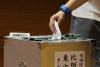
研究显示:美国消费者承担了96%的关税成本
Xin Lang Cai Jing· 2026-01-21 15:50
最新分析发现,美国人承担了约96%的关税负担——2025年约为2000亿美元——其作用类似于消费税; 经济学家警告称,这可能推动2026年通胀上升。 责任编辑:张俊 SF065 责任编辑:张俊 SF065 最新分析发现,美国人承担了约96%的关税负担——2025年约为2000亿美元——其作用类似于消费税; 经济学家警告称,这可能推动2026年通胀上升。 ...
日本大选推抗通胀食品减税 国际黄金借势攀升
Jin Tou Wang· 2026-01-19 06:18
【要闻速递】 日本大选临近,削减食品消费税成核心议题。执政自民党拟将其纳入竞选纲领,首相高市早苗计划周一 发布会阐述方针,大选或最早2月8日举行。此前,自民党与维新会联盟协议已包含暂降食品消费税内 容,正研拟具体方案,目标最快明年1月落地——目前日本食品适用8%优惠税率(标准10%)。 摘要今日周一(1月19日)亚盘时段,国际黄金最新报价为1045.69元/克,较前一交易日上涨17.08元,涨幅 1.66%,日内呈现强势反弹走势。当日开盘价报1028.51元/克,盘中最高触及1049.79元/克,最低下探至 1028.51元/克。 今日周一(1月19日)亚盘时段,国际黄金最新报价为1045.69元/克,较前一交易日上涨17.08元,涨幅 1.66%,日内呈现强势反弹走势。当日开盘价报1028.51元/克,盘中最高触及1049.79元/克,最低下探至 1028.51元/克。 反对派"中道改革联盟"(含最大在野党及前联盟成员)亦主张降消费税,同时强调财政纪律、不发额外赤 字国债。若高市宣布减税,两党将围绕相似纲领角逐。受传闻提振,东京食品股周一早盘走强,山崎面 包涨7.1%(创2025年8月来最大涨幅),7-El ...
涉税专业服务机构合规经营进阶指南(五)| 服务协议变更与终止操作操作步骤
蓝色柳林财税室· 2026-01-17 14:24
Core Viewpoint - The article discusses the implications of consumption tax and its application in specific scenarios, particularly focusing on the concept of "deemed sales" for taxable consumer goods [10][11]. Group 1: Consumption Tax and Deemed Sales - Consumption tax applies specifically to certain taxable consumer goods, and not all transfers of goods are considered deemed sales [11]. - Deemed sales occur when a taxpayer uses self-produced taxable consumer goods for purposes other than continuous production of taxable goods, such as gifts, sponsorships, or employee benefits [12]. - The tax obligation for self-produced taxable consumer goods arises on the day the goods are transferred for use, necessitating timely tax calculations to avoid future risks [13].