电力供应

Search documents
古巴全国电力系统恢复
中国能源报· 2026-03-23 06:19
Group 1 - The Cuban electrical system has been restored nationwide from the western province of Pinar del Río to the eastern province of Guantánamo as of the 22nd [1] - The Ministry of Energy and Mines reported a second nationwide blackout within a week on the 21st, indicating ongoing issues with the electrical supply [1] - Cuba has faced long-term difficulties in importing fuel and necessary equipment for aging power plants due to U.S. sanctions, leading to a tight national electricity supply [1] Group 2 - Since October 2024, Cuba has experienced multiple nationwide blackouts due to power facility failures and hurricanes [1]


美国AI因缺电停滞?马斯克:电力不到中国一半,恨不得自建发电厂
Sou Hu Cai Jing· 2026-01-27 14:37
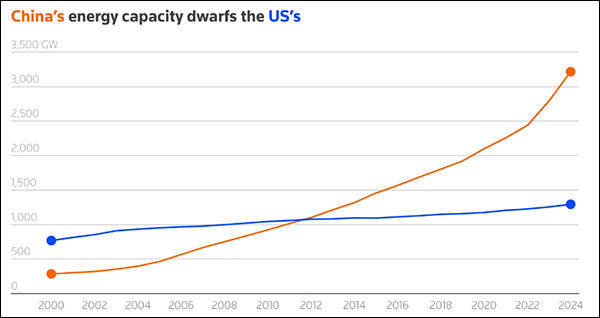
Core Insights - The article highlights the critical role of electricity supply in the development of AI, emphasizing that the U.S. is lagging behind China in this regard, which could impact its AI competitiveness significantly [3][5][18] Electricity Supply and AI Development - Elon Musk warns that the U.S. electricity output is less than half of China's, which poses a direct threat to its AI capabilities [5] - By 2026, China's electricity output is projected to reach three times that of the U.S., providing ample capacity for AI data centers [3] - The U.S. electricity capacity is currently at 1.3 terawatts, while China has 3.75 terawatts, indicating a substantial gap [3] Challenges in the U.S. Electricity Infrastructure - The U.S. faces a bottleneck in electricity supply due to aging infrastructure and slow upgrades, which delays many projects [3][7] - Utility companies across the U.S. are unable to keep up with the rising demand, with connection to the grid potentially taking 1 to 7 years [3][5] - The demand for electricity from data centers, especially for AI training, is expected to double by 2035, putting additional strain on the grid [7] Corporate Responses to Electricity Shortages - Companies like xAI are taking proactive measures by building their own power sources to bypass grid delays, such as importing gas turbines [9][18] - xAI's Colossus supercluster utilizes 100,000 NVIDIA GPUs and has built a power capacity of 1,900 megawatts through self-generated electricity [9] - Other companies, including OpenAI, Meta, and Oracle, are also investing in self-sufficient power solutions to ensure their operations are not hindered by grid limitations [9][12] Environmental Concerns - The reliance on natural gas for power generation raises environmental concerns, with criticism from advocacy groups regarding air pollution from gas turbines [12] - The increase in electricity demand for AI could lead to higher electricity prices, affecting the general public [12] Competitive Landscape - China's rapid expansion in electricity generation, including 429 gigawatts added last year, positions it favorably in the AI race [5][13] - Despite the challenges, some analysts believe that the U.S. still has an advantage in data center scale and power capacity [13] Long-term Solutions and Industry Outlook - The article suggests that while self-built power plants are a short-term solution, long-term systemic reforms are necessary to upgrade the electricity grid [15][20] - The shift towards mixed power sources, including renewable energy, is seen as essential for the future of AI development in the U.S. [16][18]
马斯克说电力制约美国AI发展
Xin Lang Cai Jing· 2026-01-23 13:45
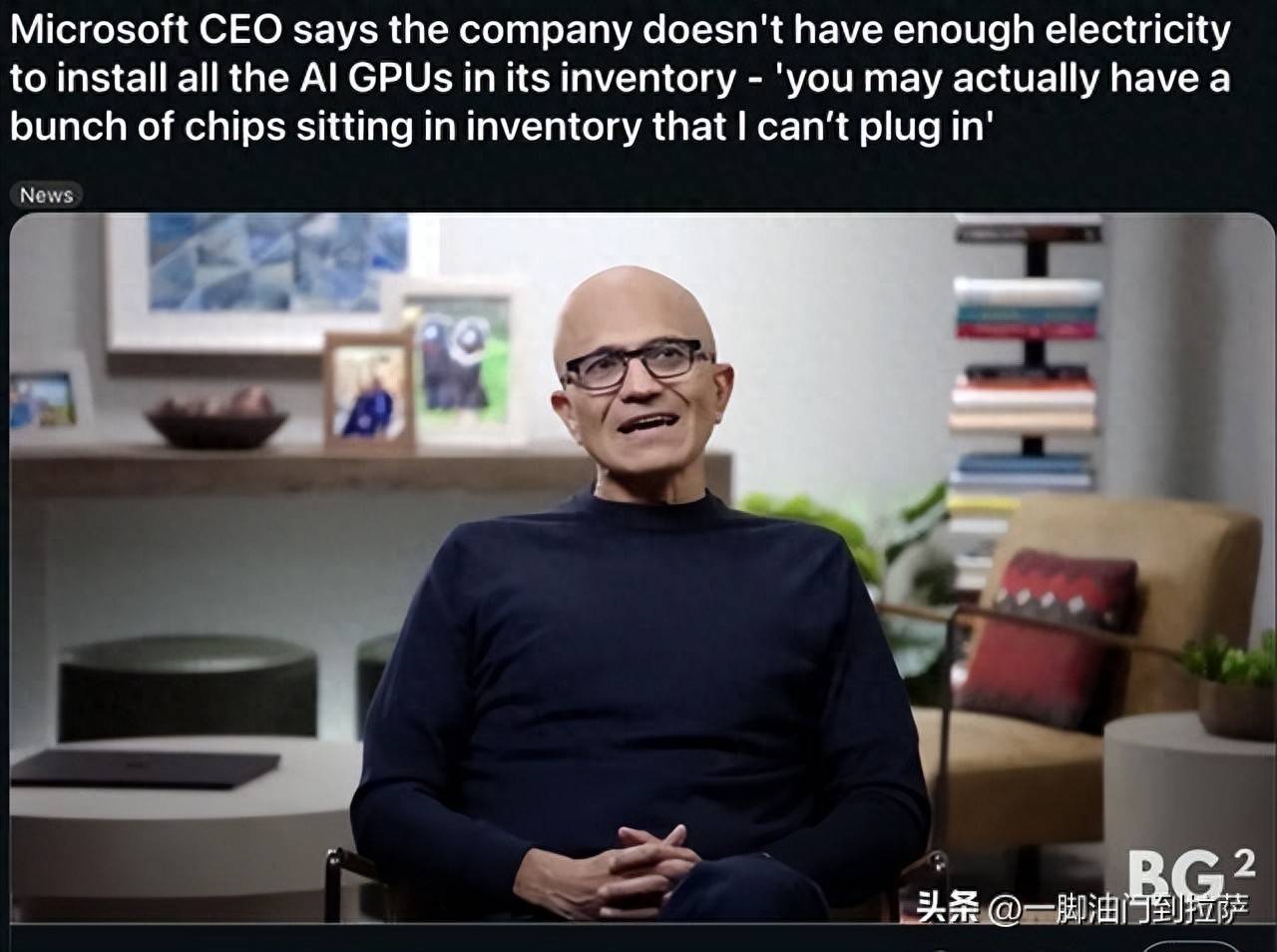
Group 1 - Elon Musk stated that the development of artificial intelligence (AI) technology in the United States is constrained by insufficient power supply, while China has already addressed this issue [1] - Musk warned that the U.S. may soon face a situation where there is an excess of chip production that cannot be utilized due to power shortages [1] - He emphasized that the fundamental limiting factor for AI deployment is the power supply, indicating that the production of AI chips is growing exponentially, but power supply is lagging behind [1] Group 2 - Musk highlighted the significant difference in energy supply structures between the U.S. and China, noting that China has a clear lead in power generation capacity, particularly in solar energy [1] - He pointed out that the rapid growth of solar power in China contrasts with the high tariff barriers on solar equipment imports in the U.S., which artificially raises the economic cost of solar energy [1] - The aging U.S. power grid and long-term underinvestment in infrastructure are increasingly problematic, slowing down the advancement of AI applications and raising investor concerns about an "AI bubble" in the U.S. [1]
马斯克:美国AI发展遭电力卡脖 中国电力增长十分惊人
Xin Lang Cai Jing· 2026-01-23 12:57
Group 1 - Elon Musk warns that the biggest obstacle to AI development in the U.S. is insufficient power supply, while China does not face this issue [1][5] - Musk states that the production of AI chips is growing exponentially, but power supply limitations hinder the efficiency of AI data centers in training and deploying AI models [1][5] - Musk emphasizes that China's power growth rate is remarkable, particularly in the solar energy sector, giving it a decisive advantage in the AI race due to its large-scale power supply capabilities [1][5] Group 2 - The outdated U.S. power grid system, resulting from decades of underinvestment and aging infrastructure, threatens the speed of AI deployment and raises concerns about the U.S. falling behind in the AI competition [1][5] - Energy experts reveal that two large data centers in Santa Clara, California, home to Nvidia, may remain idle for years due to power supply shortages, while the high energy consumption of AI is driving up energy costs in the region [2][6] - Former President Trump encourages tech companies to build nuclear power plants for AI development, claiming that the government will approve such projects within three weeks, despite the lengthy approval process typically required for nuclear plants [2][6]

一个被英伟达掩盖的、中美AI最残酷的物理真相
虎嗅APP· 2026-01-21 10:01
Core Viewpoint - The article discusses the contrasting energy challenges faced by the US and China in the context of AI development, highlighting that while China has a significant surplus in electricity supply, it faces efficiency issues in converting that energy into computational power, particularly due to semiconductor manufacturing limitations [4][18][22]. Group 1: Energy Supply and Demand - By 2030, the incremental electricity demand for AI development in China will only account for 1% to 5% of its new power generation capacity over the past five years, while in the US, it will consume 50% to 70% of the same [6][7]. - In 2023, the US added approximately 51 GW of new power generation capacity, whereas China added an impressive 429 GW, showcasing an 8-fold difference in capacity expansion [9][10]. Group 2: Efficiency and Cost Challenges - Despite having cheaper electricity costs (0.08 USD per kWh in China vs. 0.12 USD in the US), the energy cost for AI computation in China could be 140% higher than in the US due to lower chip efficiency [22][23]. - Chinese AI infrastructure may consume 100% more energy than US counterparts for the same computational output, highlighting a significant efficiency gap [21]. Group 3: Strategic Responses - The US is attempting to innovate its energy technology to bypass outdated grid infrastructure, focusing on decentralized solutions and nuclear energy revival [30][31]. - China is leveraging its advanced UHV transmission technology to transport surplus renewable energy from the west to eastern computational hubs, aiming to integrate AI into its energy systems [32][33]. Group 4: Future Implications - The competition in AI is not solely about chip technology but also about energy infrastructure and efficiency, with both countries facing unique challenges that will shape their technological trajectories over the next decade [47][48].

马斯克断言:全球AI胜负关键,并非算法,而是电力!
Sou Hu Cai Jing· 2026-01-09 17:22
Core Insights - Musk predicts that AGI will emerge by 2026, leading to significant job displacement in professions such as white-collar jobs and surgery, but he believes this will usher in an era of "universal high income" with abundant goods and services at minimal costs [1][3][20] Group 1: Predictions on AGI and Economic Impact - Musk forecasts that AGI may appear in 2026, potentially displacing jobs in various sectors, yet he reassures that society will transition to a prosperous era with low prices [3][20][39] - The abundance of goods and services will lead to prices that only account for materials and electricity costs [3][20][39] Group 2: China's Position in AI - Musk emphasizes that China is likely to lead the world in AI computing power, potentially possessing more chips than any other country [3][21][39] - He attributes China's advantage to its projected electricity generation capacity, estimating that by 2026, China's power generation could reach approximately three times that of the U.S. [3][21][39] Group 3: Energy as a Critical Factor - Current U.S. efforts to restrict China's access to advanced semiconductor chips may ultimately be ineffective, as China is expected to resolve its chip issues [5][23][49] - The primary challenge in AI development is not computing power or algorithms, but rather electricity supply [5][23][49] - A report from Goldman Sachs indicates that electricity shortages could hinder the U.S. AI race, while China is steadily increasing its energy production [5][23][49] Group 4: Future Energy Capacity - Goldman Sachs estimates that by 2030, China's backup power capacity could reach 400 gigawatts, which is three times the total demand of global data centers [5][11][61] - OpenAI has called for the U.S. to accelerate its power grid development to avoid falling behind in the AI competition, highlighting electricity as a strategic asset [5][11][61] - Morgan Stanley has revised its forecast for the electricity shortfall in U.S. data centers, equating it to the power consumption of several large cities [5][11][61]
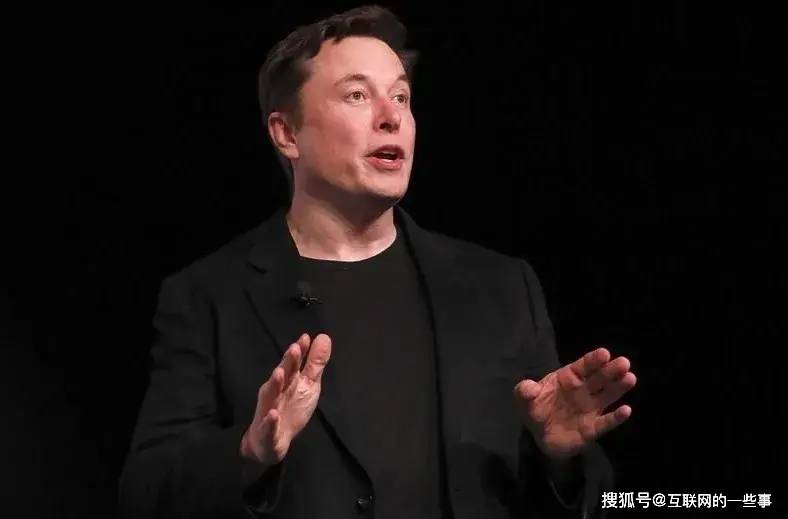
事关中国,马斯克最新发声
中国能源报· 2026-01-08 14:08
Core Viewpoint - Elon Musk believes that China will lead the world in AI computing capabilities due to its superior electricity supply capacity, predicting that by 2026, China's electricity generation could reach three times that of the United States, which will support energy-intensive AI data centers [3][4]. Group 1: AI Computing Capabilities - Musk states that the decisive factor in the AI technology race is not just algorithms or chip performance, but the ability to expand electricity production and supply [3]. - He emphasizes that the demand for electricity in data centers is comparable to that of a small city, highlighting the importance of electricity supply in scaling AI systems [3]. Group 2: Semiconductor Industry - Musk suggests that U.S. export controls on semiconductors may become less significant over time, as China will "solve the chip problem" [4]. - He notes that diminishing marginal returns in cutting-edge chip performance may allow China to close the AI technology gap even without access to the most advanced chip designs [4].

2030年美国电力告急?高盛:中国AI竞争迎反超契机
Zhong Guo Dian Li Bao· 2026-01-08 07:54
Group 1 - The rapid development of artificial intelligence (AI) is increasingly dependent on electricity supply, which is becoming a critical factor in the global AI industry landscape [1] - Goldman Sachs reports that by 2030, nearly all power grids in the United States will face insufficient backup capacity due to the soaring demand from data centers, potentially allowing China to gain a first-mover advantage in AI competition [1] - Currently, U.S. data centers account for 44% of global capacity and consume about 6% of U.S. electricity, with projections indicating this will rise to 11% by 2030 [1] Group 2 - In contrast, China's electricity supply demonstrates strong resilience, with a diversified energy system established through large-scale power construction since 2021 [2] - By 2030, China is expected to have approximately 400 gigawatts of backup power capacity, exceeding the anticipated total global demand for data centers by more than three times [2] - Currently, China's data center capacity represents one-quarter of the global total, and its ample power reserves create conditions for it to catch up with technology leaders [2]

2030年美国电力告急? 高盛:中国AI竞争迎反超契机
Zhong Guo Dian Li Bao· 2026-01-08 07:19
Group 1 - The rapid development of artificial intelligence (AI) is increasingly dependent on electricity supply, which is becoming a critical factor in the global AI industry landscape [1] - Goldman Sachs reports that by 2030, nearly all power grids in the United States will face insufficient backup capacity due to the soaring demand from data centers, potentially allowing China to gain a first-mover advantage in AI competition [1] - Currently, U.S. data centers account for 44% of global capacity and consume about 6% of U.S. electricity, with projections indicating this will rise to 11% by 2030 [1] Group 2 - In contrast, China's electricity supply demonstrates strong resilience, with a diversified energy system established through large-scale power construction since 2021 [2] - By 2030, China is expected to have approximately 400 gigawatts of backup power capacity, exceeding its own needs and more than three times the anticipated total demand from global data centers [2] - Currently, China's data center capacity represents one-quarter of the global total, and its ample power reserves create conditions for it to catch up with technology leaders [2]
马斯克:中国能解决芯片问题
Sou Hu Cai Jing· 2026-01-08 01:47
Core Viewpoint - China is expected to surpass the rest of the world in AI computing power due to its significant advantage in large-scale electricity supply, as stated by Elon Musk [1] Group 1: Electricity Supply and AI Competition - Musk estimates that by 2026, China's electricity generation could reach approximately three times that of the United States, enabling the support of high-energy AI data centers [1] - A report from Goldman Sachs indicates that power shortages may slow down the U.S. progress in the AI race, highlighting that stable and sufficient electricity supply could be a key factor in shaping this competition [2] - Goldman Sachs predicts that by 2030, China may have around 400 gigawatts of surplus electricity capacity, more than three times the current total electricity demand of global data centers [2][4] Group 2: Infrastructure and Energy Development - Huang Renxun, CEO of Nvidia, emphasized the importance of energy in the AI race, noting that China's infrastructure development speed and electricity supply capabilities are significantly ahead [5] - Huang simplified AI into five layers, stating that without energy, it is impossible to build chip factories, supercomputers, and AI data centers, despite the U.S. leading in chip technology [5] - The construction timeline for a new data center in the U.S. is approximately three years, while China can complete a hospital in a weekend, showcasing the disparity in infrastructure development speed [6] Group 3: Challenges in the U.S. Energy Sector - U.S. tech companies are building their own power plants for data centers, but expanding the U.S. power grid is challenging due to complex and unstable permitting policies [7] - The U.S. solar industry association has indicated that the country's position as a global AI leader is hindered by insufficient transmission capacity and regulatory obstacles [7] - Morgan Stanley analysts estimate that between 2025 and 2028, the electricity gap for U.S. data centers is expected to reach 44 gigawatts, indicating a growing disparity in energy supply compared to China [7]