
秸秆综合利用

Search documents
“秸”尽所能,江西这个传统农业大区实现生态、经济双赢
Zhong Guo Xin Wen Wang· 2026-02-04 10:06
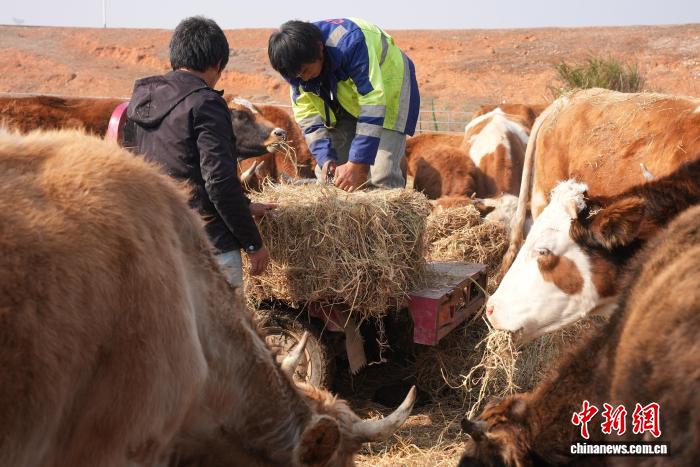
Core Viewpoint - The article highlights the effective utilization of agricultural straw in Jiangxi Province, particularly in Nanchang, where local cooperatives and companies are transforming waste straw into valuable feed and other products, thereby reducing costs and promoting environmental sustainability [1][5]. Group 1: Company Initiatives - The Haoyou Planting and Breeding Cooperative is processing rice straw into feed blocks, addressing the issue of winter feed shortages for cattle and reducing costs by approximately 300,000 yuan annually for raising over 150 cattle [1][3]. - Jiangxi Hengrang Ecological Agricultural Technology Co., Ltd. is focused on high-value utilization of straw, developing biodegradable rice seedling trays that increase seedling survival rates and yield by nearly 300 jin per mu for double-crop rice [4]. - The company is also working on a soil conditioner derived from straw, aimed at improving soil quality and addressing issues like soil acidification and heavy metal pollution [4]. Group 2: Industry Trends - Nanchang's New District is leveraging straw resource abundance by implementing a "government guidance + market operation" model to develop straw collection and processing enterprises, achieving over 95% utilization rate of straw in the region by 2025 [5]. - The district has established five agricultural enterprises as key players in straw comprehensive utilization, promoting local fertilizer and feed applications [5].

首场“委员通道”上,他们说了这些干货
Xin Lang Cai Jing· 2026-02-02 20:06
Group 1: Oil Tea Industry Development - The oil tea industry is being diversified to enhance its economic potential, with a focus on high-end skincare products [12][13] - The comprehensive utilization rate of oil tea fruit resources has increased from less than 20% to over 50% through technological advancements [13] - The initiative has led to an increase in annual income of over 20,000 yuan for more than 40,000 farming households [13] Group 2: Engineering Machinery Export - Hunan has initiated a remanufacturing system reform for engineering machinery, addressing legal and quality control challenges [14] - The province has saved over 85 million yuan in costs and reduced processing time by two months through innovative legal measures [14] - Over 3 billion yuan worth of remanufactured equipment has been exported from Hunan in the past two years [15] Group 3: Youth Talent Attraction - Hunan's "Wisdom Hunan, Talent Gathering" initiative has successfully attracted 43,000 job seekers from 235,000 resumes received [16] - The province offers substantial support for entrepreneurship, including three years of free office space and various financial incentives [16] - There are currently 425 entrepreneurial incubation bases in Hunan, with nearly 4,000 projects initiated by university students [16] Group 4: Minor Protection and Mental Health - A collaborative approach involving families, schools, and communities is being promoted to support the mental health of students [17] - A proposal for a coordinated care network for vulnerable children has been implemented, with support from multiple government departments [17] - The focus for the upcoming sessions will be on enhancing student safety through improved legal and community support mechanisms [17] Group 5: Straw Utilization for Rural Revitalization - The comprehensive utilization of straw is seen as a key ecological and economic strategy for rural areas [18] - Hunan produces over 36 million tons of straw annually, with initiatives in place to reduce environmental impact and enhance farmer income [18] - The province has established 1,195 collection points and 1,372 utilization entities to promote diverse applications of straw [18] Group 6: Hunan-Hong Kong Cooperation - Efforts are being made to strengthen economic ties between Hunan and Hong Kong, focusing on sectors like traditional Chinese medicine and finance [19] - A recent exchange led to six enterprises signing agreements, showcasing the potential for collaboration [19] - The ongoing strategy aims to facilitate the integration of resources, technology, and talent between the two regions [20]

秸秆再利用 “包袱”变“财富”
Xin Lang Cai Jing· 2026-01-23 18:53
Core Viewpoint - The articles highlight the effective utilization of crop straw in Aral City, promoting sustainable agricultural practices and enhancing farmers' income through various innovative methods of straw recycling and utilization [1][2][3] Group 1: Straw Utilization Techniques - The use of "nutrient packs" made from cottonseed hulls, rice husks, sawdust, and straw in mushroom cultivation is being implemented, with 100 acres of straw consumed for 11 mushroom greenhouses [1] - The "two-ton grain field" model allows for the full return of wheat straw to the soil, reducing chemical fertilizer use by 15 to 25 kg per acre, saving costs of 50 to 60 yuan, and increasing yield by 50 to 60 kg, leading to an overall income increase of approximately 120 yuan per acre [2] Group 2: Livestock Feed and Economic Benefits - The integration of straw into livestock feed is being promoted, creating a full industry chain from planting to processing to breeding, with a focus on enhancing the value of straw and ensuring feed supply [2] - Farmers can earn an additional 150 yuan per acre by processing straw into silage feed, contributing to a "green income" [2] Group 3: Infrastructure and Resource Management - A three-tier network for efficient straw resource conversion is being established, including collection centers and specialized service organizations, with 121 collection points and 69 various straw processing machines already in place [3] - The circular model of "straw-basis-edible fungi-straw return" not only extends the agricultural industry chain but also opens new income channels for farmers [3]
【行业深度】一文洞察2026年中国秸秆行业发展前景及投资趋势研究报告
Sou Hu Cai Jing· 2026-01-07 02:34
Core Viewpoint - The straw industry in China is deeply integrated with agriculture, energy, chemicals, and building materials, forming various industrial chains that enhance rural employment and farmers' income while creating indirect economic value through the substitution of petrochemical and wood resources [2][10]. Market Policy - The Chinese government has implemented a series of policies to promote comprehensive utilization of straw, including subsidies, market construction, and incentive measures, providing a favorable policy environment for the development of the straw recycling and processing industry [2][10][12]. - Key policies include the "Air Quality Continuous Improvement Action Plan," which emphasizes the comprehensive utilization of straw and the prohibition of burning, aiming to stabilize the comprehensive utilization rate of straw above 86% [12][10]. Utilization Volume and Rate - The comprehensive utilization of straw in China is projected to increase from 555 million tons in 2024 to 647 million tons, with feed usage accounting for approximately 18.4%, raw material and substrate fields about 1.8%, edible fungus substrate around 2.3%, and fuel fields about 8.2% [2][10]. - The comprehensive utilization rate of straw is expected to rise from 77.7% in 2024 to 88.3%, with the market size growing from 147.63 billion yuan to 205.10 billion yuan [2][10]. Industry Chain - The straw industry chain in China consists of three levels: upstream resource supply and equipment manufacturing, midstream processing and technology conversion, and downstream diversified applications, moving towards scale, high value, and intelligence [13][14]. - The upstream includes straw resource sources, collection, storage, and machinery, while the midstream focuses on processing and technology conversion, leading to applications in agriculture, energy, building materials, and environmental protection [13][14]. Related Companies - Listed companies involved in the straw industry include Sierte (002538), Yili Group (600887), Huarui Agriculture (833462.NQ), Xuerong Biological (300511), Shouxiangu (603896), Disen Co. (300335), Changqing Group (002616), Sun Paper (002078), and Shengquan Group (605589) [2].




咸阳:废弃秸秆变身“绿色财富”
Shan Xi Ri Bao· 2025-12-29 02:49
Group 1 - The core idea of the articles revolves around the comprehensive utilization of crop straw, particularly corn straw, transforming agricultural waste into valuable resources for ecological and economic benefits [1][2] - Xiangping City has implemented a "five transformations" strategy for straw utilization, focusing on fertilizer, feed, fuel, substrate, and raw material, enhancing the ecological and economic benefits [1] - The company Xi'an Xingshengyuan Ecological Agriculture Technology Development Co., Ltd. processes 30 tons of corn straw per hour and has secured orders for approximately 2 million tons from coastal regions [1] Group 2 - In Jingyang County, 12 enterprises are guided to engage in the "five transformations" of straw utilization, with one company producing around 200,000 mushroom bags from over 1,000 tons of raw materials [2] - The establishment of 511 village-level temporary straw collection and storage stations has been completed in Xiangyang City, achieving a straw utilization rate of 98.07% for summer wheat and improving the utilization of autumn corn straw [2] - The number of large-scale straw utilization enterprises in Xiangyang City has increased to 197, significantly enhancing straw processing capabilities and contributing to both environmental protection and farmer income [2]
【咸阳】废弃秸秆变身“绿色财富”
Shan Xi Ri Bao· 2025-12-24 22:43
Core Insights - The articles highlight the innovative approaches taken by companies and local governments in Shaanxi province to transform agricultural waste, specifically corn straw, into valuable resources such as feed, fertilizer, and biomass fuel, thereby promoting ecological and economic benefits. Group 1: Company Initiatives - Shaanxi Xingshengyuan Ecological Agriculture Technology Development Co., Ltd. processes 30 tons of corn straw per hour and has secured orders for approximately 2 million tons from coastal regions of China [1] - The company has implemented a comprehensive management system for straw collection, storage, transportation, and utilization, enhancing operational efficiency [1] Group 2: Local Government Support - The government of Xingping City has allocated special funds to improve straw collection and transportation capabilities across 13 towns, establishing a closed-loop management system [1] - The local agricultural bureau has strategically equipped towns with 100 corn straw shredders, 62 automatic bundlers, and 8 tree branch shredders to address the challenges of resource utilization [1] Group 3: Community Impact - In Jingyang County, 12 enterprises are guided to implement the "five transformations" of straw utilization, leading to the production of over 200,000 mushroom bags from more than 1,000 tons of raw materials [2] - Local farmers benefit from selling straw to companies, providing them with additional income and reducing environmental impact from straw disposal [2] - The overall straw utilization rate in Shaanxi has reached 98.07% for summer wheat, with an increasing number of enterprises enhancing straw processing capabilities [2]
研判2025!中国秸秆行业市场政策、产业链图谱、综合利用量、利用率、市场规模、竞争格局及发展趋势分析:市场格局较为分散[图]
Chan Ye Xin Xi Wang· 2025-12-23 01:36
Core Viewpoint - The straw industry in China is deeply integrated with agriculture, energy, chemicals, and building materials, forming various industrial chains that enhance rural employment and farmers' income while creating indirect economic value through the substitution of petrochemical and wood resources [1][12]. Market Policies - A series of national policies have been implemented to promote comprehensive utilization of straw, with local governments providing subsidies, market construction, and incentive measures to support the development of the entire straw recycling, processing, and utilization industry chain [8][9]. Industry Chain - The straw industry chain consists of upstream resource supply and equipment manufacturing, midstream processing, and downstream diversified applications, evolving towards scale, high value, and intelligence [9][10]. Development Status - The comprehensive utilization of straw in China is projected to increase from 555 million tons in 2024 to 647 million tons, with a utilization rate rising from 77.7% to 88.3% and market size expanding from 147.63 billion yuan to 205.10 billion yuan [1][13]. Competitive Landscape - The straw comprehensive utilization market is characterized by a fragmented structure with many small-scale enterprises, including those focused on fertilizer, feed, and energy applications [13][14]. Development Trends - The future of straw utilization will shift towards high-value applications, including biodegradable tableware and bio-based composite materials, while also enhancing collaboration across the industry chain [16][17]. - Technological innovations will focus on key processes such as straw pretreatment and conversion, improving efficiency and reducing costs [19][20].

通讯丨中国技术让泰国秸秆获“新生”
Xin Hua She· 2025-11-26 06:52
Core Insights - The article highlights the collaboration between China and Thailand in implementing advanced straw utilization technologies to promote sustainable agricultural practices in Thailand [1][2]. Group 1: Technology Implementation - Chinese agricultural experts are demonstrating new straw processing techniques to Thai farmers, aiming to improve straw utilization and reduce air pollution caused by burning [1]. - The project, supported by the Lancang-Mekong Cooperation Fund, involves trials in eight provinces of Thailand to identify practical technologies suitable for local conditions [1][2]. Group 2: Benefits of New Techniques - The introduction of straw collection and bundling technology allows for efficient storage and transportation of straw, which can then be converted into high-quality compost or used to create seedling substrate blocks [2]. - The use of substrate blocks for rice seedling cultivation leads to stronger seedlings and increased yields, while also reducing the need for straw burning, thus minimizing air pollution [2][3]. Group 3: Training and Adoption - Continuous training sessions are held for Thai farmers, with hands-on guidance from Chinese technicians to build trust in the new technologies [3]. - The project aims to establish a local production line for substrate blocks in Thailand, enhancing the sustainability and efficiency of rice farming practices [2].
江西新余:秸秆发酵变沼气 发电供气再利用
Yang Shi Wang· 2025-11-05 02:20
Core Viewpoint - The article highlights the innovative approach taken by a company in Xinyu, Jiangxi, to utilize excess straw after harvest, transforming it into clean energy and organic fertilizer, thereby benefiting local farmers and promoting environmental sustainability [1] Group 1: Straw Utilization - The company in Xinyu collects straw from fields after harvest, which was previously left to decompose or burned, causing pollution [1] - The collected straw is processed with livestock manure in anaerobic fermentation tanks, producing biogas for electricity generation and residential gas supply [1][1] - The fermentation process yields 20 million kWh of electricity annually and meets the gas needs of 5,000 households [1][1] Group 2: Organic Fertilizer Production - The company produces 30,000 tons of organic fertilizer and 380,000 tons of liquid fertilizer each year from the fermentation byproducts, which are then returned to the fields [1][1] - This process not only provides organic fertilizer but also supports local agricultural production [1] Group 3: Diversified Utilization Methods - Xinyu has developed multiple pathways for straw utilization, including edible mushroom substrates, beef cattle feed, and fiber processing, creating a comprehensive recycling model [1] - The city recycles 450,000 tons of straw annually, achieving a recycling rate of 95.53% [1]
黑龙江省秋收生产基本结束
Xin Hua She· 2025-10-28 06:12
Core Insights - The autumn harvest in Heilongjiang Province has been effectively organized and is nearing completion, with 99.2% of the crops harvested as of October 27, totaling 23,235.1 million acres [1] - Major crops such as soybeans and rice were harvested 3 to 5 days earlier than last year, while corn was harvested 3 days earlier [1] - The province has implemented effective agricultural management and favorable weather conditions contributed to the early maturity of crops [1] Group 1 - The province has added significant agricultural machinery this year, including 5,995 tractors over 100 horsepower, 2,986 grain harvesters, and 3,262 corn harvesters, all deployed for the autumn harvest [1] - A total of 442,000 large and medium tractors and over 200,000 large harvesting machines were mobilized for the harvest [1] - Agricultural departments have established 11 working groups to provide guidance on key tasks such as harvest production, land preparation, straw utilization, and high-standard farmland construction [1] Group 2 - Heilongjiang Province is simultaneously advancing autumn harvest, land preparation, and straw utilization, with over 112 million acres of land prepared, an increase of over 13 million acres compared to last year [2] - The agricultural authority will continue to guide and monitor the remaining corn harvest to ensure all crops are collected before freezing [2] - Efforts will focus on maximizing the effective time before the freeze to promote land preparation, straw return, and high-standard farmland construction for next year's harvest [2]