
航运业脱碳

Search documents
全国首艘甲醇加注船完成首单加注 中集安瑞科构建绿色甲醇产业链生态
Zheng Quan Shi Bao Wang· 2026-01-22 05:59
Core Viewpoint - The successful completion of the first methanol bunkering operation by China's first dual-fuel methanol bunkering vessel marks a significant milestone in the development of a green methanol supply chain and the decarbonization of the domestic shipping industry [1] Group 1: Industry Developments - The first dual-fuel methanol bunkering vessel, "Daqing 268," has a deadweight of 7,500 tons and features a dual-fuel power system that significantly reduces carbon emissions from ships [1] - The operation represents a breakthrough in the availability of green fuel bunkering equipment in the Guangdong-Hong Kong-Macao Greater Bay Area, providing green energy supplies for international vessels [1] - The Shenzhen Yantian District is advancing comprehensive reform pilot tasks, including the implementation of bonded fuel bunkering for international navigation vessels [1] Group 2: Supply Chain and Production - The green methanol supplied comes from CIMC Anwei's first large-scale biomass methanol project in Zhanjiang, Guangdong, with an initial annual production capacity of 50,000 tons and a planned capacity of 200,000 tons [2] - The project boasts a greenhouse gas (GHG) reduction rate of over 85% throughout its lifecycle and has received EU ISCC EU certification, ensuring a complete carbon traceability loop from raw materials to products [2] - CIMC Anwei has established a 30,000 cubic meter methanol storage tank and dedicated loading and unloading berths at Zhanjiang Port, creating a one-hour closed-loop system for production, storage, and transportation [2] Group 3: Strategic Partnerships - CIMC Anwei has signed a strategic cooperation agreement with Huaguang Shipping Co., focusing on the application, bunkering, and logistics services of green methanol [3] - The partnership aims to promote the commercialization of the green methanol supply chain, with CIMC Anwei supplying certified green methanol and Huaguang Shipping handling market promotion and fuel delivery [3] - The collaboration will demonstrate the application of green methanol across various scenarios in the Guangdong-Hong Kong-Macao Greater Bay Area [3]

嘉吉绿色甲醇双燃料船试航
Zhong Guo Hua Gong Bao· 2026-01-21 06:45
Core Viewpoint - Cargill's delivery and trial of its first green methanol dual-fuel bulk carrier, "Brave Pioneer," marks a significant step towards decarbonizing the shipping industry, aiming to test the fuel injection process, carbon accounting systems, and market acceptance of green methanol [1] Group 1: Company Initiatives - Cargill has received its first green methanol dual-fuel bulk carrier, which is capable of operating on traditional marine fuel or green methanol, potentially reducing carbon emissions by up to 70% [1] - The vessel was constructed by Chengxi Shipyard and is owned by Mitsui & Co., with its maiden voyage starting from the Philippines, refueling in Singapore, and heading to Western Australia before reaching Europe [1] - Cargill plans to add four more similar vessels to its fleet in the coming years, integrating various technologies such as wind-assisted propulsion and voyage optimization to create a multi-pathway decarbonization strategy [1] Group 2: Industry Impact - Cargill's actions signal a clear low-carbon demand to the market as one of the largest dry bulk charterers globally [1] - The introduction of alternative fuels in shipping is transitioning from concept to large-scale commercial validation, which will accelerate the development of supply chains for low-carbon fuels like green methanol and the establishment of industry standards [1]
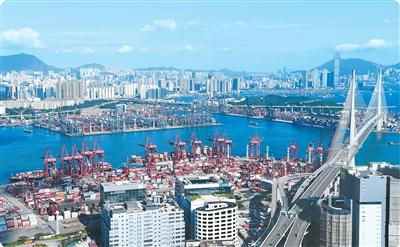
香港助力全球航运业脱碳转型
Ren Min Ri Bao Hai Wai Ban· 2025-12-20 08:38
Core Insights - Hong Kong is recognized as a significant international shipping hub, with discussions at the 2025 World Shipping Conference focusing on challenges such as decarbonization, geopolitical impacts, and crew shortages, emphasizing the need for dialogue and cooperation in the shipping industry [1] Group 1: Hong Kong's Strategic Advantages - Hong Kong serves as a vital gateway for connecting domestic and international markets, leveraging its geographical proximity to mainland China, favorable investment environment, advanced technology, efficient legal system, and abundant talent pool [2] - The city has maintained its position as the fourth in the International Shipping Center Development Index for six consecutive years, hosting over 1,200 port and maritime-related companies [2] - Hong Kong's unique advantages under the "One Country, Two Systems" framework, including a common law system and low tax regime, attract global shipping enterprises [2] Group 2: Green Transition Initiatives - Hong Kong is actively pursuing a green transition in its port operations, having invested nearly 200,000 tons in green fuel and preparing to launch methanol bunkering [4] - The Hong Kong government has established a clear roadmap and objectives through the "Green Marine Fuel Bunkering Action Plan" to achieve the International Maritime Organization's target of net-zero emissions by 2050 [4] - Legislative changes have expanded the types of marine fuels to include liquefied natural gas and methanol, facilitating a legal framework for green fuel adoption [6] Group 3: Collaborative Efforts for Decarbonization - Industry representatives stress the importance of breaking down regional barriers and achieving global collaboration for the decarbonization of the shipping sector [7] - Hong Kong is building a cooperative network that includes partnerships with ports in mainland China and Chile, enhancing regional synergy and international cooperation [7] - The financial advantages of Hong Kong can support the production and financing of alternative fuels, creating a competitive edge that is difficult for other regions to replicate [2][7] Group 4: Role in Global Maritime Regulation - Hong Kong's pragmatic approach to rule-making considers the interests of various stakeholders, positioning it as a potential coordinator of maritime regulations amid global fragmentation [3] - The city is expected to facilitate participation from international organizations and multinational entities in global emission reduction efforts, contributing to a collaborative green shipping transition [8]

全球首单落地!CMB.TECH锁定中国绿氨
Xin Lang Cai Jing· 2025-12-17 14:20
Core Insights - CMB.TECH has announced two strategic partnerships aimed at establishing a fuel supply system for its upcoming ammonia-powered fleet, including a global first contract for green ammonia shipping fuel with China Energy Engineering Group and a strategic investment in Jiangsu Andefeng Energy Technology [1][10] Group 1: Strategic Partnerships - CMB.TECH signed a long-term agreement to procure green ammonia from China Energy Engineering Group, which has recently launched a hydrogen energy industrial park in Jilin, capable of producing 45,000 tons of green hydrogen and 200,000 tons of green ammonia annually [3][4][13] - The hydrogen energy project is designed to save approximately 600,000 tons of standard coal and reduce carbon dioxide emissions by 740,000 tons each year [4][14] Group 2: Investment in Supply Chain - CMB.TECH acquired a minority stake in Jiangsu Andefeng Energy Technology, which is constructing a low-temperature ammonia storage tank with a capacity of 49,000 cubic meters, expected to be operational by Q1 2026 [6][16] - Andefeng plans to initiate ship-to-ship ammonia fuel bunkering services in 2026, directly supporting future ammonia-powered vessels [6][16] Group 3: Fleet Development - CMB.TECH is preparing for the delivery of 11 new ammonia-fueled dual-fuel vessels by 2026, which will utilize advanced diesel-ammonia dual-fuel engines to significantly reduce carbon emissions during operation [7][18] - The company views green ammonia as a promising solution for decarbonizing the shipping industry, with the potential for near-zero emissions if produced from renewable energy sources [9][18] Group 4: Future Plans - CMB.TECH aims to continue seeking partnerships with green ammonia producers globally to ensure a secure and diversified fuel supply for its fleet [9][18] - The company has plans to develop its own green ammonia production facility in Namibia, aiming to create a more resilient zero-carbon fuel supply chain [9][18] - The CEO of CMB.TECH emphasized that the investment in China marks a significant milestone in the company's decarbonization journey, with 2026 being a critical year for validating its zero-carbon shipping business model [9][18]


马士基推进燃料多元战略 将开展乙醇与甲醇混合燃料测试
Zhong Guo Hua Gong Bao· 2025-12-12 04:05
Core Viewpoint - Maersk is testing a 50% ethanol and 50% methanol fuel mix on its first methanol-powered container ship, "Laura Maersk," to enhance operational resilience and address decarbonization pressures in the shipping industry [1] Group 1: Fuel Testing and Strategy - The test aims to provide flexibility and supply resilience for Maersk's rapidly expanding dual-fuel methanol fleet [1] - The existing mature ethanol market, primarily in the U.S. and Brazil, offers a scalable transitional decarbonization pathway for the shipping industry [1] - Maersk plans to adhere to strict sustainability standards when using first-generation bioethanol derived from crops like corn, ensuring compliance with lifecycle carbon emissions requirements and avoiding deforestation or food competition [1] Group 2: Future Plans - Following the current test, Maersk intends to further explore the use of 100% ethanol to contribute to a diversified low-carbon fuel mix [1]
【高端访谈】多元化技术路线破解航运业脱碳难题——访Everllence首席执行官乌维·劳伯
Xin Hua Cai Jing· 2025-12-05 13:17
Core Viewpoint - The shipping industry is accelerating its transition to a green and low-carbon future, with China positioned as a key player in this transformation [1][7]. Group 1: Company Transformation - MAN Energy Solutions has rebranded to Everllence, emphasizing its commitment to a "zero-carbon future" and accelerating the green transition in the shipping industry [2]. - The company has shifted its focus from traditional power solutions to sustainable decarbonization technologies, establishing a new strategic direction [2][3]. - Everllence's product offerings now include diverse green technologies such as large heat pumps, carbon capture and storage, climate-neutral shipping, and hydrogen systems [3]. Group 2: Industry Trends - The shipping industry is facing challenges in finding efficient and feasible pathways for green transformation, with a consensus on emission reduction goals but uncertainty in practical implementation [4]. - The International Maritime Organization (IMO) has set a target for net-zero emissions in shipping by 2050, with ammonia, methanol, and LNG emerging as mainstream alternative fuels [4][5]. - Despite delays in the IMO's net-zero framework, demand for green fuel engines remains strong, driven by the diversification of fuel options [5][6]. Group 3: China's Role - China is recognized as a leader in the global shipbuilding industry, playing an irreplaceable role in promoting the green transition in shipping [3][7]. - Chinese shipping companies are actively engaging in low-carbon practices through technological innovation and industry collaboration, contributing to global decarbonization efforts [7][8]. - The market share of China's shipbuilding industry has remained the largest globally for 16 consecutive years, indicating its capability to lead the decarbonization process in shipping [7][8]. Group 4: Technological Innovations - Everllence's dual-fuel engines now account for 50% of its total orders, compatible with various fuels including LNG, LPG, methanol, and ammonia [4]. - The company has launched the world's first mass-produced dual-fuel ammonia engine, reflecting its commitment to innovative solutions in the shipping sector [5]. - Digitalization is identified as a key driver for reducing carbon emissions, optimizing engine and vessel operations to enhance efficiency and lower fuel consumption [8].
“一带一路”俄罗斯电动船舶电池行业市场发展趋势及投资价值评估报告(2025版)
Sou Hu Cai Jing· 2025-10-23 01:59
Core Insights - The electric ship battery market is projected to grow from $1.196 billion in 2024 to $1.745 billion by 2031, with a compound annual growth rate (CAGR) of 5.6% from 2025 to 2031, driven by decarbonization pressures and advancements in green energy technology [3][4]. Market Overview - The current dominant technology in electric ship batteries is lithium batteries, which account for 82% of the market, offering significant advantages over lead-acid batteries in terms of energy density and cycle life [3]. - The Asia-Pacific region is expected to hold 65% of the global market share in 2024, with China's market size reaching $320 million, projected to increase to 70% by 2031 [4]. - The European market is anticipated to account for 20% of the market share in 2024, with expectations to rise to 25% by 2031, supported by the EU's Green Shipping Fund [4]. - North America's market is expected to grow by 12% in 2024, influenced by the Inflation Reduction Act, although it faces a 65% dependency on imports due to insufficient local production [4]. Competitive Landscape - The market is characterized by a structure where international brands dominate the high-end segment while local companies penetrate the mid-range market [5]. - The first tier of companies, including AKASOL and Furukawa Battery, holds 55% of the market share, while the second tier accounts for 30%, primarily serving the inland shipping market [5]. - Chinese manufacturers, such as Yiwei Lithium Energy and Guoxuan High-Tech, represent 15% of the market, focusing on battery and system integration solutions [5]. Technological Developments - Notable advancements include CATL's launch of lithium iron phosphate batteries with an energy density of 180 Wh/kg, certified by CCS for use in electric cargo ships [3]. - Danfoss Editron has developed a liquid-cooled battery system that operates in extreme temperatures, while EcoMarinePower has created a solar-battery hybrid system that enhances self-sufficiency for ships [5]. Supply Chain Insights - Lithium battery raw material costs constitute 70% of the total battery price, with lithium carbonate averaging 250,000 yuan per ton in 2024 and cobalt stabilizing at 350,000 yuan per ton due to established recycling systems [5]. Regulatory Environment - The International Maritime Organization (IMO) has set a target for a 50% reduction in greenhouse gas emissions by 2050, influencing the growth of electric ship batteries [3]. - China's "14th Five-Year Plan" aims for a battery production capacity of 10 GWh by 2025, promoting local enterprise expansion [6].



绿色甲醇行业深度汇报:新能源非电利用与航运业脱碳如何共振?
2025-10-15 14:57
Summary of Key Points from the Conference Call on Green Methanol Industry Industry Overview - The report focuses on the **green methanol industry** and its intersection with the **shipping industry**'s decarbonization efforts, highlighting the potential for growth driven by regulatory changes and technological advancements [1][4]. Core Insights and Arguments - The shipping industry is pushing for low-carbon solutions, with the **International Maritime Organization (IMO)** potentially implementing a phosphorus emission ban by 2028, which could accelerate the global transition to low-carbon fuels and stimulate demand for green methanol [1][7]. - Green methanol is priced above **1,000 USD/ton** internationally, primarily driven by the shipping sector's need for decarbonization, while gray methanol prices range from **2,200 to 2,500 CNY/ton**, influenced by downstream chemical raw material costs [1][6]. - There are three main production routes for green methanol: 1. Biomass gasification synthesis (cost: **3,000-4,000 CNY/ton**) 2. Biomass coupled with green hydrogen production (cost: **3,000-4,000 CNY/ton**) 3. Electrolysis (cost: **over 5,000 CNY/ton**) [1][8]. - Global green methanol production capacity is expected to reach **500,000 tons** by the end of 2024 and not exceed **1 million tons** by the end of 2025, with domestic capacity also around **500,000 tons** [1][16]. Demand Drivers - The primary demand for green methanol currently comes from the **global shipping industry**, which is undergoing a low-carbon transition. Long-term demand is also anticipated from the chemical industry [2][3]. - The urgency in the shipping sector to adopt green methanol stems from the dominance of shipowners in **Northwest Europe and East Asia**, who control **85%** of global shipping capacity [3]. Regulatory and Market Dynamics - The EU is advancing green regulations in shipping, with new decarbonization laws expected to be implemented in **2024 and 2025**, aiming for an **80% reduction** in carbon emissions by **2050** [9]. - The IMO's measures will require ships to use increasingly green fuels, with penalties for non-compliance, potentially leading to significant financial implications for the shipping industry [10][12]. Investment Opportunities - Investment strategies include transitioning to green methanol production to achieve rapid performance growth and benefiting from increased government support for green methanol, which will drive demand for midstream equipment and EPC companies [17]. - Companies to watch include **Jiaze New Energy, Goldwind Technology, and Jidian Co.**, which have significant market potential due to their existing operations and planned capacity expansions [19]. Production Capacity and Future Outlook - Notable projects include **Goldwind Technology's** capacity increase to **1.45 million tons** and **Jidian Co.**'s collaboration with major green fuel demand partners [22][21]. - The domestic equipment sector is expected to see capital expenditures of **30-50 billion CNY** annually, with a focus on gasification equipment and process packages [27][28]. Challenges and Considerations - The shipping industry faces challenges in fuel system maturity, with green methanol being favored over hydrogen and ammonia due to lower technical barriers and compatibility with existing fuel systems [14][15]. - The competition among green methanol suppliers will hinge on their ability to maintain low production costs, with profitability projected at **1,500-2,000 CNY/ton** [18]. Conclusion - The green methanol industry is poised for growth driven by regulatory changes, technological advancements, and increasing demand from the shipping and chemical sectors. Investors should focus on companies with strong market positions and capacity expansion plans to capitalize on this emerging market.
100亿英镑全球清洁能源计划启动!华光海运与NatPower Marine成立合资公司
Sou Hu Cai Jing· 2025-09-05 01:28
Core Insights - Wah Kwong Shipping and NatPower Marine have formed a joint venture, Wah Kwong NatPower Holdings, to develop and operate shore power networks in Asia, aiming to accelerate the decarbonization of the shipping industry [1][2][4] Joint Venture Goals and Layout - The joint venture will focus on the electrification of Hong Kong waters and gradually expand to the Greater China market, ultimately covering major ports across Asia with shore power networks [2][6] - WK NatPower will provide integrated shore power solutions for vessels, including power supply during port stays and charging services for nearshore electric vessels, facilitating the shipping industry's transition to electrification and decarbonization [2][6] Leadership Insights and Industry Outlook - Wah Kwong's Executive Chairman emphasized the importance of diversifying decarbonization solutions to meet industry needs, while NatPower Marine's CEO highlighted the significance of Asian ports in global trade and climate change response [4][6] - NatPower's CEO stated that the collaboration aims to develop systems powered by renewable energy to drive decarbonization in the global shipping industry [4][6] Development of Clean Charging Corridors in Asia - The first project of WK NatPower is set to launch in 2026, focusing on ferry hubs, container terminals, and cruise markets in Asia, with plans to establish shore power infrastructure in over 30 ports by 2030 [6][7] - The initiative aims to create Asia's first clean charging corridor network at sea, integrating with a global network over time [6][7] Global Clean Energy Investment Plan - NatPower Marine has initiated a £10 billion (approximately HKD 104 billion) global clean energy investment plan, targeting the deployment of shore power systems and large-capacity charging infrastructure in 120 ports worldwide by 2030 [7] - This plan supports the shipping industry's compliance with stringent regulations from the International Maritime Organization regarding carbon intensity and emissions control [7] Company Background - Wah Kwong Shipping, established in 1952 and headquartered in Hong Kong, is a prominent shipowner with a global presence, actively promoting decarbonization and technological innovation [8][9] - Wah Kwong NatPower aims to integrate Wah Kwong's shipping resources with NatPower's renewable energy expertise to invest in and develop electrification infrastructure in Asia [9]

GCMD完成首个航运业碳捕集应用试点项目
Zhong Guo Hua Gong Bao· 2025-07-04 02:22
Core Viewpoint - The Global Maritime Decarbonization Center (GCMD) successfully completed the world's first carbon capture pilot project in the shipping industry, demonstrating the potential for captured CO2 to be reused in industrial applications, thereby linking maritime decarbonization efforts with broader terrestrial carbon ecosystems [1][2]. Group 1: Project Overview - The pilot project consists of two phases: the first phase involves capturing 25.44 tons of CO2 from the container ship "Chang Ding" and transferring it to the receiving vessel "De Jin 26" [1]. - The captured CO2 is then transported to a terminal in Zhoushan, Zhejiang Province, and unloaded into tank trucks [1]. - The second phase, led by GCMD, involves transporting the captured CO2 to its final usage destination, where it is successfully utilized in the production of low-carbon calcium carbonate [1]. Group 2: Industry Implications - This cross-industry demonstration project indicates that CO2 captured from the shipping sector can be repurposed for industrial use, thus integrating maritime decarbonization with a wider carbon ecosystem [2]. - GCMD's CEO, Professor Lu Yueling, emphasized the importance of addressing technical and operational challenges in the unloading and utilization of ship-captured CO2, marking a significant step towards incorporating this captured CO2 into a broader circular economy [2]. - GCMD was established by six industry partners, including BHP, BW Group, and others, and has received funding support from the Maritime and Port Authority of Singapore for eligible research and development projects [2].