双燃料发动机

Search documents
潍柴重机(000880) - 潍柴重机股份有限公司2026年2月3日-2月5日投资者关系活动记录表
2026-02-05 08:54
Group 1: Company Performance and Financial Outlook - In 2025, the company is expected to achieve a net profit growth of 45%-75% year-on-year, driven by industry policy support and demand from emerging markets [3] - The acquisition of 100% equity in Changbo Company was completed by the end of Q3 2025, which will be included in the consolidated financial statements [3] - The company aims to enhance shareholder returns through cash dividends, planning to distribute dividends twice a year based on operational and financial assessments [6] Group 2: Business Development and Market Strategy - The company has made significant progress in the alternative fuel market, developing various technologies for natural gas and dual-fuel engines, and has established a multi-technology system for LNG, methanol, and biofuels [4] - In the generator set business, there was a substantial increase in sales and revenue in the data center sector, gaining access to major telecom operators' procurement [4] - The company plans to leverage its product advantages to expand its market share in high-end sectors such as data centers, communications, oil and gas fields, and high-end manufacturing [4] Group 3: Changbo Company's Future Development - Changbo Company has a large market potential and competitive advantages, including rich business resources and a strong geographical position [6] - The company intends to utilize Changbo's market strengths and promote performance growth through synergy in the upstream and downstream supply chain [6]

2025年中国船用发动机研究报告:碳中和背景下的船用发动机产业观察
Tou Bao Yan Jiu Yuan· 2025-12-25 12:13
Investment Rating - The report does not explicitly state an investment rating for the marine engine industry, but it highlights significant growth potential in the environmental engine market and increasing market concentration among leading manufacturers [3][16]. Core Insights - The marine engine market is experiencing intensified competition due to the environmental transformation and the trend towards larger engines, which is leading to increased market share concentration among top companies. The CR5 of the global low-speed engine market increased from 84% in 2011 to over 89% in 2023, while China's CR3 rose from 44% to over 87% in the same period [3]. - The environmental engine market is projected to grow rapidly from approximately 21.3 billion yuan in 2024 to 123.3 billion yuan by 2035, while the traditional engine market is expected to enter a rapid decline phase after 2030. The International Maritime Organization (IMO) and the European Union have set clear greenhouse gas reduction targets for the shipping industry, necessitating the adoption of low-carbon and zero-carbon fuel vessels [3][18]. - The dual-fuel technology is identified as a core system for eco-friendly vessels, with its value increasing by approximately 20-30% compared to traditional diesel engines. The average unit value of engines is expected to rise as the penetration rate of eco-friendly vessels increases, further expanding industry demand [3][18]. Market Overview - The marine engine market is categorized into low-speed, medium-speed, and high-speed engines, with low-speed engines accounting for over 90% of the propulsion power for ocean-going vessels such as container ships and bulk carriers [5][7]. - The marine engine industry chain consists of upstream key components and material suppliers, midstream core design and manufacturing, and downstream shipbuilding and operation, characterized by high technical barriers and market concentration [8][11]. Market Size - The environmental engine market is expected to grow from approximately 21.3 billion yuan in 2024 to 123.3 billion yuan by 2035, while the traditional engine market will decline significantly after 2030 [16][18]. - The global marine engine aftermarket is projected to reach 98.5 billion yuan in 2024, with steady growth expected to 119.1 billion yuan by 2030, driven by maintenance and spare parts [19][21].
《中国海洋新兴产业指数报告二○二五》发布
Zhong Guo Zi Ran Zi Yuan Bao· 2025-12-19 07:25
Group 1 - The "China Marine Emerging Industry Index Report 2025" indicates a steady increase in the marine emerging industry index, with a value of 209 for 2024, reflecting a growth rate of 6.9% [1] - Sub-indices for human input, technological innovation capability, capital heat, and market confidence show positive trends, with year-on-year growth rates of 8.7%, 3.4%, 9.1%, and 6.1% respectively [1] - The marine emerging industry saw the establishment of 19,000 new enterprises in 2024, with over 30,000 new patent applications and a workforce of 84,000 engaged in patent research [1] Group 2 - Traditional marine industries are upgrading through green and intelligent technologies, with a 24.6% average annual growth in green power ship patents over the past five years [2] - The financing for marine new energy is particularly active, accounting for 55.3% of the total annual financing, with a 30% year-on-year increase in bidding projects related to offshore wind power [2] - Guangdong, Shandong, and Jiangsu provinces have consistently contributed over 11% to the total index since 2020, with a combined contribution of 43.2% in 2024 [2] Group 3 - The report is compiled by the Qingdao Institute of Science and Technology Information, the National Marine Information Center, and Wanlian Index, utilizing big data and enterprise dimensions for dynamic monitoring of the marine emerging industry since its initial release in October 2021 [3]
两机和商业航天高景气持续,新兴赛道筑牢新增长极
GF SECURITIES· 2025-12-14 12:19
Core Insights - The defense and aerospace industry is experiencing sustained high demand, particularly in the two aircraft sectors and commercial aerospace, which are seen as new growth drivers [2][5][13] - The report highlights the increasing frequency of commercial space launches, with companies like SpaceX targeting a valuation of $1.5 trillion as they prepare for an IPO [5][14] - Investment opportunities are identified in various sectors, including domestic demand and overseas expansion, AI-driven upgrades in military technology, and the potential for new materials and technologies in aviation and space [5][15] Industry Overview - The report notes that the demand for high-end aviation equipment is expected to continue, with significant opportunities for domestic engine replacements in the civil aviation market [23] - The commercial aerospace sector is seeing a notable increase in aircraft deliveries, with a reported 44% year-on-year growth in the delivery of wide-body aircraft as of October 2025 [5][13] - The report emphasizes the importance of strategic partnerships, such as the long-term supply agreement between Yingliu Aviation and Ansaldo Energia, which marks a shift towards large-scale collaboration [5][13] Company Analysis - Companies like AVIC Shenyang Aircraft Corporation and AVIC Xi'an Aircraft Industry Group are highlighted for their potential to benefit from increased domestic and international demand [15][29] - The report discusses the strong growth prospects for companies involved in AI-driven military upgrades, recommending a focus on firms like Ruichuang Micro-Nano and AVIC Optoelectronics [15][18] - The financial outlook for key companies is optimistic, with projected earnings growth and favorable valuation metrics, such as a dynamic PE ratio of approximately 40X for Ruichuang Micro-Nano [18][19] Market Performance - The report indicates that the China Securities Military Industry Index has shown a weekly increase of 2.53%, with a year-to-date increase of 27.99% as of the report date [36] - The military sector has outperformed major indices, indicating strong investor interest and confidence in the defense and aerospace markets [36] Investment Recommendations - The report suggests focusing on companies that are well-positioned to capitalize on the expanding domestic and international markets, particularly those involved in military and aerospace technology [15][23] - Specific companies recommended for investment include AVIC Shenyang, AVIC Xi'an, and Ruichuang Micro-Nano, among others, due to their strategic positioning and growth potential [15][18][29]


【高端访谈】多元化技术路线破解航运业脱碳难题——访Everllence首席执行官乌维·劳伯
Xin Hua Cai Jing· 2025-12-05 13:17
Core Viewpoint - The shipping industry is accelerating its transition to a green and low-carbon future, with China positioned as a key player in this transformation [1][7]. Group 1: Company Transformation - MAN Energy Solutions has rebranded to Everllence, emphasizing its commitment to a "zero-carbon future" and accelerating the green transition in the shipping industry [2]. - The company has shifted its focus from traditional power solutions to sustainable decarbonization technologies, establishing a new strategic direction [2][3]. - Everllence's product offerings now include diverse green technologies such as large heat pumps, carbon capture and storage, climate-neutral shipping, and hydrogen systems [3]. Group 2: Industry Trends - The shipping industry is facing challenges in finding efficient and feasible pathways for green transformation, with a consensus on emission reduction goals but uncertainty in practical implementation [4]. - The International Maritime Organization (IMO) has set a target for net-zero emissions in shipping by 2050, with ammonia, methanol, and LNG emerging as mainstream alternative fuels [4][5]. - Despite delays in the IMO's net-zero framework, demand for green fuel engines remains strong, driven by the diversification of fuel options [5][6]. Group 3: China's Role - China is recognized as a leader in the global shipbuilding industry, playing an irreplaceable role in promoting the green transition in shipping [3][7]. - Chinese shipping companies are actively engaging in low-carbon practices through technological innovation and industry collaboration, contributing to global decarbonization efforts [7][8]. - The market share of China's shipbuilding industry has remained the largest globally for 16 consecutive years, indicating its capability to lead the decarbonization process in shipping [7][8]. Group 4: Technological Innovations - Everllence's dual-fuel engines now account for 50% of its total orders, compatible with various fuels including LNG, LPG, methanol, and ammonia [4]. - The company has launched the world's first mass-produced dual-fuel ammonia engine, reflecting its commitment to innovative solutions in the shipping sector [5]. - Digitalization is identified as a key driver for reducing carbon emissions, optimizing engine and vessel operations to enhance efficiency and lower fuel consumption [8].
前三季度净赚150亿!造船巨头单季盈利创新高
Sou Hu Cai Jing· 2025-11-06 05:56
Core Insights - HD Korean Shipbuilding & Marine achieved significant financial growth in Q3 2025, with operating revenue of 75,815 billion KRW (approximately 53.4 billion USD), a year-on-year increase of 21.4% [2] - The company reported an operating profit of 10,538 billion KRW (approximately 7.42 billion USD), marking a remarkable year-on-year growth of 164.5% [2] - Net profit reached 767 billion KRW (approximately 54 million USD), reflecting a staggering year-on-year increase of 397% [2] - This quarter marked the first time the company's operating profit exceeded 1 trillion KRW [2] Financial Performance - For the first three quarters of the year, HD Korean Shipbuilding & Marine recorded cumulative operating revenue of 217,826 billion KRW (approximately 153.97 billion USD) and cumulative operating profit of 28,666 billion KRW (approximately 20.9 billion USD) [2] - In Q1 2025, the company achieved operating revenue of 67,717 billion KRW (approximately 47.13 billion USD), a year-on-year increase of 22.8%, with an operating profit of 8,592 billion KRW (approximately 5.98 billion USD), up 436.3% [3] - In Q2 2025, operating revenue was 74,284 billion KRW (approximately 53.44 billion USD), a year-on-year increase of 12.3%, and operating profit was 9,536 billion KRW (approximately 6.86 billion USD), up 153.3% [3] Business Segments - The shipbuilding segment saw balanced growth across all areas, with operating revenue of 61,985 billion KRW (approximately 43.65 billion USD) and operating profit of 8,658 billion KRW (approximately 6.1 billion USD), reflecting year-on-year increases of 16.5% and 128.9% respectively [5] - The engine machinery segment benefited from increased demand for dual-fuel engines due to stricter global environmental regulations, achieving operating revenue of 8,236 billion KRW (approximately 5.8 billion USD), a year-on-year increase of 31% [6] - The offshore equipment segment experienced revenue growth but reported a loss due to one-time expenses, with operating revenue of 2,804 billion KRW (approximately 1.97 billion USD) [6] Future Outlook - The company anticipates continued revenue growth driven by the construction of high-value ships and environmental compliance [6] - There is optimism regarding the LNG shipbuilding market, with expectations of over 100 new orders next year following recent approvals for LNG ship projects in the U.S. [6] - HD Korean Shipbuilding & Marine is also focusing on expanding its global submarine export business, having signed a letter of intent with the Peruvian Navy for joint development and construction [6] Parent Company Performance - HD Modern Group, the parent company, reported Q3 2025 operating revenue of 182,243 billion KRW (approximately 128 billion USD), a year-on-year increase of 9.8%, and operating profit of 17,024 billion KRW (approximately 12 billion USD), up 294.5% [7] - The group attributed its strong performance to robust growth in shipbuilding and power equipment sectors, along with a turnaround in the refining segment [7]

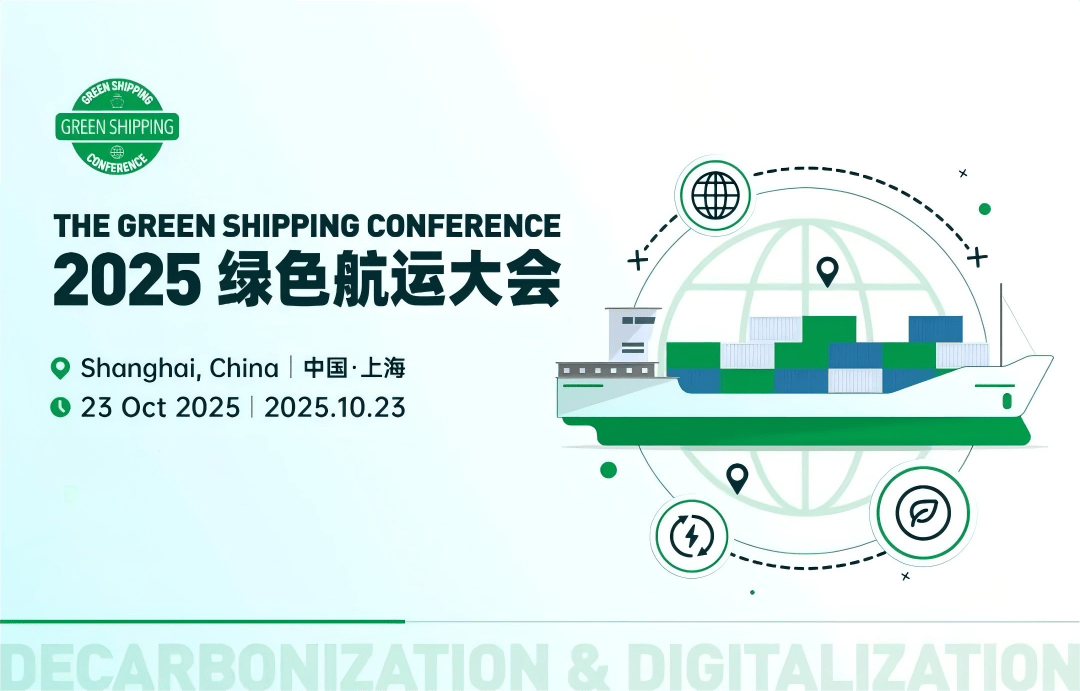
全球航运巨头共商绿色航运破局之道@The GSC 2025
Sou Hu Cai Jing· 2025-10-10 09:10
Conference Background - The International Maritime Organization (IMO) approved amendments to MARPOL Annex VI, establishing a framework for mandatory emissions limits and greenhouse gas pricing in the shipping industry, aiming for net-zero carbon emissions by 2050 [3] - The "Green Shipping 2025" conference will take place on October 23, 2025, in Shanghai, focusing on the maritime industry's green decarbonization transition and strategies for adapting to market changes [3] Organizational Structure - The conference is organized by Jiangxin Maritime and co-hosted by the International Shipbuilding and Offshore Network [3] Key Topics Analysis - Global green shipping trends overview, providing insights into future shipping development and investment directions [9] - Interpretation of international shipping carbon emission policies and regulations, offering authoritative analysis of compliance requirements and potential impacts [10] - Latest advancements in shipping emission reduction technologies, including dual-fuel engines and hydrogen fuel applications [11] - Evaluation of wind-assisted propulsion technology's potential and economic benefits [12] - Discussion on the role of digital intelligence in optimizing green shipping routes and reducing emissions through data-driven strategies [15][16] Practical Pathways and Challenges - Sharing experiences on cross-industry collaboration to promote low-carbon transformation in the shipping sector [19] - Exploration of zero-carbon vessel development roadmaps, including design concepts and commercialization timelines [21] - Insights from shipowners on challenges and strategies in green shipping, focusing on investment decisions and compliance pressures [23]
中国动力(600482):业绩持续高增 船海主业景气持续 应用产业打开新空间
Xin Lang Cai Jing· 2025-09-08 00:29
Core Viewpoint - The company has demonstrated stable revenue growth and significant profit acceleration in the first half of 2025, driven by strong performance in its marine products and effective cost control [1][2][3]. Revenue and Profit Performance - In the first half of 2025, the company achieved revenue of 27.651 billion, a year-on-year increase of 11.22%, and a net profit attributable to shareholders of 919 million, up 93.35% year-on-year [1]. - For Q2 2025, revenue reached 15.339 billion, reflecting a year-on-year growth of 13.97%, while net profit attributable to shareholders was 524 million, an increase of 35.20% year-on-year [1][2]. Segment Performance - The company's main business revenue for H1 2025 was 27.479 billion, with a year-on-year growth of 11.42%. The diesel power segment generated 13.968 billion, up 27.25%, while the chemical power segment reached 3.998 billion, growing by 3.92% [2]. - The marine platform and ship machinery segment reported revenue of 3.535 billion, a year-on-year increase of 10.48% [2]. Profitability Improvement - The company's gross margin for H1 2025 was 16.37%, a significant increase of 4.80 percentage points year-on-year, with Q2 gross margin at 16.74%, up 0.56 percentage points from Q1 [3]. - Cost control measures have led to reductions in various expense ratios, contributing to improved profitability [3]. Order and Delivery Structure - The company signed new contracts worth 33.919 billion in H1 2025, a year-on-year increase of 25.42%, with a backlog of contracts totaling 62.794 billion as of June 2025, up 7.24% from the end of 2024 [4]. - The delivery of low-speed diesel engines increased by 18% year-on-year, with new orders up 47%, indicating strong demand [4]. Green Transition and Future Outlook - The company has made significant progress in its green transition, delivering products such as high-power methanol dual-fuel low-speed engines [4]. - The company is well-positioned to benefit from the ongoing marine industry boom and green trends, with expectations of continued profit growth in the coming years [5].
中国动力今年上半年手握近628亿元订单
Zheng Quan Ri Bao Wang· 2025-08-29 13:00
Core Insights - The company reported a significant increase in revenue and profit for the first half of 2025, with operating income reaching 27.651 billion yuan, a year-on-year growth of 11.22%, and net profit attributable to shareholders increasing by 93.35% to 919 million yuan [1][2]. Business Performance - The marine power business has become a key growth driver, with the delivery of low-speed diesel engines increasing by 18% year-on-year and new orders rising by 47%. The medium-speed diesel engine segment also saw a 35% increase in deliveries and a 32% rise in new orders [2]. - The company achieved double-digit growth in its marine machinery segment, with crane deliveries surging by 375% and marine gearboxes increasing by 78% [2]. - As of June 30, 2025, the company held contracts worth 62.794 billion yuan, a 7.24% increase from the end of 2024, supporting future performance growth [2]. Technological Innovation - The company invested 1.379 billion yuan in R&D during the first half of 2025, marking a 41.74% increase. It made significant advancements in green power technology, including the delivery of new dual-fuel engines and the launch of 118 new battery products for overseas markets [3]. - The company plans to continue increasing R&D investment, focusing on low-carbon and zero-carbon power technologies to meet the challenges of the global shipping industry's green transition [3]. Shareholder Returns - The company announced a cash dividend of 0.8161 yuan per share, totaling 184 million yuan, in addition to a previously completed distribution of 419 million yuan for the 2024 fiscal year, bringing total dividends to over 600 million yuan [3]. Financial Health - The net cash flow from operating activities reached 5.288 billion yuan, a year-on-year increase of 10.91%. The company's cash balance stood at 41.605 billion yuan, up 10.20% from the beginning of the year, providing ample support for future business expansion and R&D [4]. - The global shipping market is recovering, with increasing demand for green and intelligent vessels, positioning the company favorably in the low-carbon and zero-carbon power technology sectors [4].
当全球最大造船国遇上全球第一船级社:航运业绿色转型如何提速?
第一财经· 2025-08-21 03:48
Core Viewpoint - The global shipping industry is facing the strictest carbon emission regulations in history, with the revised Annex VI of the International Convention for the Prevention of Pollution from Ships (MARPOL) coming into effect on August 1, 2023, prompting the need for new practices and technologies to meet stringent emission reduction requirements [1][3]. Group 1: Regulatory Changes and Industry Response - The revised MARPOL Annex VI is a new and very strict regulation that requires shipping companies to adopt new practices and technologies to comply with emission reduction targets [3]. - The Norwegian classification society is assisting clients in developing compliance strategies and understanding new regulations, while also providing technical advice on alternative fuels and energy-saving devices [3]. - The introduction of carbon taxes is expected to drive shipowners to invest in new technologies and improve energy efficiency, with financial institutions increasingly favoring green projects [3]. Group 2: Market Dynamics and Bilateral Trade - China is Norway's largest trading partner in Asia, with bilateral trade expected to reach $10.18 billion in 2024, a year-on-year increase of 31.7% [4]. - The Norwegian classification society has seen rapid growth in China, with its market share in the region accounting for approximately 28% of its global business [4]. - China's shipbuilding industry remains the largest globally, with completion, new orders, and backlog accounting for 51.7%, 68.3%, and 64.9% of the global total, respectively, as of the first half of 2025 [4]. Group 3: Decarbonization Challenges - The transition to decarbonization in shipping is a gradual process, with approximately 92% of the current fleet still using traditional fuels [6]. - The speed of transition depends on various factors, including infrastructure for new fuels, production scale, and the high costs associated with these transitions [6]. - Operational optimization measures, such as speed reduction and route optimization, can be implemented even for existing fleets using traditional fuels [6]. Group 4: Digitalization and Innovation - The Norwegian classification society emphasizes the importance of energy-saving technologies in reducing shipping emissions and achieving international maritime organization goals [11]. - Digital technologies are being utilized to monitor vessel operational data, allowing shipowners to better understand fuel consumption and improve operational efficiency [11][12]. - Collaborative efforts between Norwegian and Chinese teams are focused on advancing digitalization and smart technologies in the shipping industry [12]. Group 5: Future of Fuel and Shipbuilding - The future of shipping fuel will not rely on a single solution, but rather a mix of fuels depending on various factors such as vessel type and trade area [15]. - Norway has issued over 20 Approval in Principle (AiP) certificates to Chinese shipyards for various green fuel adaptation solutions and technologies [15]. - China's shipbuilding industry has evolved into a leader in high-end shipbuilding, with significant advancements in LNG carrier construction and other specialized vessels [16].