
贸易制裁

Search documents
美国关税制裁一年,中国经济不降反增,美国民众扛下所有
Sou Hu Cai Jing· 2026-02-17 13:19
Core Viewpoint - The U.S. tariffs imposed on China have not achieved their intended goals of suppressing the Chinese economy or forcing a global supply chain shift, as China continues to show robust economic growth despite the pressures [2][21][27]. Economic and Trade Changes - Despite the ongoing tariff pressures, China's manufacturing sector remains active, with factories working hard to meet orders, indicating a stable growth in export orders [5][11]. - The core advantages of Chinese manufacturing, such as complete industrial support, efficient production, and stable supply capabilities, make it difficult for global companies to abandon the Chinese market [7][9]. Supply Chain Dynamics - Many companies have only partially relocated their production capacities rather than completely withdrawing from China, as doing so would require rebuilding supply chains and incur higher operational costs [9]. - U.S. buyers have gradually accepted the reality of the tariffs, choosing to continue cooperation with Chinese suppliers rather than forgoing high-quality products [11]. Impact of Tariffs on the U.S. - The tariffs have led to increased costs for U.S. consumers and businesses, with a significant portion of the tariff burden falling on American enterprises and the general public, contrary to initial claims that foreign companies would bear the costs [13][15]. - The rising prices of various goods, from clothing to electronics, have resulted in higher living costs for American families, putting pressure on the domestic economy [15][17]. Shift in U.S. Policy - The failure of the tariff policy and the economic pressure on the U.S. have prompted a softening of the U.S. stance towards China, with efforts to engage in dialogue and technical discussions [21][23]. - The realization that tariffs cannot sever the deep economic ties between the U.S. and China has led to a more pragmatic approach in U.S.-China relations, focusing on cooperation rather than unilateral sanctions [25][29]. Conclusion - China's economy has demonstrated resilience and growth despite external pressures, while the costs of the U.S. tariffs have primarily impacted American businesses and consumers, highlighting the drawbacks of unilateral trade protectionism [27][29][31].

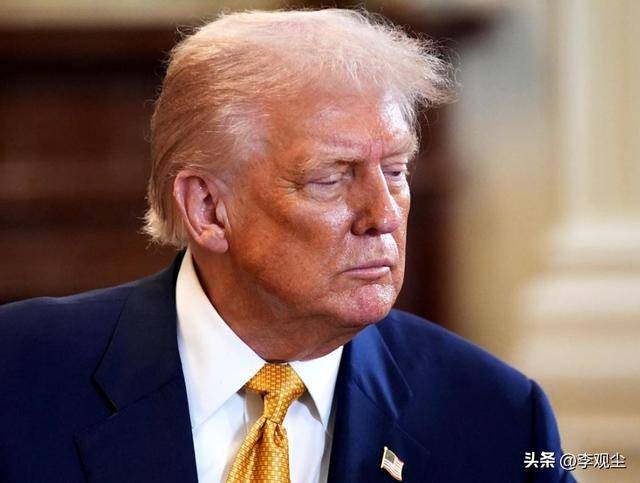
Russia shrugs off Trump's tariff threats on those who provide oil to Cuba
CNBC· 2026-02-12 11:16
A vehicle fills up with fuel at a gas station in Havana on January 28, 2026.The Kremlin on Thursday said it is actively discussing what help it can provide to fuel-starved Cuba, dismissing U.S. President Donald Trump's tariff threat to sanction countries that send oil to the Caribbean island."We wouldn't want any escalation, but on the other hand, we don't have much trade right now," Kremlin spokesperson Dmitry Peskov told reporters, according to Russian state news outlet RIA Novosti.His comments came in re ...
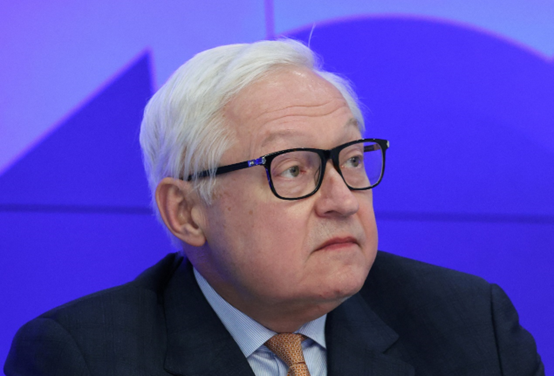
俄副外长批美方将贸易与俄乌冲突挂钩:完全不可接受
Huan Qiu Wang· 2026-02-11 06:17
报道称,当被问及如何看待美国将贸易与俄乌冲突挂钩并要求其他国家停止与俄贸易时,里亚布科夫表 示,"这完全不可接受"。他说,西方对当前形势的理解和解释与俄罗斯无关,"这种制裁和关联根本不 应该存在"。 在里亚布科夫作出上述表态之际,美国总统特朗普当地时间2日在社交平台上发帖称,他与印度总理莫 迪通了电话,莫迪同意印度停止购买俄罗斯石油,美国则决定降低印度输美商品关税税率。据《印度时 报》报道,印度方面9日称,印度的石油采购策略将以国家利益为主导。 【环球网报道 记者 张江平】据《印度快报》11日报道,对于美国将贸易与俄乌冲突挂钩,俄罗斯副外 长里亚布科夫在接受该媒体采访时称,这么做"完全不可接受"。 ...
突发!美国征加25%关税,制裁3家中国企业,14艘船舶
Sou Hu Cai Jing· 2026-02-07 19:19
这项行政令和限制更新的同步发布,表明美国在系统地放大伊朗贸易风险的外溢影响。过去,美国主要 通过金融工具实施二级限制,现在结合关税机制,形成更全面的压力。航运企业需要把伊朗相关暴露作 为长期合规重点,审视整个供应链,包括船舶来源、货物来源、客户关系和服务环节,以免在双重工具 下意外触碰红线。企业如果被列入名单,后果包括资产冻结和交易禁令,这会影响它们的全球运营,尤 其是在美国有业务的那些。 从博弈角度看,这项令对中美经贸关系有潜在影响,因为中国是伊朗的重要贸易伙伴,但令中没有立即 把中国列为加税对象。原因可能是考虑到加税会干扰中美现有的经贸议程,增加美国国内的通胀压力和 供应链成本。去年中美在关税问题上有过谈判和缓和迹象,在没有更强触发条件下,美国可能不会轻易 升级到对华加税,尤其令本身保留了部门裁量权和总统最终决定权。这样的设计让政策有弹性,能根据 实际情况调整。 伊朗石油贸易网络的复杂性是这次行动的焦点,美国情报显示,这些影子船队通过频繁换旗和老船运营 来规避制裁。列入名单的船舶大多建造于上世纪末或本世纪初,航行路径避开主流监测区,运载货物到 亚洲和中东港口。财政部在更新时,同步发布了指导,提醒行业注意这 ...
【环球财经】美威胁对与伊朗有贸易往来国家加征关税
Xin Lang Cai Jing· 2026-02-07 08:28
Core Viewpoint - The article discusses the executive order signed by U.S. President Trump, which threatens to impose tariffs on countries that purchase goods and services from Iran, effective from February 7 [1] Group 1: Executive Order Details - The executive order states that the actions and policies of the Iranian government continue to pose significant threats to U.S. national security, foreign policy, and the economy [1] - The order maintains the national emergency declared in 1995 regarding Iran [1] - It specifies that tariffs may be imposed on countries that directly or indirectly procure or import Iranian goods and services, potentially reaching up to 25% [1] Group 2: Trade Implications - The term "Iranian goods and services" refers specifically to items and services that the U.S. prohibits trade with Iran [1]

美威胁对与伊朗有贸易往来国家加征关税
Xin Hua Wang· 2026-02-07 07:13
白宫当日发布的行政令称,伊朗政府的行为和政策继续对美国国家安全、对外政策和美国经济构成重大 威胁,1995年行政令中宣布的美国国家紧急状态继续存在。 这一行政令提及的"伊朗货物和服务"特指美国禁止与伊朗进行贸易的货物和服务。 行政令还称,美国对直接或间接采购、进口伊朗货物和服务的国家加征关税是必要的,美国可能会加征 例如25%的关税。 新华社纽约2月6日电(记者刘亚南)美国总统特朗普6日签署行政令,威胁对购买受制裁伊朗货物和服 务的国家加征关税。该行政令7日起生效。 ...
(外代一线)美国威胁对向古巴提供石油国家商品加征关税
Sou Hu Cai Jing· 2026-01-31 02:46
美国总统特朗普1月29日签署行政令,威胁对向古巴提供石油的国家输美商品加征从价关税。本月初,美国对委内瑞拉发动大规模军事打击。特朗普随后暗 示,古巴可能成为美国下一个关注目标。11日,特朗普再次对古巴施压,威胁古巴若不尽快"达成协议",将面临"零石油、零资金"流入古巴的局面。 -12 Driver 122, 000 7 Pro 1-5512 tt go lya 11 202 the cite STATE call Par chip in 0 10 /2 2 1 2 1 1 1 36 per 1972 30 and ack and the first - mic accomment s 1 8 2 8 the 下载 X (C (D) t r prod Production 上海道 r 25 - . FO s @ TT 75 ty H27 and 1 te 18 the the - -- 13-12-12 r range . in ness Th 8 ne 2017 0 00 8 F s 型 T in 201 847 light , and lia to the 1 2 ! C ury of th t lyn r ...

特朗普威胁对向古巴提供石油的国家加征关税
Xin Jing Bao· 2026-01-30 01:20
1月29日,特朗普签署行政令,宣布国家紧急状态,威胁对向古巴提供石油的国家加征关税。此前特朗 普发文威胁古巴尽快"达成协议",否则将面临零石油、零资金流入古巴的局面。特朗普说古巴依赖委内 瑞拉提供的石油和资金生存,古巴为委方提供"安全服务"。特朗普声称这种关系"现在已经终结",报道 称他未说明要求古巴达成何种协议。 ...
早盘速递-20260126
Guan Tong Qi Huo· 2026-01-26 01:54
Hot News - The US is deploying troops and naval vessels to Iran, and a 25% tariff on countries trading with Iran will soon take effect. The US also imposed a new round of sanctions on multiple entities and vessels related to Iran's energy and shipping systems [2] - The preliminary January manufacturing PMI in the Eurozone rose slightly to 49.4 but remained in the contraction range, while the preliminary services PMI dropped to 51.9, below expectations. Manufacturing and services PMIs in Germany rebounded more than expected. France's manufacturing PMI rose to a nearly four-year high of 51, but its services PMI sharply declined to 47.9 [2] - The China Securities Regulatory Commission approved the registration of 20 - rubber, low - sulfur fuel oil, and international copper options, and included 14 futures and options varieties, including the above three, in the scope of expanding the opening of the futures market [2] - The Shanghai Futures Exchange adjusted the daily price limit and margin ratios for nickel, alumina, lead, zinc, and stainless - steel futures contracts starting from the settlement on January 27 [2] - China's above - scale coal production in 2025 reached 48.3 billion tons, a year - on - year increase of 1.2%, hitting a new historical high [3] Sector Performance Key Focus - Urea, lithium carbonate, platinum, crude oil, and asphalt [4] Night Session Performance - Non - metallic building materials rose 1.87%, precious metals 37.78%, oilseeds and oils 7.55%, soft commodities 2.51%, non - ferrous metals 26.15%, coal, coke, steel, and minerals 8.66%, energy 2.05%, chemicals 9.75%, grains 1.09%, and agricultural and sideline products 2.59% [4] Sector Positions - The document shows the position changes of commodity futures sectors in the past five trading days from January 19 to January 23, 2026 [5] Performance of Major Asset Classes - In the equity category, the Shanghai Composite Index rose 0.33% daily, 4.22% monthly, and 4.22% year - to - date. Other indices like the S&P 500, Hang Seng Index, etc., also had different performance [6] - In the fixed - income category, 10 - year, 5 - year, and 2 - year treasury bond futures had corresponding daily, monthly, and year - to - date changes [6] - In the commodity category, the CRB Commodity Index, WTI crude oil, London spot gold, etc., showed various performance [6] - In other categories, the US Dollar Index declined, and the CBOE Volatility Index rose [6]
美国正调遣重兵前往伊朗,伊朗警告:随时准备扣动扳机!美国宣布对与伊朗相关实体及油轮实施新一轮制裁
Guo Ji Jin Rong Bao· 2026-01-24 01:03
此外,当地时间1月23日,美国财政部外国资产控制办公室(OFAC)宣布,对与伊朗能源和航运体系 相关的多家实体及船只实施新一轮制裁,重点指向协助伊朗石油、能源及衍生品出口的航运和管理网 络。 根据公布文件,此次被列入制裁名单的对象包括多家航运公司及其关联船只,相关资产在美国司法管辖 范围内将被冻结,美国个人和机构被禁止与其进行任何交易。 据法新社等媒体1月23日报道,美国总统特朗普22日称,白宫正调遣重兵前往伊朗,尽管他并不想动用 这支舰队。他还称,对所有与伊朗进行贸易往来的国家加征25%关税的措施将很快生效。同日,伊朗伊 斯兰革命卫队总司令帕克普尔警告称,该国军队已"随时准备扣动扳机"。 特朗普在总统专机"空军一号"上接受媒体采访时称,"我们有一支非常庞大的舰队正朝那个方向驶去, 以防万一"。卡塔尔半岛电视台称,美国"亚伯拉罕·林肯"号航母打击群将在未来数天内进入中东地区。 此前,特朗普表示美国不会对伊朗采取进一步军事行动,除非德黑兰尝试恢复其核计划。美国官员向路 透社透露,美国政府正在考虑为中东地区部署额外的防空系统,旨在防范伊朗对美军基地的报复性打 击。 帕克普尔22日警告美以不要做出战略误判,否则将面 ...