跨境电商合规

Search documents
中国电商出海成本重置:欧盟将废除小额包裹免税政策,合规门槛提高后如何应对?
Di Yi Cai Jing· 2026-02-27 02:12
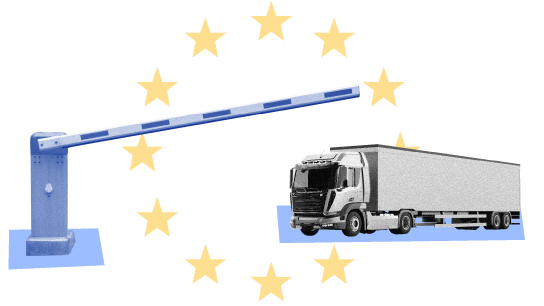
欧盟数据显示,2024年欧盟进口150 欧元以下电商包裹达46亿件,其中91%源自中国。 伴随欧盟理事会正式批准小包裹进口关税新规,欧盟将正式废除长期以来针对价值低于150欧元的小包 裹实施的关税豁免政策,并通过新关税规定,相关政策将分阶段落地实施。 上海海关学院法律系教授、上海市法学会海关法研究会副会长朱秋沅对第一财经记者表示,英国也紧随 欧盟步伐,在2025年秋季财政预算中已正式宣布,将取消针对低价值进口商品的135英镑关税豁免政 策。 值得注意的是,欧盟等方面出台上述政策指向明显。朱秋沅表示,根据欧洲议会方面提供的数据显示, 2024年欧盟进口150欧元以下电商包裹达46亿件,其中91%源自中国,日均进口量高达1200万件,较 2023年增长近一倍、较2022年增长两倍多。 朱秋沅表示,对于中国电商卖家与第三方物流商而言,这一系列政策变动意味着出海成本结构的重塑与 运营流程的调整。在全球低价值包裹免税政策退潮的背景下,精准把握政策细节、完善合规体系、物流 与定价的可追溯性,将成为穿越监管变革、实现持续发展的关键。 欧盟这样应对跨境电商进口量爆发式增长 根据新规,2026年7月1日~2028年7月1日,进 ...

低价之后,中国电商出海靠什么
Xin Lang Cai Jing· 2026-01-27 06:04
Core Viewpoint - The past two years of China's cross-border e-commerce can be defined by a "price war," but by 2025, the focus is shifting towards brand enhancement, localization, and quality improvement as platforms face increasing regulatory scrutiny and market challenges [1][15]. Group 1: Market Dynamics - The "Four Little Dragons" of cross-border e-commerce, namely AliExpress, Temu, TikTok Shop, and SHEIN, initially gained market share through cost advantages but are now transitioning to more sustainable business models [1][15]. - The tightening of global trade rules and rising geopolitical tensions have led to significant challenges for these platforms, particularly with the U.S. altering tariff policies and eliminating tax exemptions for low-value packages [5][18]. - As of June 2025, SHEIN and Temu experienced a decline in daily active users in the U.S. by 25% and 52% respectively, following the policy changes [19]. Group 2: Business Strategies - Platforms are adopting a "managed" model to enhance supply chain control, with AliExpress reporting a 70% share of Choice orders from its managed business, and Temu's transaction service revenue growth exceeding 300% during its rapid expansion [4][19]. - AliExpress is launching a "Super Brand Going Global" initiative to compete directly with Amazon, aiming to attract brands with lower costs and reporting an 80% increase in the number of million-dollar brands during key sales events [21]. - Temu is shifting its focus from being a low-cost goods distributor to empowering Chinese manufacturers to enhance brand value, indicating a strategic pivot towards high-quality development [22]. Group 3: Compliance Challenges - The international regulatory environment is becoming increasingly stringent, with compliance in areas such as data security, product safety, and environmental standards becoming critical for long-term operations [12][24]. - Temu is under investigation by the European Commission, highlighting the growing scrutiny of its business model regarding compliance with safety and environmental standards [24]. - The platforms are recognizing that compliance capabilities will become a core competitive advantage, shifting focus from rapid user growth to sustainable and compliant operational models [25].


低价之后,中国电商出海靠什么
21世纪经济报道· 2026-01-27 05:34
Core Viewpoint - The article discusses the transformation of China's cross-border e-commerce platforms, referred to as the "Four Little Dragons," from a price-driven model to a focus on branding, localization, and quality enhancement in response to global trade challenges and regulatory scrutiny [1][4]. Group 1: Market Dynamics - The "Four Little Dragons" (AliExpress, Temu, TikTok Shop, SHEIN) initially gained market share through cost advantages, leveraging China's industrial scale and efficient supply chains [3]. - The platforms are now facing significant challenges due to rising global trade protectionism and changes in trade policies, particularly in the U.S., which has affected their low-price positioning [4][5]. - The cancellation of the "de minimis" exemption for packages valued under $800 in the U.S. has led to a decline in daily active users for SHEIN and Temu, with decreases of 25% and 52% respectively [5]. Group 2: Strategic Shifts - Platforms are shifting towards brand building and high-quality growth, with AliExpress launching a "Super Brand Going Global" initiative to compete with Amazon [7]. - Temu is also undergoing a significant operational upgrade to enhance brand value and quality, moving away from being merely a low-cost product aggregator [8]. - The focus on European markets is increasing, with AliExpress reporting a 57% year-on-year increase in orders in Europe, while Temu and SHEIN are also expanding their presence in this region [8]. Group 3: Compliance Challenges - The platforms are encountering heightened compliance challenges due to stricter international regulations, which now encompass data security, product safety, and environmental standards [9][10]. - Temu is under investigation by the EU for compliance issues, reflecting the broader scrutiny faced by Chinese cross-border e-commerce platforms [10]. - Compliance capabilities are becoming a core competitive advantage, as platforms must adapt to sustainable and profitable operational models while building trust with local regulators [11].
2026开年惊魂:亚马逊批量封号,跨境电商告别旧时代
3 6 Ke· 2026-01-14 00:33
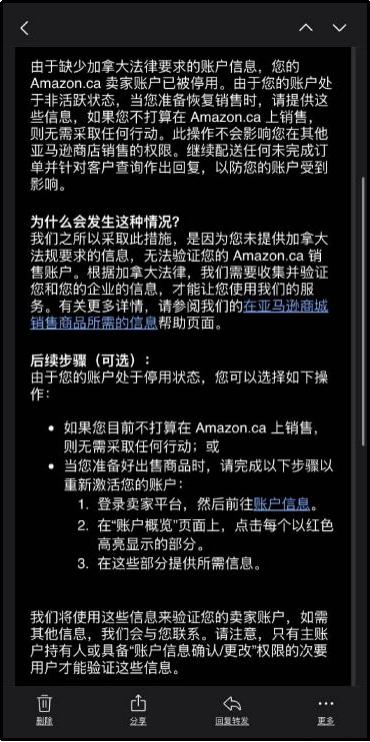
Core Viewpoint - Amazon is undergoing a systematic compliance cleanup, leading to a wave of account suspensions for sellers in Brazil and Canada, raising concerns about the future of the platform's account ecosystem under tightening regulatory scrutiny [2][10][15] Group 1: Account Suspension Details - A significant number of sellers have reported sudden account suspensions on Amazon's Brazil and Canada platforms, with many receiving notifications to complete KYC verification to reactivate their accounts [1][4] - The account suspensions are primarily affecting accounts that have not generated sales for an extended period, many of which were automatically activated or registered as backups [5][19] - Sellers are experiencing inconsistent outcomes during the verification process, with some accounts being restored quickly while others face ongoing issues [6][7] Group 2: Compliance and Regulatory Context - The current wave of account suspensions is part of a broader trend towards increased compliance measures in the cross-border e-commerce sector, driven by regulatory pressures [10][15] - Amazon's actions are seen as a response to the tightening of tax transparency and financial regulations, particularly in emerging markets like Brazil, where e-commerce is rapidly growing [12][13] - The establishment of a dedicated department within Brazil's Federal Revenue to combat tax evasion indicates a shift towards stricter enforcement of compliance in the e-commerce sector [13] Group 3: Industry Implications - The compliance cleanup signifies a transition in the cross-border e-commerce landscape, where compliance management is becoming a critical competitive factor among sellers [15][16] - The era of relying on a large number of dormant accounts is ending, as platforms are now treating inactive accounts as potential liabilities that require regular maintenance and compliance checks [19][20] - The surge in compliance requirements is expected to create a new industry for compliance services, including tax representation and risk assessment, which will become essential for sellers to remain competitive [20]

中企出海,“转舵”欧洲
2 1 Shi Ji Jing Ji Bao Dao· 2025-12-29 09:17
Core Insights - The narrative of Chinese companies expanding overseas is shifting, with a growing focus on European markets as sellers diversify away from the U.S. market due to external pressures like tariffs [1][2] - eBay has launched the "European Gold Rush Plan," highlighting Europe as a significant growth market, comparable to the U.S. market a decade ago [1][3] - The resilience of the Chinese supply chain and the adaptability of sellers are becoming more pronounced, allowing companies to deepen their roots in the U.S. market while exploring new opportunities in Europe [1][9] Group 1: Market Trends - Many sellers are increasingly recognizing the potential of the European market, especially after the U.S. imposed tariffs, leading to heightened competition [2][4] - eBay's data indicates that the online automotive parts market in Europe is projected to reach $30 billion by 2025, with significant growth in various automotive components [3] - The European market is characterized by strong consumer purchasing power, with prices often higher than in the U.S., presenting opportunities for brand premiumization [3][4] Group 2: Challenges and Opportunities - Entering the European market is more complex than the U.S. due to higher compliance requirements, including VAT registration and varying regulations across countries [5][7] - The high compliance barriers may deter less serious competitors, leading to a healthier competitive environment focused on product innovation and brand value [5][6] - Companies are advised to adopt a targeted approach rather than a broad distribution strategy, focusing on competitive niche products [7] Group 3: Resilience in the U.S. Market - The U.S. market is undergoing a significant reshuffle, with opportunities arising from product differentiation and seller evolution despite increased competition [8][9] - Sellers are finding new profit spaces through specialization and innovation, as traditional broad distribution models become less viable [9][10] - The adaptability of Chinese sellers and the robustness of the supply chain are key factors in maintaining competitive advantages, even amidst fluctuating tariff policies [9][10]

超百位行业“新生力”共探AI时代出海新路径
Sou Hu Cai Jing· 2025-12-27 00:05
Core Insights - The forum focused on how AI can empower the cross-border e-commerce growth chain, providing practical strategies and forward-looking insights for high-quality development in the industry [2][11] Group 1: Event Overview - The "Intelligent Manufacturing Outbound: New Cross-Border Directions" forum was held on December 25, featuring discussions among industry leaders on topics such as intelligent supply chain reconstruction, brand globalization, and compliance system establishment [2] - The event gathered over a hundred industry players, including cross-border e-commerce platforms, major sellers, leading outbound brands, SaaS service providers, and cross-border law firms [2] Group 2: Industry Perspectives - Chen Wending, General Manager of Southern Metropolis Daily, emphasized that cross-border e-commerce is now a competition of comprehensive strengths in brand, technology, and supply chain, serving as a key driver for China's economy to reach the high end of the global value chain [3] - Long Shuzhen, head of the Global Youth Cross-Border Association, stated that cross-border e-commerce is a vital channel for global entrepreneurs to integrate into the world economy and climb the value chain [3][4] Group 3: Case Studies and Innovations - Baoxiao, General Manager of overseas business at Hailan Home, shared the brand's journey from a domestic clothing brand to a global one, highlighting the importance of aligning Chinese aesthetics with local consumer needs [5][6] - Ouyang Zhijun from Langhua Group noted that the shift from "product export" to "industrial chain export" has revealed core pain points in logistics, capital flow, and information flow, particularly for Chinese companies facing overseas financing challenges [6][14] - Heybike's COO Li Yifan discussed the company's transition from OEM to an independent brand, successfully entering the North American market and achieving significant user acquisition through strategic marketing [7][16] - HOVERAir's Wang Xinxuan highlighted the innovation in developing a flying camera that complies with strict regulations in Japan, showcasing how market limitations can be turned into opportunities [8][17] Group 4: AI and Content Marketing - A TikTok operator from Huakai Yibai emphasized the platform's unique ability to simultaneously achieve brand marketing and sales conversion, creating a closed loop from brand exposure to GMV [9][17] - Wang Mengshan, founder of Zhifang Consulting, stressed that content marketing is the most crucial lever for brand growth, and the future competitive advantage will lie in effective content creation [9][10] Group 5: Ecosystem Development - The launch of the "Cross-Border Outbound Alliance" aims to create a long-term empowering ecosystem for the industry, transforming the resources from the forum into sustainable support for cross-border e-commerce [18] - The alliance includes various partners providing services in areas such as customized website building, overseas marketing, and cross-border insurance, aiming to break down industry resource barriers [18][19]

海仲全球化战略中心助力跨境电商“中国方案”发展
Sou Hu Cai Jing· 2025-12-16 23:35
Core Viewpoint - The cross-border e-commerce industry is experiencing rapid growth, but companies face challenges such as intellectual property protection, tax planning, compliance, product quality certification, and cross-border dispute resolution. The establishment of the Haizhong Globalization Strategy Center provides a comprehensive and efficient "Chinese solution" to support Chinese cross-border e-commerce enterprises in navigating the global market [1]. Group 1: Service System Overview - The Haizhong Globalization Strategy Center offers a multi-dimensional support system for cross-border e-commerce companies, integrating resources across various fields including intellectual property, tax planning, cross-border dispute resolution, product testing and certification, and big data analysis [2]. - The services are highly customizable, tailored to meet the specific needs of different enterprises, ensuring that they receive the most relevant support for their development [2]. - The center has established a broad cooperation network with institutions and enterprises globally, enhancing its service reach and supporting the global expansion of cross-border e-commerce businesses [2]. Group 2: Compliance Challenges and Solutions - Cross-border e-commerce companies face significant challenges in brand protection, with trademark registration cases increasing by 37% year-on-year in 2023. For instance, a seller in Shenzhen lost over $2 million due to malicious complaints from counterfeiters [3]. - Haizhong utilizes blockchain technology to complete the brand registration process within 48 hours, reducing the average industry time by 60%, ensuring the authenticity and immutability of brand information [3]. - The center also provides brand layout and monitoring services to prevent trademark registration and infringement issues [3]. Group 3: EPR Compliance Cost Solutions - The high cost of Extended Producer Responsibility (EPR) compliance is a major challenge, with 1,200 cross-border stores in Germany facing mandatory removal for non-compliance with EPR requirements in 2024 [5]. - Haizhong's intelligent declaration system can reduce the EPR registration process from 45 working days to 7 days, lowering costs by 40% [5]. - The system's data processing capabilities allow for quick and accurate matching of EPR requirements across countries, significantly improving efficiency and reducing compliance costs [5]. Group 4: Intelligent Compliance and Monitoring - The intelligent compliance hub integrates real-time regulatory changes from 187 global intellectual property offices, using AI algorithms to generate compliance plans [6]. - The system can provide a six-month advance warning for upcoming regulations, ensuring that businesses are prepared for changes [6]. - It customizes compliance solutions based on business type and operational region, ensuring adherence to local laws [6]. Group 5: Quality Assurance and Certification - The Haizhong Testing Center focuses on quality assurance in cross-border trade, providing testing and certification services that meet global standards [11]. - It utilizes the GRRA coding system to link testing results with enterprise information and product traceability, enhancing transparency and consumer trust [11]. - The center collaborates with consulting and intellectual property services to offer integrated solutions, improving operational efficiency and reducing costs for cross-border e-commerce businesses [12]. Group 6: Data Empowerment and Service Precision - Big data serves as the foundational support for Haizhong's services, integrating various resources to facilitate information sharing across different regions and stages of the supply chain [14]. - The analysis of big data allows for personalized service offerings, such as tailored financing solutions and market expansion advice [15]. - Automation in service processes, such as certification applications and tax declarations, enhances efficiency and reduces processing times [15]. Group 7: Tax Planning and Dispute Resolution - Haizhong's tax experts provide tailored tax planning solutions to help cross-border e-commerce companies navigate complex international tax regulations and reduce tax burdens [16]. - The center offers various dispute resolution services, including negotiation, mediation, arbitration, and litigation, leveraging its legal expertise to resolve cross-border disputes efficiently [17][18]. - The comprehensive "Chinese solution" provided by Haizhong addresses compliance, quality assurance, data empowerment, and dispute resolution, supporting the growth of Chinese cross-border e-commerce enterprises in the global market [18].

从三杯自来水到四个行业第一: 简稚云与J&P集团的二十年跨境征程
Mei Ri Shang Bao· 2025-12-08 23:33
Core Insights - The article highlights the journey of J&P Group and its founder, Jian Zhiyun, as a representation of the evolution of cross-border e-commerce in China from chaotic growth to regulated success [1][8] - Over the past decade, the cross-border e-commerce import and export scale in Hangzhou has increased by 1267 times, with the number of sellers rising from over 200 in 2015 to 65,000 today [1] Company Overview - J&P Group is recognized as a pioneer in the cross-border compliance sector, being the first European accounting firm to establish operations in China, with a presence in multiple countries including the UK, Germany, France, Italy, and Spain [4][5] - The company has expanded its services to include VAT tax compliance, cross-border product compliance, international trademarks, patents, and overseas business registration, establishing itself as a leader in providing comprehensive compliance services [4][6] Milestones and Achievements - J&P Group has achieved four significant "firsts" in the industry: 1. The first European accounting firm focused on Chinese cross-border e-commerce in China 2. The publication of the first compliance guide for cross-border e-commerce 3. The issuance of the first VAT tax certificate in the UK for the cross-border e-commerce sector 4. The issuance of the first WEEE environmental qualification certificate in Germany for the Chinese cross-border e-commerce sector [5][6] - The company has served over 500,000 clients, including more than 100 Fortune 500 companies, solidifying its position as a key player in the compliance field [4] Industry Impact - J&P Group has been featured three times on CCTV, highlighting its role as a compliance leader and its contributions to the cross-border e-commerce landscape [7] - The company emphasizes its core competitiveness through a full-service approach and technology-driven solutions, such as the "Cross-Border Cloud Smart System," which enhances efficiency by 70% in tax declaration tracking [7] Vision and Mission - The founder, Jian Zhiyun, aims to elevate the status and visibility of Chinese brands in the global market, viewing compliance as essential for Chinese brands to succeed internationally [8] - The slogan "Let the world turn for Chinese brands" encapsulates the company's mission to support Chinese enterprises in their global endeavors [8]
双重冲击下的中国跨境卖家:亚马逊涉税报送与 FCC 清退行动深度解析
Sou Hu Cai Jing· 2025-11-13 06:10
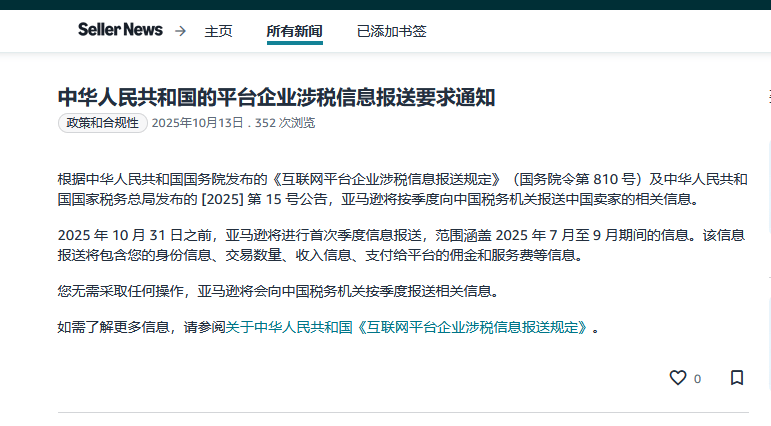
Core Insights - The cross-border e-commerce industry in China is facing unprecedented compliance challenges due to ongoing international turmoil and frequent adjustments in global e-commerce platform regulations, as highlighted in the iResearch report which states that the export scale of China's cross-border e-commerce exceeded 2.8 trillion yuan in 2024, with Amazon contributing over 35% of the transaction volume [1][4]. Regulatory Changes - In March 2025, the State Taxation Administration and the Ministry of Commerce issued regulations requiring domestic and foreign e-commerce platforms to report comprehensive tax information of Chinese sellers to Chinese tax authorities starting October 2025 [4]. - Amazon's recent notification outlines a quarterly reporting mechanism, with the first report due by October 31, 2025, covering transaction data from July 1 to September 30, 2025, involving over 50 million transaction records [5]. Seller Compliance Requirements - Amazon's reporting requirements include detailed information for corporate sellers, such as business name, tax identification, and bank account details, while individual sellers must provide identification and bank information [5]. - Sellers must complete mandatory information updates by October 20, 2025, or face restrictions on their withdrawal functions, with only about 45% of sellers having completed the updates as of mid-October 2025 [6]. Impact on Different Seller Categories - Large sellers (annual revenue over 100 million yuan) will need to restructure their global tax frameworks, potentially increasing compliance costs by 15%-20% [7]. - Small and medium-sized sellers (annual revenue between 10 million and 100 million yuan) may see annual compliance costs rise by 80,000 to 150,000 yuan, risking profitability [7]. - Micro sellers (annual revenue below 10 million yuan) face risks of incorrect reporting due to a lack of tax knowledge, prompting Amazon to offer support services [8]. Market Challenges - Concurrently, the FCC's "Operation Clean Carts" has led to the removal of 12 million Chinese electronic products from platforms like Amazon and eBay, affecting over 32,000 sellers, with Amazon accounting for 68% of the removals [10]. - The FCC's actions are part of a broader supply chain security review, with new regulations expected to impose stricter scrutiny on electronic products, potentially increasing production costs by 10%-15% for sellers needing to replace components from blacklisted companies [11][12]. Industry Outlook - The shift towards compliance in the global cross-border e-commerce sector presents both challenges and opportunities for Chinese sellers, with a potential industry reshuffle as non-compliant sellers may be eliminated [13]. - Companies are encouraged to enhance compliance capabilities and diversify markets and products to reduce reliance on low-barrier, high-competition categories, as 2025 is anticipated to be a pivotal year for compliance in China's cross-border e-commerce [13].
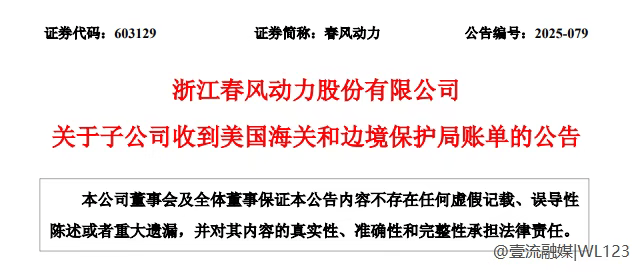
突发!浙江大卖收到美国海关1.3亿的“追缴账单”!
Sou Hu Cai Jing· 2025-11-10 03:12
Core Viewpoint - Chuanfeng Power, a well-known motorcycle manufacturer, has received a bill from the U.S. Customs and Border Protection (CBP) for nearly $20 million in tariffs due to classification adjustments for products exported from its Chinese factory to its U.S. subsidiary [1][2]. Group 1: Company Announcement - The announcement was first made on October 29, indicating that the U.S. subsidiary received an "Action Notice" from CBP regarding the classification of UZ products, including UTV and SSV models [1]. - The total amount due for tariff adjustments is reported to be $19.3287 million (approximately 137 million RMB) as of October 23, 2025 [2]. Group 2: Impact on Operations - Chuanfeng Power stated that the classification adjustments primarily involve historical tariff payments and that the company has diversified its production capacity through factories in Thailand and Mexico to mitigate cost pressures from U.S. tariffs [3]. - As of September 2025, sales in the U.S. accounted for less than 30% of the company's total revenue, suggesting that the impact on future operations is expected to be minimal [3]. Group 3: Response to Tariff Bill - The company plans to actively cooperate with CBP and may consider legal actions, including hiring lawyers for appeals and potentially filing lawsuits in U.S. international trade courts [5]. - The financial and operational impact of the tariff adjustments remains uncertain, as the exact number and amount of affected customs declarations have not been finalized [5]. Group 4: Industry Implications - The situation has sparked discussions among cross-border sellers and exporters about the risks associated with customs product classification (HS Code) issues, highlighting the complexity and potential consequences of misclassification [6]. - The incident serves as a reminder for exporting companies to prioritize compliance, as the cross-border e-commerce industry shifts from rapid growth to a focus on regulatory adherence [6][7].