通用具身智能

Search documents
中国机器人产业正迎来黄金机遇期
Zhong Guo Xin Wen Wang· 2026-02-17 12:55
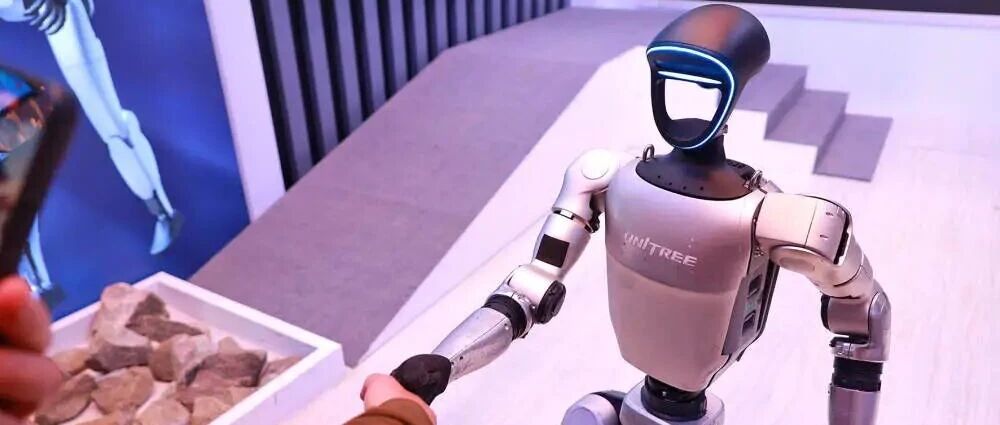
中新网北京2月17日电2026年央视春晚,数十台来自宇树科技的机器人,凭借精准同步的舞蹈动作和整 齐翻腾,在聚光灯下大放异彩,向外界传递了一个清晰信号:中国机器人产业的黄金时代正在来临。 而在舞台之外,中国机器人版图上,另一支同样颇具潜力的"物种"正在悄然崛起。它们就是活跃在生命 科学实验室、新材料研发平台的"科学家"机器人。这些机器人,正以另一种方式,无声塑造着中国科技 的硬核形象。 如果说宇树的机器人代表着中国向世界展示的"科技颜值",那么"科学家"机器人则代表着中国正在快速 积累的"科技实力"。前沿科学界的共识日益清晰:只有在真实的实验室场景中实现"手"(自动化操作) 与"脑"(AI智能决策)的深度融合,才能催生真正意义的通用具身智能。 目前,国内如晶泰科技等企业正在打造这些"关键场景"。例如,近期,晶泰科技接连宣布了两项重磅国 际合作:与全球化工巨头德国巴斯夫、韩国知名药企JW制药分别建立机器人实验室合作。此前,其在 欧美企业、阿联酋等地的布局也已落地生根,成为中国工业/科研级机器人技术走向海外尖端研发领域 的先锋代表之一。 业内分析,未来,机器人产业主要有两个核心价值场景。一种是面向大众的To C场 ...

无界动力宣布获数亿元天使+轮融资,老股东红杉中国追投
Xin Lang Cai Jing· 2026-02-14 01:59
新浪科技讯2月14日上午消息,通用具身智能机器人公司无界动力宣布完成超2亿元天使+轮融资,老股 东红杉中国、线性资本、高瓴创投、华业天成、中金资本旗下基金、BV百度风投持续追投,新增深创 投、创新工场、普华资本、钧山资本、雅瑞资本等加入。与此同时,第三轮融资已接近完成,累计融资 额将达8亿元。融资所获资金将用于加速机器人通用大脑和硬件本体的研发,推动产品在海内外客户场 景中的规模化部署。 目前,无界动力自研的首代机器人平台已进入客户场景实际应用,并与多家国内外头部企业达成战略级 合作,同时已顺利完成第一阶段交付验证,同步启动在海外市场的部署落地。(文猛) 新浪科技讯2月14日上午消息,通用具身智能机器人公司无界动力宣布完成超2亿元天使+轮融资,老股 东红杉中国、线性资本、高瓴创投、华业天成、中金资本旗下基金、BV百度风投持续追投,新增深创 投、创新工场、普华资本、钧山资本、雅瑞资本等加入。与此同时,第三轮融资已接近完成,累计融资 额将达8亿元。融资所获资金将用于加速机器人通用大脑和硬件本体的研发,推动产品在海内外客户场 景中的规模化部署。 目前,无界动力自研的首代机器人平台已进入客户场景实际应用,并与多家国内 ...
无界动力完成数亿元天使+轮融资
Bei Ke Cai Jing· 2026-02-14 01:49
Group 1 - The core viewpoint of the article is that Wujie Power, a company specializing in general embodied intelligent robots, has completed over 200 million yuan in angel round financing [1] - Existing investors such as Sequoia China, Linear Capital, Hillhouse Capital, and others have participated in the latest funding round, with new investors including Shenzhen Capital Group, Innovation Works, PwC Capital, Junshan Capital, and Yarei Capital joining [2] - Wujie Power disclosed that the third round of financing is nearing completion, with a total financing amount expected to reach 800 million yuan. The funds will be used to accelerate the development of the robot's general brain and hardware, promoting large-scale deployment of products in domestic and international customer scenarios [3] Group 2 - Wujie Power was founded in 2025 in Beijing, focusing on the research and industrial application of core technologies for general embodied intelligent robots, aiming to build a "general brain" and "operational intelligence" for robots [4]
宇树、智元竞逐人形机器人赛道
Zhong Guo Jing Ying Bao· 2026-01-22 16:25
Core Insights - The 2026 Spring Festival Gala will feature a diverse range of robots, with multiple leading companies competing, including Yushu Technology, iFlytek, Siasun, and UBTECH, each showcasing their unique programs and technologies [1][2] - The human-shaped robot market is experiencing significant growth, with 2025 being termed the "year of mass production" for humanoid robots, and substantial investments in the sector [2][3] - Chinese companies dominate the global humanoid robot market, with ZhiYuan leading in both shipment volume and market share [3] Company Developments - Yushu Technology showcased its boxing skills of the Unitree G1 robot at CES, while also releasing various models at competitive prices [5] - ZhiYuan introduced a comprehensive product matrix at CES, including a language model-driven simulation platform, enhancing its capabilities in various applications [4][5] - Yushu's focus on hardware and immediate commercialization contrasts with ZhiYuan's AI-driven, long-term strategy, affecting their market positioning and investor appeal [6] Market Trends - The humanoid robot market is projected to grow exponentially, with global shipments expected to reach 2.6 million units by 2035 [7] - In 2025, the Chinese robot industry saw approximately 200 financing events totaling over 40 billion yuan, with humanoid robots receiving over 30 billion yuan in funding [2] - Major companies like Xiaopeng Motors and Tesla are planning to scale up humanoid robot production significantly by 2026, indicating a competitive landscape [7]
人形机器人书写智能经济新篇章
Zhong Guo Zheng Quan Bao· 2026-01-15 20:48
Core Insights - The humanoid robot industry is accelerating towards maturity, overcoming the last mile of commercialization through technological breakthroughs and financial support [1][3] - The future of the humanoid robot industry is expected to enter a new phase characterized by "technological iteration + scene expansion + ecosystem improvement" [1][3] Industry Development - The expansion of mass production will continue to reduce costs, facilitating faster market entry for products [1] - Innovative business models, such as leasing, will lower application barriers and accelerate the implementation of humanoid robots in various scenarios [1][3] - The establishment of the "Mosu Space Embodied Workshop" aims to bridge the gap between technological innovation and commercial application [2] Technological Advancements - The humanoid robots showcased at the workshop are equipped with multimodal models, allowing them to process and respond to various types of information [2] - The industry is moving from early-stage technology demonstrations to a focus on comprehensive ecosystem integration and real-world application [3] Financial Support and Insurance - The high cost of humanoid robots, comparable to that of a car, necessitates financial backing for extensive testing and development [3] - Insurance companies are exploring tailored products to mitigate risks associated with humanoid robots, which can enhance confidence in their deployment [3][4] - A significant collaboration between Ping An Insurance and Shanghai Electric has led to the first insurance policy for humanoid robots, addressing long-standing industry challenges [4] Market Projections - 2025 is anticipated to be a pivotal year for mass production in the humanoid robot sector, with an expected shipment of 13,000 units globally [5] - Chinese manufacturers are expected to excel in mass production and shipment volumes, with companies like Ubtech and ZhiYuan aiming for substantial output increases in 2026 [5] - The integration of generative AI with robotics is driving the evolution of robots towards general embodied intelligence, with a projected exponential market growth over the next decade [6]
宇树科技,全球第二!
DT新材料· 2026-01-11 23:28
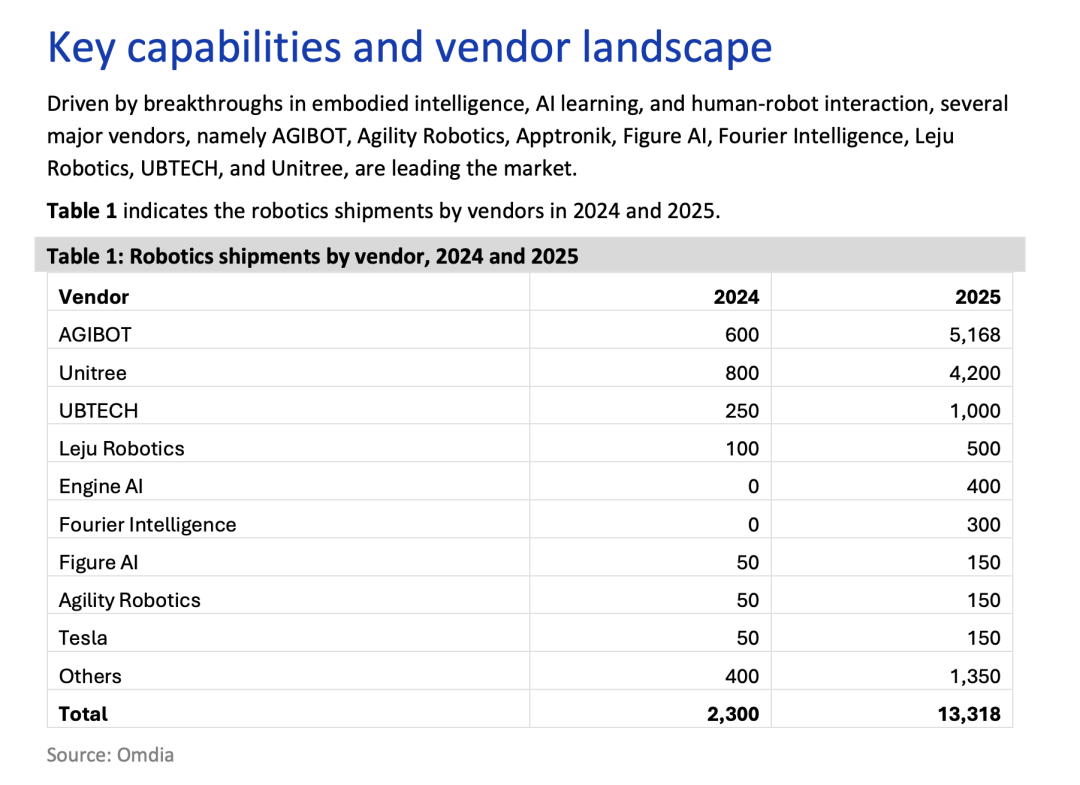
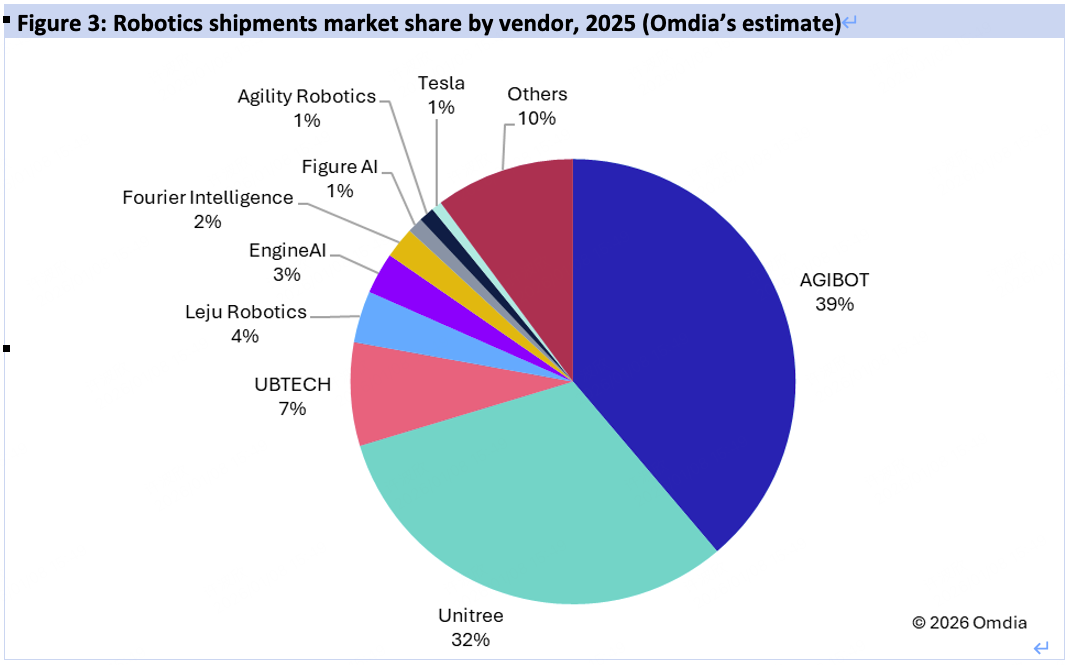
Core Insights - The global humanoid robot market is expected to enter a rapid growth phase by 2025, with total shipments projected to reach 13,318 units [1][2] - Chinese manufacturers are leading in mass production and shipment volume, with ZhiYuan achieving over 5,100 units in annual shipments, capturing 39% of the global market share, ranking first in both metrics [1][2] Group 1: Market Overview - The humanoid robot market is projected to grow significantly, with an expected shipment of 1.3 million units in 2025 [1] - By 2035, global shipments are anticipated to reach 2.6 million units, indicating exponential growth in the next decade [6] Group 2: Key Players and Market Share - ZhiYuan, Unitree, and UBTECH are the top three players in the market, with respective shipments of 5,100 units (39% market share), 4,200 units (32% market share), and 1,000 units (7% market share) in 2025 [4] - Other notable companies include Leju Robotics, Engine AI, and Tesla, with shipments ranging from 150 to 500 units [5] Group 3: Competitive Landscape - The report categorizes humanoid robot companies into tiers based on various performance metrics, with ZhiYuan, Figure AI, Tesla, UBTECH, and Unitree in the top tier [5] - The second tier includes Agility Robotics, Apptronik, Fourier Intelligence, and Leju Robotics [5] Group 4: Future Trends and Developments - The integration of generative AI with robotics is driving the evolution of robots towards "general embodied intelligence," enhancing their autonomous learning and environmental adaptability [6] - 2026 is identified as a critical turning point for the humanoid robot industry, with significant differentiation expected among startups based on technological breakthroughs and industrial capabilities [6] - Companies like Xiaopeng Motors and ZhiYuan are preparing for large-scale production, with ZhiYuan's sales revenue expected to exceed 1 billion yuan in 2025 [2][6][7]


城市24小时 | 省长新年调研“第一站”,为何选这里?
Mei Ri Jing Ji Xin Wen· 2026-01-09 16:03
Core Insights - Shaanxi Province is focusing on developing Yulin as a growth engine to drive provincial development, emphasizing the importance of stabilizing growth and enhancing industrial chains [1][4] - The "14th Five-Year Plan" highlights a dual-polar development strategy with Xi'an and Yulin as key growth poles, aiming to reshape the economic landscape of Shaanxi [3][4] Economic Development - Yulin's GDP is projected to reach 754.87 billion yuan in 2024, making it the top non-provincial capital city in Central and Western China, with its contribution to Shaanxi's economy increasing from 14.4% in 2015 to 21.2% in 2024 [5] - In the first three quarters of 2025, Yulin's GDP was 565.41 billion yuan, showing a year-on-year growth of 5.3%, indicating a slowdown compared to previous years [5] Industry Focus - Yulin aims to cultivate new pillar industries in renewable energy and new materials during the "14th Five-Year Plan" period, targeting an average annual growth rate of key economic indicators above national and provincial levels [6] - The city plans to achieve an industrial output value and GDP exceeding 10 trillion yuan by 2030, focusing on modernizing the coal chemical industry towards high-end, diversified, and low-carbon development [6] Strategic Initiatives - The provincial government is pushing for project investments and consumer spending to ensure a strong start to the "14th Five-Year Plan" [1][6] - Yulin is set to leverage its rich resource base and industrial foundation to promote deep integration of technological and industrial innovation, contributing to high-quality development in Shaanxi [1][6]
智元、宇树科技出货量飙升,占全球超70%市场份额
2 1 Shi Ji Jing Ji Bao Dao· 2026-01-09 10:04
Core Viewpoint - The humanoid robot sector experienced a strong surge on January 9, with significant gains in stock prices, particularly for companies like ZhiYuan Robotics, which saw an 8.75% increase, reflecting a growing interest in the market driven by a new report from Omdia on the global humanoid robot market trends for 2025 [1][2]. Market Trends - According to Omdia's report, Chinese manufacturers are leading the global humanoid robot market, with ZhiYuan Robotics and Unitree Technology together accounting for 71% of the market share by 2025 [1]. - ZhiYuan Robotics is projected to ship 5,168 units in 2025, a significant increase from 600 units in 2024, capturing 39% of the global market share [1][3]. - Unitree Technology and UBTECH are expected to follow with market shares of 32% and 7%, respectively, with their shipments also increasing substantially [1][3]. Vendor Performance - ZhiYuan Robotics received the highest ratings in six evaluation dimensions, indicating advanced capabilities in humanoid robotics [4]. - Unitree Technology excelled in five dimensions, while UBTECH achieved top ratings in four dimensions, showcasing the competitive landscape among these companies [4]. Future Projections - The integration of generative AI with robotics is driving the evolution of robots towards "general embodied intelligence," which is expected to lead to exponential growth in the humanoid robot market over the next decade [6]. - Omdia forecasts that global shipments of humanoid robots could reach 2.6 million units by 2035, indicating a robust growth trajectory for the industry [6].
智元、宇树科技出货量飙升,占全球超70%市场份额
21世纪经济报道· 2026-01-09 09:51
Core Insights - The humanoid robot sector experienced a strong surge on January 9, with companies like Shenzhou New Materials (上纬新材) seeing an 8.75% increase in stock price, reaching 143.99 CNY per share and a total market capitalization of 58 billion CNY [1]. Market Trends - A report by Omdia indicates that Chinese manufacturers are leading the global humanoid robot market, with companies like Zhiyuan Robotics (智元机器人) and Unitree Technology (宇树科技) expected to capture 71% of the market share by 2025 [3]. - Zhiyuan Robotics is projected to ship 5,168 units in 2025, a significant increase from 600 units in 2024, holding a 39% market share [3][5]. - Unitree Technology and UBTECH are expected to follow with market shares of 32% and 7%, respectively, with their shipments also increasing significantly [3][5]. Vendor Performance - The report outlines the expected shipments for various vendors in 2024 and 2025, with total shipments rising from 2,300 units in 2024 to 13,318 units in 2025 [5]. - Zhiyuan Robotics received the highest ratings in six evaluation dimensions, indicating advanced capabilities in humanoid robotics [6]. Future Projections - The integration of generative AI with robotics is driving the evolution of robots towards "general embodied intelligence," with the humanoid robot market expected to see exponential growth, potentially reaching 2.6 million units shipped by 2035 [8].

智元第一,宇树第二!中国人形机器人企业领跑全球
Zhong Guo Zheng Quan Bao· 2026-01-09 08:30
Core Insights - The report by Omdia highlights the dominance of Chinese manufacturers in the humanoid robot market, with Zhiyuan leading with over 5,100 units shipped, capturing 39% of the global market share [1] - By 2025, the top six humanoid robot manufacturers will all be Chinese, collectively accounting for 86.9% of global shipments [1] Group 1: Market Performance - In 2024, total shipments of humanoid robots are projected to be 2,300 units, increasing to 13,318 units in 2025 [2] - The report indicates that the humanoid robot index rose by 1.66%, with significant stock price increases for companies like Jizhi Co. and Hongxun Technology [3] Group 2: Industry Developments - At CES 2023, several Chinese humanoid robot companies showcased their products, including Zhiyuan's launch of the Genie Sim 3.0 platform, which enhances model training and application [4] - Other companies like Unitree and Fourier Intelligence also presented their latest humanoid robots and solutions, indicating a strong presence in the market [4][5] Group 3: Future Projections - Omdia predicts exponential growth in the humanoid robot market, with global shipments expected to reach 2.6 million units by 2035 [6] - Companies like Zhiyuan and Tesla are positioned as leaders in the industry, driving rapid development and innovation [6] Group 4: Strategic Investments - Companies are actively investing in humanoid robotics, with Hongrun Construction and Guoji Precision Engineering announcing partnerships and new product lines aimed at enhancing their market positions [7] - The domestic humanoid robot shipment is expected to rise to 62,500 units by 2026, marking a significant milestone for the industry [7]