
零售信贷风险

Search documents
招商银行管理层:愿承受信用卡占营收比例下降,来管控好资产质量
Mei Ri Jing Ji Xin Wen· 2026-03-30 11:09
Core Viewpoint - The performance report of China Merchants Bank (CMB) for the year 2025 highlights concerns regarding retail loan quality and net interest margin, with a slight increase in non-performing loans (NPLs) in retail lending despite a rebound in net interest margin in the fourth quarter [1][2]. Group 1: Retail Loan Quality - The NPL ratio for small and micro loans increased significantly from 0.79% to 1.22%, while the personal housing loan NPL ratio rose from 0.48% to 0.51%. Conversely, the consumer loan NPL ratio decreased from 1.04% to 1.02% [2]. - CMB's Vice President and Chief Risk Officer noted that the overall risk in retail credit is still on the rise, with pressures on asset quality due to the ongoing adjustment in the real estate market and employment conditions [2]. - The bank plans to optimize its business structure by tightening loan approval standards, especially for consumer loans, and dynamically adjusting standards for small and micro loans to mitigate risks [2]. Group 2: Credit Card Performance - Despite a decline in the credit card industry, CMB saw an increase in the number of circulating cards and cardholders, but experienced a 7.62% year-on-year drop in credit card transaction volume to 4.08 trillion yuan [3]. - The bank's strategy focuses on maintaining stable asset quality, even at the cost of reduced revenue contribution from credit cards [3]. Group 3: Net Interest Margin - CMB's net interest margin for 2025 was reported at 1.87%, a decrease of 0.11 percentage points year-on-year, although a rebound was observed in the fourth quarter [4]. - The quarterly breakdown shows net interest margins of 1.91%, 1.86%, and 1.83% for the first three quarters, with a recovery to 1.86% in the fourth quarter [4]. - The bank has made efforts to improve the asset-liability structure by increasing the proportion of higher-yielding assets and reducing lower-yielding assets [4]. Group 4: Future Outlook on Net Interest Margin - The bank anticipates that net interest margin will continue to narrow in 2026, but at a slower rate compared to the previous year, influenced by external factors and the timing of loan repricing [5]. - CMB aims to achieve a smaller reduction in net interest margin and stabilize it in the second half of 2026, provided there are no significant policy changes [6].

不良贷款,加速“促销”转让!
券商中国· 2025-11-21 04:02
Core Viewpoint - The article highlights a significant increase in non-performing loans (NPLs) and the market for transferring these loans, indicating rising risks in retail loans despite overall asset quality remaining stable among listed banks [1][6]. Group 1: Non-Performing Loans Data - The balance of non-performing loans and the non-performing loan ratio for commercial banks have both slightly increased [1]. - The market for transferring non-performing loans has seen a surge, with over 26 billion yuan in asset packages listed since November, and the total for the first half of 2025 exceeding 167 billion yuan, doubling from the same period in 2024 [1][2]. - The issuance of asset-backed securities (ABS) for non-performing loans has surpassed 67.857 billion yuan this year, reflecting an over 80% increase compared to the previous year [1]. Group 2: Retail Loan Risks - There is a consensus in the industry that retail loan risks are becoming more apparent, with no signs of reaching a peak yet [1][7]. - Major banks are increasingly transferring personal non-performing loans to improve asset quality and release capital [1][3]. - The rise in retail loan risks is characterized by a significant increase in non-performing rates for personal loans, credit card overdrafts, and personal business loans [6][7]. Group 3: Transfer Market Dynamics - The demand for transferring non-performing loans has intensified as banks approach year-end, with many institutions listing large asset packages, particularly in retail loans [2]. - The average discount rates for transferring personal loans are influenced by asset type and overdue duration, with some transactions seeing recovery prices as low as 10% of the original amount [4][5]. - The trend of "discount promotions" for non-performing assets is becoming more common as financial institutions seek to expedite transactions [4][5]. Group 4: Specific Bank Data - As of September, the non-performing loan ratio for China’s major banks has shown an upward trend, with specific figures indicating increases for banks like China Communications Bank and China Merchants Bank [6][7]. - For instance, China Communications Bank's personal loan non-performing ratio rose from 1.08% at the end of last year to 1.42% by September [6].


零售金融转型阵痛:上半年24家上市银行个贷不良率上升
Zhong Guo Jing Ying Bao· 2025-09-07 03:21
Core Viewpoint - The retail banking sector is facing significant challenges in achieving high-quality and sustainable transformation due to market volatility and economic cycles, as evidenced by the rising non-performing loan (NPL) rates among listed banks in China [1][2]. Group 1: Non-Performing Loan Trends - Among 42 listed banks, 28 disclosed personal loan NPL rates, with only 3 banks showing a decrease in NPL rates from the end of 2024 to mid-2025 [1]. - The overall trend indicates that 24 banks experienced an increase in personal loan NPL rates, highlighting a concerning risk environment [2]. Group 2: Factors Contributing to Risk - Factors such as economic slowdown, declining real estate market, and reduced household income are contributing to the rising risk in retail credit [2][3]. - The credit card sector is particularly vulnerable, with a significant increase in NPL rates, driven by a down-market shift in customer demographics and heightened sensitivity to risk [3][5]. Group 3: Bank Responses and Strategies - Some banks, like Industrial Bank and Ping An Bank, have successfully reduced their credit card and personal housing loan NPL rates, indicating effective risk management strategies [5]. - Banks are advised to innovate their risk control systems, moving away from over-reliance on collateral and adopting new data-driven approaches to enhance credit assessment [6][7]. Group 4: Future Directions - The key to overcoming challenges in retail banking lies in improving both quality and efficiency, focusing on high-value customer segments, and integrating financial services into everyday life [6][7]. - The industry is encouraged to adopt a "service-data-ecosystem" model, leveraging consumer data to enhance business services and reduce customer acquisition costs [7].


招行大财富管理收入恢复增长势头,零售信贷风险拐点何时至?
Xin Lang Cai Jing· 2025-09-03 00:31
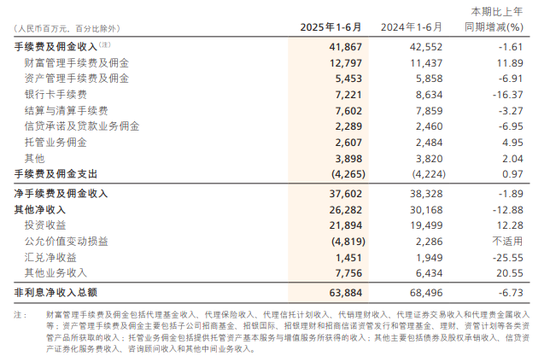
Core Viewpoint - The bank's performance in the first half of the year shows a slight decline in revenue but a modest increase in net profit, indicating a potential for gradual improvement in the second half of the year despite ongoing challenges in the banking sector [1][3]. Financial Performance - In the first half of the year, the bank achieved operating income of 169.97 billion yuan, a year-on-year decrease of 1.72% [3]. - The net profit attributable to shareholders was 74.93 billion yuan, reflecting a year-on-year growth of 0.25%, with an improvement in growth rate compared to the first quarter [3][4]. - The bank's net interest income was 106.09 billion yuan, up 1.57% year-on-year, while non-interest income was 63.88 billion yuan, down 6.73% [3][4]. Wealth Management and Fees - Wealth management income showed a recovery, growing by 5.45% to 20.86 billion yuan, after a significant decline of 16.84% in the previous year [1][4]. - The bank's total fee and commission income was 37.60 billion yuan, a decrease of 1.89% year-on-year, with notable declines in credit card fees and asset management fees [4][5]. Credit Card and Retail Loan Performance - Credit card transaction volume fell by over 8% year-on-year, leading to a 16% decline in credit card income, despite an increase in the number of credit card customers [6][9]. - Retail loan balance reached 3.68 trillion yuan, with a non-performing loan (NPL) ratio of 1.03%, up 0.07 percentage points from the end of the previous year [9][10]. Interest Margin and Market Conditions - The bank's net interest margin was 1.88%, down 12 basis points year-on-year, but still above the industry average of 1.42% [15][18]. - Factors contributing to the decline in net interest margin include lower loan pricing and a decrease in asset yields due to market conditions [16][17]. Risk Management and Future Outlook - The bank's management expressed confidence in maintaining asset quality despite rising risks in retail credit, attributing this to a strong risk culture and a focus on high-quality clients and collateral [12][13]. - The overall economic environment is expected to improve, supported by government policies aimed at boosting consumption and credit demand [13][18].
“零售之王”招商银行,上半年日赚超4亿
3 6 Ke· 2025-09-02 05:41
Core Viewpoint - The current capital market is experiencing a phenomenon of deposit outflow, leading to increased pressure on demand deposits growth for China Merchants Bank (CMB) [1] Financial Performance - In the first half of 2025, CMB reported operating income of 169.97 billion yuan, a year-on-year decrease of 1.72%, while net profit attributable to shareholders was 74.93 billion yuan, a slight increase of 0.25% [1] - CMB's daily earnings for the first half of 2025 averaged approximately 409 million yuan [1] - The bank's net interest income for the first half of 2025 was 106.09 billion yuan, up 1.57% year-on-year, with a net interest margin of 1.88%, down 12 basis points year-on-year [4] Deposit and Loan Trends - As of June 30, 2025, CMB's average daily balance of demand deposits was 4.38 trillion yuan, a year-on-year increase of 4.78%, accounting for 50.26% of total customer deposits [5] - The average cost of customer deposits was 1.26%, down 28 basis points from the end of the previous year [4] - Retail loans amounted to 3.61 trillion yuan, a slight increase of 0.94%, representing 53.43% of total loans, down 1.21 percentage points from the end of the previous year [7] Non-Interest Income - CMB's non-interest income for the first half of 2025 was 63.88 billion yuan, a decrease of 6.73% year-on-year, with net fee and commission income at 37.60 billion yuan, down 1.89% [6] - Wealth management fee and commission income saw a notable increase of 11.89% year-on-year, marking the first positive growth in three years [6] Retail Banking Strategy - CMB's retail banking business contributes over 55% to both revenue and profit, with a total retail customer base of 216 million, up 2.86% from the end of the previous year [7] - The bank's management emphasized a commitment to maintaining a strong retail strategy while being cautious in tactical execution amid rising risks in the retail credit sector [8][9]
信贷风险未现拐点、息差相对变化承压,“零售之王”招商银行如何保持定力?
Bei Jing Shang Bao· 2025-09-01 15:14
Core Viewpoint - The core viewpoint of the article emphasizes the long-term strategy of China Merchants Bank, highlighting its ability to achieve a positive net profit in a challenging banking environment characterized by low interest rates and low spreads [1][2]. Financial Performance - In the first half of 2025, China Merchants Bank reported a net profit attributable to shareholders of 74.93 billion yuan, a year-on-year increase of 0.25%, maintaining the leading position among joint-stock banks [2][3]. - The bank's operating income was 169.97 billion yuan, a decrease of 1.72% year-on-year, with net interest income at 106.09 billion yuan, up 1.57%, and non-interest income at 63.88 billion yuan, down 6.73% [2][3]. Retail Banking Insights - The bank's retail customer base reached 216 million, growing by 2.86% from the end of the previous year, with high-net-worth clients increasing to 5.63 million, a growth rate of 7.57% [3]. - Retail financial business pre-tax profit was 52.04 billion yuan, up 1.64%, accounting for 58.53% of total pre-tax profit, an increase of 1.42 percentage points year-on-year [3]. Credit Risk and Strategy - The bank faces challenges in the retail credit sector, with rising risks and a significant decline in new credit growth across the industry [3][4]. - The bank's strategy includes focusing on quality, scale, efficiency, and structure in its credit offerings, with 90% of retail loans coming from high-quality clients and over 80% being secured loans [4]. Interest Margin Situation - As of June 30, 2025, the bank's net interest yield was 1.88%, down 12 basis points year-on-year, and the net interest margin was 1.79%, down 9 basis points [5]. - The average annual yield on interest-earning assets was 3.14%, down 46 basis points, while the average cost of interest-bearing liabilities was 1.35%, down 37 basis points [5]. Internationalization Strategy - The bank is accelerating its internationalization strategy, driven by the increasing overseas investment needs of Chinese enterprises and the integration of the Chinese economy into the global market [7][8]. - As of the reporting period, the bank had established six branches and three wholly-owned subsidiaries overseas, with total assets of overseas institutions growing by 6.56% year-on-year [8]. Future Development Focus - The bank aims to enhance its digital transformation by investing in financial technology for risk control and efficiency improvement [9]. - It plans to offer more comprehensive financial services, particularly in emerging sectors like technology and green finance, while also diversifying its international retail product offerings [9].

净息差、行业“反内卷”、零售信贷风险……招行管理层最新表态!
Zheng Quan Ri Bao· 2025-09-01 13:03
Core Viewpoint - The performance report of China Merchants Bank for the first half of 2025 shows a slight decline in revenue but a modest increase in net profit, indicating resilience amid challenging market conditions [1][2]. Financial Performance - China Merchants Bank's revenue decreased by 1.72% year-on-year to 169.969 billion yuan, while net profit attributable to shareholders rose by 0.25% to 74.930 billion yuan, marking a positive turnaround compared to the first quarter [1]. - Total assets increased by 4.16% from the end of 2024 to 12.66 trillion yuan, and the non-performing loan ratio decreased by 0.02 percentage points to 0.93% [1]. Net Interest Margin - The net interest margin for the first half of the year fell by 0.12 percentage points to 1.88%, although it remains significantly above the industry average [2]. - The bank's deposit cost is already lower than the industry average, with demand deposits making up 50% of the deposit structure, limiting further reduction in deposit costs [2]. Retail Business and Credit Risk - The retail business of China Merchants Bank is performing well, with total assets under management (AUM) reaching 16.03 trillion yuan, a 7.39% increase from the end of 2024 [1]. - The retail non-performing loan ratio rose to 1.03%, an increase of 0.07 percentage points from the end of 2024, reflecting challenges in the retail credit sector [4][5]. Market Trends and Customer Preferences - There is a noted shift in customer risk preferences towards equity assets, with a marginal improvement in aggressive investment preferences, although a conservative approach remains predominant [5]. - The bank plans to enhance its wealth management capabilities by diversifying products and improving global asset allocation services [5]. Industry Context - The "anti-involution" trend in the banking sector is expected to stabilize loan pricing and control deposit costs, contributing to improved asset quality [3]. - The retail credit industry is facing unprecedented challenges, with a decline in market demand and an increase in risk exposure due to economic slowdown and reduced consumer repayment capacity [5].
招行副行长王颖:零售信贷风险仍将上升,行业未见拐点
Di Yi Cai Jing· 2025-09-01 07:50
Group 1 - The core viewpoint indicates that retail credit risk has been on the rise since last year, with no signs of a turning point in the near future, as stated by the Vice President of China Merchants Bank, Wang Ying [1] - The overall asset quality of China Merchants Bank remains stable and controllable despite the increasing retail credit risk, with a retail non-performing loan (NPL) balance of 37.71 billion yuan and an NPL ratio of 1.03% as of June 30, which is 0.07 percentage points higher than the end of last year [1] - The newly generated NPLs primarily stem from retail business, with a total of 32.72 billion yuan in new NPLs generated in the first half of the year, reflecting a year-on-year increase of 749 million yuan [1] Group 2 - The balance of retail loans at China Merchants Bank reached 3.61 trillion yuan as of June 30, marking a 0.94% increase from the end of last year, while excluding credit cards, the balance grew by 2.16% to 2.68 trillion yuan [2] - The bank's operating income was 96.19 billion yuan, a year-on-year growth of 0.26%, and the pre-tax profit was 52.036 billion yuan, reflecting a 1.64% increase year-on-year [2] - Despite external market challenges such as the rise of third-party payments and adjustments in the real estate market, China Merchants Bank's retail business continues to grow, maintaining a strategic commitment across all segments [2]
招商银行副行长王颖:零售信贷风险上升趋势未见拐点
Bei Ke Cai Jing· 2025-09-01 05:11
Core Insights - The retail credit sector is facing unprecedented challenges in both development and risk aspects this year, with no signs of a turning point in the rising risk trend [1] Development Challenges - The retail credit market has seen a significant decline in incremental growth due to various factors including market environment and credit demand [1] Risk Factors - The overall economic slowdown, downturn in the real estate market, declining household income levels, and reduced repayment capacity and willingness among customers are contributing to the rising risk trend in retail credit [1] Credit Card Insights - Credit cards, which have a more down-market customer base and higher sensitivity to risk, serve as a leading indicator for changes in retail credit risk [1] - The non-performing loan ratio for credit cards continues to show a clear upward trend, indicating that the risk in retail credit has been increasing since last year and is still being revealed [1]
招商银行副行长王颖:零售信贷风险未来仍将小幅上升
Bei Jing Shang Bao· 2025-09-01 05:08
Core Viewpoint - The retail credit risk is on the rise, but the overall asset quality of the bank remains stable and controllable, with expectations of a slight increase in risk in the near term [1][2] Group 1: Retail Credit Risk - The bank's vice president, Wang Ying, indicated that the retail credit risk has increased, and there is no sign of a turning point in this trend [1] - Credit card customer segments are more sensitive to risks compared to retail credit, making credit card risk a leading indicator for retail credit risk changes [1] - The bank expects a slight increase in retail credit risk in the near future, but maintains that its asset quality is robust and manageable [1] Group 2: Asset Quality Assurance - The bank's assurance of retail credit asset quality is based on three main factors: a strong risk culture, a "three excellence strategy" focusing on quality customers, regions, and collateral, with 90% of loans adhering to this strategy [1] - Over 80% of the bank's retail loans are mortgage loans, providing a stable and sufficient collateral base, with low loan-to-value ratios [1] - The solid economic foundation of the country, supported by various government policies, is expected to improve the retail credit operating environment and shift competition towards technology and service quality [1] Group 3: Future Strategy - The bank aims to maintain its risk bottom line and ensure asset quality remains at the best level in the industry while enhancing its existing advantages in retail credit [2] - The bank will continue to strengthen the contribution of retail credit to its asset allocation as a stabilizing force [2]