预制菜透明化

Search documents
2026年第5周:食品饮料行业周度市场观察
艾瑞咨询· 2026-02-04 03:25
Group 1: Canned Food Industry - The State Administration for Market Regulation has released three draft national standards for canned food to enhance industry standards and applicability [3] - The canned food industry in China is diverse but lacks innovation, particularly in attracting younger consumers [3][4] - Canned food prices are generally affordable, benefiting from economies of scale and technological advancements, with the industry upgrading through self-heating products and high-end categories [3][4] Group 2: New Beverage Trends - The sugar water shop model has gained popularity among franchisees, with brands like Mai Ji Milk rapidly expanding, but faces challenges such as high costs and low-frequency consumption [5] - The market for traditional Chinese health drinks is booming, with products like red bean and barley water seeing increased sales, driven by young consumers' health consciousness [6] - The beverage market is experiencing a shift towards health-oriented products, with low-sugar and functional drinks becoming mainstream, while traditional brands face declining sales [7] Group 3: Functional and Innovative Products - Vitamin drinks are becoming essential for young consumers, especially during flu seasons, with brands like Nongfu Spring seeing significant sales growth [9] - The introduction of banana-flavored drinks by major brands reflects a trend towards health-conscious and innovative beverage offerings [10] - The global nutrition and health industry is witnessing a peak in raw material innovation, with a focus on standardized and stable ingredients [11] Group 4: Market Dynamics and Brand Strategies - The "medicinal food" trend is emerging, with a market size projected to reach 370 billion yuan, driven by policy support and technological advancements [12] - The rise of Chinese-style health drinks is creating a competitive landscape, with brands needing to address issues of standardization and supply chain integration [14] - The dairy industry is shifting focus from consumer markets to B2B opportunities, driven by the growth of new consumption formats like tea and coffee [15] Group 5: Brand Developments and Challenges - The beverage brand COMMUNE is preparing for an IPO, aiming to expand its presence despite facing challenges in same-store sales and rising costs [24] - The acquisition of the domestic soda brand Dayao by KKR marks a shift towards capitalizing on efficiency over emotional branding [25] - Dongpeng's coffee brand has rapidly gained market share, positioning itself among the top three in the ready-to-drink coffee market through strategic pricing and targeted marketing [26] Group 6: New Market Entrants and Innovations - The launch of Baoshifu's first bread store in Wuhan indicates its entry into the competitive bakery market, focusing on fresh and affordable products [27] - The Mexican baking group Bimbo is increasing investment in the Chinese market, leveraging local strategies and brand acquisitions to enhance market presence [28] - The recent leadership change at China Resources Beverage aims to optimize costs and drive new business growth amid evolving consumer trends [29]


贾国龙继续发声:西贝断崖式亏损,罗永浩直播间销售额增加5倍
Sou Hu Cai Jing· 2026-01-19 03:08
Core Viewpoint - The ongoing dispute between Jia Guolong, chairman of Xibei, and Luo Yonghao has drawn significant attention, particularly regarding accusations of Xibei's use of pre-prepared dishes and the impact on the company's reputation and sales performance [1][4]. Group 1: Company Performance - Xibei has faced a "cliff-like" loss, while Luo Yonghao's live streaming sales reportedly increased fivefold, with his company "Jiao Ge Peng You" achieving fourth-quarter revenue that is double the average of the first three quarters [2]. - The controversy surrounding Xibei's alleged use of pre-prepared dishes has been described by Jia Guolong as the largest external crisis since the company's establishment [4]. Group 2: Social Media and Public Response - Jia Guolong expressed frustration over the insults and defamation circulating on the internet, which he claims are perpetuated by Luo Yonghao's statements [2]. - Luo Yonghao confirmed that he has been banned from the platform for 15 days and interpreted this as a form of protection, stating he would not further respond to the issue [3]. - The conflict escalated on January 16, with both Jia Guolong and Luo Yonghao preparing to respond to each other's accusations, but their accounts were suddenly banned before they could engage [4].

贾国龙再发声:西贝断崖式亏损,我遭无数辱骂!罗永浩:我很好,不会再回应
2 1 Shi Ji Jing Ji Bao Dao· 2026-01-18 02:50
Core Viewpoint - The ongoing public dispute between Jia Guolong, founder of Xibei, and Luo Yonghao centers around accusations of Xibei serving pre-prepared dishes, leading to significant financial losses for the company and public backlash against its employees [2][6]. Company Financials - Xibei plans to close 102 stores, which represents approximately 30% of its total locations, resulting in over 4,000 employees facing unemployment [6]. - Jia Guolong disclosed that Xibei's single-store net profit is only 5%, and in November of the previous year, the company's total revenue was merely 265 million yuan, less than half of the same period in previous years [3][6]. Public Relations and Media Response - Jia Guolong expressed frustration over the negative portrayal of Xibei in media, particularly by Luo Yonghao, who has seen a fivefold increase in sales in his live-streaming sessions while criticizing Xibei [2]. - The conflict has escalated to the point where both Jia Guolong and Luo Yonghao's social media accounts were suspended, indicating a significant level of public interest and controversy surrounding the issue [7]. Regulatory Context - Jia Guolong referenced a statement from six government ministries in 2024 clarifying that chain restaurants with central kitchens do not fall under the category of pre-prepared dishes, asserting that Xibei operates within legal boundaries [2].
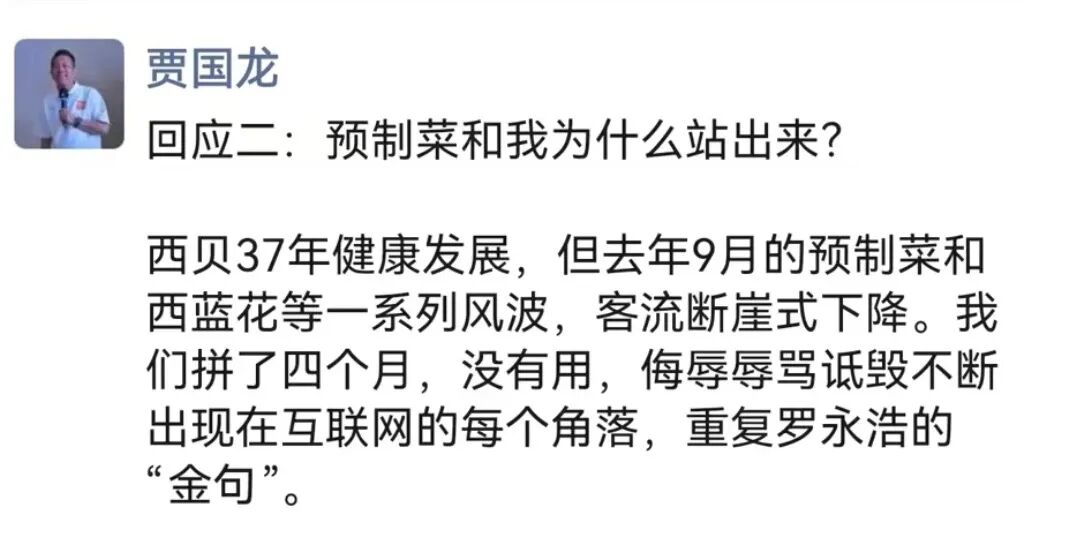
贾国龙再发声:西贝断崖式亏损,我遭无数辱骂!罗永浩:我很好,不会再回应
21世纪经济报道· 2026-01-18 02:43
Core Viewpoint - The ongoing debate between Jia Guolong and Luo Yonghao has drawn significant attention, particularly regarding the financial struggles of Xibei and the accusations of using pre-made dishes [1][2][3]. Group 1: Financial Performance and Business Operations - Xibei plans to close 102 stores, resulting in over 4,000 employees facing unemployment, highlighting a drastic financial downturn [3]. - Jia Guolong disclosed that Xibei's single-store net profit is only 5%, and in November of the previous year, the overall revenue was merely 265 million yuan, less than half of the same period in previous years [4]. - Fixed expenses for salaries alone reached 135 million yuan in the worst-performing month [4]. Group 2: Public Perception and Media Engagement - Jia Guolong expressed frustration over the public's perception of Xibei, stating that the definition of "pre-made dishes" is subjective and questioning who sets the standards for such classifications [3][4]. - He criticized Luo Yonghao for profiting from his live-streaming sales while attacking other businesses, suggesting a double standard in the criticism directed at Xibei [3]. Group 3: Regulatory Context and Industry Standards - Jia Guolong referenced a statement from six government ministries in 2024, clarifying that chain restaurants with central kitchens do not fall under the category of pre-made dishes, asserting that Xibei operates within legal boundaries [3]. - He emphasized Xibei's commitment to transparency, being one of the first restaurants in China to implement open kitchens, and challenged Luo Yonghao to define standards for consumer rights [4].

罗永浩贾国龙骂战惨遭禁言!新浪CEO炮轰挑起网络戾气
Sou Hu Cai Jing· 2026-01-17 19:54
Core Viewpoint - The public dispute between Luo Yonghao and Jia Guolong highlights the tension between business strategies and consumer rights, particularly regarding the use of pre-prepared ingredients in the restaurant industry [18] Group 1: Company Responses - Jia Guolong publicly denied Luo Yonghao's accusations regarding the use of pre-prepared dishes and announced plans to sue him, while also opening the kitchens of 370 stores to scrutiny [2] - On January 15, Jia Guolong confirmed the closure of 102 stores, representing 30% of the total, citing losses exceeding 500 million yuan due to the negative publicity [5] - Jia Guolong demanded an apology and compensation from Luo Yonghao, claiming that the online attacks had severely impacted his employees [9][11] Group 2: Public and Media Reactions - The dispute escalated with both parties being silenced on social media, which added a dramatic twist to the ongoing "pre-prepared dish controversy" [3][13] - Public sentiment largely views the conflict as a deeper issue of business practices versus consumer rights, rather than a personal feud [18] - There is a general disappointment among the audience regarding the social media ban, as many were interested in the unfolding drama between the two business figures [18] Group 3: Industry Implications - The controversy has raised questions about transparency in the food industry, particularly concerning the use of frozen and pre-prepared ingredients [7][16] - Luo Yonghao suggested that the real reason for the business struggles lies within the company's operational failures rather than external criticism [7] - The incident may prompt regulatory changes regarding the transparency of food preparation practices in the restaurant sector [16]
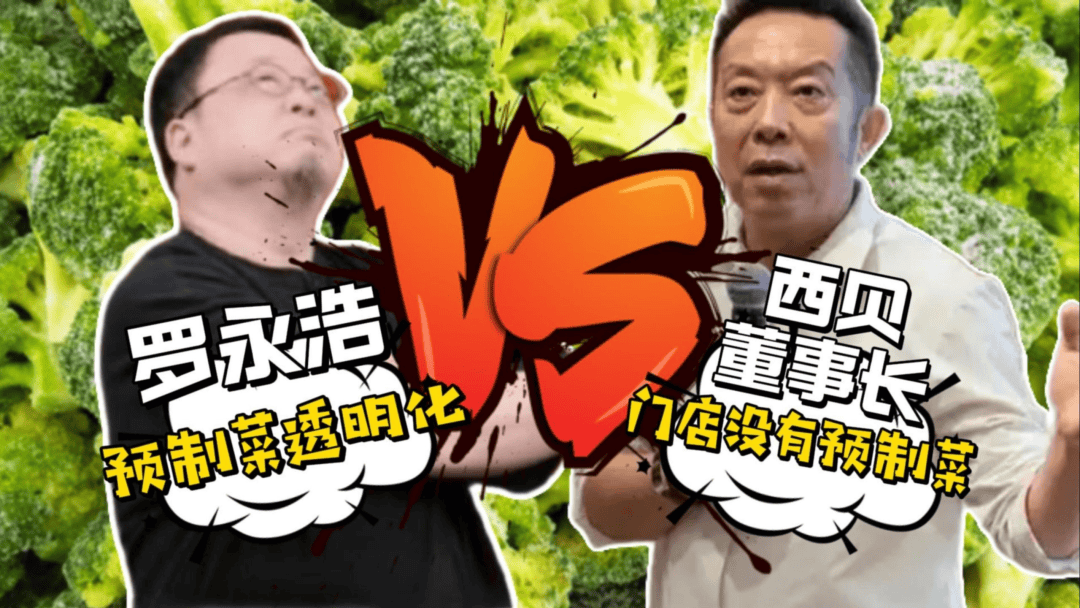
确认被禁言15天,罗永浩再发声:不会再回应
中国基金报· 2026-01-17 15:01
Core Viewpoint - The article discusses the ongoing public dispute between Luo Yonghao and Jia Guolong regarding the quality of pre-made dishes at the restaurant chain Xibei, highlighting the escalation of their exchanges and the implications for both parties involved [1][3][6]. Group 1: Background of the Dispute - The conflict began four months ago when Luo Yonghao claimed that most dishes at Xibei were pre-made, prompting Jia Guolong to deny this and threaten legal action [6]. - After a period of relative quiet, Jia Guolong reignited the dispute in January by asserting that Xibei does not serve pre-made dishes and accusing Luo of maliciously misrepresenting their food quality [6][7]. Group 2: Responses and Reactions - Luo Yonghao confirmed that he was banned from the platform for 15 days and interpreted this as a form of protection, stating he would not further comment on the matter [1]. - Jia Guolong accused Luo of inciting online harassment against Xibei staff and demanded a public apology from Luo for the alleged misinformation [3][7]. Group 3: Social Media Dynamics - Both parties have been banned from commenting on the platform, with the CEO of Weibo suggesting that future disputes should be handled through media interviews [3][4]. - A supporting account for Xibei emerged, which raised questions about the authenticity of social media interactions surrounding the dispute [4].

罗永浩再发声:我很好,不会再回应
Xin Lang Cai Jing· 2026-01-17 14:29
Core Viewpoint - The ongoing dispute between Luo Yonghao and Xibei's founder Jia Guolong regarding the use of pre-made dishes has escalated, leading to mutual accusations and a temporary ban on both parties from social media platforms [1][2][11]. Group 1: Background of the Dispute - The conflict began four months ago when Luo Yonghao claimed that most dishes at Xibei were pre-made after dining there, prompting Jia Guolong to deny the allegations and threaten legal action [5][11]. - After a brief hiatus, Jia Guolong reignited the dispute in January by asserting that Xibei does not serve pre-made dishes and accusing Luo of maliciously misrepresenting their food quality [11]. Group 2: Recent Developments - On January 17, Luo Yonghao confirmed he was banned from the platform for 15 days and interpreted this as a form of protection, stating he would no longer comment on the matter [1][12]. - Jia Guolong's response included claims of online harassment faced by his family and employees, demanding that Luo clarify his statements [8][11]. Group 3: Social Media Dynamics - Both Luo Yonghao and Jia Guolong have been banned from posting on social media, with the CEO of Weibo suggesting that future disputes should be handled through media interviews [2][12]. - A supporting account, @西北人心声, emerged to back Jia Guolong, although it was noted that the account's origin and device used differed from Jia's official communications [3][12].
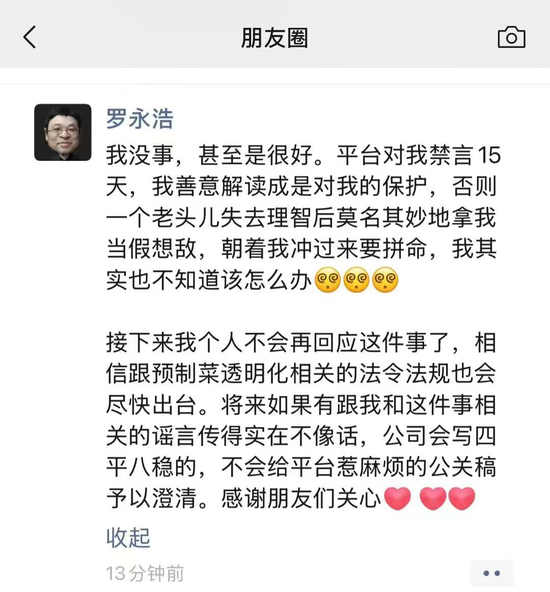
预制菜理应是“明白菜”
Jing Ji Ri Bao· 2025-12-03 00:01
Core Viewpoint - The entry of a well-known company into the prepared food market has sparked discussions about transparency in this sector, highlighting consumer dissatisfaction with the lack of information regarding the nature of prepared dishes [1] Group 1: Consumer Sentiment - Many consumers do not reject prepared foods but are concerned about the transparency of information, expressing disappointment over the difference between expectations of freshly cooked meals and the reality of reheated dishes [1] - The perception of freshness and sensory experience associated with "freshly cooked" meals remains important for some consumers, despite the acceptance of prepared foods by others if they are tasty, of good quality, and reasonably priced [1] Group 2: Industry Standards and Challenges - The lack of national standards for prepared foods leads to a lack of unified definitions and classification, creating ambiguity that some businesses exploit [2] - There is a deficiency in a comprehensive traceability system within the prepared food industry, making it difficult for consumers to access key information such as ingredient sources, processing methods, and production dates [2] - Some businesses take advantage of the vagueness in the definition of prepared foods to evade disclosure obligations, contributing to market disorder [2] Group 3: Recommendations for Improvement - Stakeholders should take proactive measures to address transparency issues and build consumer trust through clear and timely standards that meet the needs of both manufacturers and consumers [3] - Regulatory bodies need to enhance oversight of the prepared food industry, focusing on manufacturers with high complaint rates and imposing severe penalties for illegal activities throughout the production and processing chain [3] - Prepared food manufacturers must ensure the freshness, safety, and health of ingredients, while restaurant businesses should clearly indicate whether meals are prepared and set reasonable prices, respecting consumer rights to information and choice [3]
多家餐厅悄悄撤下“现做”招牌被骂:预制菜透明化,已成餐企绕不开的必答题
Sou Hu Cai Jing· 2025-09-29 00:26
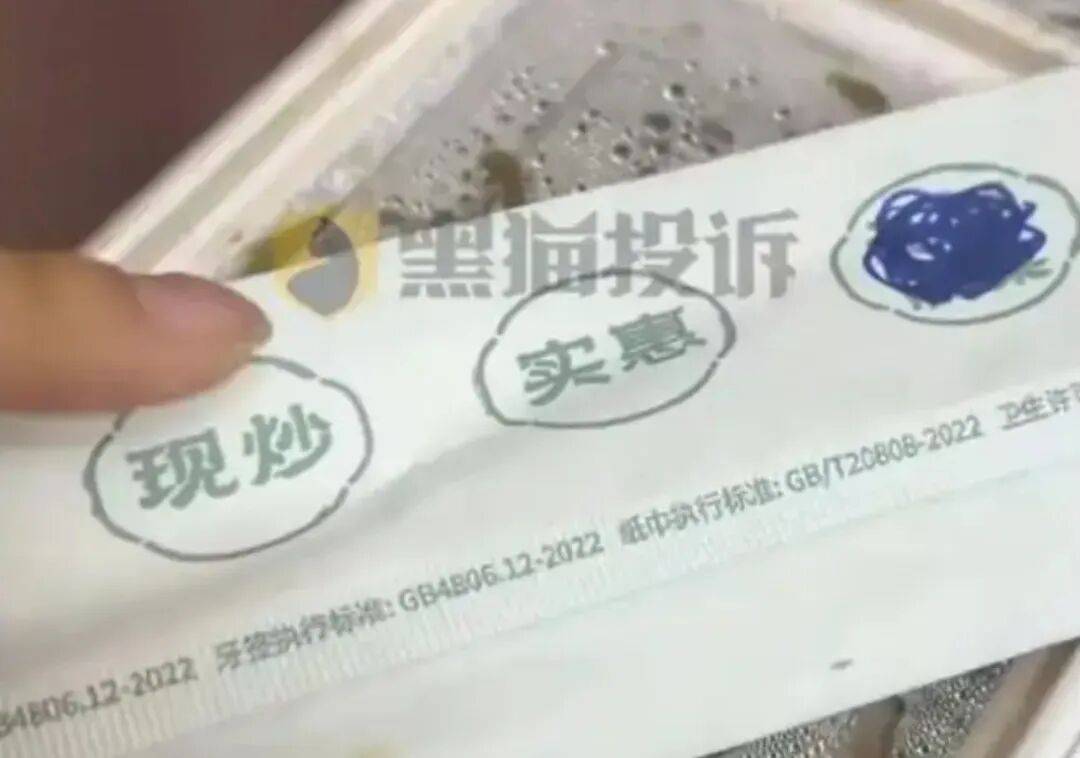
Core Viewpoint - The restaurant industry is facing a dilemma regarding the use of pre-prepared dishes, with some companies opting for transparency while others choose to avoid the topic altogether. The push for transparency in pre-prepared dishes is becoming an inevitable trend driven by consumer rights and regulatory pressure [1][4][25]. Group 1: Industry Response to Pre-prepared Dishes - Some restaurants, like Green Tea, have removed signs claiming "no pre-prepared dishes" and have blacked out such labels on disposable utensils, indicating a cautious approach to avoid backlash [2][5][6]. - In contrast, other establishments, such as Haidilao, have begun to label certain dishes as "partially pre-processed," reflecting a more transparent strategy [8][10]. - The well-known brand Dabowl Mr. has announced plans to clearly label the preparation methods of all 126 dishes in its menu, with 65.8% being freshly made [13]. Group 2: Challenges in Defining Pre-prepared Dishes - The lack of a clear definition and standards for what constitutes a pre-prepared dish complicates the labeling process for restaurants, leading to confusion and inconsistency in the industry [16][17]. - The complexity of traditional Chinese cuisine makes it difficult to categorize dishes as pre-prepared, as the preparation process can vary significantly [18][20]. - Smaller restaurants face additional challenges due to limited resources and the inability to implement comprehensive labeling systems [22]. Group 3: Consumer Perception and Market Dynamics - Consumer perception equates pre-prepared dishes with lower quality, leading to hesitance among restaurants to label their offerings as such, especially in higher-end dining establishments [23][24]. - The reliance on pre-prepared ingredients is widespread in the industry, with few restaurants able to operate without them, particularly in chain operations [24]. - The recent decline in customer traffic for brands like Xibei highlights the potential negative impact of being associated with pre-prepared dishes [24]. Group 4: Regulatory Trends and Future Directions - The push for transparency in pre-prepared dishes is gaining momentum, with government agencies advocating for clearer labeling practices to protect consumer rights [25][29]. - Some regions are already implementing mandatory labeling requirements for pre-prepared dishes, indicating a shift from optional to required transparency [29]. - The industry may see a division where high-end restaurants focus on freshly made dishes while fast-casual dining embraces pre-prepared options, reflecting changing consumer expectations [33].

程序员们不仅写得了代码,还能在GitHub里炒出一桌菜~
菜鸟教程· 2025-09-24 03:29
Core Viewpoint - The article discusses the rising popularity of pre-prepared meals (pre-made dishes) and highlights consumer concerns regarding transparency in food sourcing and preparation methods, rather than the concept of pre-prepared meals itself [1][22]. Group 1: Consumer Sentiment - Consumers are not afraid of standardized cooking processes but are concerned about the lack of transparency regarding the ingredients and preparation methods of pre-prepared meals [3][22]. - The analogy of discovering a pre-prepared dish being mass-produced rather than freshly cooked evokes a sense of distrust among consumers, similar to a deceptive relationship [2][22]. Group 2: Trends and Innovations - The emergence of the open-source recipe project CookLikeHOC, inspired by the popular restaurant chain Laoxiangji, indicates a trend where consumers are increasingly interested in cooking at home [4][6]. - CookLikeHOC is not an official repository but a third-party compilation aimed at helping users understand and replicate Laoxiangji's dishes, reflecting a growing interest in home cooking [8][22]. Group 3: Community Engagement - The CookLikeHOC project has gained significant traction, with over 17,000 stars on its repository, suggesting a rising trend in community engagement around home cooking [9][22]. - Users are actively participating in discussions about cooking techniques and sharing experiences, indicating a vibrant community focused on culinary skills [18][22]. Group 4: Trust and Quality - The article emphasizes that while pre-prepared meals can be acceptable, the trust in food quality must be established through transparency and clear communication about ingredients and preparation methods [23][22].