AI原生硬件

Search documents
99%做硬件的老方法注定是死局
虎嗅APP· 2026-03-30 10:30
Core Viewpoint - The article discusses the evolution of AI-native hardware, emphasizing that hardware should be designed around intelligent agents rather than merely adding AI capabilities to existing products [5][11][25]. Group 1: AI-native Hardware Concept - A good AI-native hardware must be designed as an intelligent agent's body, where the hardware and AI capabilities are inseparable [5][11]. - The traditional approach of developing hardware first and then adding AI is deemed ineffective; instead, the intelligent agent should be defined first [5][11]. - The article highlights the shift from viewing hardware as a container for content to seeing it as the embodiment of the intelligent agent itself [24][25]. Group 2: Market Trends and Opportunities - The AI hardware market is experiencing rapid growth, with companies quickly bringing products to market, often within three months [10]. - The article notes that many current AI hardware products simply add conversational capabilities to existing devices, which is seen as outdated logic [10][11]. - There is a belief that a "deconstruction of smartphones" will occur, where specialized hardware will outperform smartphones in specific scenarios [14][49]. Group 3: Product Development Strategy - The company, Qido, has expanded its knowledge base from 100,000 to over 1 million entries to cover 99% of encyclopedia questions for children aged 6 to 12 [12]. - The product line is designed to cater to different age groups, with specific products for each developmental stage [29]. - The strategy includes simplifying the product by removing unnecessary features that do not align with children's needs [13][36]. Group 4: Funding and Growth - Qido has successfully completed two rounds of financing within its first year, attributed to a mature team and a global compliance strategy [15][42]. - The company emphasizes the importance of understanding local regulations and cultural nuances in product design for international markets [42][53]. Group 5: Challenges and Solutions - The article discusses the challenges of integrating AI with hardware, particularly the need for a cohesive approach that combines content, AI, and hardware design [52]. - The strategy of "strong cloud, weak end" is employed to manage costs and enhance product performance by relying on cloud computing rather than extensive on-device processing [37][48]. - The company aims to address potential network issues through engineering solutions that minimize sensitivity to latency and connectivity fluctuations [39].


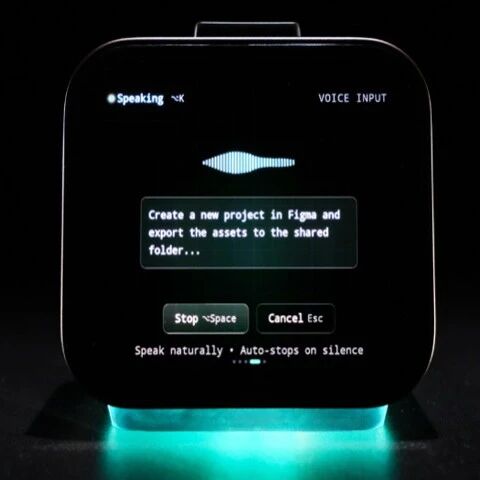
叫板OpenClaw,一款主动找活干的agent原生硬件即将发售
36氪· 2026-03-12 15:24
Core Viewpoint - The article discusses the emergence of Violoop, a hardware designed specifically for AI applications, which aims to transform the interaction between users and AI by making it more proactive and intuitive, thus addressing the limitations of current AI systems like OpenClaw [4][20]. Group 1: Product Overview - Violoop is described as a "black box" desktop computer designed for AI, which can be used immediately upon plugging in, distinguishing itself from OpenClaw by eliminating deployment difficulties [5]. - It features a self-developed visual model that allows it to perceive screen content in real-time, enabling proactive task suggestions and assistance [5][10]. - The device operates by connecting via HDMI, allowing it to function as a physical keyboard and mouse, thus facilitating cross-application workflows [11]. Group 2: Technical Innovations - Violoop incorporates a dual-chip architecture where the main chip runs AI tasks while a separate security chip manages sensitive information, ensuring data privacy and security [18][19]. - The design reduces the core chip cost to one-fourth of typical market prices, allowing the product to be priced around $300, making it accessible for consumers [13]. - The system is designed to monitor AI operations in real-time, providing users with visibility and control over AI actions [13]. Group 3: Market Position and Vision - Violoop aims to redefine the AI landscape by evolving AI from a passive tool to an active assistant that understands user needs without requiring explicit commands [10][21]. - The founders believe that the future of AI will involve creating a digital workforce, where AI can autonomously manage tasks and even handle financial transactions within set parameters [22]. - The company plans to establish a skill-sharing ecosystem to enhance user experience and create a high barrier to entry for competitors by locking in workflows with their hardware [23]. Group 4: Challenges and Future Outlook - Despite positive pre-crowdfunding feedback, Violoop faces challenges in maintaining its competitive edge as larger companies may quickly replicate its innovations once proven [24]. - The success of Violoop will depend on its ability to build a loyal user base and a unique software ecosystem that leverages its hardware capabilities [24].
“下一个iPhone级别的创新可能不是眼镜”
虎嗅APP· 2026-01-31 13:30
Core Insights - The article discusses the current state of the global humanoid robot industry and the competitive landscape of AI glasses, highlighting a significant shift in technological power from the West to the East, particularly China [2][4]. Group 1: Industry Overview - The CES event showcased that nearly 90% of hardware manufacturers were from China, indicating China's dominance in the consumer electronics space [2]. - Voxdale, a Belgian engineering firm, plays a crucial role in bridging the gap between prototype development and mass production in the hardware industry, addressing the challenges of scaling and cost efficiency [3][4]. Group 2: AI Hardware Perspective - Tim Dieryckx defines "AI-native hardware" as products where AI is the core essence, meaning that without AI, the product becomes non-functional [7][15]. - Current AI hardware offerings are often criticized for merely being "compute boxes" without real-world applications, particularly in the case of AI glasses, which are seen as more of a gimmick than a revolutionary product [5][21]. Group 3: Market Dynamics and Challenges - The hardware industry faces a "valley of death" where many startups fail to transition from prototype to mass production due to high costs and insufficient market traction [25]. - Key reasons for failure include a lack of understanding of product-market fit, misaligned market positioning, and the fragmented nature of the European market, which complicates scaling efforts [25][26]. Group 4: Recommendations for Entrepreneurs - Chinese hardware entrepreneurs are advised to leverage local advantages, adopt global strategies, and remain vigilant against emerging competition from other regions like India and Europe [34][32]. - The importance of rapid iteration and adaptation in product development is emphasized, contrasting the more rigid approaches often seen in Europe [26].
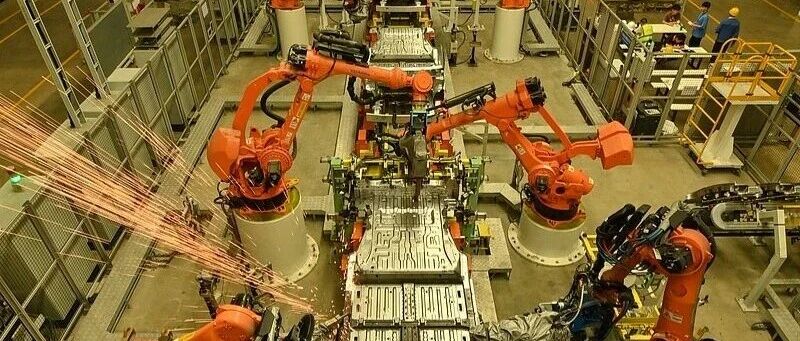
具身泡沫收缩,机器人ChatGPT时刻还没到|虎嗅CES 2026讨论会
虎嗅APP· 2026-01-09 13:31
Core Insights - The article emphasizes a shift in the AI hardware industry towards practical applications and commercialization, moving away from grand narratives of universal robots to specialized solutions [6][7][10]. Group 1: Market Trends - The consensus at CES 2026 is that the "bubble is shrinking," with companies focusing on vertical scenarios rather than one-size-fits-all solutions [8]. - Companies are abandoning humanoid robots in favor of specialized devices, such as wheeled robotic arms and folding machines, indicating a trend towards smaller, cost-effective solutions [9]. - The introduction of home robots priced below 10,000 yuan is expected to lower industry entry barriers, exemplified by products like the remote-free home robot dog [9]. Group 2: Companion Robots - The companion robot market is becoming increasingly competitive, with a clear distinction emerging among survivors: those with precise product definitions, high technical barriers, or innovative forms like flying companions [12]. - The emotional value of companion robots is being engineered and quantified, with design principles being applied to create a sense of "life" in robotic movements [13]. - Companion robots are positioned not as replacements for pets but as alternatives for those who desire the emotional benefits of pet ownership without the responsibilities [13]. Group 3: Supply Chain Dynamics - The dominance of Chinese manufacturers at CES highlights a significant shift in the global supply chain, with the "East rising and West falling" narrative becoming increasingly evident [15]. - The efficiency of the Chinese supply chain allows for rapid hardware iteration, contrasting with the slower pace of Western teams reliant on Chinese components [15][17]. - The geographical concentration of manufacturing in regions like Dongguan provides a competitive advantage that is difficult to replicate [17]. Group 4: AI Glasses Market - The AI glasses market is characterized by intense competition, with various manufacturers vying for a share, but large companies are expected to dominate due to their supply chain capabilities [19][20]. - For AI glasses to achieve mass commercialization, they must excel in multiple areas such as weight, battery life, interaction, display, computation, and price, which is currently not the case [20]. - Opportunities still exist for startups in niche verticals, such as professional sports and industrial inspections, despite the competitive landscape [20]. Group 5: Future Outlook - The discussion among industry leaders indicates a growing focus on emotional needs, particularly in the companion robot sector, which targets a significant market of individuals seeking companionship [22]. - The transition from theoretical technology to practical engineering solutions is underway, with B2B applications likely to see commercialization before broader consumer adoption [22]. - The article concludes that the industry is shifting from questioning the feasibility of technology to evaluating the market value of products, marking a significant change in focus [25].

上纬新材携启元Q1 CES 2026首秀
Zheng Quan Shi Bao Wang· 2026-01-08 06:44
Core Insights - The CES 2026 showcased the world's first small-sized humanoid robot, Q1, developed by the company, which emphasizes continuous learning and deep personalization capabilities [1][2] - The event highlighted a shift towards practical applications of AI, moving away from complex concepts to tangible results, indicating a significant transformation in the hardware sector [1] - Q1's innovative features include a compact design that retains force control performance and high dynamic response, making it accessible for various users, from researchers to children [1] Industry Impact - The introduction of Q1 sets a new benchmark for personal robots globally, filling a gap in the personal robot category and providing a practical development model for the industry [2] - The launch aligns with NVIDIA's announcement of AI becoming a "default configuration" across various sectors, marking a significant milestone in the evolution of AI hardware [2] - The CES 2026 is seen as a pivotal moment for the emergence of AI-native hardware, indicating a "Cambrian explosion" of new AI hardware species [2]

后关税时代,智能硬件创业者的下一站在哪?|2025 T-EDGE全球对话
Sou Hu Cai Jing· 2025-12-31 12:52
Core Insights - The article discusses the impact of the U.S. tariff policy on global trade, particularly how it affects Chinese companies' overseas strategies and the emergence of new players in the AI-driven hardware sector [3] - The global AI edge hardware market is projected to grow from 321.9 billion yuan to 1.22 trillion yuan from 2025 to 2029, with a compound annual growth rate (CAGR) of 40%, significantly outpacing traditional consumer electronics [3] - The shift towards AI hardware represents a new competitive landscape, where hardware is evolving from a passive tool to an active service provider that understands user needs [4][5] Group 1: Market Dynamics - The U.S. tariff changes have led to a reassessment of overseas markets, with many companies considering alternatives to the U.S. market while still recognizing its significance due to high consumer willingness to pay [6] - Despite tariff fluctuations, Chinese companies maintain profitability due to advantages in supply chains, talent pools, and rapid product iteration compared to Silicon Valley [4][6] - The AI hardware sector is characterized by challenges such as data scarcity and the need for significant computational power, which can increase costs and limit product usability [5][34] Group 2: Entrepreneurial Challenges and Opportunities - Entrepreneurs in the AI hardware space face hurdles related to proprietary data availability and the complexity of enhancing user experience through AI [5][35] - The need for collaboration with medical professionals and data experts is emphasized as a strategy to overcome challenges in product development and user engagement [5][35] - The article highlights that addressing these challenges can lead to unique value propositions that differentiate products in the market [35] Group 3: Innovation and Product Development - The article outlines a shift in product development strategies, where crowdfunding platforms like Kickstarter are utilized for market validation and user feedback [7][12] - Companies are encouraged to adopt a direct-to-consumer (DTC) approach, leveraging community engagement and social media to enhance product visibility and user interaction [13][14] - The importance of understanding local market dynamics and consumer behavior is stressed, particularly in the context of product localization and cultural adaptation [18][25] Group 4: Future Directions and Strategic Insights - The establishment of innovation centers, such as the one in Silicon Valley, aims to facilitate connections between entrepreneurs and overseas resources, enhancing market entry strategies [28] - The integration of AI into hardware is seen as a critical factor for future success, with a focus on creating seamless user experiences that address real-world problems [33][36] - The article concludes with a call for entrepreneurs to navigate the complexities of AI and hardware integration while ensuring compliance with varying international regulations [36]


有道AI答疑笔销售额破亿,国内AI硬件迎来规模化商业信号
Sou Hu Wang· 2025-12-17 03:14
Core Insights - The article highlights the successful commercialization of AI-native hardware in China, specifically the "Youdao AI Answering Pen," which achieved sales exceeding 100 million yuan within a year of its launch, marking a significant milestone in the industry [1][4]. Product Overview - The Youdao AI Answering Pen was launched in February 2025, designed to provide students with real-time, precise, step-by-step guided learning assistance [2]. - The product focuses on high-frequency needs in learning, offering a seamless integrated experience that differentiates it from mobile applications, featuring convenient interactions and a distraction-free system environment [2]. Business Model and Market Position - The commercialization path of the Youdao AI Answering Pen presents a distinct approach in the industry, avoiding the traditional competition of "built-in resource races" in educational hardware [5]. - It defines a new category of "AI-native hardware," emphasizing the value of real-time interactive experiences driven by deep integration with AI models, rather than relying on a closed content library [5]. Technological Integration and Innovation - The product has undergone significant upgrades, including the introduction of the "Panorama Puzzle" feature, which simplifies the scanning process and aims for seamless integration into user habits [5]. - The "guided answering" feature transforms the traditional Q&A model into an interactive process that fosters critical thinking, positioning AI as a "thinking coach" rather than just a repository of answers [5]. Collaboration and Academic Support - The Youdao AI Answering Pen integrates the DeepSeek-R1 universal model with Youdao's proprietary educational model, ensuring logical rigor and adherence to educational standards [7]. - Collaboration with Tsinghua University's Qiu Chengtong Mathematics Science Center enhances the accuracy of AI-generated content, addressing user concerns about AI reliability and building market trust [7]. Future Industry Trends - The competition in the industry is expected to increasingly focus on the quality of generated content, personalized adaptation, and immersive multi-modal interactions, indicating that the race centered around "real needs" is just beginning [8].

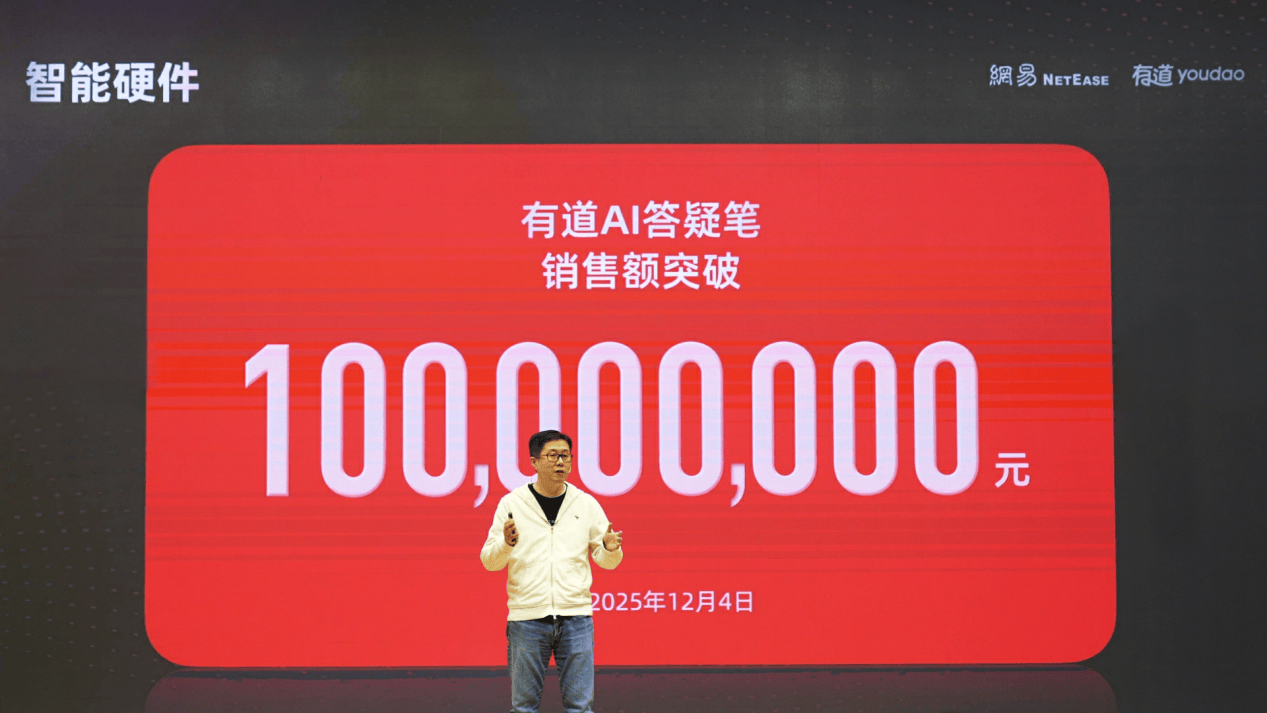
有道AI答疑笔销售额突破1亿元
Bei Jing Shang Bao· 2025-12-16 10:17
Core Viewpoint - NetEase Youdao's AI-native hardware, "Youdao AI Answer Pen," has achieved sales exceeding 100 million yuan within less than a year of its launch, highlighting the growing demand for integrated AI learning tools [1] Group 1: Product Performance - The "Youdao AI Answer Pen" was launched in February 2025 and has quickly surpassed 100 million yuan in sales [1] - The product focuses on providing real-time, accurate, step-by-step guided learning assistance for students, addressing a high-frequency demand in the education sector [1] Group 2: Consumer Insights - Consumers are drawn to the product due to its integrated experience that software alone cannot replicate, including features like "pen-to-scan" convenience and a distraction-free environment without mobile interference [1] - The device serves as a "thinking coach," guiding users through the learning process, which enhances its appeal among students [1]
没屏幕却值百亿美元,从王室到NBA球星都在戴
虎嗅APP· 2025-10-27 09:50
Core Insights - The article discusses the rapid growth and valuation of the smart ring industry, particularly focusing on the success of the Oura Ring, which has seen its valuation soar from $5.2 billion to $11 billion in less than a year due to increased demand and innovative features [5][27]. Market Growth - The global smart ring market is projected to grow from $2.67 billion in 2023 to $4.46 billion in 2024, reaching $34.87 billion by 2032 [5][7]. - The U.S. smart ring market revenue is expected to reach $9.04 million by 2029 [5]. Company Performance - Oura Ring's sales have surged, with cumulative sales surpassing 5.5 million units by September 2025, with significant growth occurring in 2025 alone [8][19]. - The company achieved $500 million in revenue in 2024, with projections to double this figure to over $1 billion in 2025 [19][26]. Leadership and Strategy - The appointment of Tom Hale, a former president of SurveyMonkey, marked a pivotal moment for Oura, leading to a strategic shift towards AI-driven health management [9][18]. - Hale's strategy focuses on transforming Oura from a sleep tracking device to a proactive health management platform, integrating personal health data with healthcare providers [18]. Product Features - Oura Ring utilizes advanced sensors to monitor various health metrics, providing users with scores for readiness, sleep quality, and activity levels [22][23]. - The introduction of the "Health Panels" feature allows users to schedule lab tests and receive results directly through the app, enhancing the platform's functionality [24]. Business Model - Oura has shifted from a one-time hardware sales model to a dual revenue stream of hardware sales and subscription services, with a monthly fee of $5.99 for full access to data analysis [26]. - The revenue structure is healthy, with approximately 80% coming from hardware sales and 20% from high-margin subscription services, leading to an annual recurring revenue (ARR) of $144 million by 2024 [26]. Competitive Landscape - The smart ring market is becoming increasingly competitive, with major tech companies like Samsung entering the space with products like the Galaxy Ring, which integrates more ecosystem features [30][31]. - Emerging brands such as Ultrahuman Ring and RingConn are also targeting similar markets, indicating a growing interest in smart health monitoring devices [33].

一枚戒指,估值777亿
投中网· 2025-10-17 06:46
Core Insights - Oura, a company founded 12 years ago, is dominating the AI-native hardware market with its smart ring, achieving a valuation of $10.9 billion after a recent funding round of $875 million [3][12] - The company has sold 5.5 million rings since its inception, with 3 million sold in the last year alone, generating revenue of $500 million, projected to reach $1 billion by 2025 [12][15] Company Background - Oura was established in 2013 in Oulu, Finland, originally named Jouzen, which means "swan" in Finnish [6] - The founding team, consisting of Petteri Lahtela, Kari Kivelä, and Markku Koskela, has extensive experience in technology and product development [7][9] - The company faced initial challenges, including cash flow issues and difficulties in securing early funding, but successfully launched its first product, the Oura Ring Gen1, in 2015 [10][11] Product Development and Market Expansion - The second generation of the Oura Ring (Gen2) was launched in 2017, leading to significant sales growth, especially during the COVID-19 pandemic due to its temperature monitoring capabilities [11][12] - Oura has expanded its customer base to include enterprises, offering products for health risk management to various organizations, including hospitals and sports teams [12][15] Technological Advancements - The latest Oura Ring 4 features enhanced Smart Sensing technology, increasing the number of signal pathways from 8 to 18, improving data accuracy [14][15] - Oura has received FDA certification for its medical device, allowing it to develop a more comprehensive healthcare ecosystem through acquisitions and partnerships [15][16] Future Plans and Market Strategy - The recent funding will be used for research on non-invasive glucose monitoring, hiring medical data scientists, and expanding into Asian markets [16] - Oura's CEO emphasized the company's competitive edge lies in its extensive data collection, with nearly 15 billion hours of health data, making it difficult for larger companies to compete [16]