AI智能体技术

Search documents
蚂蚁国际联手谷歌推出“通用商业协议”,金融科技ETF华夏(516100) 有望受益行情及AI双重催化
Sou Hu Cai Jing· 2026-01-13 06:52
Group 1 - The three major indices collectively declined, with the healthcare, CRO, and weight loss sectors leading the gains, while cryptocurrency and brokerage sectors experienced fluctuations and corrections [1] - Ant International is set to collaborate with Google on a new open standard in the field of Agentic Commerce, known as the Universal Commerce Protocol (UCP), aimed at enhancing AI agent technology to support the entire shopping process [1] - Dongwu Securities indicates that the fintech sector is experiencing a dual opportunity of "short-term market activity + mid-term policy drive," suggesting that internet brokerages may see performance elasticity due to sustained trading activity [1] Group 2 - The Huaxia Financial Technology ETF (516100) closely tracks the CSI Financial Technology Theme Index, covering software development, internet finance, and the digital currency industry, and is expected to benefit from market recovery and AI-driven catalysts [2]

蚂蚁国际和谷歌共推“通用商业协议”,打通“AI购物”全流程
Huan Qiu Wang· 2026-01-12 10:29
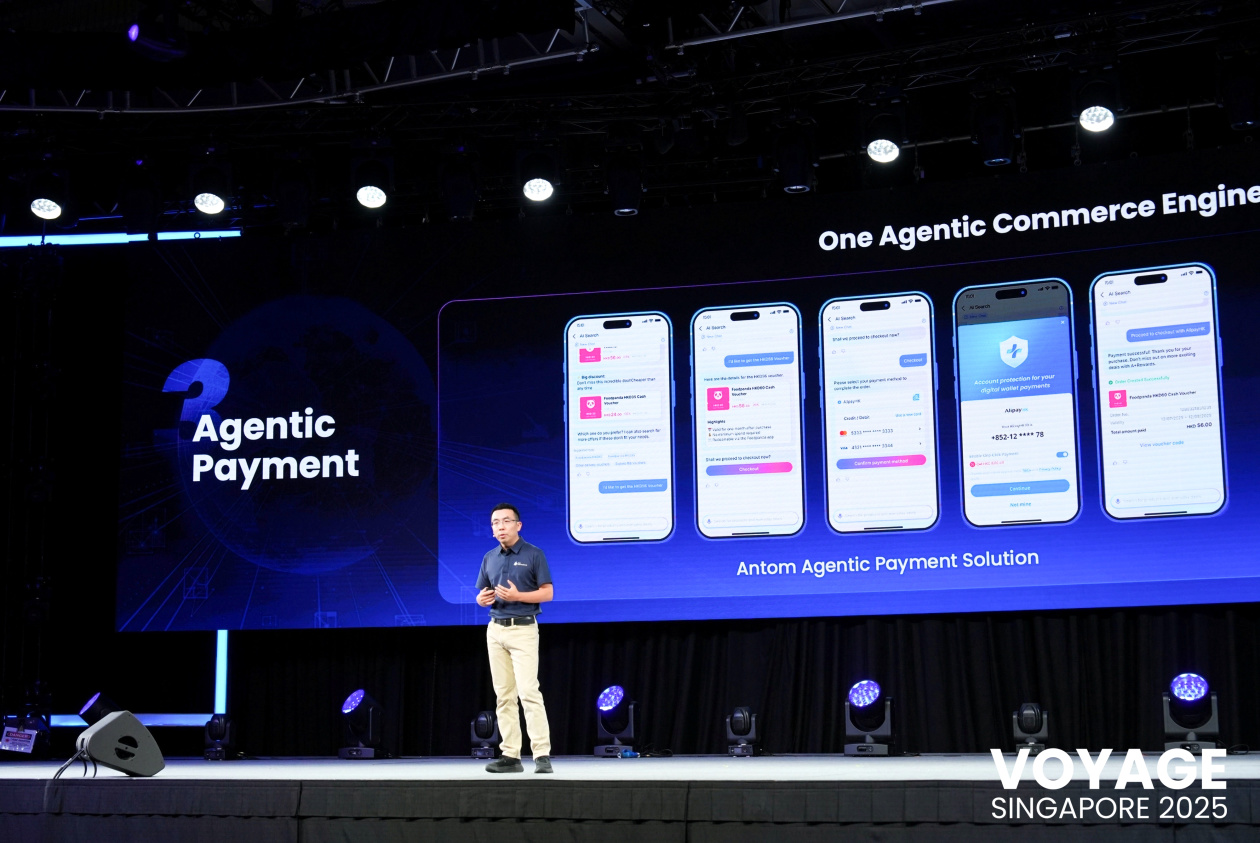
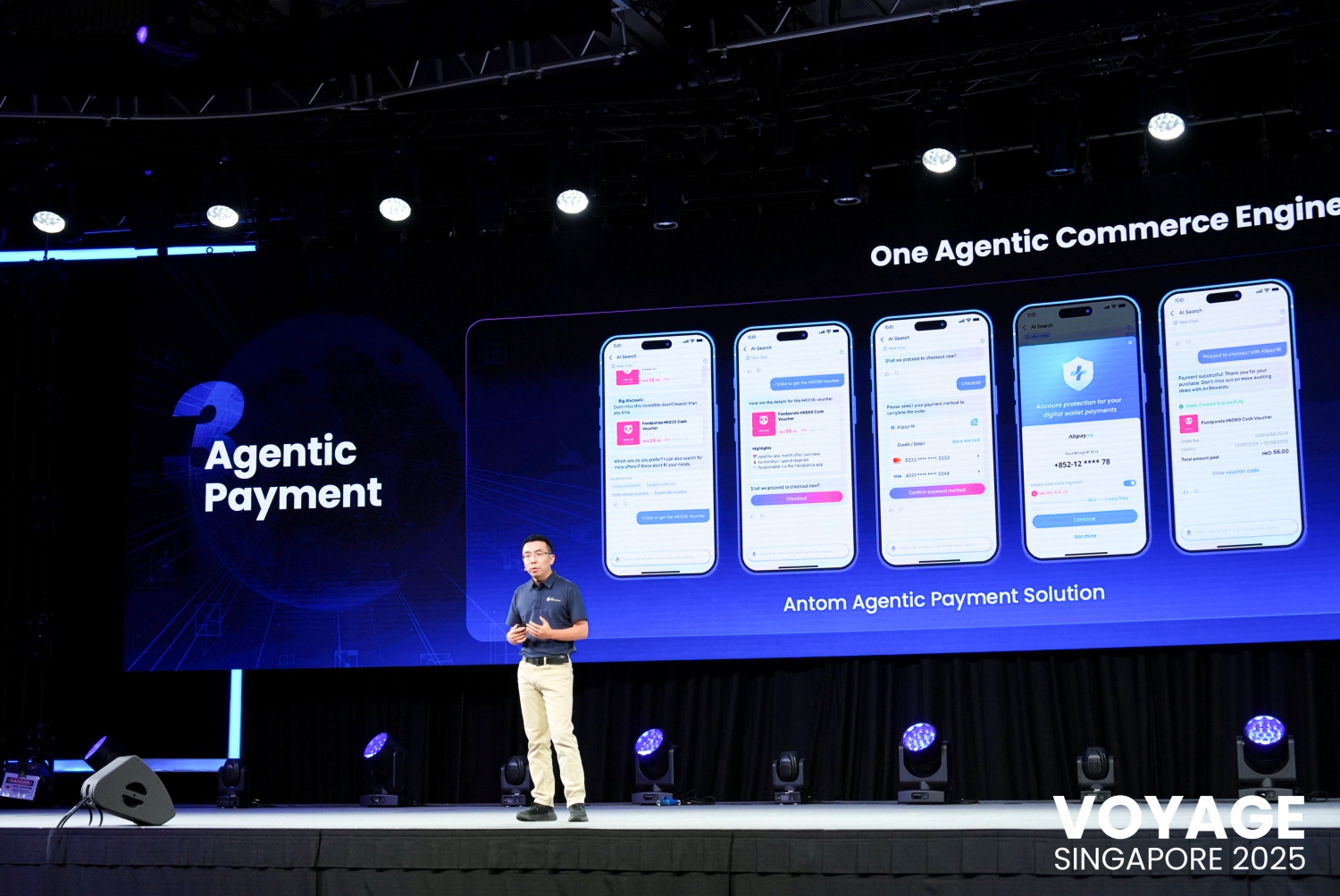
Core Insights - Ant Group and Google are collaborating on a new open standard in the field of Agentic Commerce called the Universal Commerce Protocol (UCP) to enhance AI agent technology and support the entire shopping process, including browsing, purchasing, and after-sales [1] - The UCP establishes a universal interaction language that allows AI agents to efficiently collaborate across systems, consumer interfaces, merchant backends, and payment providers, facilitating commercial activities [1] - Ant Group's Chief Innovation Officer, Yang Jiangming, emphasized the company's commitment to expanding partnerships with leading global models to support the construction of the AI commercial ecosystem, leveraging its advanced payment technology [1] Summary by Sections Collaboration and Protocol - Ant Group and Google are working together on the Universal Commerce Protocol (UCP) to promote AI agent technology [1] - The UCP allows developers to connect all AI agents easily without needing individual connections for each agent [1] - Multiple global payment and retail companies have already joined the UCP initiative led by Google [1] Core Capabilities for Merchants - Ant Group provides three core capabilities for merchants to ensure a reliable AI agent solution [3] - Merchants can manage AI algorithms comprehensively while automating shopping interactions to align consumer experiences with brand image and service standards [3] - Ant Group has developed a smart payment solution specifically for e-wallet scenarios, allowing users to complete transactions without leaving the AI interaction interface [3] Security and Application - Ant Group employs various AI security technologies to ensure transactions are verifiable and traceable, with clear responsibilities among participants in the payment cycle [3] - The company has partnered with leading model vendors like Qianwen and DeepSeek to explore scalable applications of AI in B2B services, particularly in emerging markets [3] - Ant Group's services cover over 200 markets globally, connecting more than 1.8 billion user accounts and 150 million merchants, which will support the implementation of UCP [3]

蚂蚁国际和谷歌共推“通用商务协议”,打通“AI购物“全流程
Zhong Jin Zai Xian· 2026-01-12 08:32
Core Insights - Ant Group is expanding its collaboration with global leading models to support the construction of an agentic commerce ecosystem [2] - The collaboration will focus on the Universal Commerce Protocol (UCP), aimed at enhancing AI agent technology to support the entire shopping process, including browsing, purchasing, and after-sales [2] - UCP establishes a universal interaction language that allows AI agents to efficiently collaborate across systems, enhancing commercial activities [2] Group 1 - Ant Group's Chief Innovation Officer, Yang Jiangming, emphasized the importance of leveraging their leading payment technology to enhance user experience and drive AI-driven commercial growth [2] - The UCP protocol allows developers to connect all agents easily without needing individual connections for each agent, with several global payment and retail giants already joining the protocol [2] - The company aims to provide three core capabilities for merchants: comprehensive management of AI algorithms, a specialized payment solution for e-wallet scenarios, and ensuring brand consistency in consumer experiences [2] Group 2 - Ant Group has implemented multiple AI security technologies to ensure transaction verifiability and traceability, with clear responsibilities among participants during payment cycles [3] - The company has partnered with leading model manufacturers like Qianwen and DeepSeek to explore scalable AI applications in B-end merchant and institutional services, particularly in emerging markets [3] - Ant Group's services cover over 200 global markets, connecting more than 1.8 billion user accounts and 150 million merchants, which will support the implementation of UCP [3]
Agent 2.0时代来了,首批「工业级智能体」正在核心位置上岗
机器之心· 2026-01-09 04:08
Core Insights - The article discusses the transformative impact of AI tools on work efficiency, suggesting that if these tools had been available earlier, many tasks could have been completed much faster [2][5]. - A new working paradigm centered around AI agents is emerging, significantly altering workflows in development and data analysis [5]. Group 1: AI Tools and Efficiency - AI tools have led to substantial reductions in project completion times, with engineers from major tech companies sharing their experiences [2][5]. - The focus of AI applications is shifting from validating usability to realizing actual value, with upgrades to application components aimed at lowering the entry barrier for users [10]. Group 2: Alibab Cloud's Baolian Upgrades - Alibaba Cloud's Baolian has undergone a comprehensive upgrade, marking the transition from a "handcrafted workshop" era to an "industrial assembly line" era for AI agents [6]. - The upgraded Baolian framework includes a "1+2+N" blueprint, which encompasses model and cloud services, high-code and low-code development paradigms, and task-specific development components [6]. Group 3: Multi-modal Data Integration - The ability to integrate and utilize multi-modal data is crucial for large-scale AI applications, with Baolian enhancing its multi-modal knowledge base capabilities to support various file types [12][15]. - Baolian's upgrades allow for flexible processing of multi-modal data, enabling users to orchestrate document, image, audio, and video data through a visual interface [13]. Group 4: Asynchronous API and Cost Efficiency - Baolian has introduced an asynchronous API that extends the timeout limit for long-running tasks from 5 minutes to over 24 hours, ensuring stable execution of lengthy tasks [18]. - The idle scheduling feature of Baolian can reduce AI inference costs by over 50% [19]. Group 5: Development Framework - Baolian provides a dual-mode development capability, allowing both high-code and low-code approaches to coexist, catering to different roles within enterprises [23]. - The upgraded Agent 2.0 architecture enhances task planning and introduces a "Plan-Execute-React" feedback loop, improving the overall development process [26]. Group 6: Model and Cloud Services - The model service layer of Baolian has been strengthened to enhance enterprise-level capabilities, supporting structured metadata display and multi-model comparisons [33]. - Baolian offers a native training and fine-tuning capability for its models, enabling businesses to create customized models using their own data [36]. Group 7: Security and Deployment - Baolian's confidential inference service utilizes a trusted execution environment to provide high-security model inference capabilities [37]. - The release of the enterprise version of the Agent platform allows for the development and deployment of AI agents in private clouds and on-premises environments [40]. Group 8: Industry Implications - The upgrades to Baolian are expected to lower the barriers for AI technology adoption across various industries, facilitating the emergence of AI as a capable "digital employee" [43][45].

IBM专家:企业级智能体规模化依赖专用模型,智能体「Shopify时刻」尚未到来
3 6 Ke· 2025-12-04 04:12
Core Insights - IBM's podcast episode discusses the current state and future of AI agent technology, highlighting that consumer-level AI agents are unlikely to see significant adoption in the short term due to existing technological limitations [1][2]. Group 1: Current Market Performance - IBM's stock has increased by 41.2% this year, outperforming the Nasdaq Composite Index by 15.2% and the S&P 500 by 13.2% [1]. - IBM's market capitalization is approximately $282.9 billion, with Q3 2025 revenue growth of 9% reaching $16.3 billion, and a 17% revenue growth in the infrastructure segment [1]. Group 2: Challenges in AI Agent Development - The experts agree that there is a significant gap between prototype development and large-scale deployment of AI agents, making it difficult for non-technical users to create and deploy agents easily [1][2]. - The transition from natural language to AI agents requires a reliable planning module to ensure that AI systems do not deviate from their intended tasks, indicating that a simple natural language command cannot replace the need for careful engineering [2][3]. Group 3: Future of AI Agents - The discussion identifies three key areas that need to be addressed for AI agents to move from concept validation to large-scale deployment: reliability and control, cost-effectiveness, and the need for a simplified infrastructure and ecosystem [3]. - The future landscape of AI agents may resemble the early days of customized AI models, with potential breakthroughs coming from reusable "base agents" or companies focusing on specific use cases to develop a general platform [3]. Group 4: Developer Ecosystem and Deployment Challenges - Current developer tools allow for some level of no-code solutions, but significant challenges remain in deploying AI agents in real-world scenarios, as there are no "one-click" solutions available [6][7]. - The complexity of integrating AI agents into existing systems and the lack of ready-to-use solutions are major barriers to widespread adoption [7][8]. Group 5: Market Dynamics and Competitive Landscape - The future competitiveness of AI agents will depend on the ability to create replicable processes and achieve cost efficiency, with a focus on reducing operational costs significantly [12][13]. - The market may not favor a single dominant model but rather a combination of multiple models and orchestration, with the potential for new players to emerge by focusing on specific use cases [14][15].

匹配小企业 服务大市场 一张“小工单”背后藏着怎样的“智造密码”
Yang Shi Wang· 2025-11-10 08:58
Core Insights - The article discusses the transformation of production methods in small and medium-sized enterprises (SMEs) in China due to the adoption of a digital tool called "Small Work Order" [1][3] - The tool has significantly improved efficiency and reduced costs for SMEs, allowing them to better manage complex orders [3][5] Group 1: Company Overview - Black Lake Technology, a startup from Shanghai, developed the "Small Work Order" tool to address the operational challenges faced by SMEs in manufacturing [3][5] - The company was founded by a group of young entrepreneurs who transitioned from the financial sector to the manufacturing industry, recognizing the need for efficient solutions [5] Group 2: Market Impact - The adoption of the "Small Work Order" has led to a notable increase in operational efficiency for SMEs, with some reporting significant cost savings compared to traditional management systems [3][5] - Black Lake Technology has experienced a business growth rate of approximately 70% annually over the past two years, indicating strong market demand for their solution [5] Group 3: Industry Trends - The article highlights the growing number of technology and innovation-driven SMEs in China, with over 600,000 such companies established, including more than 140,000 specialized and innovative SMEs [9] - The integration of AI technology into the "Small Work Order" tool reflects a trend towards smarter manufacturing solutions in the industry [9]

云迹盘中涨超7% 公司持续深化生态布局 联合立讯集团落地工业级方案
Zhi Tong Cai Jing· 2025-10-30 02:31
Core Viewpoint - Cloudwalk Technology (云迹科技) has entered into a deep strategic partnership with Luxshare Precision (立讯集团) to advance the intelligent upgrade of Luxshare's global production bases, showcasing the adaptability of its UP series robots in industrial manufacturing scenarios [1] Group 1: Strategic Partnership - The collaboration with Luxshare marks the first large-scale application of Cloudwalk's UP series robots in the industrial manufacturing sector, demonstrating their strong scene adaptability [1] - Cloudwalk's technology has been successfully implemented in over 34,000 hotels and more than 150 hospitals globally, indicating a robust operational ecosystem [1] Group 2: Recent Developments - Cloudwalk has completed upgrades for 18,000 Meituan hotels with the "small bag" feature, in collaboration with Meituan Waimai, leading to the establishment of a nationwide delivery model covering nearly 20,000 hotels [1] - The new delivery model has achieved an average daily processing volume of over 10,000 takeaway orders, marking a transition to an intelligent delivery phase without human intermediaries [1]
港股异动 | 云迹(02670)盘中涨超7% 公司持续深化生态布局 联合立讯集团落地工业级方案
智通财经网· 2025-10-30 02:28
Core Viewpoint - Cloudwalk Technology (云迹科技) has entered into a deep strategic partnership with Luxshare Precision (立讯集团) to advance the intelligent upgrade of Luxshare's global production bases, showcasing the adaptability of Cloudwalk's UP series robots in industrial manufacturing scenarios [1]. Group 1: Strategic Partnership - Cloudwalk Technology's stock rose over 7% during trading, currently up 5.58% at HKD 115.5, with a trading volume of HKD 6.6765 million [1]. - The collaboration with Luxshare marks the first large-scale application of Cloudwalk's UP series robots in the industrial manufacturing sector, demonstrating their strong scene adaptability [1]. Group 2: Technological Advancements - Cloudwalk has developed an intelligent ecosystem that supports over 34,000 hotels and more than 150 hospitals globally, indicating its robust technological foundation in the hotel service robot sector [1]. - The UP series robots have achieved a breakthrough in AI agent technology across various scenarios, enhancing their operational capabilities [1]. Group 3: Operational Developments - Cloudwalk has completed upgrades for 18,000 Meituan hotels with the "small bag" feature, in collaboration with Meituan Waimai, leading to the successful implementation of the "small bag quick delivery relay" model across nearly 20,000 hotels nationwide [1]. - The daily average of processed takeaway orders has surpassed 10,000, marking a transition to an intelligent delivery phase that eliminates human intermediaries in hotel takeaway logistics [1].
联想以AI重塑企业流量与增长 乐享企业超级智能体上线累计创收18.9亿元
Zheng Quan Ri Bao Wang· 2025-10-29 14:14
Core Insights - Lenovo's "LeXiang Enterprise Super Intelligent Agent" has generated a revenue of 1.89 billion yuan since its launch, covering over 20 core scenarios and supporting more than 1 million daily interactions, with a 270% increase in user weekly activity and a 30% increase in order conversion rate [1][3] Group 1: Technological Advancements - The LeXiang Super Intelligent Agent integrates cutting-edge technologies such as natural language processing, multimodal large models, knowledge graphs, and reinforcement learning to create an intelligent closed-loop system [2] - The system achieves seamless integration of over 20 heterogeneous systems, reducing inference latency to 200ms, increasing functionality reuse by 60%, and decreasing development costs by 40% [2] Group 2: Market Transformation - The shift from the internet to AI is changing the logic of traffic acquisition, moving from a model where users search for information to one where intelligent agents serve users [2] - Brands must possess "super intelligent agents" that deeply understand users and seamlessly connect services to capture new market opportunities [2] Group 3: Strategic Goals - Lenovo aims for the LeXiang Super Intelligent Agent to serve as the "intelligent core" for enterprises in the AI landscape, transforming the relationship between brands and users [3][4] - The company plans to build a cross-enterprise intelligent agent collaboration alliance and promote intelligent collaboration across the industry chain [3]

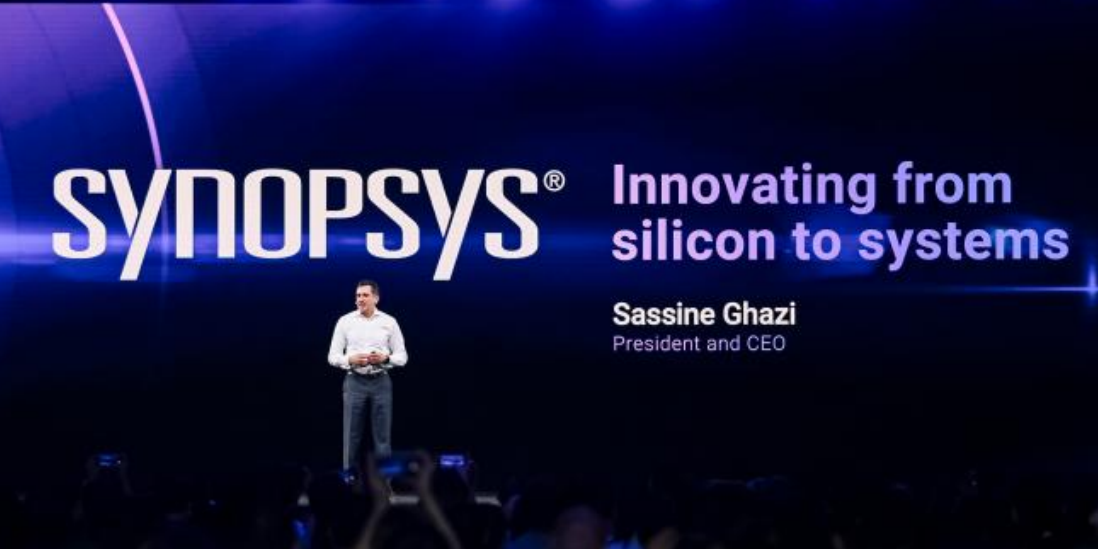
数字孪生+AI智能体技术突破,新思科技重塑芯片设计
Di Yi Cai Jing· 2025-09-19 02:59
Core Insights - Synopsys is undergoing a strategic transformation from chip design to system-level solutions, highlighted by its $35 billion acquisition of Ansys, a leader in simulation and analysis software [3] - The company aims to optimize design processes across electronic, mechanical, and software domains by creating digital twins and enhancing AI capabilities to support specific workloads [3][4] - Synopsys emphasizes the importance of integrating chip design with system-level insights to create value in future technological developments, particularly as complex intelligent systems become mainstream [4] Company Strategy - The strategic shift includes three main capabilities: integrating simulation with chip design, providing lifecycle optimization for intelligent systems, and upgrading chip technology to address complex issues in advanced processes [3] - AI is positioned as a core capability in modern chip design, with ongoing development of AI agents for various engineering tasks [3] Industry Context - The CEO of Lingqiao Intelligent highlights the need for delivering entire systems rather than just hardware, emphasizing the importance of digital feedback from human knowledge and developer experience [4] - TSMC's vice president notes that digital twins and AI play a dual role in supporting AI hardware and meeting customer expectations for integration, computing power, and energy efficiency [4] Historical Perspective - Synopsys has established itself as a leader in EDA, simulation, and multi-physics analysis technologies, marking its 30th anniversary in China, where it has contributed significantly to the development of the semiconductor industry [5] - The company has a history of collaboration with Chinese academic institutions, including a donation of over $1 million in software to Tsinghua University [5]