企业所得税

Search documents
企业所得税6类资产总搞混?一文讲清核心要点→
蓝色柳林财税室· 2025-08-17 00:43
Group 1 - The tax basis for purchased fixed assets includes the purchase price, related taxes, and other expenses directly attributable to making the asset ready for use [3] - The tax basis for self-constructed fixed assets is based on expenditures incurred before the completion settlement [3] - For finance-leased fixed assets, the tax basis is determined by the total payments specified in the lease contract and related costs incurred during the contract signing [3] Group 2 - Depreciation for fixed assets should start from the month following their use and stop from the month following their cessation of use [4] - The minimum depreciation period for buildings is 20 years, while for machinery and equipment, it is 10 years [4] - Certain fixed assets, such as unused assets and those leased under operating leases, cannot be depreciated for tax purposes [4] Group 3 - Expenditures for the reconstruction of fixed assets that change the structure or extend the useful life are considered long-term deferred expenses [5] - Major repair expenditures that exceed 50% of the tax basis of the fixed asset and extend its useful life by more than 2 years should be amortized over the remaining useful life of the asset [5] - Other expenditures that should be treated as long-term deferred expenses must be amortized over a minimum of 3 years [5] Group 4 - The tax basis for purchased intangible assets includes the purchase price, related taxes, and other expenses necessary to make the asset ready for use [6] - Intangible assets are amortized using the straight-line method starting from the month they are put into use [6] - The minimum amortization period for intangible assets is 10 years, unless specified otherwise by law or contract [6] Group 5 - The tax basis for purchased biological assets includes the purchase price and related taxes [7] - Depreciation for biological assets should start from the month following their use and stop from the month following their cessation of use [7] - The minimum depreciation period for timber biological assets is 10 years, while for livestock, it is 3 years [7] Group 6 - Investment assets are classified as assets formed from equity and debt investments [8] - The cost of investment assets acquired through cash payments is based on the purchase price [8] - The cost of investment assets obtained through non-cash means is based on the fair value of the asset and related taxes [8] Group 7 - The cost of inventory obtained through cash payments includes the purchase price and related taxes [9]


问答|增值税一般纳税人和增值税小规模纳税人有什么区别?
蓝色柳林财税室· 2025-08-17 00:43
Core Viewpoint - The article focuses on providing guidance for individual businesses in Ningbo regarding tax policies and procedures, specifically addressing common questions related to value-added tax (VAT) and individual income tax [3]. Group 1: Tax Types and Filing - Individual businesses need to be aware of the main types of taxes they must declare, including VAT and individual income tax, along with their respective filing deadlines [6]. - There are specific consequences for individual businesses that fail to file their tax declarations on time [6]. - The article outlines various methods for calculating individual income tax on business income [6]. Group 2: VAT Registration and Invoicing - Individual businesses can apply to become general VAT taxpayers and are eligible to issue special VAT invoices [6]. - The process for individual businesses to apply for small-scale taxpayer status is also detailed [6]. - The article discusses the use of electronic invoices by individual businesses, including how to apply for and issue them [6]. Group 3: Tax Benefits and Exemptions - Current preferential tax policies available to individual businesses are highlighted, including those aimed at specific key groups [6]. - The article emphasizes the importance of understanding these policies to maximize tax benefits [6]. Group 4: Tax Registration and Cancellation - After obtaining a business license, individual businesses are required to register with the tax authorities [6]. - The process for tax cancellation when an individual business ceases operations is explained, including the need for tax deregistration [6].
全国生态日:一图了解施工扬尘环境保护税
蓝色柳林财税室· 2025-08-15 12:44
Core Viewpoint - The article discusses the implementation of environmental protection tax on construction dust, detailing the calculation methods, tax obligations, and the impact of construction activities on dust emissions [4][5][6]. Tax Obligations - The construction dust environmental protection tax is calculated monthly and reported quarterly, with tax obligations starting from the actual commencement date of the project and ending upon completion [4]. - The tax amount is determined based on the construction area, dust emission coefficients, and any applicable reduction ratios based on regulatory evaluations [5][6]. Calculation Method - The formula for calculating dust emissions is based on the construction area (in square meters), the dust emission coefficient (in kilograms per square meter), and a reduction ratio that varies based on the project's compliance with dust pollution control measures [5][6]. - Specific coefficients for different types of construction projects are provided, such as 0.269 for residential buildings and 0.404 for municipal infrastructure [5]. Case Study - A case study illustrates the tax calculation for a real estate development project, showing how to determine the taxable amount based on the project's area, construction days, and evaluation results [6]. - For example, if a project has a construction area of 10,000 square meters and falls under a second-class evaluation with a 30% reduction, the tax calculation would reflect these parameters [6].

韩国提高资本利得税计划引发反对声浪
Bei Jing Shang Bao· 2025-08-04 15:52
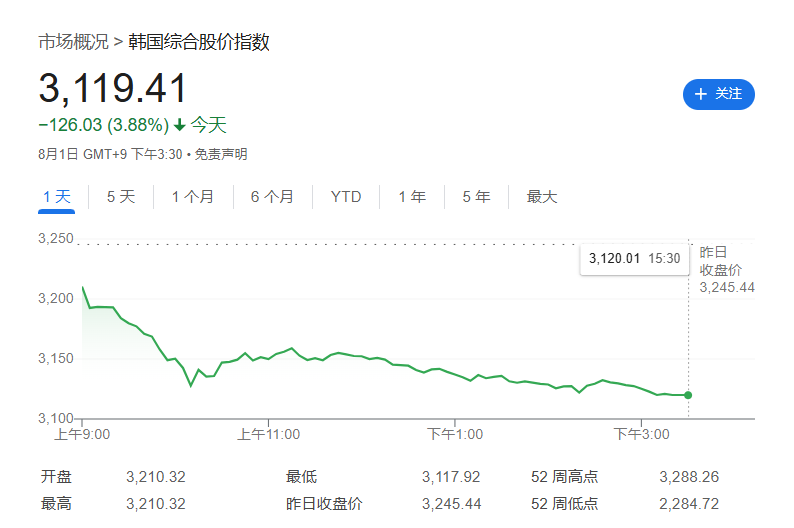
Core Points - The South Korean government, led by President Lee Jae-myung, unexpectedly introduced a comprehensive tax increase plan just two months into his administration, which includes significant reductions in capital gains tax thresholds, increases in securities transaction tax, and a rise in the maximum corporate income tax rate [1][2] - The announcement has sparked strong public opposition, with a petition to withdraw the capital gains tax plan gathering over 120,000 signatures, far exceeding the 50,000 needed to submit the proposal for parliamentary review [1][3] - The tax reform is projected to increase the annual tax burden on households and businesses by 8.2 trillion KRW (approximately 5.9 billion USD) over the next five years, marking the largest increase in recent years [3] Tax Plan Details - The proposal aims to lower the capital gains tax threshold from the current 5 billion KRW to 1 billion KRW (approximately 714,000 USD) [2] - The securities transaction tax rate will rise from 0.15% to 0.2%, and the maximum corporate income tax rate will increase from 24% to 25%, reversing the previous administration's tax cuts [2] - New rules for dividend income tax will impose a 20% tax on dividend income between 20 million and 300 million KRW, with a 35% rate on amounts exceeding 300 million KRW [2] Market Reaction - The tax increase announcement led to a significant drop in the KOSPI index, which fell by 3.9%, marking the largest single-day decline since April [1][2] - Investor confidence has been severely impacted, with market experts expressing disappointment over the sudden nature of the tax proposals, especially during a period of structural reform in the South Korean capital market [2][3] - Concerns have been raised that the higher capital gains tax could lead to long-term undervaluation of the stock market, as major shareholders might sell off stocks at year-end to avoid taxes, potentially destabilizing the market [2][3] Political Implications - The stark contrast between the government's current tax policies and President Lee's campaign promises, which included a goal of pushing the KOSPI index to 5,000 points, has led to a crisis of confidence among investors [4] - The government's need to find funding sources for consumer stimulus policies due to declining tax revenues from economic slowdown has prompted these tax reforms, which may further alienate retail investors and weaken corporate competitiveness [3][4]
提高资本利得税计划引反对声浪,韩国逾12万人签请愿书要求叫停
Hua Er Jie Jian Wen· 2025-08-04 03:49
Group 1 - Over 120,000 people in South Korea have signed a petition to halt the recently announced capital gains tax increase plan, surpassing the required 50,000 signatures for parliamentary review [1] - The South Korean stock market experienced a significant decline of 3.9%, marking the largest drop since April of this year [1] Group 2 - The tax increase plan announced by the South Korean Ministry of Finance includes a substantial reduction of the capital gains tax threshold from 5 billion KRW to 1 billion KRW (approximately 714,000 USD), an increase in the securities transaction tax rate from 0.15% to 0.2%, and a rise in the maximum corporate income tax rate from 24% to 25% [2] - New rules for dividend income tax have been introduced, imposing a 20% tax on dividend income between 20 million and 300 million KRW, and a 35% tax on amounts exceeding 300 million KRW [2] Group 3 - The unexpected tax increase plan has severely impacted investor confidence, with market consensus initially expecting only a moderate rise in corporate tax rates and new dividend taxation proposals [3] - The proposal has faced strong opposition, particularly from retail investors, with over 30,000 signatures against the capital gains tax proposal by last Friday afternoon, indicating significant discontent among the investor community [3] - Warnings from investors and business groups suggest that this move could alienate a large and influential retail investor base and potentially weaken the competitiveness of South Korean companies, casting a shadow over the prospects for economic reform [3]
提高资本利得税计划引发反对声浪,韩国逾12万人签请愿书要求叫停
Hua Er Jie Jian Wen· 2025-08-04 03:44
Group 1 - Over 120,000 people in South Korea have signed a petition to halt the recently announced capital gains tax increase plan, surpassing the required 50,000 signatures for parliamentary review, testing the ruling party's resolve to push the proposal through [1][3] - The tax increase plan includes significantly lowering the capital gains tax threshold from 5 billion KRW to 1 billion KRW (approximately 714,000 USD), raising the securities transaction tax rate from 0.15% to 0.2%, and increasing the highest corporate income tax rate from 24% to 25%, reversing the previous government's tax cuts [2] - The unexpected tax proposal has severely impacted investor confidence, with the Kospi index experiencing a 3.9% drop, the largest decline since April of this year, as investors express disappointment over the sudden announcement amid ongoing structural reforms in the South Korean capital market [2][3] Group 2 - The tax proposal has faced strong opposition, particularly from retail investors, with over 30,000 signatures against the capital gains tax proposal collected by Friday afternoon, indicating significant discontent within the investor community [3] - Investor and business groups warn that the tax increase could alienate a large and influential retail investor base and potentially weaken the competitiveness of South Korean companies, casting a shadow over the prospects for economic reform [3]
韩股暴跌!李在明政府意外推出加税计划,投资者怒了
Hua Er Jie Jian Wen· 2025-08-01 07:28
Core Viewpoint - The unexpected tax increase plan introduced by the new South Korean government has led to a significant market downturn, contradicting previous promises to boost the stock market and investor confidence [1][5][7]. Group 1: Tax Increase Details - The tax plan includes a substantial reduction in the capital gains tax threshold from 5 billion KRW to 1 billion KRW (approximately 714,000 USD) [5]. - The securities transaction tax rate will increase from 0.15% to 0.2% [5]. - The corporate income tax rate will rise from 24% to 25%, reversing previous tax cuts [5]. - New rules for dividend income tax will impose a 20% tax on dividends between 20 million and 300 million KRW, and a 35% tax on amounts exceeding 300 million KRW [5]. Group 2: Market Reaction - The announcement led to a sharp decline in the KOSPI index, which fell by as much as 3.8%, with major stocks like Samsung Electronics and SK Hynix leading the drop [1][6]. - The South Korean won also depreciated against the US dollar, falling by 0.6% to a two-month low [1]. - Investor sentiment has been severely impacted, with over 30,000 signatures collected on a petition against the capital gains tax proposal, nearing the threshold for parliamentary review [6]. Group 3: Political and Economic Context - The tax increase is seen as a response to growing fiscal pressures due to slowing economic growth and declining corporate tax revenues [7]. - The government's actions contradict President Yoon Suk-yeol's campaign promise to improve corporate governance and push the KOSPI index to 5,000 points [7]. - Analysts suggest that this move could undermine public support for the government and deter foreign investors who were optimistic about the market due to reform promises [7].
涉税名词一起学 | 研发费用加计扣除系列(1)什么是研发费用加计扣除?
蓝色柳林财税室· 2025-07-31 00:46
Group 1 - The core concept of R&D expense super deduction is to allow companies to deduct a higher amount of their R&D expenses from taxable income, thereby reducing their tax burden [1][2] - R&D expenses include costs related to research and development activities such as labor, materials, and equipment depreciation [1] - The super deduction policy is a tax incentive aimed at encouraging innovation and enhancing technological competitiveness in the country [1][3] Group 2 - An example illustrates that if a company has an annual revenue of 2 million and R&D expenses of 1 million, without the super deduction, the corporate income tax would be 250,000 [2] - If the company applies a 100% super deduction, the corporate income tax would be reduced to 0 [3]

上半年财政收入数据的几个不寻常
Sou Hu Cai Jing· 2025-07-30 05:16
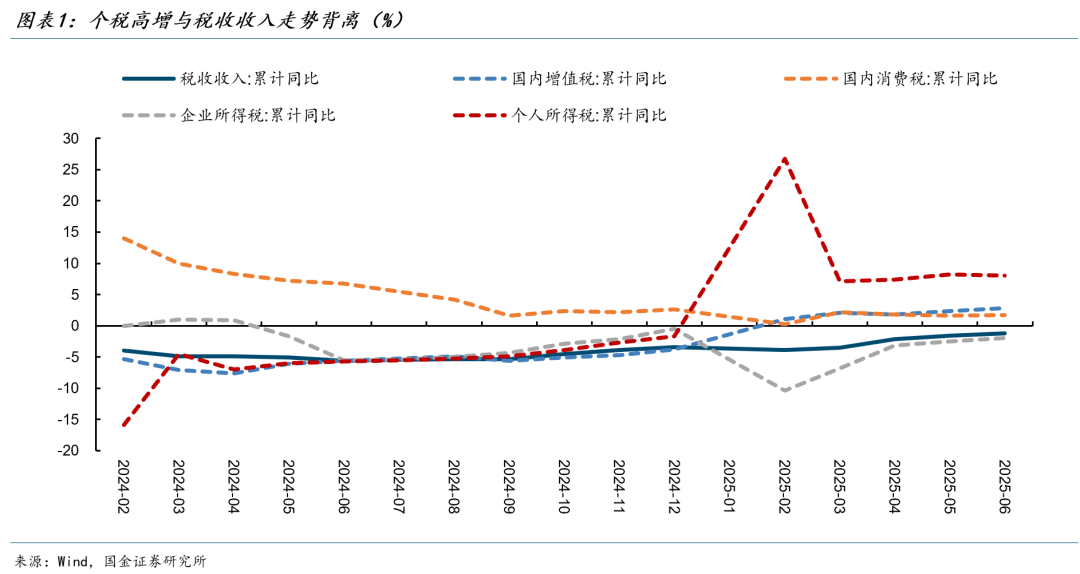
Group 1 - The core viewpoint of the articles highlights the significant increase in individual income tax (IIT) revenue, which is primarily attributed to improved tax collection efficiency and enforcement, rather than an increase in residents' disposable income [1][5][10] - In the first half of the year, individual income tax revenue grew by 8% year-on-year, while urban residents' per capita disposable income only increased by 4.7%, indicating a disparity between income growth and tax revenue [5][10] - The increase in individual income tax is mainly driven by high-income earners, with those earning over 1 million yuan annually contributing over 50% of the total IIT revenue, despite representing only 1% of the total filers [5][10] Group 2 - The divergence between value-added tax (VAT) and corporate income tax (CIT) is notable, with VAT revenue increasing by 2.8% while CIT revenue decreased by 1.9% in the first half of the year [12][13] - This divergence is attributed to "involution" competition leading to increased revenue without corresponding profit growth, as well as one-time factors affecting CIT collection early in the year [12][13] - The overall corporate income tax revenue was negatively impacted by a reduction in tax payments from central financial enterprises, which accounted for a significant portion of the decline [13] Group 3 - Non-tax revenue experienced a decline, with a year-on-year growth of only 3.7% in the first half of the year, and a negative growth rate observed since May [17][18] - The slowdown in non-tax revenue growth is linked to diminishing support from the monetization of state-owned assets and improvements in the business environment leading to reduced administrative fees and penalties [17][18] - The revenue from state-owned resource asset usage, which constitutes a significant portion of non-tax revenue, is expected to face challenges as easily monetizable assets have already been utilized [18]
上半年财政收入数据的几个不寻常(国金宏观张馨月)
雪涛宏观笔记· 2025-07-30 01:55
Group 1 - The core viewpoint of the article highlights that the significant increase in individual income tax (IIT) is primarily due to improved tax collection efficiency and enforcement, while the divergence between value-added tax (VAT) and corporate income tax (CIT) is mainly influenced by one-time factors at the beginning of the year. Additionally, the negative shift in non-tax revenue reflects improvements in the business environment [1][3][11]. Group 2 - In the first half of the year, national tax revenue reached 9.29 trillion yuan, showing a year-on-year decline of 1.2%, with VAT, CIT, and consumption tax growth rates at 2.8%, -1.9%, and 1.7% respectively. Despite weak growth in overall tax revenue, IIT saw a notable increase of 8% year-on-year [3][6]. - The growth in IIT is not aligned with improvements in residents' disposable income, which only increased by 4.7%. High-income earners contribute significantly to IIT, with those earning over 1 million yuan accounting for over 50% of the total IIT collected [6][10]. - The increase in IIT is attributed to several factors, including the full implementation of the "Golden Tax" Phase IV, which enhances tax collection efficiency through data integration and analysis, and the implementation of the Common Reporting Standard (CRS) for overseas income reporting [8][10]. - The rise in stock transfers and employee stock incentives, particularly in high-income cities like Beijing and Shanghai, has also contributed to the increase in IIT. In the first half of the year, Beijing's IIT revenue grew by 7.8% [10]. - The growth in dividend income from listed companies, with a total dividend payout of nearly 2.4 trillion yuan, has further supported the increase in IIT [10]. Group 3 - The divergence between VAT and CIT is unusual, with VAT growing by 2.8% while CIT declined by 1.9%. This divergence is attributed to "involution" competition leading to increased revenue without corresponding profit growth, as well as one-time factors affecting CIT collection early in the year [11][12]. - The decline in non-tax revenue, which reached 2.27 trillion yuan with a year-on-year growth of only 3.7%, is primarily due to reduced support from the monetization of state-owned assets and improvements in the business environment leading to lower administrative fees and penalties [15][16][17].