全球气候治理

Search documents
中方驳斥美国代表在气候问题上对中国的无端指责
Xin Hua She· 2025-11-07 00:16
Core Viewpoint - The article highlights China's strong defense against U.S. accusations regarding carbon emissions and climate policies, emphasizing China's commitment to climate action and contrasting it with the U.S. historical record on emissions and climate agreements [1]. Group 1: China's Position on Climate Action - China is recognized globally as the country with the strongest commitment to fulfilling emission reduction promises, taking significant actions, and achieving notable results in combating climate change [1]. - With a population of 1.4 billion and the second-largest GDP in the world, China contributes over 30% annually to global economic growth, while its per capita carbon emissions are not among the highest globally [1]. Group 2: U.S. Criticism and Historical Context - The U.S. is identified as the country with the highest cumulative greenhouse gas emissions historically and maintains one of the highest per capita carbon emissions rates [1]. - The U.S. has previously labeled climate change as a significant hoax, has withdrawn from the Paris Agreement twice, and is seen as a major obstacle to global climate governance efforts [1]. Group 3: Call for International Cooperation - The article stresses the need for unity and cooperation in addressing climate change, rather than blame-shifting and accusations, indicating that the international community should focus on collaborative efforts [1].
丁薛祥在贝伦气候峰会上的发言(全文)
Xin Hua She· 2025-11-06 22:31
Core Points - The speech emphasizes the importance of global climate governance and China's commitment to achieving its climate goals, particularly in the context of the 10th anniversary of the Paris Agreement [2][3] - China has made significant progress in its 2030 Nationally Determined Contributions, achieving targets in wind and solar power capacity and forest carbon stock ahead of schedule [2] - The speech outlines three key suggestions for global climate action: maintaining the right direction towards green low-carbon transformation, implementing climate actions based on common but differentiated responsibilities, and enhancing international cooperation for green technology and trade [3][4] Group 1 - The speech highlights Brazil's role as the COP30 presidency and China's support for its efforts in advancing global climate governance [2] - China's commitment to a comprehensive green transformation of its economy and society is reiterated, with a focus on achieving carbon peak and neutrality [2][3] - The need for a collaborative approach to climate governance is stressed, advocating for a balance between environmental protection, economic development, and social improvement [3] Group 2 - The speech calls for developed countries to fulfill their emission reduction obligations and provide support to developing nations in terms of technology and capacity building [3] - It emphasizes the necessity of a conducive international trade environment for promoting global green low-carbon transformation [3][4] - The overall message is a call for unity and cooperation among nations to build a sustainable and harmonious world [4]
丁薛祥出席贝伦气候峰会并致辞
Xin Hua She· 2025-11-06 22:31
新华社巴西贝伦11月6日电(记者 陈威华 赵博超)当地时间11月6日,习近平主席特别代表、中共 中央政治局常委、国务院副总理丁薛祥在巴西贝伦出席《联合国气候变化框架公约》第30次缔约方大会 贝伦气候峰会并致辞。 丁薛祥转达习近平主席对巴西举办峰会的良好祝愿,赞赏巴西作为COP30主席国为积极推进全球气 候治理作出的重要贡献,预祝大会圆满成功。 与会期间,丁薛祥会见了联合国秘书长古特雷斯。丁薛祥表示,当前多边主义和联合国工作面临前 所未有的挑战。不管国际形势如何变化,中方都将坚持真正的多边主义,继续全力支持联合国在国际事 务中的核心地位和作用,推动各国加强对话合作,为世界和平发展事业作出更大贡献。中方坚定不移走 绿色发展道路,愿同各方加强沟通合作,共同推动建设人与自然和谐共生的美丽世界。古特雷斯感谢中 方始终支持联合国工作,表示中国不仅是全球气候治理关键引领者,也是世界和平和多边主义的重要支 柱。习近平主席提出的全球治理倡议对完善改革现有全球治理体系非常重要,联合国期待同中国进一步 密切协作。 当天,丁薛祥应邀出席巴西总统卢拉主持的"永远的热带雨林基金"主题午宴并致辞,表示近年来中 国热带雨林地区生态环境保护和 ...
《中国应对气候变化的政策与行动2025年度报告》发布——中国对全球气候治理的贡献日益凸显
Ren Min Ri Bao Hai Wai Ban· 2025-11-05 04:08
Core Insights - The 30th United Nations Climate Change Conference (COP30) will be held in Brazil, showcasing China's efforts in addressing climate change through the release of the "China's Policy and Action on Climate Change 2025 Annual Report" [1] Group 1: Climate Change Mitigation Efforts - China has made significant progress in reducing carbon emissions, with non-fossil energy accounting for 19.8% of total energy consumption by 2024, and coal consumption decreasing from 67.4% in 2013 to 53.2% [1] - The report highlights the growth of the lithium battery and photovoltaic industries, with multiple indicators expected to achieve double-digit growth in 2024, and China maintaining its position as the world's largest producer of new energy vehicles for ten consecutive years [1][2] Group 2: Carbon Market Development - The national carbon market has entered a new phase, with a total trading volume of 728 million tons and a transaction value of 49.83 billion yuan as of September 2025, marking a historical high in trading volume for 2024 at 18.04 billion yuan [2][3] - The completion rate for carbon quota compliance reached a historical high, with 2,096 key emission units required to submit a total of 5.244 billion tons of quotas, and actual compliance at 5.243 billion tons [3] Group 3: Global Climate Cooperation - China has contributed to global energy and industrial green transformation, reducing wind and solar power costs by over 60% and 80% respectively, and creating 46% of global renewable energy jobs [3] - By the end of 2024, China has signed 54 climate change cooperation documents with 42 developing countries, implementing over 300 capacity-building projects and providing training for more than 10,000 individuals [3] Group 4: Commitment to International Climate Goals - China announced its 2035 national contribution targets at the recent UN climate summit, reflecting its commitment to the Paris Agreement and the need for a conducive international environment to achieve these goals [4] - The report outlines China's basic positions for COP30, emphasizing the importance of multilateral cooperation, adherence to the UN Framework Convention on Climate Change, and promoting global green and just transitions [4]


COP30倒计时:中国已提交NDC 欧盟等缔约方仍未交卷
2 1 Shi Ji Jing Ji Bao Dao· 2025-11-04 14:30
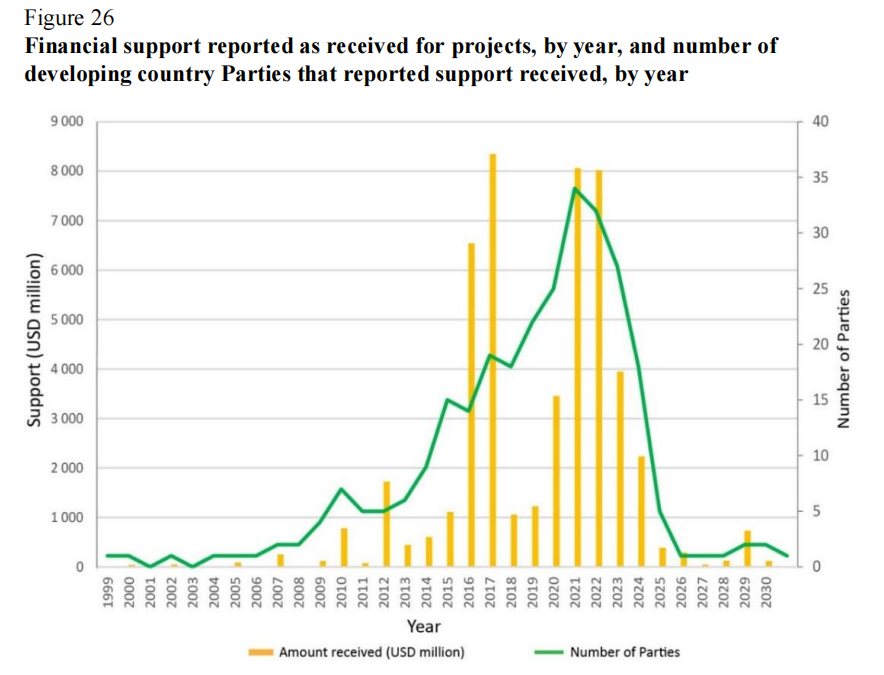
Group 1: Climate Commitments and NDC Submissions - The COP30 conference is approaching with only six days left, and the submission rate of Nationally Determined Contributions (NDCs) is low, with only 64 out of 178 parties submitting new NDC reports, covering about 30% of global emissions in 2019 [1][3] - The United States' withdrawal from the Paris Agreement and its embrace of fossil fuels have raised doubts among developing countries regarding the reliability of commitments made by developed nations, complicating collective action [1][3] - The European Union is facing challenges in submitting its NDC, with its NDC3.0 currently in a difficult position, revealing cracks in its previously high-profile commitment to submit before COP30 [1][3][4] Group 2: China's NDC Submission - China officially submitted its 2035 NDC report on November 3, showcasing its commitment to addressing climate change and aligning with its modernization and ecological goals [2] Group 3: Funding and Investment Challenges - A significant funding gap for climate action in developing countries has been highlighted, with a need for nearly $7 trillion by 2030 to meet NDC targets, while developed countries mobilized less than $600 billion from 2016 to 2022 [12][13] - The COP30 conference aims to address the implementation of climate financing, emphasizing the need for public-private collaboration to meet the urgent demands of climate crises [13][14] - The lack of clear standards and investment pathways for climate adaptation and transition projects is a major barrier to attracting private capital [15][16] Group 4: Role of Public-Private Partnerships - The Asian Development Bank has committed to providing $100 billion in climate financing from 2019 to 2030, but this is insufficient compared to the overall demand for climate funding [17] - Effective public-private partnerships (PPP) are essential for leveraging private capital in climate projects, with governments providing policy support and infrastructure while private sectors handle operational aspects [18]
中国对全球气候治理的贡献日益凸显
Ren Min Ri Bao Hai Wai Ban· 2025-11-04 01:08
Core Insights - The report highlights China's significant contributions to climate change mitigation and adaptation, showcasing its commitment to global climate governance and green development [2][3][4][5] Group 1: Climate Change Mitigation Efforts - In 2024, non-fossil energy is projected to account for 19.8% of China's total energy consumption, with coal consumption decreasing from 67.4% in 2013 to 53.2% [3] - The report indicates that the lithium battery and photovoltaic industries are expected to achieve double-digit growth in multiple indicators in 2024, with China's new energy vehicle production leading globally for ten consecutive years [3] - The national carbon market has entered a new phase, with a cumulative trading volume of 728 million tons and a transaction value of 49.83 billion yuan as of September 2025, marking a historical high for the market [4] Group 2: Global Climate Leadership - China has contributed to a significant reduction in global wind and solar power costs by over 60% and 80%, respectively, while creating 46% of global renewable energy jobs [4] - By the end of 2024, China has signed 54 climate cooperation agreements with 42 developing countries, enhancing their capacity to address climate change through various initiatives [4] - China's announcement of its 2035 national contribution targets aligns with the Paris Agreement, reflecting its commitment to international climate goals [5] Group 3: International Cooperation and Policy Stance - The report outlines China's basic stance for COP30, emphasizing the importance of multilateral cooperation, adherence to the UN Framework Convention on Climate Change, and promoting a just global green transition [5] - China remains committed to its climate actions and international cooperation efforts, regardless of changing global circumstances [5]
外交部:预祝贝伦气候峰会取得圆满成功,为世界留下“巴西印记”
Xin Hua She· 2025-10-31 10:04
Core Points - The article discusses the upcoming climate summit in Belem, Brazil, where China's Vice Premier Ding Xuexiang will represent President Xi Jinping on November 6 [1] - The Chinese government expresses hope for the summit to be a significant milestone in global climate change efforts, coinciding with the 10th anniversary of the Paris Agreement [1] - China aims to showcase its achievements and proposals in climate governance, reinforcing its role as a responsible major power [1] Group 1 - Vice Premier Ding Xuexiang will attend the Belem climate summit as a special representative of President Xi Jinping [1] - The summit marks the 10th anniversary of the Paris Agreement and is a critical year for national contributions to climate action [1] - China emphasizes its commitment to multilateralism and collaboration in promoting global green and low-carbon transformation [1]
外交部:愿为全球气候治理注入更强劲信心和动力
Yang Shi Xin Wen· 2025-10-31 07:55
Core Points - The year marks the 10th anniversary of the Paris Agreement and a new round of Nationally Determined Contributions submissions, indicating a critical juncture in global climate governance [1] - China expresses its willingness to contribute its achievements and solutions to enhance confidence and momentum in global climate governance [1] - The emphasis is placed on multilateralism, collaboration, and the promotion of a global green and low-carbon transition to build a clean and beautiful world [1] - The upcoming conference is anticipated to leave a "Brazilian mark" and serve as an important milestone in addressing global climate change [1]
碳排放配额累计成交7.6亿吨!我国碳市场建设迈入新阶段
Yang Shi Xin Wen· 2025-10-29 17:17
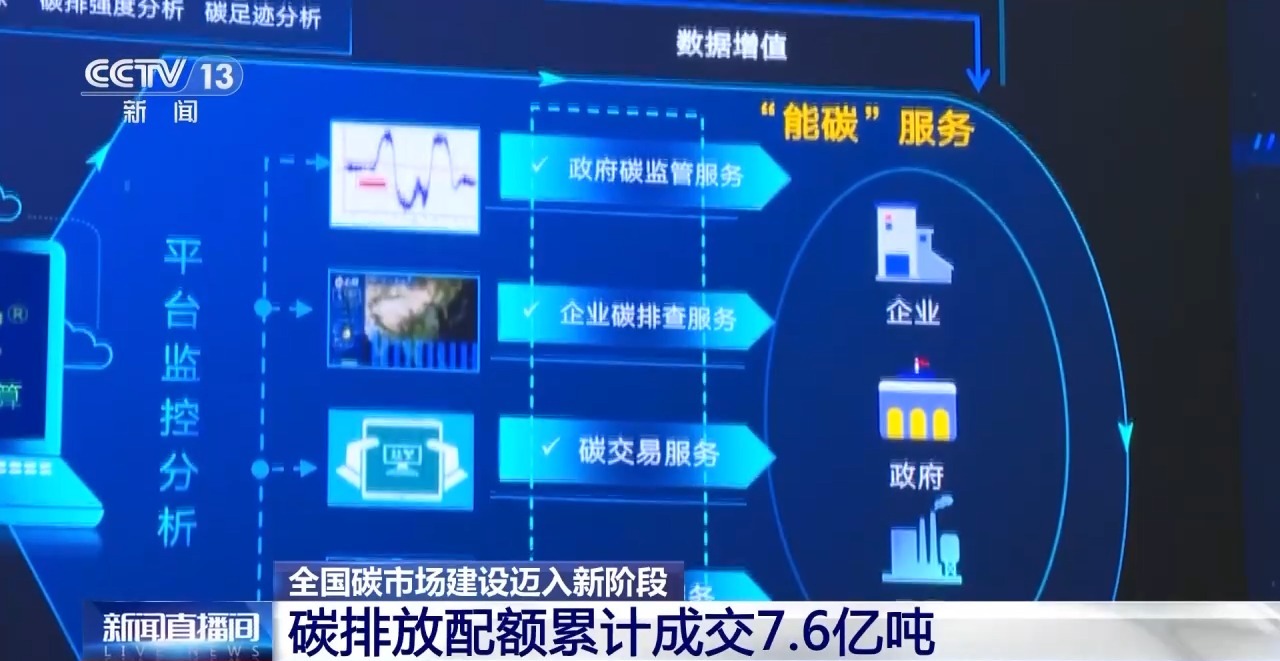
Group 1 - The national carbon emissions trading market in China has established a basic framework over the past four years, with stable and effective market operations, marking a new phase in its development [1][3] - As of October 28, 2025, a total of 760 million tons of carbon emission allowances have been traded, generating a transaction value of 51.44 billion yuan, indicating the gradual emergence of a price "guiding role" [1] - The steel, cement, and aluminum smelting industries are continuously being integrated into the national carbon emissions trading market, with approximately 1,500 new key emission units added, which will effectively manage over 60% of the national carbon emissions [1] Group 2 - The voluntary greenhouse gas emission reduction trading market in China has been operational since January of last year, with active trading of reduction volumes, demonstrating the market's role in incentivizing low-cost greenhouse gas reduction actions across various industries [5] - The capacity of market participants and awareness of low-carbon reduction have significantly improved, reflecting the effectiveness of the market mechanism [5] Group 3 - China aims to promote positive outcomes at the upcoming 30th United Nations Climate Change Conference, emphasizing that no country can remain isolated in the face of the climate crisis [6][7] - The country will adhere to the framework of the United Nations Framework Convention on Climate Change and the Paris Agreement, advocating for the principle of "common but differentiated responsibilities" [9] - China calls for developed countries to fulfill their obligations regarding climate change while balancing negotiations on mitigation, adaptation, funding, technology, and capacity building [9]
COP30前夕中方发声:应制定1.3万亿美元融资路线图
2 1 Shi Ji Jing Ji Bao Dao· 2025-10-29 09:47
Core Points - The Ministry of Ecology and Environment of China held a press conference to release the "2025 Annual Report on China's Policies and Actions to Address Climate Change," highlighting China's significant contributions in climate mitigation, adaptation, carbon markets, and global climate governance [2][3] Group 1: Climate Change Policy and Actions - The report outlines China's commitment to achieving its 2035 Nationally Determined Contributions (NDC) in line with the Paris Agreement, emphasizing the need for both domestic efforts and a favorable international environment [2] - The report expresses dissatisfaction from developing countries regarding the COP29's target of $300 billion per year by 2035, stating it lacks strength and does not adequately reflect the funding obligations of developed countries [2] - The report calls for COP30 to make progress on establishing a financing roadmap of $1.3 trillion and a funding roadmap of at least $300 billion from developed countries [2] Group 2: New Energy System Development - China's new energy system construction has made significant progress, with the share of new energy installations expected to exceed 45.8% by June 2025, and the proportion of renewable energy transmitted through ultra-high voltage direct current exceeding 50% [3] - By June 2025, the cumulative installed capacity of pumped storage will exceed 61 million kilowatts, and the installed capacity of new energy storage projects will reach 94.91 million kilowatts [3] Group 3: Multilateral Cooperation and Climate Governance - The report emphasizes the importance of multilateralism in addressing global climate change, urging all parties to maintain confidence in international cooperation and to send a strong political signal against unilateralism and protectionism [4] - It stresses the need for developed countries to recognize the efforts of developing countries and to respond to their specific challenges, which is essential for the success of COP30 [5] - The report advocates for a balanced approach to negotiations on mitigation, adaptation, finance, technology, and capacity building, highlighting the necessity for developed countries to fulfill their obligations under the Paris Agreement [5]