半导体国产化

Search documents
集体跳水!全球市场突变
Zheng Quan Shi Bao· 2025-11-18 09:26
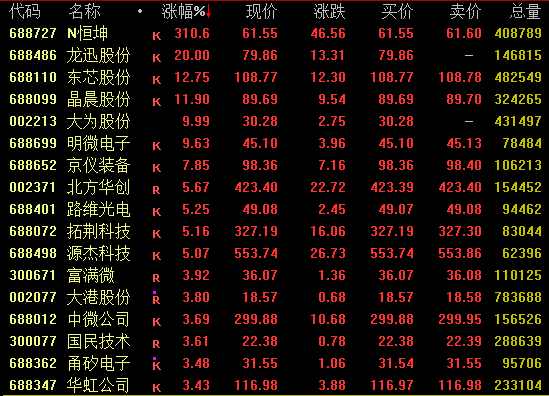
Market Overview - Major stock indices in the Asia-Pacific region experienced significant declines, with Japan's Nikkei 225 dropping 3.22% to 48,702.98 points, marking the largest single-day drop since April [1] - The South Korean Composite Index fell 3.32% to 3,953.62 points, while the Australian S&P 200 Index decreased by 1.28% to 8,469.1 points [1] - European markets also opened lower, with major indices such as the Euro Stoxx 50, FTSE 100, CAC 40, DAX 30, and FTSE MIB all declining by over 1% [1] A-Share Market Performance - The A-share market also saw declines, with the Shanghai Composite Index down 0.81% to 3,939.81 points and the Shenzhen Component Index down 0.92% to 13,080.49 points [2] - The ChiNext Index fell 1.16% to 3,069.22 points, while the North Star 50 Index dropped nearly 3% [2] - Over 4,100 stocks in the market were in the red, with resource stocks such as coal, steel, and chemicals experiencing collective declines [2] Semiconductor Sector - The semiconductor sector showed strength, with Longxin Co. rising 20% to hit the daily limit, and Dongxin Co. and Jingchen Co. increasing by nearly 13% and 12%, respectively [3] - Other notable performers included Dazhi Co. reaching the daily limit and Beifang Huachuang rising over 5% [3] AI Application Sector - The AI application sector was notably active, with stocks like Xuan Ya International and Langchao Software hitting the daily limit for two consecutive days [7] - Other companies such as Fushi Holdings and Yuanlong Yatu also reached their daily limits, indicating strong investor interest in AI-related stocks [7] Lithium Battery Sector - The previously strong lithium battery sector saw a significant drop, with Huasheng Lithium Battery falling over 17% and several other companies experiencing declines of over 10% [10] - Notably, Huasheng Lithium Battery had previously reached a historical high, with a cumulative increase of approximately 190% over the past ten trading days [11] Company Announcements - Companies in the lithium battery sector, such as Shida Shenghua, reported significant stock price fluctuations and advised investors to be cautious due to the uncertain recovery in the downstream lithium battery industry [12] - Shida Shenghua's revenue for the first three quarters of 2025 was reported at 539 million yuan, a year-on-year increase of 62.29%, but the company still faced risks of performance decline or losses [12]

集体跳水!全球市场突变
证券时报· 2025-11-18 09:20
Market Overview - Global markets experienced significant declines, with major indices in the Asia-Pacific region all falling sharply. The Nikkei 225 index dropped 3.22% to 48702.98 points, marking the largest single-day decline since April [2] - European stock markets also opened lower, with major indices such as the Euro Stoxx 50, FTSE 100, CAC 40, DAX 30, and FTSE MIB all declining by over 1% [3] - In the A-share market, the Shanghai Composite Index fell by 0.81% to 3939.81 points, while the Shenzhen Component Index decreased by 0.92% to 13080.49 points. The ChiNext Index dropped 1.16% to 3069.22 points [4] Sector Performance - The semiconductor sector showed resilience, with stocks like Longxin Co. rising by 20% and Dongxin Co. increasing by nearly 13%. Other semiconductor stocks also performed well, indicating a strong interest in this sector despite broader market declines [8][10] - The AI application sector was notably active, with stocks such as Xuan Ya International and Langchao Software hitting the daily limit up, reflecting growing investor interest in AI technologies [12][14] - Conversely, the lithium battery sector faced a significant downturn, with companies like Huasheng Lithium Battery dropping over 17%. This sector's decline follows a period of strong performance, indicating potential volatility [16][17] New Listings - Three newly listed stocks saw substantial gains, with Hengkun New Materials closing up 310.61%, and Beikang Testing and Nanguang Digital rising by 295.52% and 224.78%, respectively [6] Investment Insights - Analysts suggest that the trend towards supply chain security and self-sufficiency will continue, particularly in the semiconductor industry. The ongoing growth in global AI computing power and the structural shortages in storage are expected to drive demand for domestic semiconductor production [10][15] - The recent announcements from major companies like Alibaba and Baidu regarding their AI initiatives indicate a competitive push in the AI sector, which may present investment opportunities in the long term [14][15]





6000亿美元赛道的并购逻辑与未来图鉴——全景网对话达迈智能总经理蒋新欣
Quan Jing Wang· 2025-11-17 07:29
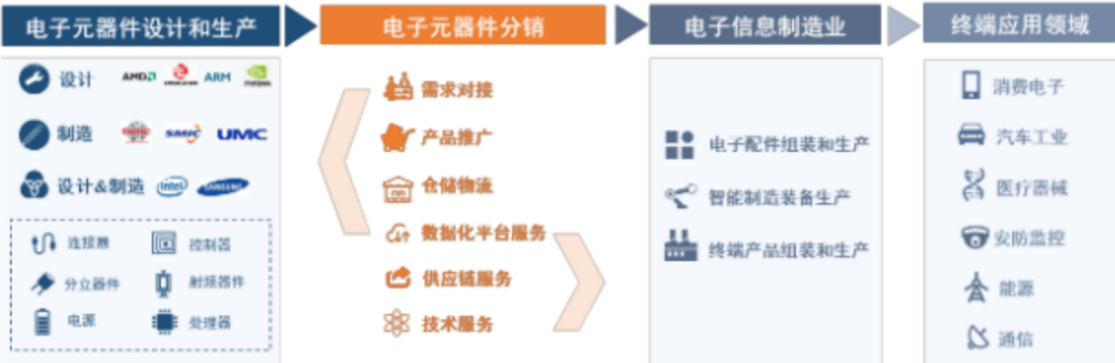
Core Viewpoint - The acquisition of Shenzhen Dama Intelligent Technology Co., Ltd. by Chahua Co., Ltd. marks a strategic shift towards a dual business model combining plastic home goods and electronic component distribution, aiming to leverage financial resources and expand market presence [2][8]. Company Overview - Chahua Co., Ltd. completed the acquisition of 100% equity in Dama Intelligent for 93.83 million yuan and subsequently increased its capital by 45 million yuan, integrating Dama into its consolidated financial statements [2][8]. - Dama Intelligent generated 136 million yuan in revenue in the first half of 2025, accounting for 36.48% of Chahua's total revenue, indicating a successful initial realization of merger benefits [2][8]. Market Context - The global semiconductor market reached a record sales figure of 627.6 billion USD in 2024, with a projected growth rate of 19.1% compared to 2023, highlighting the robust demand and growth potential in the electronic distribution sector [3][4]. - The domestic electronic distribution industry is evolving alongside the growth of China's semiconductor industry, with a current domestic localization rate of less than 12%, suggesting significant room for growth [4][6]. Business Model and Strategy - Dama Intelligent focuses on providing comprehensive services including product selection, technical support, and logistics, differentiating itself from traditional distributors by emphasizing technology-driven solutions [6][7]. - The company aims to capture growth in high-tech markets such as AI and optical communication, projecting a compound annual growth rate of approximately 40% over the next three years, potentially reaching 3-5 billion yuan in revenue [7][8]. Financial Synergy - Chahua's low leverage and strong cash flow position provide a solid foundation for funding Dama's distribution business, allowing for flexible and low-cost capital deployment [8][10]. - Chahua's plastic home goods segment reported a revenue decline of approximately 18% in the first half of 2025, but the diversification into electronic distribution is seen as a strategic move to counterbalance this decline [8][10]. Future Outlook - The collaboration between Chahua and Dama is expected to create synergies, with potential applications in smart home products, enhancing the value proposition for both companies [9][10]. - Dama has committed to not reducing its shareholding for 30 months post-acquisition, and Chahua plans to distribute at least 20% of its distributable profits as cash dividends over the next three years, signaling confidence in future profitability [9][10].

6000亿美元赛道的并购与未来——全景网对话达迈智能总经理蒋新欣
Quan Jing Wang· 2025-11-17 05:11
Core Viewpoint - The acquisition of Shenzhen Dama Intelligent Co., Ltd. by Chahua Co., Ltd. marks a strategic shift towards a dual business model combining plastic home goods and electronic component distribution, aiming to leverage financial resources and expand into high-growth semiconductor channels [2][8]. Company Overview - Chahua Co., Ltd. acquired 100% of Dama Intelligent for 93.83 million yuan and subsequently increased its capital by 45 million yuan, integrating Dama into its financial reports [2][8]. - Dama Intelligent generated 136 million yuan in revenue in the first half of 2025, accounting for 36.48% of Chahua's total revenue, indicating a successful initial phase of the merger [2][8]. Industry Context - The global semiconductor market reached a record sales figure of 627.6 billion USD in 2024, with a projected growth rate of 19.1% compared to 2023, highlighting the robust demand for semiconductors [3][4]. - The domestic electronic distribution industry is evolving alongside the growth of China's semiconductor industry, with local distributors increasingly capturing market share as domestic chip production rises [4][6]. Business Model and Strategy - Dama Intelligent focuses on providing comprehensive services, including product selection and technical support, to clients in the IoT, communications, consumer electronics, and IDC sectors [6][7]. - The company aims to achieve a compound annual growth rate of approximately 40% in its electronic distribution segment over the next three years, targeting revenue between 3 billion to 5 billion yuan [7]. Financial Performance - Chahua's plastic home goods segment reported a revenue decline of approximately 18% in the first half of 2025, but the diversification into electronic distribution is seen as a strategic move to counterbalance this decline [8]. - Chahua maintains a low debt ratio of under 30%, positioning itself favorably within the A-share consumer goods sector, which allows for flexible funding for the new electronic distribution business [8][10]. Future Outlook - The collaboration between Chahua and Dama is expected to create synergies, with potential applications in smart home products, enhancing the value proposition for both companies [9]. - Dama's parent company has committed to not reducing its stake for 30 months post-acquisition, while Chahua plans to distribute at least 20% of its distributable profits as cash dividends over the next three years, signaling confidence in future profitability [9][10].
从塑料家居到芯片分销 6000亿美元赛道的并购逻辑与未来图鉴——全景网深度专访茶花股份董事、达迈智能总裁 张程
Quan Jing Wang· 2025-11-17 03:17
Core Viewpoint - The merger between Chahua Co., Ltd. and Dama Intelligent Co., Ltd. represents a strategic shift for Chahua, moving from a stable plastic home goods business to the high-growth semiconductor distribution sector, leveraging low leverage and strong cash flow to explore new business opportunities [2][12]. Group 1: Merger and Acquisition Details - In January 2025, Chahua acquired 100% of Dama Intelligent and subsequently increased its capital by 45 million yuan, integrating Dama into its financial reports and entering the electronic components distribution market [2][9]. - Dama Intelligent contributed 136 million yuan in revenue during the first half of 2025, accounting for 36.48% of Chahua's total revenue, marking the initial realization of merger benefits [2][9]. Group 2: Market Context and Industry Potential - The global semiconductor market reached a record sales figure of 627.6 billion dollars in 2024, with a projected growth rate of 19.1% compared to 2023, indicating a robust long-term outlook for the industry [3][5]. - The domestic electronic distribution industry is evolving alongside the growth of the local semiconductor chip industry, with a current domestic localization rate of less than 12%, suggesting significant room for growth [5][6]. Group 3: Dama Intelligent's Business Model - Dama Intelligent focuses on providing comprehensive services, including product selection and technical support, to major clients in the IoT, communications, consumer electronics, and IDC markets [6][8]. - The company aims to leverage its technical capabilities to drive growth in high-barrier markets such as optical communication and AI computing, projecting a compound annual growth rate of around 40% over the next three years [8][9]. Group 4: Financial Synergy and Strategic Outlook - Chahua's plastic home goods segment reported a revenue of 234 million yuan in the first half of 2025, a decline of approximately 18%, while the company is diversifying its channels and expanding its market presence [9][11]. - The merger allows Chahua to maintain a low debt ratio, with a long-term asset-liability ratio below 30%, while enhancing its return on equity through the integration of cash and credit resources into the semiconductor distribution business [11][12].
从塑料家居到芯片分销 6000亿美元赛道的并购逻辑与未来图鉴——全景网深度专访茶花股份董事、达迈智能
Quan Jing Wang· 2025-11-17 02:23
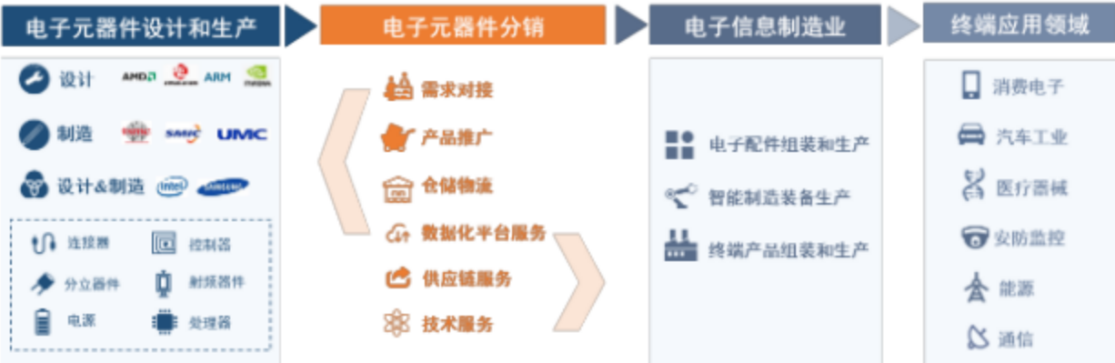
Core Viewpoint - The acquisition of Shenzhen Dama Intelligent Co., Ltd. by Chahua Co., Ltd. marks a strategic shift towards a dual business model combining plastic home products and electronic component distribution, aiming to leverage the growth potential in the semiconductor market [1][9]. Group 1: Acquisition Details - In January 2025, Chahua Co., Ltd. acquired 100% of Dama Intelligent for 938,300 CNY and subsequently increased its capital by 45 million CNY, integrating Dama into its financial reports [1][9]. - Dama Intelligent contributed 136 million CNY in revenue during the first half of 2025, accounting for 36.48% of Chahua's total revenue, indicating the initial success of the acquisition [1]. Group 2: Market Context - The global semiconductor market reached a record sales figure of 627.6 billion USD in 2024, representing a 19.1% increase from 2023, with expectations of continued double-digit growth in 2025 [2]. - The semiconductor industry is characterized by a low domestic production rate of less than 12%, suggesting significant growth opportunities for local distributors like Dama Intelligent [5][6]. Group 3: Dama Intelligent's Business Model - Dama Intelligent operates as a key player in the electronic component distribution sector, focusing on providing comprehensive services including product selection, technical support, and logistics for various markets such as IoT and communications [6][8]. - The company aims to capitalize on the domestic semiconductor market's growth by enhancing its technical capabilities and forming strategic partnerships with major clients like Lenovo and Xiaomi [6][8]. Group 4: Financial Strategy and Future Outlook - Chahua Co., Ltd. maintains a low debt ratio of under 30%, allowing for a stable financial foundation to support the new dual business model [11]. - The company has committed to a minimum cash dividend of 20% of distributable profits over the next three years, signaling confidence in future profitability and growth [12].
早盘直击|今日行情关注
申万宏源证券上海北京西路营业部· 2025-11-14 02:07
Market Overview - The A-share market has regained upward momentum, with the Shanghai Composite Index reaching new recent highs, indicating a strong performance with more stocks rising than falling [1] - The market is currently experiencing a phase of consolidation around the 4000-point level, which may prepare for further upward movement [1] - The recent breakthrough of the 3900-point resistance since late October suggests that the market has the potential for further upward expansion [1] Future Outlook - The market is expected to maintain a fluctuating upward trend, with key focus areas in November including the impact of the 14th Five-Year Plan on industries, event-driven dynamics in the technology sector, and price recovery driven by anti-involution [1] - The anticipated return of bullish sentiment is likely as the index breaks previous highs [1] Sector Highlights - The technology sector remains a focal point for November, with orderly rotation and high-low switching expected within the sector [2] - Underperforming segments such as robotics, military industry, and smart vehicles are anticipated to see a rebound, while leading sectors like computing hardware, domestic semiconductors, and new energy may present buying opportunities upon adjustment [2] - The anti-involution trend is showing results in sectors like photovoltaics, cement, coal, and express delivery, which are experiencing price increases and potential for further gains [2] Specific Sector Opportunities - Robotics is projected to expand from humanoid to quadruped and functional robots, creating opportunities in sensors, controllers, and dexterous hands [2] - The trend towards semiconductor localization continues, with attention on semiconductor equipment, wafer manufacturing, materials, and IC design [2] - The military sector is expected to see a recovery in orders by 2025, with signs of bottoming out in the performance of various military sub-sectors [2] - The innovative pharmaceutical sector is entering a recovery phase after nearly four years of adjustment, with positive net profit growth expected to continue [2] - The banking sector is witnessing a rebound in mid-year performance growth, attracting interest from long-term institutional investors due to appealing dividend yields [2]

机构:半导体国产化有望继续加速
Zheng Quan Shi Bao Wang· 2025-11-14 00:45
Core Viewpoint - The semiconductor industry is expected to continue its positive development driven by AIGC and consumer demand by 2025, with an acceleration in the localization process of China's semiconductor industry [1] Group 1: Industry Trends - The domestic semiconductor industry is experiencing a wave of mergers and acquisitions, with companies across various sectors such as semiconductor materials, equipment, EDA, packaging, and chip design actively pursuing consolidation plans [1] - Horizontal mergers are being utilized to expand scale, while vertical mergers aim to enhance the supply chain, leading to a reshaping of the domestic semiconductor landscape [1] Group 2: Market Demand and Supply - In October, global semiconductor demand showed continued improvement, with slight growth in PCs and tablets, rapid growth in TWS headphones, wearable devices, and smart home products, and high-speed growth in AI servers [1] - Despite a relatively ample short-term supply and high inventory levels, a downward trend in inventory has been observed, and overall price increases are expanding, indicating a favorable supply-demand balance expected to continue into November [1] - Global AI computing power investment is significantly increasing, while structural shortages in storage persist, indicating ongoing demand pressures [1] - Short-term external policies are raising costs for industries reliant on U.S. imports, but long-term prospects for semiconductor localization are expected to accelerate [1]
科技股行情进入深水区私募积极寻找新机遇
Zhong Guo Zheng Quan Bao· 2025-11-13 20:02
Core Viewpoint - The A-share market is experiencing increased volatility, with semiconductor, power grid equipment, and robotics becoming focal points driven by the AI industry wave and domestic logic, leading to a shift from broad-based gains to structural differentiation in tech stocks [1] Group 1: Investment Strategies - The consensus among top private equity firms is shifting from identifying "new" versus "old" investment opportunities to discerning "genuine" versus "false" prospects within the tech sector [1][2] - Investment strategies are evolving to focus on "high-low switching" within the tech sector, with funds moving from previously high-performing areas like computing power to sectors like electricity and semiconductors [2] - The overall upward trend in the tech sector is expected to continue, with a rotation pattern likely to persist in the medium to long term [2] Group 2: Evaluation Criteria - A simplified verification system for investing in tech stocks emphasizes the importance of assessing whether technology is genuinely applicable, the robustness of profit-making capabilities, and the effectiveness of R&D investments [3] - The recommendation is to avoid blindly chasing high valuations and instead focus on companies with solid earnings and numerous orders, employing a strategy of gradual buying to mitigate risks [3][4] Group 3: Market Dynamics - The high concentration in the AI sector is seen as structural, with companies showing better performance having higher crowding and better profit forecasts, leading to a cautious approach towards marginal changes in these stocks [4] - There is a strong belief in the long-term trends of core tech industries like AI and semiconductors, with a focus on application deployment and potential industry triggers [5][6] Group 4: Emerging Opportunities - Private equity firms are actively exploring niche areas such as storage chips, AI glasses, and emerging technologies like controllable nuclear fusion and next-generation communication technologies [6] - The demand for AI infrastructure is expected to remain robust, driven by high capital expenditures from overseas cloud vendors and accelerated domestic investments, with projections extending to 2026 [5][6]
江丰电子(300666):耗材到零部件 平台化发展
Xin Lang Cai Jing· 2025-11-12 08:41
Group 1 - The company demonstrated steady performance in Q3 2025, with revenue reaching 3.291 billion yuan, a year-on-year increase of 25.37%, and net profit attributable to shareholders of 401 million yuan, up 39.72% year-on-year [1] - In Q3 2025 alone, the company achieved revenue of 1.196 billion yuan, a 19.92% increase year-on-year, and a net profit of 148 million yuan, reflecting a 17.83% year-on-year growth [1] - The company is a global leader in ultra-pure metal sputtering targets, with a comprehensive product line covering advanced, mature, and specialty processes, serving major clients like TSMC and SMIC [1] Group 2 - The company is expanding its semiconductor precision components business, leveraging its technology and service capabilities to meet the growing domestic demand for semiconductor equipment [2] - It has established multiple smart production bases, producing over 40,000 types of components used in key semiconductor processes such as PVD and CVD [2] - The company has become a core supplier of precision components for several well-known domestic semiconductor equipment companies and international chip manufacturers [2] Group 3 - The company has received approval for a private placement to raise funds for projects including the production of electrostatic chucks and ultra-pure metal sputtering targets, aimed at overcoming key material technology bottlenecks [3] - The establishment of a production base in South Korea will optimize capacity layout and enhance international competitiveness, while domestic capacity will cater to the growing local semiconductor demand [3] Group 4 - Revenue projections for the company are 4.5 billion yuan in 2025, 5.9 billion yuan in 2026, and 7.5 billion yuan in 2027, with net profits expected to be 520 million yuan, 754 million yuan, and 1.036 billion yuan respectively, with a "buy" rating assigned [4]