
中韩半导体ETF(513310)

Search documents
ETF午评 | 船舶制造走强, 法国CAC40ETF(513080)上涨3.11%,A500ETF基金(512050)成交额居首
Sou Hu Cai Jing· 2026-02-13 05:22
Market Performance - The Shanghai Composite Index decreased by 0.70%, the Shenzhen Component Index fell by 0.67%, and the ChiNext Index dropped by 0.96% [1] - Shipbuilding, aerospace, and semiconductors showed the highest gains, while small metals, photovoltaic equipment, and shipping ports collectively retreated [1] ETF Performance - The top five ETFs by increase were: - France CAC40 ETF (513080) up 3.11% - China-Korea Semiconductor ETF (513310) up 2.35% - Sci-Tech Semiconductor Equipment ETF (589020) up 2.32% - Sci-Tech Semiconductor ETF (588170) up 2.21% - Sci-Tech Semiconductor Equipment ETF (588710) up 2.14% [1] - The top five ETFs by decrease were: - Oil and Gas ETF (561760) down 3.63% - Oil ETF (561360) down 3.60% - Oil and Gas ETF (159309) down 3.58% - Oil and Gas ETF (561570) down 3.50% - Oil ETF (159697) down 3.30% [1] ETF Trading Volume - The top ten ETFs by trading volume included: - A500 ETF Fund (512050) with a volume of 9.776 billion - A500 ETF Huatai-PB (563360) with 7.270 billion - CSI A500 ETF (159338) with 5.846 billion - A500 ETF Southern (159352) with 5.665 billion - Gold ETF (518880) with 4.225 billion - A500 ETF E Fund (159361) with 3.106 billion - Hang Seng Technology ETF (513130) with 3.105 billion - Hong Kong Securities ETF E Fund (513090) with 2.785 billion - CSI 500 ETF (510500) with 2.601 billion - Hang Seng Technology Index ETF (513180) with 2.303 billion [2]
量化择时周报:缩量信号近在咫尺,重回科技与周期-20260208
ZHONGTAI SECURITIES· 2026-02-08 10:43
Quantitative Models and Construction Methods Model Name: Industry Trend Allocation Model - **Model Construction Idea**: This model aims to identify industry trends and allocate investments accordingly[5][8][10] - **Model Construction Process**: - The model uses various indicators to assess industry trends, including market performance, valuation levels, and risk appetite. - It incorporates signals from different sub-models such as the Mid-term Distress Reversal Expectation Model, TWO BETA Model, and Performance Trend Model. - The Mid-term Distress Reversal Expectation Model waits for reversal signals in industries like liquor and real estate. - The TWO BETA Model recommends the technology sector and monitors opportunities in commercial aerospace. - The Performance Trend Model focuses on the computing power industry chain and oversold sectors like non-ferrous metals and chemicals. - **Model Evaluation**: The model is effective in identifying industry trends and making allocation recommendations based on various market signals[5][8][10] Model Name: Timing System - **Model Construction Idea**: This model aims to distinguish the overall market environment and provide timing signals for investment decisions[5][8][9] - **Model Construction Process**: - The model uses the distance between the long-term moving average (120 days) and the short-term moving average (20 days) of the WIND All A Index. - The latest data shows the 20-day moving average at 6787 and the 120-day moving average at 6338, with a difference of 7.08%. - The model also considers the market trend line, which is currently around 6780 points, and the profitability effect, which is -1.44%. - The model suggests that the market is in a shock pattern and monitors short-term risk appetite changes. - **Model Evaluation**: The model provides clear signals for market timing based on moving averages and other indicators[5][8][9] Model Backtesting Results - **Industry Trend Allocation Model**: - **PE Valuation Level**: 90th percentile, indicating a high level[8][10] - **PB Valuation Level**: 50th percentile, indicating a medium level[8][10] - **Position Recommendation**: 70% for absolute return products with WIND All A as the stock allocation subject[8][10] - **Timing System**: - **Moving Average Distance**: 7.08%, greater than the absolute value of 3%[5][8][9] - **Market Trend Line**: Around 6780 points[5][8][9] - **Profitability Effect**: -1.44%, indicating a temporary end to the upward trend[5][8][9] Quantitative Factors and Construction Methods Factor Name: Mid-term Distress Reversal Expectation Model - **Factor Construction Idea**: This factor aims to identify potential reversal signals in distressed industries[5][8][10] - **Factor Construction Process**: - The model monitors industries like liquor and real estate for reversal signals. - It uses various market indicators to assess the likelihood of a reversal. - **Factor Evaluation**: The factor is useful for identifying potential investment opportunities in distressed industries[5][8][10] Factor Name: TWO BETA Model - **Factor Construction Idea**: This factor aims to recommend sectors with high growth potential, such as technology[5][8][10] - **Factor Construction Process**: - The model focuses on the technology sector and monitors opportunities in commercial aerospace. - It uses market performance and other indicators to make recommendations. - **Factor Evaluation**: The factor is effective in identifying high-growth sectors and making investment recommendations[5][8][10] Factor Name: Performance Trend Model - **Factor Construction Idea**: This factor aims to identify sectors with strong performance trends[5][8][10] - **Factor Construction Process**: - The model focuses on the computing power industry chain and oversold sectors like non-ferrous metals and chemicals. - It uses performance indicators to make recommendations. - **Factor Evaluation**: The factor is useful for identifying sectors with strong performance trends and making investment recommendations[5][8][10] Factor Backtesting Results - **Mid-term Distress Reversal Expectation Model**: - **PE Valuation Level**: 90th percentile, indicating a high level[8][10] - **PB Valuation Level**: 50th percentile, indicating a medium level[8][10] - **TWO BETA Model**: - **PE Valuation Level**: 90th percentile, indicating a high level[8][10] - **PB Valuation Level**: 50th percentile, indicating a medium level[8][10] - **Performance Trend Model**: - **PE Valuation Level**: 90th percentile, indicating a high level[8][10] - **PB Valuation Level**: 50th percentile, indicating a medium level[8][10]
四点半观市 | 机构:A股市场中期展望依然向好 创业板具有较好风险收益比
Shang Hai Zheng Quan Bao· 2025-11-04 10:32
Group 1 - The domestic commodity futures market showed mixed results, with the shipping index (European line) rising over 3% and lithium carbonate dropping over 4% [1] - The China convertible bond index closed down 0.67%, with notable gainers including Zhongneng Convertible Bond and Zhenhua Convertible Bond, which rose 13.15% and 9.57% respectively [1] - The ETF market had varied performances, with the Asia-Pacific Selected ETF leading gains at 2.35%, while the Nikkei 225 ETF fell by 5.76% [1] Group 2 - UBS Securities expressed a positive mid-term outlook for the A-share market, suggesting that growth style remains the main investment theme, with the ChiNext board showing a favorable risk-reward ratio [2] - In the context of AI investments, Invesco's Chief Global Market Strategist noted that the potential of AI is undeniable, but the ultimate winners in the sector will take time to identify, recommending a diversified investment approach [2] - CICC highlighted that the market's upward trend is likely to continue, with structural highlights in sectors such as AI computing power, machinery, automotive, and innovative pharmaceuticals [2] Group 3 - The Chief Economist of AVIC Securities indicated that external risks are easing, leading to improved market risk appetite, and suggested a balanced investment approach focusing on themes like smart technology and aerospace [3] - The recent announcement regarding gold tax policies aims to encourage on-site gold trading by clarifying distinctions between investment and non-investment uses [2]

ETF市场周报 | 国际经贸环境预期改善,指数一度站上4000点!新能源相关ETF延续涨势
Sou Hu Cai Jing· 2025-10-31 09:15
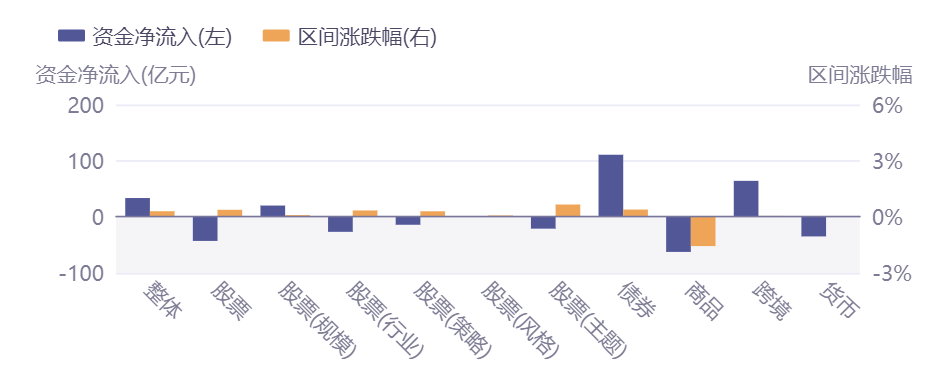
Market Overview - The A-share market showed a stabilizing rebound during the week of October 27-31, 2025, with the ChiNext Index and STAR Market 50 Index leading the gains, while the Shanghai Composite Index fluctuated around 4000 points, reaching recent highs [1] - Major indices mostly closed higher, with the Shanghai Composite Index, Shenzhen Component Index, and ChiNext Index rising by 0.11%, 0.67%, and 0.50% respectively [1] - The two-in-one margin balance quickly rebounded, indicating an increased willingness among some investors to engage in leveraged trading under the current market conditions [1] ETF Performance - New energy-related ETFs continued their upward trend, supported by significant policies in the "14th Five-Year Plan," with technology being a key focus [2] - The top ten ETFs by growth included several technology-focused products, such as the China-Korea Semiconductor ETF and battery ETFs, which saw gains exceeding 7% [2] - In September, new energy vehicle sales reached 1.604 million units, a year-on-year increase of 24.6%, with a market penetration rate climbing to 49.8% [2] - The demand for lithium batteries remains strong, with a 47.3% year-on-year increase in installed capacity for power batteries in the first half of 2025 [2] Decline in Certain Sectors - The storage chip sector faced a downturn following Samsung's announcement of a 30% price reduction for its 12-layer HBM3E storage chips, leading to a collective cooling in the storage chip sector [3] - Despite the recent decline, analysts predict that AI will drive a structural and long-term demand for storage chips, expanding the demand base beyond consumer electronics [3] - By 2026, demand for storage chips from AI servers is expected to increase significantly, indicating a dual-driven growth model for the sector [3] Fund Trends - During the week of October 27-30, 2025, the average daily trading volume fell below 2 trillion, reflecting a decrease in market activity and a slight net inflow of 33.3 billion [4] - Bond ETFs saw significant inflows, with 110.59 billion entering, indicating a shift towards fixed-income products amid changing market conditions [7] - The Tianhong Science and Technology Bond ETF led inflows with over 40 billion, followed by other bond ETFs with substantial inflows as well [7] ETF Issuance - Six new ETFs are set to be launched next week, including the China Life Asset Management CSI A500 Dividend Low Volatility ETF, which focuses on high dividend and low volatility stocks [9] - The Bosera Securities Company ETF tracks the CSI All Share Securities Company Index, reflecting the overall performance of the securities industry in China [10] - The E Fund Hang Seng Biotechnology ETF aims to reflect the performance of the largest 30 biotechnology companies listed in Hong Kong, highlighting the growth potential in this sector [11]

半导体板块保持强势,中韩半导体ETF(513310)、科创半导体设备ETF(588710)持续“吸金”
Xin Lang Ji Jin· 2025-09-26 09:24
Core Insights - The semiconductor sector is experiencing strong performance driven by surging AI demand, industrial cycle recovery, and accelerated domestic substitution [1] - Significant inflows into semiconductor ETFs have been observed, with the China-Korea Semiconductor ETF (513310) achieving an average daily trading volume of 5.5 billion yuan over the past week [1] - The Chinese semiconductor industry is entering a new phase characterized by "policy dividends + technological independence," with a focus on accelerating domestic substitution [1] ETF Performance - The China-Korea Semiconductor ETF (513310) saw a cumulative inflow of 442 million yuan, while the Sci-Tech Semiconductor Equipment ETF (588710) recorded a net inflow of 490 million yuan over a recent seven-day period [1] - The scale of the China-Korea Semiconductor ETF increased from 1.354 billion yuan to 1.878 billion yuan, marking a growth of 524 million yuan [1] - The Sci-Tech Semiconductor Equipment ETF's scale doubled from 343 million yuan to 757 million yuan during the same period [1] Industry Developments - The Ministry of Industry and Information Technology has launched a growth action plan for the electronic information manufacturing industry for 2025-2026, focusing on key components and technologies for 5G/6G [1] - Domestic leading companies in the semiconductor equipment sector have achieved technological breakthroughs, increasing the domestic production rate of semiconductor equipment from 13.6% in 2022 to 21.58% in 2024 [1] ETF Composition - The China-Korea Semiconductor ETF (513310) tracks an index composed of the China Securities Semiconductor 15 Index and the KRX Semiconductor 15 Index, covering various segments of the semiconductor industry [2] - The Sci-Tech Semiconductor Equipment ETF (588710) focuses on companies involved in semiconductor materials and equipment, benefiting from the domestic substitution trend [2] - The ETFs are managed by Huatai-PB Fund, which has over 18 years of experience in ETF operations and manages over 575 billion yuan in non-cash ETFs [2][3]
半导体板块持续火热,场内T+0交易的中韩半导体ETF(513310)成为便捷布局抓手
Xin Lang Ji Jin· 2025-09-24 05:54
Group 1 - The semiconductor sector has been performing strongly, attracting significant market attention, with the China-Korea Semiconductor ETF (513310) being a key investment tool due to its large scale and superior liquidity [1] - As of September 23, the China-Korea Semiconductor ETF (513310) reached a scale of 1.621 billion yuan, surpassing the 1.5 billion yuan mark, with a recent increase of 415 million yuan, representing a growth rate of 32.94% over the past five trading days [1] - The average daily trading volume of the China-Korea Semiconductor ETF (513310) has also increased significantly, reaching 5.282 billion yuan in the last five trading days, compared to 1.545 billion yuan on August 15 [1] Group 2 - The China-Korea Semiconductor ETF (513310) and its associated off-market funds are based on the China-Korea Semiconductor Index, which combines the CSI Semiconductor 15 Index and KRX Semiconductor 15 Index on an equal-weight basis, covering various segments of the semiconductor industry [2] - The fund manager, Huatai-PB Fund, has over 18 years of experience in ETF operations and is recognized for its leading index investment management capabilities, having created several benchmark ETFs [2]
简单解读下今天的发布会
表舅是养基大户· 2025-09-22 13:31
Core Viewpoint - The financial conference primarily focused on summarizing the achievements of financial regulation over the past five years, with no short-term policy adjustments discussed [2][5]. Monetary Policy - The monetary policy remains moderately accommodative, with a shift from addressing external conflicts to balancing internal demand, emphasizing a low-interest financing environment and avoiding structural asset overheating [6][7]. - The number of local government financing platforms has decreased by over 60%, and their debt scale has dropped by more than 50% over the past five years, marking significant progress in managing hidden local debts [8][9]. Stock Market Insights - The conference highlighted a preference for a "slow bull" market rather than a "fast bull," with the annualized volatility of the Shanghai Composite Index decreasing by 2.8 percentage points to 15.9% over the past five years [10][11]. - The technology sector's market capitalization now exceeds 25% of the A-share market, with the number of top 50 listed companies in the tech sector increasing from 18 to 24 over the last five years [12]. - The capital market is encouraged to serve the real economy, promote industrial integration, and enhance resource allocation efficiency, with significant reforms in the stock market observed in the past year [13][14]. Market Trends - Recent market movements show a surge in the semiconductor and consumer electronics sectors, driven by strong iPhone 17 sales and rising prices in memory chips due to AI demand [17][19]. - Agricultural Bank of China continues to experience significant declines, with its price-to-book ratio at 0.85, indicating ongoing valuation discrepancies compared to other major banks [21][22][26].



AI发展拉动全球半导体需求增长,中韩半导体ETF(513310)连续7个交易日获资金流入
Xin Lang Ji Jin· 2025-09-22 05:42
Core Insights - The global semiconductor industry is entering a significant growth cycle driven by demand for AI computing power, with a projected sales increase of 20.6% to $62.07 billion in 2025, and China's semiconductor sales expected to reach $17.02 billion, growing by 10.4% [1] - Capital expenditure in overseas semiconductor firms is expected to remain strong, particularly in AI-related advanced logic and memory sectors, while domestic capital expenditure is influenced by the rhythm of memory investments and the yield of advanced logic [1] - The recent positive changes in the semiconductor industry have led to strong performance in the semiconductor sector and increased investment in specialized index products, with the China-Korea Semiconductor ETF (513310) attracting a net inflow of 492 million yuan over seven trading days [1] Industry Overview - The China-Korea Semiconductor ETF (513310) tracks a combined index of the China Securities Semiconductor 15 Index and the KRX Semiconductor 15 Index, reflecting the performance of leading semiconductor companies in both markets [2] - As of September 19, 2025, the China-Korea Semiconductor Index has a price-to-earnings ratio (PE) of 17.65, which is within the historical median range and offers a valuation advantage compared to other semiconductor indices [2] - The ETF is the first cross-border product using a jointly compiled index from both countries, providing a significant opportunity for investment in the semiconductor sector amid the industry's growth [2] Fund Management - The China-Korea Semiconductor ETF is managed by Huatai-PB Fund, which has over 18 years of experience in ETF operations and is recognized for its leading index investment management capabilities [3] - As of September 19, 2025, Huatai-PB Fund's equity ETF scale reached 570.1 billion yuan, indicating strong market presence and liquidity [3]
板块高景气下特色半导体产品受青睐,中韩半导体ETF(513310)近一周规模增长超40%
Xin Lang Ji Jin· 2025-09-19 06:05
Group 1 - The semiconductor industry is experiencing a strong upward cycle driven by robust AI demand, with significant capital inflow into related ETFs [1][2] - The China-Korea Semiconductor ETF (513310) saw its scale increase from 961 million yuan on September 11 to 1.354 billion yuan on September 18, marking a growth of over 40% [1] - The ETF has attracted a total net inflow of 383 million yuan over six trading days from September 11 to September 18, with an average daily trading volume of 3.469 billion yuan in September, significantly higher than the 467 million yuan average in the first half of the year [2] Group 2 - The China-Korea Semiconductor ETF tracks a composite index of the China Securities Semiconductor 15 Index and the KRX Semiconductor 15 Index, covering various segments of the semiconductor industry [2] - The ETF is managed by Huatai-PB Fund, one of the first ETF managers in China, known for its successful track record in managing ETFs [2] - The global semiconductor sales are projected to reach 62.07 billion USD in July 2025, with a year-on-year growth of 20.6%, and cumulative sales from January to July 2025 expected to be 404.98 billion USD, also reflecting a 20.4% increase [1]
芯片板块持续强势!借道T+0中韩半导体ETF(513310)助力把握相对低估机遇
Xin Lang Ji Jin· 2025-09-17 06:42
Group 1 - The semiconductor sector is experiencing significant interest from investors, with the China-Korea Semiconductor ETF (513310) attracting a net inflow of 267 million yuan over four trading days, reaching a record high of 1.206 billion yuan in total assets [1] - The trading volume of the China-Korea Semiconductor ETF has also increased, maintaining daily trading volumes above 4 billion yuan during the same period, indicating strong liquidity [1] - The underlying index of the ETF, which tracks 15 leading semiconductor companies in China and Korea, has seen a 36.62% increase over the past six months, outperforming major technology indices [1] Group 2 - Recent events in the semiconductor industry include China's anti-dumping investigation into imported analog chips from the U.S. and the launch of self-developed chips by domestic internet leaders, indicating a steady push for domestic substitution [2] - The China-Korea Semiconductor ETF is the first product to adopt a cross-border index, reflecting trends in both countries' semiconductor industries and offering investors a unique opportunity to capitalize on growth in this sector [2] - The ETF supports T+0 trading, providing investors with flexibility, and is positioned to benefit from the ongoing advancements in both Chinese and Korean semiconductor technologies [2] Group 3 - The China-Korea Semiconductor ETF was established on November 2, 2022, and has reported returns of 27.70%, 15.87%, and 17.10% for the years 2023, 2024, and the first half of 2025, respectively [3] - The performance of the ETF has been competitive compared to its benchmark, which had returns of 27.94%, 16.80%, and 16.90% during the same periods [3] - The fund has been managed by Liu Jun and Li Mu Yang since its inception [3]