南南合作

Search documents
世粮署驻华代表:同舟共济迈向“零饥饿”的美好未来
Zhong Guo Xin Wen Wang· 2025-10-22 06:12
Core Points - The ultimate goal of the World Food Programme (WFP) is to establish a world free of hunger, which includes eliminating all forms of malnutrition, promoting sustainable agricultural practices, and ensuring smallholder farmers can achieve stable livelihoods while providing healthy nutrition for children [1][2]. Group 1: Global Food Security - The current global food security situation is urgent, with approximately 673 million people struggling with hunger as of last year, primarily due to wars, conflicts, climate change, and natural disasters [1]. - Many countries in the Global South face challenges such as insufficient agricultural production capacity, outdated technology, and incomplete industrial chains [1]. Group 2: China's Role and Experience - Since joining the WFP in 1979, China has developed valuable experiences in food security, poverty alleviation, and rural revitalization, which can be shared with other developing countries [2]. - The establishment of the South-South Cooperation Knowledge Sharing Platform in 2022 aims to facilitate the exchange of China's successful experiences in food security and nutrition improvement [2]. Group 3: Call for Cooperation - The WFP representative emphasizes the need for stronger international cooperation to support developing countries in enhancing food self-sufficiency and building sustainable agricultural systems, with a focus on vulnerable groups such as children and women [3]. - Achieving the goal of eliminating hunger requires collective efforts and innovative collaboration to help vulnerable communities regain hope [3].
第二届非洲国别研究论坛在扬州大学举办,扬州大学与中国非洲研究院将战略合作
Yang Zi Wan Bao Wang· 2025-10-21 10:22
Core Insights - The "Second Africa Country Research Forum" was held on October 18, focusing on the theme of "Strategic Autonomy and Diversification of Cooperation Partners: The Rise of the Global South and African Countries' Foreign Relations" [2] - The forum gathered experts from nearly 70 universities, research institutions, and practical sectors across China to discuss topics such as African diplomatic policies, China-Africa relations, and regional integration [2] Group 1 - The opening ceremony featured the signing of strategic cooperation framework agreements between Yangzhou University and the China Africa Research Institute, aimed at deepening collaboration and resource integration [3] - The Yangzhou University Africa Research Center launched two academic products: the journal "Red Sea Region Studies" and the blue book "Red Sea Region Development Report," marking significant contributions to the field of African studies in China [3] Group 2 - Keynote speeches included an analysis of the current African situation and China-Africa relations, emphasizing the resilience and potential of the all-weather partnership in the new era [5] - A new expert dialogue segment was introduced, discussing "Africa and China-Africa Cooperation," highlighting the evolving dynamics of international relations [5][6] Group 3 - The sub-forums addressed various topics, including African countries' diplomatic adjustments under strategic autonomy, the new dynamics of South-South cooperation, and the complexities of regional integration and governance [6] - Discussions also focused on the transformation of China-Africa cooperation from traditional pragmatism to deep integration, covering areas such as education, energy transition, and the fusion of language and artificial intelligence [6] Group 4 - The closing session summarized the research outcomes and emphasized the need for expanding the scope of country studies and innovating organizational formats for future forums [8] - The importance of translating research outcomes into practical applications and talent cultivation was highlighted, proposing a "language + profession + region" model for training young researchers in African studies [8]

农业农村部对外经济合作中心再获FAO南南合作杰出贡献表彰
人民网-国际频道 原创稿· 2025-10-21 05:42
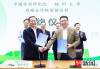
Core Insights - The Agricultural and Rural Affairs Ministry's Foreign Economic Cooperation Center (FECC) received recognition from FAO for outstanding contributions in South-South and triangular cooperation, marking its second international award since 2018 [1] - FECC has implemented over 30 projects in collaboration with FAO, accounting for 75% of China's cooperative projects with FAO, significantly benefiting smallholder farmers in developing countries [1] Project Summaries - The Uganda project established nearly 100 demonstration sites, successfully promoting over 20 advanced agricultural technologies and 68 quality crop varieties, receiving written praise from the Ugandan president [2] - The Cape Verde project focused on capacity building, establishing national agricultural laboratories and nearly 20 research demonstration bases, conducting over 100 technical guidance sessions, and training more than 30,000 individuals [2] - The Sri Lanka project introduced 12 tropical fruit cultivation and processing technologies, resulting in a 50% increase in mango production, tripling pineapple yields, and a 600% increase in seedling propagation rates, earning high praise from the Sri Lankan government [2]
2025年世界粮食论坛举行 共促全球农业和粮食体系转型(国际视点)
Ren Min Ri Bao· 2025-10-20 22:41
Core Insights - The 2025 World Food Forum, hosted by the Food and Agriculture Organization (FAO), took place in Rome, marking the FAO's 80th anniversary, with over 25,000 representatives discussing food security, climate change, and technological innovation [1][2] Group 1: Global Hunger and Food Security - Approximately 673 million people globally face hunger, with 2.3 billion in food insecurity and 2.6 billion unable to afford healthy diets [2] - The number of people facing hunger decreased by 15 million from the previous year, primarily due to improvements in Southeast Asia, South Asia, and South America, although regions like Africa and West Asia continue to see worsening conditions [2] - Conflict is identified as the leading cause of acute food insecurity, affecting around 140 million people across 20 countries, with Sudan confirmed to be experiencing famine [2] Group 2: Food Prices and Economic Challenges - Rising food prices are a critical global challenge, exacerbating food insecurity and malnutrition, with the FAO's September 2025 food price index significantly higher than the previous two years [3] - Since 2020, global food price inflation has consistently outpaced overall inflation, hindering improvements in food security [3] Group 3: Agricultural Development and Innovation - The forum emphasized the need for structural reforms and increased investment to promote resilient and sustainable agricultural development [4][6] - The FAO launched the Agricultural Food Systems Technology and Innovation Initiative, providing policy recommendations for agricultural technology innovation in low- and middle-income countries [4] - Innovative agricultural solutions, such as AI-driven irrigation optimization systems, are being tested in countries like Tajikistan and Georgia [4] Group 4: International Cooperation and Funding - The FAO's "Hand in Hand" initiative has attracted participation from over 80 countries, raising over $8 billion to support agricultural projects [5] - The "Global Alliance Against Hunger and Poverty," initiated by Brazil, includes 105 countries and aims to enhance cooperation in food security [5] - The FAO recognized China's significant contributions to global food security, with over $130 million invested in various projects benefiting over 1 million farmers [7][8]
合力培育中赤几友谊的常青树(大使随笔)
Ren Min Ri Bao· 2025-10-18 22:02
民心相通是中国和赤道几内亚关系的坚固纽带。中国每年都为赤几提供各类人力资源培训的机会,越来 越多的赤几学生通过中国政府奖学金或自主申请到中国留学。赤道几内亚国立大学孔子学院和当地多所 中小学开设的孔子课堂,为当地民众打开了一扇认识中国的窗户,中文已经是当地学生最喜欢的外语之 一,中国文化成为了赤几多元文化的重要组成部分。两国不断拓展在媒体、音乐、体育等方面的交流, 促进人文相亲。 非洲中西部的几内亚湾地区,常可以看到高大挺拔、树伞如盖的木棉树,它也是赤道几内亚的国树。站 在新的历史起点上,中赤几两国将继续同舟共济、携手努力,把政治互信的根扎深,把互利合作的干养 壮,使人文交流的叶茂盛,相信如木棉树一般茁壮的中赤几友谊之树在双方共同浇灌下,定会枝繁叶 茂、果实累累,不断惠及两国人民。 肝胆相照是中国和赤道几内亚友谊的鲜明底色。两国建交初期,中国在自身并不宽裕的情况下坚定不移 帮助赤几经济社会发展。2008年汶川特大地震发生后,奥比昂总统派外长专程将100万欧元送到灾区。 2016年,赤几政府捐资修建的"中国—赤道几内亚友谊小学"在云南省金平苗族瑶族傣族自治县落成。面 对新冠疫情,两国团结互助,中方率先向赤几提供 ...
“中国的影响力建立在合作的基础上”
Ren Min Ri Bao· 2025-10-17 22:13
10月16日,国家主席习近平向联合国粮食及农业组织成立80周年致贺信。习近平主席在贺信中高度赞扬 联合国粮食及农业组织(粮农组织)成立80年来取得的巨大成就,就加强全球粮食及农业治理发出号召 倡议,充分彰显了中国推动构建人类命运共同体的坚定决心和历史担当。接受本报记者采访的各方人士 表示,习近平主席的贺信体现出对粮农组织和世界粮食安全的高度重视,展现出中国的大国责任担当。 各方愿与中国和粮农组织等共同努力,为应对全球粮食安全挑战、增进人民福祉作出更大贡献。 "期待未来粮农组织和中国进一步深化南南合作" "中国在国内广大农村地区实现的发展变革,为其他发展中国家提供了珍贵的经验和范例。"联合国国际 农业发展基金助理副总裁多纳尔·布朗高度评价中国对全球农业发展所作出的贡献,"中国以积极行动守 护全球粮食安全。中国坚定支持南南及三方合作,在推动全球农业农村发展中发挥了重要作用,为全球 南方国家落实联合国2030年可持续发展议程贡献了力量。" 哥伦比亚驻罗马联合国机构大使、农业和农村发展部前部长珍妮弗·莫西卡表示:"习近平主席贺信展示 出的发展与合作意愿对哥伦比亚等拉美国家十分重要。哥伦比亚与中国有着共同的发展需求,许 ...
新华时评丨为粮安天下注入中国智慧
Xin Hua She· 2025-10-16 13:18
Core Insights - Global food security is deteriorating due to multiple crises such as regional conflicts, extreme weather, and economic shocks, affecting billions of people who still struggle with hunger [1] - China, as the world's largest grain producer, has successfully addressed its own food security for over 1.4 billion people, contributing significantly to global food security [1] - China actively provides emergency food aid to countries facing natural disasters and humanitarian crises, sharing agricultural development experiences and practical technologies to enhance food production capabilities in developing nations [1][2] Group 1 - China's commitment to food security is reflected in its active participation in global initiatives, advocating for the stability of the global food supply chain and opposing trade barriers that exacerbate hunger [2] - Collaborative documents like the "China-Pacific Island Countries Agricultural and Fishery Cooperation Nanjing Consensus" emphasize the need for international cooperation to combat food crises [2] - China promotes a "teach a man to fish" approach by not only providing immediate food aid but also enhancing the self-sufficiency of developing countries through technology transfer and knowledge sharing [2][3] Group 2 - Since September 2021, China has conducted over 300 agricultural technology training sessions for policymakers and agricultural technicians from nearly 150 countries, covering a wide range of topics [3] - Collaborations with international organizations like the World Food Programme have facilitated the sharing of practical knowledge and technologies through digital platforms, enhancing agricultural modernization efforts globally [3] - China's approach to food security transcends traditional aid models, focusing on capacity building, technical cooperation, and experience sharing, reflecting a commitment to a more equitable and sustainable future [3]
专访丨中国为全球粮食安全注入更多确定性——访世界农业遗产基金会主席库哈夫坎
Xin Hua Wang· 2025-10-16 07:10
Core Viewpoint - China is enhancing global food security through practical actions, addressing challenges posed by climate change, geopolitical conflicts, and supply chain disruptions [1][2] Group 1: China's Role in Global Food Security - China has maintained its own food security while contributing to global stability through South-South cooperation, technological innovation, and knowledge sharing [1][2] - The country has shifted its focus from domestic supply to global governance, emphasizing collaborative efforts rather than unilateral aid [1][3] Group 2: Agricultural Cooperation and Technology Transfer - China collaborates with organizations like the FAO and WFP to establish agricultural technology demonstration and training platforms in Asia, Africa, and Latin America, benefiting millions of farmers [2][3] - The emphasis is on low-cost, sustainable, and replicable technologies that empower local farmers rather than creating dependency on external aid [2][3] Group 3: Systemic Innovations and Sustainable Practices - China's agricultural practices integrate traditional wisdom with modern technology, promoting green and digital transformations in agriculture [3][4] - The country is moving towards a comprehensive governance model that includes ecological safety and cultural heritage, providing a sustainable agricultural governance paradigm for the world [2][4] Group 4: Long-term Commitment to Global Food Governance - China's approach is evolving from short-term aid to long-term co-construction, focusing on systemic governance and global responsibilities [4] - The nation is not only ensuring its own food security but is also helping the world to better sustain itself [4]
【高端访谈】中国为全球粮食安全注入更多确定性——访世界农业遗产基金会主席库哈夫坎
Xin Hua She· 2025-10-16 05:34
Core Viewpoint - The global food security challenges are intensifying due to climate change, geopolitical conflicts, and supply chain disruptions, with China playing a crucial role in stabilizing the global food system while ensuring its own food security [1] Group 1: China's Role in Global Food Security - China has transitioned from focusing solely on domestic supply to participating in global governance and cooperation in food security [1][4] - Through South-South cooperation, technology innovation, and knowledge sharing, China is becoming a reliable and stable force in the global food system [1][4] - China's agricultural cooperation emphasizes sustainable and maintainable practices, promoting low-cost, replicable technologies that empower local farmers rather than creating dependency on external aid [2][3] Group 2: Practical Initiatives and Collaborations - China collaborates with organizations like the FAO, IFAD, and WFP to establish agricultural technology demonstration and training platforms across Asia, Africa, and Latin America, benefiting millions of farmers [2] - Initiatives include promoting high-yield hybrid rice, water-saving irrigation, and small farmer organization development, enhancing the resilience of the global food system [2][3] - The integration of traditional agricultural wisdom with modern technology is evident in practices like ecological farming and digital agriculture, which improve productivity and sustainability [3] Group 3: Long-term Vision and Systemic Governance - China's approach is shifting global food governance from short-term aid to long-term co-construction and from single production increases to systemic governance [4] - The focus is on building integrated capabilities that encompass ecology, technology, market, and organization, demonstrating China's commitment to global food security [4]
南方的潮涌——中国海油在巴西的奋斗、合作与展望
Huan Qiu Shi Bao· 2025-10-15 11:59
Core Viewpoint - China National Offshore Oil Corporation (CNOOC) actively engages in South-South cooperation, leveraging energy as a link to foster development across various regions, including East Africa, South America, Southeast Asia, and the Caribbean [2][5]. Group 1: CNOOC's Role in South-South Cooperation - CNOOC is recognized as a pioneer in South-South cooperation, facilitating resource optimization and energy security while sharing technology and talent development experiences [2][5]. - The company has been involved in diverse practices such as aviation fuel trade, deep-sea development, agricultural assistance, youth empowerment, and community building [2]. Group 2: CNOOC's Engagement in Brazil - CNOOC has been increasingly proactive in participating in China-Brazil cooperation, focusing on energy collaboration, economic development, and community construction [7]. - Brazil is home to the world's largest deepwater salt oil fields, and CNOOC is viewed as a key international partner by Brazil's national oil company, Petrobras [8]. Group 3: Project Management and Innovation - CNOOC has played a significant role in project management for FPSO (Floating Production Storage and Offloading) projects in Brazil, particularly in the Libra block, showcasing its integrated capabilities [10][11]. - The company has successfully adapted its management experience to enhance project efficiency, earning trust and recognition from Brazilian partners [10][11]. Group 4: Achievements and Future Prospects - In 2024, CNOOC won a long-term contract for 12 million barrels of crude oil from the Mero oil field, marking its first successful bid for a long-term contract in Brazil [11]. - CNOOC's overseas net production reached 58 million barrels of oil equivalent in Q1 2025, reflecting a 1.9% year-on-year increase, primarily driven by projects in Brazil [11]. Group 5: Community Engagement and Social Responsibility - CNOOC has contributed to local community development in Brazil, providing support during natural disasters and engaging in initiatives that enhance the lives of local residents [16]. - The company emphasizes the importance of mutual support and cooperation, aligning with the principles of the Belt and Road Initiative [16][18]. Group 6: Future Directions - CNOOC aims to deepen its integration into Brazil's socio-economic development, fostering self-reliance and confidence among local communities [18]. - The company is optimistic about Brazil's potential as a new growth point in the global economy, particularly in the context of energy transition and sustainable development [18][20].