全球粮食安全

Search documents
把牢团圆餐中的幸福
Xin Lang Cai Jing· 2026-02-20 00:05
Group 1 - The core viewpoint emphasizes the importance of agricultural modernization and rural revitalization as a foundation for national survival and development, highlighted by the release of the central government's guiding document on agriculture and rural affairs [2] - The document outlines a strong commitment to ensuring food security, focusing on maintaining production capacity, ecological sustainability, and increasing both yield and income [2][3] - By 2025, China's grain production is projected to reach 1.43 trillion jin, marking a 1.2% increase from the previous year, with both total output and yield expected to hit historical highs [3] Group 2 - The current food security situation in China is stable, with continuous harvests reinforcing confidence, but there are emerging risks and challenges due to global instability and extreme weather events affecting agricultural production [3] - China has actively engaged in international agricultural cooperation, promoting agricultural technologies and training professionals in developing countries, thereby contributing to global food security [4] - The government aims to ensure that every piece of arable land becomes productive and that technological advancements are integrated into agricultural practices to strengthen the food security defense line [5]


先正达拟赴港上市,最高募资100亿美元!或成今年全球最大IPO
Sou Hu Cai Jing· 2026-02-09 15:53
Core Viewpoint - Syngenta Group, a leading agricultural technology company under China National Chemical Corporation, plans to launch an IPO in Hong Kong this year, potentially raising up to $10 billion, which could become one of the largest IPOs globally in 2023 [1][2]. Group 1: Company Overview - Syngenta Group is recognized as a global leader in agricultural technology, with operations spanning pesticides, seeds, and digital agriculture, serving major agricultural markets worldwide [1]. - The company has a strong influence in crop protection, seed development, and agricultural technology innovation, characterized by stable cash flow and long-term growth potential [1]. Group 2: IPO Details - The IPO is expected to be a phased approach, with the final fundraising amount being flexible based on market conditions, investor subscriptions, and overall pricing levels [2]. - If successful in raising close to $10 billion, the IPO would be rare in the Hong Kong market and prominent in the global IPO landscape [2]. Group 3: Strategic Importance of IPO - The funds raised from the IPO will help optimize Syngenta's capital structure, reduce financial costs, and provide substantial support for R&D, industry consolidation, and global market expansion [3]. - Public market pricing will enhance the company's brand influence and transparency, which is crucial for a globally operating agricultural technology firm [3]. Group 4: Industry Challenges - The agricultural and agrochemical sector faces external challenges, including global agricultural price fluctuations, stricter environmental regulations, and changes in the international trade environment, which may impact industry profitability and market expectations [3]. - Investors are increasingly focusing on the company's technological barriers, product upgrade capabilities, and responses to policy and cyclical fluctuations rather than just short-term performance [3]. Group 5: Macro Impact - A successful IPO for Syngenta would positively impact the Hong Kong capital market by increasing financing scale and international attention, enhancing Hong Kong's presence in the global capital market [4]. - It would also provide a demonstration effect for other competitive Chinese enterprises considering listing in Hong Kong and improve the investor structure by attracting long-term capital [4]. - The IPO reflects the ongoing demand for high-quality large assets in the global capital market, especially in a context of differentiated economic growth and fluctuating market risk preferences [4].
维护全球粮食安全的中国智慧(国际论坛)
Ren Min Ri Bao· 2026-01-14 21:57
Core Viewpoint - China, as a populous nation, not only meets the food needs of its over 1.4 billion population but also enhances global food system resilience through South-South cooperation, making significant contributions to global food security [1][2]. Group 1: Agricultural Development in China - China's rural economy has transformed significantly, with increased vitality and diversification, leading to improved living standards for farmers [1]. - The Chinese government consistently prioritizes agricultural issues, as evidenced by the annual issuance of the Central No. 1 Document focusing on "agriculture, rural areas, and farmers," ensuring policy stability and continuity [1]. - China has developed leading agricultural technologies, including hybrid rice and integrated pest management, alongside a progressively digital and intelligent agricultural supply chain [1]. Group 2: Sharing Agricultural Wisdom and Experience - China draws from its rich agricultural heritage, which combines ecological wisdom with tourism potential, and integrates agricultural heritage protection with rural revitalization [2]. - The country is committed to sharing its extensive experience with other developing nations through South-South cooperation projects, where Chinese agricultural experts work closely with local farmers to adapt technologies to local ecological and economic conditions [2]. - Following the achievement of comprehensive poverty alleviation, China aims for higher agricultural and rural development goals, as outlined in the "14th Five-Year Plan," which suggests new deployments for accelerating agricultural modernization [2].
重大披露!社保新入3大龙头,重仓抄底却遇牛市套牢,浮亏持续扩大
Sou Hu Cai Jing· 2026-01-14 19:41
Core Insights - The social security fund, known as the "national team," has faced significant losses on recent investments in various companies, including Zhongchong Co. and Poly Developments, despite their strong market positions and low price-to-book ratios [1][3][5] - A trend has emerged where the social security fund's investments in leading companies across multiple sectors have resulted in substantial unrealized losses, with many stocks down over 50% over three years [3][5] - The fund's strategy appears to focus on acquiring shares in industry leaders at low valuations, reminiscent of its approach during market downturns in 2018 [5][6] Investment Performance - The social security fund's recent investments include 1.44 million shares of Zhongchong Co., which has a 9% market share in the domestic pet food market, but the stock price has declined since the purchase [1] - Poly Developments, the 2024 real estate sales champion, has a price-to-book ratio of 0.47, yet its stock continues to hit new lows [3] - The fund's investment in China Metallurgical Group resulted in a short-term loss exceeding 80 million yuan after acquiring 100 million shares [3] Sector Analysis - In the aluminum sector, the fund increased its holdings in Nanshan Aluminum to 164 million shares, making it the fifth-largest shareholder, but the stock price has also fallen [3] - The renewable energy sector saw the fund invest in Jiazhe New Energy with 19.45 million shares, despite the company's high gross margin of 57.6% [3] - In the pharmaceutical industry, the fund acquired 13.94 million shares of Kelun Pharmaceutical, which has a market share of over 40% in large-volume parenterals, but the stock price has not improved [5] Long-term Strategy - The social security fund's investment approach reflects a preference for industry leaders, with recent acquisitions spanning real estate, agriculture, mining, and high-end manufacturing [5][6] - The fund's investments are based on thorough research, targeting companies with strong fundamentals that have not yet been fully reflected in their stock prices [11] - The fund's long-term investment horizon is evident, as it continues to invest in companies despite short-term market fluctuations [6][8] Market Trends - The fund's investments align with broader industry trends, such as the focus on food security and the demand for intelligent automotive technologies [6] - The global demand in certain sectors has decreased by 10%, while companies are increasing R&D investments, which may impact short-term profitability but enhance long-term efficiency [8] - Policy changes are affecting valuation systems, with state-owned enterprises being urged to focus on core responsibilities, leading to asset divestitures that may impact market perceptions [9]

东西问丨穆罕默德·曼苏里:中国实践如何助力保障全球粮食安全?
Zhong Guo Xin Wen Wang· 2026-01-01 08:07
Core Insights - The global food security situation remains severe, with approximately 673 million people facing hunger and 2.3 billion in food insecurity, exacerbated by regional conflicts, extreme weather, and trade barriers [1] - China's practices in ensuring food security and promoting rural revitalization offer valuable insights for the world, particularly as the FAO approaches its 80th anniversary in 2025 [1] Group 1: Effective Practices in Rural Revitalization - The FAO's strategic pillars of "better production, better nutrition, better environment, and better life" align closely with China's rural practices observed during the visit [2] - China demonstrates effective production methods that balance productivity and sustainability, including diverse agricultural practices and livestock farming [2] - There is a strong emphasis on diversified food production, creating job opportunities, and enhancing quality of life through the development of fresh produce and health-related food products [2] - Environmental protection efforts include wetland conservation and the production of green and organic foods, showcasing a commitment to sustainable practices [2] Group 2: Key Characteristics of China's Rural Revitalization - Two notable characteristics of China's rural revitalization are the guiding role of local governments and the entrepreneurial spirit of rural residents [5] - Local governments provide public investment and ensure that development benefits cooperatives and farmers, while also maintaining fair pricing mechanisms [5] - The entrepreneurial drive among rural residents has led to successful local businesses that create jobs and contribute to poverty alleviation [5] Group 3: Investment in Human Capital - Investment in human capital is crucial for sustainable development, yet rural development has often focused more on physical infrastructure than on enhancing human capabilities [8] - Human capital investment includes education, training, and health, which are essential for empowering farmers and entrepreneurs [8] - The FAO has identified six key recommendations for human capital investment, emphasizing the importance of partnerships, inclusive policies, and continuous innovation [9] Group 4: China's Contributions to Global Food Security - China has made significant contributions to global food security, achieving the UN Millennium Development Goal of halving extreme poverty and hunger ahead of the 2030 target [11] - The country has ensured stable supplies of staple foods and maintained abundant availability of various agricultural products, improving national nutrition [11] - China's experience in poverty alleviation and food security serves as a model for other countries, particularly through South-South cooperation initiatives [12]

欧洲突然发现:俄罗斯掌握了自己的另一命门,制裁破洞让普京赚翻
Sou Hu Cai Jing· 2025-12-19 06:16
Core Viewpoint - The EU's sanctions on Russian fertilizers, intended to target Russia, have inadvertently increased production costs for European farmers, leading to a significant economic burden on the agricultural sector [1][3][12]. Group 1: Impact on European Farmers - European farmers are facing skyrocketing production costs due to rising fertilizer prices, with urea prices increasing by 26.5% from May to July 2023, reaching $496 per ton [3]. - Farmers in Greece and France report dramatic increases in operational costs, with electricity bills soaring from €250-300 to nearly €1000, and nitrogen fertilizer prices rising from over €200 to €1000 per ton [5][12]. - Many farmers are delaying fertilizer purchases due to high costs and declining wheat prices, which have fallen to a five-year low [5][15]. Group 2: Russian Fertilizer Exports - Despite sanctions, Russian fertilizer exports to Europe have increased, with urea exports rising by 48% compared to the pre-war average [3][7]. - Russia's fertilizer production capacity is significantly higher than domestic demand, allowing for continued exports even amidst sanctions [7][8]. Group 3: EU's Dependency and Market Dynamics - The EU relies on Russia for approximately 25% of its fertilizer imports, creating a complex dependency that undermines the effectiveness of sanctions [7][10]. - In anticipation of the 2025 import tariffs, EU countries have increased their fertilizer imports from Russia, indicating skepticism about the sanctions' impact [10]. Group 4: Energy Costs and Production Challenges - The surge in natural gas prices, a key input for nitrogen fertilizer production, has led to a significant reduction in Europe's fertilizer production capacity, with major companies like BASF cutting ammonia production [12][13]. - The intertwined issues of energy costs and fertilizer supply are exacerbating the global food security crisis, with warnings of a potential 40% reduction in global food production if fertilizer trade issues are not resolved [13][15]. Group 5: Global Food Security Concerns - The dual impact of the fertilizer crisis and disrupted grain supplies from Russia and Ukraine poses a significant threat to global food security [15]. - The UN Secretary-General has called for the facilitation of Russian fertilizer exports to alleviate the humanitarian crisis, highlighting the urgent need for a resolution [15].
聚焦进博|继续推动中美农贸“压舱石”作用
Guo Ji Jin Rong Bao· 2025-11-07 13:01
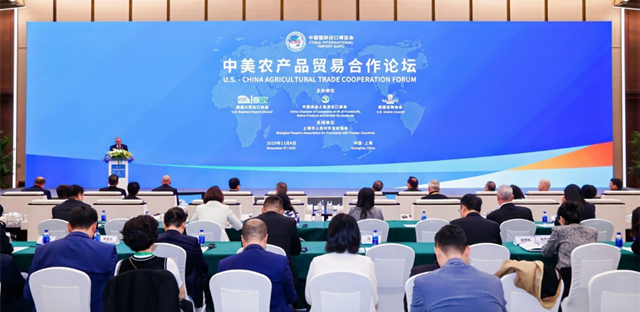
Core Insights - The forum aimed to strengthen agricultural trade cooperation and mutual trust between China and the U.S., addressing global food security and sustainable development amidst geopolitical challenges [1][3][4] Group 1: Forum Overview - The "U.S. Agricultural Trade Delegation" participated in the China International Import Expo, focusing on enhancing agricultural trade cooperation [1] - The forum received strong support from local associations and concluded successfully on November 7 [1] Group 2: Agricultural Trade Significance - China is the world's largest soybean importer, with an expected import volume of 105 million tons in 2024, highlighting the importance of U.S.-China soybean trade [3] - The U.S. Department of Agriculture predicts global soybean production will reach 427 million tons by 2025-2026, with the U.S. contributing over 25% [3] Group 3: Perspectives from Industry Leaders - U.S. Soybean Export Council CEO expressed optimism about the recovery of U.S.-China agricultural trade, emphasizing agriculture as a bridge for international cooperation [3] - Chinese officials highlighted the mutual benefits of agricultural cooperation, which is crucial for the healthy development of bilateral relations [3][5] Group 4: Consumer Trends and Market Opportunities - The forum discussed the need to enhance understanding of Chinese consumer demands, which are increasingly driving supply [8] - Various U.S. agricultural representatives shared insights on their products and the importance of meeting the high-quality standards expected by Chinese consumers [6][7]
继续推动中美农贸“压舱石”作用
Guo Ji Jin Rong Bao· 2025-11-07 11:40
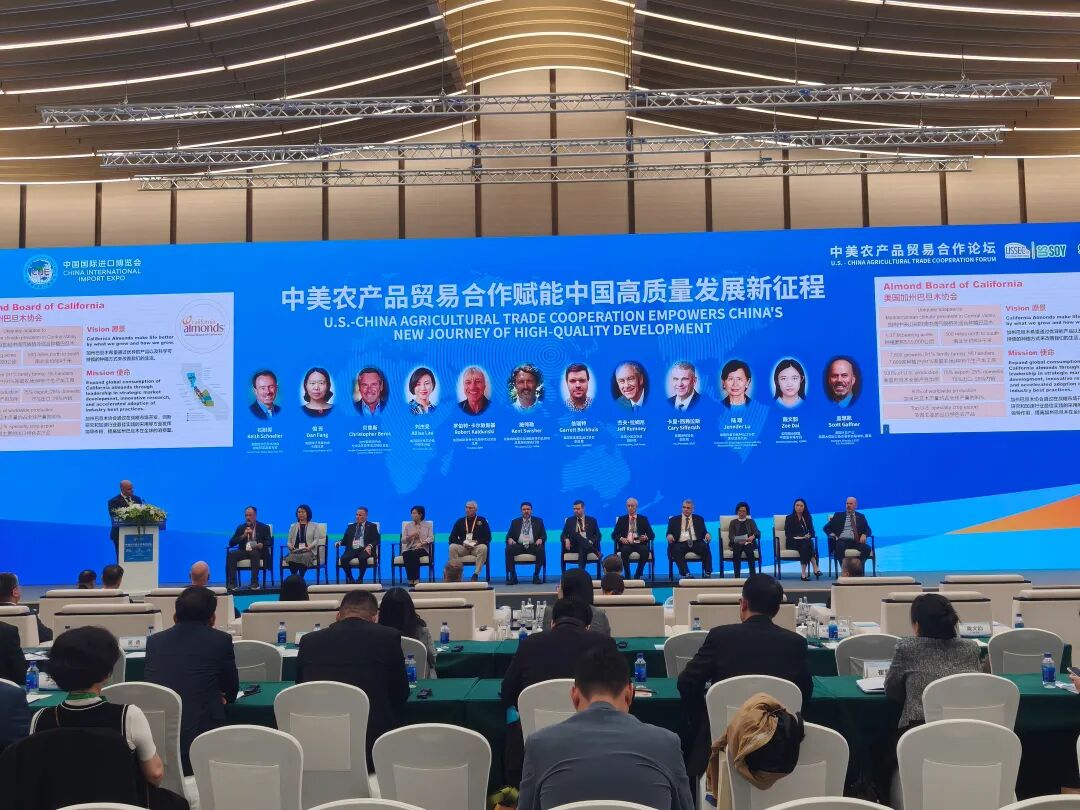
Group 1 - The core focus of the "China-U.S. Agricultural Trade Cooperation Forum" is to enhance agricultural trade cooperation and mutual trust between China and the U.S., contributing to global food security and sustainable development goals [1][2] - The forum emphasizes the importance of U.S.-China soybean trade, with China projected to import 105 million tons of soybeans in 2024, maintaining its status as the largest soybean importer globally [2] - The U.S. Department of Agriculture forecasts global soybean production to reach 427 million tons in the 2025-2026 period, with the U.S. contributing over 25% and China maintaining imports around 100 million tons [2] Group 2 - U.S. agricultural representatives express optimism about the recovery of agricultural trade relations, highlighting agriculture as a bridge for international cooperation and trust [2] - The Chinese Ministry of Commerce emphasizes the mutual benefits of agricultural cooperation, stating that stable economic relations foster agricultural collaboration, which in turn promotes healthy bilateral relations [2] - The forum participants discuss the need to strengthen cooperation and investment to achieve long-term win-win outcomes, focusing on expanding trade and market opportunities [3] Group 3 - The California Almond Association highlights its significant investment in the Chinese market over the past 30 years, with China being a key destination for its almond exports [4] - The California Wine Association, participating for the first time, notes that California produces 85% of U.S. wine and aims to meet the diverse and high-quality demands of Chinese consumers [4] - The Wisconsin Ginseng Growers Association reports that 65% of its ginseng production is exported directly to China, showcasing a long-standing trade relationship [4] Group 4 - The U.S. Rice Industry Association emphasizes its commitment to sustainability and high quality, with American rice being non-GMO and traceable from farm to table [5] - Participants note a trend of "consumer-driven supply" in the Chinese market, indicating the need for improved insights into Chinese consumer demands as a competitive advantage [5]
14家美国农产品协会齐聚进博会,“农业人”怎么看中美农业合作
第一财经· 2025-11-07 07:34
Core Viewpoint - The "China-US Agricultural Trade Cooperation Forum" emphasizes the importance of agricultural cooperation between China and the US, highlighting mutual benefits and the potential for enhancing global food security and economic prosperity [3][6]. Group 1: Forum Overview - The forum was held during the 8th China International Import Expo, co-hosted by various US agricultural associations and the China Chamber of Commerce for Import and Export of Foodstuffs and Native Produce [3][6]. - Key representatives from 14 US agricultural associations and Chinese agricultural trade experts attended, indicating a strong commitment to fostering agricultural trade [3][6]. Group 2: Agricultural Trade Significance - Agricultural cooperation is deemed a crucial component of the economic relationship between the two countries, with both sides recognizing the vast potential for collaboration [6][7]. - The US Department of Agriculture projects that global soybean production will reach 427 million tons in the 2025/26 season, with the US contributing over 25% [6]. Group 3: Future Outlook - US agricultural leaders express optimism about the recovery and revitalization of agricultural trade with China, viewing agriculture as a bridge for international cooperation [6][8]. - The US Grain Council's president emphasizes the long-standing commitment to the Chinese market, stating that the US will continue to supply agricultural products as long as there is demand [8][9]. Group 4: Market Dynamics - The US is a major supplier of sorghum to China, with 5.683 million tons imported in 2024, accounting for 65.65% of total imports [9]. - The US agricultural sector faces challenges such as high input costs and declining prices, but remains optimistic about future trade opportunities [10].
14家美国农产品协会齐聚进博会,“农业人”怎么看中美农业合作
Di Yi Cai Jing· 2025-11-07 06:18
Core Insights - The "China-US Agricultural Trade Cooperation Forum" emphasizes the importance of agricultural cooperation between the two countries, highlighting mutual benefits and the potential for global food security and economic prosperity [1][3] - The forum aims to strengthen agricultural trade cooperation and trust amid global challenges such as geopolitical tensions and supply chain disruptions, positioning agricultural trade as a stabilizing force in US-China relations [3][4] Group 1: Trade Relations - The US and China are significant agricultural trade partners, with agricultural cooperation being a crucial component of their economic relationship [1][3] - The US soybean industry is a key area of focus, with the USDA predicting global soybean production to reach 427 million tons by the 2025/26 season, with the US contributing over 25% [3] - The US Grain Association expresses commitment to maintaining trade relations with China, emphasizing the importance of open and mutually beneficial trade [4][6] Group 2: Market Dynamics - China is the largest market for US sorghum, with imports expected to reach 8.657 million tons in 2024, primarily from the US, Australia, and Argentina [6] - The US is facing challenges with high input costs and declining prices, impacting farmers' ability to sustain their operations [6][7] - The US agricultural sector is optimistic about future trade opportunities, emphasizing the need for continued communication to improve trade relations [7]