太空经济

Search documents
太空光伏是什么?为何成为头部企业前瞻布局的焦点?
Jing Ji Ri Bao· 2026-01-08 07:52
Core Viewpoint - The article discusses the emerging focus on space photovoltaic technology, highlighting its potential to meet the energy demands of future space exploration and artificial intelligence applications, as well as the strategic importance of this technology in the global energy landscape [1][4]. Group 1: Space Photovoltaic Technology Overview - Space photovoltaic refers to solar power systems installed on spacecraft or satellites, which can provide energy for these systems and potentially transmit energy back to Earth in the future [1]. - The technology is gaining attention due to the increasing demand for stable energy supply in space, driven by the growth of satellite internet, space station construction, and deep space exploration [1][2]. Group 2: Advantages of Space Photovoltaic - Space photovoltaic systems can generate energy continuously without the limitations of weather or day-night cycles, offering a significantly higher theoretical efficiency compared to ground-based systems [2]. - The technology is seen as a crucial energy support for space computing and deep space exploration, representing a new energy solution that encompasses generation, wireless transmission, and ground reception [2]. Group 3: Challenges Facing Space Photovoltaic - The technology faces significant challenges, including the need for materials that can withstand extreme space conditions, high deployment and maintenance costs, and an immature supply chain for advanced photovoltaic components [3]. - The lack of large-scale production of next-generation photovoltaic cells and the need for improved wireless energy transmission efficiency are also critical hurdles [3]. Group 4: Strategic Value of Space Photovoltaic - Space photovoltaic has the potential to transform the global energy supply structure, contributing to carbon neutrality goals and enhancing national energy security [4]. - The development of this technology could drive advancements in lightweight materials, wireless energy transmission, and robotics, fostering a cycle of innovation and industrial upgrade [4]. - Early investment in space photovoltaic infrastructure is viewed as essential for securing future energy rights in the competitive space economy [4]. Group 5: Development Pathways for Space Photovoltaic - The commercialization of space photovoltaic is expected to be a gradual process, starting with energy supply for specific space facilities, then expanding to support low Earth orbit satellite constellations, and eventually enabling large-scale energy transmission to Earth [4]. - Collaboration between state-owned enterprises and private companies is crucial for leveraging engineering capabilities and technological innovations in the development of space photovoltaic [5]. Group 6: Future Outlook - While technological breakthroughs and industry maturity will take time, the pursuit of energy freedom remains a driving force for the ongoing revolution in space photovoltaic technology [6].
2025年中国航天发射92次创新高 产业链上市公司协同发力
Zheng Quan Ri Bao Wang· 2026-01-04 13:55
Group 1 - In 2025, China is expected to achieve a record high of 92 space launches, marking a significant milestone in its aerospace industry [1][2] - The aerospace industry in China is characterized by increased launch frequency, active participation of private rocket companies, and high levels of capital involvement, indicating a new phase of high-quality development towards becoming a space power [1][2] - State-owned enterprises play a crucial role in leading the industry, with companies like Aerospace Science and Technology Corporation and Guizhou Aerospace Electric Co., Ltd. providing essential components and technologies for space missions [1][2] Group 2 - Private companies are filling niche markets, with firms like Wuxi Parker New Material Co., Ltd. and Jiangxi Lianchuang Optoelectronics Co., Ltd. making significant technological advancements in aerospace components and superconducting technologies [2] - The year 2026 is anticipated to continue the trend of high-frequency launches, with a focus on rocket recovery technologies, which may accelerate the growth of private aerospace enterprises [2] - The capital market is opening up for commercial aerospace companies, with new regulations allowing quality commercial rocket firms to list on the Sci-Tech Innovation Board, enhancing funding opportunities for the sector [3]


火箭回收大战背后,大航天时代已经拉开序幕
Xin Lang Cai Jing· 2026-01-04 11:30
Core Viewpoint - The article highlights the intense competition in the reusable rocket sector, particularly between Chinese companies and SpaceX, with significant advancements in technology and launch capabilities being made by both sides [1][22][41]. Group 1: Chinese Space Achievements - China achieved a record of 88 space launches in 2025, nearing the 100-launch milestone, with notable events including the successful emergency launch of Shenzhou 22 and a record of three launches in one day [1][21]. - The Long March 12甲 rocket successfully launched on December 23, becoming the first methane rocket from China's national team and the fifth globally to achieve this feat, although it did not succeed in its first-stage recovery [4][25]. Group 2: SpaceX Dominance - SpaceX continues to lead the industry with a record of 163 launches in 2025, including a monthly record of 15 launches in October and a successful launch of 29 satellites in one go on December 9 [1][21]. - The Falcon 9 rocket has achieved a record of 32 reuses, showcasing the effectiveness of its recovery technology [1][21]. Group 3: Reusable Rocket Developments - Blue Origin's New Glenn rocket successfully completed its second launch with first-stage recovery, marking it as the third rocket globally to achieve vertical landing after Falcon 9 and Falcon Heavy [2][23]. - The Blue Arrow Zhuque-3 rocket, despite a landing failure, is significant as China's first attempt at orbital rocket landing and the world's second stainless steel rocket [2][23]. Group 4: Market Dynamics and Future Prospects - The emergence of multiple Chinese reusable rockets, including Zhuque-3, Long March 12甲, and Tianlong-3, indicates a strategic move to compete directly with SpaceX's Falcon 9, targeting the high-demand market segment [9][30][31]. - The article emphasizes that the 10-20 ton rocket class is becoming the market's mainstay due to its ability to efficiently deploy multiple satellites and meet the growing demand for low Earth orbit satellite constellations [11][32][34]. Group 5: Strategic Implications - The competition in the reusable rocket sector is seen as a precursor to broader geopolitical and technological rivalries, with the potential for China to surpass the U.S. in space capabilities [20][41]. - The article suggests that the ongoing developments in reusable rockets are not just about technology but also about establishing a sustainable space economy and infrastructure for future advancements [19][40].


崔传刚:科技为国而商,为需而兴
Xin Lang Cai Jing· 2026-01-01 13:35
科技为国而商,为需而兴——2025年中国商业科技的发展与2026年展望 崔传刚 新经济学家智库特约研究员 2025年,由中美主导的全球商业科技竞争,已经进入"近身博弈"的深化期,与此同时,中国科创力量在商业化赛道的强势崛起,正成为重塑全球产业格局 的关键变量。从人工智能大模型的规模化落地到人形机器人产业的场景渗透,从商业航天的规模化运营到"太空经济"的多元探索,以至于半导体芯片的自 主突破与光刻机的技术攻坚,中国的商业科技产业正在以一种"技术突破—场景验证—商业变现"的闭环发展模式,勾勒出前途远大的发展图景。 在这一年,中国的商业科技与实体经济持续深度融合,既加速推动了新质生产力的形成、夯实了中国的硬经济根基,更鲜明呈现出一种核心趋势:中国科 技商业化的进程不再仅局限于单纯经济价值的创造,而是已然与国家的战略需求形成高度协同。在一系列的关键领域,科技商业化和国家战略已形成 了"产业赋能国家、国家支撑产业"的良性互动态势,商业价值的创造与国家利益的增进正变得越发同步。 这一趋势,可以说是全球科技竞争逻辑演变的一种必然结果,同时也深受各国产业发展的客观差异影响。 来源:经济学家圈 从国际视野看,科技中立主义正日渐 ...

惊天大逆转!卫星产业ETF(159218)尾盘转为净流入!盘中规模突破15亿元历史大关
Jin Rong Jie· 2025-12-31 07:57
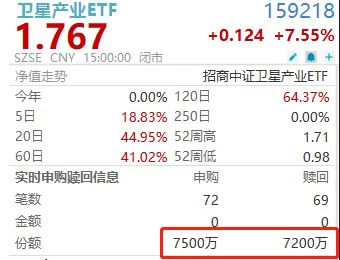
分析认为,本轮上涨源于产业进入"四轮驱动"发展阶段:政策支持明确,资本投入踊跃(超10家企业启 动IPO),技术迭代加速(可回收火箭突破),以及需求持续释放(星座组网与终端普及同步推进)。 四重动力共同推动卫星制造、发射、地面设备及运营服务全链条进入高景气周期。 作为覆盖产业链各核心环节的高效工具,卫星产业ETF(159218)已成为资金布局商业航天长期趋势的"温 度计"与"通行证"。在行业基本面持续向好的背景下,该ETF有望继续吸引中长期配置型资金,为投资 者提供参与"太空经济"战略机遇的便捷渠道。 风险提示:基金有风险,投资需谨慎。 资讯所属栏目还有更多独家策划、专家专栏,免费查阅>> 12月31日,卫星板块再现异象:数据显示,截至14时59分,卫星产业ETF(159218)涨7.36%,前几大权 重股方面,航天电子、中国卫星涨停封板,中科星图涨11.09%,资金热度不减,据Wind Level2实时行 情结合均价预估,盘中净流入超200万,此前持续维持净流出态势。截至发稿,以实时成交价估算,盘 中预估规模超15亿,在全市场同标的ETF中规模居首。 | 卫星产业ETF | | 159218 +0.124 ...
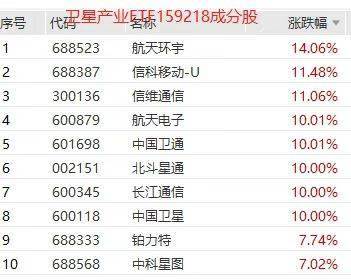
满屏涨停!卫星产业ETF(159218)午后持续上攻涨超6%引领跨年行情!航天环宇、信维通信、信科移动-U领衔
Sou Hu Cai Jing· 2025-12-31 05:53
Group 1 - The satellite industry is experiencing a significant surge, with the satellite industry ETF (159218) reaching a new annual high, reflecting strong market sentiment and capital inflow [1][3] - Key stocks within the satellite industry have shown substantial gains, with notable increases such as 14.06% for Hangda Universe and 11.48% for Xinke Mobile-U, indicating robust performance across the sector [2] - The current growth phase of the industry is driven by four main factors: clear policy support, active capital investment (with over 10 companies initiating IPOs), accelerated technological advancements (notably in reusable rockets), and sustained demand release through satellite constellation networking and terminal proliferation [2] Group 2 - The satellite industry ETF (159218) serves as an efficient tool covering all core segments of the industry chain, acting as a "thermometer" and "pass" for capital allocation in the commercial space sector [3] - With the industry's fundamentals improving, the ETF is expected to continue attracting medium to long-term investment funds, providing investors with a convenient channel to participate in the "space economy" strategic opportunities [3]


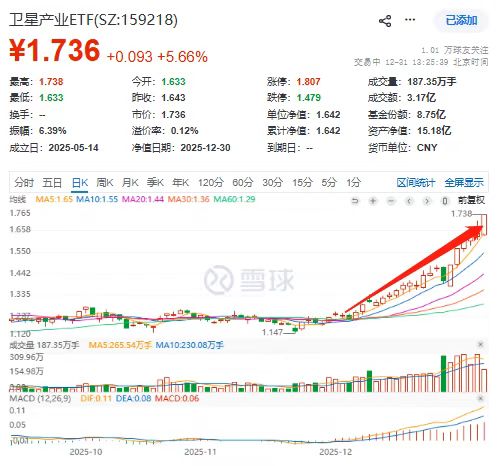
全面爆发!卫星产业ETF(159218)午后飙涨5.66%,中国卫星等成分批量涨停
Jin Rong Jie· 2025-12-31 05:51
2025年收官日,卫星产业以强劲涨势为全年行情画上句号。12月31日下午,卫星产业ETF(159218)涨幅 扩大至5.66%,继续刷新年度高点。板块龙头股集体爆发,其前三大权重股中国卫星、中国卫通、北斗 星通均强势涨停封板,显示出强大的资金凝聚力和市场情绪。 | 卫星产业ETF(SZ:159218) | | | | | | --- | --- | --- | --- | --- | | ¥1.736 +0.093 +5.66% | | | 交题中 12-31 13:25:39 北京时间 | 1.01 万球友关注 | | 三: 1.738 | 今年:1.633 | 张停:1.807 | 成交量:187.35万手 | | | 是低:1.633 | 昨收:1.643 | 跌停:1.479 | 成交额:3.17亿 | | | 摘手:一 | 市价:1.736 | 皇位净值:1.642 | 基金份额: 8.75亿 | | | 振幅: 6.39% | 溢价率:0.12% | 景计净值:1.642 | 名产净值:15.18亿 | | | 成立日:2025-05-14 | 净值日期:2025-12-30 | 到期日 :- | ...

钧达股份,签约卫星电池独角兽,布局钙钛矿太空能源应用
DT新材料· 2025-12-28 16:05
Core Viewpoint - The article discusses the strategic partnership between JunDa Co., Ltd. and Shangyi Optoelectronics, focusing on the development and commercialization of perovskite battery technology for space energy applications, highlighting the advancements in battery efficiency and the growing demand for energy solutions in the space economy [1][2]. Group 1: Strategic Partnership and Technological Advancements - JunDa Co., Ltd. has signed a strategic cooperation agreement with Shangyi Optoelectronics to invest in the latter as a strategic shareholder, aiming to integrate industry and scenario resources for perovskite battery technology applications in space energy [1]. - JunDa has achieved a laboratory efficiency of 32.08% for perovskite tandem batteries, positioning itself at the forefront of the industry, with plans to complete the first industrialized N-type + perovskite tandem battery by November 2025 [1]. - The partnership will establish a collaborative mechanism for technology research and development, on-orbit verification, and application scenario expansion [1]. Group 2: Market Trends and Demand - The global low Earth orbit (LEO) satellite constellation deployment is entering a rapid growth phase, with over 100,000 satellites planned, indicating a shift towards dense networking and large-scale development [2]. - The functionality of low Earth orbit satellites is evolving from remote sensing and communication to on-orbit AI training and edge computing, increasing the demand for lightweight and efficient energy solutions [2]. - The space economy is becoming a core arena for reshaping global technological competition, with significant implications for energy supply and thermal efficiency in ground computing facilities [2]. Group 3: Advantages of Perovskite Batteries - Perovskite batteries offer advantages such as ultra-lightweight, low cost, high radiation resistance, and flexible deployment, making them a revolutionary solution for space energy challenges [3]. - The lightweight nature of perovskite batteries can significantly reduce spacecraft payload weight, thereby lowering launch costs [3]. - The cost of raw materials for perovskite batteries is substantially lower compared to traditional gallium arsenide batteries, making them suitable for large-scale applications [3].


大消息引爆!集体涨停
Ge Long Hui A P P· 2025-12-25 09:23
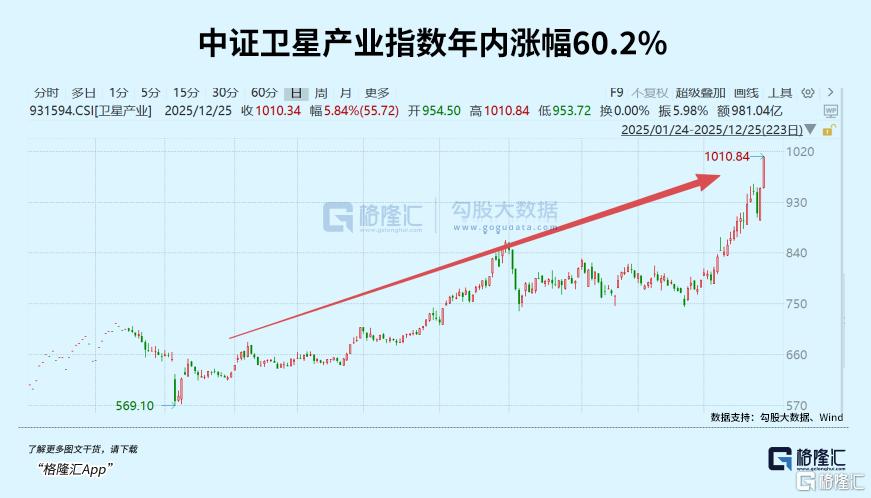
Core Viewpoint - The A-share market continues its upward trend, driven by favorable catalysts in the commercial aerospace and robotics sectors, with significant gains in related ETFs [1][2]. Group 1: Commercial Aerospace - The commercial aerospace sector is experiencing multiple positive catalysts, including the successful launch of the Long March 12 rocket, which provided key engineering data for future technology iterations [2]. - Blue Arrow Aerospace, a leading private aerospace company, has completed its IPO guidance work, marking a significant step towards entering the capital market [2]. - Upcoming industry events, such as the 2025 Commercial Aerospace Development Conference, are expected to further promote industry consensus and accelerate the commercialization of aerospace [2]. Group 2: Robotics - Fenglong Co., Ltd. announced a change in its controlling shareholder to UBTECH, the first publicly listed humanoid robot company globally, which is expected to enhance business synergy [3]. - The recent unveiling of Tesla's humanoid robot in Berlin demonstrated its commercial application potential, performing tasks like packaging and delivery [4]. - The launch of the first robot rental platform, "Qingtian Rent," in Shanghai aims to provide integrated solutions and is expected to expand to 200 cities, serving over 400,000 people [4]. Group 3: Market Trends and Investment Opportunities - Both commercial aerospace and humanoid robotics are identified as high-growth sectors with potential market sizes exceeding trillions [7]. - Continuous technological breakthroughs in both sectors are accelerating commercialization, with humanoid robots already being deployed in manufacturing environments [8]. - Supportive policies from major countries are encouraging investment in both sectors, with initiatives aimed at simplifying processes and promoting collaboration between state and private enterprises [9]. Group 4: Capital Activity - The commercial aerospace sector is projected to exceed 20 billion RMB in financing by 2025, with various stakeholders, including internet giants and local government funds, establishing dedicated funds [11]. - The robotics sector has seen over 600 financing events in the first three quarters of 2025, with significant investments from tech giants and venture capital targeting early-stage technologies [13]. - The enthusiasm in the primary market is beginning to influence the secondary market, with notable increases in relevant indices, such as the China Satellite Industry Index and the National Robot Industry Index [15]. Group 5: Investment Strategies - Investors are advised to focus on leading companies with core technological advantages and clear business models in both sectors [22]. - A gradual investment approach is recommended, emphasizing long-term holdings to navigate the high volatility associated with these growth sectors [22]. - ETFs like the E Fund Satellite ETF and the E Fund Robotics ETF provide convenient investment tools for exposure to the entire industry chain [23].
10.6万亿,史上最大IPO要来了?
投中网· 2025-12-25 07:45
Core Viewpoint - SpaceX is reportedly planning to go public with a potential IPO in 2026, aiming for a valuation of $1.5 trillion and raising over $30 billion, marking a significant shift from Elon Musk's previous stance against IPOs [5][6][9]. Group 1: SpaceX's IPO Plans - SpaceX's valuation has reportedly doubled from $400 billion in July 2025 to $800 billion, with further plans to reach $1.5 trillion by 2026 [5][6]. - The company is exploring alternative IPO structures, such as using a Special Purpose Acquisition Company (SPAC) to bypass traditional IPO processes [6]. - If successful, SpaceX's IPO could become the largest in history, surpassing Saudi Aramco's $29 billion record [9]. Group 2: Comparison with Chinese Commercial Space Industry - Chinese commercial space companies, including Blue Arrow Aerospace and Tianbing Technology, are also pursuing IPOs, with a combined valuation of approximately 85.5 billion yuan, only 0.8% of SpaceX's valuation [7][16]. - The significant valuation gap is attributed to differences in launch costs, with SpaceX's Falcon 9 costing about $3,000 per kilogram compared to domestic costs of around 150,000 yuan per kilogram [7][17]. - The Chinese commercial space sector faces challenges in achieving lower costs and higher launch frequencies, which are critical for establishing a sustainable business model [17][18]. Group 3: Financial Performance and Future Prospects - SpaceX is projected to generate over $15 billion in revenue this year, with expectations of reaching $22-24 billion in annual revenue by 2026 [12][17]. - The company has raised over $10 billion to date, indicating strong financial backing and a robust funding capability compared to other private firms [9]. - The transition to public markets will require SpaceX to adopt a more rigorous pricing mechanism, balancing cash flow certainty from Starlink with the capital-intensive nature of Starship [10][12].