PPI

Search documents
推动物价合理回升,多部门明确政策思路
Di Yi Cai Jing Zi Xun· 2026-01-25 13:13
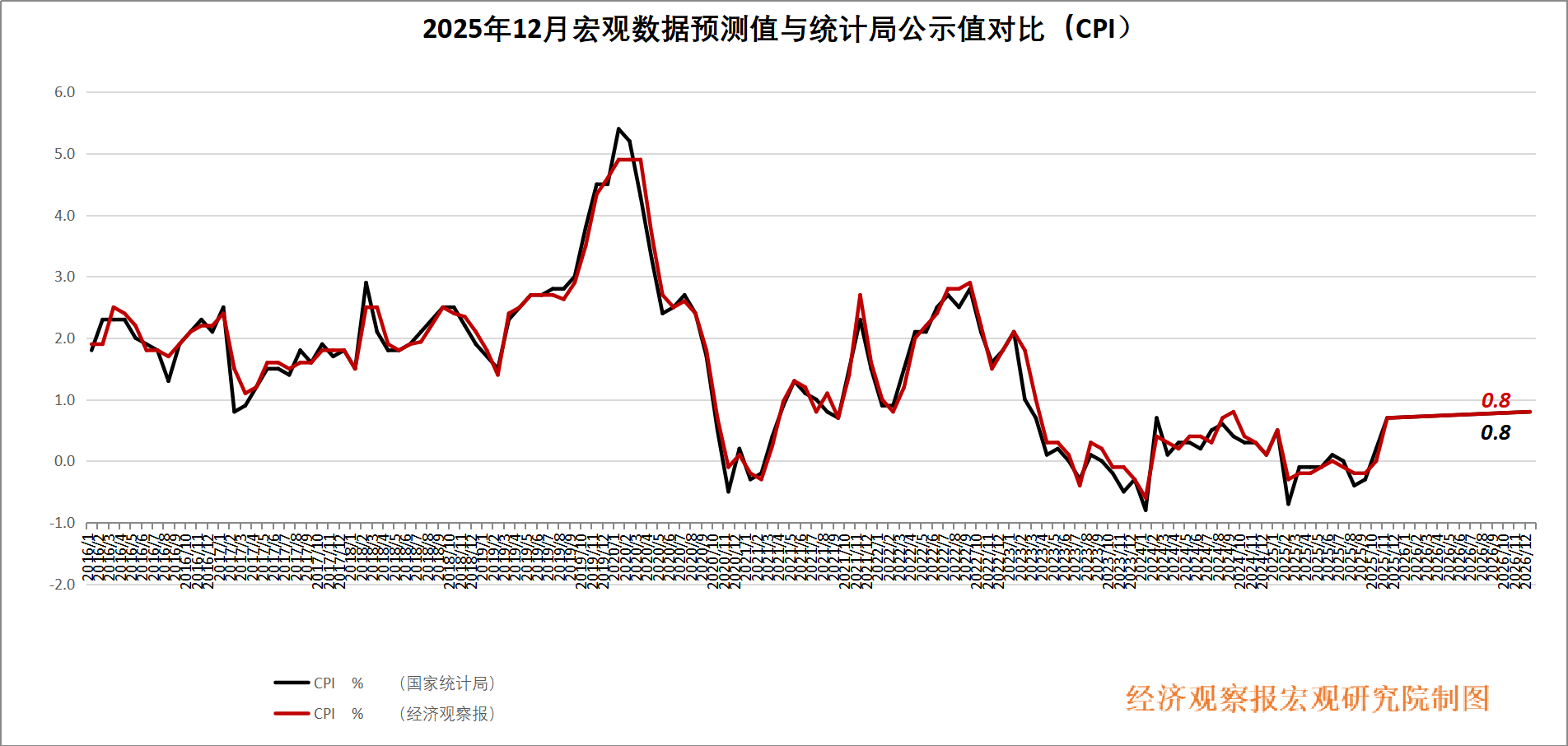
Group 1 - The core viewpoint emphasizes that price signals are crucial for economic health and consumer confidence, with multiple government departments advocating for reasonable price recovery this year [1][5][8] - The National Development and Reform Commission (NDRC) plans to implement a series of policies across total, structural, and reform measures to promote moderate price recovery [1][6] - The People's Bank of China (PBOC) has identified promoting stable economic growth and reasonable price recovery as key considerations in monetary policy, continuing to support a moderately loose monetary environment [1][8] Group 2 - Analysis indicates that prices reflect the balance of supply and demand, with the Consumer Price Index (CPI) expected to hover around 0% in 2025, indicating a need for stronger policy measures to stabilize prices [2][10] - The CPI showed signs of improvement starting in Q4 2025, with a notable increase in October, reaching a year-high of 0.8% in December [3][4] - Structural factors affecting the CPI include a 1.5% decline in food prices and a 3.3% drop in energy prices, which significantly impacted the overall CPI [4][6] Group 3 - The NDRC emphasizes the importance of a balanced approach to price control, advocating for both demand expansion and the regulation of excessive competition [6][7] - The upcoming revision of the Price Law aims to enhance market regulation and address unfair pricing practices, which is expected to improve the competitive environment [7][8] - The PBOC's commitment to maintaining liquidity and supporting economic stability is crucial for fostering a conducive environment for price recovery [8][9]
经济修复平稳 政策加力支持中小企业发展
Jing Ji Guan Cha Wang· 2026-01-23 14:43
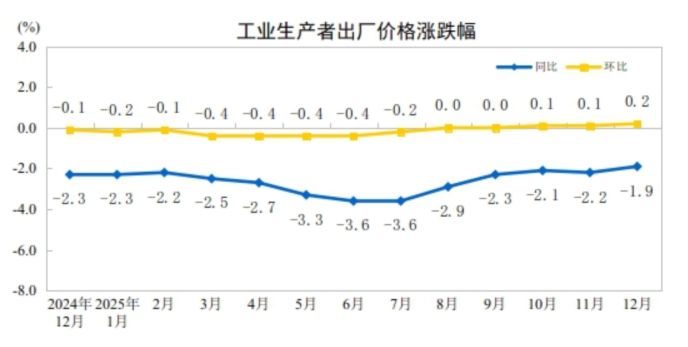
Core Viewpoint - The macroeconomic data for December 2025 indicates a stable recovery in the economy, with rising prices in non-ferrous metals, a return of the manufacturing PMI to the expansion zone, and growth in medium to long-term corporate loans. However, the economic environment for small and medium-sized enterprises remains challenging, and the real estate market continues to exert significant downward pressure on prices and investments [1]. Group 1: Inflation and Price Indices - The Consumer Price Index (CPI) increased from 0.7% to 0.8% year-on-year, with food CPI rising 1.1% year-on-year, marking a continuous five-month growth [4][2]. - The Producer Price Index (PPI) improved from -2.2% to -1.9% year-on-year, reflecting a narrowing decline in industrial product prices due to rising raw material costs and the impact of policies aimed at reducing excess capacity [7][5]. Group 2: Manufacturing and Investment - The Manufacturing Purchasing Managers' Index (PMI) rose from 49.2% to 50.1%, indicating a return to expansion for large enterprises, while small enterprises remain in a contraction zone [10][8]. - Fixed asset investment decreased by 3.8% year-on-year, with real estate investment down 17.2%, while equipment renewal investment grew by 11.8%, supported by policy initiatives [14][11]. Group 3: Credit and Money Supply - New RMB loans totaled 910 billion yuan in December, with medium to long-term corporate loans increasing by 330 billion yuan, driven by recent policy financial tools [17][15]. - The M2 money supply growth rate rose to 8.5% year-on-year, indicating a significant rebound, primarily due to a reduction in non-bank deposits [20][18].

李迅雷专栏 | PPI“失去十五年”之谜
中泰证券资管· 2026-01-21 11:32
Core Viewpoint - The Producer Price Index (PPI) in China has shown a zero increase over the past 15 years, despite a significant GDP growth of 250% during the same period, indicating a persistent weakness in producer prices and underlying demand issues [3][4][41]. Group 1: PPI Trends and Historical Context - The PPI has been in a negative growth phase since October 2021, marking 39 consecutive months of year-on-year decline by December 2025 [1]. - From 2012 to 2025, there were 111 months of negative PPI, indicating that two-thirds of this period experienced deflation in producer prices [1][4]. - The PPI index, set at 100 in December 2010, remained unchanged at 100 by December 2025, reflecting no price increase over 15 years [1][4]. Group 2: Economic Growth vs. PPI - China's GDP grew from less than 40 trillion yuan in 2010 to over 140 trillion yuan by 2025, a 2.5 times increase, while the broad money supply (M2) increased 3.68 times during the same period [4]. - Despite significant economic growth, the PPI's lack of increase raises questions about the underlying demand and pricing power within the economy [4][41]. Group 3: Factors Influencing PPI - The PPI's long-term decline is attributed to weak demand, particularly after the peak of the real estate market in 2021, which has affected both upstream and downstream price transmission [39][41]. - The relationship between real estate investment and PPI indicates that a downturn in real estate correlates with a decline in producer prices, as seen in historical data [34][41]. - The inability of upstream price changes to effectively transmit to downstream prices is exacerbated by high competition in the downstream sectors and insufficient demand [20][39]. Group 4: External Influences and Export Dynamics - Export dynamics play a crucial role in influencing midstream product prices, with a significant portion of manufacturing exports being affected by global demand fluctuations [24][26]. - The export price index has seen a notable decline, indicating that reliance on price competition to maintain export volumes may not be sustainable [26][28]. - The overall weak demand in the domestic market, particularly in the context of real estate and consumer confidence, has further constrained PPI recovery [28][39]. Group 5: Recommendations for Economic Policy - To address the persistent weakness in PPI, it is essential to adjust the supply-demand relationship by expanding effective demand, particularly through increasing the income of middle and low-income groups [41][49]. - Stabilizing the real estate market is suggested as a means to support consumer spending and alleviate overcapacity issues in various industries [41][49]. - The focus should shift towards enhancing consumer income through government policies, which may involve restructuring fiscal spending to prioritize direct transfers to households [41][49].

专访中国政策科学研究会经济政策委员会副主任徐洪才:PPI回升现积极信号,如何巩固物价修复态势?
Xin Lang Cai Jing· 2026-01-20 12:45
Core Viewpoint - The recent data on prices indicates positive signals for the economy, with the Producer Price Index (PPI) showing a narrowing year-on-year decline and the Consumer Price Index (CPI) reaching a three-year high, suggesting a potential recovery in industrial production and consumer demand [1][3]. Economic Indicators - In December 2025, the PPI year-on-year decline narrowed to 1.9%, with a month-on-month increase for three consecutive months, indicating the effectiveness of proactive fiscal and moderately loose monetary policies [3]. - The CPI in December 2025 rose to 0.8% year-on-year, marking the highest level in nearly three years [1]. Consumer Behavior - Final consumption expenditure contributed over 50% to economic growth in 2025, with "self-indulgent consumption" rising, as service retail sales grew by 5.5%, outpacing goods retail sales by 1.7 percentage points [1][9]. - The growth in per capita consumption expenditure was still slower than the growth in per capita disposable income, indicating a need for improved conversion of income into consumption [10]. Industrial Production - The recent month-on-month increase in PPI suggests a recovery in industrial production demand, although the sustainability of this trend remains to be observed [3]. - The high-tech manufacturing sector accounted for 17.1% of the value added in large-scale industries, indicating a long-term trend towards high-tech manufacturing leading industrial development [6]. Policy Recommendations - To maintain the recovery of PPI, it is crucial to expand consumer demand and increase residents' income, especially during the upcoming traditional sales season [4]. - Policies should focus on enhancing consumer rights protection, creating consumption hotspots, and providing direct cash subsidies to low-income groups to stimulate spending [10][11]. Future Outlook - The rise of "self-indulgent consumption" presents a significant growth opportunity, particularly in sectors like health and wellness, which could drive future economic expansion [9]. - The effectiveness of monetary policy is currently limited, as a significant amount of money is not effectively translating into actual demand, highlighting the need for stabilizing expectations in economic work [8].
12月宏观数据分析:2025年预期目标圆满实现,但复苏动能仍不强
Xi Nan Qi Huo· 2026-01-20 02:02
1. Report Industry Investment Rating No relevant content provided. 2. Core Viewpoints of the Report - The GDP growth target of 5% in 2025 was successfully achieved, but the growth rate declined quarter - by - quarter. The macro - economic data in December continued to fall, and the recovery momentum remained weak. Consumption, fixed - asset investment, and the real estate market were sluggish, while exports showed resilience and inflation data improved [3]. - A rational and objective view of the current macro - economy is needed. The transformation, adjustment, and bottoming - out of the real estate market require time, and the domestic economic recovery cannot be achieved overnight. More active macro - policies should be implemented to expand domestic demand and optimize supply [4]. - In the future, "expanding domestic demand and combating cut - throat competition" will remain important long - term policy measures. The financial market is in a state of "weak reality, strong expectation", and the market sentiment is continuously improving. In 2026, the macro - economy and asset prices are expected to continue the upward repair trend, but patience is required [4]. 3. Summary by Directory 3.1 Manufacturing PMI: A Slight Rebound but Still Weak - In December, the manufacturing PMI was 50.1%, up 0.9 percentage points from the previous month, entering the expansion range. Large - scale enterprises' PMI was 50.8%, up 1.5 percentage points; medium - sized enterprises' PMI was 49.8%, up 0.9 percentage points; small - sized enterprises' PMI was 48.6%, down 0.5 percentage points [6]. - Among the five sub - indices of the manufacturing PMI, the production index, new order index, and supplier delivery time index were above the critical point, while the raw material inventory index and employment index were below it. The production and new order indices increased, indicating accelerated production and improved market demand, but the employment index declined slightly [6]. - Overall, although the manufacturing PMI rebounded in December, the manufacturing sector was still weak, and the economic recovery momentum was insufficient [9]. 3.2 CPI and PPI: Inflation Continued to Improve - In December 2025, the national CPI rose 0.8% year - on - year and 0.2% month - on - month. Food and non - food prices both increased, and among the eight major categories of prices, five increased and two decreased year - on - year [10]. - The PPI decreased 1.9% year - on - year in December, with the decline narrowing by 0.3 percentage points, and increased 0.2% month - on - month, with the growth rate expanding by 0.1 percentage points. The anti - cut - throat competition policy has achieved continuous results, and the PPI year - on - year growth rate is expected to turn positive in 2026 [12][15]. 3.3 Import and Export: Maintaining Resilience - In December, China's imports denominated in US dollars increased 5.7% year - on - year, and exports increased 6.6% year - on - year, both exceeding expectations. The trade surplus was 1,141.4 billion US dollars [16]. - Since the second quarter, exports have been stronger than expected, showing strong resilience. The real risk for China's foreign trade lies in the potential economic recession in the US and the slowdown of global economic growth [18]. - In December, China's exports to regions other than the US maintained steady growth, and exports to ASEAN countries continued to replace those to the US [19]. 3.4 Credit: Weak Resident Credit Demand and Declining M1 Growth - At the end of 2025, the stock of social financing scale was 442.12 trillion yuan, a year - on - year increase of 8.3%. The annual increment of social financing scale was 35.6 trillion yuan, 3.34 trillion yuan more than the previous year [20][21]. - In December, resident short - term and long - term loans both decreased significantly, indicating weak resident consumption and housing credit demand. Government bond issuance slowed down, M1 growth declined, but enterprise credit improved and M2 growth rebounded [24][25]. - Overall, the credit demand of the real economy was still weak, and the upward trend of M1 and M2 growth faced resistance [26]. 3.5 Industrial Production, Consumption, and Investment: Industrial Production Rebounded, while Consumption and Investment Growth Continued to Decline - In December 2025, the added value of large - scale industrial enterprises increased 5.2% year - on - year and 0.49% month - on - month. For the whole year of 2025, it increased 5.9% compared with the previous year [27]. - In December, the total retail sales of consumer goods increased 0.9% year - on - year. After excluding the impact of national subsidies, consumption in 2025 was weak, indicating insufficient domestic demand. Further consumption - promotion policies may be introduced in 2026 [27][28]. - In 2025, the national fixed - asset investment (excluding rural households) decreased 3.8% year - on - year. The growth rates of manufacturing investment, infrastructure investment, and real estate development investment all continued to decline [32]. 3.6 Real Estate Market: Continued Downtrend - In 2025, the sales area and sales volume of newly built commercial housing decreased by 8.7% and 12.6% respectively year - on - year. The real estate development investment decreased 17.2% year - on - year [31][32]. - The new construction, construction, and completion of real estate all declined further. The real estate development climate index continued to fall in December [35][36]. - The real estate market is currently at the bottom stage. With the decline of the base, the year - on - year decline of sales area and sales volume is gradually narrowing. The first half of 2026 is expected to be a critical period for the real estate market to stop falling and stabilize [38]. 3.7 Summary and Outlook - In December, the macro - economy was weak, with consumption, fixed - asset investment, and the real estate market remaining sluggish, while exports were resilient and inflation data improved [40]. - The main constraints on macro - economic recovery and asset price repair are insufficient domestic effective demand represented by real estate and consumption, and over - capacity in multiple industries. More policy support is needed [40]. - The financial market is in a state of "weak reality, strong expectation". In 2026, the macro - economy and asset prices are expected to continue the upward repair trend, but one should track policy implementation details and wait for positive macro - economic signals [40].
2025年度四川民生调查数据发布,全省居民人均消费支出26073元 四川人在文旅消费上舍得花钱
Si Chuan Ri Bao· 2026-01-20 00:31
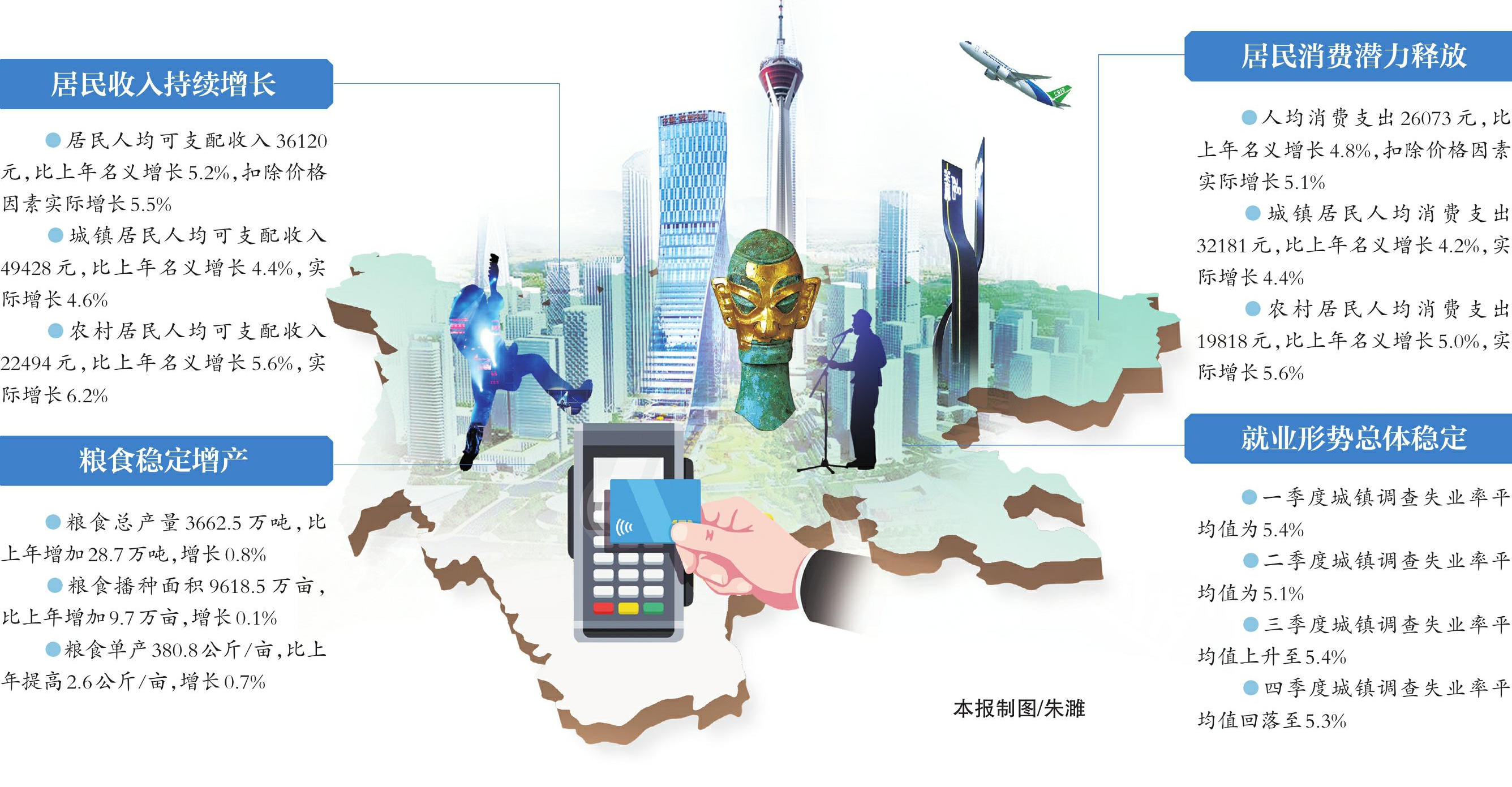
Core Insights - The overall economic indicators for Sichuan in 2025 show stable grain production, steady livestock development, and continuous growth in residents' income, with a low Consumer Price Index (CPI) and stable urban employment [3] CPI Trends - Sichuan's CPI exhibited a pattern of high opening and low closing, with a year-on-year decline of 0.3% for 2025, influenced by insufficient domestic consumption, price competition in certain industries, and declining prices of pork and international crude oil [4] - The core CPI, excluding volatile food and energy prices, increased by 0.5% year-on-year, indicating a gradual accumulation of domestic demand recovery and improving price signals [6] Consumer Spending Patterns - In 2025, the per capita disposable income in Sichuan reached 36,120 yuan, a nominal increase of 5.2%, while per capita consumption expenditure was 26,073 yuan, with a nominal growth of 4.8% [7] - The share of service consumption in total spending rose, with per capita service expenditure increasing by 6.0%, indicating an upgrade in consumer quality [7] - Cultural and entertainment spending surged by 12.6%, reflecting a vibrant tourism and entertainment market [8] Industrial Price Index - The Producer Price Index (PPI) for industrial producers in Sichuan fell by 2.8% year-on-year, with 64.1% of 39 industrial sectors experiencing price declines [8] - Despite the overall decline, some sectors like electronics and integrated circuits showed price increases, indicating structural upgrades in the industry [8] Livestock Industry Insights - The pig farming sector in Sichuan showed stable development, with a 1.6% year-on-year increase in pig slaughtering and a 4.7% increase in pork production [9] - However, pork prices experienced a significant decline of 16.6% year-on-year in December 2025, attributed to weak demand and increased supply [10]
解读2025中国经济年报 | 专访徐洪才:PPI回升现积极信号 如何巩固物价修复态势?
Mei Ri Jing Ji Xin Wen· 2026-01-19 22:47
Core Viewpoint - The recent data on prices indicates positive signals for the economy, with PPI showing a narrowing year-on-year decline and CPI reaching a three-year high, suggesting a potential recovery in industrial demand and consumer spending [1][3][11]. Group 1: Price Indicators - In December 2025, the PPI year-on-year decline narrowed to 1.9%, with a month-on-month increase for three consecutive months, indicating the effectiveness of proactive fiscal and moderate monetary policies [1][3]. - The CPI rose to 0.8% year-on-year, marking the highest level in nearly three years, reflecting a recovery in consumer prices [1][11]. Group 2: Consumer Demand - Final consumption expenditure contributed over 50% to economic growth in 2025, with "self-indulgent consumption" rising, as service retail sales grew by 5.5%, outpacing goods retail sales by 1.7 percentage points [1][13]. - To sustain PPI recovery, expanding consumer demand and increasing residents' income are crucial, especially as the traditional sales peak approaches during the Spring Festival [7][19]. Group 3: Industrial Development - High-tech manufacturing is leading industrial development, with its value added accounting for 17.1% of total industrial value added in 2025, indicating a long-term trend towards high-tech industry leadership [9][10]. - The need to escape "involution" competition is emphasized, with a focus on enhancing technology to create barriers against imitation and fostering innovation [10]. Group 4: Policy Recommendations - The continuation of the "old-for-new" policy in 2026 aims to stimulate consumption, with a focus on optimizing the policy to benefit low-income groups and ensuring direct cash subsidies for those in need [15][19]. - To convert income into consumption, improving the consumer environment, creating consumption hotspots, and increasing income for low-income groups are essential strategies [18][19].
周二(1月20日)重点关注财经事件和经济数据
Jin Rong Jie· 2026-01-19 22:16
Group 1 - The article highlights key economic indicators to be released on specific dates, including China's one-year loan market quoted interest rate and Germany's Producer Price Index (PPI) for December [1] - It also mentions the unemployment rate in the UK for December and the three-month ILO unemployment rate for November, along with the number of unemployment claims in December [1] - Additionally, the article notes the adjusted current account balance for the Eurozone in November and the ZEW economic sentiment index for Germany and the Eurozone for January [1]
核心CPI涨幅扩大
Jing Ji Ri Bao· 2026-01-19 22:15
Group 1: Consumer Price Trends - The overall consumer price index (CPI) is stable and gradually improving, with a year-on-year increase of 0.7% for 2025, which is an increase of 0.2 percentage points compared to the previous year [2][3] - CPI experienced significant monthly fluctuations in January and February due to the Spring Festival, with January rising by 0.5% and February falling by 0.7%. From March to July, CPI remained stable with fluctuations between -0.1% and 0.1% [2] - Food prices decreased by 1.5% for the year, contributing approximately 0.27 percentage points to the CPI decline, while energy prices fell by 3.3%, impacting CPI by about 0.25 percentage points [2] Group 2: Core CPI and Industrial Prices - The core CPI has been rising since March 2025, maintaining a year-on-year increase of over 1% for four consecutive months from September to December, with December seeing a rise of 1.2% [3] - The Producer Price Index (PPI) decreased by 2.6% for the year, but the decline narrowed in the second half, with a reduction of only 1.9% in December, the smallest since September 2024 [4] - Prices in the coal mining and processing sectors turned upward after nine months of decline, with December prices rising by 1.3% and 0.8% respectively, contributing to the narrowing of the PPI decline [4] Group 3: Industrial Development and Price Increases - The high-quality development and transformation of industries have led to price increases in certain sectors, with significant growth in manufacturing driven by advancements in artificial intelligence and green technologies [5] - Prices for integrated circuit packaging and testing, external storage devices, and wearable smart devices increased by 2.0%, 0.7%, and 0.1% respectively, reflecting the impact of new production capabilities [5]
速览!2025年国民经济成绩单出炉
第一财经· 2026-01-19 03:36
Core Viewpoint - The article presents the 2025 national economic operation data released by the National Bureau of Statistics, highlighting key economic indicators and their year-on-year changes. Group 1: Economic Indicators - GDP for 2025 is projected at 14,018.79 billion yuan, reflecting a year-on-year growth of 5.0% [4] - The industrial added value above designated size is expected to grow by 5.9% in 2025 [4] - The added value of the service industry is anticipated to increase by 5.4% [4] Group 2: Consumer and Investment Data - The total retail sales of consumer goods for 2025 is estimated at 501.202 billion yuan, showing a growth of 3.7% compared to the previous year [4] - Real estate development investment is projected at 82.788 billion yuan, indicating a significant decline of 17.2% [4] - The sales area of newly built commercial housing is expected to be 88,101 million square meters, down by 8.7% year-on-year [4] Group 3: Price and Employment Metrics - The Consumer Price Index (CPI) is expected to remain flat compared to the previous year [4] - The Producer Price Index (PPI) is projected to decrease by 2.6% [4] - The total import and export volume of goods is estimated at 454.687 billion yuan, reflecting a growth of 3.8% [4] - The urban surveyed unemployment rate is projected to be 5.2%, an increase of 0.1% [5] - The per capita disposable income of residents is expected to reach 43,377 yuan, with a nominal growth of 5.0% [4]