
企业家精神

Search documents
全球顶级科技投资力量发声
Zhong Guo Ji Jin Bao· 2025-11-03 15:23
Core Insights - The forum highlighted the importance of technological innovation in China's "14th Five-Year Plan," which provides long-term confidence for investors [2] - Global investors can participate in China's technology sector through ETFs and actively managed funds, leveraging the unique advantages of Chinese entrepreneurs [3][5] - The forum aimed to showcase new opportunities in China's capital markets and promote collaboration between mainland China and Hong Kong [2] Group 1: Investment Opportunities - Global investors can engage in China's technology industry through various investment vehicles, including ETFs and actively managed funds, focusing on sectors like semiconductors and artificial intelligence [5] - The potential of the mainland ETF market is significant, with strategies that cover leading global manufacturing companies and create alpha in different sectors [5] - The trends of consumption upgrades and Chinese companies expanding overseas present additional investment opportunities for international investors [5] Group 2: Industry Trends and Insights - The "14th Five-Year Plan" emphasizes the strategic importance of technological innovation, which is seen as a core competitive advantage for China's economy [12] - China is positioned to catch up in high-tech industries, with strengths in artificial intelligence, advanced manufacturing, and other emerging sectors [7] - The entrepreneurial spirit in China is viewed as a major advantage, enabling companies to adapt quickly and provide high-quality services [10] Group 3: Challenges and Market Dynamics - Despite macroeconomic and geopolitical uncertainties, the trend of Chinese companies expanding internationally is expected to have a positive long-term impact on investments [9] - The private equity investment market in China is currently in an adjustment phase, but the development of Hong Kong's capital market and the recovery of the A-share market may create new early-stage investment opportunities [9] - The unique characteristics of China's technology sector and its synergy with global technology ecosystems can enhance investment returns [12] Group 4: Technological Integration in Asset Management - The asset management industry in China is undergoing a technology-driven transformation, with innovation becoming a key engine for unlocking new value [14] - Asset management institutions are encouraged to explore technology applications across three dimensions: cognitive and mechanism restructuring, deepening core business scenarios, and differentiated path layouts [14] - Hong Kong's position as an international financial center can facilitate cross-border regulatory alignment and resource integration, accelerating technological collaboration in the asset management sector [14]

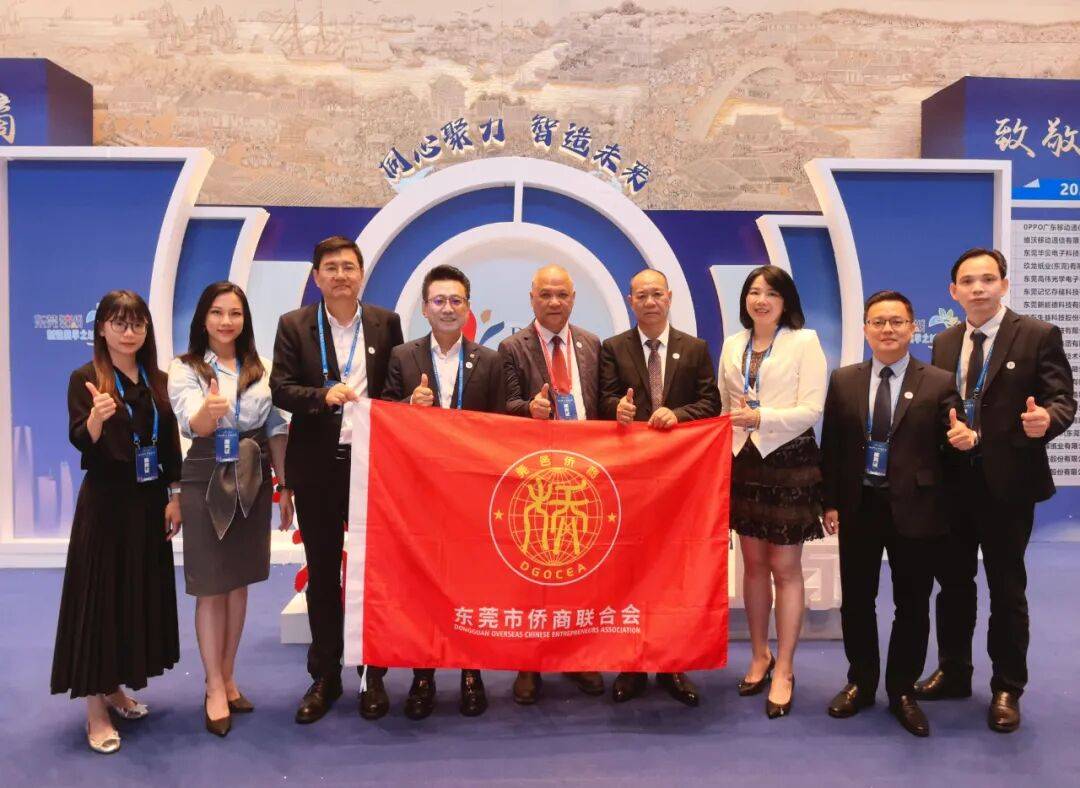
2025年东莞民营企业家日交流大会召开:大力弘扬企业家精神,以更硬举措促进民营经济发展
Sou Hu Cai Jing· 2025-11-03 10:04
Core Insights - The event "2025 Dongguan Private Entrepreneurs Day" was held, emphasizing the importance of private enterprises in the economic development of Guangdong province [1][4] - Key government officials highlighted the need for private entrepreneurs to embrace innovation and social responsibility while contributing to the local economy [4][5] Group 1: Government Support and Initiatives - The provincial government encourages private enterprises to understand and implement the spirit of the 20th National Congress and the "14th Five-Year Plan" to enhance their development confidence [4] - The municipal government aims to create a supportive environment for businesses, ensuring that policies benefit enterprises directly and efficiently [5] Group 2: Focus on Innovation and Technology - Entrepreneurs are urged to seize opportunities in artificial intelligence and other strategic areas, promoting technological transformation and green upgrades [5] - The event included the announcement of awards for outstanding enterprises and entrepreneurs, highlighting the recognition of excellence in the private sector [5]
厚植家国情怀打造一流企业 为高质量发展注入澎湃动能
Zheng Zhou Ri Bao· 2025-11-03 00:45
Group 1 - The core message emphasizes the importance of entrepreneurs in driving the development of Zhengzhou, highlighting their role in innovation and economic growth [1][2] - Entrepreneurs are encouraged to focus on technological innovation, industry upgrades, and social responsibility, aiming to create unique technological strengths and integrate digital technology with the real economy [2] - Zhengzhou aims to improve its business environment by aligning with international standards and enhancing market, governance, legal, financial, and foreign trade environments to support enterprise development [2] Group 2 - The meeting included representatives from various companies such as Yutong Group, Hanwei Technology, and others, who shared insights on enterprise growth and contributions to Zhengzhou's economic development [1] - The atmosphere of the meeting was described as warm, sincere, and harmonious, with the mayor actively engaging with the entrepreneurs [1] - The mayor expressed gratitude for the contributions of entrepreneurs to Zhengzhou's development, recognizing their efforts in innovation and progress [1]
追光丨第三届 “郑州企业家日”特刊
Sou Hu Cai Jing· 2025-11-01 03:11
Core Viewpoint - The "Zhengzhou Entrepreneur Day" celebrates local entrepreneurs, emphasizing their role in economic development and the city's commitment to fostering a supportive business environment [7][8]. Group 1: Recognition of Entrepreneurs - A list of outstanding individuals and entrepreneurs from Zhengzhou is highlighted, showcasing their contributions to various industries [3][4][5]. Group 2: Economic Development Initiatives - Zhengzhou aims to create a vibrant business atmosphere by promoting policies that support entrepreneurship and innovation, enhancing the overall economic landscape [8][9]. - The city has established over 2.1 million business entities, with numerous billion-dollar enterprises and a growing number of specialized and innovative companies [9]. Group 3: Industry Leaders and Innovations - Companies like Yutong, Hanwei Technology, and Sanquan Foods are recognized for their significant market positions and innovative contributions to their respective sectors [9][30][24]. - Zhengzhou's manufacturing sector is transitioning from traditional methods to intelligent manufacturing, with companies investing heavily in R&D and digital transformation [56][70]. Group 4: Social Responsibility and Community Engagement - Entrepreneurs are actively involved in social responsibility initiatives, contributing to community welfare and supporting local development [20][27][66].

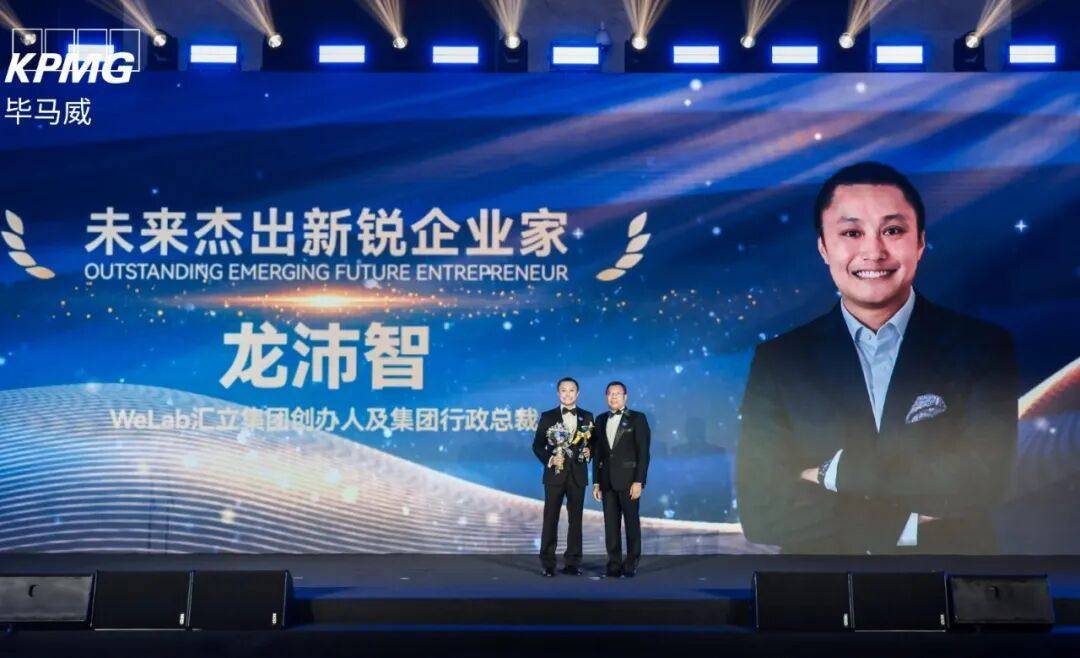
WeLab汇立集团龙沛智斩获毕马威“未来杰出新锐企业家”大奖
Sou Hu Cai Jing· 2025-10-30 05:47
Core Insights - WeLab Group's CEO, Long Peizhi, received the "Future Outstanding Young Entrepreneur" award at the inaugural KPMG China "Future Entrepreneur Awards" in Shenzhen, recognizing his visionary leadership and commitment to driving financial innovation in Asia [1][3] Group 1: Company Achievements - By 2025, WeLab Group aims to have over 70 million personal users and more than 700 corporate clients, with a goal of providing AI-driven financial services to 500 million users by 2032 [3] - WeLab Bank achieved monthly breakeven within four years of its establishment, significantly faster than the industry standard of 5 to 7 years, with projected revenue nearing 700 million RMB in 2024, a year-on-year growth rate exceeding 30% [3] - Total deposits for WeLab Bank grew by 120%, and the bank is expected to achieve profitability in the first half of 2025, leading the Hong Kong digital banking market in several key metrics [3] - In Indonesia, WeLab's digital bank, Bank Saqu, attracted 2.5 million users within two years of launch, demonstrating the success of its differentiated positioning under Long Peizhi's leadership [3] Group 2: Industry Context - The "Future Entrepreneur Awards" focus on the inheritance and breakthroughs of private enterprises, as well as innovation and sustainable development [3] - KPMG China emphasizes the evolution of entrepreneurial spirit in line with national development, aiming to identify successful entrepreneurs with a "future sense" across five dimensions: strategic foresight, technological innovation, governance optimization, operational resilience, and social responsibility [4] - Long Peizhi's philosophy of "living in the future, building the present" has guided WeLab since its inception, reflecting a commitment to continuous innovation and market leadership [4]
实业报国四十载 创新领航新征程
Zheng Quan Shi Bao· 2025-10-29 18:35
Core Viewpoint - The article highlights the journey of Shenda Group under the leadership of Zhang Guoping, emphasizing the importance of entrepreneurial spirit, innovation, and social responsibility in overcoming challenges and achieving high-quality development in the new energy and new materials sectors [1][22]. Group 1: Early Development - In 1985, Zhang Guoping started Shenda Group with less than 300,000 yuan, focusing on producing plastic packaging for food, which faced initial market challenges [1][2]. - The company identified a gap in the domestic market for packaging materials, leading to the development of the three-layer co-extruded film, which significantly contributed to the localization of export packaging materials and won several awards [2][3]. Group 2: Expansion Phase - Under Zhang's leadership, Shenda evolved from a small factory to a leading soft plastic packaging enterprise in Asia, breaking foreign technology monopolies and addressing domestic market needs [3][4]. - The establishment of publicly listed companies and the introduction of professional management marked a significant shift in the company's operational structure, enhancing its capital and growth potential [3][4]. Group 3: Crisis Management - In 2006, Shenda faced a financial crisis but successfully restructured by shutting down unprofitable operations and reallocating resources to support local education and economic development [5][6]. - The company emerged as a model for successful restructuring in the domestic market, demonstrating resilience and social responsibility through consistent tax contributions [6]. Group 4: New Era and Strategic Shift - With the introduction of the national "dual carbon" strategy in 2020, Shenda pivoted towards new energy materials, aiming to establish a second growth curve [8][21]. - The establishment of Nali Technology and Boheng New Materials reflects Shenda's commitment to innovation and breaking foreign monopolies in the new energy sector [9][12]. Group 5: Technological Innovation and Market Expansion - Nali Technology has rapidly advanced in the new functional collector field, achieving significant production capacity and entering the supply chains of major global companies like CATL and Tesla [11]. - Boheng New Materials successfully developed a production line for ultra-thin high-strength films, addressing a critical gap in the domestic market and enhancing the safety of electric vehicle batteries [12][13]. Group 6: Corporate Culture and Social Responsibility - Zhang Guoping emphasizes the integration of innovation, talent, and social responsibility as core components of Shenda's corporate culture, fostering a strong team and community engagement [16][20]. - The company has a history of contributing to social causes, including educational initiatives and disaster relief, reinforcing its commitment to corporate citizenship [20]. Group 7: Future Vision - Shenda aims to achieve the "Centennial Shenda" goal by focusing on high-quality development in soft plastic materials, new energy materials, and modern services, with a clear strategy for technological advancement and market expansion [21][22]. - The company plans to enhance its global presence and continue attracting top talent to support its ambitious growth objectives in the new energy sector [21][22].

拆解鹏华基金闫思倩,在极致产业趋势捕获阿尔法
点拾投资· 2025-10-28 11:01
Core Viewpoint - The article discusses the investment philosophy of Yan Siqian, a fund manager at Penghua Fund, emphasizing her focus on high-growth sectors such as new energy vehicles and artificial intelligence, and her ability to capture industry opportunities despite market volatility [1][4][28]. Group 1: Investment Performance - Yan Siqian's managed products have shown an average return of 83.94% over the past year, significantly outperforming the CSI 300 index during the same period [1]. - The performance metrics of her funds indicate a maximum drawdown of 26.39% and an annualized volatility of 36.13% [1]. - All products managed by Yan Siqian have achieved positive returns since their inception, showcasing her effective management strategy [3]. Group 2: Investment Philosophy - Yan Siqian's investment philosophy is heavily influenced by her early focus on Tesla, which she views as a model of non-linear growth and innovation [6][10]. - She believes that enduring volatility is essential to realize significant returns, as evidenced by Tesla's stock performance over the years [10][26]. - The acceleration of technological development is a key theme in her investment approach, where she emphasizes the importance of surviving the initial phases of innovation to benefit from subsequent growth [11][12]. Group 3: Sector Focus - Yan Siqian has concentrated her investments in sectors with high growth potential, particularly in the electric vehicle and AI industries, which she believes are transformative [28]. - Her investment strategy has evolved to include smart vehicles and robotics, aligning with Tesla's innovations in these areas [12][17]. - The focus on disruptive technologies is a hallmark of her investment style, as she seeks to identify companies that can lead in these rapidly changing sectors [18][29]. Group 4: Characteristics of Investment Strategy - Yan Siqian's investment strategy is characterized by a strong focus on product strength and entrepreneurial spirit, which she considers crucial for identifying successful companies [18]. - She emphasizes the importance of understanding the underlying technology and market dynamics, which allows her to make informed investment decisions [22][25]. - The article highlights her optimistic outlook and proactive approach to identifying opportunities, even during market downturns [25][30].


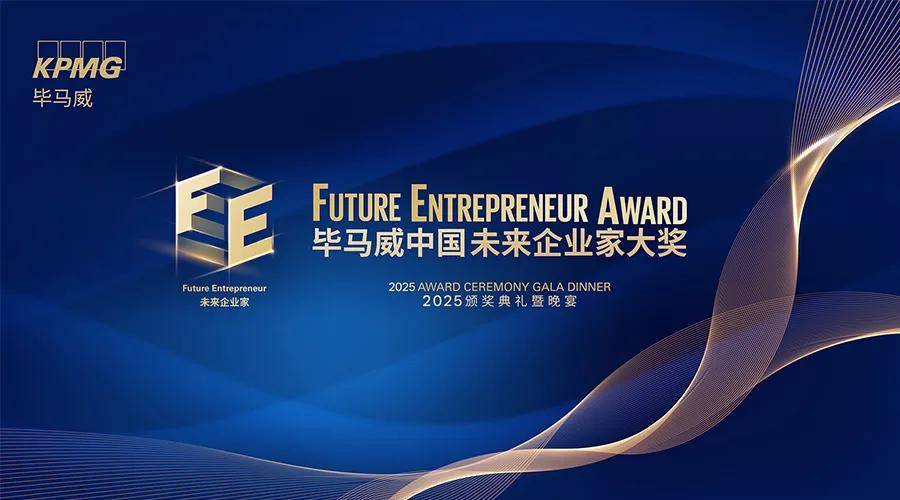
毕马威成功举办首届“未来企业家大奖”助力民营经济高质量发展
Sou Hu Cai Jing· 2025-10-28 06:42
Core Insights - The global economic landscape is undergoing significant adjustments, presenting unprecedented challenges for businesses and entrepreneurs, with private enterprises playing a crucial role in driving high-quality economic development in China [2] - The inaugural KPMG "Future Entrepreneur Awards" ceremony took place in Shenzhen, recognizing 25 outstanding entrepreneurs for their contributions in long-term business development, technological innovation, internationalization, and social responsibility [4][7] - KPMG aims to identify truly "future-oriented" entrepreneurs through the "Future Entrepreneur Awards," focusing on five dimensions: strategic foresight, technological innovation, governance optimization, operational resilience, and social responsibility [5] Awards and Recognition - The awards include categories such as "Future Entrepreneur of the Year," "Future Extraordinary Female Entrepreneur," "Future Outstanding Family Entrepreneur," and "Future Outstanding Emerging Entrepreneur," with winners recognized for their significant achievements [4][6] - Notable winners include Gao Dekang from Bosideng International Holdings, Luan Bo from Shandong Jingbo Holdings Group, and Yu Hao from Zhaomi Technology (Suzhou) Co., Ltd., among others [6] Entrepreneurial Spirit - The concept of "Future Entrepreneurs" reflects an evolution of entrepreneurial spirit alongside national development, emphasizing innovation and leadership in driving quality improvements in China's economic development [5][9] - Award-winning entrepreneurs demonstrate characteristics of the new era, combining innovation with globalization while also focusing on the intergenerational transmission of entrepreneurial spirit [9] - KPMG's initiative not only honors exceptional entrepreneurs but also serves as a deep reflection on the future development of the private economy in China, aiming to assist businesses in navigating opportunities and challenges [9]
弘扬企业家精神 发展新质生产力
Jin Rong Shi Bao· 2025-10-27 00:32
Core Viewpoint - The article emphasizes the importance of entrepreneurial spirit in driving economic transformation and innovation, highlighting its role in fostering new productive forces through technological advancements and high-quality development [1][3]. Group 1: Entrepreneurial Spirit - Entrepreneurial spirit is defined as the ability to create value through creative destruction, characterized by innovation, risk-taking, resilience, and social responsibility [2][3]. - The Chinese context of entrepreneurial spirit includes not only Western traits like insight and dedication but also a sense of national pride and social responsibility [2][3]. - The Chinese government encourages entrepreneurs to enhance their capabilities in patriotism, innovation, integrity, and social responsibility to contribute to high-quality development [2][3]. Group 2: New Productive Forces - New productive forces are cultivated through technological innovation, focusing on digitalization, intelligence, and sustainability [3][4]. - The development of new productive forces relies on the support of entrepreneurial spirit, particularly in innovation and breakthroughs in key technologies [3][4]. - The synergy between technological breakthroughs and entrepreneurial spirit is crucial for achieving economic and social value growth [3][4]. Group 3: Innovation and Risk - Innovation is driven by high-end resources such as talent, technology, and financial support, which are essential for market competitiveness [4][5]. - Entrepreneurs act as organizers of high-end innovation resources, leveraging their strategic vision and management skills to create superior products [4][5]. - Risk-taking is essential for entrepreneurs to identify and seize opportunities in rapidly changing markets, as demonstrated by successful companies like Huawei and ByteDance [5][6]. Group 4: Resilience and Social Responsibility - Resilience is vital for overcoming challenges in developing key technologies, with entrepreneurs playing a crucial role in navigating setbacks [6][7]. - Companies like Alibaba have shown that sustained investment in core technology can lead to significant breakthroughs despite initial losses [6][7]. - The social responsibility aspect of entrepreneurial spirit encourages companies to engage in sustainable practices, contributing to environmental and social governance (ESG) initiatives [7][8].
聚焦科技创新、推动产融结合 2025达晨企业家峰会暨产融大会举办
Shang Hai Zheng Quan Bao· 2025-10-26 14:35
Core Insights - The 2025 Dachen Entrepreneur Summit and Industry-Finance Conference was held in Hangzhou, Zhejiang, attracting over 700 participants from various sectors including AI, aerospace, low-altitude economy, semiconductors, new materials, and biomedicine [1][3] - Dachen Capital emphasizes the importance of both entrepreneurs and scientists in driving human progress, advocating for a supportive environment for entrepreneurs to thrive [3] - Dachen Capital's investment strategy focuses on hard technology and emerging industries, managing nearly 66 billion yuan in funds and investing in over 800 companies [5][11] Group 1: Key Themes from the Summit - Liu Zhou, the founder and chairman of Dachen Capital, highlighted the need for society to recognize entrepreneurs as a scarce resource and called for a culture that encourages innovation and risk-taking [3] - The summit featured discussions on AI and embodied intelligence, showcasing the rapid development in these fields and the importance of creating a supportive ecosystem for startups [6][8] - Dachen Capital's Chief Investment Officer, Xiao Bing, outlined strategies for achieving sustainable growth, including focusing on self-sufficiency, emerging industries, cost reduction, and global expansion [5] Group 2: Investment and Economic Development - Dachen Capital has invested in 72 companies in Zhejiang, totaling over 3.6 billion yuan, contributing to the success of several firms in entering capital markets [11] - The establishment of the Dachen (Hangzhou) Industry-Finance Innovation Center aims to integrate capital, industry, and government resources to enhance project implementation and industry collaboration [11] - The summit included parallel forums discussing various topics such as AI, commercial aerospace, semiconductors, and healthcare, reflecting the focus on hard technology and its growth potential [9][11]
