
光伏行业反内卷

Search documents
中经评论:光伏业反内卷向外延才能赢未来
Jing Ji Ri Bao· 2025-09-11 00:07
Core Viewpoint - The photovoltaic (PV) industry is facing severe challenges due to low-price competition and quality inconsistencies, prompting regulatory bodies in China to take action to promote quality over quantity in the sector [1][2][3]. Group 1: Industry Challenges - The current low-price competition is squeezing profit margins for companies, forcing them to cut R&D investments, which threatens long-term sustainability and innovation [2]. - The "bad money drives out good" effect is evident, where high-quality producers are losing market share to low-cost competitors, leading to a slowdown in technological upgrades and instability in the supply chain [2]. - The industry is experiencing a misallocation of social capital due to homogeneous competition, exacerbating the overall challenges faced by the sector [2]. Group 2: Regulatory Actions - Six government departments have convened to address the chaotic competition in the PV industry, focusing on establishing a "red-green light" system to regulate project approvals based on energy efficiency, environmental standards, and technological benchmarks [3]. - The aim is to create a fair market environment by curbing improper competition practices, such as selling below cost, thereby allowing companies to compete on technology, efficiency, and brand management [3]. - Industry self-regulation is emphasized as a crucial step towards maturity, with industry associations playing a key role in maintaining market order and promoting compliance among companies [3]. Group 3: Future Directions - Companies are encouraged to transform internal competition into external growth by focusing on technological innovation, which can redefine cost structures and escape the price war [4]. - Expanding into new application scenarios can create new demand and reduce system costs, allowing for better pricing strategies [4]. - The shift from merely selling components to offering comprehensive solutions and services in the global market is essential for enhancing value chains and achieving higher profit margins [4]. - Building a collaborative ecosystem among industry players is vital for long-term sustainability, as it allows for shared risks and collective innovation [4]. Group 4: Historical Perspective - Historical trends indicate that every restructuring in the PV industry presents opportunities, and moving away from zero-sum competition towards value co-creation is essential for maintaining leadership in the global market [5].
半年营收6100亿元的光伏板块 业绩拐点还有多远?
2 1 Shi Ji Jing Ji Bao Dao· 2025-09-10 13:02
Core Viewpoint - The photovoltaic industry is still in a bottoming phase in the first half of the year due to a year-on-year decline in industry chain prices, with significant revenue and profit reductions reported by listed companies [1][3]. Financial Performance - A total of 110 photovoltaic listed companies achieved a combined revenue of 615.28 billion yuan in the first half of the year, a decrease of approximately 65 billion yuan compared to the same period last year [1]. - The net profit attributable to shareholders was 7.64 billion yuan, down from 17.01 billion yuan in the previous year [1]. - Among the listed companies, 47 reported losses, an increase from 39 in the same period last year [4]. Company-Specific Performance - Notable companies such as Longi Green Energy and Aiko Solar reported significant reductions in losses, with Longi's net profit at -2.569 billion yuan (a 50.88% improvement) and Aiko's at -238 million yuan (an 86.38% improvement) [4]. - Aiko Solar attributed its performance improvement to a 400% year-on-year increase in ABC component shipments, reaching 8.57 GW [4]. Market Dynamics - The demand side saw high growth in new domestic photovoltaic installations, particularly during the second quarter's "rush installation" period, which boosted revenue despite ongoing price pressures [3][5]. - The component segment remains a key area of loss, with major manufacturers like Tongwei, Trina Solar, and JinkoSolar collectively losing nearly 16 billion yuan [5]. Cash Flow and Operational Trends - The net cash flow from operating activities for the 110 listed companies turned positive, totaling 29.451 billion yuan, a significant improvement from the previous year [8]. - The second quarter alone saw a net cash flow of 28.988 billion yuan, marking a 60-fold increase from the first quarter [8]. Industry Outlook - The industry is experiencing a shift towards maintaining stable cash flow and seeking high-value orders, moving away from irrational competition [8][9]. - Regulatory efforts are underway to address non-rational competition, with a focus on capacity adjustment and resisting low-price competition [9].



华泰证券:供需格局优化,光伏玻璃价格上涨
Mei Ri Jing Ji Xin Wen· 2025-09-07 23:46
Core Insights - The current supply and inventory levels in the photovoltaic glass industry are relatively low, indicating a potential for price and profit recovery [1] - There is a need to monitor the potential release of supply increments, as policies and various stakeholders are actively promoting the photovoltaic industry to avoid internal competition [1] - The expectation is for further policies related to capacity and price competition mechanisms to be introduced, which may benefit leading companies with scale and profit advantages [1]

华泰证券:供需格局优化 光伏玻璃价格上涨
Di Yi Cai Jing· 2025-09-07 23:44
Group 1 - The core viewpoint of the report indicates that the current supply and inventory levels in the photovoltaic glass industry are relatively low, suggesting a potential for price and profit recovery [1] - There is a need to monitor the potential release of incremental supply, as policies and various stakeholders are actively promoting the photovoltaic industry to avoid internal competition [1] - The expectation is for further relevant policies regarding capacity and price competition mechanisms to be introduced, which may benefit leading companies with scale and profit advantages [1]
上半年亏损1.69亿元后 中来股份董事长辞职引关注!公司回应:与业绩情况无关
Hua Xia Shi Bao· 2025-09-06 04:35
Core Viewpoint - The resignation of the chairman of Zhonglai Co., Ltd. is attributed to age, and the company asserts that this decision is unrelated to its financial performance, which has seen losses in 2024 and the first half of 2025 [2][6]. Company Overview - Zhonglai Co., Ltd. specializes in photovoltaic materials, high-efficiency batteries, and components, and was established in 2008, going public in 2014 [5]. - The company is currently facing financial difficulties, with losses of 8.56 billion in 2024 and a net loss of 1.69 billion in the first half of 2025, although this represents a 44.83% improvement year-on-year [6][7]. Leadership Changes - The former chairman, Cao Lu, who held the position for over two years, resigned due to age, and will not hold any position in the company post-resignation [2][3]. - The largest shareholder is Lin Jianwei, who holds 16.36% of the shares, while Zhejiang Zheneng Electric Power Co., Ltd. is the second-largest shareholder with 9.75% [3]. Financial Performance - The company reported a revenue of 33.04 billion in the first half of 2025, a year-on-year increase of 7.25%, but still recorded a net loss [6][7]. - The photovoltaic application system business generated the highest revenue of 18.29 billion, with a gross margin of 19.84% [7]. Debt and Financial Structure - Zhonglai Co., Ltd. has a high debt ratio of 75.9%, with total liabilities amounting to 124.25 billion [8][9]. - The company plans to improve its financial structure by enhancing profitability, optimizing financing, and managing funds more efficiently [9].

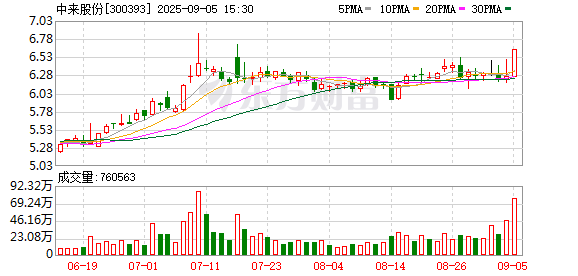
上半年亏损1.69亿元后,中来股份董事长辞职引关注!公司回应:与业绩情况无关
Hua Xia Shi Bao· 2025-09-06 04:20
Core Viewpoint - The resignation of the chairman of Suzhou Zhonglai Photovoltaic New Materials Co., Ltd. (Zhonglai) has raised market concerns, particularly regarding its timing in relation to the company's ongoing losses in 2024 and the first half of 2025 [2][5]. Company Overview - Zhonglai was established in 2008 and went public on the Growth Enterprise Market in 2014, focusing on photovoltaic auxiliary materials, high-efficiency batteries, components, and photovoltaic applications [5]. - The company is currently facing significant financial challenges, with reported losses of 8.56 billion yuan in 2024 and a net loss of 1.69 billion yuan in the first half of 2025, despite a 7.25% year-on-year increase in revenue to 33.04 billion yuan [5][7]. Leadership Changes - Chairman Cao Lu resigned due to age-related reasons, and his departure is stated to be unrelated to the company's financial performance [2][3]. - The company plans to complete the election of a new chairman and board members in accordance with legal procedures [2]. Financial Performance - Zhonglai's financial performance has been volatile, with a net loss of 3.13 billion yuan in 2021, followed by profits of 4.01 billion yuan in 2022 and 5.27 billion yuan in 2023, before returning to losses in 2024 [5]. - The company reported a significant reduction in losses in the first half of 2025 compared to the previous year, indicating some operational improvements [5]. Debt and Financial Structure - Zhonglai's debt levels are high, with a debt-to-asset ratio of 75.9% as of June 2025, reflecting the company's aggressive expansion and technology upgrades [8][9]. - The company has a total guarantee amount of approximately 1.998 billion yuan, with actual guarantees totaling about 908 million yuan, which is 269.39% of its latest audited net assets [8]. Market Position and Strategy - The company is focusing on its core business and aims to improve its financial structure through enhanced profitability, optimized financing, and better management of fund usage [9]. - Zhonglai is committed to continuous technological innovation and expanding its global market presence to maintain its leading position in the photovoltaic industry [6][7].
福莱特玻璃(6865.HK):光伏玻璃价格向好 公司盈利改善可期
Ge Long Hui· 2025-09-05 19:18
Core Viewpoint - The company experienced significant declines in revenue and net profit in the first half of 2025, primarily due to falling photovoltaic glass prices and asset impairments [1] Group 1: Financial Performance - In the first half of 2025, the company achieved revenue of 7.737 billion yuan, a year-on-year decrease of 27.66% [1] - The net profit attributable to shareholders was 261 million yuan, down 82.58% year-on-year [1] - In Q2 2025, revenue was 3.658 billion yuan, a year-on-year decline of 26.41% and a quarter-on-quarter decrease of 10.33% [1] - The net profit for Q2 was 155 million yuan, down 79.02% year-on-year but up 46.02% quarter-on-quarter [1] Group 2: Margin and Impairment - The gross margin for photovoltaic glass in the first half was 12.31%, a decrease of 12.39 percentage points year-on-year [1] - The overall gross margin improved by nearly 5 percentage points quarter-on-quarter in Q2 [1] - Asset impairments in Q2 amounted to approximately 240 million yuan, with around 100 million yuan related to raw materials and products, and about 140 million yuan related to fixed assets [1] Group 3: Market Outlook - In September, photovoltaic glass prices showed improvement, indicating potential recovery in profitability due to supply-demand dynamics [1] - The company undertook cold repairs on three glass furnaces in July, with a total daily melting capacity of 3,000 tons, while current production capacity stands at 16,400 tons [1] - The photovoltaic industry is experiencing enhanced expectations for "anti-involution," contributing to the positive pricing trend in September [1] Group 4: Industry Context - As of September, the price for 3.2mm single-layer coated photovoltaic glass ranged from 18.5 to 19.5 yuan per square meter, while the price for 2.0mm single-layer coated glass remained around 13 yuan per square meter [2] - Domestic cold repair capacity reached 15,000 tons, with global photovoltaic glass supply capacity at approximately 100,000 tons [2] - The industry inventory has decreased to a reasonable level of 20 days, indicating an improving supply-demand structure [2] Group 5: Investment Rating - The company is rated as a "buy," with a target price raised to 14.00 HKD per share, reflecting a potential upside of 25% from the current price [2] - As a leading enterprise in the industry, the company is expected to recover profitability ahead of its peers, supported by its technological and cost advantages [2]

新高!翻倍!光伏板块彻底爆发,硅料龙头市值站稳千亿!
Jin Shi Shu Ju· 2025-09-05 13:33
Core Viewpoint - The photovoltaic sector has shown clear signs of a cyclical reversal, with significant stock price increases across the board, indicating a potential recovery in the industry [2][5]. Group 1: Stock Performance - On September 5, the photovoltaic equipment sector surged by 8.15%, with all 74 constituent stocks closing in the green, and eight stocks rising over 10% [2]. - Notable stock performances included JinkoSolar (19.99%), Changsheng Electric (18.24%), and Sungrow Power (16.67%) [2]. - From April to September, several photovoltaic stocks have doubled in value, with Sungrow Power increasing from 51.90 CNY to 137.66 CNY, a rise of 165%, and JinkoSolar from 43.24 CNY to 89.24 CNY, a rise of 106% [2]. Group 2: Market Capitalization - Tongwei Co., Ltd. has reached a total market capitalization of 109.8 billion CNY, making it the third photovoltaic stock in A-shares to surpass the 100 billion CNY mark [3]. - The top 12 photovoltaic companies by market capitalization include Sungrow Power (280.59 billion CNY), Jiangxi Green Energy (137.16 billion CNY), and Tongwei Co., Ltd. (109.80 billion CNY) [4]. Group 3: Silicon Material Sector - The leading silicon material companies have also seen significant stock price increases, with Tongwei Co., New Special Energy, GCL-Poly Energy, and Daqo New Energy all experiencing gains between 6.18% and 17.28% [6]. - The price of silicon materials has risen for ten consecutive weeks, with n-type polysilicon prices increasing by 42% and 43% respectively [8][9]. Group 4: Industry Trends - The Ministry of Industry and Information Technology has emphasized the importance of addressing overcapacity in the photovoltaic sector, indicating that "anti-involution" has become a national strategic focus [10]. - Major silicon material companies are planning to consolidate smaller producers by September 22, which is expected to stabilize the market [10][11]. - The anticipated recovery in silicon material prices is expected to positively impact the entire photovoltaic supply chain, leading to a healthier industry environment [11].



福莱特玻璃(06865):光伏玻璃价格向好,公司盈利改善可期
Guoyuan Securities2· 2025-09-05 09:59
Investment Rating - The report assigns a "Buy" rating to the company, with a target price raised to HKD 14.00 per share, indicating a potential upside of 25% from the current price of HKD 11.19 [5][10]. Core Views - The company's performance in the first half of 2025 was impacted by a decline in photovoltaic glass prices and asset impairments, leading to a revenue drop of 27.66% year-on-year to RMB 77.37 billion and a net profit decline of 82.58% to RMB 2.61 billion [2][8]. - The photovoltaic glass market is showing signs of recovery, with improved pricing expected in September 2025, driven by supply-demand dynamics and a reduction in industry inventory levels [4][9]. - The company is positioned as a leading player in the industry, with advantages in technology and cost, which are expected to facilitate a quicker recovery in profitability compared to peers [4][10]. Summary by Sections Financial Performance - In H1 2025, the company reported a revenue of RMB 77.37 billion, down 27.66% year-on-year, and a net profit of RMB 2.61 billion, down 82.58% year-on-year. Q2 2025 revenue was RMB 36.58 billion, a decrease of 26.41% year-on-year and 10.33% quarter-on-quarter, with a net profit of RMB 1.55 billion, down 79.02% year-on-year but up 46.02% quarter-on-quarter [2][8]. - The gross margin for photovoltaic glass in H1 2025 was 12.31%, a decline of 12.39 percentage points year-on-year, although Q2 showed a near 5 percentage point improvement quarter-on-quarter [8]. Market Outlook - The company has recently cold-repaired three glass furnaces, totaling a daily melting capacity of 3,000 tons, while current production capacity stands at 16,400 tons. The photovoltaic glass pricing is improving, with recent quotes indicating a range of RMB 18.5-19.5 per square meter for 3.2mm single-layer coated glass and around RMB 13 per square meter for 2.0mm [4][9]. - The overall supply-demand structure in the photovoltaic glass industry is beginning to improve, with inventory levels dropping to a reasonable 20 days [4][9]. Valuation - The target price has been increased to HKD 14.00 per share, corresponding to a 23x PE ratio for 2026, reflecting an anticipated valuation uplift as the company navigates through the current cycle [5][10].
通威股份(600438):2025H1业绩符合预期 触底信号凸显
Xin Lang Cai Jing· 2025-09-05 06:24
Group 1 - The company reported a net profit attributable to shareholders of -5 billion yuan in the first half of 2025, with a revenue of 40.509 billion yuan, a year-on-year decline of 7.51% [1] - In Q2 2025, the company achieved a revenue of 24.575 billion yuan, a year-on-year increase of 1.44% and a quarter-on-quarter increase of 54.24% [1] - The company maintained its position as the industry leader in silicon material sales, with approximately 161,300 tons sold in the first half of 2025, capturing about 30% of the global market share [1] Group 2 - The average price of silicon material in Q2 2025 declined compared to Q1 2025, leading to an increase in per-ton losses despite stable costs [1] - The company sold 49.89 GW of battery cells in the first half of 2025, continuing to hold the global number one position, with cumulative shipments surpassing 300 GW [2] - The company achieved component sales of 24.52 GW, maintaining the top position in domestic distributed shipments, while overseas sales reached 5.08 GW, showing explosive growth in markets like Poland, Romania, and Hungary [2] Group 3 - Revenue projections for the company are estimated at 62.3 billion yuan, 69.1 billion yuan, and 75 billion yuan for 2025, 2026, and 2027 respectively, reflecting a year-on-year decline of 32.3% in 2025 [3] - The net profit forecast for 2025 has been revised down to -5.5 billion yuan, with subsequent years expected to show significant recovery [3] - The company maintains an "overweight" rating despite the downward adjustment in 2025 earnings expectations due to ongoing price declines in the industry chain and inventory impairment [3]