
入境游

Search documents
视频丨从冰雪体验到AR探秘 外国游客用更多方式感知活力中国
Yang Shi Xin Wen Ke Hu Duan· 2025-12-09 23:49
Group 1: Winter Sports Events and Participation - The Milan Winter Olympics will take place from February 6 to February 22, 2026, with several top international winter sports events currently being held in China as part of the qualification process [2][4] - The Chinese team has sent 24 athletes to participate in the U-shaped venue World Cup at the Yunding Ski Park, marking the largest delegation in history [4] - In a previous large jump World Cup event, 14 Chinese athletes competed, with 3 standing on the podium [6] Group 2: Economic Impact of Winter Sports - The hosting of high-level international events has significantly increased foot traffic to the event locations, contributing to the growth of the winter sports economy [10] - The unique viewing experience offered by hotels near the competition venues has led to full bookings during the events, indicating strong demand [16] - Over 100 winter sports events and activities are scheduled in Chongli this winter season, highlighting the integration of winter sports into economic development and consumer spending [16] Group 3: Inbound Tourism Trends - Inbound tourism has seen a significant increase, with many popular destinations reporting over a 90% rise in visitor numbers since the beginning of the year [19] - The number of non-Chinese passport holders booking domestic flights has increased by 13.58% this winter season, with Harbin, Dalian, and other northern cities becoming popular destinations [20] - The introduction of immersive cultural experiences, such as AR-guided tours, has attracted foreign tourists seeking deeper engagement with Chinese culture [23][25] Group 4: Shopping Trends Among Foreign Tourists - The trend of "China shopping" has gained popularity, with foreign tourists encouraged to bring empty suitcases to fill with affordable goods during their visits [26] - In Shenzhen, the daily average of foreign visitors to Huaqiangbei has doubled, indicating a strong interest in purchasing technology and daily necessities [28] - The facilitation of tax refund processes for foreign tourists has led to a 285% increase in the number of travelers benefiting from these services, along with a 98.8% rise in sales and tax refund amounts [28]


从冰雪体验到AR探秘 外国游客用更多方式感知活力中国
Yang Shi Xin Wen· 2025-12-09 22:58
Group 1: Upcoming Events and Participation - The Milan Winter Olympics will take place from February 6 to February 22, 2026, with several top international ice and snow events currently ongoing in China as part of the qualification process [1] - Starting in 2023, multiple ice and snow events have been hosted in China, leveraging the facilities built for the Beijing Winter Olympics, with 24 Chinese athletes participating in the upcoming U-shaped venue World Cup, marking the largest delegation ever [3] - In a previous large jump event, 14 Chinese athletes competed, with 3 standing on the podium, showcasing the growing competitiveness of Chinese athletes in winter sports [5] Group 2: Economic Impact and Tourism - The hosting of high-level international events has significantly increased foot traffic to the venues, contributing to a booming ice and snow event economy [9] - The unique viewing experience offered by hotels near competition venues, including free access to events for guests, has led to high occupancy rates during the competitions [15] - This winter season, over 100 ice and snow events and activities are taking place in Chongli, indicating the integration of the ice and snow event economy into broader economic development [15] Group 3: International Tourism Trends - There has been a 13.58% year-on-year increase in the number of non-Chinese passport holders booking domestic flights, with popular destinations including Harbin and Dalian [17] - The "China Purchase" trend has gained popularity, with foreign tourists coming to China specifically for shopping, as evidenced by the significant increase in foreign visitors to places like Huaqiangbei [23][25] - The introduction of convenient tax refund services for foreign tourists has further stimulated cross-border shopping, with a 285% increase in the number of travelers benefiting from these services [25]

【感知中国活力】入境游火热 消费潜力持续释放
Yang Shi Wang· 2025-12-09 22:45
央视网消息:在线旅游平台数据显示,自今年以来,多个热门目的地入境游客量增幅均超90%,入境游 市场热度攀升。 ...
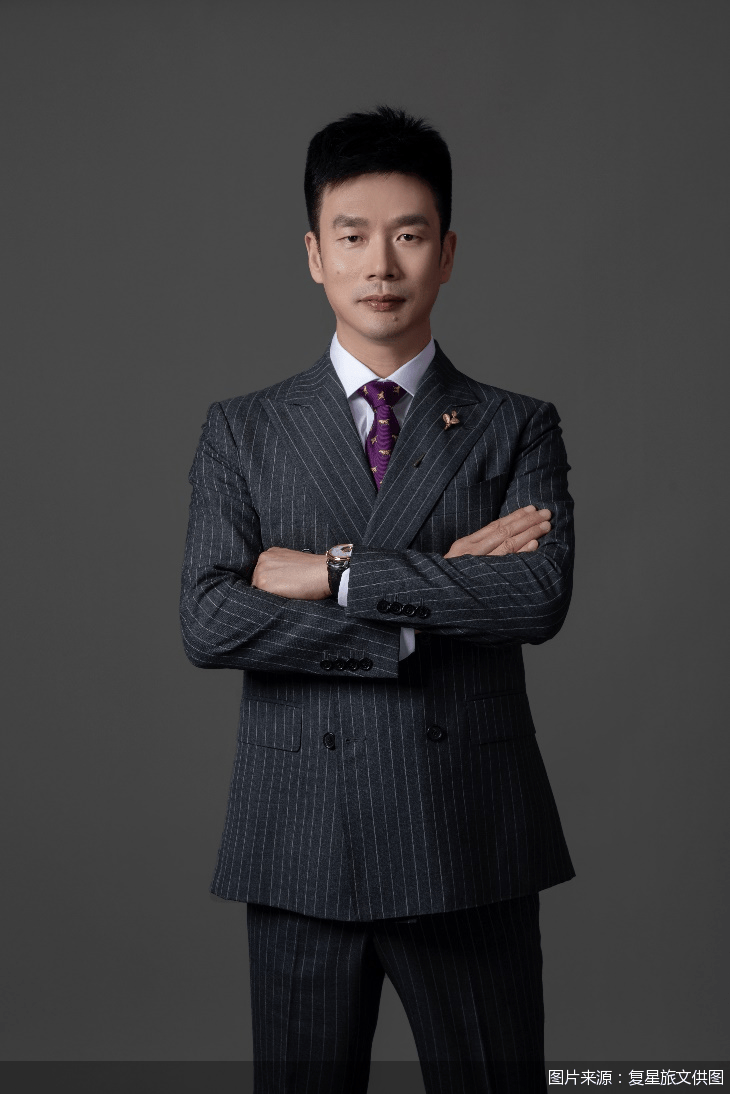
专访复星旅文CEO鲍将军: Club Med 十年内扩展到100家,加速盘活存量资产
Bei Jing Shang Bao· 2025-12-08 10:31
Core Viewpoint - Fosun Tourism Group is focusing on a light asset strategy post-privatization, aiming to expand its Club Med brand and develop new product lines, including super cultural tourism malls, by 2035 [2][4]. Group 1: Club Med Expansion - By 2035, Fosun plans to operate 100 Club Med Mediterranean resorts, 20 Club Med Joyview resorts, and 5 super cultural tourism malls globally [2][3]. - Club Med Mediterranean resorts account for nearly 90% of Fosun's revenue, with reported operating revenue of 10.23 billion yuan, of which 9.25 billion yuan comes from Club Med [2][4]. Group 2: Super Cultural Tourism Malls - The first super cultural tourism mall is set to open in Chongqing in 2026, covering nearly 500,000 square meters and featuring immersive theme districts and indoor theme parks [3]. - The strategy for super cultural tourism malls focuses on revitalizing existing assets in prime locations, indicating a shift towards commercial tourism transformation [3][4]. Group 3: Asset Optimization and Capital Structure - Fosun is accelerating its light asset strategy, planning to divest heavy asset projects like those in Lijiang and Taicang by 2026 [6]. - The independent listing of Atlantis in Sanya through a REITs model is underway, which is expected to improve cash flow and reduce overall debt [6][8]. Group 4: AI Integration in Operations - Fosun is leveraging AI technology to enhance customer experience and operational efficiency, providing personalized services based on visitor data [7][8]. - The AI systems are designed to automate quality control and operational processes, allowing staff to focus on customer engagement [7][8]. Group 5: Focus on Inbound Tourism - Inbound tourism is identified as a key growth area, with Club Med Lijiang receiving 20% of its visitors from international tourists and Atlantis seeing a 140% increase in international visitors year-on-year [10][11]. - The company aims to address challenges faced by international tourists, such as booking difficulties and the need for personalized services, to enhance their experience [10][11].
2025四川省冬季旅游季启动 “蜀山暖雪”受东南亚游客青睐
Zhong Guo Xin Wen Wang· 2025-12-08 08:13
【东盟专线】2025四川省冬季旅游季启动 "蜀山暖雪"受东南亚游客青睐 成都乐道国际旅行社有限公司负责人王治力表示,四川凭借靠近东南亚的地理位置、灵活的短途高性价 比产品,以及"山上玩雪、山下回暖"的独特舒适体验,在入境游市场具有竞争优势。现有免签政策已有 效带动客流,若未来政策范围扩大,市场潜力将进一步释放。 编辑:郭晋嘉 广告等商务合作,请点击这里 中新社四川阿坝12月8日电 (单鹏)2025四川省冬季旅游季8日在四川阿坝州汶川县启动。在启动仪式上, 新加坡、泰国、马来西亚、越南等东南亚国家的旅行商协会与四川省旅行社协会签署入境游合作协议, 将为四川入境游市场注入新动能。 随着冬季游开启,一大批境外游客追着"蜀山暖雪"来到四川。当前,四川正通过完善"吃住行游购娱"全 链条国际化服务,吸引全球游客前来体验巴蜀风情,四川省内主要景区入境游客数量显著增长。截至12 月2日,今年以来成都边检站查验入出境外国人156万余人次,同比增长45.8%,入境外籍旅客排名前三 的国家是泰国、马来西亚、新加坡。 新加坡经典旅游集团董事长蒋慧君分析称,免签政策落地与社交媒体传播,促使中国成为新加坡游客热 门选择。四川独特的自然景 ...
展望2026|专访复星旅文CEO鲍将军: Club Med 十年内扩展到100家,加速盘活存量资产
Sou Hu Cai Jing· 2025-12-07 08:46
Core Insights - Fosun Tourism Group has unveiled its new strategy for 2026, emphasizing a continued shift towards a light-asset model following its privatization, with plans for global expansion and asset optimization [1][7] Group 1: Strategic Goals - By 2035, the company aims to operate 100 Club Med resorts globally, 20 Joyview resorts, and 5 super cultural tourism malls, targeting different segments of the vacation market [3][4] - The Club Med brand accounts for nearly 90% of Fosun Tourism's revenue, with a reported operating revenue of 102.3 billion yuan in the first half of 2025, of which 92.5 billion yuan came from Club Med [3][4] Group 2: Asset Management - The company plans to divest from heavy asset projects such as Lijiang and Taicang, with the latter already selling 250 properties this year, and aims to complete these divestitures by 2026 [8] - The independent listing of Atlantis in Sanya through a REITs model is underway, which is expected to improve cash flow and reduce overall debt for the company [7][8] Group 3: New Product Lines - The super cultural tourism mall project is set to open in Chongqing in 2026, covering nearly 500,000 square meters and featuring immersive theme districts and indoor amusement parks [4][5] - The company is focusing on revitalizing existing commercial assets in China, leveraging their prime locations for cultural tourism transformation [4][5] Group 4: AI Integration - Fosun Tourism is adopting AI technology to enhance customer experience, providing personalized services based on visitor profiles and improving operational efficiency through automated feedback systems [10][11] - The integration of AI aims to standardize non-standardized tourism products, allowing staff to focus on building connections with guests [10][11] Group 5: Focus on Inbound Tourism - The company is prioritizing the inbound tourism market, with Club Med Lijiang receiving 20% of its visitors from international tourists and Atlantis seeing a 140% year-on-year increase in international visitors [12] - To attract international guests, the company is addressing challenges such as booking difficulties and service customization to enhance the overall visitor experience [12][13]
入境游市场增长势头强劲 政策、服务持续升级助力外国游客“解锁”多彩中国
Yang Guang Wang· 2025-12-07 04:51
Group 1 - The inbound tourism market in China has shown strong growth this year, supported by upgraded policies and services to attract foreign tourists [1] - At Xiamen Gaoqi International Airport, over 330,000 visa-free foreign travelers have entered this year, marking a year-on-year increase of over 35% [1] - The implementation of measures such as online entry card filling and the establishment of a "one-stop comprehensive service center" has enhanced the efficiency of services for foreign travelers [1] Group 2 - The newly launched "border inspection information reporting system" at Xi'an Xianyang International Airport has reduced average customs clearance time by 5 to 8 minutes, improving overall efficiency by 30% [1] - The introduction of a new duty-free store in Xi'an incorporates local cultural elements and aims to guide overseas consumption back to China through an innovative "duty-free + cultural tourism + consumption" model [2] - In Hangzhou, the implementation of "one-click tax refund" service has streamlined the tax refund process for international tourists, with 292 duty-free stores and a sales volume exceeding 202 million yuan, a year-on-year increase of 103.97% [2]
两部门发文促进文旅与民航业融合发展
Zheng Quan Ri Bao· 2025-12-03 16:26
Core Insights - The Ministry of Culture and Tourism and the Civil Aviation Administration of China jointly issued the "Action Plan for the Integrated Development of Culture, Tourism, and Civil Aviation," aiming for significant improvements in tourism services and deeper integration by 2027 [1] Group 1: Action Plan Objectives - The Action Plan outlines four main areas: enhancing tourism service levels, optimizing travel routes and facilities, cultivating new integrated products and scenarios, and creating a favorable environment for integrated development [2] - It proposes 15 specific measures to achieve these objectives, including encouraging airlines to offer multi-destination packages and promoting collaboration among various tourism-related entities [2][3] Group 2: Low-altitude Tourism Development - The Action Plan emphasizes the regulated development of low-altitude tourism, advocating for local governments to establish joint regulatory mechanisms and support qualified enterprises in offering low-altitude tourism projects [3] - Low-altitude tourism is seen as a key driver for the transformation and upgrading of the cultural tourism industry, with significant market potential expected to be released following the implementation of the Action Plan [3] Group 3: Enhancing Inbound Tourism - The Action Plan aims to improve the convenience of inbound tourism by implementing policies that facilitate entry for foreign tourists and enhancing services at major airports [4] - It encourages the expansion of direct flights from key source countries and the development of diverse travel products to meet the varied needs of inbound tourists [4] Group 4: Policy Synergy and Market Growth - The integration of cultural tourism and civil aviation is crucial for breaking down industry barriers and creating a collaborative mechanism for demand matching, product co-creation, and data sharing [5] - Recent trends indicate a resurgence in inbound tourism, with a recovery rate projected at 123% by 2025, significantly surpassing global averages, driven by visa facilitation and improved payment environments [6][7]
【社服】中国入境游迈向高质量发展阶段,龙头OTA与旅行社有望受益——中国入境旅游产业研究专题报告(陈彦彤/聂博雅/汪航宇)
光大证券研究· 2025-12-02 23:06
Group 1 - The core viewpoint of the article highlights the significant growth potential of China's inbound tourism market, which has lagged behind domestic and outbound tourism in terms of growth rate and GDP contribution [4] - The inbound tourism market is primarily driven by two factors: the release of visa-free policies and the promotion of Chinese culture abroad, leading to a positive cycle of cultural and tourism integration [5] - The inbound tourism market in China has seen rapid growth since 2023, indicating the onset of a golden development period for inbound tourism [5] Group 2 - Trip.com, as a leading OTA, is benefiting from the inbound tourism boom, with a focus on the Asia-Pacific region and a strategy of gradual international growth [6] - Tongcheng Travel is expanding into international markets, with significant year-on-year growth in international flight and hotel bookings expected in 2024 [7] - Zhongxin Tourism, which started with outbound tourism, is gradually developing its inbound tourism business, having established a subsidiary for inbound services in March 2024 [8]



中国入境游产业研究专题报告:中国入境游迈向黄金发展期,龙头OTA与旅行社有望受益
EBSCN· 2025-12-01 11:13
Investment Rating - The report gives a "Buy" rating for Trip.com and Tongcheng Travel, and an "Accumulate" rating for Zhongxin Tourism [3][4]. Core Viewpoints - The Chinese inbound tourism market is entering a golden development period, driven by visa-free policies and cultural exports, with significant growth potential [1][20]. - The inbound tourism market has shown rapid growth since 2023, with inbound visitor numbers expected to increase from 82.03 million in 2023 to 131.90 million in 2024, a year-on-year growth of 60.8% [20]. - The report highlights the importance of optimizing visa-free policies and enhancing cultural outreach as key drivers for the growth of inbound tourism [7][9]. Summary by Sections 1. Market Potential - The Chinese inbound tourism market has a low base and significant growth potential, with historical growth lagging behind domestic and outbound tourism [19][21]. - Key source countries for inbound tourism include South Korea, Japan, and Russia for short-haul travel, while the United States is the largest long-haul source [19][50]. 2. Policy Impact - The report emphasizes the positive impact of visa-free policies, particularly in Hainan, which has significantly boosted inbound visitor numbers [19][20]. - The continuous release of visa-free policy benefits is expected to inject strong policy-driven momentum into the inbound tourism market [19][20]. 3. Cultural Influence - The integration of cultural exports with tourism is creating a virtuous cycle, enhancing China's global appeal and driving inbound tourism growth [7][19]. - The report cites Turkey as a successful example of how cultural exports can stimulate inbound tourism [7][19]. 4. Company Analysis - Trip.com is actively expanding its inbound tourism market presence and optimizing its supply chain to leverage growth opportunities [2][9]. - Tongcheng Travel is rapidly developing its international business, with significant year-on-year growth in international flight and hotel bookings expected in 2024 [2][9]. - Zhongxin Tourism, with its strong outbound tourism background, is beginning to establish its inbound tourism services, showing potential for future growth [3][9].