科创板IPO

Search documents
IPO雷达|三个月闪电上会!优迅股份毛利率持续下跌,实控人曾靠“夺权”上位
Sou Hu Cai Jing· 2025-09-13 16:18
Core Viewpoint - Xiamen Youxun Chip Co., Ltd. (Youxun Co.) is rapidly advancing its IPO process, with the listing review committee meeting scheduled for September 19, 2025, just under three months after its application was accepted on June 26, 2025 [1][3]. Company Overview - Youxun Co. was established in February 2003 and specializes in the research, design, and sales of optical communication front-end transceiver chips, which are primarily used in optical modules across various applications including access networks, 4G/5G networks, data centers, metropolitan area networks, and backbone networks [3]. - The company aims to raise 889 million yuan (approximately 8.89 billion yuan) through its IPO, with plans to invest in the development and industrialization of next-generation access network and high-speed data center chips, automotive chips, and 800G and above optical communication chips [3]. Financial Performance - From 2022 to 2024, Youxun Co.'s revenue decreased from 339 million yuan to 313 million yuan, before rebounding to 411 million yuan. Net profit also saw a decline from 81.4 million yuan to 72.08 million yuan, followed by a recovery to 77.87 million yuan [4]. - In the first half of 2023, the company's revenue grew by 20.19% year-on-year, while major downstream customers experienced revenue growth exceeding 50% [4]. - Despite the revenue recovery, the company's gross margin has been declining, with figures of 55.26%, 49.14%, 46.75%, and 43.48% for the respective years from 2022 to the first half of 2025 [4][5]. R&D and Cost Structure - Youxun Co.'s R&D expense ratio decreased from 21.14% in 2022 to 15.81% in the first half of 2025, which is below the industry average during the same period [5]. - The decline in gross margin is attributed to changes in industry demand, price reductions of key products, and rising costs of certain procurement items [5]. Shareholding and Control - The company has undergone two changes in its actual controller since its establishment, with the current controllers, Ke Binglan and Ke Tenglong, holding a combined voting power of 27.13% prior to the IPO. Post-IPO, this is expected to dilute to 20.35% [6]. - The current actual controllers lack technical development backgrounds, with Ke Binglan previously involved in financing and management roles [6][7].

恒坤新材科创板IPO:盈利依赖引进产品的代理业务,前驱体长期亏本、KrF 光刻胶产能利用率不足20%仍募10亿扩产
Tai Mei Ti A P P· 2025-09-12 10:49
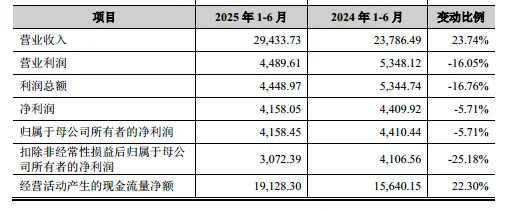
Core Viewpoint - Xiamen Hengkang New Materials Technology Co., Ltd. has received approval for its IPO on the Sci-Tech Innovation Board, but faces significant challenges due to high customer concentration and a notable disparity between revenue growth and profit decline [1][2][4]. Group 1: Revenue and Profitability - Hengkang New Materials has shown strong revenue growth with a compound annual growth rate of 30.5%, but struggles with profitability, as evidenced by a 25.18% decline in net profit in the first half of 2025 despite a 23.74% increase in revenue [1][2][3]. - The company’s revenue heavily relies on its top five customers, which accounted for over 97% of total sales during the reporting period, indicating a high customer concentration risk [3][4]. - The revenue figures for 2022 to 2024 show a significant increase, with 2024 revenue up 70.29% compared to 2022, yet net profit decreased by nearly 3 million [2][3]. Group 2: Customer Dependency - The largest customer contributed 64% of total revenue in the lowest year of the reporting period, raising concerns about the sustainability of the business model if relationships with key clients deteriorate [4][5]. - The company’s reliance on a few key customers poses a risk to its operational performance, as any changes in these relationships could adversely affect financial results [4]. Group 3: Product Profitability - Hengkang New Materials has a dual product structure, with self-produced products and introduced products, but the latter remains the primary source of profit, contributing over 65% of gross profit despite a growing share of self-produced products in revenue [5][6]. - The gross profit margins for self-produced products have been declining, falling below industry averages since 2023, raising questions about their technological competitiveness [9]. Group 4: IPO Fund Utilization and Project Viability - The company plans to raise 1.007 billion yuan for expansion projects, including the second phase of integrated circuit precursors and advanced materials, but the rationale behind these projects is under scrutiny due to ongoing losses in precursor products [1][10][12]. - The utilization rates for KrF photoresist production have been alarmingly low, with rates below 20%, leading to skepticism about the decision to expand production capacity in this area [12].
科创板IPO终止逾三年,无人船公司重启上市辅导!中信证券担任辅导机构
Sou Hu Cai Jing· 2025-09-07 10:37
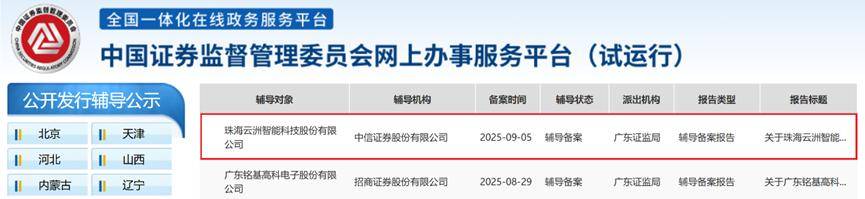
Group 1 - The China Securities Regulatory Commission has accepted the application for the initial public offering (IPO) and listing guidance of Zhuhai Yunzhou Intelligent Technology Co., Ltd., with the filing date set for September 5, 2025, and the guiding institution being CITIC Securities [1][2] - The guidance agreement between CITIC Securities and Yunzhou Intelligent was signed on August 28, 2025, and other participating service institutions include Beijing King & Wood Mallesons (Chengdu) Law Firm and Tianjian Certified Public Accountants [2][3] - Yunzhou Intelligent was previously accepted for an IPO application on the Sci-Tech Innovation Board in December 2021 but withdrew the application in July 2022, leading to the termination of the review process by the Shanghai Stock Exchange [3] Group 2 - Established in 2010, Yunzhou Intelligent focuses on the research, production, sales, and related services of unmanned boats, being a pioneer in China's unmanned boat industry [4] - The company's revenue for the years 2018 to 2021 showed significant growth, with revenues of 26.99 million, 63.63 million, 252.59 million, and 117.53 million yuan respectively, while net profits remained negative during the same period [5][6] - The total assets of the company as of June 30, 2021, were 1.24 billion yuan, with a debt-to-asset ratio of 28.12% [6] Group 3 - The previous IPO plan included projects such as the construction of small and medium-sized unmanned boat production bases, an upgrade of the unmanned boat research center, and marketing network and brand building, with a total fundraising target of 1.55 billion yuan [7][8] - The fundraising allocation included 136.46 million yuan for small unmanned boat production base construction, 260.34 million yuan for medium-sized unmanned boat production base construction, and 507.03 million yuan for the research center upgrade [8] - The actual controller of the company is Zhang Yunfei, who holds 51.42% of the voting rights, with no single shareholder holding more than 30% [8]

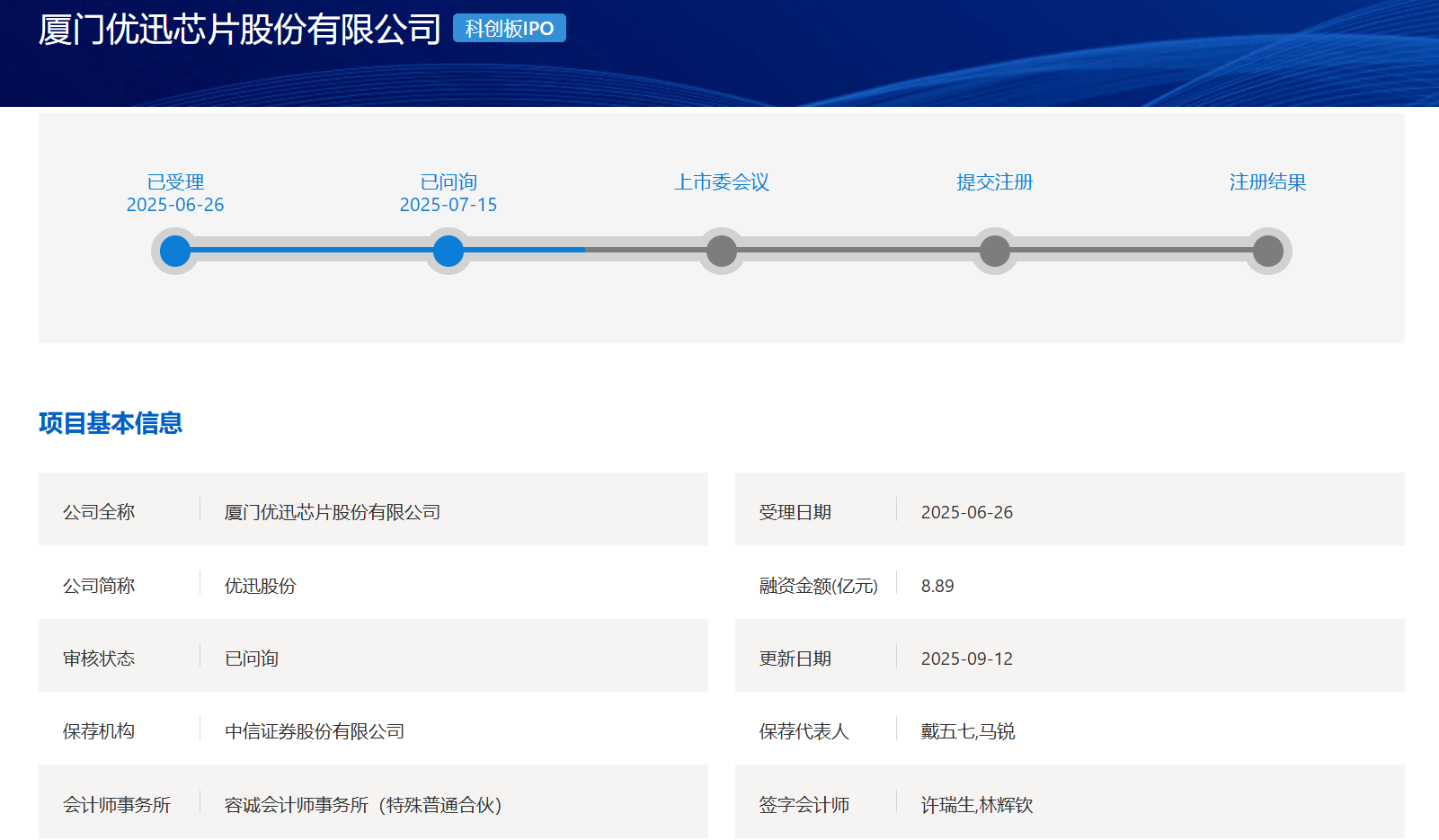
优迅股份科创板IPO披露首轮审核问询函回复
Bei Jing Shang Bao· 2025-09-02 02:13
Company Overview - Xiamen Youxun Chip Co., Ltd. (referred to as "Youxun Co.") focuses on the research, design, and sales of optical communication front-end transceiver chips [1] - The company aims to raise approximately 889 million yuan through its IPO on the Sci-Tech Innovation Board [1] IPO Details - Youxun Co.'s IPO was accepted on June 26, 2025, and entered the inquiry stage on July 15, 2025 [1] - The funds raised will be allocated to the development and industrialization of next-generation access network and high-speed data center chips, automotive chips, and 800G and above optical communication chips and silicon photonic components, as well as to supplement working capital [1] Regulatory Inquiry - In the first round of inquiry, Youxun Co. faced questions regarding its products and technology, market space, and market competition [1]
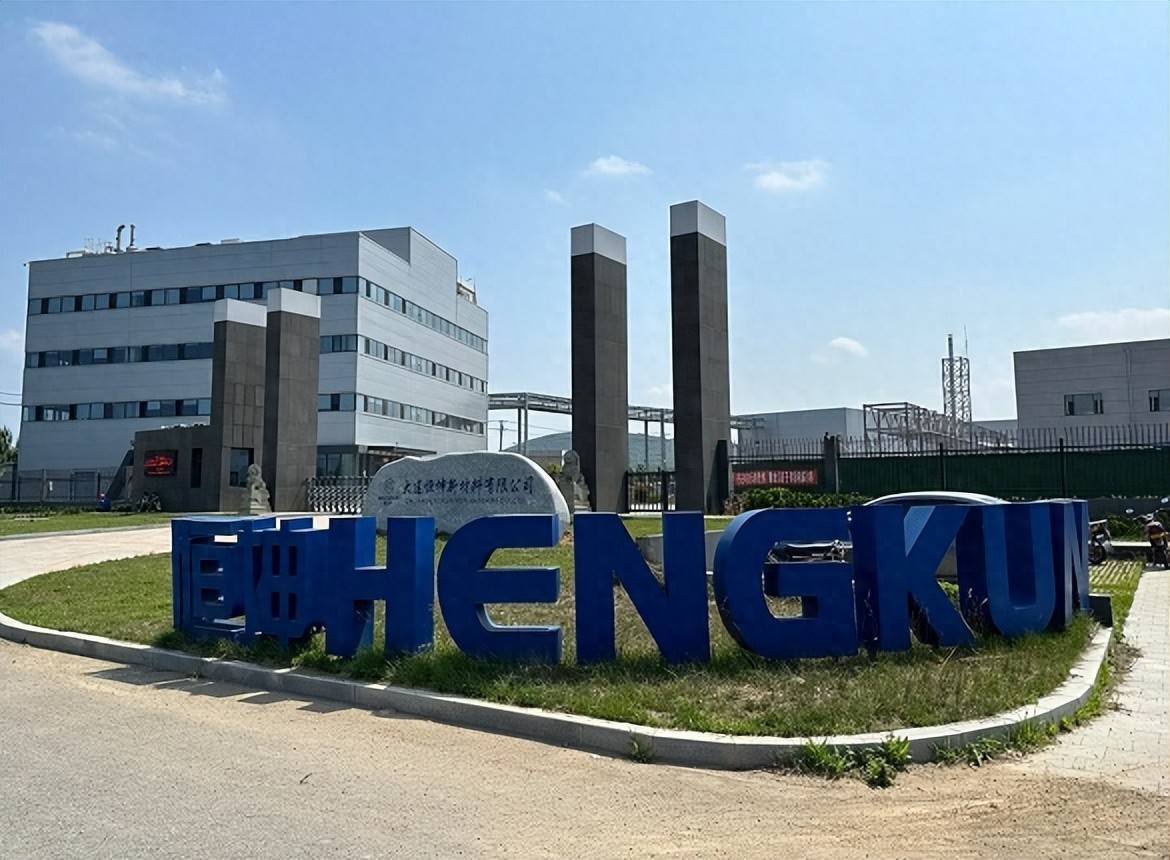
恒坤新材IPO再上会:子公司产能竟超总产能待解释
Sou Hu Cai Jing· 2025-08-27 08:26
Core Viewpoint - Xiamen Hengkang New Materials Technology Co., Ltd. (referred to as "Hengkang New Materials") has faced a delay in the review of its IPO application on the Sci-Tech Innovation Board, with concerns raised regarding its self-produced photoresist materials and precursor products, accounting practices, and the sustainability of high-yield long-term deposits [2][3]. Group 1: Business Overview - Hengkang New Materials was established in 2004, initially focusing on optoelectronic film devices and window lenses, later transitioning to semiconductor materials, primarily developing photoresist and precursor materials for integrated circuits [3]. - The company's main products are categorized into self-produced and introduced products, with self-produced product sales increasing from 123.58 million yuan in 2022 to 344.19 million yuan in 2024, representing a growing share of total revenue [3][4]. Group 2: Financial Performance - Despite the growth in self-produced product sales, over half of the company's profits still derive from introduced products, which are subject to customer cooperation changes that significantly impact performance [3][4]. - The gross profit from introduced products was 189.41 million yuan in 2022, 167.92 million yuan in 2023, and 192.31 million yuan in 2024, accounting for 82.05%, 74.42%, and 65.86% of total gross profit, respectively [3][4]. Group 3: Customer Dependency - The company's largest customer, referred to as Customer A, accounted for 72.35% of main business revenue in 2022, with sales figures of 229.60 million yuan, 240.29 million yuan, and 345.83 million yuan from 2022 to 2024 [4]. - In 2025, the largest customer terminated its cooperation with Hengkang New Materials, leading to a significant decline in revenue and gross profit from introduced products by 57.4% and 59.09%, respectively, in the first half of 2025 [4]. Group 4: Production and Capacity Issues - Hengkang New Materials' self-produced products include SOC, BARC, KrF photoresist, i-Line photoresist, and TEOS precursor materials, with TEOS being produced under a technology transfer agreement with South Korea's Soulbrain [5][6]. - The company has reported negative gross margins for its self-produced TEOS products, with gross margins of -329.59%, -19.91%, and -1.56% from 2022 to 2024 [6]. Group 5: Expansion Plans - The company plans to raise 1.2 billion yuan for various projects, including the second phase of the integrated circuit precursor project and advanced materials projects, although the total fundraising amount has been reduced to 1,006.70 million yuan due to project adjustments [14][15]. - The second phase of the integrated circuit precursor project is expected to invest 519.11 million yuan and add a production line with a capacity of 720,000 kg [15]. Group 6: Capacity Utilization - Current production capacities for various products in 2024 are reported as follows: SOC at 26,928 gallons, BARC at 20,796 gallons, KrF photoresist at 12,465 gallons, and TEOS at 840,000 kg, with utilization rates of 57.42%, 21.43%, 17.55%, and 46.47%, respectively [16][17]. - There are discrepancies noted between the production capacities reported in the IPO documents and those disclosed in inquiry responses, with some subsidiary capacities exceeding the total capacities reported [18][20].
科创板IPO“撤单”两年后,飞依诺重启上市之路
Sou Hu Cai Jing· 2025-08-26 01:34
Group 1 - The core point of the article is that Feiyinuo Technology Co., Ltd. is preparing for its initial public offering (IPO) and has registered for guidance with the Jiangsu Securities Regulatory Bureau [1] - Feiyinuo previously applied for an IPO on the Shanghai Stock Exchange's Sci-Tech Innovation Board in December 2022 but withdrew its application in June 2023 due to strategic planning considerations [1] - The company specializes in the production of digital color ultrasound diagnostic equipment, including trolley-type ultrasound, portable ultrasound, and handheld ultrasound devices, with core technologies in beamforming, signal processing, and image processing [1] Group 2 - The controlling shareholder of Feiyinuo is Zhoushan Chenxin Equity Investment Partnership (Limited Partnership), which directly holds 32.36% of the company's shares [1]
恒坤新材科创板IPO将二度上会
Bei Jing Shang Bao· 2025-08-24 04:17
Core Viewpoint - Xiamen Hengkang New Materials Technology Co., Ltd. is set to have its IPO reviewed again on August 29, after a previous review was postponed on July 25 [1] Company Overview - Hengkang New Materials focuses on the research and industrial application of key materials in the integrated circuit field [1] - The company is one of the few domestic enterprises capable of developing and mass-producing key materials for 12-inch integrated circuit wafer manufacturing [1] - Hengkang New Materials primarily engages in the research, production, and sales of photoresist materials and precursor materials [1]
西安奕材尚未盈利迎考IPO
Bei Jing Shang Bao· 2025-08-12 16:12
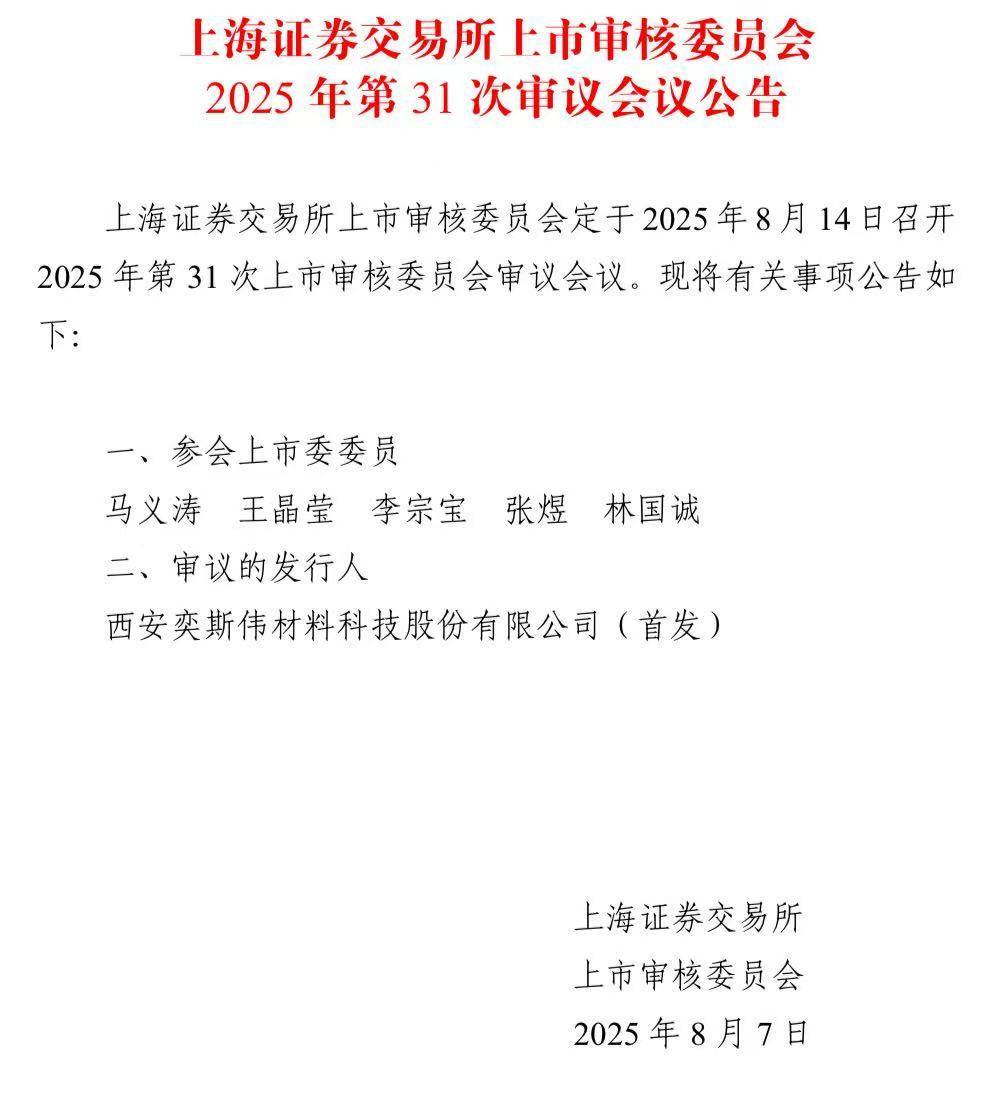
由京东方前掌门人王东升掌舵,西安奕斯伟材料科技股份有限公司(以下简称"西安奕材")冲击上市迎 来最新进展。根据安排,公司科创板IPO将于8月14日上会迎考。作为《关于深化科创板改革服务科技 创新和新质生产力发展的八条措施》(以下简称"科创板八条")发布后上交所受理的首家未盈利企业, 2022—2024年,西安奕材年度净利不断增亏,三年累计亏超17亿元。不过,公司今年上半年净利同比减 亏。另外,公司报告期内毛利率存在较大波动,且显著低于同行业可比公司平均水平。 上半年净利同比减亏 在问询阶段排队近8个月,西安奕材将于8月14日迎来上会大考。 据了解,西安奕材科创板IPO于2024年11月29日获得上交所受理,同年12月24日进入问询阶段。报告期 内公司始终专注于12英寸硅片的研发、生产和销售。基于2024年月均出货量和截至2024年末产能规模统 计,公司均是全球第六的12英寸硅片厂商,前述月均出货量和产能规模全球同期占比约为6%和7%。 本次冲击上市,西安奕材拟募集资金约49亿元,拟投资于西安奕斯伟硅产业基地二期项目。 作为科创板八条发布后首家获上交所受理的未盈利企业,2022—2024年,西安奕材年度净利亏损 ...
西安奕材IPO闯关,百亿资本冬宴下的未盈利赌局
Sou Hu Cai Jing· 2025-08-09 01:46
Core Viewpoint - The IPO journey of Xi'an Yicai has transformed into a high-stakes game of capital and risk, with significant financial challenges and control issues looming over the company [2][24]. Group 1: Control Issues - Xi'an Yicai, founded in March 2019 by Wang Dongsheng, has a complex shareholder structure that raises control risks, with the largest shareholder holding only 12.73% of shares [4][5]. - Liu Yiqian, through Guohua Life, holds a veto power in key investment platforms, allowing potential interference in major decisions despite being behind the scenes [5][6]. - The dilution of voting rights post-IPO could exacerbate control instability, as the combined control of Wang Dongsheng and his associates is below the 30% safety line [4][5]. Group 2: Financial Challenges - The company reported cumulative losses of 1.727 billion yuan over three years, with total debt soaring to 7.007 billion yuan in 2024, a 60% year-on-year increase [2][13]. - Revenue growth from 1.055 billion yuan in 2022 to 2.121 billion yuan in 2024 (CAGR of 41.83%) contrasts sharply with deepening net losses, which expanded from -412 million yuan to -738 million yuan [13][14]. - The debt-to-asset ratio has risen significantly, indicating deteriorating asset quality, with total liabilities reaching 5.113 billion yuan in 2024 [14][15]. Group 3: R&D and Operational Issues - The company claims to hold 1,635 patents, but about 50% of its 235 R&D personnel are classified as "part-time," raising concerns about the effectiveness of its R&D efforts [9][10]. - The production line's heavy investment has led to a depreciation expense of 931 million yuan in 2024, which constitutes 46.7% of operating costs, further squeezing R&D budgets [10][11]. - The company faces a significant cash flow challenge, with capital expenditures of 2.09 billion yuan against a net cash flow from operating activities of 815 million yuan [17]. Group 4: Industry Challenges - Xi'an Yicai's expansion plan aims to increase production capacity from 650,000 wafers per month in 2024 to 1.2 million by 2026, but faces headwinds from declining prices and potential overcapacity [19][20]. - Product prices have dropped nearly 30% from 479.89 yuan to 361.58 yuan between 2022 and 2024, with further declines expected [19][20]. - The company relies heavily on a few major customers, with over 60% of revenue coming from the top five clients, creating a risk of revenue volatility [22][23]. Group 5: Regulatory Scrutiny - The company has triggered 17 financial risk warning indicators, prompting regulatory inquiries into control stability, profitability forecasts, and R&D authenticity [24][26]. - The regulatory body has raised concerns about the reliability of the company's profit forecasts and the stability of its major customer relationships [24][26]. - The upcoming IPO review will serve as a critical test for the company's ability to navigate these challenges and the broader implications for unprofitable firms seeking to go public [24][26].
最高法披露骗保典型案例;480家药企竞逐第十一批集采 | 健讯Daily
2 1 Shi Ji Jing Ji Bao Dao· 2025-08-06 00:11
Regulatory Changes - The National Health Commission has issued a notice prohibiting medical institutions from using misleading names for outpatient services that imply efficacy, emphasizing the need for clear and accurate naming practices [1] Drug Procurement - The National Medical Insurance Administration announced that 480 pharmaceutical companies are competing in the 11th batch of national drug procurement, with 55 drugs proposed for inclusion, averaging 15 companies per drug, and some drugs having over 40 participating companies [2] Legal Actions Against Fraud - The Supreme People's Court reported a significant increase in the prosecution of medical insurance fraud cases, with 1,156 cases involving 2,299 individuals concluded in 2024, marking a 131.2% year-on-year increase and recovering over 402 million yuan in lost funds [3] Drug Approvals - Innovent Biologics announced that its oral GLP-1R agonist IBI3032 has received FDA approval for clinical trials, with plans to initiate Phase I trials in mid-2025 targeting overweight or obese individuals [4] - Dyne Therapeutics received breakthrough therapy designation from the FDA for its investigational therapy DYNE-251 for Duchenne muscular dystrophy, with data expected by the end of 2025 [5] - Xinhua Pharmaceutical's subsidiary, Xinda Pharmaceutical, has received a drug registration certificate for Finasteride tablets, which are included in the national medical insurance drug list [6][7] Mergers and Acquisitions - Shanghai TuoJing announced the acquisition of 82% of Wuhan Kanglu Biological for 328 million yuan, focusing on advancements in molecular diagnostics [8] Financial Performance - Jiuzhou Pharmaceutical reported a 3.86% increase in revenue to 2.871 billion yuan and a 10.7% increase in net profit to 526 million yuan for the first half of 2025 [10] Strategic Investments - Yabao Pharmaceutical plans to acquire a traditional Chinese medicine project for 22 million yuan, enhancing its R&D pipeline and competitive edge [11] Shareholder Actions - Chenshin Pharmaceutical announced that a major shareholder plans to reduce their stake by up to 3% through market transactions, which is not expected to significantly impact the company's governance or operations [12]