
绿色低碳转型

Search documents
吉林油田打造CCUS发展联合体 共赢绿色未来
Sou Hu Cai Jing· 2025-09-28 03:26
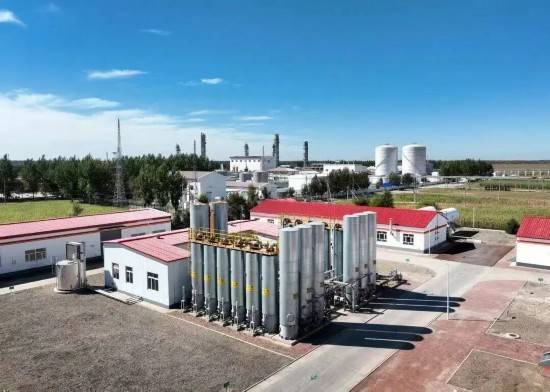
Core Viewpoint - The Jilin Oilfield CCUS technology team has been awarded the "Moving Petroleum Team" honor, reflecting their dedication and achievements in carbon capture, utilization, and storage (CCUS) technology, with a total carbon dioxide storage exceeding 3.9 million tons, ranking first in China [1][3]. Group 1: Achievements and Recognition - The Jilin Oilfield has successfully stored over 3.9 million tons of carbon dioxide, equivalent to planting 35 million evergreen trees in the Songliao Plain [1]. - The CCUS technology team has developed a series of advanced technologies with independent intellectual property rights despite facing significant challenges, including a lack of prior experience and references [4]. - The Jilin Oilfield operates the only Chinese project among the 21 large-scale CCUS projects globally, achieving a dual benefit of carbon reduction and increased oil production [5]. Group 2: Collaborative Efforts and Training - The Jilin Oilfield has established a new model of "production, learning, research, and application," focusing on talent cultivation and creating the first CCUS training system in China [7]. - The company has hosted over 2,000 domestic and international experts and established partnerships with various enterprises and academic institutions to tackle CCUS technology projects [9]. - More than 300 core technical talents in CCUS have been trained, and the company has expanded its services to provide CCUS design, technology research, and operational management to other oilfields [9].

京能集团多领域创新发展
Sou Hu Cai Jing· 2025-09-28 03:00
Core Viewpoint - The article emphasizes the pivotal role of state-owned enterprises, particularly Jingneng Group, in supporting the high-quality development of Beijing, focusing on energy security, green transformation, digital economy, urban renewal, cultural tourism integration, and elder care services [1][15]. Group 1: Energy and Digital Transformation - Jingneng Group is actively responding to the global energy revolution and the integration of digital economy by placing technological innovation at the core of its development strategy, particularly under the "dual carbon" goals [3]. - The company has developed the first fully domestic gas turbine model application system, "Qingrui," which enhances operational efficiency and reliability while reducing maintenance costs, thus supporting the digital transformation of the clean energy sector [3]. - Jingneng Group has established a comprehensive "Jingneng Xingyao" series of products and core technology systems to leverage its energy industry advantages into new digital economic growth, including a public AI computing platform that connects extensive green computing resources [4]. Group 2: Smart Heating and Virtual Power Plants - Beijing Thermal Group is advancing smart heating transformations, having completed upgrades for 72.5 million square meters and planning an additional 25.04 million square meters by 2025, which includes the installation of numerous IoT devices [5]. - Jingneng Group's virtual power plant has aggregated a total capacity exceeding 4 million kilowatts, significantly enhancing flexibility and resilience in power grid management, while promoting the consumption of clean energy [6]. Group 3: Green Technology and Ecological Restoration - Jingneng Group has developed a comprehensive technology system for ecological restoration, addressing environmental issues in mining areas, achieving a 25% increase in filling rates and an 8.5% reduction in material costs [7]. - The company employs innovative green technologies for ecological restoration, effectively recovering vegetation and enhancing carbon sink capabilities [8]. Group 4: Urban Renewal and Cultural Tourism Integration - Jingneng Group is actively involved in urban renewal and cultural tourism integration, focusing on optimizing the value of existing properties and enhancing cultural resources through innovative projects [9]. - The company has transformed old industrial buildings into cultural landmarks, achieving high occupancy rates and positive customer ratings, thereby revitalizing urban spaces [10]. Group 5: Elder Care Services - Jingneng Group is committed to building a comprehensive elder care service system, addressing the needs of an aging population through a collaborative approach across various service chains [12]. - The company has implemented a model that integrates medical and elder care services, establishing community care stations and specialized care brands to enhance service delivery [13][14].

【新思想引领新征程】扎实推进绿色低碳转型 彰显负责任大国担当
Yang Guang Wang· 2025-09-28 01:08
Group 1 - China's commitment to green development is highlighted by its new round of Nationally Determined Contributions (NDCs) announced by President Xi Jinping at the UN Climate Change Summit, emphasizing the country's determination to fulfill its promises [1][5] - The construction of the ±800 kV UHVDC project from southeastern Tibet to the Guangdong-Hong Kong-Macao Greater Bay Area is a significant step in China's energy transition, expected to deliver over 43 billion kWh of green electricity annually, equivalent to half of the Three Gorges Dam's annual output [1] - The project will replace approximately 12 million tons of standard coal consumption and reduce carbon dioxide emissions by about 33 million tons, showcasing China's role as a responsible major power in global energy transformation [1] Group 2 - Since the announcement of the "carbon peak" and "carbon neutrality" goals in September 2020, China has built the world's largest and fastest-growing renewable energy system, providing over 80% of global photovoltaic components and 70% of wind power equipment [2] - The successful implementation of ammonia co-firing technology at the first coal-fired power plant in China marks a breakthrough in clean energy, contributing to the establishment of a low-carbon and efficient energy system [2] - The global first ultra-zero carbon building in Qingdao, which operates on 100% green energy, represents a new model for zero-carbon architecture and an integrated energy ecosystem [3] Group 3 - China's forest coverage rate exceeds 25%, with a forest stock volume of over 20 billion cubic meters, contributing to a national carbon sink of over 1.2 billion tons of CO2 equivalent annually, ranking first in the world [3] - The carbon trading market in China has seen a cumulative transaction volume of over 723 million tons of carbon emission allowances as of September 26 [3] - Jiangxi province is exploring the integration of forest carbon sink values into ecological compensation mechanisms, providing financial benefits to local farmers based on the carbon sequestration capabilities of their forests [3] Group 4 - By 2035, non-fossil energy consumption is projected to account for over 30% of total energy consumption, with forest stock volume expected to reach over 24 billion cubic meters, and new energy vehicles becoming the mainstream of new vehicle sales [4]
亚太森博入围年度省级重点行业能效“领跑者”名单
Qi Lu Wan Bao Wang· 2025-09-28 01:02
近年来,亚太森博大力推进能源结构转型,采取优化设备系统流程、优化生产流程减少设备空转时间、 提高冷却水回收利用率等方式进一步降低能耗,高效利用原料加工过程中产生的黑液等生物质能源替代 煤炭,从生物质能源利用、光伏发电拓展和余热高效回收三个维度全面强化清洁能源体系,使生物质能 源在总能耗中占比超过83%,持续降低碳排放强度,推动行业绿色低碳转型。目前,该公司永磁高效节 能电机改造、网毯清洗系统改造等多个节能降碳项目在推进中。 近日,省工业和信息化厅印发《关于2025年度省级重点行业能效"领跑者"名单的公示》,日照经开区亚 太森博(山东)浆纸有限公司名列其中。 ...
2025年太原能源低碳发展论坛举行
Xin Hua Wang· 2025-09-28 00:41
Core Viewpoint - The 2025 Taiyuan Energy Low Carbon Development Forum focuses on "green low-carbon transformation and building a new energy system," highlighting global discussions on low-carbon energy issues [1] Group 1: Forum Overview - The forum is co-hosted by the Ministry of Foreign Affairs, the National Energy Administration (representing the National Development and Reform Commission), and the Shanxi Provincial Government [1] - It features participation from guests across 32 countries and regions, including representatives from international organizations and multinational enterprises [1] - The forum includes various activities such as international meetings, parallel forums, investment promotions, achievement releases, and business inspections [1] Group 2: Special Features - Cuba participates as the guest country in related activities [1] - Concurrently, the 2025 Shanxi (Taiyuan) Energy Industry Expo is held to showcase the latest achievements and trends in the green low-carbon transformation of the energy industry [1] - The expo attracts over 500 domestic and international enterprises, universities, and research institutions in the energy sector [1] Group 3: Forum Significance - The Taiyuan Forum is recognized as a significant national-level, international, and specialized forum in China's energy industry, having successfully held eight sessions [1]
第十八届中国(东营)国际石油石化装备与技术展览会举办
Sou Hu Cai Jing· 2025-09-27 09:40
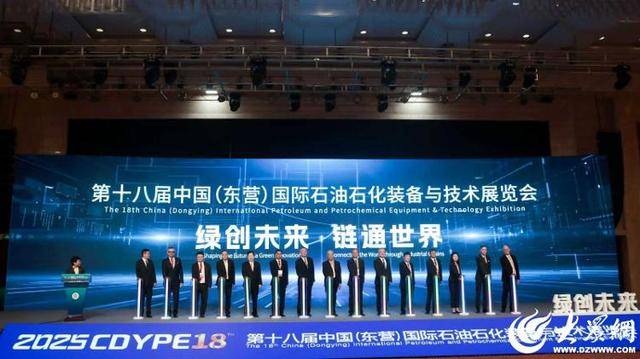
Core Viewpoint - The 18th China (Dongying) International Petroleum and Petrochemical Equipment and Technology Exhibition emphasizes the theme "Green Innovation for the Future, Connecting the World," focusing on low-carbon transformation in the traditional energy sector and fostering new productive forces through technological innovation [1][6]. Group 1: Exhibition Overview - The exhibition lasts for three days and covers an area of over 40,000 square meters, with more than 400 exhibitors and buyers, and an expected attendance of over 60,000 visitors [1]. - There are five exhibition areas, including specialized zones for central and state-owned enterprises, oilfield supply chain companies, international exhibits, and outdoor displays of large oil equipment and drones [1]. Group 2: Participation and Exhibitors - The exhibition features a diverse range of exhibitors from the oil and gas industry, with 69% of participants being from outside the region, including renowned companies like Baker Hughes, Caterpillar, and Total [3]. - A record number of World Fortune 500 and central enterprise exhibitors are present, with several companies participating for the first time, including Baker Hughes and the China National Petroleum Corporation [3]. Group 3: Special Topics and Events - The exhibition includes over 20 high-profile meetings focusing on four main topics: "Going Global Together," "International Procurement," "Future Industries," and "New Product Launches," featuring nearly 100 experts and representatives [5]. - The "Going Global Together" topic aims to provide a platform for sharing overseas market opportunities and industry trends, while the "International Procurement" section facilitates efficient procurement connections [5]. Group 4: Historical Significance and Impact - The exhibition has been successfully held for 17 consecutive years and is recognized as the second oil equipment exhibition in China to receive UFI certification, playing a crucial role in promoting green transformation and technology cooperation in the petroleum and petrochemical equipment industry [6]. - It serves as an international platform for upgrading the petroleum and petrochemical equipment industry, enhancing trade, investment, and technology collaboration, and showcasing new technologies and products [6].




中国担当提振推进全球气候治理的信心
Ren Min Ri Bao· 2025-09-27 03:05
Core Points - President Xi Jinping announced China's new round of Nationally Determined Contributions (NDCs) at the UN Climate Change Summit, emphasizing the country's commitment to global climate governance and cooperation [1] - China aims to reduce its total greenhouse gas emissions by 7%-10% from peak levels by 2035, increase non-fossil energy consumption to over 30% of total energy consumption, and expand installed capacity of wind and solar power to over six times that of 2020 [1] - The announcement has been interpreted globally as a significant commitment from China, enhancing confidence in global emission reduction efforts and indicating a shift towards a green economy [1] Group 1 - The global climate governance is at a critical stage, with China positioning itself as a responsible contributor and action-oriented player [1] - The year marks the 10th anniversary of the Paris Agreement, making it a pivotal moment for submitting new NDCs [1] - International reactions highlight China's accelerated green transition and its potential to reshape the global economy through clean energy initiatives [1] Group 2 - Effective climate change response requires global collaboration, with a consensus among most countries on the necessity of green low-carbon development [2] - The transition to a green economy is seen as a new engine for social and economic development, despite challenges such as insufficient contributions and funding [2] - The principle of common but differentiated responsibilities should guide international cooperation, with developed countries taking the lead in emission reductions and supporting developing nations [2] Group 3 - Deepening cooperation is essential to address global deficits in development, trust, and governance, with a focus on collaborative green development [3] - There is a significant demand for global green development, necessitating international collaboration in green technology and industry [3] - The urgency of climate change requires all parties to take action, reinforcing confidence, responsibility, and cooperation to achieve a harmonious relationship between humanity and nature [3]
“十四五”能源成就企业谈丨向智向新 坚定做好煤炭清洁高效利用“大文章”
国家能源局· 2025-09-27 01:57
Core Viewpoint - China Coal Energy Group has committed to high-quality development during the "14th Five-Year Plan" period, focusing on clean and efficient coal utilization while optimizing energy structure and promoting industrial upgrades [3] Group 1: Innovation and Technology - The company emphasizes an innovation-driven development strategy, aiming for technological self-reliance and focusing on safe, green, and intelligent coal mining [4] - A unique innovation model combining internal and external resources has been established, leading to the creation of 33 high-tech enterprises and recognition of several as "little giants" [4] - Significant breakthroughs in core technologies have been achieved, including the development of the world's first 200-ton pure electric mining truck and an 8 MW intelligent conveyor system [5] Group 2: Digital Transformation - The company has built an intelligent production and operation management platform, incorporating over 150 AI algorithm models to enhance management efficiency [6] - A total of 48 intelligent coal mines and 203 intelligent mining faces have been established, with several projects recognized as national examples of intelligent coal mining [6] Group 3: Green and Low-Carbon Development - China Coal is committed to ecological governance and has established 22 national and provincial-level green mines, significantly improving vegetation coverage in mining areas [8] - The company has participated in the development of national standards for carbon footprint measurement and has implemented various environmental technologies across over 60 mines [9] Group 4: Circular Economy and Resource Utilization - The company is leveraging various spaces for developing photovoltaic projects and has implemented green transformations in mining areas, achieving high resource utilization rates for coal gangue and mine water [10] - The comprehensive energy consumption for raw coal production has been reduced to 3.85 kg of standard coal per ton, significantly lower than the industry average [10] Future Outlook - China Coal aims to continue its commitment to energy security and modernization, enhancing core competitiveness while accelerating green and low-carbon transformation [10]
中国担当提振推进全球气候治理的信心(和音)
Ren Min Ri Bao· 2025-09-26 21:57
Group 1 - The core viewpoint emphasizes China's commitment to global climate governance, showcasing its responsible role and boosting confidence in collaborative efforts [1] - China announced new national contributions, aiming for a 7%-10% reduction in greenhouse gas emissions by 2035, with non-fossil energy consumption exceeding 30% of total energy consumption [1] - The targets include increasing wind and solar power capacity to over six times the 2020 levels, achieving a forest stock of over 24 billion cubic meters, and making new energy vehicles the mainstream of new vehicle sales [1] Group 2 - The article highlights the necessity of global cooperation in addressing climate change, emphasizing that green low-carbon transformation is a global consensus [2] - It stresses the shared responsibility of nations to protect the environment and achieve sustainable development, while addressing challenges such as insufficient contributions and funding [2] - The need for developed countries to fulfill their obligations and support developing nations with funding and technology is underscored [2] Group 3 - The importance of deepening cooperation among nations to tackle climate governance challenges is discussed, with a focus on enhancing international collaboration in green technology and industry [3] - The article calls for practical actions to address climate change, emphasizing that the transition to a green low-carbon economy is an unstoppable trend [3] - It concludes with a vision of harmonious coexistence between humanity and nature, urging collective action to protect the planet [3]
全球电子纸显示龙头东方科脉递表港交所,2024年全球商用端市场份额达26.3%
Xin Lang Cai Jing· 2025-09-26 02:49
Core Viewpoint - Zhejiang Oriental Kema Electronic Co., Ltd. has officially submitted its listing application to the Hong Kong Stock Exchange, positioning itself as the largest commercial smart IoT electronic paper display solution provider globally with a market share of 26.3% as of 2024 [1] Group 1: Company Overview - The company focuses on the design, research and development, manufacturing, and sales of electronic paper display modules, with products applicable in various sectors such as smart retail, smart office, smart education, smart logistics, smart transportation, and e-readers [1] - The company has maintained steady growth in performance, with sales volume of smart IoT electronic paper display modules increasing from 50.6 million units in 2022 to 67.1 million units in 2024, and total revenue of RMB 12.13 billion, RMB 10.24 billion, and RMB 11.51 billion during the same period [1] Group 2: Financial and R&D Investment - R&D expenditures from 2022 to 2024 were RMB 38 million, RMB 39.9 million, and RMB 56 million, representing 3.1% to 4.9% of total revenue [2] - As of June 30, 2025, the company has obtained 94 patents, including 28 invention patents, indicating strong technological innovation capabilities [2] Group 3: Customer Structure and Production Capacity - The company has a high customer concentration, with the top five customers accounting for 93.3%, 88.7%, and 82.6% of revenue from 2022 to 2024, and the largest customer contributing 47.7%, 50.7%, and 36.3% respectively [2] - The company operates four production and R&D bases domestically and internationally, with an annual production capacity exceeding 130 million units and 47 specialized production lines [2] Group 4: Industry Outlook - The global demand for electronic paper is expected to grow due to its advantages such as ultra-low power consumption and eye-friendly experience, with the market for smart IoT electronic paper solutions projected to increase at a compound annual growth rate of 14.6%, from RMB 54.8 billion in 2024 to RMB 108.4 billion in 2029 [2] Group 5: Listing and Fund Utilization - The listing is sponsored by CITIC Securities (Hong Kong) Limited, with the raised funds intended for enhancing production capacity, upgrading production bases, increasing R&D investment, and supporting working capital [3] - The listing is expected to further enhance the company's global competitiveness and accelerate its international strategic layout [3]