
新型工业化

Search documents
四川宜宾:深化产融合作 加速新型工业化升级
Xin Hua Cai Jing· 2025-07-25 12:17
Group 1 - The core theme of the conference is to enhance the multi-level financial service system to support the acceleration of new industrialization, with over a thousand representatives from various sectors gathering to explore effective paths for financial empowerment of the real economy [1][3] - Yibin, as a national pilot city for industrial-financial cooperation, has implemented a "policy + product + platform" strategy to promote a virtuous cycle of "technology - industry - finance" [1][2] - Yibin has introduced several financial support measures, including guarantee subsidies and loan interest discounts, to direct financial resources towards enterprises, particularly focusing on innovative financial products for technology-driven companies [1][2] Group 2 - Yibin has established a robust industrial fund ecosystem, collaborating with leading capital firms to create a fund matrix exceeding 600 billion yuan, targeting sectors such as new energy storage, intelligent connected vehicles, and artificial intelligence [2] - The "Yirongtong" financial service platform has been set up to serve 520,000 market entities, facilitating over 1,000 billion yuan in financing through regular industrial-financial matchmaking events [2] - The city aims to leverage its industrial fund group to attract high-quality projects and enterprises, promoting industrial transformation and upgrading through a combination of funds and industry [2][3]
深化产融结合,加速新型工业化升级,宜宾试点见成效
Jing Ji Guan Cha Bao· 2025-07-25 09:24
Core Insights - The conference held in Yibin focused on enhancing the integration of finance and industry to support the advancement of new industrialization [1] - A series of financial tools and comprehensive service plans were launched to facilitate industrial and financial cooperation [1][2] - Yibin has been recognized as a key city in the Chengdu-Chongqing economic circle and has made significant strides in industrial development and financial innovation [2][3] Financial Tools and Policies - The conference introduced innovative financial products such as "Science and Technology Innovation Loan" and "Carbon Account Financing" to support enterprises [2][4] - Yibin has implemented policies like the "Pilot Implementation Plan for Industrial-Financial Cooperation" to provide financial support through guarantees and loan subsidies [4] - A fund cooperation matrix exceeding 600 billion yuan has been established to address financing challenges for local enterprises [4] Industrial Development - Yibin's industrial landscape includes four major sectors: high-quality liquor, power batteries, crystalline silicon photovoltaics, and digital economy, with each sector showing significant growth [3] - The high-quality liquor industry has surpassed 100 billion yuan in output value, while power batteries have also exceeded 100 billion yuan for two consecutive years [3] - Emerging industries such as energy storage and smart connected vehicles are expected to surpass 10 billion yuan this year [3] Future Prospects - Yibin aims to build a modern regional center and a strong manufacturing city, fostering a continuous collaboration between industry and capital [4] - The city is actively exploring new industrial paths, focusing on green energy and digital economy sectors [2][4] - The integration of technology, industry, and finance is seen as a key strategy for sustainable development in Yibin [4]
产融合作新生态:科技赋能、以融促产、适配现代产业体系丨直击2025产融合作大会
Tai Mei Ti A P P· 2025-07-25 08:19
Core Insights - The conference focused on "Industry-Finance Integration Innovation and Collaborative Value Creation," aiming to redefine the new heights of industry-finance cooperation and support the vision of new industrialization [4][16] - The event gathered over a thousand representatives from national ministries, financial institutions, and industry leaders to discuss effective paths for financial empowerment of the real economy [2][3] Group 1: Industry Development - Yibin has been actively exploring innovative solutions for a "technology-industry-finance" virtuous cycle, showcasing significant achievements in revitalizing the city through financial support for industries [4][10] - The city has established a diversified modern industrial system, with key sectors like high-quality liquor and power batteries exceeding a combined output value of 100 billion [4][10] - Yibin's industrial clusters, such as "4+4+N," are gaining momentum, providing substantial space for industry-finance cooperation [5][12] Group 2: Financial Services - Financial institutions have seen a continuous increase in the proportion of manufacturing loans, with medium and long-term loans in manufacturing rising to 14.2%, an increase of nearly 8 percentage points over three years [6][9] - Yibin has introduced various financial products tailored for technology-driven enterprises, such as "Science and Technology Loans" and "Intellectual Property Pledge Financing" [10][11] - The city has established a financial service platform, "Yirongtong," to support over 520,000 market entities and has facilitated financing for over 600 projects amounting to more than 100 billion [10][15] Group 3: Policy and Innovation - The conference highlighted the importance of differentiated and diversified financing services to support the transformation and upgrading of traditional manufacturing [6][11] - New financial products and services, such as the "Mid-Stage Protection and Financing" scheme, aim to accelerate the commercialization of innovative technologies [11][17] - Yibin's government has implemented policies to attract financial resources towards enterprises, including the establishment of a fund cooperation matrix exceeding 60 billion [10][15] Group 4: Future Outlook - The conference's "Three Rivers Mouth Declaration" emphasizes the need for a multi-layered financial service system to support new industrialization and enhance the resilience of industrial chains [17] - Yibin aims to leverage the outcomes of the conference to build a modern regional center city and a manufacturing powerhouse, fostering continuous collaboration between industry and capital [16][17] - The integration of technology, finance, and industry is seen as a critical driver for urban development and economic growth in the context of a new round of technological revolution [16][17]

泰安|泰安攻克多项“卡脖子”技术
Da Zhong Ri Bao· 2025-07-25 00:46
Core Insights - The article highlights the advancements in technology and industrial development in Tai'an, particularly in the semiconductor and chemical industries, showcasing the successful domestic production of high-purity silane gas and pyridine, which were previously dominated by foreign companies [2][3][4]. Group 1: Semiconductor Industry - The electronic-grade silane gas produced in Tai'an has achieved an international leading standard of "6 nines" purity (99.9999%), which is essential for advanced semiconductor manufacturing [2]. - The project is expected to generate an annual revenue of 1.8 billion yuan and tax revenue of 120 million yuan once fully operational [2]. Group 2: Chemical Industry - Tai'an Mingde New Materials Co., Ltd. has invested 3.01 billion yuan in a pyridine project, with the first phase producing 50,000 tons of pyridine, marking a significant leap from follower to leader in the industry [3]. - Upon completion, the pyridine production capacity will exceed 150,000 tons, capturing over 50% of the global market share [3]. - Pyridine is a critical raw material for various agricultural, pharmaceutical, and industrial products, underscoring its importance in ensuring agricultural productivity and human health [3]. Group 3: Technological Innovations - Tai'an Zhongte Special Paper Co., Ltd. has successfully developed a domestic alternative for liquid crystal display (LCD) separator paper, overcoming previous technical barriers [4]. - The new separator paper significantly improves temperature control and breathability, addressing issues with static electricity and high-temperature resistance found in conventional materials [4]. - The project is expected to reduce production costs significantly, with a potential saving of 600 yuan per ton compared to imported materials [4]. Group 4: Industrial Growth and Investment - Tai'an is implementing a "Double Ten Project" strategy, focusing on major technological breakthroughs and the transformation of significant achievements, which has led to 27 ongoing major technology projects [6]. - The industrial output value of Tai'an increased by 8.3% year-on-year in the first four months of the year, surpassing the provincial average by 0.2 percentage points [6]. - Industrial technological transformation investments grew by 16.8%, ranking fifth in the province [6].
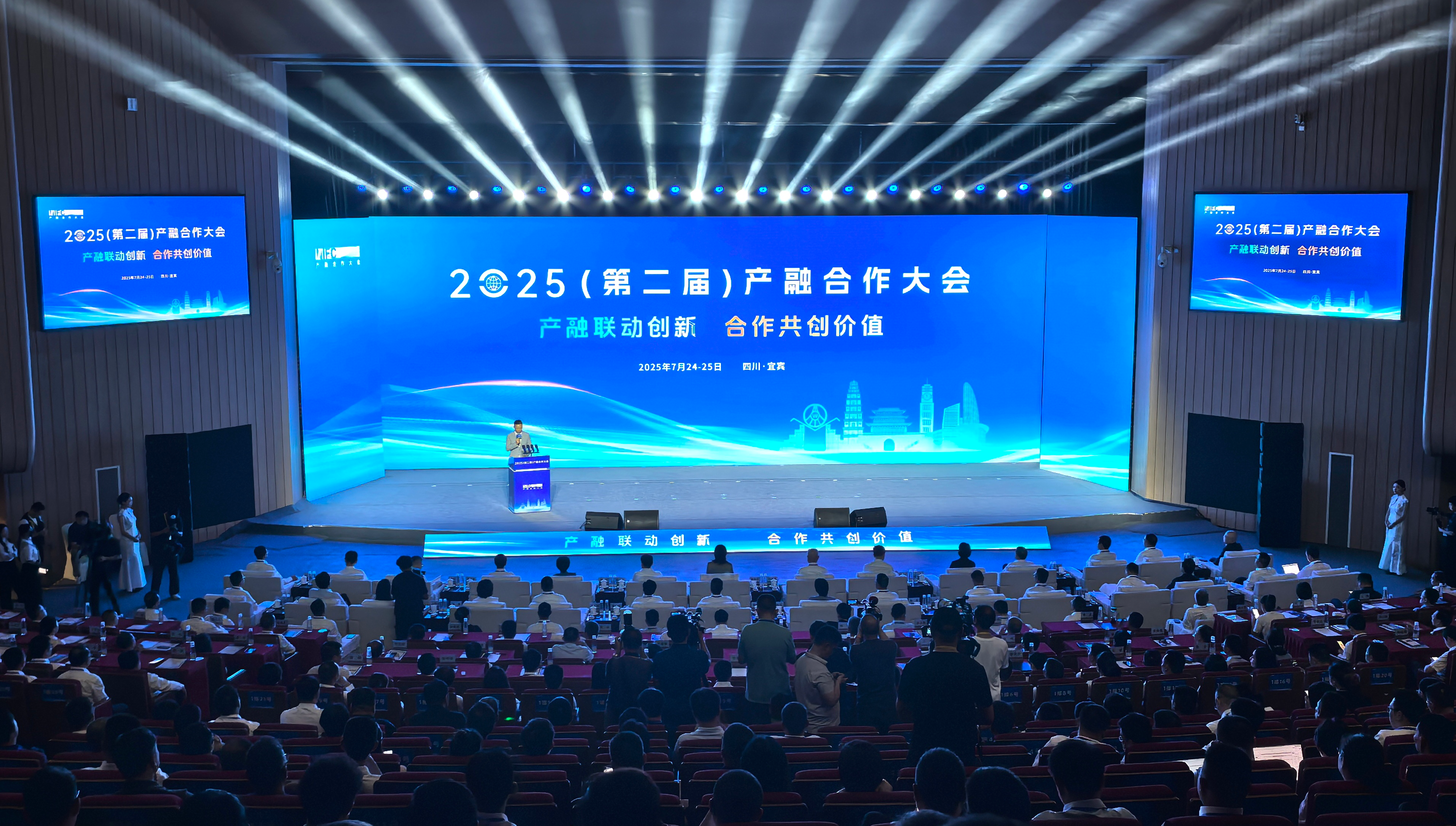
产融结合赋能新型工业化 2025(第二届)产融合作大会在四川宜宾开幕
Zhong Guo Xin Wen Wang· 2025-07-24 15:54
Group 1 - The conference focuses on "innovation cooperation and value co-creation" in the context of industrialization and aims to enhance financial support for key strategic areas and weak links in the economy [1][2] - A series of financial tools were launched, including the "support for new industrialization innovative financial product matrix" and the "comprehensive financial service plan for pilot projects" [1] - The event will last for two days and includes activities that analyze the role of digital technology in optimizing financial resource allocation and reducing corporate financing costs [1][2] Group 2 - The conference features a "results display" session showcasing the top-level design of the industrial-financial cooperation policy system and innovative practices from pilot cities [2] - Yibin, the host city, is recognized as a key city in the Chengdu-Chongqing economic circle and has been selected as a national pilot city for industrial-financial cooperation [2] - Yibin is developing several emerging industrial clusters, including a world-class power battery industry cluster and a national-level crystalline silicon photovoltaic industry cluster [2]
2025山东经济半年报:5.6%的增速靠何支撑?
Zhong Guo Xin Wen Wang· 2025-07-24 15:40
Economic Overview - Shandong's GDP for the first half of 2025 reached 500.46 billion yuan, with a year-on-year growth of 5.6%, outperforming the national average [1] - The province has seen consistent GDP growth over the past five years, indicating a stable economic trajectory [1] Agriculture Sector - As a major agricultural province, Shandong has implemented a new initiative to enhance grain production capacity, ensuring stable supply of key agricultural products [1] - The total output value of agriculture, forestry, animal husbandry, and fishery reached 537.53 billion yuan, with a year-on-year increase of 4.3% [1] - Summer grain production yielded 54.74 billion jin, a 0.7% increase year-on-year, with Shandong leading the nation in both yield and total production increase [1] Industrial Growth - The industrial added value above designated size in Shandong grew by 7.7%, exceeding the national growth rate by 1.3 percentage points [2] - Key industries such as equipment manufacturing saw a significant increase of 13%, contributing 3.2 percentage points to the overall industrial growth [2] - The province's strong industrial foundation and comparative advantages are evident as it adapts to global economic shifts towards high-quality development [2] Export Performance - Shandong's total goods import and export volume reached 1.73 trillion yuan, marking a year-on-year growth of 6.8% [3] - Exports surpassed 1 trillion yuan, with a year-on-year increase of 6%, highlighting the province's robust export resilience [3] - High-tech product exports reached 90.08 billion yuan, growing by 28.1%, indicating a focus on product upgrading and innovation [3] Consumer Market - The total retail sales of consumer goods in Shandong amounted to 2.01421 trillion yuan, with a year-on-year growth of 5.6% [4] - Urban and rural retail sales both showed positive growth, with urban sales increasing by 5.7% and rural sales by 5.6% [4] - The province has actively promoted consumption through various initiatives, including nearly 4,000 promotional events and subsidies to boost consumer spending [4] Future Outlook - With the current growth momentum, Shandong's GDP is projected to exceed 10 trillion yuan by 2025, indicating a significant advancement in its economic development [5]
【财经分析】县域经济迎质效双升 “东强西弱”等问题仍待破局
Xin Hua Cai Jing· 2025-07-24 06:46
Core Insights - The report highlights the importance of county-level economies as a key link in urban-rural integration and a crucial driver for common prosperity in China [1][2] - The transition from scale expansion to quality improvement in county economies is a focal point of social attention, particularly in the context of new industrialization, urbanization, and rural revitalization [1][2] Economic Performance - County economies have shown significant growth, with GDP increasing from 31.6 trillion yuan in 2015 to 48.3 trillion yuan in 2023, reflecting a continuous upward trend [2] - The economic structure has improved, with the secondary industry accounting for 40% of the county economy, establishing a dual-driven model of secondary and tertiary industries [2] - The top 100 counties contribute 26.5% of county GDP despite representing only 5% of the total number of counties, showcasing their economic strength [2] Challenges Faced - There are notable regional disparities in county economic development, with the eastern region having a significant advantage in the number of top-performing counties [4] - The pressure for industrial structure transformation remains, as traditional industries still dominate, and the proportion of strategic emerging industries is relatively low [4][5] - The need for balanced regional development and the upgrading of industrial structures are critical challenges for achieving high-quality growth [4][5] Pathways for High-Quality Development - Experts suggest that county economies should explore development paths tailored to their unique characteristics, emphasizing the integration of new industrialization, urbanization, and rural revitalization [6][7] - Key strategies include promoting new industrialization, enhancing traditional industries, and fostering the development of emerging industries to create new growth engines [6][7] - The report outlines five focus areas for the 14th Five-Year Plan, including provincial coordination, synchronized modernization, and the cultivation of new productive forces [7]
持续推进新型工业化 多地加码布局新质生产力
Zhong Guo Chan Ye Jing Ji Xin Xi Wang· 2025-07-23 23:11
Group 1: Policy Initiatives - The "Two New" policies, focusing on large-scale equipment updates and consumer goods trade-in, are being implemented across various regions to stimulate economic growth and enhance production capabilities [2][3][4] - Jiangsu has invested 25 million yuan in upgrading its equipment, resulting in a 33.3% reduction in labor usage and a 37.5% increase in efficiency for its filling operations [2] - The National Development and Reform Commission has allocated 200 billion yuan in special bonds to support equipment updates and 300 billion yuan for consumer goods trade-in programs [3] Group 2: Technological Advancements - The integration of artificial intelligence in manufacturing is being promoted, with initiatives in Hebei focusing on developing industrial models and applications to enhance productivity [5][6] - Jiangxi is addressing common challenges in AI application scenarios and aims to establish a series of demonstration projects to showcase AI capabilities in manufacturing [6][7] - Sichuan is advancing brain-computer interface technology, with plans to create a leading industry in this field by 2030, emphasizing the importance of innovation and application [8][9] Group 3: Future Industry Development - Multiple provinces are prioritizing the development of emerging and future industries, with a focus on digital economy sectors such as quantum technology and data space [10][11] - The projected market value of future industries in China is expected to reach 13.4 trillion yuan by 2025, with a compound annual growth rate of around 15% [11] - Local governments are encouraged to create pilot zones for future industries, fostering innovation and collaboration between enterprises and research institutions [11]
杭州GDP半年报:突破1.1万亿元 同比增长5.5%
Hang Zhou Ri Bao· 2025-07-23 02:12
Economic Overview - Hangzhou's GDP for the first half of the year reached 1,130.3 billion yuan, with a year-on-year growth of 5.5%, accelerating by 0.3 percentage points compared to the first quarter [1] - The contribution of the service industry to economic growth is nearly 70%, indicating its critical role in driving high-quality development [1] Industrial Performance - The industrial added value for large-scale enterprises in Hangzhou was 225.2 billion yuan, showing a year-on-year increase of 6.9% [1] - High-tech industries, strategic emerging industries, and equipment manufacturing saw added value growth rates of 8.5%, 9.2%, and 10.5% respectively, all exceeding the average level of large-scale industries [1][2] Manufacturing Sector - The automotive manufacturing sector is a key focus for Hangzhou, with a significant increase in new energy vehicle production by 117.8% in the first half of the year [2] - The city is actively building five industrial ecological circles to enhance innovation, value addition, and supply chain reliability [2] Consumer Market - The total retail sales of consumer goods in Hangzhou reached 458.5 billion yuan, with a year-on-year growth of 6.0% [2] - The "replace old appliances" policy led to a remarkable increase in retail sales of household appliances and audio-visual equipment by 97.5% [2] Foreign Trade - Hangzhou's total import and export volume was 436.6 billion yuan, growing by 7.1% year-on-year, with exports reaching 309.8 billion yuan, an increase of 12.5% [2] - Private enterprises played a significant role, with exports amounting to 238.0 billion yuan, growing by 13.4%, which is 0.9 percentage points faster than the overall export growth [2] Service Industry - The added value of the service industry in Hangzhou was 847.4 billion yuan, with a year-on-year growth of 5.7%, accelerating by 0.7 percentage points compared to the first quarter [3] - The recovery of the service industry and consumer market is linked to the steady increase in residents' income, which reached 44,709 yuan per capita, growing by 4.7% year-on-year [3]
工业和信息化部召开“推进信息化和工业化深度融合”重点建议提案办理座谈会
news flash· 2025-07-22 10:50
Core Viewpoint - The meeting emphasized the importance of integrating information technology and industrialization as a strategic task and practical implementation to support the development of a strong manufacturing and network nation [1] Group 1: Meeting Objectives - The meeting aimed to gather opinions from representatives on key proposals related to the digital transformation of manufacturing, development of industrial internet platforms, AI empowerment, and training of leading talents in manufacturing [1] - The Ministry of Industry and Information Technology (MIIT) highlighted the need to align proposal handling with the implementation of important directives from General Secretary Xi Jinping and the decisions of the Central Committee and State Council [1] Group 2: Integration Significance - The meeting stressed the critical significance of promoting the deep integration of information technology and industrialization, viewing it as a strategic task for advancing new industrialization [1] - It called for the establishment of a robust system for integrated development, solidifying the foundation for such integration, and fostering an ecosystem that supports this development [1] Group 3: Future Directions - The MIIT aims to push for the integration of information technology and industrialization at broader, deeper, and higher levels to provide strong support for advancing new industrialization and building a manufacturing powerhouse and a network power [1]