全国统一大市场

Search documents
万达信息:公司主营业务顺应、契合并受益于国家建设全国统一大市场的良好政策
Zheng Quan Ri Bao Wang· 2025-09-18 11:13
Group 1 - The core viewpoint of the article highlights that Wanda Information's main businesses, including smart city, smart government, smart healthcare, smart finance, health management, and trusted ICT, align with and benefit from the national policy aimed at building a unified national market [1]

“缺钱,但真的不想搬总部了”!地方投资基金“返投”考核亟待优化调整
证券时报· 2025-09-18 03:06
Core Viewpoint - Government investment funds are a primary source of capital in the primary market, but they often impose "return investment" conditions that require companies to relocate their core operations or headquarters to receive funding, creating a dilemma for many businesses [1][3]. Group 1: Government Investment and Return Investment - Local governments are increasingly aggressive in attracting companies, often sending high-ranking officials to solicit businesses to relocate, with the aim of fostering local economic development [3]. - The return investment requirement binds venture capital and private equity firms to local government mandates, compelling them to invest a certain percentage of government funds back into local enterprises [3][4]. - There are three main types of return investment: establishing local branches with minimal operations, setting up factories or sales centers, and relocating headquarters with substantial operational commitments [4]. Group 2: Challenges Faced by Companies - Many companies face a tough choice between accepting funding with relocation conditions or missing out on critical financial support, especially those under cash flow pressure [1][5]. - Frequent relocations can disrupt long-term business strategies and increase operational costs, making the funding both a necessity and a burden for companies [5][6]. - Concerns about managing operations across different locations are significant, particularly for technology firms that rely on close coordination between R&D and production [7][8]. Group 3: Effectiveness of Return Investment - The effectiveness of return investment is questioned, as many companies that receive funding do not contribute significantly to local economies, with some being mere shell companies [11][12]. - Despite policies aimed at improving local investment practices, many regions still prioritize short-term metrics like the number of companies attracted over long-term economic contributions [11][12]. - Experts suggest that local governments should shift their focus from quantity to quality in attracting businesses, emphasizing sustainable economic development rather than merely fulfilling return investment quotas [13].


要素市场堵点难点如何破解
Jing Ji Ri Bao· 2025-09-17 22:07
Core Viewpoint - The State Council has approved a pilot program for comprehensive reform of factor market allocation in ten regions, marking a shift from top-level design to practical implementation in China's factor market reform [1][2] Group 1: Reform Objectives and Significance - The pilot program aims to optimize resource allocation efficiency and maximize benefits, contributing to high-quality economic development [1][2] - The reform is a key step in building a unified national market and is essential for establishing a high-level socialist market economy [2][6] Group 2: Key Measures and Areas of Focus - The pilot regions will address existing bottlenecks in the factor market, including the transformation of scientific and technological achievements, market-oriented reform of industrial land, and the establishment of a green factor trading mechanism [2][4] - Emphasis will be placed on the interconnectivity of various factors such as land, labor, capital, technology, and data, promoting a coordinated approach to reform [2][3] Group 3: Innovation and New Factor Development - The pilot program will explore the integration of new production factors and new business models, particularly in the digital economy and service sectors [4][5] - Regions like Hangzhou, Ningbo, and Wenzhou are focusing on innovative applications of public and social data to enhance productivity [4] Group 4: Regional Implementation and Experience Sharing - The selected pilot regions include major urban clusters and cities with strong economic foundations, which will facilitate the resolution of common regional issues [7][8] - The experience gained from these pilots will be crucial for maximizing reform outcomes and promoting broader implementation across the country [8]
增加优质消费供给 加大信贷支持力度
Zhong Guo Zheng Quan Bao· 2025-09-17 20:19
Core Viewpoint - The Chinese government is implementing a series of policies to enhance service consumption, focusing on innovative consumption models and improving service quality to meet diverse consumer needs and support high-quality economic development [1][2]. Group 1: Policy Measures - Approximately 50 pilot cities will be selected nationwide based on population size, driving potential, and development prospects to increase quality consumption supply and innovate diverse consumption scenarios [1]. - The Ministry of Commerce plans to implement policies for high-quality development in the accommodation industry and the integration of railways and tourism [3]. - The "Artificial Intelligence +" initiative will be deeply implemented to accelerate AI applications in service consumption [1][2]. Group 2: Service Supply Enhancement - The government aims to enhance service supply quality and capacity by promoting innovation in enterprises and improving service levels in key sectors such as childcare, elderly care, housekeeping, and tourism [2]. - A "Credit +" project will be launched in key areas to establish a mechanism for rewarding trustworthy behavior and penalizing untrustworthy actions, thereby increasing consumer confidence [2]. Group 3: Financial Support - The People's Bank of China has introduced multiple policies to expand high-quality credit supply, increasing support for first loans, renewals, credit loans, and medium to long-term loans for the consumption sector [2]. - As of the end of July, the loan balance in key service consumption areas reached 2.79 trillion yuan, a year-on-year increase of 5.3%, with new loans in the first seven months exceeding the total for the previous year by 630 billion yuan [2]. Group 4: Implementation and Future Actions - The People's Bank of China will collaborate with various departments to ensure the effective implementation of policies aimed at enhancing service consumption and improving consumer satisfaction [3]. - The Ministry of Culture and Tourism plans to launch initiatives to improve tourism service quality and consumer experience, including the "Hundred Cities, Hundred Areas" and "Hundred Cities, Thousand Stations" action plans [3].
“蜜糖”成枷锁 企业不愿搬地方投资基金“返投”考核亟待优化调整
Zheng Quan Shi Bao· 2025-09-17 18:08
Core Viewpoint - Government investment funds are a primary source of capital in the primary market, but they often impose "return investment" conditions that require companies to relocate their core operations or headquarters to receive funding, creating a dilemma for many businesses [1][2]. Group 1: Government Investment and "Return Investment" Conditions - Local governments are actively seeking to attract companies to relocate, often led by high-ranking officials, with the goal of fostering local economic development and creating publicly listed companies [2][4]. - The "return investment" requirement binds venture capital and private equity firms to invest a certain percentage of government funds back into local enterprises, complicating the investment landscape [2][3]. Group 2: Challenges Faced by Companies - Companies face increased operational costs and strategic disruptions when required to relocate, leading to a difficult choice between securing necessary funding and maintaining stability [1][3]. - Frequent relocations can disrupt long-term business plans and increase operational burdens, making the investment funds both a necessity and a constraint for many firms [3][4]. Group 3: Divergent Interests of Funds and Companies - Investment funds are caught in a bind as companies resist relocation, making it challenging to fulfill "return investment" obligations while also meeting local government funding requirements [4][8]. - The reluctance of companies to relocate headquarters complicates the ability of funds to meet their investment goals, particularly in developed regions where securing funds is more difficult [4][6]. Group 4: Recommendations for Improvement - Industry experts suggest that local governments should adjust their evaluation criteria for attracting businesses, focusing on long-term contributions such as tax revenue and employment rather than short-term metrics like the number of companies relocated [8][10]. - There is a call for a shift from a focus on "return investment" to a more sustainable approach that emphasizes the overall value and impact of businesses on local economies [9][10].
专访郭万达:湾区要素改革有三大独特性,试点开启“飞地”模式
2 1 Shi Ji Jing Ji Bao Dao· 2025-09-17 09:19
Core Viewpoint - The article discusses the unique characteristics and significance of the market-oriented reform pilot program in the Guangdong-Hong Kong-Macao Greater Bay Area, highlighting its potential impact on national market integration and the development of new productive forces. Group 1: Unique Characteristics of the Greater Bay Area Pilot Program - The pilot program in the Greater Bay Area reflects a "first-mover" advantage, building on the experiences from Shenzhen's earlier reform initiatives [2] - The program addresses new industries and fields such as life health, new energy, and artificial intelligence, indicating a focus on the development of new productive forces [2] - The program prepares for cross-border flows with Hong Kong and Macau, aiming for higher standards in rule alignment and factor mobility [3] Group 2: Replicable Experiences for National Reform - The Greater Bay Area's advanced marketization can provide valuable lessons for other cities facing similar challenges, such as land use reform and financial innovations [4] - The experiences from the Greater Bay Area can be shared not only among the ten pilot cities but also with other cities across the country [4] Group 3: Key Reforms Addressing Current Challenges - The program proposes reforms targeting pain points in the factor market, such as improving the profit-sharing ratio for technology transfer to 50% for state-owned tech enterprises [7] - It introduces a flexible land transfer system to address issues related to industrial land use and potential idleness [7] - The program emphasizes the importance of public data sharing to facilitate digital and intelligent applications [7] Group 4: Integration with Hong Kong and Macau - The integration of the nine inland cities is crucial for achieving market integration with Hong Kong and Macau, overcoming administrative and departmental barriers [8] - Successful market integration in the Greater Bay Area is foundational for broader market integration across the region [8] Group 5: Contribution to National Unified Market Construction - The pilot program's focus on factor market unification is essential for fostering fair competition and innovation among market participants [9] - The Greater Bay Area's high level of marketization and internationalization can enhance the efficiency of new factor allocation, contributing positively to national market integration [9] Group 6: Advanced Market Development in the Greater Bay Area - The Greater Bay Area has developed advanced markets in resource and environmental sectors, including carbon trading and water rights trading [10] - The systematic and layered market construction in the Greater Bay Area can provide insights for national reforms and the establishment of a higher-level open economy [10]
数字人浙小景播报:晶盛机电受机构券商关注最高
Quan Jing Wang· 2025-09-17 09:16
Core Viewpoint - The article emphasizes the importance of fair competition policies in the context of China's rapidly evolving digital economy and the global landscape of multinational enterprises [1] Group 1: Fair Competition Policies - The theme for the 2025 Fair Competition Policy Promotion Week in China is "Unified Market, Fair Competition Future" [1] - Recent developments include the implementation of the "Fair Competition Review Regulations" and the establishment of various guidelines to strengthen the legal foundation for fair competition [1] - The focus is on accelerating the construction of a unified national market, which has seen significant progress in recent years [1] Group 2: Investor Education - The Zhejiang Investor Education Base aims to enhance investor relations through a focus on financial information services [1] - The organization is exploring an "Internet + Investor Education" model, combining online and offline methods to make investor education services more accessible [1]

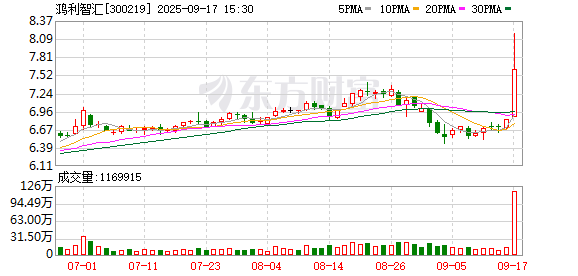
鸿利智汇:公司身处粤港澳大湾区,将持续关注相关政策实施,促进企业高质量发展
Zheng Quan Ri Bao· 2025-09-17 08:12
Core Viewpoint - Hongli Zhihui expressed that the support from the State Council aims to promote efficient allocation and healthy development of factor markets in relevant regions, which will facilitate the transformation of technological achievements and enhance the efficiency of land resource allocation [2] Group 1 - The approval document is intended to support the development of new productive forces and advance the construction of a unified national market [2] - The company is located in the Guangdong-Hong Kong-Macao Greater Bay Area and will continue to monitor the implementation of related policies to promote high-quality development [2] - The policy is expected to guide the smooth flow of human resources and enhance the capital allocation capabilities [2]

市委常委会召开会议:积极融入服务全国统一大市场,进一步加强生物多样性保护
Chang Jiang Ri Bao· 2025-09-17 07:48
Group 1 - The meeting emphasized the importance of implementing Xi Jinping's article on advancing the construction of a unified national market, recognizing its significance and adhering to the basic requirements of "five unifications and one openness" [2] - The meeting discussed the need to enhance product quality, regulate low-price disorderly competition, and promote comprehensive reforms in factor market allocation to better integrate and serve the national unified market [2] - The meeting highlighted the importance of actively participating in global industrial and supply chains, expanding foreign trade and investment, and improving the business environment to create a high-level inland open highland [2] Group 2 - The meeting focused on deepening the rectification of corruption and misconduct issues affecting the public, particularly in education, rural collective assets, and elderly care sectors, to purify the grassroots political ecology [3] - It was stressed to enhance regulatory oversight and improve systems to maintain a long-term mechanism for safeguarding public interests [3] - The meeting called for a coordinated effort to ensure that the public feels the impact of anti-corruption measures in their daily lives [3] Group 3 - The meeting reviewed the "Wuhan Biodiversity Protection Plan (2025-2035)" and emphasized the need to enhance responsibility and urgency in biodiversity protection [4] - Key tasks include conducting baseline surveys, protecting endangered species, and implementing measures against invasive species [4] - The meeting also discussed the importance of developing eco-tourism and carbon sink industries, as well as establishing mechanisms for realizing the value of ecological products [4]
洞见 | 申万宏源杨成长:地方如何打造区域比较优势?
申万宏源证券上海北京西路营业部· 2025-09-17 02:32
Core Viewpoint - The article emphasizes the importance of developing regional comparative advantages through four key aspects: location advantages, institutional advantages, market advantages, and brand advantages, which are essential for high-quality economic development during the "14th Five-Year Plan" period [6][31]. Group 1: Location Advantages - Location advantages have evolved significantly with the rise of the flow economy, necessitating cities to leverage urban clusters and innovate development paths along coastal, border, river, and belt areas [7][10]. - Cities should integrate their development into urban clusters, aligning local plans with regional strategies to enhance connectivity and fill functional gaps left by core cities [8][9]. - The concept of location advantages should shift from traditional geographical perspectives to focus on flow economy opportunities, assessing the ability to attract people, goods, capital, and data [10][11]. Group 2: Institutional Advantages - Institutional advantages are crucial for enhancing regional competitiveness, focusing on creating a market-oriented, rule-of-law, and international business environment [12]. - There is a need for substantial improvements in the business environment, emphasizing real cost reductions for enterprises and fostering a culture of integrity and legal compliance [13][14]. - Local governments should adapt to the digital economy by enhancing digital governance and streamlining processes to reduce bureaucratic burdens on businesses [15][16]. Group 3: Market Advantages - Market advantages are vital for activating regional economic momentum, with a focus on expanding consumption markets and enhancing the efficiency of resource allocation [19][20]. - Local plans should prioritize the expansion of consumption markets, leveraging digital networks to connect urban and rural areas effectively [20][21]. - There is a call for further market-oriented reforms to optimize the utilization of traditional and new factors of production, including land and data [22][23]. Group 4: Brand Advantages - City branding is essential for enhancing urban attractiveness and should be systematically developed to reflect unique local values and cultural heritage [26][27]. - Local governments are encouraged to create distinctive city brands by leveraging cultural assets and integrating them with industrial characteristics [28][29]. - Continuous efforts in brand promotion and management are necessary to transform temporary popularity into lasting brand equity [30][31].