中国威胁论

Search documents
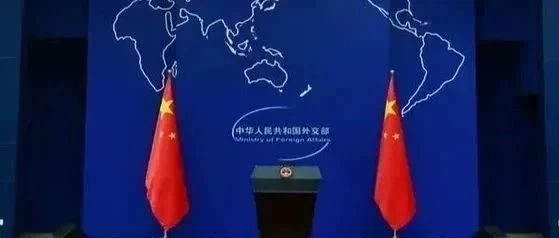
拿到稀土后,欧盟变脸,取消中欧对话,冯德莱恩找特朗普“告状”
Sou Hu Cai Jing· 2025-06-18 16:54
Group 1 - The core viewpoint of the article highlights the EU's dual strategy in response to the pressure from the Trump administration, which includes strong signals of potential retaliation against U.S. tariffs and a shift towards strengthening economic cooperation with China [1][3] - The EU has expressed a willingness to cooperate with China to alleviate the pressures imposed by the U.S., indicating a potential strategy of "aligning with China to counter the U.S." [1][3] - China's response to the EU's overtures has been positive, including the suspension of certain anti-dumping investigations and offering preferential treatment in rare earth exports, showcasing China's goodwill in improving relations with the EU [3][4] Group 2 - The EU's recent decision to cancel the planned high-level economic dialogue with China was justified by claims of slow progress in trade discussions, which is seen as an inadequate excuse given the substantial communication and agreements reached on various trade issues [4][6] - The EU's actions appear to signal alignment with the U.S. in its strategy to contain China, as evidenced by the EU's participation in the G7 summit where leaders shifted their stance to support U.S. policies against China [6][9] - The EU's approach may lead to negative consequences, as it risks becoming a pawn in U.S. trade strategies, potentially exposing itself to further economic exploitation by the U.S. while trying to appease Trump [11]

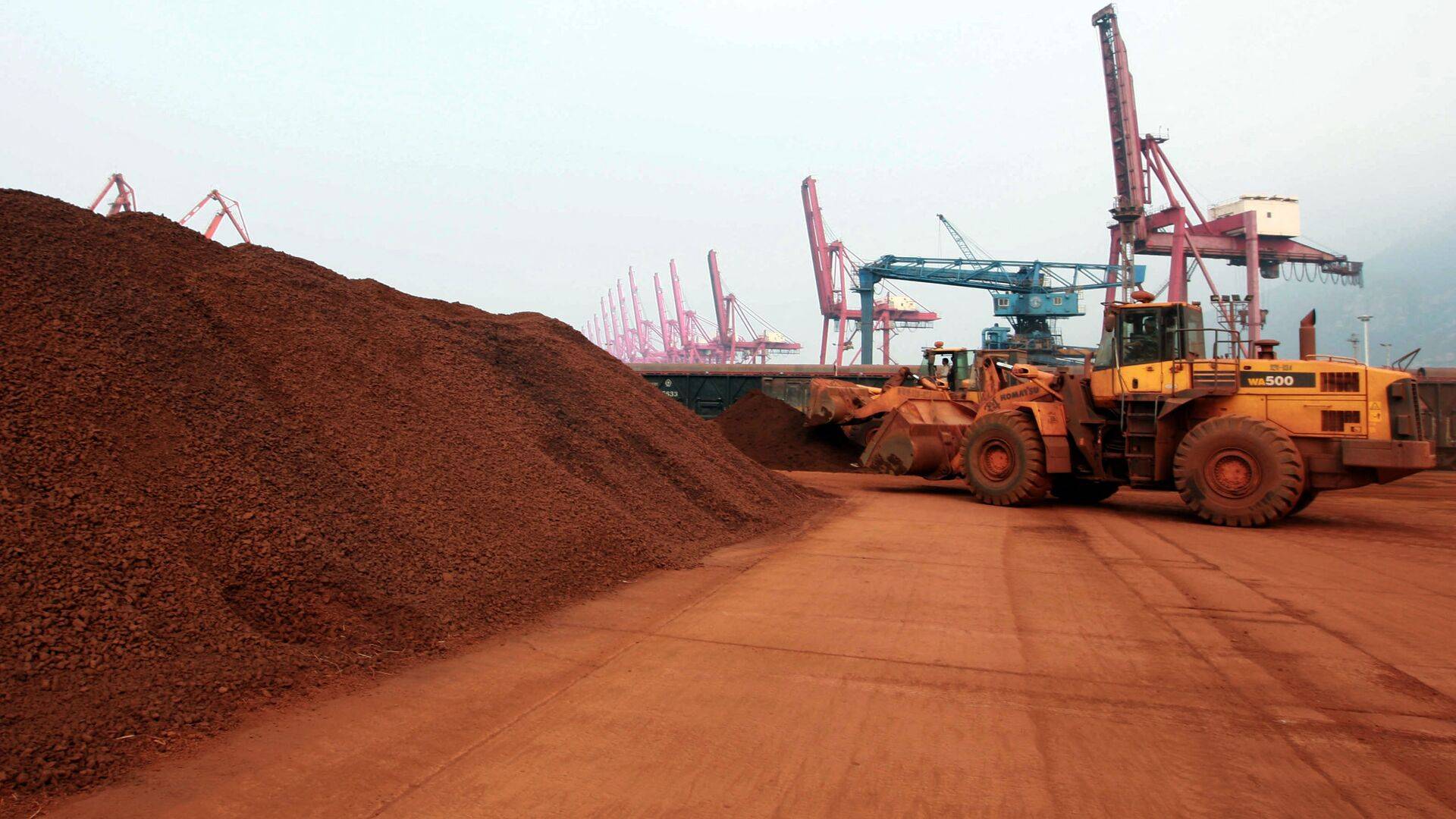
卢比奥对中国“垄断”稀土感到愤怒:美国想要蛋糕,却不愿进厨房
Sou Hu Cai Jing· 2025-06-10 01:24
Group 1 - The core issue discussed in the recent US-China leadership call is the trade and technology disputes, particularly focusing on China's control over rare earth exports [1] - US Treasury Secretary labeled China as an "unreliable partner" due to its restrictions on rare earth exports, claiming that China had previously intended to supply the US but has now withheld it [1] - US Secretary of State expressed outrage over China's "monopoly" on rare earths over the past 25-30 years, accusing China of deceitful practices to achieve global dominance [3] Group 2 - Historically, the US has abundant rare earth resources but outsourced the "dirty work" of mining and processing to China due to environmental regulations and cost concerns [5] - China invested significantly over three decades to develop its rare earth industry into a global leader, while the US focused on deindustrialization and financial markets [5][7] - The US faces challenges in re-establishing its rare earth supply chain, including high costs, long timelines, and a lack of technical expertise [7] Group 3 - The US's realization of the importance of rare earths came only after imposing sanctions on China regarding chips and technology, highlighting a lack of foresight in its industrial strategy [8] - The current geopolitical negotiations will depend on what concessions the US is willing to make in areas such as tariffs and technology exports in exchange for rare earth access [8]
国防部:希望英方端正认知 停止渲染所谓中国威胁
news flash· 2025-06-09 08:06
国防部:希望英方端正认知 停止渲染所谓中国威胁 金十数据6月9日讯,6月9日下午,国防部新闻局副局长、国防部新闻发言人蒋斌大校就近期涉军问题发 布消息。有记者提问,据报道,英国政府近日发布《战略防务评估》报告,称中国利用经济、技术和军 事能力,努力在印太地区占据主导地位,构成"复杂而持续的挑战"。请问发言人有何评论?国防部新闻 发言人蒋斌大校表示,中国坚持走和平发展道路,奉行防御性国防政策,始终是亚太安全的维护者、建 设者、贡献者。中国的发展给各国带来的是机遇而不是挑战,为世界和平提供的是稳定性、正能量。我 们希望英方端正对华认知,尊重客观事实,理性看待中国和中国军队发展,停止渲染所谓"中国威胁", 多做有利于两国两军关系发展的实事。 (央视军事) ...
美国为何总针对中国?英国学者给出答案,美国觉得自己天下第一!
Sou Hu Cai Jing· 2025-06-08 15:49
Group 1 - The article discusses the selective exemption of tariffs by the Trump administration, particularly emphasizing the ongoing trade conflict with China, which has seen increased tariffs since 2018 [1][5][7] - Despite the negative impact on American consumers, the U.S. continues to escalate tensions with China, driven by a perception of a significant "original sin" committed by China [3][14] - The U.S. has been promoting the "China threat" narrative across various domains, including environmental and technological concerns, which has led to increased tariffs on Chinese products [9][11] Group 2 - The article highlights the U.S. military spending and the portrayal of China's military growth as a threat, despite the U.S. being the world's largest military spender [13][19] - The ongoing tariff war is seen as an attempt by the U.S. to revive its manufacturing sector, although it overlooks the deep reliance on Chinese production [45][48] - The article notes that despite the tariffs, American businesses continue to import from China due to cost advantages, indicating a disconnect between policy and market realities [48][50] Group 3 - The expert Martin Jacques argues that the U.S. response to China's rise is rooted in a historical sense of American exceptionalism and a fear of losing its hegemonic status [19][28] - The U.S. has historically underestimated China's potential for growth and has reacted defensively to its advancements, particularly after the 2008 financial crisis [41][43] - The article concludes that the U.S. strategy of decoupling from China and rallying allies is a manifestation of its anxiety over China's rise, reflecting a broader struggle between established and emerging powers [62][64]
美国五角大楼任命印太事务负责人,曾频频炒作“中国威胁论”
Guan Cha Zhe Wang· 2025-06-05 09:13
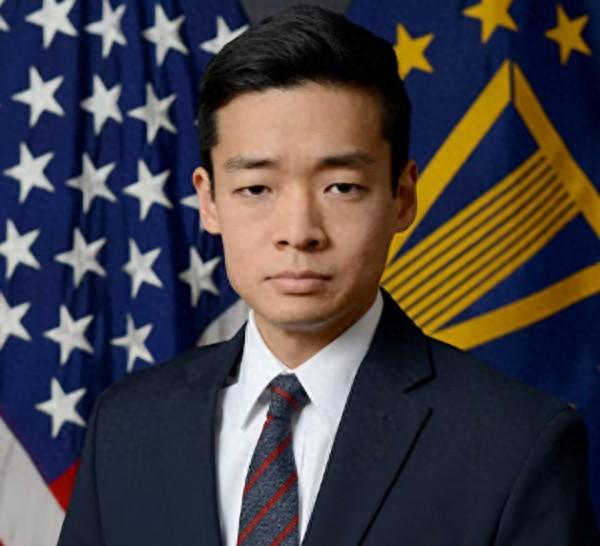
Core Viewpoint - The appointment of John Noh as Assistant Secretary of Defense for Indo-Pacific Security Affairs highlights the U.S. focus on countering perceived threats from China in the region, amidst rising tensions between the U.S. and China [1][6]. Group 1: Appointment and Responsibilities - John Noh has been nominated to oversee military strategy and alliances in East and Southeast Asia, a critical role given the current geopolitical climate [1]. - Noh has previously served in various capacities within the Department of Defense, including as a legal advisor for the House's "China Task Force" and has been involved in defense cooperation in the Indo-Pacific region [3][6]. Group 2: Strategic Context - The U.S. is emphasizing the need for allies in Asia to increase defense spending, drawing parallels with European nations facing direct threats [7]. - Noh has publicly articulated concerns regarding China's military advancements and intentions, suggesting that the U.S. should bolster its defense capabilities and encourage allies to do the same [6][7]. Group 3: Regional Reactions - Analysts have expressed skepticism about the feasibility of U.S. calls for Asian allies to raise defense spending to 5% of GDP, citing differing strategic environments compared to Europe [7]. - The Chinese government has responded critically to U.S. officials' rhetoric on the China threat, asserting that the U.S. is the primary disruptor of peace and stability in the Asia-Pacific region [7].
美智库:美国实力在下降?中美博弈的5大战场,中国将如何获胜?
Sou Hu Cai Jing· 2025-06-05 07:16
Group 1: Technology and Innovation - The core battlefield of the US-China rivalry is in the technology sector, particularly in areas like artificial intelligence, semiconductors, and 5G [2] - Despite US sanctions, China has made significant strides in technology self-sufficiency, exemplified by Huawei's development of the Kirin 9000s chip and the launch of the DeepSeek R1 AI model, which outperformed some US models [4][5] - China's commitment to increasing R&D investment in core technologies like semiconductors and AI is expected to enhance its competitiveness [5] Group 2: Trade Relations - The trade war initiated by the Trump administration in 2018 has not subsided, with tariffs imposed on hundreds of billions of dollars of Chinese goods [7] - China has responded to US tariffs by imposing its own tariffs on US agricultural and industrial products, showcasing its economic resilience [9] - The potential for negotiation and compromise remains, as evidenced by the temporary suspension of certain tariffs during Geneva talks [9] Group 3: Global Supply Chain and Manufacturing - The US has attempted to exclude China from global supply chains, but China's position as the "world's factory" remains strong due to its superior infrastructure and production efficiency [11][12] - In the electric vehicle sector, BYD is projected to surpass Tesla as the largest EV manufacturer by 2024, indicating China's growing influence in this market [13] Group 4: Military Dynamics - China's military modernization, including advancements in missile technology and aircraft, demonstrates its growing military capabilities [15] - The US continues to conduct military operations in the South China Sea, but both nations have shown restraint in escalating military tensions [17] Group 5: Overall Economic Outlook - The US faces challenges such as manufacturing hollowing out and rising social tensions, while China is steadily advancing its economic reforms and expanding its international relationships [19] - The strategic patience and resilience of China may lead to a potential shift in the balance of power, allowing it to break the US's dominant position in the future [19]
高志凯:当两岸最终统一时,赫格塞思先生请不要假装惊讶
Guan Cha Zhe Wang· 2025-06-04 07:41
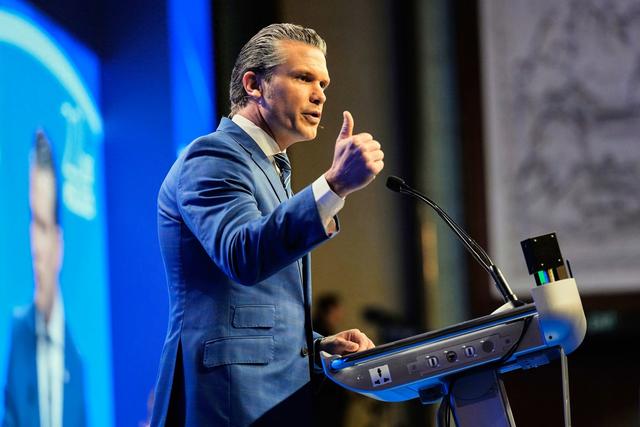
Group 1 - The U.S. Defense Secretary's speech at the Shangri-La Dialogue emphasized the "China threat" narrative, particularly regarding Taiwan and the South China Sea, which was met with strong opposition from China [1][3] - The U.S. perceives China as its greatest rival, fearing that if China surpasses the U.S., it would impose its ideology and political system on the U.S., which is deemed a significant misunderstanding [3][4] - The U.S. may be seeking to provoke tensions in the Taiwan Strait, potentially using "Taiwan independence" advocates as proxies to counter China's rise [5][6] Group 2 - The article suggests that the U.S. is attempting to instigate conflict in the Taiwan Strait to benefit from the resulting chaos, positioning itself as a defender of peace while undermining China [5][7] - There is concern that the U.S. aims to leverage Taiwan's semiconductor industry and other economic assets for its own gain, as indicated by previous statements from U.S. officials about relocating Taiwan's chip production to the U.S. [6][10] - The narrative indicates that the eventual unification of Taiwan with China is inevitable, and the U.S. should not be surprised by this outcome, as it is seen as a trend that will occur regardless of external pressures [8]
连线“香会”现场:赫格塞思的如意算盘下,亚太盟友难掩焦虑
Bei Jing Ri Bao Ke Hu Duan· 2025-06-01 15:18
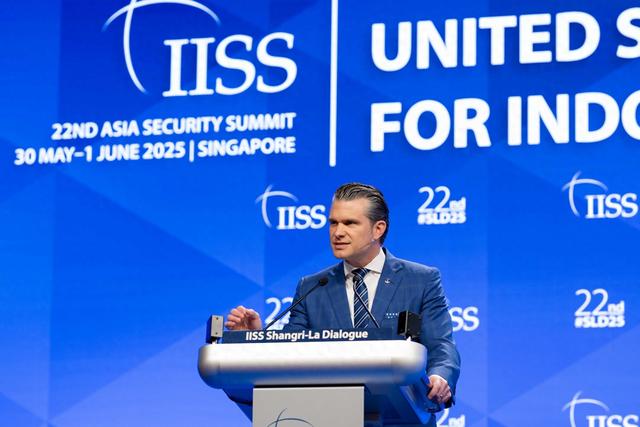
Core Points - The 22nd Shangri-La Dialogue was held in Singapore from May 30 to June 1, with a notable change in China's representation, sending a delegation from the National Defense University instead of a higher-level official [1][7] - U.S. Defense Secretary Lloyd Austin's speech emphasized the "China threat," particularly regarding Taiwan and the South China Sea, which was met with strong rebuttals from the Chinese delegation [1][5] - The dialogue highlighted the contrasting perspectives on regional security, with U.S. officials advocating for increased defense spending among regional allies, while many attendees expressed skepticism about U.S. intentions and commitments [4][10] Group 1: U.S. Position - U.S. Defense Secretary Austin's remarks were characterized by a hegemonic mindset, aiming to provoke confrontation and promote U.S. interests in the Asia-Pacific region [3][4] - The U.S. is perceived to be pressuring regional allies to increase defense spending, effectively pushing them to purchase American military equipment [4][10] - Many attendees at the dialogue expressed disappointment with Austin's speech, viewing it as lacking substance and primarily focused on maintaining U.S. dominance without offering concrete security guarantees [10] Group 2: China's Response - The Chinese delegation, led by Major General Hu Gangfeng, firmly rejected the accusations made by the U.S., labeling them as unfounded and aimed at inciting conflict in the Asia-Pacific [1][5] - China's participation at a lower level this year was framed as a strategic choice, emphasizing constructive dialogue and mutual respect rather than a sign of diminished importance [7][8] - The Chinese response highlighted a commitment to peace and stability in the region, contrasting sharply with the confrontational tone of the U.S. [5][10]
美防长在香格里拉对话会上大放厥词,分析人士:可能想转移外界注意力
Guan Cha Zhe Wang· 2025-06-01 15:03
Group 1 - The core argument of the article revolves around U.S. Defense Secretary Lloyd Austin's remarks at the Shangri-La Dialogue, where he emphasized the so-called "China threat" to pressure allies to increase military spending [1][2] - Austin's speech highlighted the need for U.S. allies to enhance their defense budgets, citing that NATO members commit 5% of their GDP to defense, while Asian countries are reducing their defense expenditures [2][5] - Analysts suggest that Austin's strong rhetoric may serve as a distraction from negative publicity surrounding recent leaks and internal turmoil within the U.S. Defense Department [5][6] Group 2 - Austin's comments included a call for the U.S. to rebuild deterrence in the Indo-Pacific region through improved forward troop posture, assisting allies in strengthening their defense capabilities, and revitalizing the defense industrial base [2][5] - Following Austin's speech, a joint statement was issued by defense ministers from the U.S., Japan, Australia, and the Philippines, reiterating the "China threat" and committing to cooperation for a "free and open Indo-Pacific" [5][9] - The article notes that Austin's remarks reflect a commitment from the Trump administration to prioritize the Indo-Pacific region, although the actual actions taken by the administration will be closely scrutinized by Asian nations [9][10]
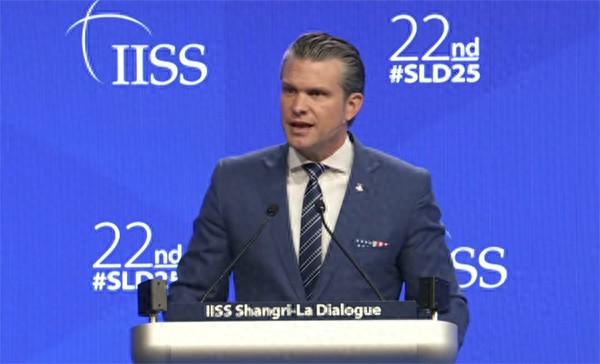
外交部深夜发声:已提出严正交涉
第一财经· 2025-06-01 00:20
问:据报道,5月31日,美国防长赫格塞思在香格里拉对话会上发表演讲,大肆渲染中国威胁,就涉台、 南海等问题发表消极言论。请问中方对此有何评论? 答:赫格塞思无视地区国家求和平谋发展的呼声,兜售阵营对抗的冷战思维,抹黑攻击中国,大肆渲 染"中国威胁论",充满挑衅挑拨。中方对此强烈不满和坚决反对,已向美方提出严正交涉。 6月1日,外交部网站发布外交部发言人就美国防长赫格塞思在香格里拉对话会上涉华消极言论答记者 台湾问题纯属中国内政,任何外国无权干涉。美方不要妄想把台湾问题当作遏制中国的筹码,勿要玩火。 中方敦促美方切实恪守一个中国原则和中美三个联合公报,停止为"台独"势力撑腰打气。南海的航行和飞 越自由从来都不存在任何问题。中国在南海问题上始终坚持同有关国家通过对话协商妥善处理分歧,坚持 依法依规维护领土主权和海洋权益。美国才是破坏南海和平稳定的最大因素。 问。 中方敦促美方切实尊重地区国家维护和平稳定的努力,停止蓄意破坏地区和平稳定环境,渲染冲突对抗、 加剧地区局势紧张。 事实上,美国才是世界上名副其实的霸权国家,是破坏亚太地区和平稳定的最大因素。美国为维护自身霸 权,推进所谓"印太战略",在南海地区部署进攻性 ...