
中国特色金融文化

Search documents
践行中国特色金融文化 夯实高质量发展根基
Zhong Guo Zheng Quan Bao· 2025-11-28 22:42
Core Viewpoint - The Chinese financial industry is undergoing a significant cultural transformation, emphasizing the importance of corporate culture alongside traditional hard strengths for sustainable growth [2][9]. Group 1: Cultural Transformation - The release of the "Ten Elements of Cultural Construction in the Securities Industry" and the "Five Musts and Five Must Nots" requirements highlight the shift towards enhancing soft power through cultural development [2]. - The "14th Five-Year Plan" explicitly calls for advancing cultural construction, indicating a strategic direction for the industry [2]. - National financial institutions, like Guojin Securities, are integrating these cultural requirements into their mission and strategic development, positioning culture as a core engine for high-quality growth [2][9]. Group 2: Integrity and Governance - Guojin Securities emphasizes honesty and integrity as foundational principles, embedding these values into its governance framework to foster a trustworthy environment [3]. - The company has established a leadership group for cultural construction, ensuring that daily operations align closely with corporate culture [3]. - Initiatives such as the signing of the "Party Style and Clean Government Construction Commitment" and the promotion of integrity culture are part of the company's efforts to guide employees in ethical conduct [3]. Group 3: Risk Management and Innovation - Guojin Securities prioritizes risk management as essential for high-quality development, focusing on a comprehensive internal control system to manage various risks [6][8]. - The company promotes a culture of rational, value, and long-term investment, enhancing its professional research capabilities to stabilize market operations [6]. - In terms of innovation, Guojin Securities aims to serve the real economy by focusing on key sectors and implementing a dual strategy of equity and debt financing [7]. Group 4: Compliance and Talent Development - The company reinforces the idea that "compliance creates value," emphasizing the importance of compliance training and awareness among all employees [8]. - Guojin Securities invests in talent development, establishing a robust selection and training system to maintain competitiveness in the market [8]. - The company has implemented strict accountability measures for compliance violations, ensuring a culture of responsibility and continuous improvement [8].


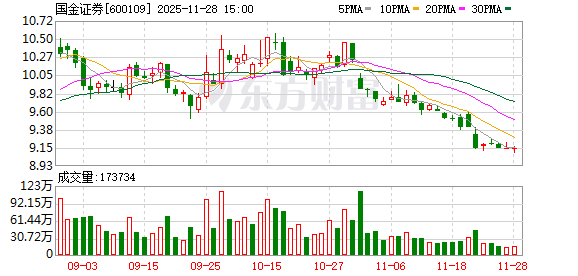
厚植金融为民情怀筑牢资本市场信任根基
Zhong Guo Zheng Quan Bao· 2025-11-28 20:25
Core Viewpoint - The company emphasizes the importance of investor education and protection as a vital part of sustainable development, aligning with the principles of the "People First" approach highlighted in the 20th National Congress of the Communist Party of China and the 14th Five-Year Plan [1][6]. Group 1: Investor Education Initiatives - The "Shouzheng Academy" has received over 1.8 million visitors and has been rated "Excellent" for seven consecutive years by the China Securities Regulatory Commission [2]. - The academy integrates party-building with technology to enhance investor education services, showcasing a commitment to the "People First" spirit [1][2]. - The company has established a financial legal volunteer team, merging legal education with financial services, and has been recognized as a public service station by the Fujian Provincial Justice Department [3]. Group 2: Innovative Educational Content - The company has developed a financial literacy course for the elderly, focusing on knowledge dissemination, risk prevention, and financial literacy cultivation [6]. - A series of animated videos titled "Financial Friends" has been created to educate the elderly on financial knowledge, incorporating local cultural elements [6]. - The company has produced educational materials that creatively blend traditional Chinese culture with financial education, receiving national recognition [4]. Group 3: Community Engagement and Outreach - The company has organized numerous educational activities for students, integrating financial knowledge with historical and cultural education [5]. - It has launched various online and offline initiatives to promote investor education, including live-streaming sessions and short educational dramas [5]. - The company actively participates in national investor protection campaigns, ensuring comprehensive coverage of educational content across different age groups [5]. Group 4: Focus on Elderly Financial Services - The company recognizes the importance of transforming the silver economy from concept to practice, expanding its elderly financial services [6][7]. - It collaborates with various stakeholders to create a comprehensive elderly financial service ecosystem, addressing the needs of the aging population [7]. - The company has conducted research on investor protection strategies for the elderly, receiving high praise from regulatory bodies [6][7].
践行中国特色金融文化夯实高质量发展根基
Zhong Guo Zheng Quan Bao· 2025-11-28 20:25
Core Viewpoint - The Chinese financial industry is undergoing a significant cultural transformation, emphasizing the importance of corporate culture alongside traditional hard strengths for sustainable growth [1]. Group 1: Cultural Transformation - The release of the "Ten Elements of Cultural Construction in the Securities Industry" and the "Five Musts and Must Nots" of Chinese financial culture highlights the need for cultural development in the sector [1]. - The "14th Five-Year Plan" explicitly calls for advancing cultural construction, indicating a strategic direction for the industry [1]. - The chairman of Guojin Securities, Ran Yun, emphasizes that cultural construction is crucial for the healthy development of the capital market and for establishing correct values and risk perspectives [1]. Group 2: Integrity and Governance - Guojin Securities has integrated integrity into its governance framework, fostering an environment of honesty and trust [2]. - The company has established a leadership group for cultural construction, ensuring that daily operations align closely with corporate culture [2]. - A commitment to integrity is reinforced through the signing of the "Party Style and Clean Government Construction Commitment" and the implementation of a series of activities to promote a culture of integrity [2]. Group 3: Risk Management and Innovation - Guojin Securities prioritizes risk management as a foundation for high-quality development, focusing on quality and sustainable growth rather than speed [3]. - The company has developed a comprehensive internal control system to manage various risks, ensuring capital adequacy and stable operations [3]. - The firm promotes a culture of rational, value, and long-term investment, enhancing its professional research capabilities [3]. Group 4: Compliance and Talent Development - The company emphasizes compliance as a value-creating principle, enhancing its compliance management through a multi-level training system [4]. - Guojin Securities has implemented a performance assessment mechanism linked to risk management outcomes, fostering a culture of compliance [4]. - The firm views talent as its most important asset, establishing a scientific selection mechanism and a robust training system to maintain market competitiveness [5]. Group 5: Commitment to High-Quality Development - Guojin Securities is committed to the mission of making financial services more efficient and reliable, contributing to the high-quality development of China's financial sector [5]. - The company adheres to principles of honesty, responsibility, prudence, innovation, and compliance in its operations [5].
从“金融地标”到“文化坐标” 中国银行(天津)博物馆的文化叙事
Jin Rong Shi Bao· 2025-11-28 04:33
Core Viewpoint - The establishment of the Bank of China (Tianjin) Museum serves as a significant cultural initiative to preserve and promote the history of modern Chinese finance, reflecting the evolution of financial services in support of national development and cultural heritage [2][14]. Group 1: Historical Context and Significance - The Bank of China (Tianjin) is the oldest financial institution in Tianjin, witnessing the rise of the Chinese nation from hardship to rejuvenation, thus embodying a unique red gene and financial culture [2][3]. - The museum's construction is a conscious effort to recover financial heritage from historical fragments, with a focus on the archives of the Bank of China Tianjin branch, which includes 437 boxes of valuable documents [2][3]. Group 2: Museum Features and Exhibits - The museum features over 630 exhibits, with more than half being physical artifacts, showcasing the transformation of dormant financial memories into tangible cultural assets [3][4]. - The narrative structure of the museum is centered around the theme "Financial Services for the Great Rejuvenation of the Chinese Nation," highlighting the continuous role of finance in national development across different historical periods [4][5]. Group 3: Thematic Exhibition Areas - The museum consists of seven thematic exhibition areas, each detailing different aspects of the Bank of China's contributions, from its foundational role in the early 20th century to its support for national economic recovery and development [5][6]. - Each exhibition area, such as "Centennial Style" and "Centennial Witness," illustrates the bank's historical significance in supporting industrial growth and national resistance against foreign aggression [5][9]. Group 4: Cultural and Educational Outreach - Since its opening, the museum has welcomed over 170,000 visitors and hosted more than 1,000 events, emphasizing its role as a dynamic platform for cultural dissemination [12]. - The museum integrates financial culture into various educational activities, collaborating with universities and utilizing multimedia formats to enhance public engagement with financial history [12][13]. Group 5: Cross-Disciplinary Collaboration - The museum positions itself as a "financial culture salon," actively engaging with government, regulatory bodies, and local enterprises to host diverse cultural events, thereby fostering community connections [13][14]. - The development of cultural products, such as souvenirs inspired by the museum's themes, aims to achieve both cultural and social value, reinforcing the museum's commitment to community welfare [13][14].

六年深耕构建生态新图景,证券行业文化建设迈向新阶段
Mei Ri Jing Ji Xin Wen· 2025-11-28 00:38
Core Perspective - The construction of a financial culture with Chinese characteristics is becoming a driving force for the stable and sustainable development of the securities industry, emphasizing integrity, innovation, and compliance [1] Group 1: Cultural Construction in the Securities Industry - Over the past six years, more than a hundred securities firms have integrated cultural construction with compliance risk control and service to the real economy, creating a cultural ecosystem that combines Chinese characteristics with international perspectives [1] - The principle of party leadership is fundamental to cultural construction in the securities industry, enhancing corporate image and core competitiveness while promoting sustainable development [1][2] - Zhejiang Securities has developed an innovative path for implementing Chinese financial culture through a system that integrates party leadership, cultural development, and governance [1][2] Group 2: Strategic Integration and Responsibility - Zhejiang Securities has established a three-dimensional guarantee system for cultural construction, focusing on ideological leadership, strategic collaboration, and responsibility transmission [2] - The company has implemented a "three-level responsibility closed loop" to ensure accountability in cultural construction, integrating it into the party's assessment system [2][3] Group 3: Social Responsibility and Investor Education - The securities industry is transitioning from fragmented participation in social responsibility to a systematic approach, integrating financial empowerment, industry support, and public welfare [6] - Companies like Shanghai Securities are extending their cultural responsibilities to rural revitalization, utilizing green bonds and investor education to support local economies [6] - The industry is enhancing investor education as a key component of inclusive finance, with increased participation in the capital market following recent policy changes [3][5] Group 4: Professional Culture and Market Impact - The current transition in the securities industry from "scale competition" to "functional enhancement" emphasizes the importance of professional culture in driving value creation and compliance [8] - Professional culture is seen as a means to build trust with stakeholders, creating a "trust premium" that enhances competitive advantage [8] - Companies like China Galaxy Securities highlight the role of cultural construction in reinforcing their mission to serve the real economy and manage financial risks [8]

东吴证券党委书记、董事长范力:以党建“三个融合”引领五大行动 奋力书写金融强国建设新篇章
Zhong Guo Zheng Quan Bao· 2025-11-28 00:17
Core Viewpoint - The importance of finance in China's modernization and economic development is emphasized, with a focus on high-quality growth and regional development strategies [1] Group 1: Financial Strategy and Development - The company aims to serve small and micro enterprises by deepening its business in the Beijing Stock Exchange and exploring financial practices aligned with the "Five Major Articles" of modernization [1] - The company is committed to a "base strategy" to support enterprise listings and enhance direct financing, contributing to Suzhou's achievement of AAA ratings for all state-owned enterprises at the county level [4][5] Group 2: Party Leadership and Governance - The company integrates party leadership into its governance structure, ensuring that party work is aligned with corporate strategy and decision-making processes [2][3] - A comprehensive system for party governance is established, including clear responsibilities and decision-making protocols across all subsidiaries [2] Group 3: Talent Development - The company focuses on market-oriented employment practices, emphasizing both moral and professional qualifications in talent acquisition [7][8] - Initiatives are in place to attract high-level talent from major cities and enhance collaboration with universities to build a robust talent pipeline [7] Group 4: Cultural and Social Responsibility - The company promotes a unique corporate culture that integrates financial and regional cultural elements, enhancing employee engagement and community ties [9][10] - A charity foundation has been established, contributing over 190 million yuan to various social causes, including rural revitalization efforts [10] Group 5: Compliance and Risk Management - The company emphasizes strict compliance with industry regulations and internal governance, implementing a comprehensive risk management framework [11][12] - Regular training and education on discipline and compliance are conducted to ensure adherence to ethical standards and enhance organizational integrity [12]

鹏扬基金宋震:以金融文化筑牢信义根基保护投资者合法权益
Zhong Guo Zheng Quan Bao· 2025-11-27 23:37
Core Viewpoint - The Fourth Plenary Session of the 20th Central Committee of the Communist Party of China outlines the main goals for economic and social development during the "15th Five-Year Plan" period, emphasizing high-quality development in the economy and capital markets, which raises new requirements for the public fund industry [1][2]. Group 1: Industry Development Goals - The "15th Five-Year Plan" marks a critical period for achieving socialist modernization and accelerating the construction of a financial power, with the public fund industry expected to fully understand and implement the new directives from the plenary session [2]. - The public fund industry is encouraged to align its operations with national strategies, emphasizing responsible investment and risk prevention to protect investors' legitimate interests while supporting high-quality development of the real economy [1][2]. Group 2: Financial Culture and Ethics - The core ethical principle of the financial industry, known as fiduciary duty, emphasizes integrity, responsibility, and long-term value, which is a vital part of the Chinese financial culture [3]. - The public fund industry must integrate fiduciary responsibility into all operational processes, ensuring that investor interests are prioritized and that professional diligence is maintained throughout investment research, sales, and operations [3]. Group 3: Risk Management and Compliance - The company has established a comprehensive risk awareness culture and internal compliance training system to protect investors' rights, utilizing innovative methods such as AI to enhance training effectiveness [4][5]. - A robust legal compliance framework is in place to ensure that compliance management covers all operational aspects, with a zero-tolerance policy for non-compliance [5]. Group 4: Technology and Innovation - The company is leveraging financial technology to enhance risk management and innovation, focusing on building an integrated investment research system supported by big data and AI [6]. - Efforts are being made to automate information disclosure processes to improve compliance efficiency and reduce operational risks [6][7]. Group 5: Intellectual Property Protection - The company has developed a multi-dimensional protection system for intellectual property, including copyright protection for financial data models and research reports, as well as patent protection for core technologies [7]. - Financial technology is being utilized to enhance legal compliance and data security, ensuring that the company adheres to regulations while protecting investors' rights [7].
鹏扬基金宋震: 以金融文化筑牢信义根基 保护投资者合法权益
Zhong Guo Zheng Quan Bao· 2025-11-27 21:25
Core Points - The Fourth Plenary Session of the 20th Central Committee of the Communist Party of China will be held in October 2025, outlining major goals for economic and social development during the "14th Five-Year Plan" period [1] - The public fund industry is expected to enter a new stage of high-quality development, aligning with national strategies and enhancing risk prevention measures [1][2] - The integration of financial culture and the construction of a financial power is emphasized, with a focus on ethical responsibilities and investor interests [2][3] Industry Development - The "14th Five-Year Plan" is a critical period for achieving socialist modernization and promoting high-quality financial development [1] - The China Securities Regulatory Commission has issued an action plan to promote high-quality development in the public fund industry, emphasizing the importance of adhering to the Party's leadership in financial work [1][2] - The public fund industry is encouraged to translate strategic directions into concrete actions to support national goals [1][2] Company Initiatives - Pengyang Fund emphasizes a value pursuit of responsible investment and risk prevention, aiming to protect investors' legal rights while contributing to the high-quality development of the real economy [1][3] - The company has established a comprehensive risk prevention system and a robust legal compliance framework to ensure the practical implementation of fiduciary responsibilities [3][4] - Pengyang Fund actively embraces financial technology, integrating it into compliance culture and training to enhance risk awareness among employees [5][6] Compliance and Risk Management - The company has developed a systematic internal compliance training and integrity culture education system to strengthen risk awareness and protect investors' rights [4][5] - A zero-tolerance approach to compliance violations is adopted, with continuous improvement of compliance accountability mechanisms [5][6] - The use of technology in compliance management includes automated updates of legal regulations and contract management, ensuring adherence to personal information protection principles [6][7] Financial Technology and Innovation - Financial technology is seen as a key driver for enhancing risk management and fostering innovation within the public fund industry [6][7] - Pengyang Fund is leveraging big data and artificial intelligence to improve investment research and risk management processes, enhancing decision-making efficiency [6][7] - The company is committed to protecting intellectual property rights and ensuring that technological innovations comply with legal standards [7]
以金融文化筑牢信义根基保护投资者合法权益
Zhong Guo Zheng Quan Bao· 2025-11-27 20:21
Core Viewpoint - The Fourth Plenary Session of the 20th Central Committee of the Communist Party of China outlines the main goals for economic and social development during the "15th Five-Year Plan" period, emphasizing high-quality development in the economy and capital markets, which raises new requirements for the public fund industry [1][2] Group 1: Financial Culture and Responsibilities - The public fund industry is expected to fully understand and implement the new requirements set forth by the Central Committee regarding the construction of a financial power, translating strategic directions into concrete actions to support the "15th Five-Year Plan" goals [2][3] - The concept of fiduciary duty is central to the financial industry, emphasizing integrity, responsibility, and long-term value, which is a key component of Chinese financial culture [3][4] Group 2: Risk Management and Compliance - The company has established a comprehensive risk prevention system to ensure fiduciary responsibilities are upheld, integrating compliance culture into all operational aspects [3][5] - The company emphasizes a "zero tolerance" policy towards compliance violations, continuously refining its compliance accountability mechanisms to delineate clear boundaries for business development [5][6] Group 3: Technological Innovation in Finance - The company is leveraging financial technology to enhance compliance and risk management, employing big data and artificial intelligence to improve investment research and decision-making processes [6][7] - The establishment of a digital infrastructure for information disclosure aims to automate compliance processes, thereby increasing efficiency and reducing operational risks [6][7] Group 4: Cultural and Ethical Development - The company is committed to fostering a culture of compliance and ethical behavior among employees, utilizing innovative training methods to enhance awareness and participation in compliance practices [4][5] - The integration of technology in compliance efforts is seen as a means to strengthen legal operations while ensuring the protection of investor rights [6][7]
证券分析师评选规范升级!主办方承诺函制度筑起“防火墙”
2 1 Shi Ji Jing Ji Bao Dao· 2025-11-26 03:16
Core Viewpoint - The China Securities Association is revising the "Regulations for Securities Analysts Participating in External Evaluations," introducing stricter regulatory constraints to enhance the quality of external evaluations and ensure analysts fulfill social responsibilities and adhere to Chinese financial culture [1][4]. Group 1: Key Changes in Regulations - The introduction of a commitment letter system for evaluation organizers, requiring them to submit a commitment letter to the China Securities Association (CSRC) before each evaluation, effectively creating a "firewall" to filter out non-compliant evaluations [1][3]. - Organizers must submit the commitment letter and qualification materials by August 31 each year, tightening the timeline and documentation requirements to reduce the space for non-compliant evaluations [3]. - The new regulations specify violations by organizers, such as unauthorized adjustments to evaluation rules or results, allowing the CSRC to take actions like revoking accepted commitment letters [3][5]. Group 2: Expanded Responsibility and Compliance - The revised regulations broaden the scope of responsibility from individual analysts to include their research teams, linking team accountability to individual compliance [4][5]. - If an analyst is under investigation, their entire team will lose eligibility for evaluations, emphasizing collective responsibility within research teams [4][5]. - The regulations outline six specific situations that restrict participation in evaluations, including administrative penalties and investigations by the CSRC [5]. Group 3: Changes in Evaluation Criteria and Incentives - The new regulations clarify that evaluation results cannot be used as a basis for salary incentives, shifting the focus from rankings to professional and social value [6][7]. - Analysts' social responsibility and adherence to Chinese financial culture will now be included in evaluation criteria, promoting a shift from external ranking pursuits to enhancing professional and social value [7]. - This adjustment aims to encourage analysts to prioritize serving investors and the capital market, fostering a healthier industry environment [7].